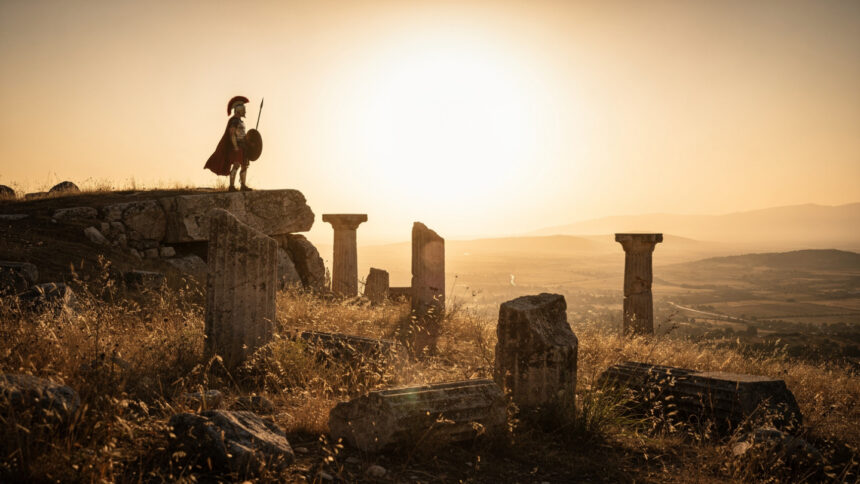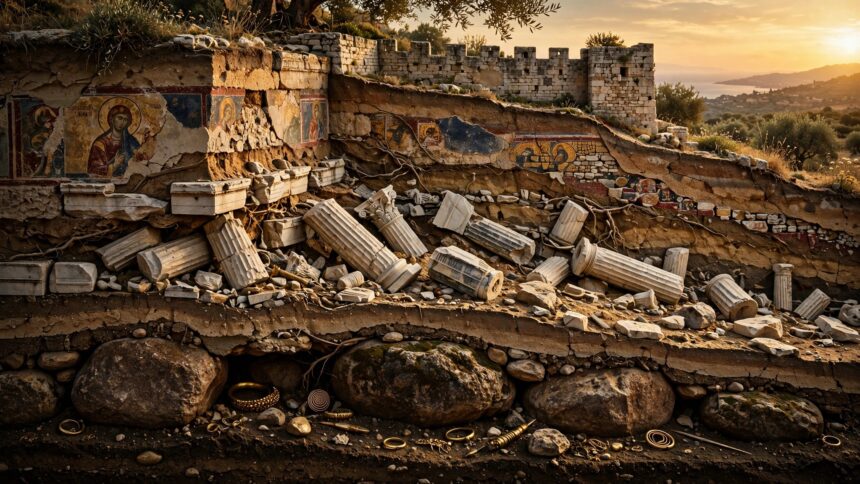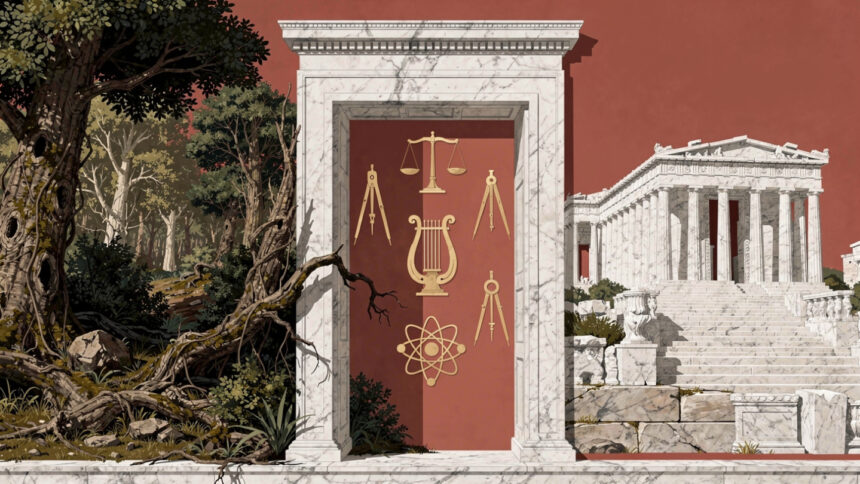

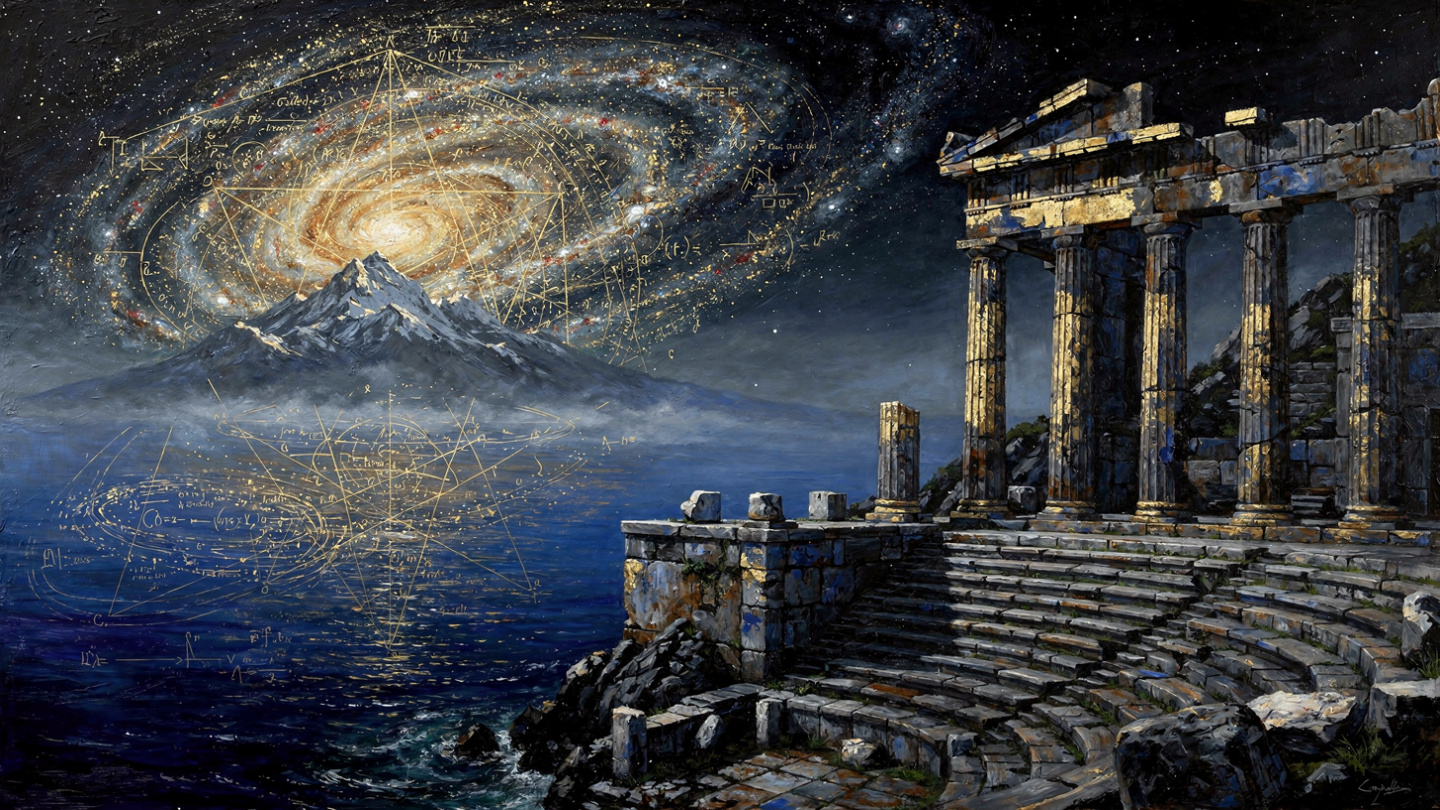
Greece is where the categories were invented.
Philosophy, democracy, tragedy, comedy, history as a discipline, mathematics as a system of proof, the Olympic games, the epic poem, the medical oath, the architectural orders that still structure the built world: all of these originated in a place, over a period, among a people who happened to be working through the most fundamental questions about how to organize human life and thought at the same moment that they were building the monuments and writing the texts that preserved their answers.
This is the reason Greece is different from every other destination in Europe, and the reason that a visit to it is different in kind from a visit to France or Spain or Italy, however beautiful those countries are. Greece is not simply a place with a long history. It is the place where much of the intellectual and civic framework that Western civilization has since operated within was first articulated. When you stand in the Agora of Athens where Socrates questioned his fellow citizens about the nature of justice and virtue, or at Delphi where the inscription Know Thyself was placed above the entrance to Apollo’s oracle, or at the theater of Epidaurus where the Greek dramatic tradition produced the forms that are still used in theater worldwide, you are not at a historical monument. You are at the source.
This guide covers the Greek mainland and the major island groups in the order that makes geographic and cultural sense, beginning in Athens, moving through the mainland sites that most visitors pass through on their way to islands, and then through the island groups from west to east and north to south. For the islands that have their own dedicated articles in the Olympus Estate collection, links are provided. This article is the entry point.
The Geography and What It Means
Greece occupies the southern tip of the Balkan Peninsula and extends into the Aegean and Ionian seas through more than six thousand islands and islets, of which approximately 227 are permanently inhabited. The mainland is predominantly mountainous: 80 percent of the country’s terrain is above the flat agricultural land that the major plains of Thessaly, Macedonia, and the Peloponnese represent. The sea is never far. From Mount Olympus on the boundary between Macedonia and Thessaly, both the Aegean to the east and the Thermaic Gulf to the west are visible on clear days.
The five seas that surround Greece, the Mediterranean to the south, the Aegean to the east, the Ionian to the west, and the Cretan and Libyan seas between Crete and North Africa, are not simply different bodies of water with different names. They have different characters in terms of wave patterns, depth, clarity, and the quality of the light they reflect, and the Greek island groups that each sea produces have correspondingly different visual characters. The Ionian Islands, wetter and greener from the Atlantic weather systems that the Italian peninsula does not fully block, look different from the Cyclades, which are drier and more exposed to the Meltemi wind that defines the summer Aegean. The Dodecanese, close to the Turkish coast, have a landscape character influenced by the proximity to the Anatolian mainland. Each group requires its own account.
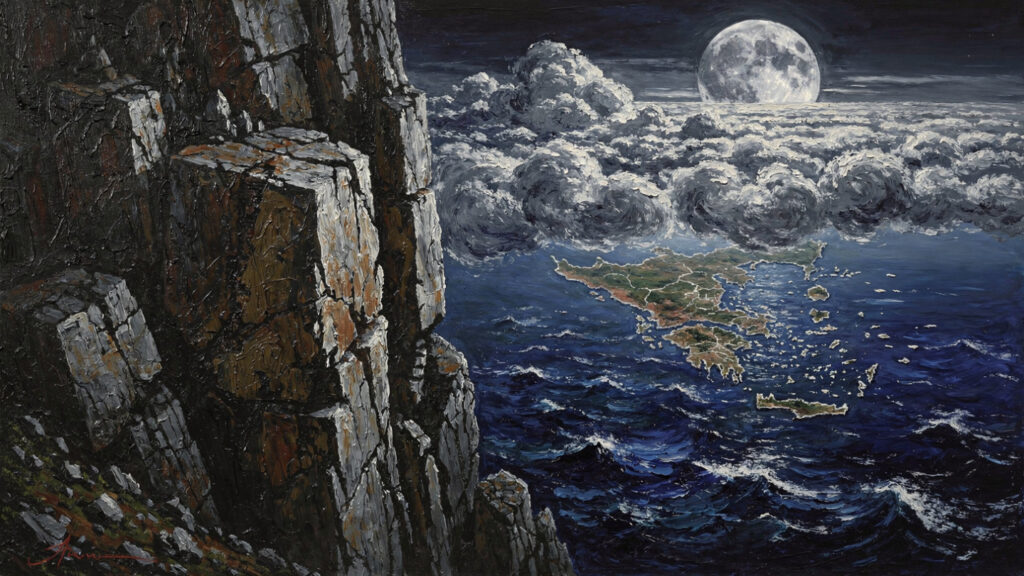
The mountains are as important as the sea for understanding Greece, and they are less frequently discussed in the travel literature than the islands deserve. Mount Olympus at 2,917 meters, Parnassus at 2,457 meters, the Taygetos range above Sparta, the Pindus chain that runs down the western spine of the mainland from Epirus through Thessaly: these ranges have shaped Greek history as directly as the sea has, by creating the terrain that isolated the city-states from each other and produced the political fragmentation that is both the explanation for Greek civilization’s extraordinary diversity and the reason it was eventually conquered by Macedon and then Rome.
Athens | The Source
Athens is the first destination for most visitors to Greece, and it is the correct first destination, not simply because it is the capital and has the most convenient international airport, but because understanding Athens gives the visitor the interpretive framework that makes everything else in Greece more legible.
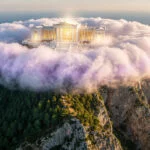
The Acropolis is the starting point. The hill itself, the limestone outcrop 156 meters above the city floor, has been the site of continuous sacred use for at least 3,000 years: the Mycenaean palace that preceded the classical period temples, the archaic temples that the Persians burned in 480 BCE, and the classical temples that Pericles commissioned in the 450s and 440s and that have been under more or less continuous examination and restoration since the nineteenth century. The Parthenon at the summit, dedicated to Athena Parthenos and completed in 432 BCE, is the most complete expression of the Doric architectural order and the most analyzed building in the history of architecture. The dedicated article in the Olympus Estate collection, including the Oxford CGI reconstruction of the Parthenon as it stood in 432 BCE, gives this building the depth it deserves.
The Acropolis Museum at the base of the hill, opened in 2009, holds the surviving sculptural elements of the Acropolis monuments in a building designed to maintain their spatial relationship with the original structures above. The Parthenon Gallery on the top floor is oriented to match the orientation of the Parthenon, with the surviving frieze sections displayed in correct sequence and plaster casts filling the positions of the sections held in the British Museum and other institutions.
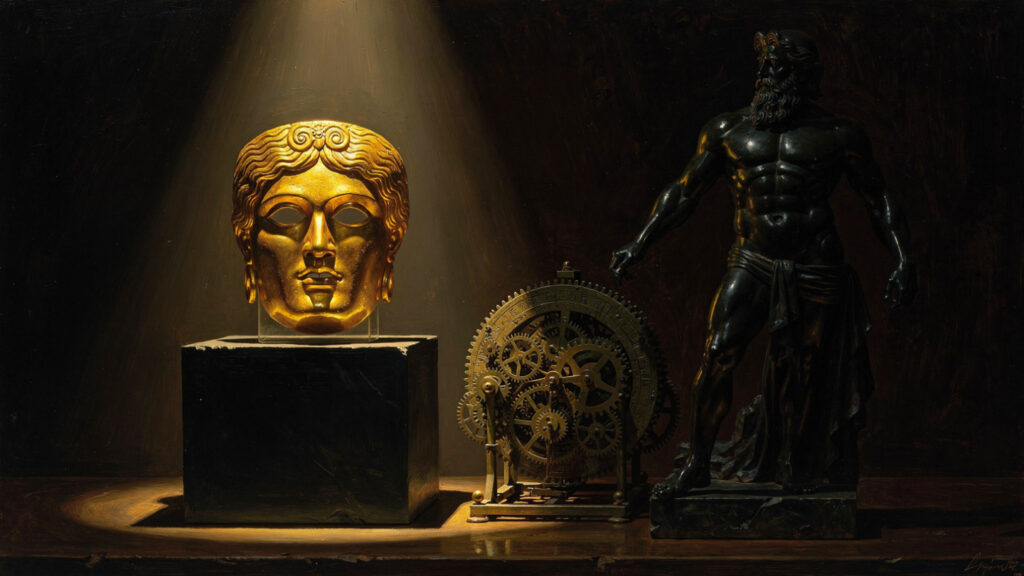
The Agora, the civic and commercial heart of ancient Athens below the Acropolis to the northwest, is where the philosophical practice that Athens produced operated in its most public and most characteristic form. Socrates walked here. The Stoa Poikile, the Painted Porch from which the Stoic philosophical school takes its name, stood on the northern edge of the Agora. The Temple of Hephaestus on the western hill is the best preserved classical temple in Greece, its Doric columns intact and its architectural details legible in a way that the heavily damaged state of the Parthenon does not permit.
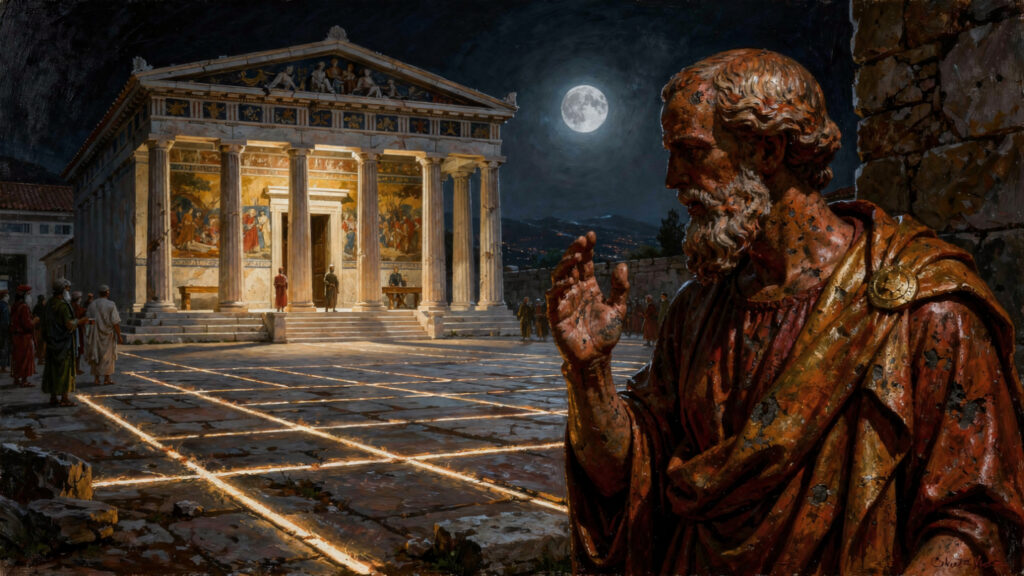
The National Archaeological Museum in the Exarcheia neighborhood north of the Agora holds the most comprehensive collection of ancient Greek material anywhere in the world: the gold masks from the shaft graves of Mycenae, the Antikythera Mechanism, the bronze statue of Poseidon or Zeus recovered from the sea off Cape Artemision, the Cycladic marble figures from the third millennium BCE, and the full range of painted pottery, bronze, and marble that the ancient Greek world produced across a thousand years of artistic development. A serious engagement with the collection requires a full day and rewards it.
Delphi, 178 kilometers northwest of Athens on the slopes of Parnassus above the valley of the Pleistos river, is the most atmospherically powerful archaeological site in Greece and the most completely preserved ancient sacred landscape in the country. The sanctuary of Apollo, the theater above it, the Treasury of the Athenians, the Sacred Way, and the museum that holds the Bronze Charioteer and the collection of votive offerings that the ancient world brought to the oracle: all of these together constitute an experience that the photographs do not prepare the visitor for, because the photographs cannot capture the quality of the site’s position on the hillside, the view down the valley to the sea at Itea, and the atmosphere that Delphi produces in the early morning before the tour groups arrive.
The Peloponnese | The Mythological Core
The Peloponnese, the large peninsula connected to the mainland by the narrow Isthmus of Corinth, is the landscape that the central Greek mythological tradition is most deeply embedded in: the site of Mycenae, of Tiryns, of Olympia, of Epidaurus, of Sparta, of Nemea, of Corinth. The mythological geography of the Trojan War cycle, the Heracles labors, and the history of the Peloponnesian War are all readable in the terrain of this peninsula.
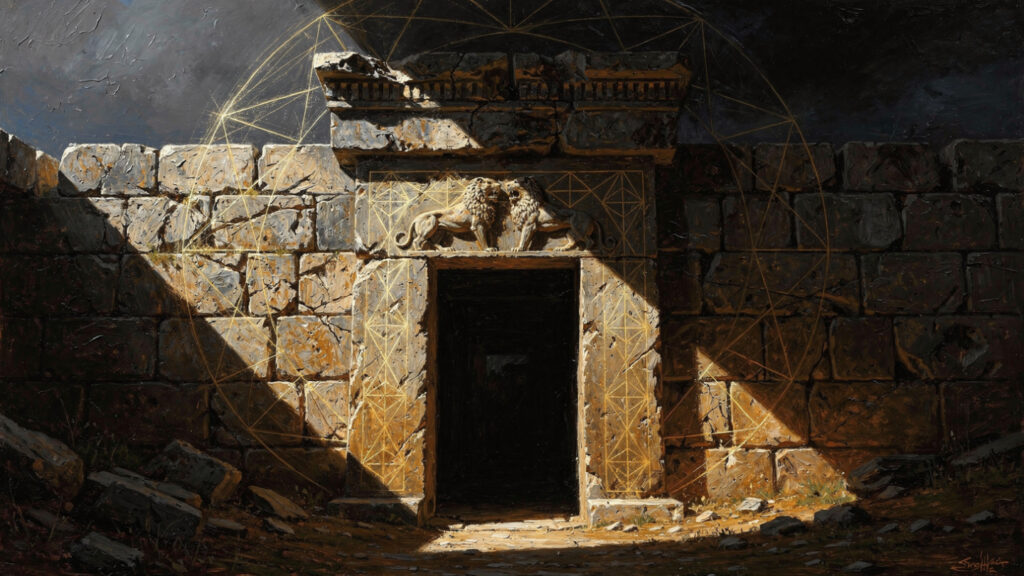
Mycenae, in the Argolid plain below the Argive hills, is the site of the palace culture that Homer’s epics preserved in distorted and elaborated form as the world of Agamemnon, Clytemnestra, Orestes, and the Trojan War. The Lion Gate, the shaft graves, the Treasury of Atreus, and the palace ruins are the material evidence of the most powerful Bronze Age civilization on the Greek mainland. The gold objects from the shaft graves, including the gold masks that Schliemann attributed to Agamemnon and the later scholarship dated to several centuries before the Trojan War’s probable historical period, are in the National Archaeological Museum in Athens.
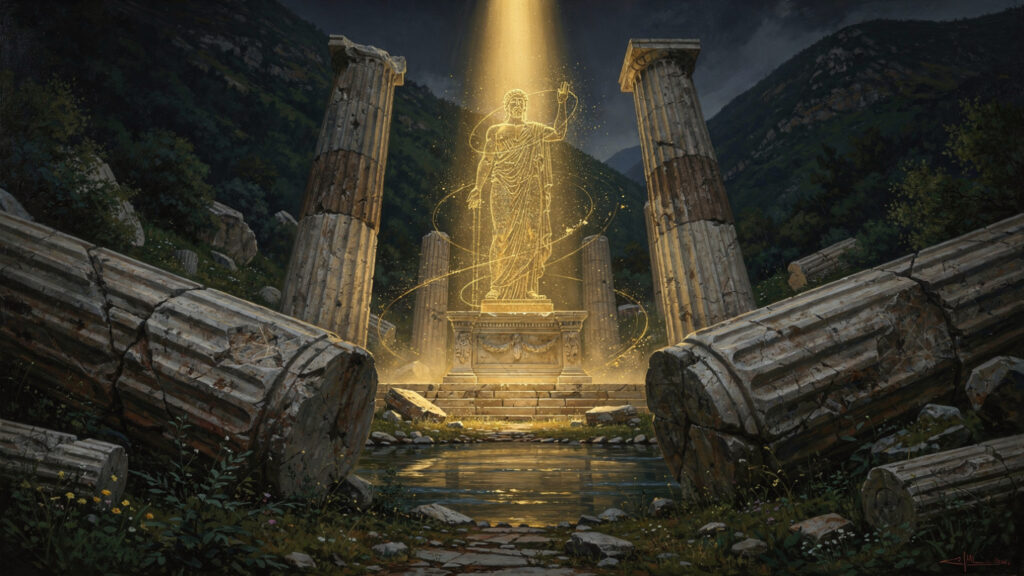
Olympia, in the western Peloponnese in the valley of the Alpheios river, is the site of the sanctuary where the ancient Olympic Games were held every four years from 776 BCE until the emperor Theodosius prohibited them in 393 CE. The site today holds the ruins of the Temple of Zeus, one of the largest temples in the ancient Greek world, within which stood the cult statue by Pheidias that the ancient world counted among the Seven Wonders: a twelve-meter chryselephantine statue of Zeus seated on a throne, now entirely lost. The Archaeological Museum at Olympia holds the sculptural program of the Temple of Zeus, including the pediment sculptures that are among the finest examples of classical Greek sculpture outside the Acropolis collections.
Epidaurus, on the Saronic Gulf coast of the northeastern Peloponnese, holds the sanctuary of Asclepius and the theater that is the best-preserved ancient Greek theater in the world and the most acoustically perfect. The theater is still in use for the summer festival that presents ancient Greek drama in its original performance space.
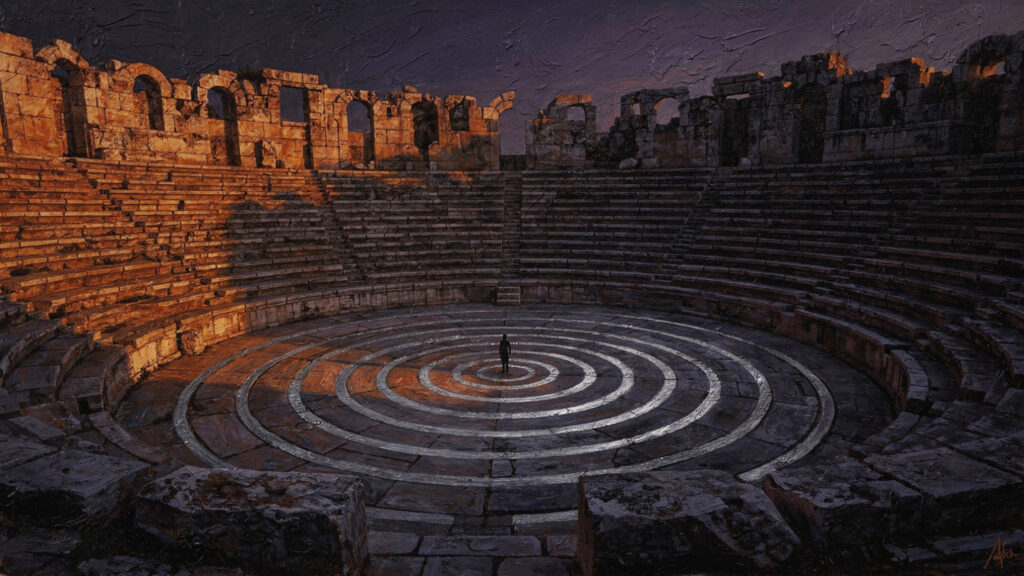
Attending a performance at Epidaurus in the early evening, when the light has softened and the limestone seating has retained the day’s warmth, gives the most direct available experience of what the ancient theatrical tradition felt like in the landscape it was designed for.
Northern Greece | Macedonia, Epirus, and the Road to Olympus
Northern Greece is the part of the country that the standard tourist circuit most consistently underserves, which means it is the part where the visitor willing to venture beyond the established routes encounters the landscapes and sites that the crowd has not yet organized itself around.
Thessaloniki, the second largest city in Greece, is the gateway to the northern region and a destination of considerable historical and cultural depth in its own right. The Byzantine heritage of the city, which served as the second city of the Byzantine Empire and preserves the richest collection of Byzantine churches and mosaics outside Constantinople, is available to the visitor who walks through the upper city: the Rotunda, built as a mausoleum by the emperor Galerius and subsequently converted to a church and then a mosque, is among the finest late antique structures surviving anywhere in the Mediterranean. The Archaeological Museum holds the gold funeral treasures from the royal Macedonian tombs at Vergina, including the larnax, the gold burial casket, believed by many scholars to have contained the remains of Philip II of Macedon, the father of Alexander the Great.
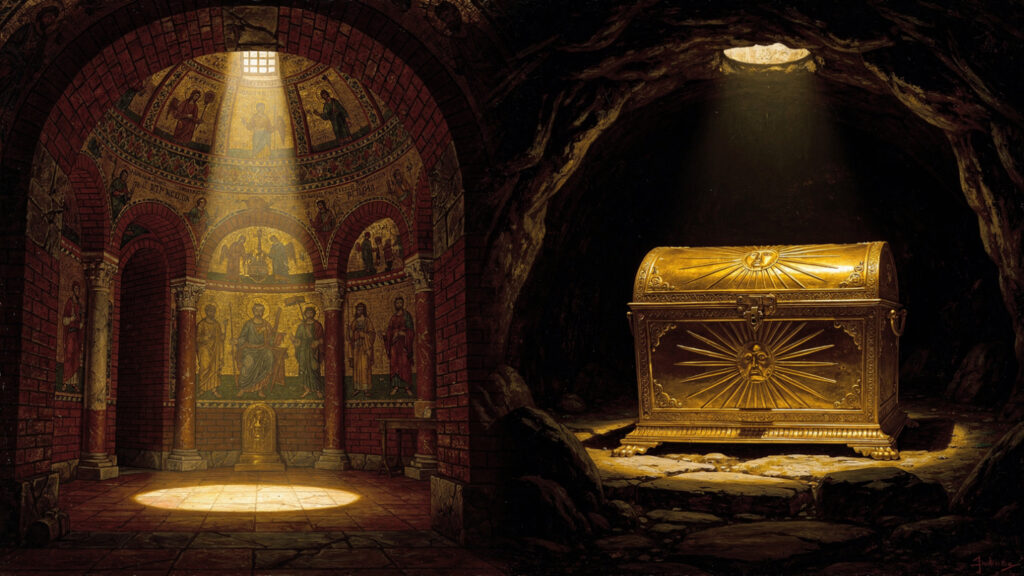
Vergina, 70 kilometers southwest of Thessaloniki, is the site of the ancient Macedonian royal cemetery where the tombs of the Macedonian dynasty were discovered in 1977 by the archaeologist Manolis Andronikos. The Great Tumulus contains four unlooted royal tombs whose contents, preserved in situ under the tumulus, constitute the most significant archaeological discovery in Greece in the twentieth century. The museum built within the tumulus allows the visitor to see the tombs and their contents in their original position underground: the painted hunting scene above the facade of Tomb II is the largest and most complete example of ancient Greek painting surviving in its original location anywhere in the world.
Mount Olympus itself is covered in depth in the dedicated article in the Olympus Estate collection. The approach from Litochoro on the eastern slope provides access to the trail network of the Enipeas gorge and the upper mountain refuges, and the experience of the mountain, its cloud layer, its endemic flora, and the relationship between its height and its mythology, is given the treatment it deserves in that article.
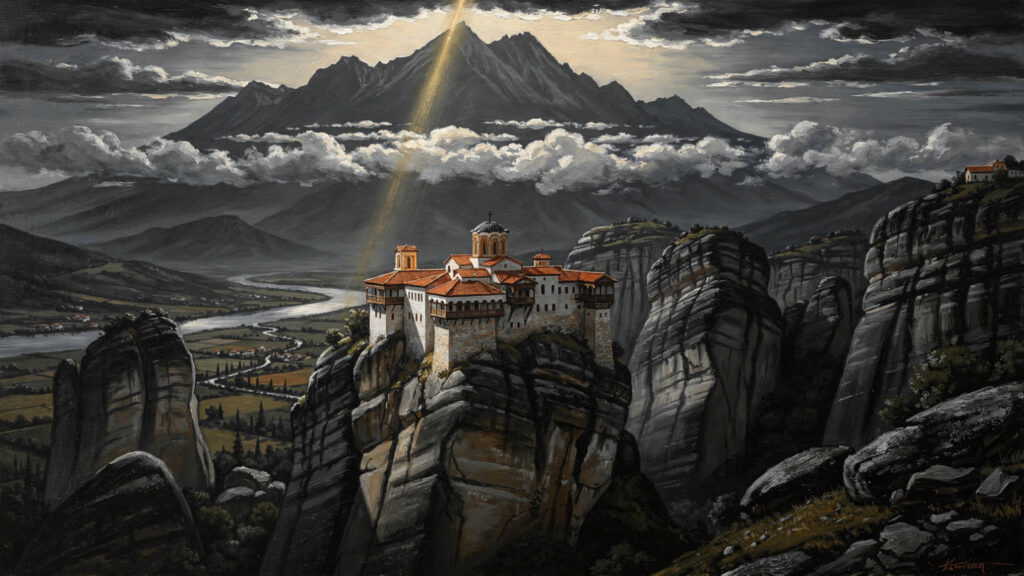
Meteora, the monastery complex in the Thessaly region where Byzantine-era monastic communities built their monasteries on the tops of extraordinary sandstone rock formations rising from the plain of the Pineios river, is one of the most visually extraordinary sites in Greece and the most completely unexpected for the visitor who encounters it for the first time. The monasteries, six of which are active, are built on rock pinnacles between 300 and 600 meters high, accessible by staircases cut into the rock in the modern period to replace the baskets and ropes that the earlier monastic inhabitants used. The combination of the geological formations, the Byzantine architectural tradition, and the quality of the Thessalian light on the rock faces at different times of day produces a site that has no equivalent anywhere in Greece and very few equivalents anywhere in the world.
The Islands | An Overview
The Greek islands are covered in individual articles throughout the Olympus Estate collection, each developed with the depth that the island’s character and history requires. What follows is an orientation to the major groups.
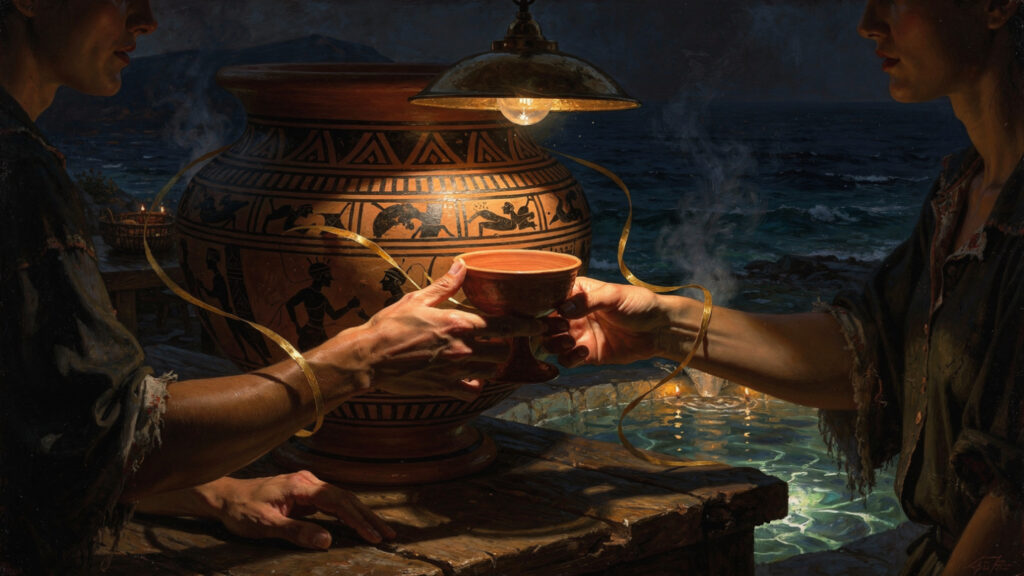
The Ionian Islands, Corfu, Kefalonia, Zakynthos, Lefkada, and their smaller neighbors, are the westernmost Greek islands and the most distinctly Mediterranean in their character: greener, wetter, and more architecturally influenced by the Venetian governance that lasted from the thirteenth through the eighteenth centuries than the Aegean islands. The Ionian group’s travel guides in the Olympus Estate collection cover Corfu, Kefalonia, and Zakynthos in dedicated articles.
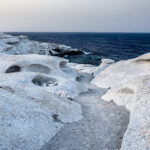
The Cyclades, Santorini, Mykonos, Naxos, Paros, Milos, Sifnos, and the other islands of the central Aegean, are the island group that most people mean when they picture the whitewashed Cycladic architecture that has become the visual signature of Greece in the global travel imagination. Santorini, Mykonos, and Milos have dedicated articles in the Olympus Estate collection. Naxos, the largest and most fertile of the Cyclades, is the subject of the souvlaki and rosto articles that trace the culinary tradition the island’s volcanic soil produces.
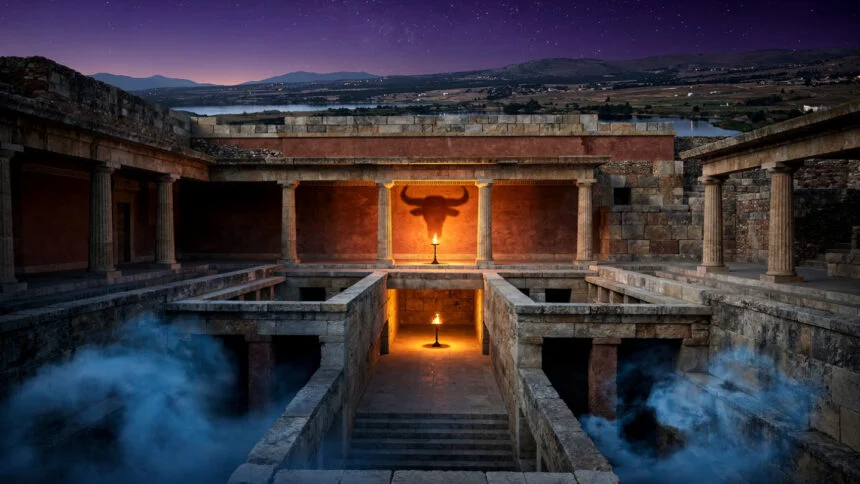
Crete, the largest Greek island and the most historically significant, the site of the Minoan civilization, the Palace of Knossos, the Samaria Gorge, and the Heraklion Archaeological Museum, has a dedicated article in the Olympus Estate collection that gives it the full treatment its complexity requires.
The Dodecanese, Rhodes, Kos, Patmos, Samos, and the other southeastern Aegean islands, are the island group whose position closest to the Turkish coast has given them the most layered governance history: Byzantine, Crusader, Ottoman, Italian, and finally Greek, each period leaving architectural and cultural evidence in the landscape. Rhodes and Samos have dedicated articles in the collection.
The North Aegean Islands, Lesbos, Chios, Samos, Thassos, are the least visited of the major island groups by international tourism and the most distinctive in their cultural and natural characters. Thassos appears in the Five Islands mythology article. Lesbos, the island of Sappho and of the olive groves that produce some of the most distinguished olive oil in the eastern Mediterranean, is the North Aegean island most worth the visit that the mainstream tourist circuit has not yet organized.
The Saronic Islands, Aegina, Hydra, Spetses, and Poros, are the islands closest to Athens, accessible in a few hours by fast ferry from Piraeus, and the island group that most directly serves the Athenian urban population as a weekend destination. Hydra, the island that has prohibited motor vehicles since 1955 and that has been the residence of artists and writers throughout the twentieth century, is covered in the Olympus Estate collection’s dedicated article.
Food, Wine, and the Table
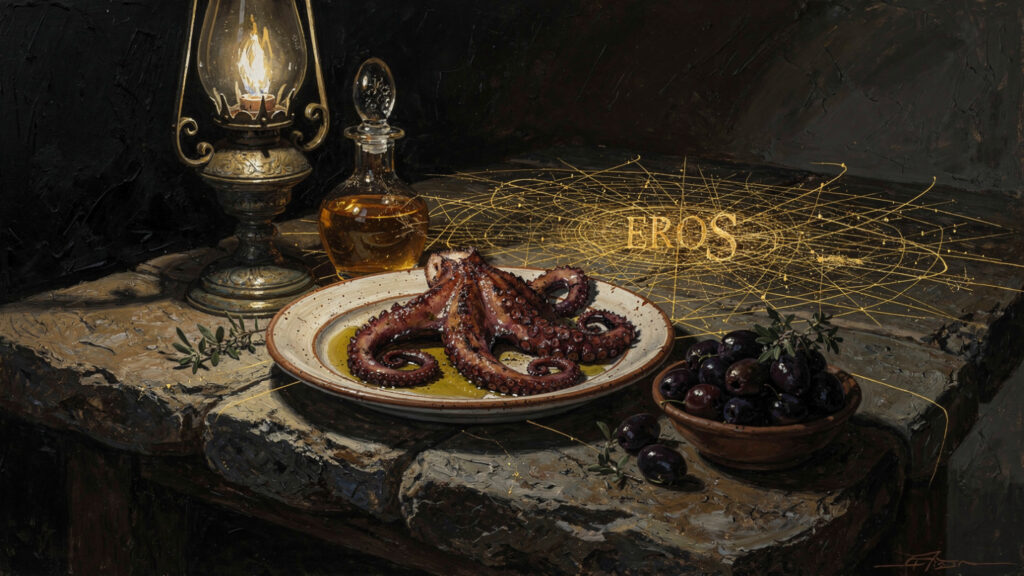
Greek cuisine is covered in depth across multiple articles in the Olympus Estate collection, each developed around a dish or tradition: the ancient origins of souvlaki, the Naxos rosto recipe, the bobota of the wartime kitchen, the cheesecake that began in Samos, the aphrodisiac tradition of the ancient symposium. What follows is orientation rather than depth.
The organizing principle of Greek food is seasonal and regional specificity rather than the elaboration of technique. The best Greek meal is the one that uses the ingredients of the place and season in which it is being eaten: the fish caught that morning in the sea visible from the table, the olive oil pressed from the trees on the hillside above the village, the wine from the grape variety that the island’s volcanic or limestone soil produces. The Mediterranean diet that contemporary nutritional science praises is the diet that these principles produce when they are followed consistently across a lifetime, and the Greek table in its best expressions is the diet of a people who have been following these principles for three thousand years.
The wine deserves mention. The Greek wine revival of the last twenty years has produced internationally recognized wines from grape varieties that the ancient world cultivated and that were marginalized through the centuries of Ottoman governance and post-independence reconstruction in favor of international varieties. The Assyrtiko of Santorini, the Xinomavro of Naoussa in Macedonia, the Agiorgitiko of Nemea in the Peloponnese, the Robola of Kefalonia, the Muscat of Samos: each of these is a grape variety native to a Greek region, and the wines they produce in their home environments are the most direct material expression of the relationship between Greek terrain and Greek culture that the contemporary visitor can taste.
When to Come and How to Move
Greece is accessible year-round and offers different experiences in different seasons that are all worthwhile rather than merely acceptable alternatives to the high summer peak.
April and May are the months when the mainland archaeological sites and the island landscapes are most beautiful and least crowded. The wildflowers are at their peak. The light has the quality of the Mediterranean spring before the summer haze thickens it. The sea is cold enough that swimming requires commitment but the air temperature makes outdoor movement genuinely pleasant. The archaeological sites at Delphi and Olympia and Mycenae are walkable at midday without the heat management that July and August require.

June and September are the beach months for those who want the water warm and the visitor numbers below peak. The Meltemi wind that dominates the Aegean from late July through August is typically less intense in June and September, which makes sailing and boat tours more comfortable and the exposed beach sites more accessible.
July and August provide the maximum sunshine, the maximum water temperature, and the maximum visitor density simultaneously. The major sites require early morning arrival. The island ferries require advance booking. The experience is intense in every direction, and some travelers find that intensity the point.
October is the harvest month, when the grape picking that produces the new vintage and the olive picking that produces the early harvest oil bring the agricultural calendar to its visible conclusion, and the island landscape has the palette of autumn that the summer bleaching of the vegetation conceals.
Getting between the mainland and the islands by ferry is part of the Greek travel experience rather than simply a transportation mechanism: the overnight ferry from Piraeus to Heraklion or the fast ferry from Athens to the Cyclades provides the encounter with the Aegean, its horizon, its light, and its smell of salt and diesel and the particular quality of the sea air at night, that the airplane does not.
The Living Culture
Greek culture is covered in depth across the Olympus Estate collection in articles that address the practices, traditions, and social forms that constitute Hellenic life in its contemporary expressions: the siesta, the volta, the kafeneion, the panegyri, the Easter celebrations, the olive harvest, the quality of Greek hospitality that the ancient word philoxenia, love of the stranger, names and that the contemporary Greek still practices with a warmth that the most skeptical visitor eventually stops qualifying.
What the guide cannot provide, and what the articles in the Wanderlust Greece and Cultural Chronicles: Greek Heritage Insights and Greek Living categories of the Olympus Estate collection develop across their full range, is the understanding that Greece is not a destination to visit but a civilization to encounter: a place whose relationship with its own past is not the relationship of a museum to its collection but the relationship of a living person to the family they grew up in, complex and sometimes contentious and always present.
The myths are not dead. The landscape still carries the names they gave it. The people still celebrate the saints in the churches that the Byzantine period built on the temples of the gods those saints replaced. The olive trees in the groves above the ancient sites are the descendants of trees that were standing when the temples were built. The wine in the glass comes from the same grape varieties that the Linear B tablets recorded in the palace economies of the Bronze Age.
Greece is the place where the past is not another country. It is the ground you are standing on.
At Olympus Estate, every category in our collection begins from Greece: Wanderlust Greece for the landscapes and journeys, Cultural Chronicles for the heritage and tradition, Tales from Olympus for the myths and mythic essays, and Greek Living for the daily life and the table. The country is larger than any single article. The collection is the guide.