

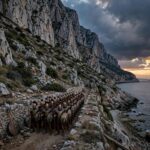
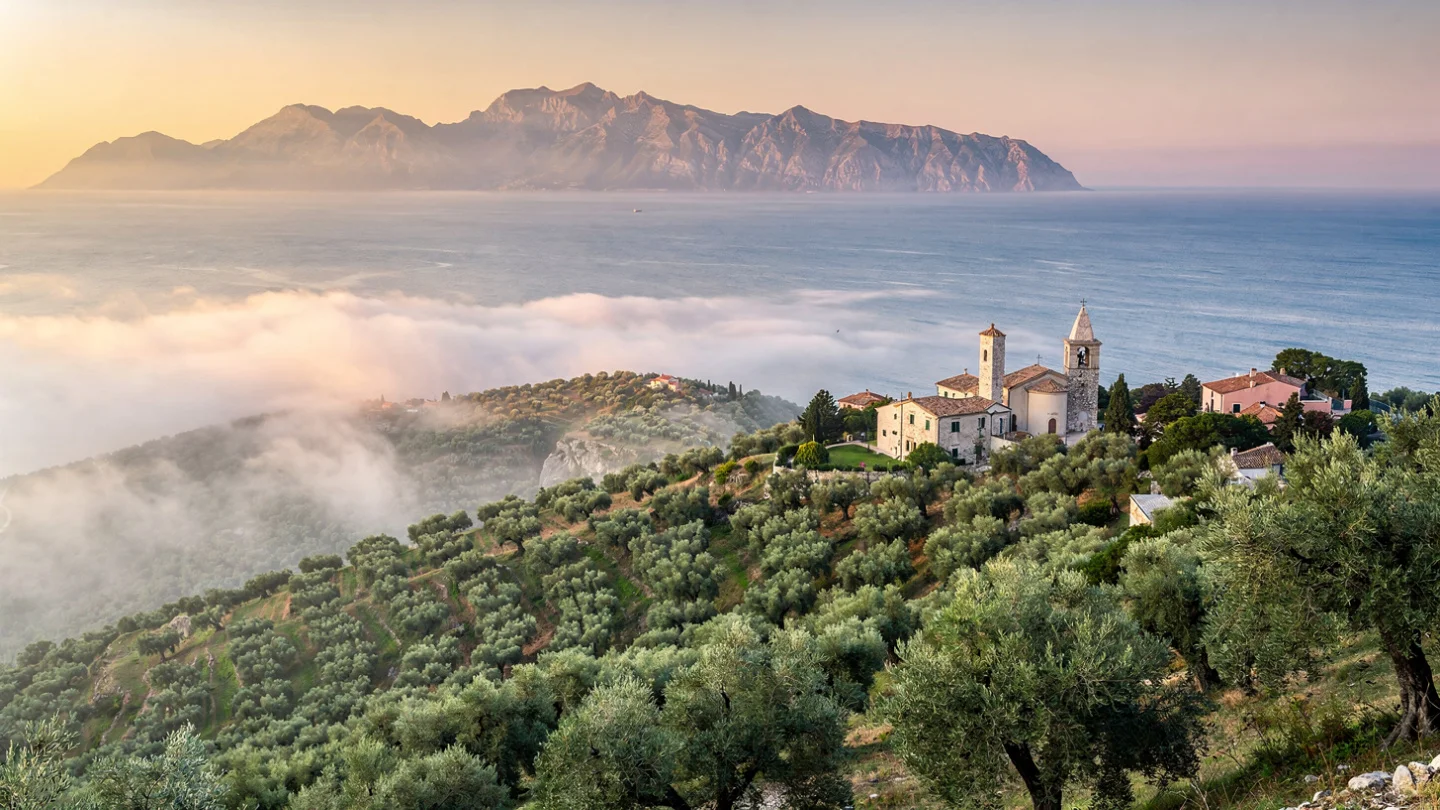
The Ionian light is different from the Aegean one.
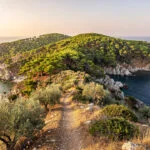
This is the first thing that the traveler notices when arriving on Corfu from the eastern side of Greece, or from any point that has involved time on the Aegean islands. The Aegean light is white and hard-edged, defining surfaces with the precision of a drafting instrument. The Ionian light is softer, warmer in its tones, filtered by the higher rainfall that the western islands receive from the Atlantic weather systems that do not reach the eastern Aegean. The olive trees on Corfu are older and larger than on most Greek islands because they grow in this more generous moisture. The vegetation is denser. The landscape is greener in ways that visitors from the drier Cyclades find startling.
Corfu, the northernmost of the Ionian Islands and the second largest in the group, sits one and a half kilometers off the Albanian coast and between ten and twenty-five kilometers from the Greek mainland. It is 72 kilometers long and between three and thirty-seven kilometers wide at different points, shaped in the rough crescent form that the local topography produced: a mountainous northern section where Mount Pantokrator rises to 906 meters, a lower and more cultivated central area, and a flatter southern region where the villages are quieter and the agricultural land more extensive.
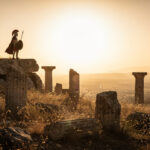
The island that Homer placed Odysseus on after his final sea ordeal, the land of the Phaeacians who provided the hero with his last voyage home, has been inhabited continuously since the Neolithic period and governed by the Corinthians, the Byzantines, the Angevins, the Venetians, the French, the British, and finally the Greek state, whose sovereignty was established in 1864 when the British Protectorate of the United States of the Ionian Islands was dissolved. Each governing power left something in the landscape and in the city that Corfu Town still carries in its architecture and its street plan.
Corfu Town and Its Layers
The old town of Corfu is a UNESCO World Heritage Site, designated in 2007, for the reason that its urban fabric preserves in legible form the accumulated architectural inheritance of several centuries of governance by different powers operating from different aesthetic traditions.
The two fortresses that stand at either end of the old town peninsula are the most immediately dramatic evidence of this: the Old Fortress on the eastern promontory, built on the site of the Byzantine fortification and substantially constructed in the Venetian period between the fifteenth and sixteenth centuries, and the New Fortress on the western side of the town, begun in 1576 and completed in the seventeenth century, which the Venetians built when the Ottomans demonstrated at the siege of 1571 that the existing defenses were insufficient.
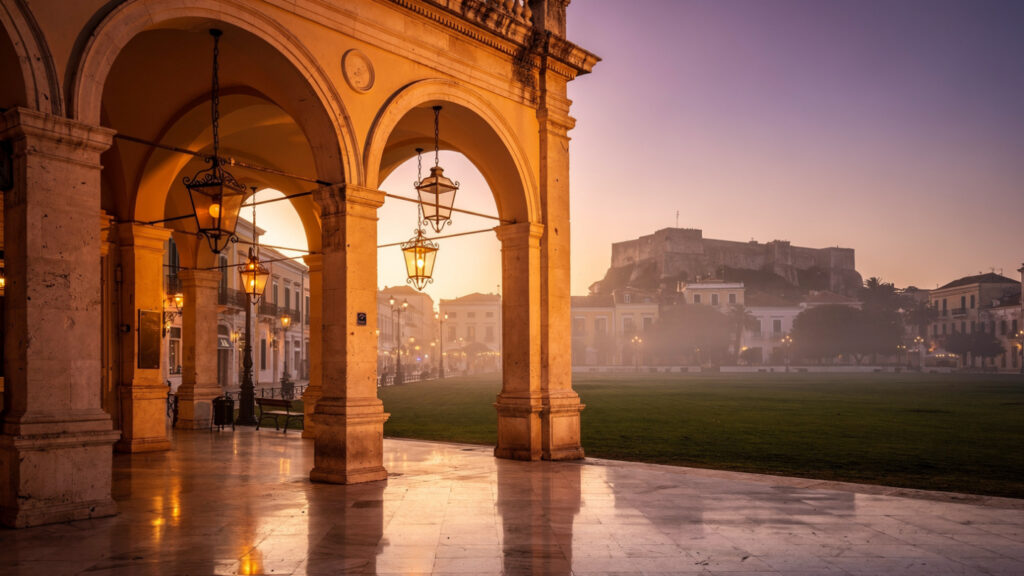
The Liston, the covered arcade along the western edge of the Spianada, was built during the French period of administration, 1807 to 1814, in deliberate emulation of the rue de Rivoli in Paris, reflecting the French administrators’ habit of transplanting metropolitan architectural forms to the territories they governed. The Spianada itself, the large open space between the Liston and the Old Fortress, was created in the Venetian period by demolishing the buildings that had occupied the land in front of the fortress walls, and it has served as the island’s central public space ever since: the site of the cricket pitches that the British period introduced and that Corfiots maintained with unexpected enthusiasm after the British left, and the site of the Easter celebrations that bring the entire island’s population to the town for the procession of the bier and the pot-smashing ceremonies that are central to Corfu’s Orthodox Easter tradition.
The church of Saint Spyridon, built in the 1580s, holds the remains of the island’s patron saint in a silver reliquary that is carried through the town in procession four times a year: at Palm Sunday, Easter Saturday, August 11th, and the first Sunday of November. Each procession marks a historical occasion on which the saint’s intercession was credited with protecting the island: the plague of 1630, the Ottoman siege of 1716, and the famine of 1553 among them. The processions are genuine religious events that the visitor is welcome to observe, and the church itself, with its collection of silver ex-votos donated by those who attributed healings or deliverances to the saint’s intercession, is the most significant interior on the island in terms of active religious practice.
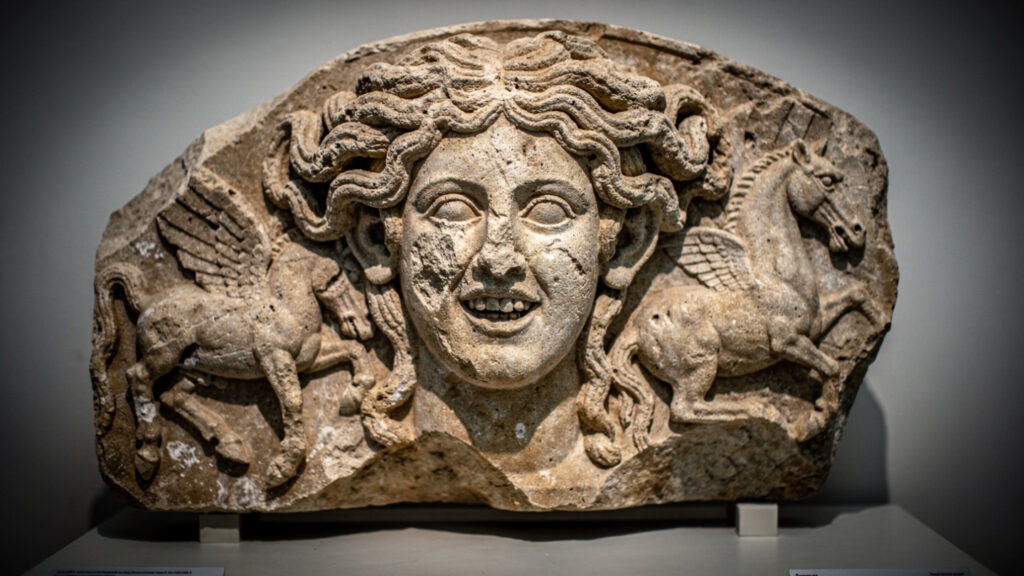
The archaeological museum in the center of town holds the collection that establishes the island’s pre-Venetian, pre-Byzantine, and pre-Roman history. The most important object in the collection is the Gorgon pediment from the temple of Artemis at Palaiopolis, one of the earliest surviving examples of monumental Greek pediment sculpture, dated to the early sixth century BCE and large enough that its installation in the museum required the building of a dedicated gallery. The central figure of Medusa with the winged horse Pegasus emerging from her shoulder and the Gorgon’s children at her sides, flanked by feline figures, represents the visual language of the archaic period at a scale that few surviving examples can match.
The Mythological Geography
The identification of Corfu with the Scheria of the Odyssey, the island of the Phaeacians, is ancient and has been maintained by the tradition with a consistency that reflects something real about the island’s character even if the mythological identification is not a historical fact.
The Phaeacians were a people whose maritime capability exceeded anything in the mortal world: their ships sailed without steering, guided by the will of the navigator, and could cross the distances of the sea in a night that would take an ordinary ship weeks. They existed at the margin between the human world and the divine, closer to the gods than other mortals, capable of crossing the distances that separated the edges of the known world from its center. Their island was the last place before home.
Pontikonisi, the small islet visible from the coast near the Kanoni peninsula south of Corfu Town, is identified in local tradition as the petrified Phaeacian ship that Poseidon turned to stone as it returned from delivering Odysseus to Ithaca, punishing the Phaeacians for having helped the mortal he had sworn to prevent from reaching home. The Byzantine chapel of Pantokrator on the islet, dating to the twelfth century, replaced an earlier sacred site, and the view of the islet from the Kanoni hill above, framed by the flat water of the Halikiopoulou lagoon with the airport runway visible beyond it, is one of the most reproduced images of the island.
Whether the Phaeacians are historical, whether Corfu is Scheria, whether the petrified ship is Pontikonisi: none of these is established by evidence that a historian would accept. What the tradition preserves is an understanding that the character of Corfu, its maritime capability, its position at the threshold between the Ionian and Adriatic seas, its role as a waystation for travelers moving between the eastern and western Mediterranean, made it the appropriate candidate for the mythological island that provided the last refuge before home. The myth fits the geography, which is how the best myths work.
The Venetian Landscape
The four centuries of Venetian governance that ended with the French conquest in 1797 left more visible evidence in the Corfu landscape than any other period of the island’s history.
The olive trees are the most extensive evidence. The Venetians required Corfu’s farmers to plant olive trees as a condition of land tenure, promising a cash payment for each tree planted and establishing the legal framework that connected the island’s agricultural production to olive oil in a way that persisted long after the Venetian administration ended. The island now contains an estimated three to four million olive trees, among the highest densities of olive cultivation in the Greek world, and many of the oldest trees date to the Venetian planting incentive. The groves around the village of Doukades in the west, and through the central part of the island around Skripero and Giannades, are the most impressive in scale and in the age of the individual trees.
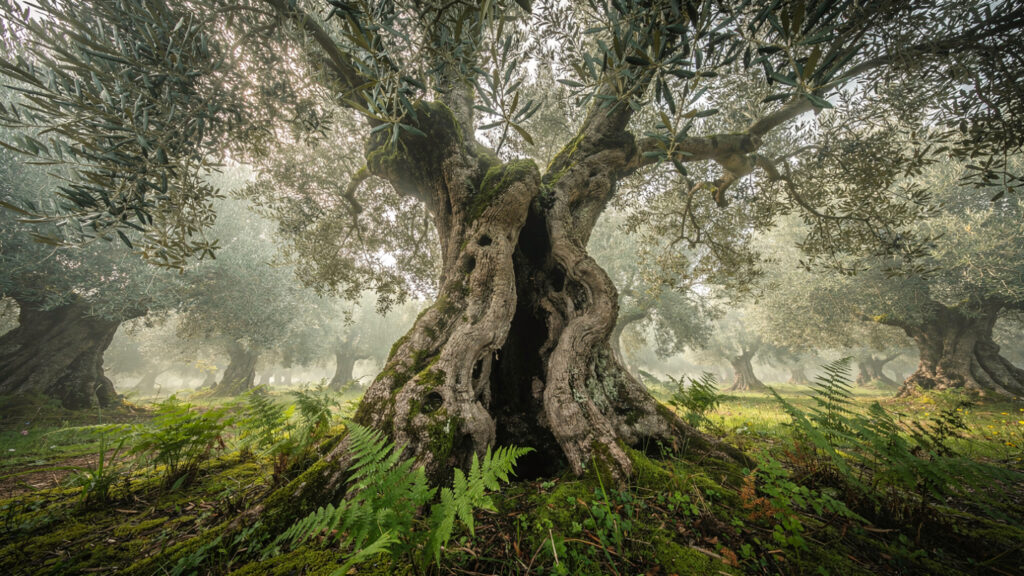
The villages of the island’s interior carry the Venetian period in their architecture unmistakably: the village churches with their bell towers, the loggia buildings in the village squares, the fortified towers that the Venetian-period landlord class built on their agricultural estates, all reflect a visual tradition that is distinctly Venetian even when it has been subsequently modified by later construction. The old village of Ano Korakiana in the northeastern part of the island, reached by a road that climbs through olive groves from the coast road, is the best-preserved example of this Venetian-period village architecture on the island.
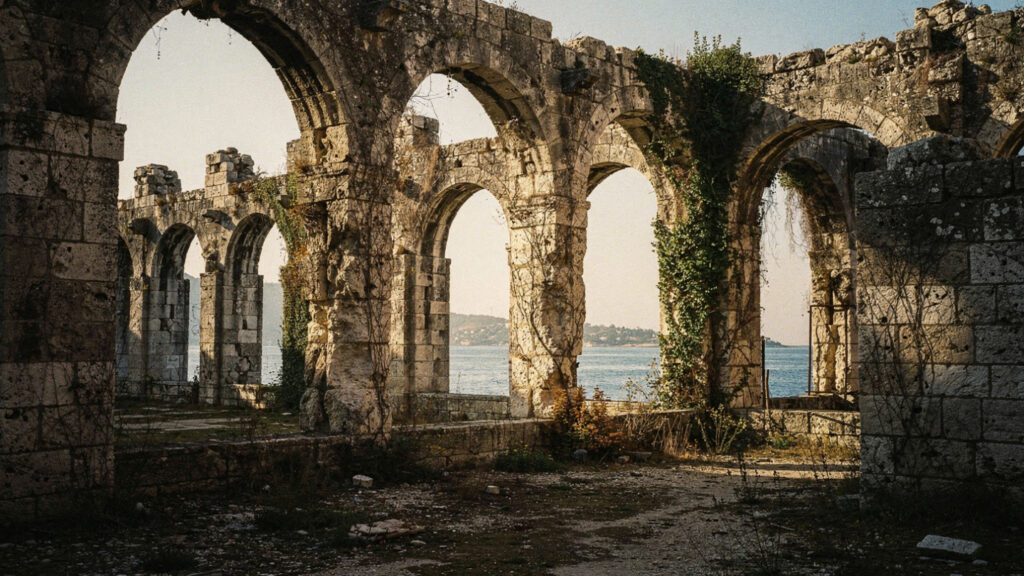
The Venetian shipyard at Gouvia, visible from the road north of Corfu Town, is one of the few surviving examples of Venetian naval infrastructure in the Ionian. The arched storage bays that housed the Venetian fleet’s galleys in winter are still standing, roofless now but structurally intact, on the edge of the lagoon that the Venetians used as a protected anchorage. The marina that has been built beside the remains uses the same protected water.
The British Period and the Cricket Pitch
The British Protectorate of the Ionian Islands, which governed Corfu from 1815 to 1864, is remembered on the island with a combination of ambivalence and affection that the most successful colonial relationships tend to produce.
The High Commissioner’s residence, built in the neoclassical style that the British administration favored, stands at the northern end of the Spianada and is now used as the Presidential Palace of Corfu when the head of state visits the island. The arcaded building with its Doric columns was designed to project the visual authority that the British associated with good governance, and it does so with a confidence that the Greek administration has not felt the need to modify.
The cricket pitch on the Spianada is the most unexpected legacy. Cricket arrived on Corfu with the British garrison and was adopted by the Corfiot upper class with sufficient enthusiasm that the sport has been continuously played on the island since the early nineteenth century, making Corfu the only place in Greece where cricket is a genuine local tradition rather than an imported novelty. The Corfu Cricket Club plays on the Spianada in the spring and summer, and the sight of cricketers on the grass in front of the Venetian fortress is the most concentrated visual expression of the island’s layered governance history that it is possible to encounter.
Paleokastritsa and the Western Coast
The western coast of Corfu is defined by the headlands and coves that the limestone cliffs produce as they descend to the sea, and the most dramatic section of this coast is the Paleokastritsa area in the northwest, where the monastery of the same name occupies a promontory above a series of coves whose water color in summer is the blue-green that the combination of depth and limestone seabed produces.
The monastery, founded in the thirteenth century and rebuilt in its current form in the seventeenth and eighteenth centuries, is an active monastic community that the tourist traffic of the summer months surrounds without entirely penetrating. The church interior holds Byzantine icons and the museum attached to the monastery contains archaeological objects from the area. The view from the monastery terrace across the coves and out to sea is the view that the Venetian-period painters who worked on Corfu used as their landscape reference, and it remains the most comprehensive single view of the western coast’s character.
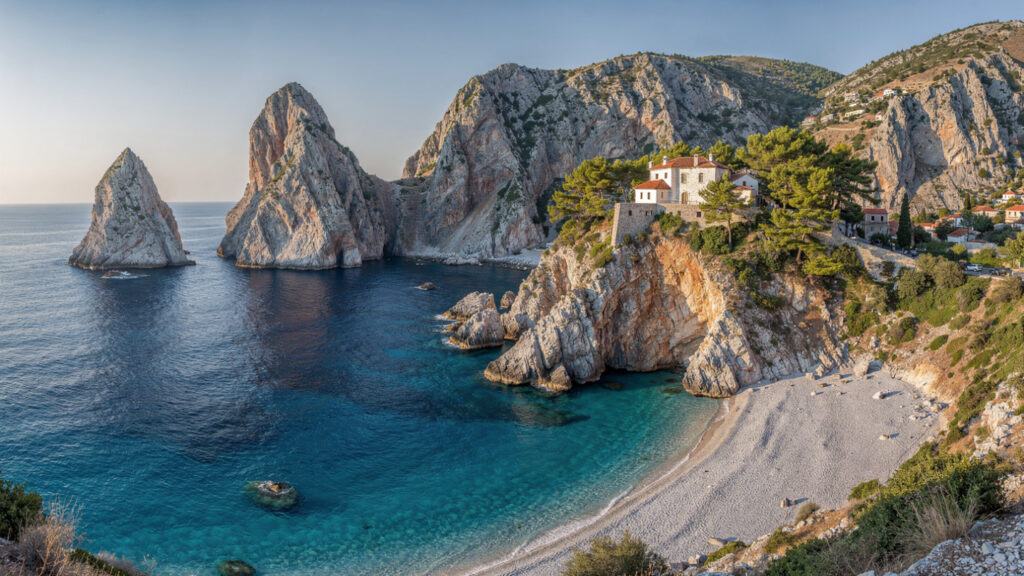
The village of Lakones, above Paleokastritsa on the hillside, provides the vantage point from which the full plan of the Paleokastritsa coastline is visible: the headlands, the monastery promontory, the individual coves, and the road switchbacking down from the village to the sea below. The view from Lakones at the end of the afternoon, when the light is moving toward the west and the sea takes the colors of the declining sun, is among the finest on the island.
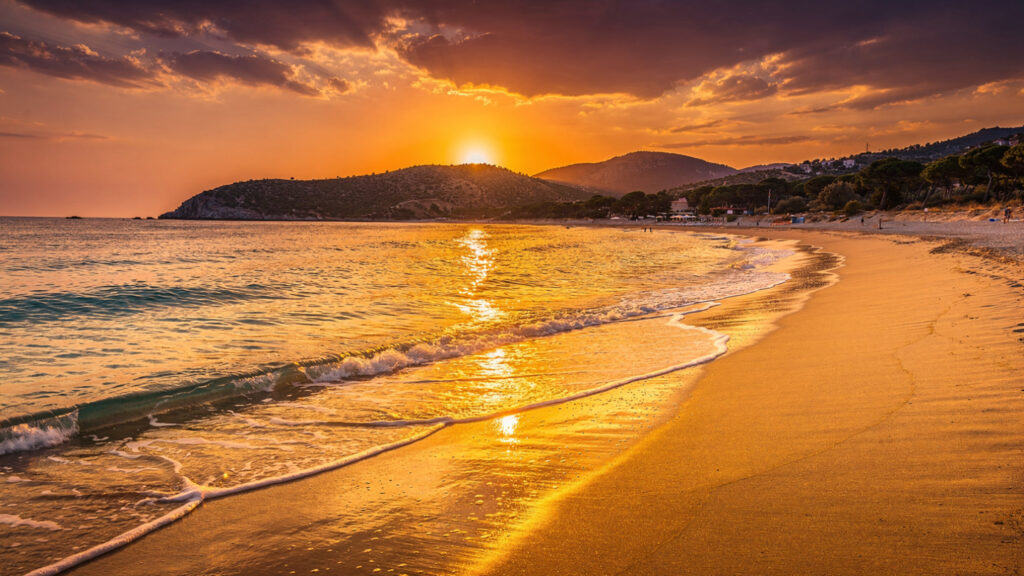
Glyfada, on the western coast south of Paleokastritsa, is the beach that the island’s reputation as a beach destination is most substantially built on: a wide bay of golden sand backed by low hills with a beach infrastructure of sunbeds and beach bars that has been developed over the decades of Corfu’s mass tourism into a fully operational resort beach. Its Blue Flag status reflects the water quality that the western coast’s exposure to the open Ionian produces rather than the development of the beach itself.
Food and the Kumquat
The food of Corfu reflects the Venetian inheritance more directly than any other element of the island’s culture, in the same way that the Venetian presence in Corfu was longer and more embedded than in most of the other places that the Republic of Venice governed.
Pastitsada, the meat slow-cooked in a spiced tomato sauce over pasta, is the most distinctly Corfiot dish and the one that most clearly shows the influence of the Venetian culinary legacy: the combination of sweet spices with a meat sauce served over pasta reflects the sixteenth and seventeenth-century Venetian kitchen rather than the Greek mainland practice. Rooster is the traditional meat for pastitsada, though beef and octopus versions are also common.
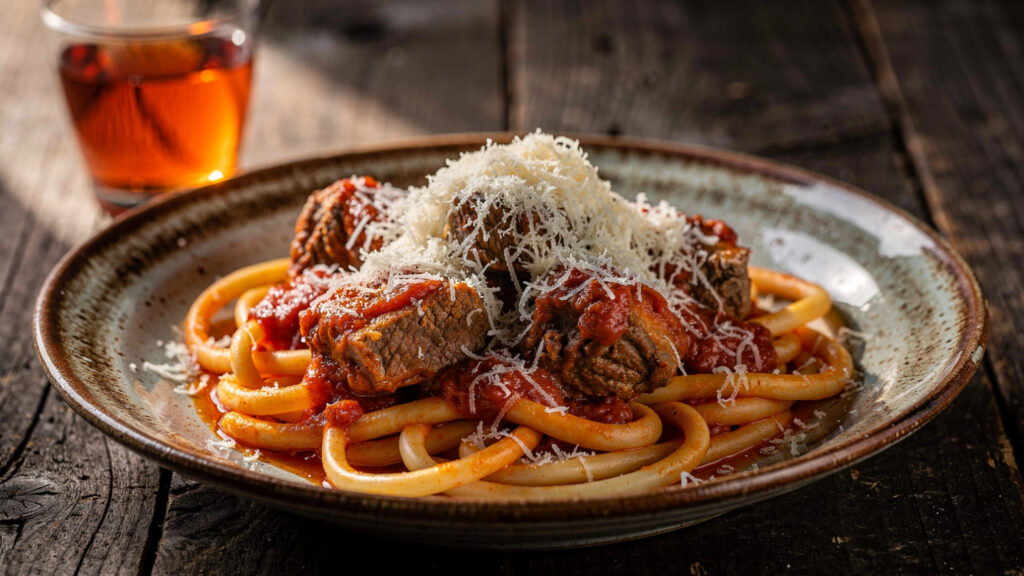
Sofrito, thin-sliced beef sautéed in garlic, white wine, vinegar, and parsley, is another Venetian-derived preparation that appears on Corfiot menus as a local specialty. The combination of white wine and vinegar in the sauce reflects a preservation technique that the Venetian kitchen used for meat in warm climates, adapted to the Corfiot ingredients and palate over four centuries of continuous preparation.
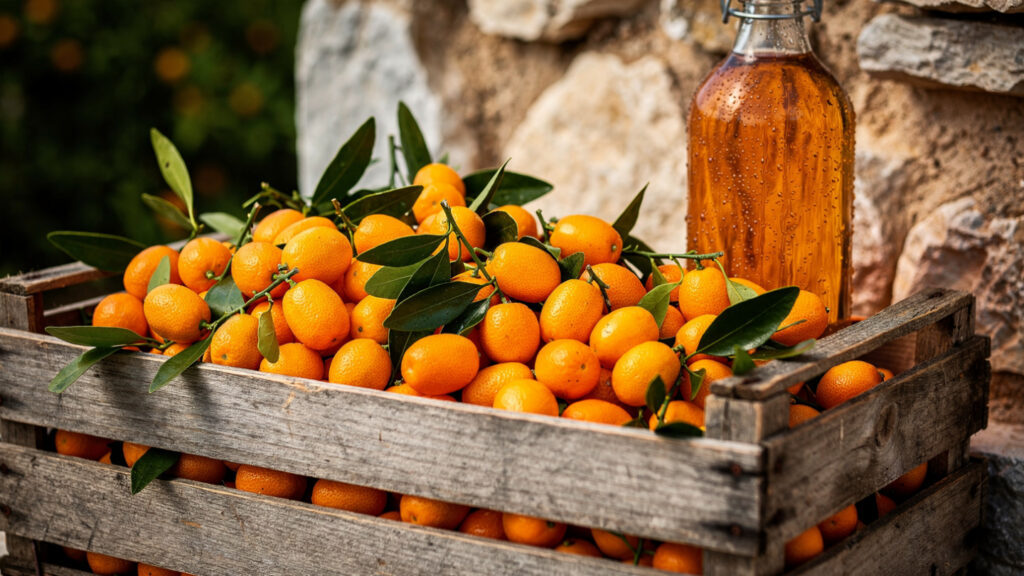
The kumquat, which grows on Corfu in orchards established in the nineteenth century from trees originally imported from Japan through China, has become the most commercially distinctive product of the island: the small oval citrus fruit is used in liqueur production, in marmalade and confectionery, and in savory preparations where its combination of sweet skin and sour flesh adds a quality to sauces and salads. The kumquat liqueur, in its various commercial and artisanal versions, is the standard Corfiot souvenir and the standard end-of-meal offering in the island’s restaurants.
Local wine is produced in small quantities from the island’s vineyards and tends toward the orange wine tradition, using extended skin contact during white wine production to produce a darker, more tannin-present wine than conventional whites from the same grape varieties. This winemaking approach is ancient in the wider Ionian region and has recently attracted international attention as a wine style, though on Corfu it has been the standard for centuries.
When to Come and How to Move
Corfu is accessible year‑round by ferry from the mainland ports of Igoumenitsa and Patras and by air from Athens and from the European airports that the island’s tourism infrastructure connects to in summer. The ferry from Igoumenitsa to Corfu takes approximately ninety minutes. From Patras the overnight ferry is the most convenient option for those arriving from the south.
The island’s road network is reasonable by Greek island standards in the central and southern areas, less so in the northern mountain sections where the roads narrow and the gradients steepen. A rental car is the practical necessity for anyone who wants to explore beyond the town and the immediately accessible coastal areas. Scooters and small motorcycles are available for those with experience of them and appropriate for the less mountainous sections.
The best months for the combination of beach access, archaeological site visiting, and landscape quality are May, June, and September. July and August bring the full summer tourism traffic and the temperatures, averaging around 30 degrees Celsius, that make extended outdoor activity in the middle of the day uncomfortable.
The Easter celebrations in Corfu are enough to be worth planning around if the timing is possible: the processions of Saint Spyridon, the midnight service, and the Saturday morning pot-smashing ceremony in which Corfiots throw clay pots from their balconies to mark the end of Lent produce a collective atmosphere that the island does not replicate at any other time of year.
The mountain interior of the island, accessible from the village of Strinilas below Mount Pantokrator’s summit, is best visited in spring and autumn when the heat at altitude is manageable and the views across to the Albanian mountains to the north and the Greek mainland to the east are at their clearest.
At Olympus Estate, Wanderlust Greece guides you across the storied terrain of the Hellenic world, from the UNESCO old town of Corfu to the monastery at Paleokastritsa and the cricket pitch where the Venetian and British inheritances meet on the same grass. The island that Poseidon gave the Phaeacians and the British gave cricket to is still there, still layered, still worth every season.