




The ancient Greeks understood that wine was not Dionysus’s invention.
Wine was older than Dionysus. The Linear B tablets from the Bronze Age palaces of Knossos and Mycenae, the same archives the olive tree article in this collection develops through the OLE ideogram for oil, record wine under its own syllabic spelling, wo-no, the direct ancestor of the classical Greek oinos, as one of the two primary liquids, alongside olive oil, whose production and distribution and ritual use the palatial economy managed and measured. The Mycenaean palace at Pylos allocated wine to religious purposes in the same administrative tablets that recorded its commercial production. Wine existed in the Greek world centuries before any theology organized what wine was supposed to mean.
This is the wine Dionysus did not invent, only reinterpreted for a religion that needed a story about ecstasy.
What Dionysus contributed was not the wine but an account of the wine: a claim about what the drink did to a person, what it was for, and what the experience of losing rational control to it revealed about the relationship between an ordered human mind and the divine force that could unmake it.
The Bacchae article in this collection develops this theology through the question Euripides asked in the god’s own theater in 405 BCE: what happens when an ordered civic world refuses to acknowledge the force whose periodic release, through organized theater and organized ritual, is the very thing that lets that civic world renew itself? Wine was not the answer to that question. Wine was simply the medium through which the experience of Dionysian dissolution reached the person who had never undergone the deeper ritual preparation the mystery cults demanded.
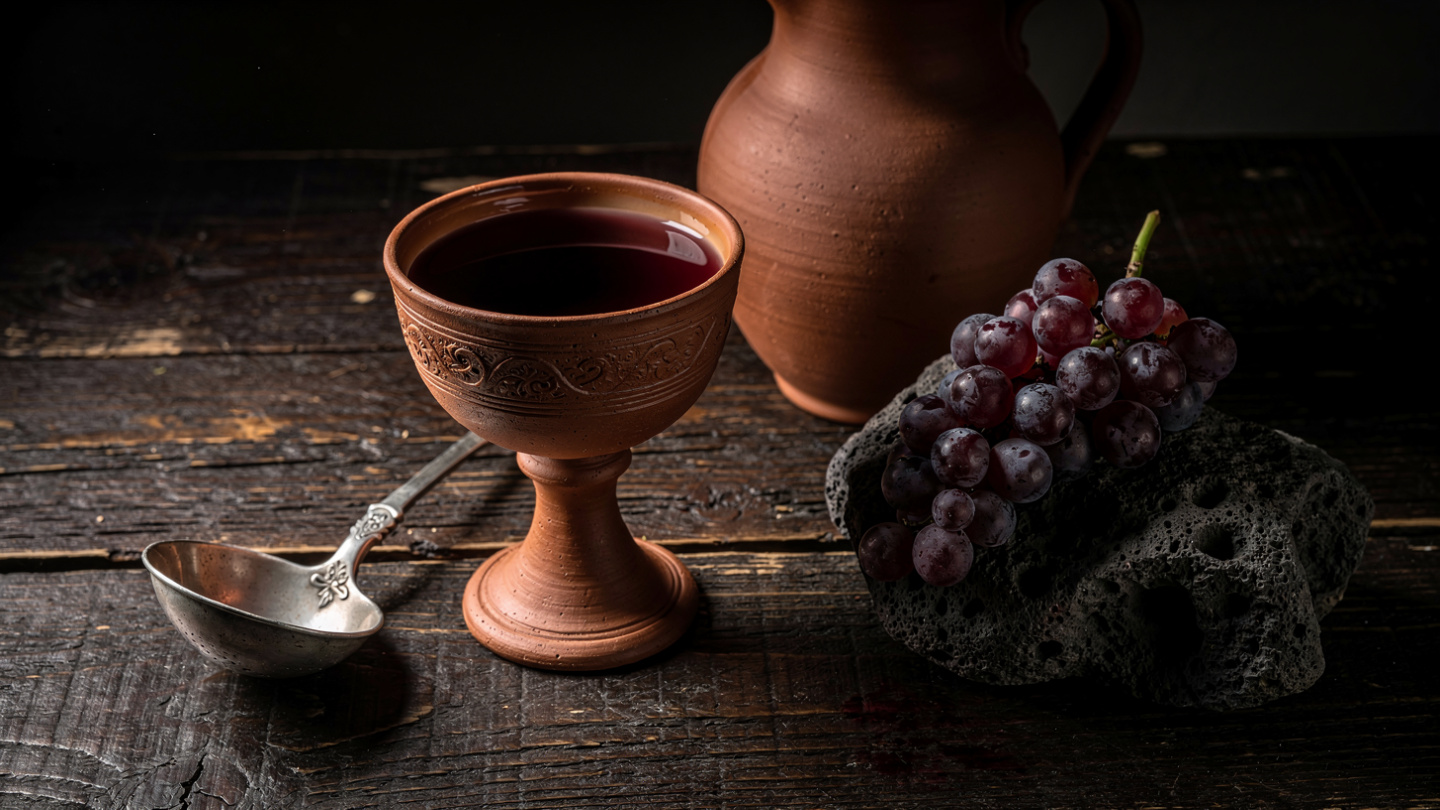
The symposion was the institution that gave this theological content a manageable shape: a controlled drinking occasion, governed by the symposiarch, the appointed officer who set the ratio of water to wine, whose job was to permit exactly enough dissolution to honor the god without letting that dissolution overrun the society hosting it. The symposion was not a party. It was a civic mechanism built for one purpose: to let its members meet the Dionysian force inside a frame sturdy enough to prevent that meeting from becoming a catastrophe.
The standard water-to-wine ratio at a symposion was three parts water to one part wine, tightening to two to one on the occasions whose more ambitious conversation called for a little more loosening of the rational mind. A symposiarch who called for the wine unmixed was inviting the most radical version of the god’s presence the social occasion could survive, and the entire arrangement depended on that symposiarch knowing exactly when to call a halt.
This is the theological setting in which Greece’s regional wines took their present shape.
The Volcanic Terroir and Its Theology
The volcanic arc article in this collection develops the South Aegean Volcanic Arc, running from Methana to Nisyros, as the geological system that gives the Aegean islands their individual characters. Volcanic deposits, tectonic activity, and the Meltemi wind’s abrasive action together produce soils whose mineral content and drainage each island’s vines translate into a distinct wine.
The Assyrtiko of Santorini is the Santorini caldera’s volcanic geology rendered as a drink. Its vines are trained in a basket shape called the kouloura, the same word used for a circular bread roll the shape evokes, and the training exists for a reason the volcanic geology itself demands: it keeps the fruit low enough to escape the worst of the Meltemi’s force while the vine’s own leaves create a small, sheltering microclimate, and it concentrates the morning dew inside the basket’s shallow bowl, where the fruit draws moisture directly from the volcanic pumice and ash in an island that otherwise receives almost no irrigation.
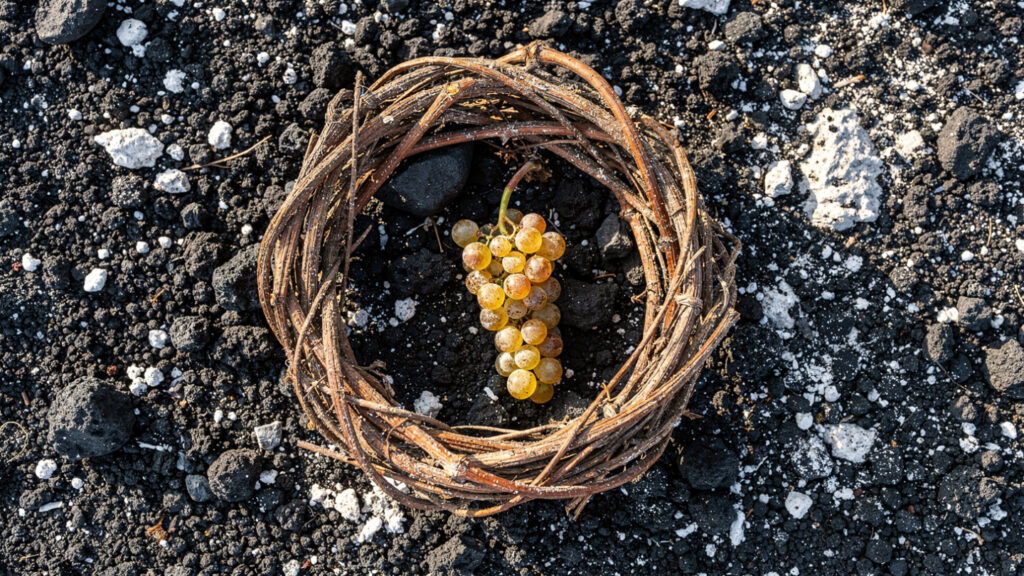
The Assyrtiko’s flavor profile, bone dry, high in acid, unmistakably saline, comes directly from the volcanic soil’s mineral content meeting the salt of the sea air. The Poseidon article in this collection develops Cape Sounion and the character of the sea that surrounds every Cycladic island. The Assyrtiko tastes of that sea, filtered through the volcanic soil the sea itself helped to shape.
The Muscat of Samos, the sweet golden wine whose terrain the Samos article in this collection develops through the island’s combined volcanic and limestone geology, comes from the Muscat Blanc à Petits Grains grape, cultivated continuously by the island’s wine cooperative since its founding in 1934. Its flavor, orange blossom, apricot, honey, reflects the island’s hot dry summer and its volcanic and limestone soil in a form sweet wine alone can carry.
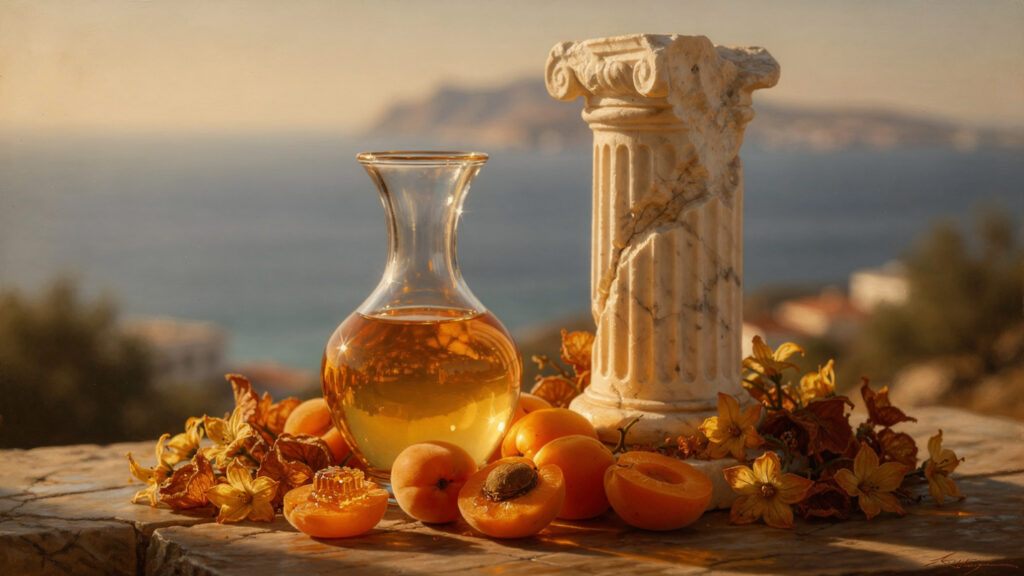
Samos was the birthplace of Pythagoras and the site of the Eupalinos tunnel and the unfinished Heraion. The Samos article names the wine correctly as an expression of the island’s own terrain: to taste it is to taste soil that has been worked in essentially the same way since antiquity. The Muscat’s sweetness carries the warmth of ground that Samian religion once organized around Hera’s sacred marriage to Zeus, celebrated at the very site of the Heraion whose single surviving column the Samos article places in the afternoon light with the Turkish coast visible across the strait.
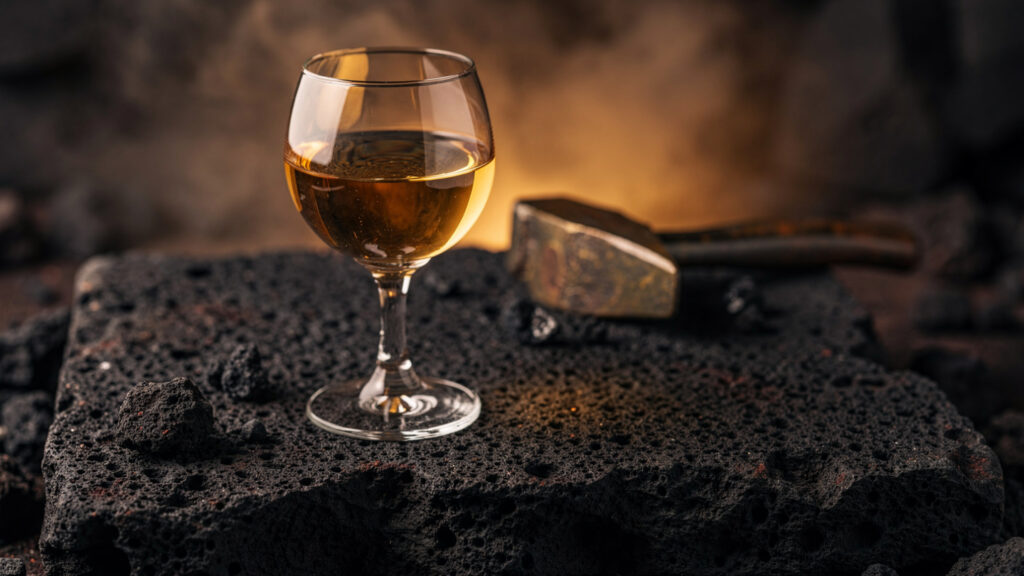
The Muscat of Limnos, made from the Muscat of Alexandria grape, comes from the island whose mythology the Limnos article in this collection develops through Hephaestus and his exile there from Olympus. It carries a volcanic depth the Samos Muscat lacks: the same geology that made the island a fitting workshop for the Olympian smith gives the Limnos Muscat its mineral weight and its faintly smoky character.
The Peloponnese and Its Heroic Grapes
Nemea is the valley where Heracles killed the Nemean Lion, the first of his twelve labors. Its enclosed geography, limestone hillsides rising through a range of altitudes, produces exactly the conditions the Agiorgitiko grape needs, and the wine carries the weight of that heroic labor in the very shape of the valley that hosted it.
The Agiorgitiko, named for Saint George rather than for the ancient hero, is the red grape of Nemea, cultivated across the Mycenaean, classical, Byzantine, Ottoman, and modern periods without interruption. The overlap of a Christian saint’s red cross with the ancient blood of a hero’s labor, both claimed by the same valley, is the layering the Peloponnese produces more consistently than anywhere else in Greece: an older religious world and a Christian one occupying identical ground at once, neither one erasing the other.
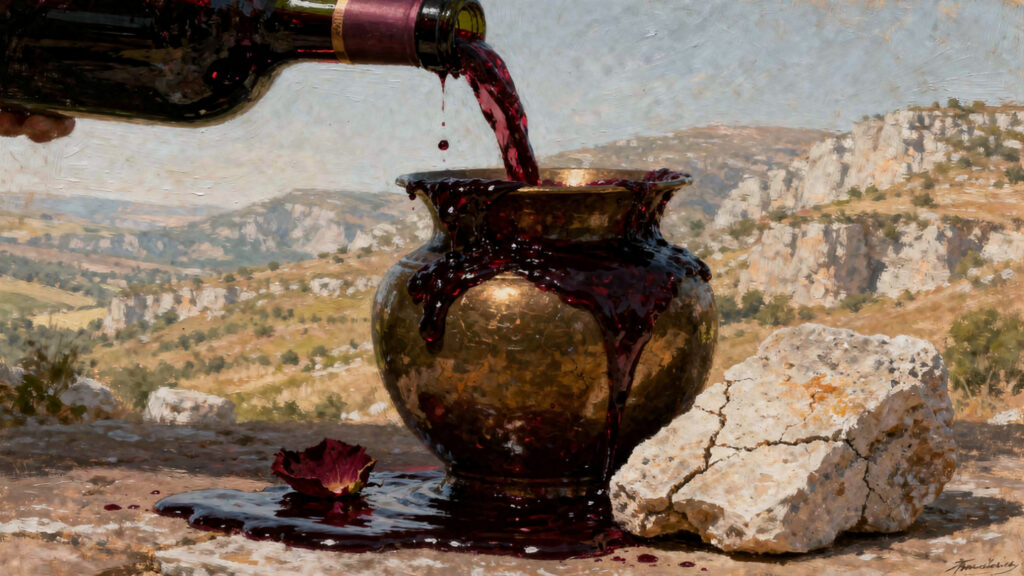
The Agiorgitiko’s range runs from the soft, fruit-forward wines of the valley floor, where lower elevation and a warmer microclimate produce something accessible early, to the concentrated, age-worthy wines of the higher vineyards, where altitude and cooler nights lengthen the growing season and build a firmer tannin structure. The same grape produces both extremes purely through the valley’s own change in elevation.
The Temple of Zeus at Nemea, whose archaeology as the site of the ancient Panhellenic Nemean Games the collection’s Foloi forest article develops through its proximity to Olympia, sits close enough to the vineyards that a visitor can stand in one landscape and see both: the ancient sanctuary of a hero’s labor and the working vines that now surround it.
Mantinia in Arcadia is a high plateau, roughly 650 metres above sea level, where altitude, cool nights, and a mix of limestone and volcanic soil give the Moschofilero grape its particular character. Arcadia is the region the collection’s Epicurus article touches through its pastoral mythology, the landscape of Pan and the nymphs and the flocks, and it is precisely this reputation, as the place where the Greek literary imagination located an undisturbed simplicity from the Hellenistic period onward, that gives the Mantinia plateau its particular character as a place.
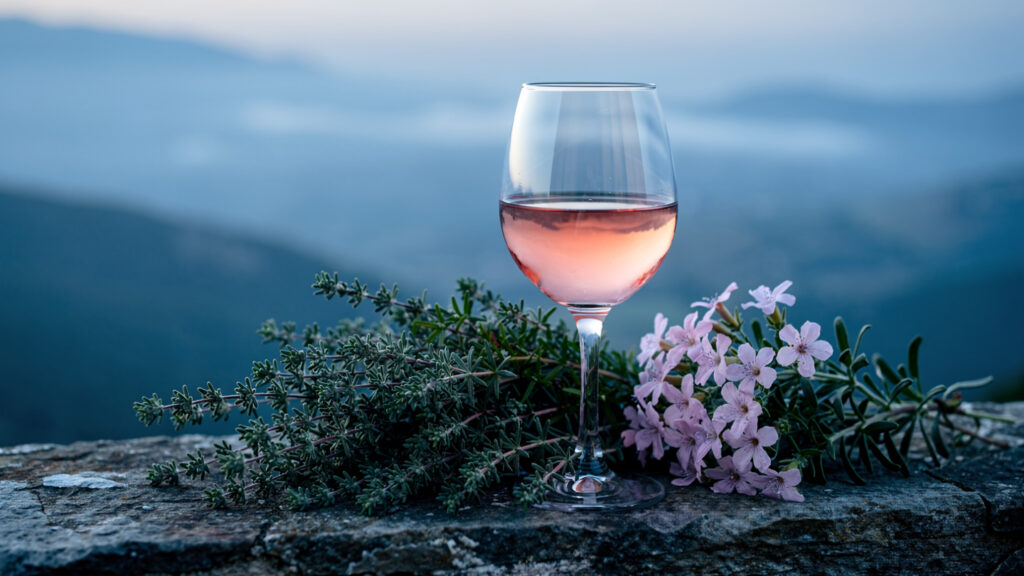
The Moschofilero is a grape of unusual character: pink-tinged skin that gives its white wine a faint rosy tinge, an aromatic profile of rose petal, citrus blossom, and ginger drawn from the grape’s own natural terpenes, and a structural delicacy that its high-altitude, cool-climate growing conditions force producers to handle with real care. The wine is the Arcadian landscape rendered in liquid form: light, fragrant, unmistakably the wine of the place where the pastoral ideal was most fully imagined in ancient literature.
Macedonia and the Kingdom Alexander Carried Abroad
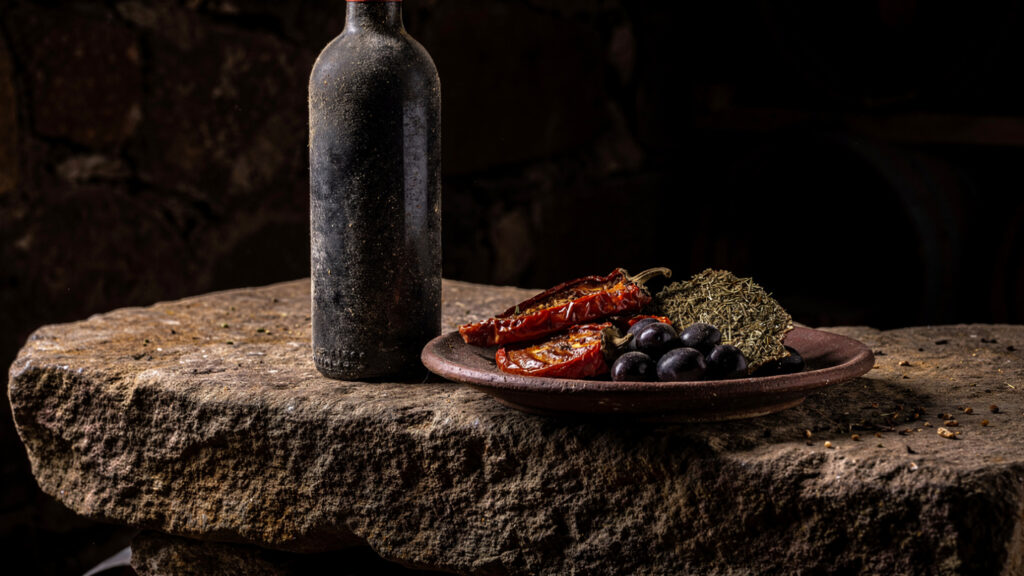
The Xinomavro of Naoussa is the red grape of Macedonia, a wine this collection’s repeated references to Alexander the Great have touched on without ever developing at length. Its name means, in direct translation, the sour black, and its high acidity, firm tannins, and savory aromatics, sun-dried tomato, black olive, anise, dried rose in the combination a mature bottle develops, produce a wine most wine writers now compare to the Nebbiolo of Piedmont. The two grapes are unrelated. The comparison holds anyway, because the same combination of structural intensity, aromatic complexity, and slow aging requirement produces a similar style in both, one that rewards a drinker patient enough to let a cellar, or a collector, give the tannin the time it needs.
The Macedonian kingdom that unified the Greek world and then carried it into Asia, Egypt, and India built its own royal drinking culture around exactly the symposion Philip II and Alexander both maintained with an intensity the ancient sources treat as central to Macedonian identity, and as the source of some of the most consequential episodes in Alexander’s own personal and political life.
The Rapsani blend, grown on the lower slopes of Mount Olympus from a combination of Xinomavro, Krassato, and Stavroto that the appellation’s own indigenous grapes supply, is produced in the literal shadow of the mountain the Greeks once considered the gods’ own home. The Kouretes article in this collection develops the first Olympic Games at Dion, the Macedonian sacred city at the foot of Olympus where Alexander sacrificed before his Persian campaign. The wine from these slopes has been made in essentially this form since antiquity, in the same landscape that once hosted the king’s own sacrifice.
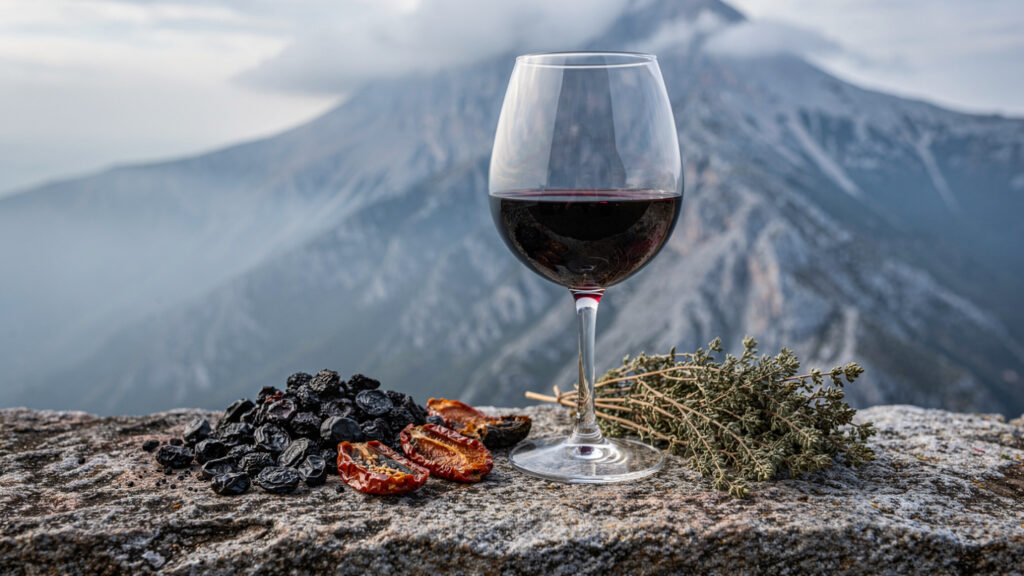
The Debina of Epirus, the white grape grown near the ancient oracle of Dodona that the Epirus article in this collection develops through the oldest oracle in the Greek world, one whose prophecies came from the rustling of a sacred oak’s leaves rather than from the volcanic vapors at Delphi, produces a wine of high acidity, light body, and clean green apple and pear notes, most often released in a sparkling style made by the traditional second fermentation.

The Dodona oracle communicated through the wind moving in the oak’s leaves, a sound the Selloi priests were trained to interpret, and the sparkling Debina, its effervescence built through that same second fermentation, carries an unmistakable echo of that same lightness and clarity: a wine that speaks, in its own way, through the same wind that once carried the oracle’s meaning.
Crete and the Deepest Vintage in Europe
Crete’s wine history reaches deeper into this collection’s coverage than any other region’s, through the volcanic arc article’s treatment of the Minoan eruption and the olive tree article’s treatment of the Bronze Age palatial economy. The Linear B tablets from Knossos record wine, under the same wo-no spelling found at Pylos and Mycenae, alongside olive oil as the two staples of the Minoan palace’s economy. The wine presses at Vathypetro, which the sacred table article develops as Europe’s oldest known wine press, dating to roughly 1600 BCE, give Cretan winemaking a claim to depth no other Greek region can match.
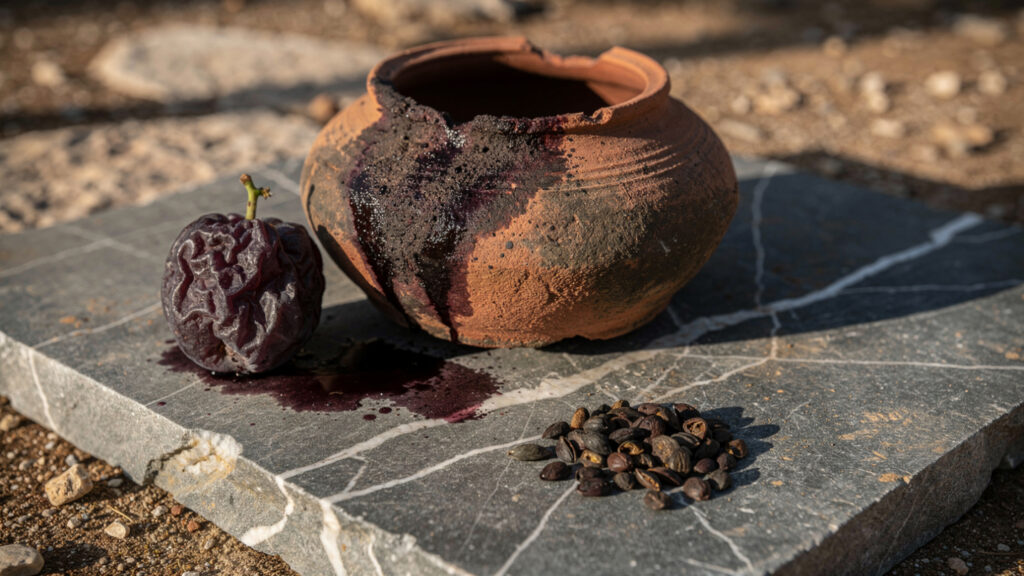
The Vidiano, Crete’s indigenous white grape, has been revived within living memory and has become the island’s most significant new white wine of the modern era. Its richness and texture, ripe fruit balanced against a firm mineral structure and real weight on the palate, come from the same warm climate and limestone soil that have supported Cretan agriculture without interruption since the Minoan period.
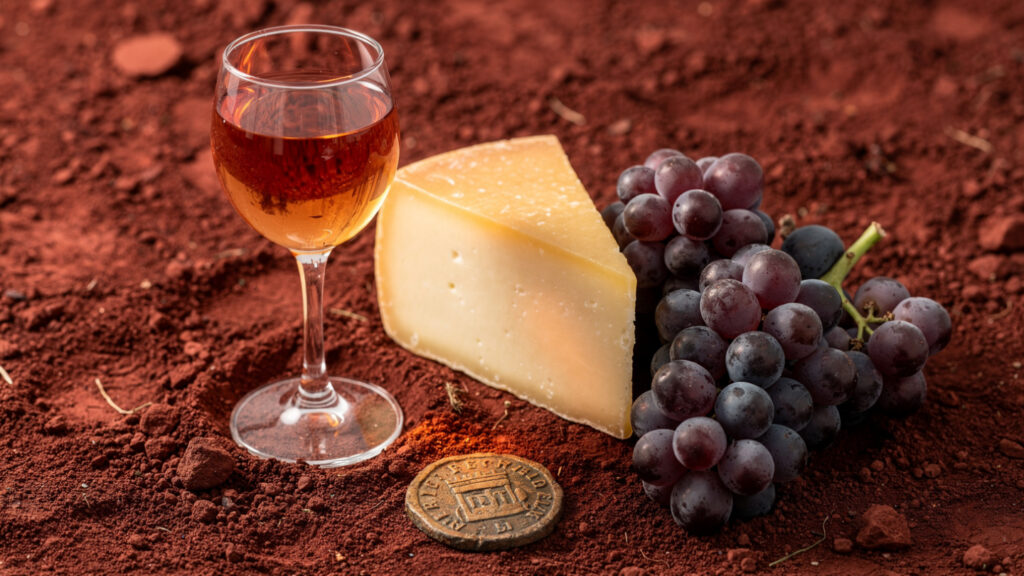
The Liatiko, Crete’s traditional red grape, has been cultivated across the island’s Minoan, Byzantine, Venetian, and Ottoman periods without a real break. It produces a wine of pale colour, dried cherry, and earthiness, shaped by the island’s warm climate and by a genetic stock whose antiquity in Cretan viticulture ancient written sources confirm directly.
The Ionian Islands and the Odyssean Landscape
The Robola of Cephalonia is the white grape of the island Homer names as the kingdom of Odysseus, and its cultivation in the porous limestone soil of the Omala valley, at altitude, gives the wine its mineral character and its citrus clarity.
Cephalonia’s claim to be Homer’s actual Ithaca is one of the oldest unresolved arguments in classical geography, an ancient rivalry the surviving evidence has never settled definitively in favor of either Cephalonia or the modern island still called Ithaca. What is not in dispute is that the porous karst limestone of the Ionian islands, whose character the tidal underground lake inside the Melissani cave on Cephalonia makes strikingly visible, is exactly the geology that gives the Robola its distinctive mineral quality.
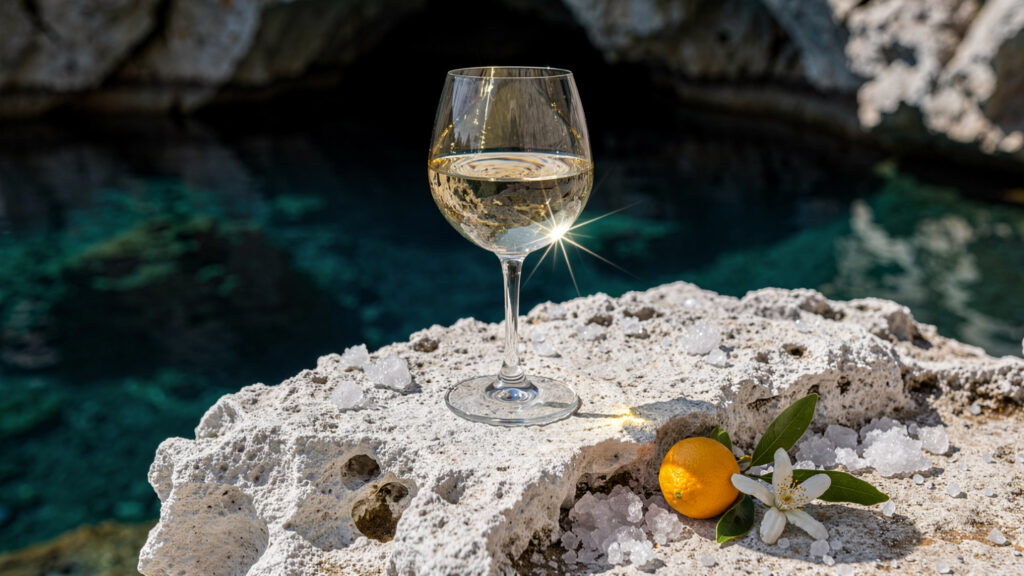
The wine’s citrus, mineral, and clean acidity come directly from that geology: porous limestone drains fast and forces the vine’s roots to dig deep through the rock in search of water, producing the same mineral character the Chablis and Pouilly-Fumé of France’s own limestone regions express. The comparison holds not because the grapes are related, they are not, but because the same geological mechanism, limestone drainage meeting a vine’s root response to it, produces a recognizably similar flavor in entirely different grapes, in entirely different places.
What the Wine Was
Greece’s regional wines are, each one, a living geological and cultural record of the exact landscape that produced them, and it was this quality, the sense of carrying a specific place inside a specific pleasure, that set wine apart from every other sensory experience available to an ancient Greek drinker.
The symposion governed this transfer directly: the encounter between an ordered rational mind and the landscape a wine expressed. A symposiarch managing the ratio of water to wine was, in a very real sense, managing how much of that landscape was allowed into the room. Undiluted wine meant the landscape at full strength, the exact condition the ecstatic experience of Dionysian release sought and that the symposion’s own social discipline held in check.
Contemporary Greek winemaking is the direct continuation of a viticulture whose Bronze Age foundation the Linear B tablets record and whose theological framing Dionysian religion supplied. The indigenous grapes surveyed here, Assyrtiko, Agiorgitiko, Moschofilero, Xinomavro, Debina, Vidiano, Robola, and the Muscat varieties, are genetic material whose continuous cultivation, across the ancient, Byzantine, Ottoman, and modern periods, has kept a single thread connecting the landscape and the wine unbroken for roughly three and a half thousand years.
To taste these wines is to taste the landscapes themselves: the volcanic mineral of the Santorini caldera, the pastoral fragrance of the Arcadian plateau, the heroic weight of the Nemean valley, the oracular clarity of the Epirot mountains, the Minoan depth of Cretan limestone, the Odyssean mineral of Ionian karst.
The wine did not need Dionysus to have this character. But Dionysus is the reason we know what to call it.
At Olympus Estate, Food and Seasonal Life traces the Greek table from the Linear B tablets to the contemporary harvest. The Linear B tablets recorded wine, under the syllabic spelling wo-no, alongside olive oil as the two primary products of the Bronze Age palatial economy. The wine presses at Vathypetro on Crete date to approximately 1600 BCE. The symposiarch managed the water-to-wine ratio to govern the encounter between an ordered mind and the Dionysian force. The Assyrtiko tastes of the Santorini caldera and the Aegean’s salt simultaneously. The Moschofilero carries the fragrance of the Arcadian plateau where Pan’s flocks once grazed. The Xinomavro rewards the patient drinker. The Debina of Epirus speaks with the clarity of the wind through the sacred oak at Dodona. Not every response to the vine’s character was celebratory. The myth of King Lycurgus, who tried to drive Dionysus into the sea and paid for it, preserves the tradition’s memory of what resisting wine actually cost. The wine did not need Dionysus to have this character. But Dionysus is the reason we know what to call it.