


The question is not which island is better. It is which island is yours.
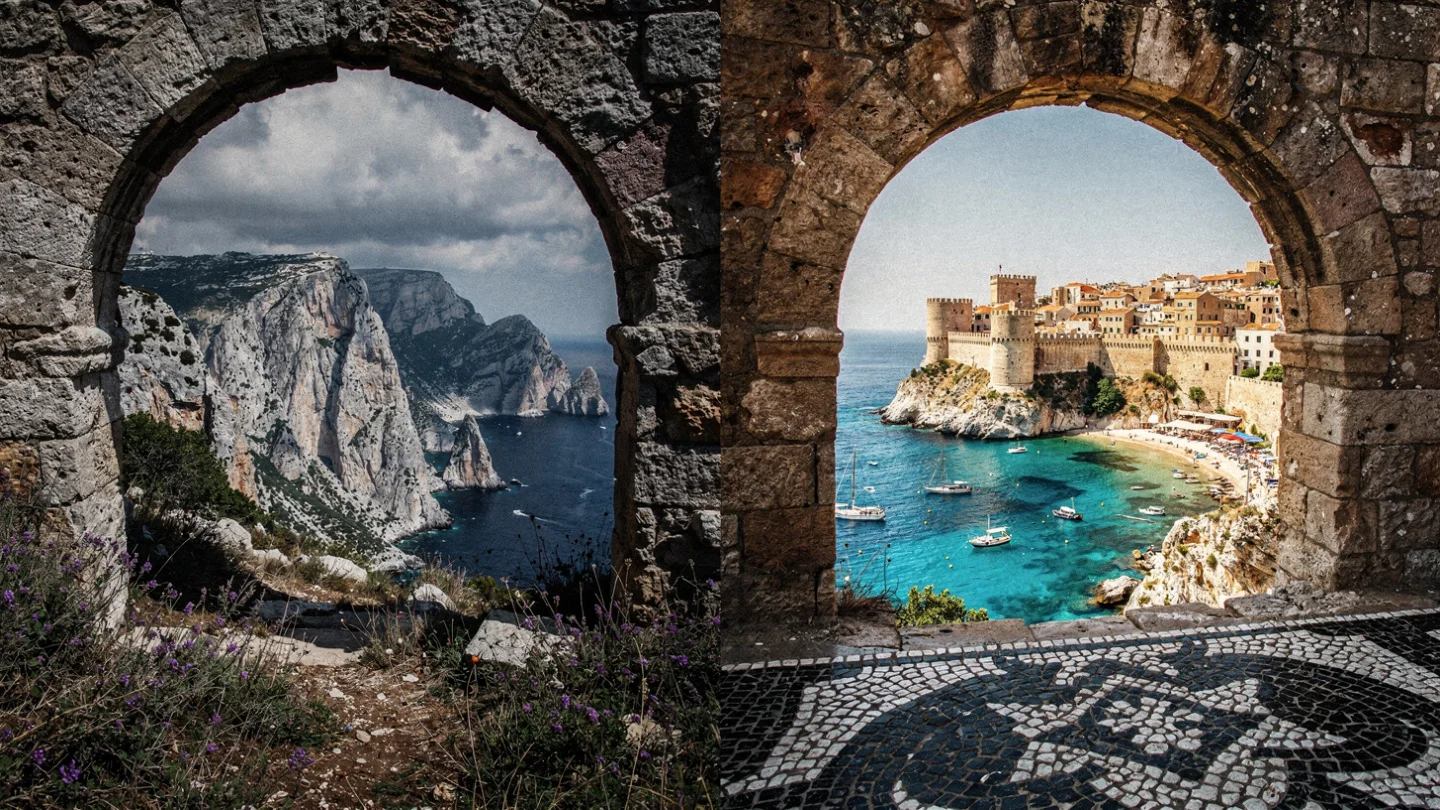
Crete and Rhodes are both extraordinary, and their extraordinary qualities are so different from each other that the choice between them is less a matter of ranking than of self-knowledge: understanding what kind of encounter with Greece you are actually seeking, and matching that encounter to the island whose character provides it.
This article draws on the dedicated Olympus Estate guides to both islands, which cover each in the depth that their complexity requires. What follows is the distillation of those accounts into the single most useful comparison available: not a matrix of beach quality scores and accommodation price ranges, but an honest account of what each island is, and what kind of traveler each island is for.
What Crete Is
Crete is the largest Greek island and the site of Europe’s oldest civilization, and both of these facts are immediately relevant to the character of a visit to it.
The size means that Crete cannot be done in a week in the way that a smaller island can be done. The island is 260 kilometers long and its terrain ranges from the Aegean coast in the north, where the Venetian harbors of Heraklion and Chania and Rethymno carry four centuries of Venetian governance in their architecture, to the Libyan Sea coast in the south, which the White Mountains and the Psiloritis massif separate from the north by ranges that exceed 2,400 meters. Between the north coast resorts and the south coast beaches lies an interior of mountain villages, Minoan hill settlements, Byzantine monasteries, and the landscape of a large island that has been continuously inhabited for five thousand years and carries that inhabitation in its geography.
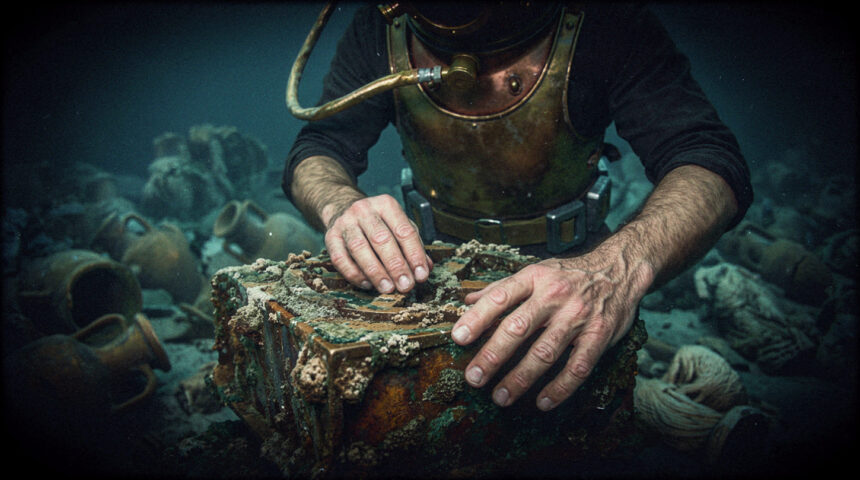
The Minoan civilization that the Palace of Knossos and the Heraklion Archaeological Museum document was the most sophisticated Bronze Age culture in the European world: its administrative records in Linear A remain undeciphered, its frescoes are among the finest paintings of the ancient world, and its trade networks extended across the eastern Mediterranean from Egypt to the Aegean islands to the Levantine coast. Walking through Knossos, whatever reservations the archaeologically minded visitor has about Evans’s reconstructions, is walking through the material evidence of a civilization that preceded the Greece most people think of when they think of Greece by a thousand years.
The Samaria Gorge descending through the White Mountains to the Libyan Sea coast is often cited as the longest gorge in Europe, though the Gorges du Verdon in southern France runs somewhat longer, and the more defensible claim is that Samaria is the longest and most dramatic gorge in Greece. The Heraklion Archaeological Museum is the most important Minoan collection in the world. The Akrotiri site on the island’s western peninsula is the most intensely preserved monastic concentration in Crete outside Mount Athos. The olive trees of the Cretan groves are among the oldest continuously cultivated trees in the Mediterranean world.
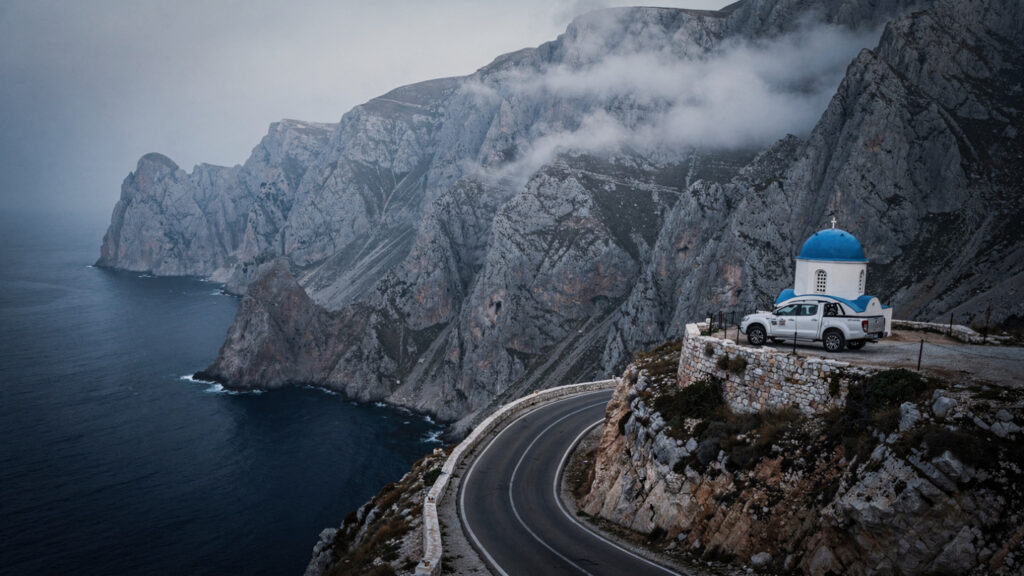
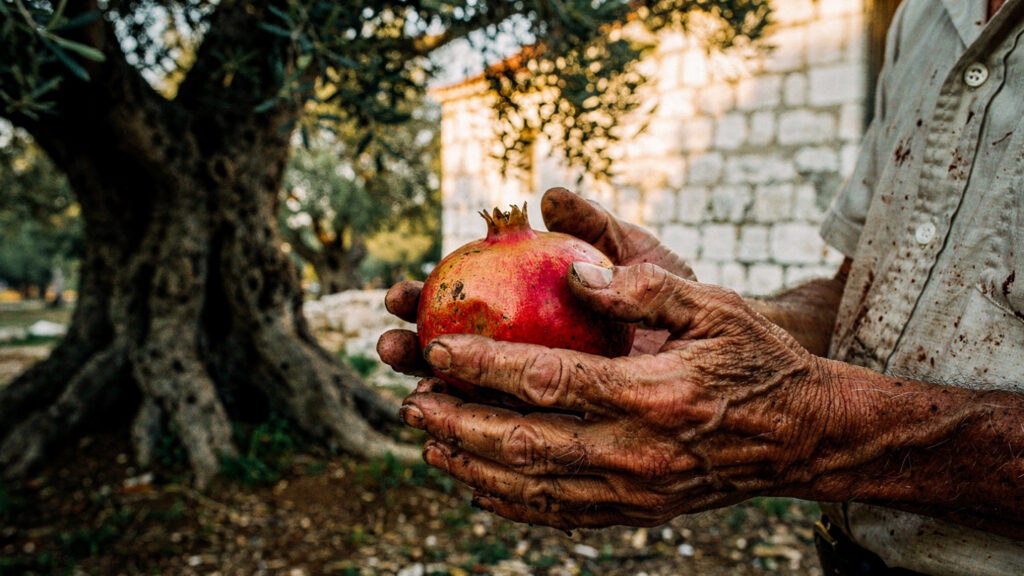
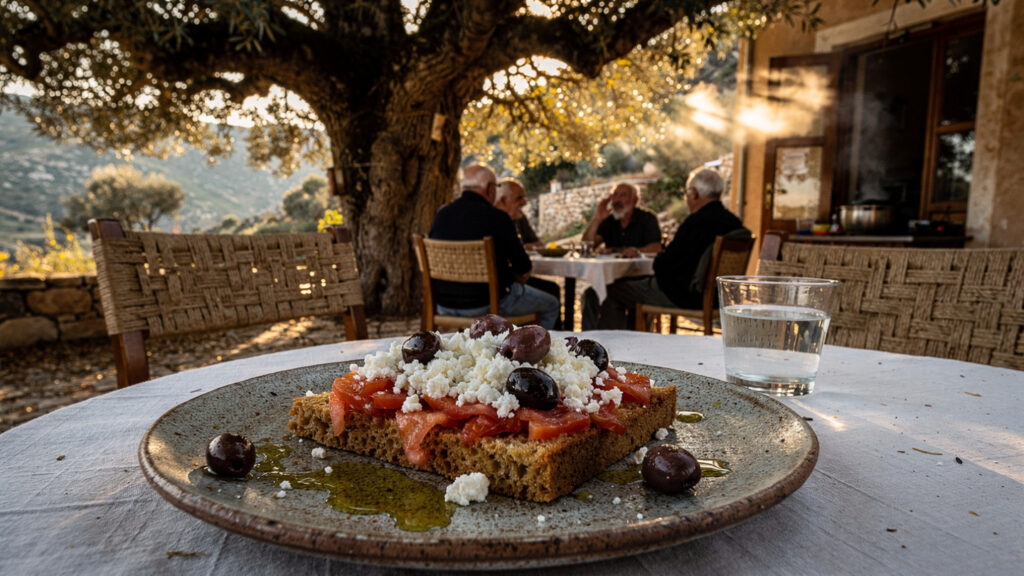
Crete rewards the visitor who stays long enough to move through it, who rents a car and drives the mountain road from Chania to the south coast, who spends a morning at Akrotiri before the tourist buses arrive, who eats dakos made from the island’s own tomatoes in a village kafeneion in October during the olive harvest. A week on the north coast beaches is a week in one of the most comfortable resort environments the Mediterranean offers. It is not the same thing as understanding what Crete is.
What Rhodes Is
Rhodes is the most complete medieval city in the Mediterranean, and this is the fact that most decisively defines the character of a visit to it.
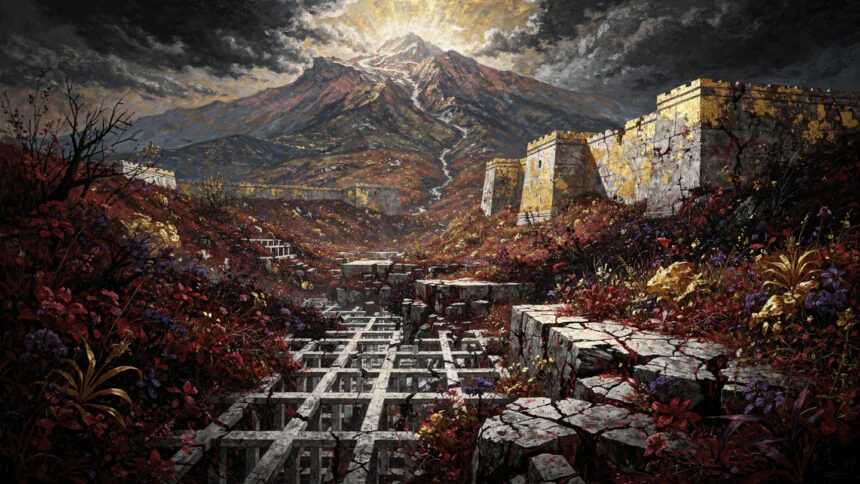
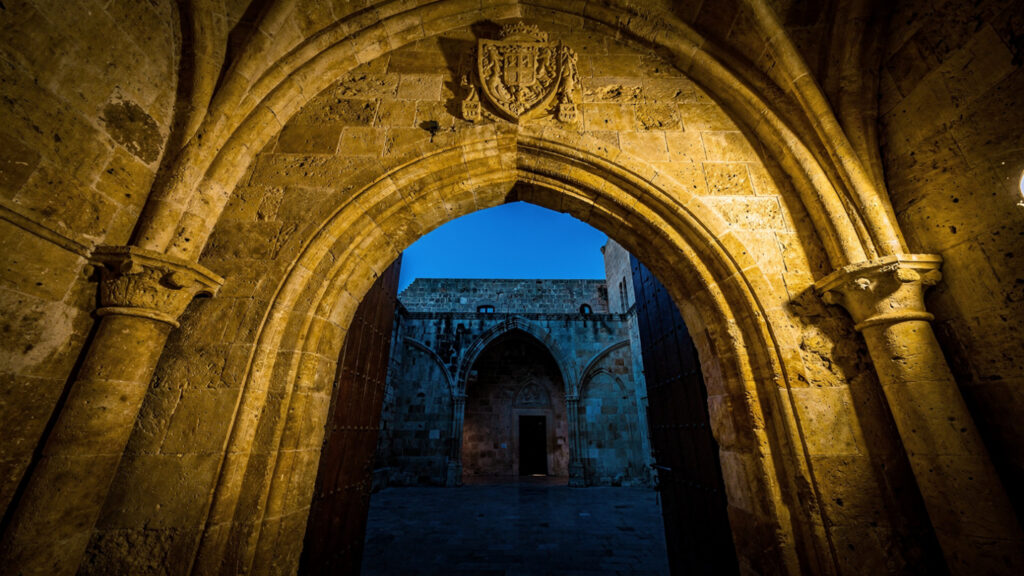
The walled city of Rhodes, which the Knights Hospitaller built and expanded and defended between 1309 and 1522, is not simply a well-preserved historical site. It is a functioning urban environment in which the fourteenth and fifteenth and sixteenth century architecture of the Knights’ administrative and residential buildings has been maintained in sufficient completeness that the Street of the Knights, the Odos Ippoton, still runs its full length between the Palace of the Grand Masters and the hospital that is now the Archaeological Museum, the buildings on both sides substantially intact to their original rooflines with their heraldic devices still carved above their doorways.
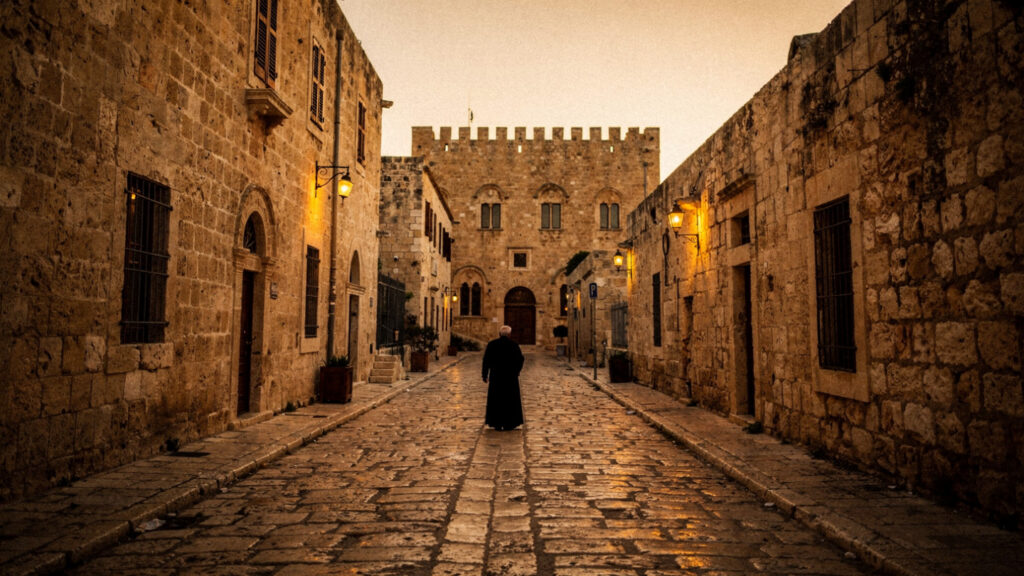
The scale is the first surprise: the walled city is smaller than most visitors expect from its reputation, which makes it immediately walkable in a way that requires a different kind of time than Crete requires. A visitor to Rhodes can walk from the harbor to the Palace of the Grand Masters and back through the Byzantine quarter and out through the Jewish quarter in a morning, and can spend the afternoon at Lindos with enough time to reach the Acropolis before the afternoon crowd builds, and can be back in the old city for the evening meal in the time that a single day on Crete’s archaeological circuit would not accommodate.
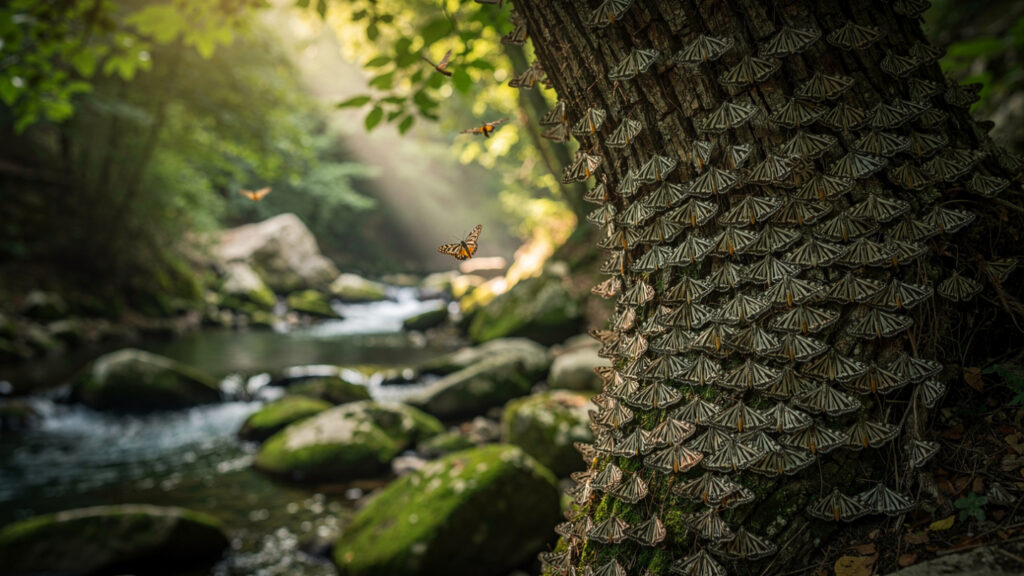
The Colossus is gone and the mystery of where it stood remains unresolved, as the dedicated Rhodes article in this collection discusses. What remains is genuinely extraordinary: the Valley of the Butterflies, which are actually moths, in the island’s interior, the ancient city of Kamiros on the northwest coast, the beach at Anthony Quinn Bay named for the actor who bought land on the island and contributed to its post-war reputation as a destination for the internationally famous, and the southern coast road from Lindos to Prasonisi where the Aegean meets the Mediterranean and the island’s modern tourist development has not yet fully arrived.
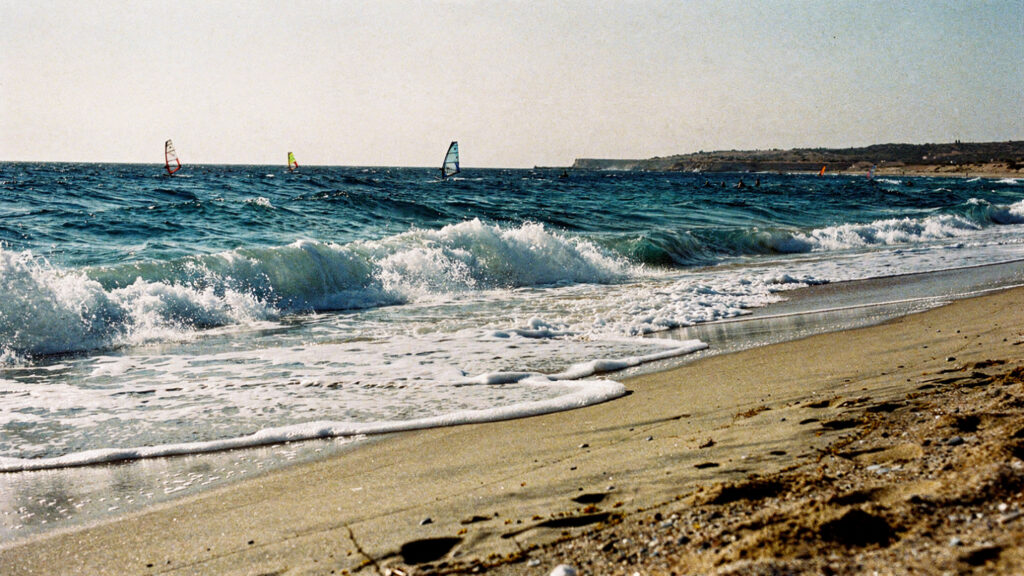
The Dodecanese location of Rhodes, close to the Turkish coast and at the intersection of the Aegean and the wider Mediterranean, gives the island a character that the Cyclades and the Ionian Islands do not have: a landscape that the Arabic and the Byzantine and the Ottoman and the Italian and the Greek successive administrations have all contributed to, visible in the architecture of the old city in ways that the careful observer can read layer by layer.
The Character Distinction
The choice between Crete and Rhodes is the choice between depth and coherence.
Crete requires depth: the willingness to stay long enough, to move far enough inland, to understand that the island’s most significant qualities are not concentrated in any single site but distributed across a landscape of considerable size that rewards sustained engagement. The visitor to Crete who stays a week in Heraklion and visits Knossos and the Samaria Gorge has encountered the island’s headline offerings. The visitor who also drives the mountain road to the south coast, who visits the Cretan Historical Museum and understands the island’s resistance tradition, who eats at a village table during the olive harvest, has encountered the island.
Rhodes offers a different quality: the coherence of an island small enough to be understood in a week without the feeling of having only scratched the surface. The old city provides the most concentrated encounter with European medieval history available anywhere in the Mediterranean. Lindos provides the most accessible ancient acropolis in the Dodecanese. The southern coast provides the wilderness that the old city’s density makes necessary as contrast. These can all be experienced in the same week without the logistical complexity that Crete’s scale imposes.
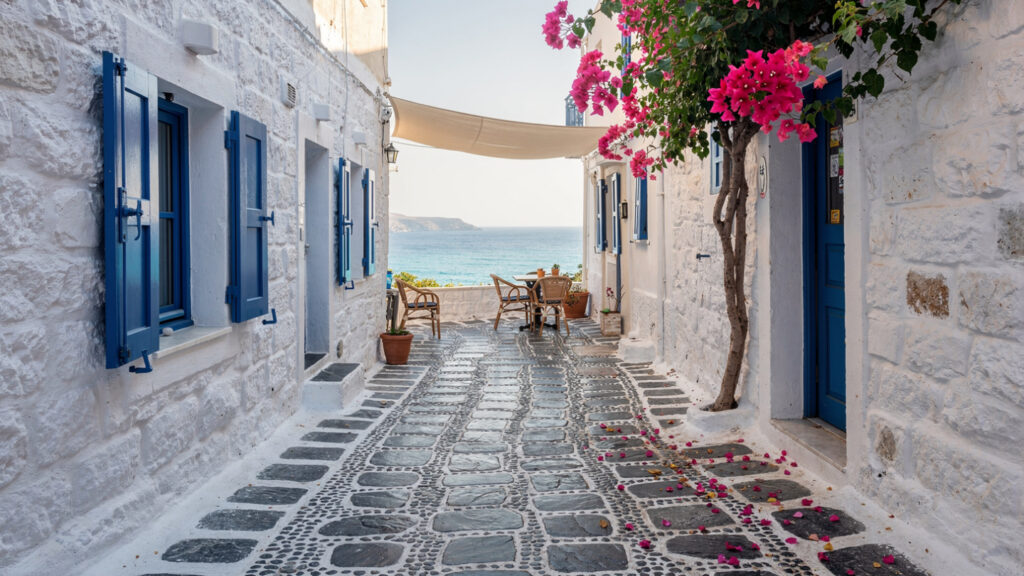
The traveler who wants to go somewhere and understand it by the end of the week will find Rhodes more satisfying. The traveler who wants to return to somewhere for years and continue discovering it will find Crete more satisfying. These are different desires, and both are legitimate.
History on Each Island
Both islands hold extraordinary historical depth, but the historical registers they offer are different enough to be worth distinguishing explicitly.
Crete offers the longest historical span of any Greek island: Minoan Bronze Age at Knossos and Akrotiri, Mycenaean period in the transition material between the two cultures, classical Greek at the ancient city of Aptera and the Gortyna law code, Roman at the same Gortyna that the Romans made the provincial capital, Byzantine in the monastery concentrations of the western peninsula, Venetian in the harbor cities of the north coast, Ottoman in the architectural traces the conquest left, and the Second World War in the battle of Crete and the resistance tradition that the island maintained through the occupation. The depth of this historical record means that almost any village in Crete sits on or near something significant from one period or another, and the visitor who is paying attention will find history at the table and in the conversation rather than only at the designated archaeological sites.
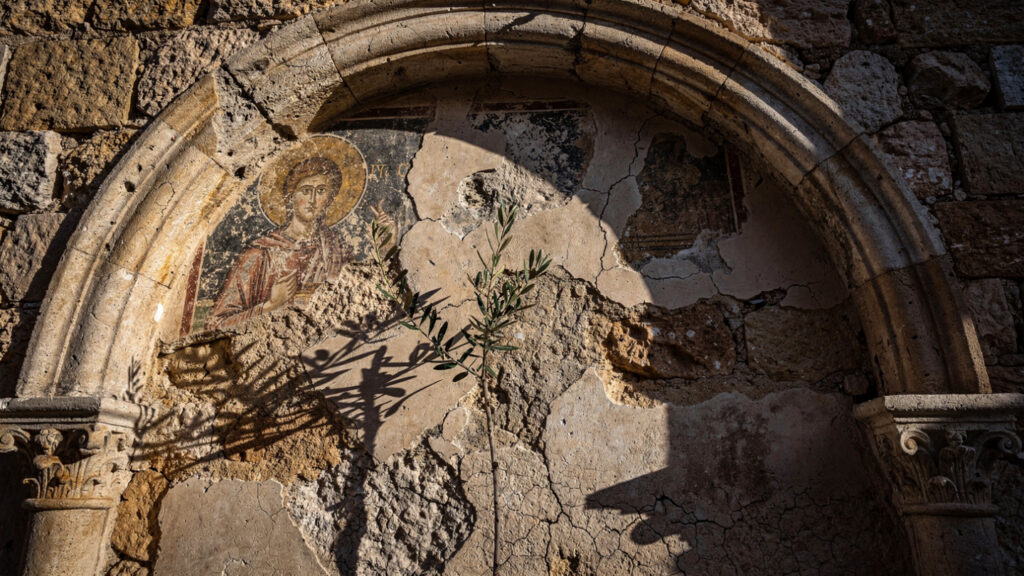
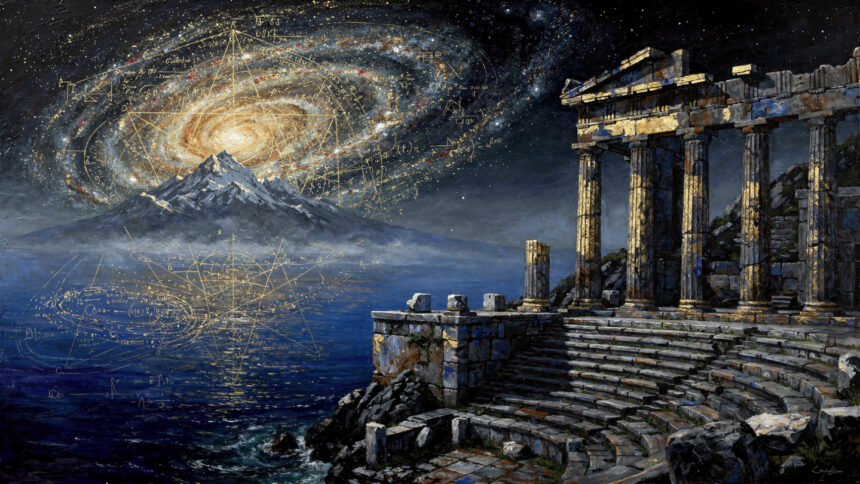
Rhodes offers a different historical concentration: the Knights Hospitaller period from 1309 to 1522 is the island’s historical signature, the event that left the most visible and most complete material record, and the old city is the most completely preserved expression of that period available anywhere in the world. The ancient sites at Lindos and Kamiros are significant in their own right, and the article on ancient Kamiros in the Olympus Estate collection makes the case for its value as the alternative to Lindos that the crowd has not yet discovered. But the Knights’ city is what Rhodes has that nowhere else has, and the visitor who is interested in medieval European history and architecture will find it more concentrated and more legible here than anywhere in the Mediterranean.
Beaches, Landscape, and the Outdoor Life
Crete’s landscape is the more dramatic, and the beaches that its coastline produces reflect the drama: the pink-sand beach at Elafonisi, accessible from the island’s western tip, the lagoon at Balos accessible by boat or by a long walk down a steep track from the road above, the beach at Preveli where the Kourtaliotiko river reaches the Libyan Sea between a grove of Cretan date palms. These are beaches whose visual character is produced by the geology and geography of the island rather than by resort development, and they require effort to reach in a way that the effort is part of their character.
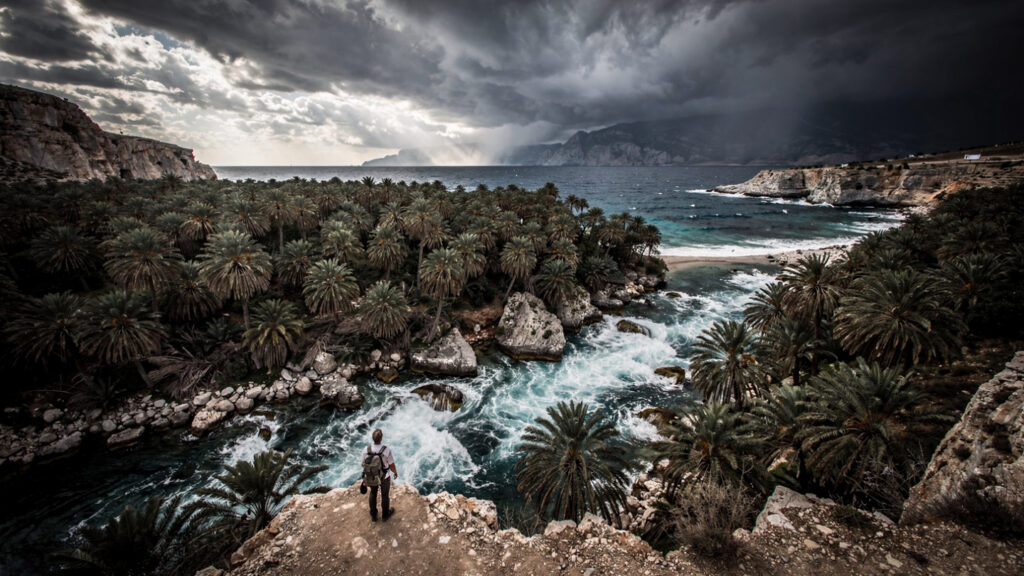
The Samaria Gorge, the Imbros Gorge, the mountain circuit of the Psiloritis massif, the drive along the south coast road from Hora Sfakion to Matala: these are the outdoor experiences that Crete’s landscape makes available and that no other Greek island can replicate, because no other Greek island has terrain of this scale and this variety.
Rhodes’s outdoor life is more accessible and less demanding: the Valley of the Butterflies in the island’s interior, the Prasonisi peninsula where the two seas meet, the walking routes around the Lindos headland. These are genuine natural experiences, and the southern coast’s relative underdevelopment provides the specifically Mediterranean quality of a coastline that has not been organized for visitors. But the visitor who wants the wild and the challenging will find Crete more consistently obliging than Rhodes.
The Practical Decision
If one week is available and it cannot be extended, Rhodes is the more manageable island for a first visit to the Greek islands. The old city is walkable. Lindos is a day trip. The southern coast requires a car but is accessible without the multi-day commitment that Crete’s interior requires. The visitor will leave with a complete sense of having understood something.

If more than one week is available, or if the visitor has already been to Rhodes and is ready for the island that will take more than one visit to know, Crete is the answer. The island is large enough and layered enough that the visitor who returns to it will continue to discover things that the previous visit had not reached.
If the interest is medieval history and architecture: Rhodes. If the interest is ancient civilization, specifically Minoan, with everything that Crete’s archaeological record adds to that: Crete. If the interest is landscape and the outdoor life that it makes available: Crete. If the interest is a coherent, manageable island that delivers an extraordinary concentration of historical and natural experience within a week’s compass: Rhodes.
Both islands are in the Olympus Estate collection in dedicated articles that give each the depth that a comparative overview cannot provide. The Crete travel guide and the Rhodes travel guide are the next step from this one.
At Olympus Estate, Wanderlust Greece guides you across the sacred and storied terrain of the Hellenic world. Crete and Rhodes are both in the collection in the depth they deserve. Read both. Then decide. The choice will be clearer.