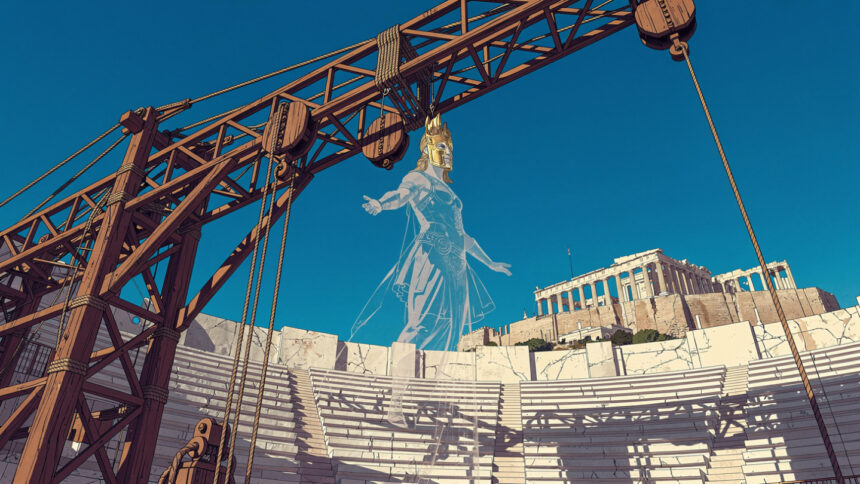






Plutarch knew that character was visible in the small things.
This methodological claim organizes the entire Parallel Lives and separates Plutarch’s approach to biography from every predecessor whose surviving work allows comparison. The great historians, Thucydides, Herodotus, Polybius, cared about the large things: the movements of armies, the decisions of states, the causes and consequences of wars whose outcomes shaped the Mediterranean world for generations. Plutarch cared about something different. He cared about the person who made the decision, about the quality of character that produced a choice at the exact moment that choice determined what followed.
He said as much directly in the opening of his Alexander: it is not histories he is writing but lives, and in the most illustrious deeds there is not always a manifestation of virtue or vice, but often a slight thing, a phrase, a jest, reveals character more fully than battles where thousands fall, or the greatest armaments, or sieges of cities.
The phrase or the jest that reveals more than the battle. This insight, developed across forty-eight paired biographies, gave the West one of its most consequential intellectual inheritances, and its philosophical foundation connects Plutarch directly to Socrates, whose method treated examination of an individual life as the primary instrument for investigating how human beings should actually live.
Chaeronea and the Landscape of the Particular
Plutarch was born in Chaeronea in Boeotia, a small, provincial town, not the great intellectual center of Athens, not the oracle site of Delphi thirty miles to the west, not the commercial hub of Corinth to the south, but a modest hill town in the Boeotian interior, the kind of place ancient geographical imagination associated with serious battles rather than philosophical movements.
Chaeronea was the site of two of the most consequential battles in Greek history. In 338 BCE, Philip of Macedon defeated the combined Greek forces there and established Macedonian hegemony over the Greek world. Alexander was eighteen years old at the battle and commanded the Macedonian cavalry on the left wing. The Sacred Band of Thebes, an elite fighting force of 150 paired lovers whose devotion to each other was understood as a genuine military advantage, making them among the most effective infantry in the ancient world, was destroyed at Chaeronea to the last man. Philip wept when he walked among the bodies.

Plutarch was born four centuries after this battle, in the town it had permanently defined. The Lion of Chaeronea, the monumental sculpture erected over the mass grave of the Sacred Band, stood a few miles from where he grew up. The historical weight of the moment when Greek city-state independence effectively ended was inherited weight the landscape of Chaeronea itself carried.
Anyone who grew up in Chaeronea knew that the great events of history had human beings at their center, that one person’s decision in one moment had determined whether the Lion of Chaeronea stood over the bodies of the defenders or the attackers. The Boeotian interior, where the serious work of Greek history had consistently played out, produced exactly the philosopher whose method examined the individual whose character produced the decision whose consequence became the historical event.
The Priest at Delphi
For most of his adult life, Plutarch served as a priest at the sanctuary of Apollo at Delphi.
The Apollo article in this collection develops Delphi’s own character, the combination of its prophetic function and the intellectual weight of the three Delphic maxims, Know Thyself, Nothing in Excess, and Surety Brings Ruin, that together gave the ancient Greek world its most concentrated statement about the relationship between a human being and the conditions of human existence.
Plutarch’s role at Delphi was never primarily interpreting the oracle. It was maintaining the sanctuary’s own institutional life across the historical period he served it. He held the priesthood for decades. He knew the sanctuary not as a tourist or a pilgrim, arriving to seek guidance and departing with an interpretation, but as an institutional participant whose ongoing engagement with the place gave him an understanding maintaining any real institution actually requires.

The combination of Boeotian provincial landscape and Delphic priestly duty gave Plutarch his own philosophical temperament: someone who took Delphi’s interest in individual self-knowledge with complete seriousness, and who understood the method of self-knowledge as the examination of an individual’s character within the actual circumstances of that individual’s life.
This is why the Parallel Lives are organized the way they are: a Greek figure paired with a Roman figure, not to prove the Roman equal to the Greek or the Greek superior to the Roman, but to illuminate each one’s character through the contrast and comparison the pairing itself makes available. Know Thyself, applied to biographical examination of a historical figure: to know Alexander, examine him beside Caesar. To know Demosthenes, examine him beside Cicero. The self-knowledge each pairing produces is the method Plutarch inherited directly from Delphi and applied to biography.
The Parallel Lives and the Biographical Method
The methodological innovation of the Parallel Lives influenced the writing of biography from Suetonius through the Renaissance humanists to Samuel Johnson and James Boswell and the entire subsequent English literary biography, arguably its single most extensive and consequential influence anywhere.
The innovation was never the paired structure, though pairing was the formal device through which it found its fullest expression. The innovation was a claim about the relationship between biographical examination of a historical figure and the philosophical investigation of how human beings should actually live.
Standard ancient historiography treated great figures of the past as instruments of the historical forces the historian was trying to understand: Thucydides’s Pericles was the Athenian leader whose political decisions produced the Athenian strategy of the Peloponnesian War, whose consequences the History traces. The person served as the instrument of historical force.

Plutarch reversed the relationship entirely. Historical force became the instrument of biographical examination. The Peloponnesian War was the context that made Athenian leaders’ characters visible. The Persian Wars were the context that made Themistocles’s and Aristides’s characters visible. The military and political events of the historical record became the occasions on which the characters of the people making the decisions were revealed in a form only high-stakes circumstances could actually reveal.
The small things the great occasions revealed. The phrase or the jest that showed more than the battle. The quality of a response to crisis disclosed a person’s character far more completely than the crisis’s outcome ever disclosed about the historical forces that produced it in the first place.

This is the methodological contribution the Western biographical tradition has absorbed most completely: the claim that an individual life, examined with the attention its details actually deserve, is the single most productive instrument available for investigating the character that life most specifically embodies.
The Moralia and the Practical Ethics
Alongside the Parallel Lives, Plutarch produced the Moralia: seventy-eight essays and dialogues whose range constitutes the most comprehensive ancient Greek engagement anywhere with the practical questions of an ethical life actually lived by an individual in society.
How to tell a flatterer from a friend. How to profit from one’s enemies. How to control anger. How to listen. How to be curious. On the education of children. On the face in the moon. On the intelligence of animals. On the delays of divine vengeance.
This range is itself evidence of Plutarch’s actual philosophical project: not developing a systematic philosophical position to defend against competing objections, but investigating the questions an educated person living in the first- or second-century Mediterranean world genuinely encountered in daily life.

The essay on telling a flatterer from a friend addresses a problem anyone navigating patronage and friendship in the Roman imperial world urgently needed the tools to manage. A flatterer told you what you wanted to hear. A friend told you what you needed to hear. The real difficulty was that people could not always tell the two apart, and that failure was exactly the instrument of character corruption a flatterer was specifically designed to produce.
This is Socratic method applied to the practical circumstances of daily life: examining a relationship with the same attention Socratic examination gave to anything else, not as a theoretical exercise, but as practical preparation for the actual challenge that relationship presented.
The Transmission to the West
Plutarch’s historical role in transmitting ancient Greek thought to the West rests on the combination of his accessibility, his range, and his particular methodological choices.
The Parallel Lives were translated into Latin by Italian Renaissance humanists and became the single most available source of ancient Greek and Roman biographical material for writers, thinkers, and political figures across subsequent European history. Montaigne read Plutarch constantly and acknowledged him as the single most important influence on the Essays, whose method of investigating a question through classical reference combined with personal observation Montaigne himself was the first to trace directly back to Plutarch.

Shakespeare read Plutarch in Thomas North’s translation of Jacques Amyot’s French version, drawing the biographical material for Julius Caesar, Antony and Cleopatra, Coriolanus, and Timon of Athens directly from the Parallel Lives, plays whose engagement with the relationship between individual character and the historical forces a person must navigate drew their ancient Greek and Roman exemplars straight from Plutarch.
What was actually transmitted was a methodological claim: that examining an individual life, with the precision its details deserve, is the most productive instrument available for investigating questions of character and virtue, the questions philosophy from Socrates onward had identified as the most important questions there are.

The West inherited this claim from Plutarch more completely than from any other single source. Literary biography, the personal essay, and the dramatic investigation of the historical figure all still carry Plutarch’s own methodology, developed at Chaeronea and Delphi in the first and second centuries of the common era.
Plutarch and the Collection
This collection has developed Socratic thought through the flagged Socrates article candidate, Epicureanism through the Epicurus article, Cynicism through the Diogenes article, Stoicism across multiple articles, Aristotle through repeated references and the flagged Aristotle article candidate, and Plato across multiple articles.
Plutarch is the figure in ancient Greek thought who served as synthesizer and transmitter above all else. He inherited the full range of classical philosophy, engaged with it from his position as priest at the most sacred site in the ancient Greek world, and produced from that engagement work whose influence on the West was transmission rather than innovation. He understood exactly what he had inherited and built the instruments for carrying its content across the boundary separating the ancient world from everything that came after it.

The Parallel Lives gave the West its biographical method. The Moralia gave it its practical ethical vocabulary. Together they gave the humanism that produced the Renaissance its single most productive ancient source. Montaigne called him his philosopher. Shakespeare made him his dramatist. The West that followed made him its biographer.
He was born in a town whose own history marked the moment Greek city-state independence effectively ended. He served as a priest at a sanctuary whose wisdom survived that political independence’s end. He wrote the works that transmitted that wisdom forward.
The phrase or the jest that reveals more than the battle. Character visible in the small things. Examining an individual life as the most productive instrument available for investigating how human beings should live.

He knew these questions had never been answered. He knew his role was not to answer them but to keep them alive in exactly the form examining historical lives keeps them alive best. The Lives were still alive when the humanists read them. They are still alive now.
At Olympus Estate, Mythic Essays moves through the deeper currents of the Greek tradition. It is not histories I am writing but lives, Plutarch said in the opening of the Alexander. A slight thing like a phrase or a jest often makes a greater revelation of character than battles where thousands fall. He was born in Chaeronea where the Sacred Band died and the Lion still stands over the mass grave. He served as a priest at Delphi for most of his adult life. The Parallel Lives gave the West its biographical method. The Moralia gave it its practical ethical vocabulary. Montaigne called him his philosopher. Shakespeare made him his dramatist. The method was the claim that the examination of the individual life was the most productive available instrument for the investigation of the questions about how human beings should live. The phrase or the jest. Character visible in the small things. The questions had not been answered. His role was to keep them alive. They are still alive now.