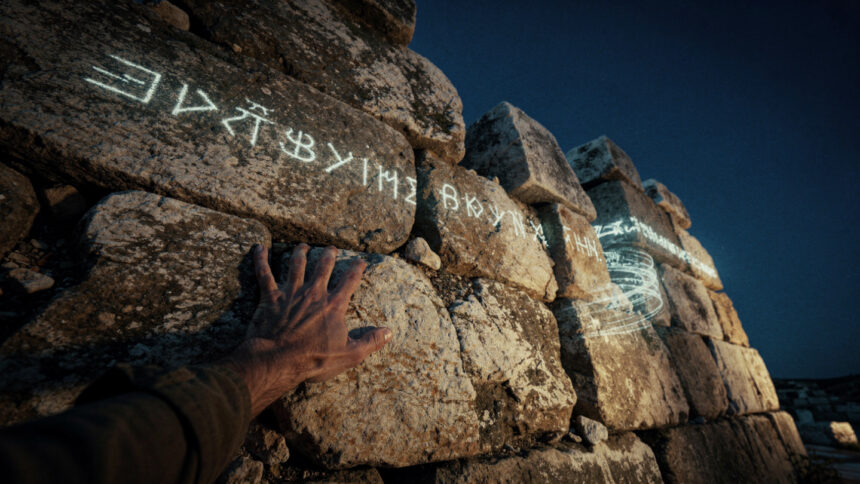





The ancient Olympic Games developed within a landscape that shaped every aspect of athletic preparation. The stadium at Olympia, positioned in the Alpheios River Valley, reached temperatures above forty degrees Celsius during the summer, and the fine limestone dust of the region coated the air, the skin, and the track. Measuring 192.27 meters, a distance attributed to Heracles, the stadium created a consistent environment in which athletes tested their limits.
Historical accounts describe how competitors prepared their bodies with high-phenolic olive oil, often sourced from the sacred groves of Altis, which acted as both a protective layer against the sun and a functional medium for movement. The oil’s antioxidant properties supported the skin under intense heat, while the ritual of application helped athletes transition into a focused state before entering the stadium.
Oil Application as Athletic Preparation

The use of olive oil was not symbolic but practical. Its viscosity allowed athletes to withstand the abrasive conditions of the limestone track, and its chemical composition offered natural protection against solar exposure. Massaging the oil into the skin increased circulation and prepared the body for the friction of wrestling, running, and pankration. The process also served as a mental threshold, marking the shift from daily life to athletic engagement.
The oil was not a personal purchase. It was supplied and administered under the supervision of the gymnasiarch, the official responsible for the gymnasion, which meant the ritual of oiling was as much a matter of civic order as of practical skin care. Wealthy sponsors, known as choregoi in other civic contexts, sometimes funded the oil supply for an entire delegation of athletes traveling to Olympia, turning the anointing itself into a form of public patronage visible to everyone in the stadium before a single race had run.
Dust Selection and Skin Engineering
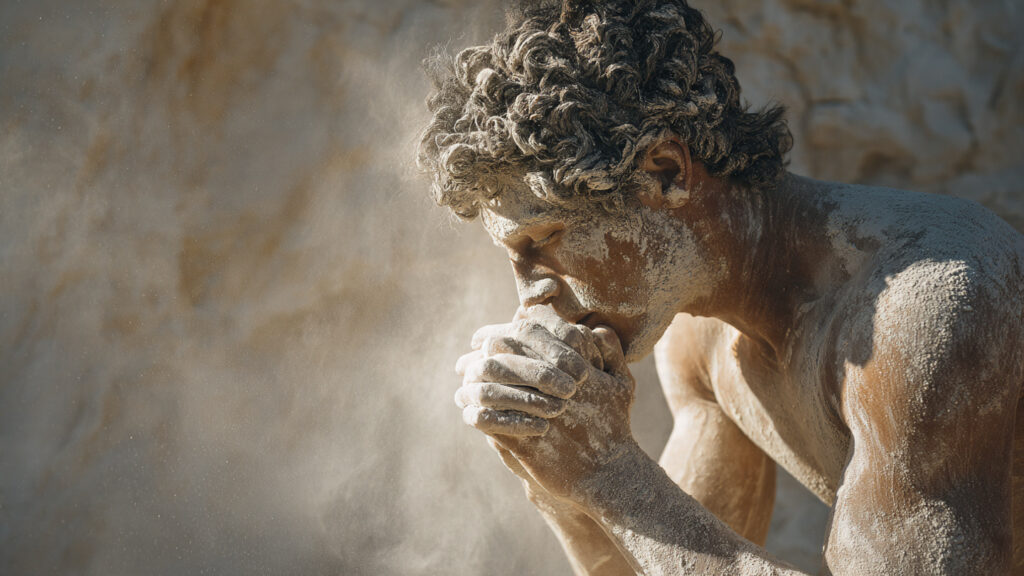
After oiling, athletes stepped into the konistra, where they coated themselves with mineral dust known as konis. This dust was selected from quarries for its texture and behavior under heat. Certain types cooled the skin by increasing evaporation, others improved grip for grappling, and some absorbed warmth during early-morning training. The combination of oil and dust created a second skin that balanced protection, traction, and thermoregulation. The athlete’s body became a deliberately engineered surface, adapted to the demands of the Mediterranean climate and the physical contact of competition.
Training Practices in the Gymnasion and Palaestra
Training took place in the gymnasion and palaestra, where athletes practiced the gymnikos agon, the naked struggle. This approach allowed unrestricted movement, efficient heat dissipation, and complete visibility. Every improvement, injury, and imperfection was exposed, turning the body into a visible record of discipline and effort. The training environment encouraged accountability and precision, reinforcing the idea that preparation was as important as performance.
The trainers who oversaw this preparation, the paidotribes, held a role that combined the functions of coach, physician, and moral instructor. Philostratus, writing centuries later on the subject of athletic training, described the ideal paidotribes as someone who understood not only technique but the individual constitution of each athlete, adjusting diet, rest, and exercise to the specific body in front of him rather than applying a single method to every competitor. This individualized attention, unusual by the standards of most ancient institutions, reflected the enormous civic investment placed in athletic success at Panhellenic games.
Strigil Use and Post-Training Restoration
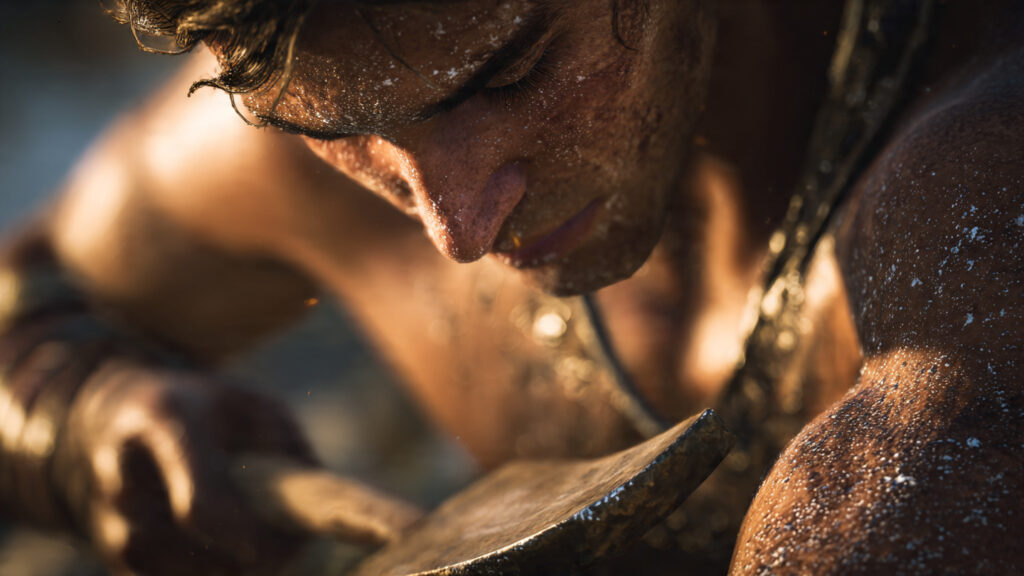
Recovery was a structured process. After hours of exertion, athletes used the bronze strigil to scrape away the mixture of sweat, oil, and dust known as gloios. Ancient physicians valued this substance for its potential medicinal properties, and the scraping process itself stimulated circulation, removed dead skin, and relieved the body of accumulated residue. It marked a transition from exertion to restoration and prepared the athlete for the next cycle of training.
The gloios scraped from famous athletes was reportedly sold or given away as a valued commodity, prized in some medical traditions as an ingredient in remedies for joint pain and skin ailments. The residue of a champion’s training, in other words, had a market value of its own, a detail that reveals how completely Greek culture had merged the athlete’s body with the civic and even commercial life of the city that produced him.
Halteres and the Mechanics of Momentum
The use of halteres, stone or lead weights ranging from one to five kilograms, added another dimension to ancient athletic practice. These weights were used in the long jump and in strength exercises that developed coordination, balance, and explosive power. Their carved finger grips reveal an early understanding of ergonomics, and their use demonstrates how the ancients manipulated external mass to enhance performance. By swinging the halteres during a jump, athletes could shift their center of mass, counteract backward rotation, and extend their distance through precise timing and control.
Women’s Competitions in the Heraean Tradition
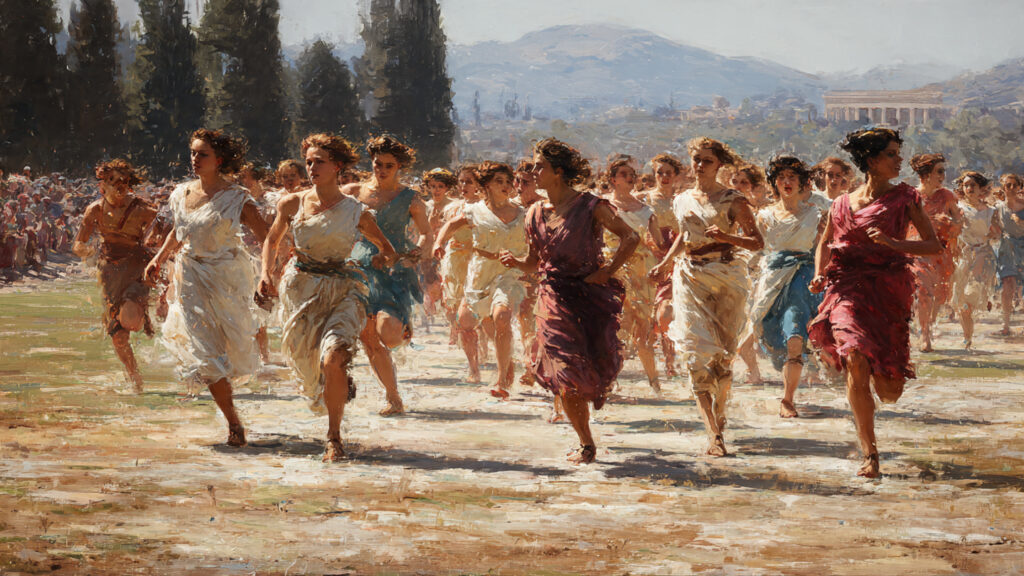
Women participated in the Heraean Games, held in honor of Hera, which included footraces divided by age. Competitors wore a shortened chiton that allowed for freedom of movement, and their victories were recorded in stone. These games demonstrate that physical capability and visible health were valued across the community, and they highlight the broader Greek heritage of embodied excellence.
The Heraean Games ran on their own separate cycle from the men’s Olympics, organized by a council of sixteen women drawn from the cities of Elis, and the winners received olive crowns and the right to dedicate a portrait or image of themselves within the sanctuary of Hera, an honor that placed their achievement in permanent proximity to the same sacred precinct that hosted the men’s competition. This was not a minor or unofficial event tolerated at the margins. It was a structured, sanctioned institution with its own religious authority behind it.
Discipline, Detail, and Athletic Focus
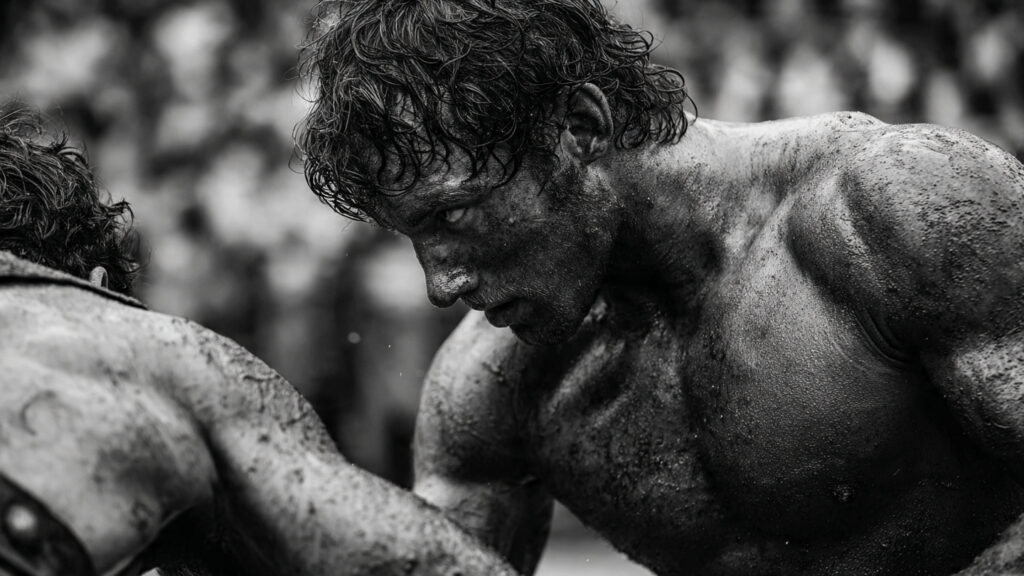
Other details, such as the use of the kynodesme, a leather cord used by male athletes to secure their anatomy, reveal the precision with which the ancients approached preparation. This practice minimized distraction and unnecessary movement during competition, reflecting the attention to detail that characterized ancient training. The pankration, a demanding combination of wrestling and boxing, required not only physical skill but also psychological endurance. The story of Arrichion of Phigalia, who died while forcing his opponent to submit and was crowned victor posthumously, illustrates the intensity of commitment expected in this discipline.
Nutritional Habits of Ancient Competitors
Nutrition supported the demands of ancient training. Early athletes relied on figs, fresh cheese, and grain, while later competitors incorporated meat to support greater muscle development. Honey served as a quick source of energy, and diluted wine was used for controlled hydration. The diet emphasized whole, minimally processed foods and reflected a balance between simplicity and function.
The shift toward meat-heavy diets is credited in the ancient tradition to Pythagoras of Samos, or in a competing account to the trainer Dromeus of Stymphalos, who is said to have replaced the older fig-and-cheese regimen with a diet built around meat specifically to increase muscle mass for the heavier events. Whichever account is accurate, the change marks one of the earliest recorded instances of a deliberate, engineered dietary intervention aimed at athletic performance, centuries before the modern language of sports nutrition existed to describe it.
Architectural Features of the Olympia Stadium
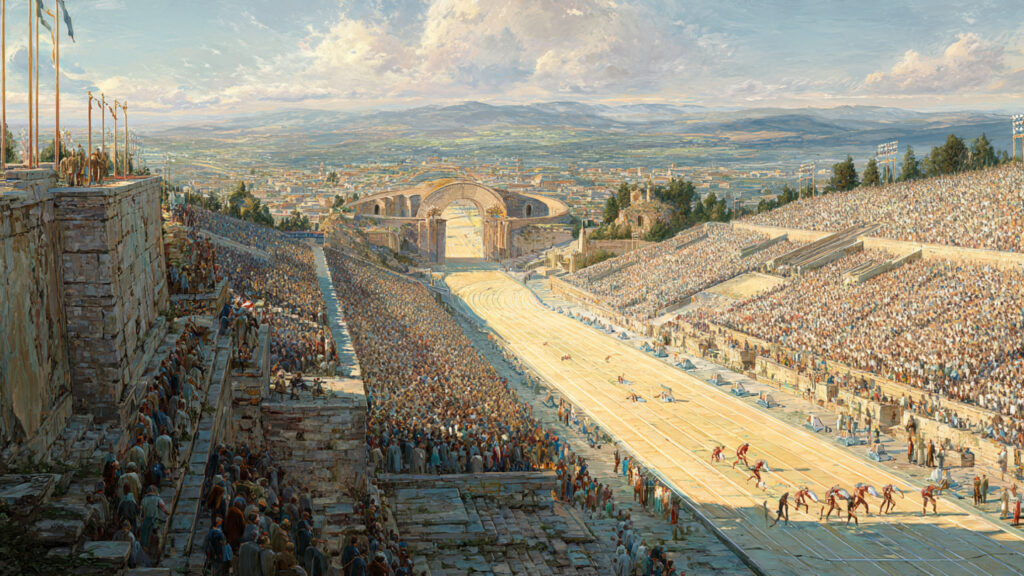
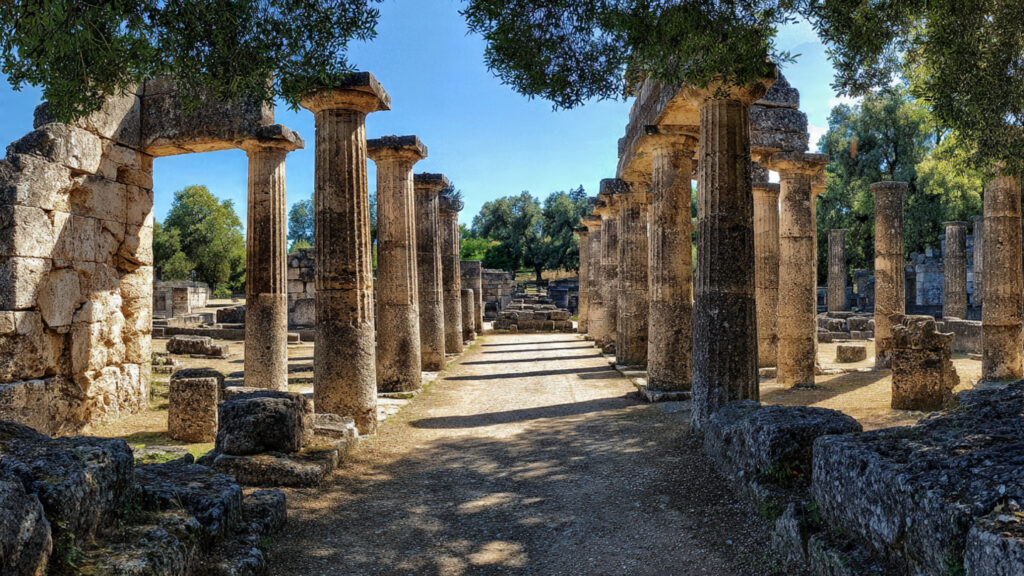
The architecture of the stadium at Olympia shaped the athletic experience. The vaulted entrance, the sloping spectator banks, and the stone starting blocks known as the balbis created a focused environment that heightened the sense of occasion and fairness. The grooves in the balbis dictated foot placement and starting posture, ensuring a consistent beginning to each race. The design of the space influenced the rhythm, stance, and psychological state of the athlete before the contest even began.
Endurance as a Dialogue Between Body and Environment
The ancient Olympic rituals offer a coherent record of endurance rooted in the realities of the natural world. They show how discipline, environment, ritual, and recovery were woven into a single, continuous system, one supervised by civic officials, funded by wealthy patrons, and open, in its own separate form, to women as well as men. The track at Olympia still lies in the sun, its dust carrying the memory of countless athletes who stepped into the arena with intention and resolve.
At Olympus Estate, Cultural Chronicles traces the practices and institutions that defined Greek civilization from the inside. The stadium at Olympia measured 192.27 meters, a distance attributed to Heracles, and reached temperatures above forty degrees Celsius in summer. Athletes oiled themselves with high-phenolic olive oil from the sacred groves of Altis, supplied under the supervision of the gymnasiarch, then stepped into the konistra to coat themselves with konis, mineral dust selected for its texture and behavior under heat. After training, athletes scraped away the gloios, the mixture of sweat, oil, and dust, with a bronze strigil, a substance valued enough to be sold for medicinal use. The halteres, weights of one to five kilograms with carved finger grips, were swung during the long jump to shift the center of mass and counteract backward rotation. Arrichion of Phigalia died forcing his opponent to submit and was crowned victor posthumously. Women competed separately in the Heraean Games, organized by a council of sixteen women from Elis, in a shortened chiton that allowed freedom of movement. The track at Olympia still lies in the sun, its dust carrying the memory of countless athletes who stepped into the arena with intention and resolve.