




The word comes from the Italian arrosto, meaning roast, which tells you something immediately about Naxos and its history.
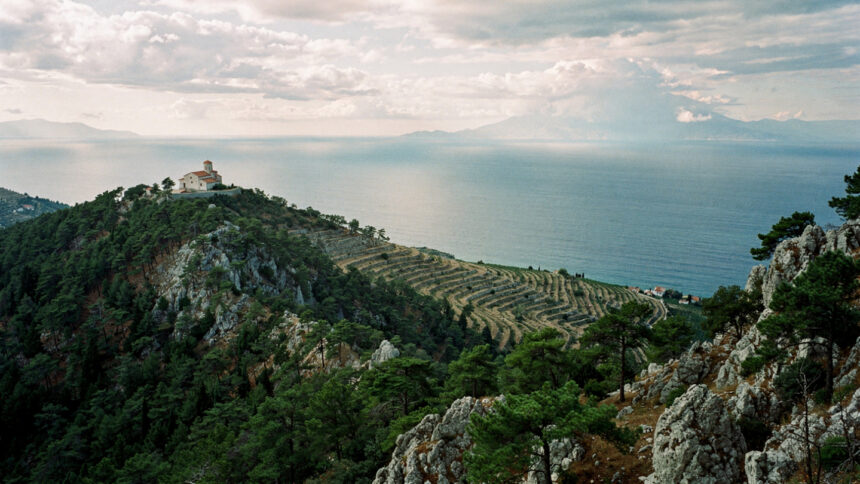
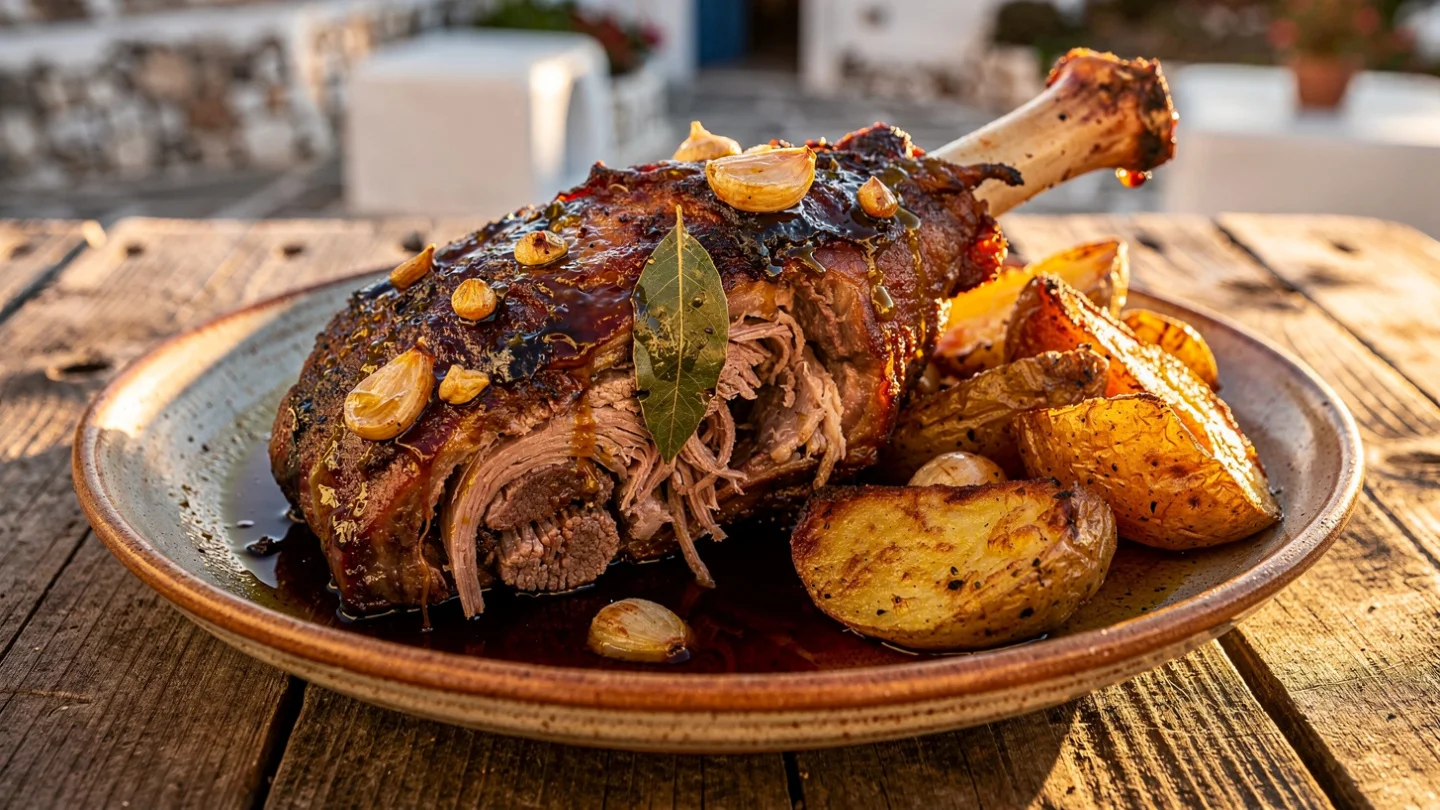
The largest and most fertile island in the Cyclades was under Venetian governance from 1207 to 1566, longer than most of the other Aegean islands, and that duration left traces in the language of the kitchen as well as in the architecture of the fortified towers that still mark the Naxian landscape. The rosto that the Naxians make for weddings and baptisms and village festivals carries an Italian word in its name and a cooking method that is entirely its own: not roasted in the Italian sense of dry heat in an oven, but braised in a heavy pot over a low flame with olive oil, garlic, tomato paste, red wine, and bay leaves, for long enough that the collagen in the pork leg dissolves into the sauce and the meat becomes the kind of tender that braising produces and roasting never does.
This distinction matters because it is the distinction between a dish that exists because it sounds like something else and a dish that exists because it tastes like itself. Naxos rosto sounds like the Italian word and cooks like the Greek tradition: slow, unhurried, with the patience that an island whose olive oil and wine and pork are produced within its own coastline can afford because the ingredients are at hand and the feast day is not going anywhere.
Naxos and the Conditions That Produce the Dish
Naxos feeds itself in a way that most Greek islands do not.
The island’s size, approximately 428 square kilometers, and its mountainous interior, rising to 1001 meters at Mount Za, create the range of terrain and microclimate that allows Naxos to produce the full range of ingredients that a cuisine requires: the grain that the Cycladic Bronze Age civilizations stored in their hilltop fortifications and that the contemporary island’s bakers still use for the traditional breads, the olive oil from groves on the lower slopes, the potatoes that the volcanic soil of the Naxian interior produces with an earthy density that makes them one of the most sought-after agricultural products in the Greek market, the pork from the pigs that the island’s farmers have been raising on the scrub and grain of the interior for as long as the island has been inhabited.
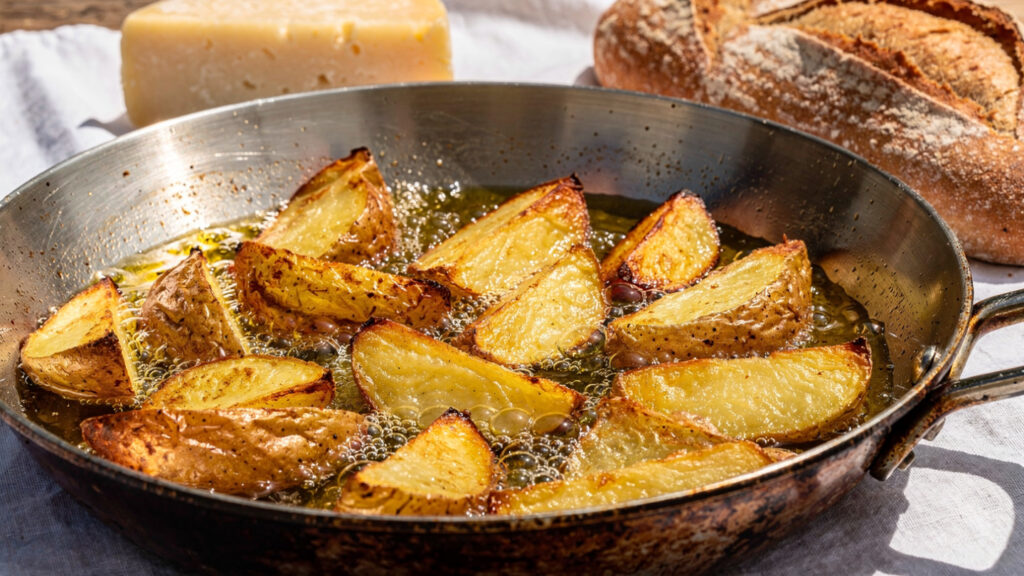
The Naxian potatoes, known throughout Greece for their flavor and texture, are the traditional accompaniment to the rosto. They are fried in olive oil after the pork is done, in the fat that has accumulated in the pot from the meat and the oil combined, which gives them the savory depth that potatoes fried in neutral oil do not achieve. The combination of the braised pork in its thick red sauce with the potatoes fried in its own rendered fat is the combination that the dish has always been: two preparations from the same animal and the same oil, the whole producing more than its parts.
The graviera cheese that Naxos produces, a hard cheese with a sweetness and a texture that the island’s milk produces distinctively and that is aged in the cool mountain dairies of the island’s interior, is the other product that the rosto table typically includes: not as part of the dish but alongside it, as the cheese course that the Greek table places at the beginning or end of a meal with an indifference to the conventions of French service that reflects a different relationship between the meal’s components.
The Cooking and What It Requires
The rosto is not a difficult dish. It is a patient one, which in the context of the Naxian kitchen means approximately the same thing: a cook who begins the rosto in the morning for the afternoon feast has given the dish what it needs, which is time, and time is the one ingredient that the supermarket does not stock and that no technique can substitute for.
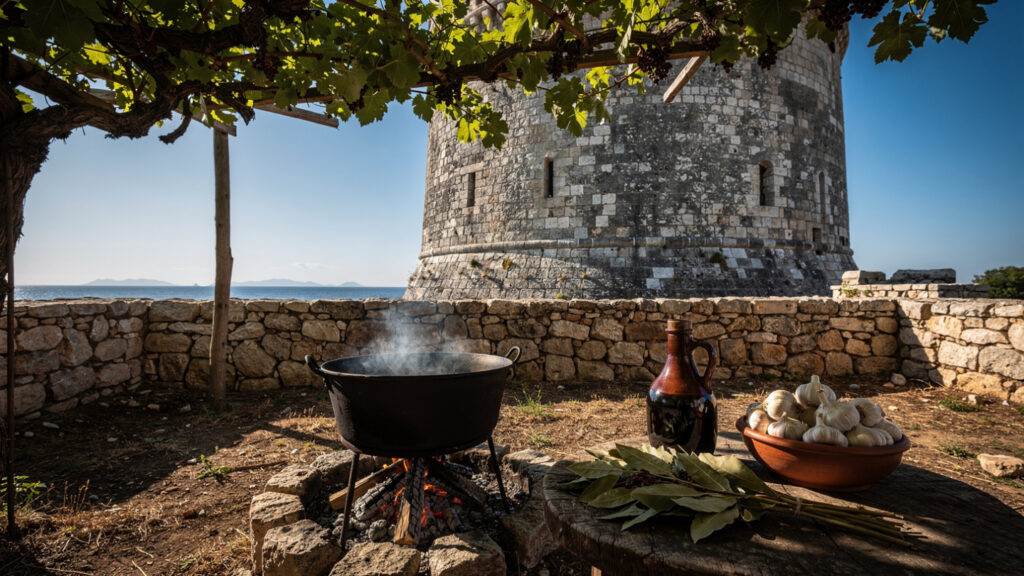
The pork leg, whole and bone-in for the versions that the traditional kitchen makes and boneless for the versions that convenience has introduced to the contemporary preparation, is the foundation. The bone conducts heat into the interior of the meat from the center as well as the exterior, and the collagen in the bone and the connective tissue around it dissolves into the braising liquid over the long cooking time and gives the sauce the body that a boneless preparation requires additional thickening to achieve. The bone-in version produces a more complete sauce with no additional effort, which is the kind of efficiency that the traditional kitchen practices because it evolved from the logic of using the whole animal rather than from any explicit principle of cooking.
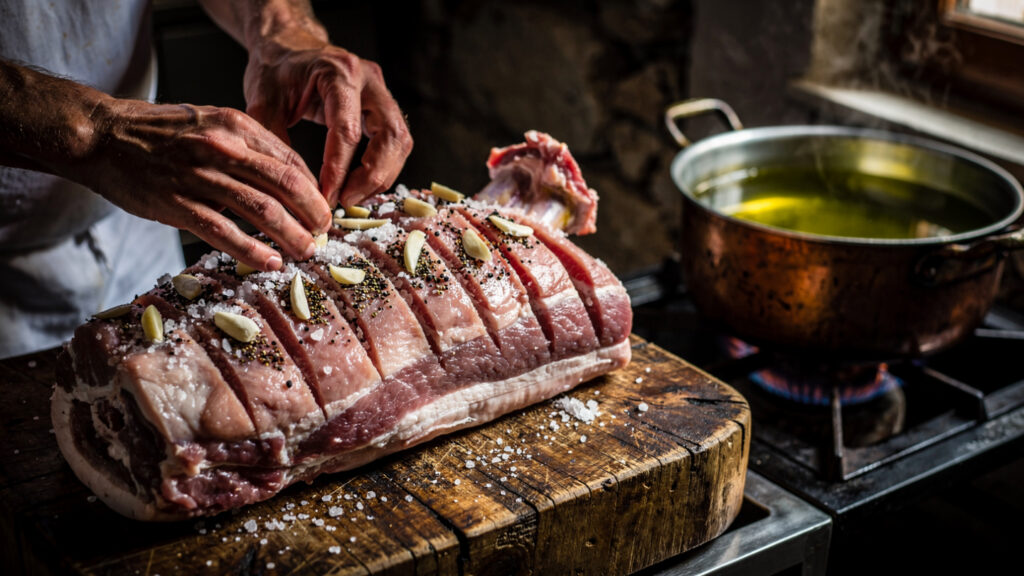
The incisions cut into the pork before searing, into which the mixture of garlic, salt, pepper, and olive oil is pressed, are the technique that ensures the seasoning reaches the interior of a large cut of meat that the external sauce and the braising liquid would not fully penetrate in the time available. The garlic that goes into the incisions cooks inside the meat as the pork braises, becoming soft and sweet rather than sharp, and perfumes the interior of the meat from the inside out in the way that surface seasoning cannot achieve.
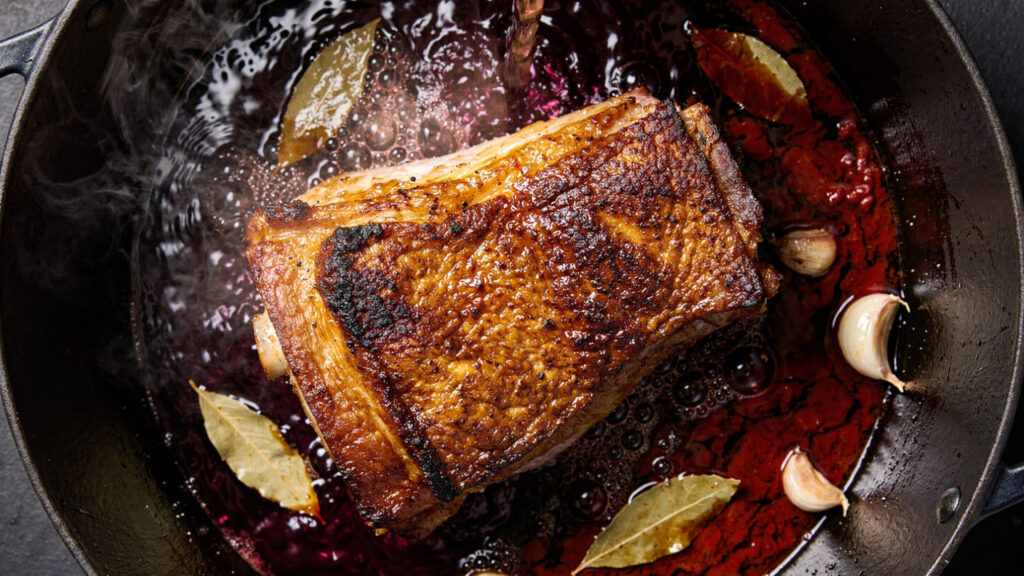
The sear that precedes the braise is the step that the impatient cook is most tempted to abbreviate and that should not be abbreviated. The Maillard reaction that occurs when the protein surface of the meat contacts the hot oil produces the flavor compounds that distinguish braised meat from boiled meat: the caramelized exterior that the sauce then dissolves into the braising liquid, enriching it with the complexity that a pallid, unseared piece of pork cannot provide. The sear should be complete on all surfaces and should be done over heat high enough to brown rather than steam the meat.
The deglaze with red wine after the tomato paste has been added and caramelized slightly is the step that lifts the fond, the browned residue on the bottom of the pot, into the sauce. The fond contains concentrated flavor from both the sear and the tomato paste caramelization, and the wine dissolves it into the liquid that will become the sauce. The alcohol evaporates in the first minutes of simmering, leaving the wine’s acidity and tannin to balance the sweetness of the tomato and the richness of the pork fat.
Two hours at the lowest simmer the stove produces is the minimum. The pork is done when it offers no resistance to a fork inserted into its thickest point and can be pulled apart with the fork’s tines without requiring a knife. The sauce at this point should be thick enough to coat the back of a spoon and dark enough to show the concentrated reduction that the long cooking has produced. If the sauce is still thin, the lid should come off for the last thirty minutes and the heat raised slightly to encourage evaporation.
The Feast Day and Its Context
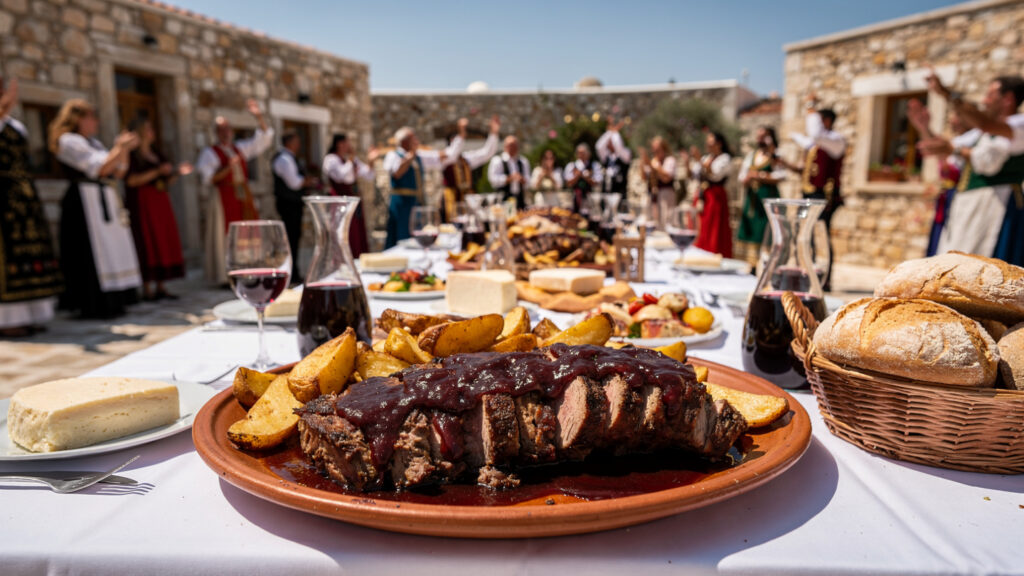
Rosto appears on the Naxian table at the moments that the Greek calendar marks as occasions for gathering: the wedding, the baptism, the panegyri, the festival of the local saint that brings the village together on the name day of whoever the church is dedicated to. These are not occasions on which a cook produces something quick or easy. They are the occasions on which a cook produces something slow and complete, something that has been started the day before or early in the morning, something whose smell has been spreading through the house or the courtyard for hours before the guests arrive.
The communal dimension of the dish is part of its character. A whole pork leg feeds many people, which is the appropriate scale for the occasions on which it is made. A pot of rosto on a wedding table in Naxos is feeding a community that has gathered to mark something, not an individual or a couple who want dinner. The dish carries the sociality of its occasion in its scale.
This dish carries the tradition in the form that the Greek kitchen has always carried its most important recipes: not through written texts but through the accumulated practice of cooking the dish many times for many people over many years, adjusting by judgment rather than measurement, knowing when the sauce is right by its color and consistency rather than by a timer. The recipe shared here is that tradition translated into measurements for the cook who does not yet have that judgment, which is a different thing from the dish made by an experienced island cook.
The recipe can be followed with measurements. The rosto it produces will be good. The rosto made by an experienced hand is the same dish at a different point in its development, the point that comes after the measurements have been internalized and forgotten and replaced entirely by attention.
How to Make It
The accompaniments are not optional. Fried potatoes in the fat from the pot, or pasta cooked al dente and tossed in the sauce, are the Naxian completion of the dish. A simple salad with Naxian graviera, sliced and served with olive oil and dried oregano, is the cheese course that belongs on the same table.
The wine should be red and dry, preferably Naxian if it can be found, otherwise any red wine of sufficient body to stand up to the sauce without disappearing into it. The raki or tsipouro that follows the meal is the traditional ending of a Naxian feast and the signal that the eating is done and the conversation can begin.
Olympus Estate · Food & Seasonal Life
Naxos Rosto · Traditional Cycladic Braised Pork
The slow-braised pork leg served at every Naxian wedding and festival since the Venetian period. The name comes from the Italian arrosto. The cooking is entirely its own.
Ingredients
- Pork leg, bone-in (whole)2 kg
- Extra virgin olive oil150 ml
- Garlic cloves, thinly sliced4 cloves
- Tomato paste3 tbsp
- Dry red wine200 ml
- Bay leaves4
- Hot water500 ml
- Sea salt1½ tsp
- Black pepper, freshly ground1 tsp
Method
-
1
Prepare the pork
Pat the pork leg thoroughly dry with kitchen paper. In a small bowl, combine the salt, pepper, garlic slices, and 3 tablespoons of olive oil into a paste. Using a sharp knife, cut deep incisions across all surfaces of the pork and press the paste firmly into each one. This seasons the meat from the interior throughout the long braise.
-
2
Sear on all sides · 10 to 12 min
Heat the remaining olive oil in a large heavy-bottomed pot or Dutch oven over medium-high heat until shimmering. Sear the pork leg on all surfaces until deeply golden, turning with tongs. Do not rush this step: the caramelized exterior builds the sauce’s depth.
-
3
Add tomato paste and wine · 3 min
Reduce heat to medium. Add the tomato paste and stir to coat the pork, allowing it to caramelize against the pot base for 1 to 2 minutes. Pour in the red wine and scrape up all browned residue from the base. Let simmer for 2 minutes until the alcohol evaporates.
-
4
Braise low and slow · 2 hours
Add the bay leaves and hot water. The liquid should come approximately one third of the way up the pork. Cover with a tight-fitting lid and reduce heat to the lowest simmer. Cook for 2 hours, turning the pork once at the halfway point. The pork is ready when a fork inserted into the thickest point meets no resistance.
-
5
Reduce the sauce if needed · up to 30 min
If the sauce is still thin, remove the lid, raise heat to medium, and cook uncovered for 20 to 30 minutes until the sauce coats the back of a spoon and is a deep, dark red.
-
6
Rest and serve · 10 min rest
Remove from heat and rest for 10 minutes before slicing. Serve the sliced pork generously coated in sauce, with fried potatoes cooked in the same pot fat or al dente spaghetti tossed through the sauce. Accompany with sliced Naxian graviera dressed with olive oil and dried oregano.
At Olympus Estate, Food and Seasonal Life traces Greek cuisine as a living calendar, from the festival tables of Naxos to the olive harvest kitchens of the Peloponnese. The best dishes are always slow. The best occasions always wait for them.