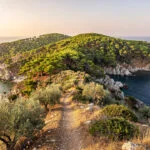


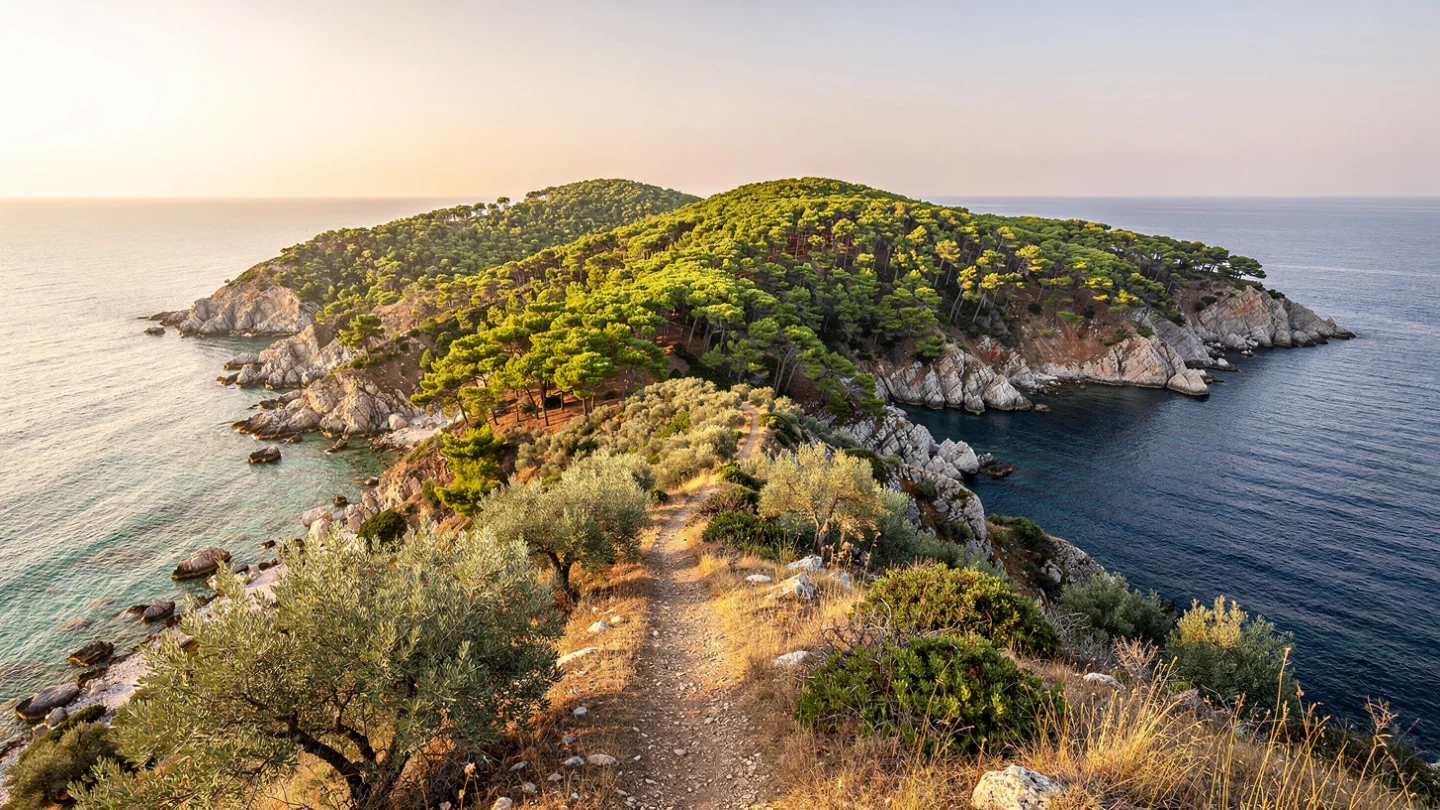
The three peninsulas of Halkidiki extend into the northern Aegean like fingers reaching for the water, and most visitors follow them all the way to the end where the beaches are.
This is understandable. The beaches of Halkidiki, on Kassandra to the west and Sithonia in the middle and the Athos peninsula in the east, are among the best in the northern Aegean: the water clear, the sand pale, the summer light the quality that the northern Greek sky produces when it is unclouded and the humidity has not yet risen to the levels that blur the horizon in August. Lonely Planet, which knows what travelers come to the region for, runs a regular feature on these beaches and what they offer.
The same feature, in a less well-known version, is about everything else. The interior of Halkidiki, the wide forested bulk of land before the three peninsulas diverge, holds a cave with a skull 700,000 years old. The monastery republic on the Athos peninsula has been in continuous operation for more than a millennium. The vineyards of the interior are producing wine within sight of the sea. The underwater terrain off the Sithonian coast holds scorpion fish and sea bass and the quality of silence that the sea produces at ten meters depth.
Ten things to do in Halkidiki that are not lying on a beach, though none of them require you to skip the beach entirely.
Dive the Sithonian Coast
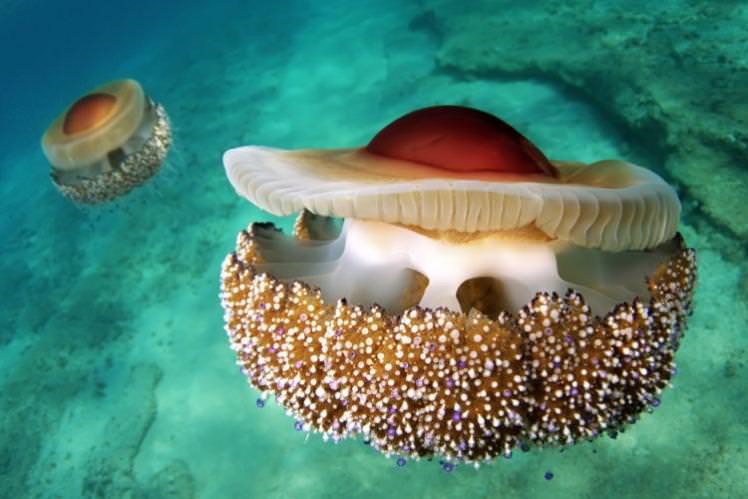
The underwater landscape off the coast of Sithonia is the least visited part of the peninsula and the most rewarding for the visitor willing to go beneath the surface rather than float on it.
Atlantis Diving Center, based in Nikiti at the northern entrance to Sithonia as you drive down from Thessaloniki, runs courses and excursions calibrated for first-time divers as well as for those with existing certification. The day excursions, which include transport and refreshments and run from approximately 75 euros, access a sea floor that holds anemones and scorpion fish and the sea bass that the local fishing boats are also pursuing from above, the coexistence of the two activities giving each some perspective on the other.
Nikiti itself, the village above the dive center, is worth the stop independent of the diving: a traditional Sithonian settlement that the coastal development of the peninsula has left largely intact, with the quality of a Greek village that still has a working relationship with its own geography rather than primarily with its visitors.
Cycle the Interior of Kassandra
The westernmost peninsula of Halkidiki, Kassandra, is mostly experienced from the coast road that follows its perimeter. The interior is forested, hilly, and substantially unused by the vehicles that circulate the peninsula’s beaches from resort to resort.
Break Free operates mountain biking excursions into the pine-covered interior of Kassandra, accessing the terrain that the coast road makes visible only in glimpses between the trees. The section of the peninsula that the local geography calls the camel’s hump, for the profile it presents to anyone approaching from the north, provides the gradient that the descent from it makes worthwhile: the Thermaic Gulf visible from the ridge in a panorama that the coast road, running along the water’s edge below, cannot provide.
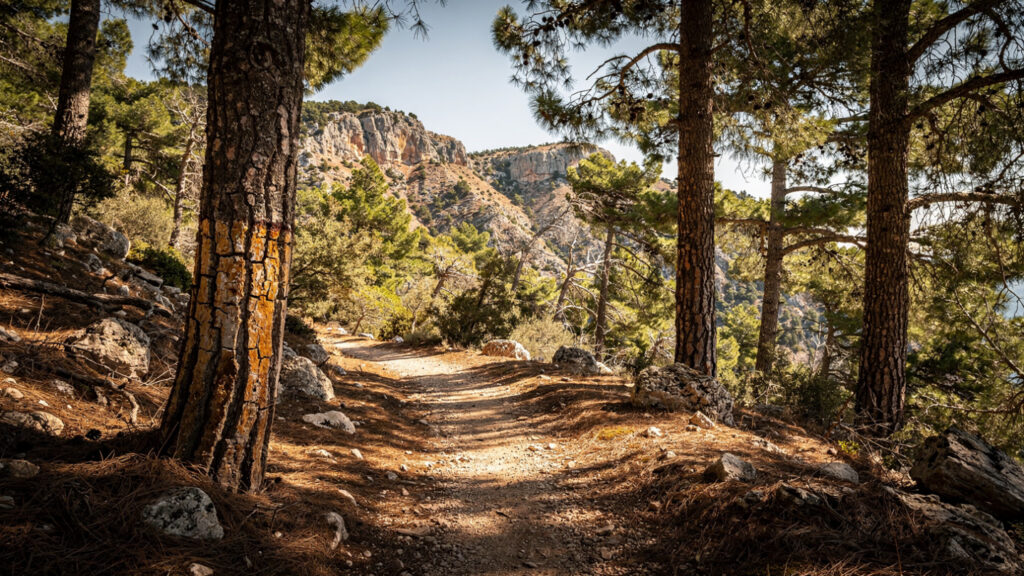
Major roads in Halkidiki follow the coastline. The interior is accessible on foot and by bike in ways that are inaccessible to anyone in a vehicle, which means the interior has a different relationship with solitude than the beaches. The pines that cover the slopes produce a combination of shade and resin smell that the coastal pine forests share but that the interior concentrates.
Go Underground at Petralona
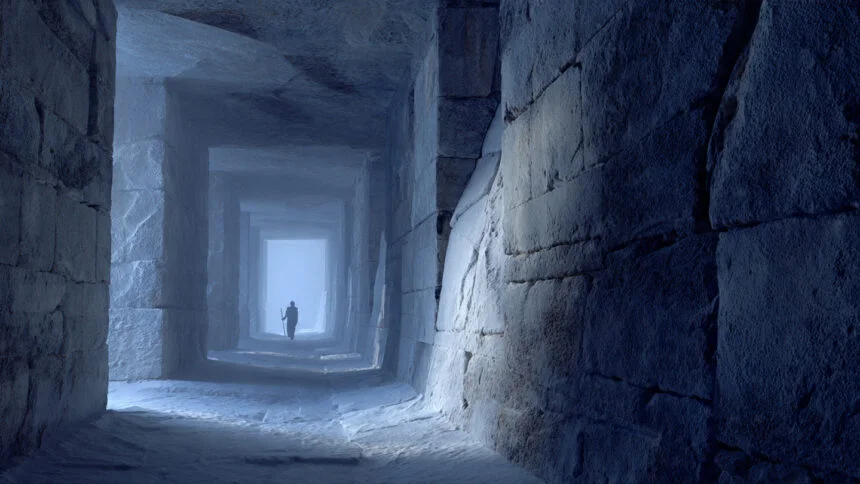
Petralona Cave, 50 kilometers southeast of Thessaloniki in the low limestone hills before Halkidiki’s three peninsulas diverge, contains what was found there in 1960: the skull of a hominid dated to approximately 700,000 years ago, alongside Paleolithic tools, animal bones, and the evidence of a cave occupation that predates any other human presence in Europe by a significant margin.
The scientific debate about the Petralona skull, its exact species classification, its precise age, and the interpretation of the surrounding finds, has not been fully resolved, which makes the site more interesting rather than less. A site that raises questions about what it is provides more to think about than a site that supplies only answers.
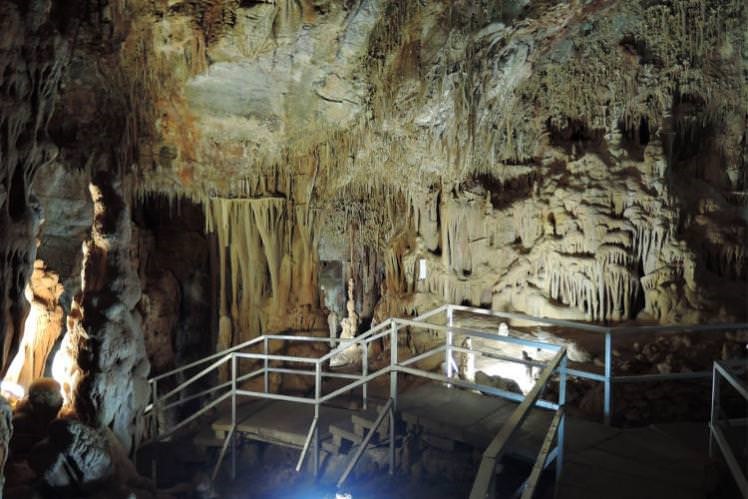
The cave itself is a substantial limestone formation with stalactites and stalagmites accumulated over the same geological time scale that produced the hominid who sheltered inside it. The combination of the geological and the archaeological, the ancient stone formations and the ancient human presence, is not a combination that many sites in Greece can offer in the same location. Petralona is consistently undervisited relative to its significance, for the reason that the hominid skull does not appear on the same tourist circuit as the Parthenon or the Palace of Knossos, and that undervisitation is the condition that makes it worth seeking out.
Take the Waters at Agia Paraskevi
On the southwestern coast of Kassandra, the Agia Paraskevi Thermal Baths are what they describe: spring water, naturally warm, fed into a bathing complex that offers public and private pools, a sauna, and a hammam.
The sulphur content of the water is perceptible in the air around the baths, a smell that has been associated with healing and with the divine in the traditions of multiple cultures, and that the contemporary visitor either adjusts to quickly or finds more difficult to accommodate. The therapeutic properties attributed to the water, particularly for skin conditions, are the reputation that similar springs across the Mediterranean have accumulated over centuries of use rather than the subject of controlled clinical investigation. They are the properties that people have returned to the spring to obtain, which is a form of evidence even if it is not the form that a pharmaceutical trial would produce.
The baths are a contrast to the public beach experience of Kassandra in the way that hot water in an enclosed space contrasts with cool water in an open one. Both are available within a short distance of each other on the same peninsula, which is the hospitality of a landscape that offers more than one way to be in the water.
Sail and Camp the Islands Between the Peninsulas
Between Kassandra and Sithonia, the Toroneos Gulf holds a scattering of small islands and islets that the ferries do not visit and the tourist infrastructure has not organized around.
Grigorios Delichristos runs group sailing and camping excursions to these islands, with an emphasis on the skills rather than the comfort: spear fishing, navigation by observation, the management of a camp on a beach without resort facilities. The silence that the excursions access is not the absence of noise in the way that a quiet hotel room is quiet. It is the silence of a small island in the northern Aegean when the wind has dropped and the nearest settlement is several kilometers of water away. This is a quality of the natural world that the organized beach experience is designed to fill rather than to provide.

The excursions are not for everyone, and they are not designed to be. The people who want the cocktail bar and the organized sunbeds will not find them. The people who want the island without the infrastructure will find exactly that, and the difference between the two experiences is the difference between visiting a place and being in it.
Kayak Toward the Evening Light
Sea Kayak Halkidiki, based in Vourvourou on the eastern coast of Sithonia, runs three-hour guided sea kayaking excursions timed to the quality of the late afternoon light over the Aegean.
Vourvourou sits within a protected bay whose orientation and the arrangement of the small islands at its entrance create the conditions that the excursions are designed around: the paddle out through sheltered water, the open Aegean as the destination, and the light from the west falling on the surface as the sun moves toward the Kassandra ridge behind. The copper and gold quality of the light on the water in this hour is what the excursion is built around, and the physical effort of paddling in the warmth of the late afternoon is the preparation for the stillness of arriving at the open water when the light is at its best.
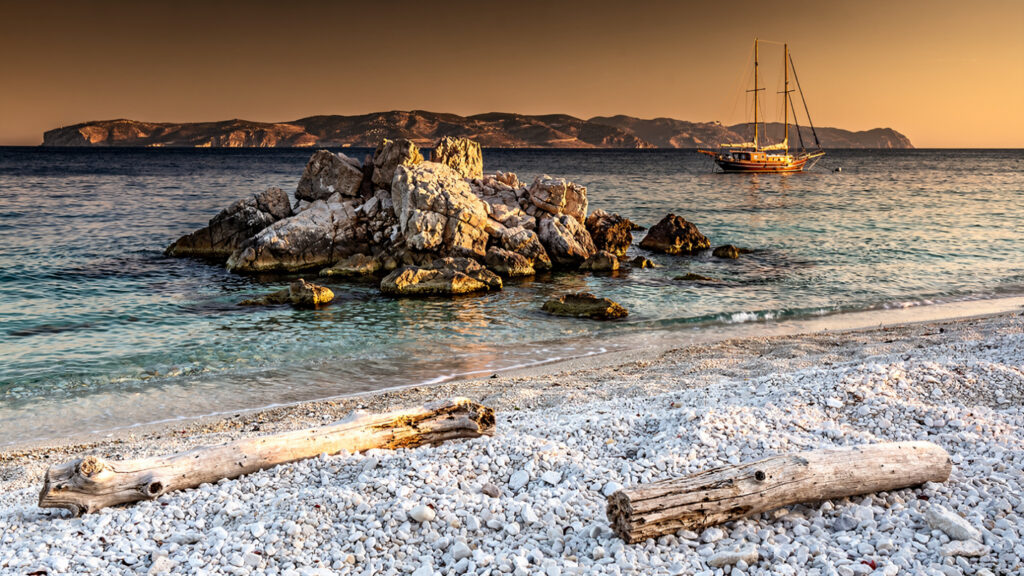
Three hours is the right duration for this experience: long enough to reach water where the peninsula is behind you and the open sea is what surrounds you, not so long that the effort subsumes the quality of the arrival.
Eat at the Source
The seafood tavernas of Sithonia are the most direct available access to what the sea off the peninsula holds, in the form in which it is best eaten: recently caught, simply prepared, and consumed in proximity to the water it came from.
O Giorgakis in Kalamitsi is the recommendation for the sundried and grilled octopus that is the Halkidiki signature preparation. The octopus is hung on lines to dry in the sun before it is grilled, a process that concentrates the flavor and changes the texture in ways that fresh-to-grill preparation does not achieve. The result has a density and an intensity that a visitor who has eaten octopus in other contexts will find distinct from previous experience.
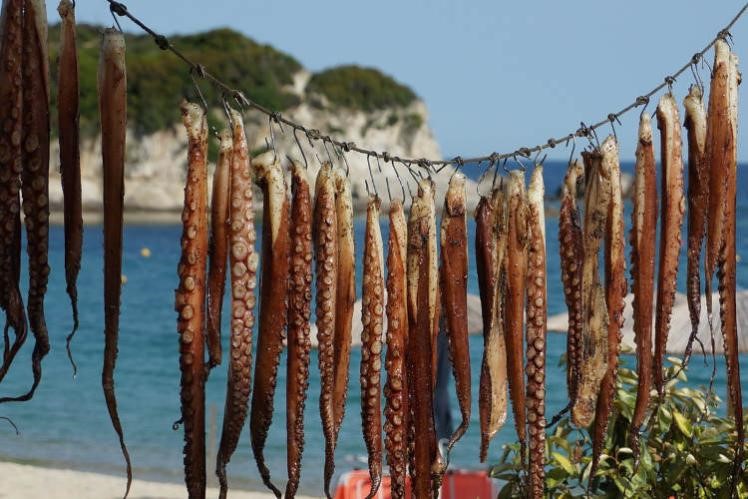
In Sarti, at the south end of Sithonia’s eastern coast, Kivotos positions its tables on the sand above the water, which provides the quality of a meal in which the relationship between what is being eaten and where it was caught is not a marketing claim but a visible fact.
Camp at Porto Elea
Porto Elea is a camping site on Sithonia’s northern coast that has been developed to the point where the word glamping, meaning the combination of camping and glamour, applies without embarrassment.
The site is at the end of a steep and unpaved road that filters out the visitors who would not enjoy it before they arrive. Those who make the descent find a private white-sand beach, an on-site taverna serving the local ingredients, a cocktail bar, and the cricket sound at night that the surrounding pines produce when the air is still. The accommodation ranges from equipped tents to small cabins, and the quality of sleeping within hearing distance of the water, accessible here without the infrastructure that most such positions on the Halkidiki coast have accumulated, is what the site provides that its competitors cannot match by the same means.
Private beach access in the northern Aegean does not require celebrity expenditure if the road to it is unpaved enough.
Visit Mount Athos by Sea
The Athos peninsula, the easternmost of Halkidiki’s three, has been under the governance of its monastic community for more than a thousand years and under an administrative arrangement that exempts it from ordinary Greek territorial regulations since the early twentieth century.
Male visitors who are spiritually inclined, prepared for the paperwork that access requires, and comfortable with the austere conditions of monastic hospitality can spend time in the monastery republic itself, moving through an environment whose daily rhythms have not substantially changed across the centuries of its operation. The arrangement of the working day around the liturgical hours, the quality of a community organized entirely around a purpose that is not economic or political, and the buildings that the twenty monasteries and their dependencies have accumulated across the millennium of the republic’s operation are available to those who qualify for entry.

Women travelers, and men who do not wish to apply for the entry permit, can see the coastline of the peninsula and the monastery buildings from the water through Athos Sea Cruises, which runs daily cruises from Ouranoupoli. The buildings that the monasteries have built along the cliff faces and above the shore, in positions that the medieval logic of defense and the spiritual logic of elevation determined and that the centuries have elaborated with additional structures, are best visible from the water in any case. The cruise provides the perspective that the coastline’s architecture was designed to be seen from, even if it provides only that perspective.
Stay in the Vineyards at Gerakini
The village of Gerakini sits where the forested interior of Halkidiki reaches the sea, on the coast between Kassandra and Sithonia in the part of the region that most visitors pass through rather than stay in.
Kostas House, a family-run accommodation within a working vineyard, is the suggestion for anyone who wants the combination of rural Halkidiki, direct access to what the land produces, and a host who treats the hospitality as personal rather than professional. Kostas, the host in question, is the kind of person who will not allow a guest to leave without having eaten his olives and drunk his wine, which is the form of hospitality that the tradition of Greek rural accommodation at its best provides: not service in the hotel sense but welcome in the older sense, the household opening what it has.
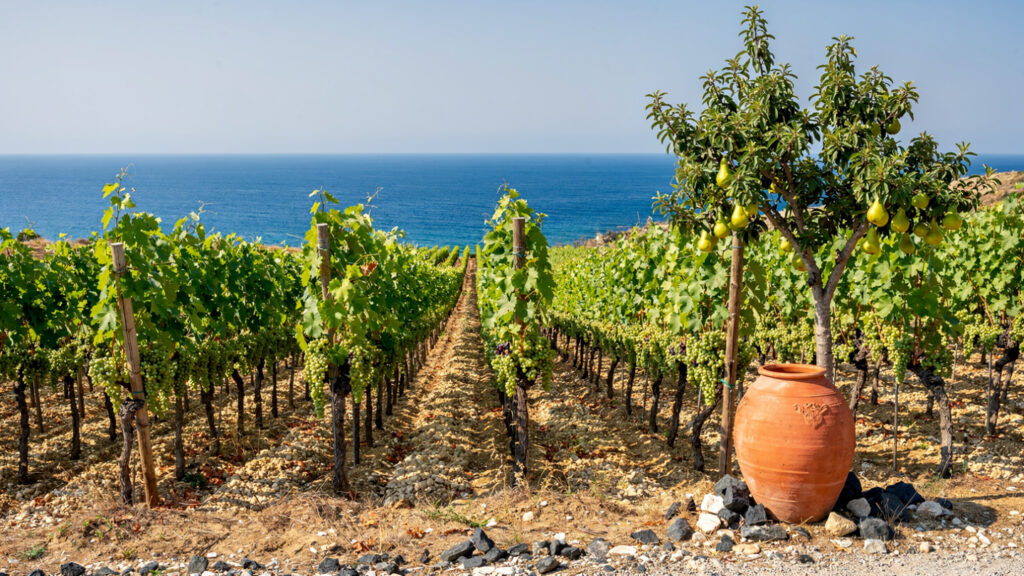
From the vineyard, the sea is visible at the edge of the horizon. The sunlounger that Kostas provides is in the garden rather than on the beach, and the coffee served in the flower-draped garden in the morning is the version of the Halkidiki morning that the beach resort cannot replicate because it requires the combination of stillness and proximity to working land that the resort design is organized to replace rather than to preserve.
The beach is still there, a short distance from the vineyard. It will be there when you have finished the wine.
At Olympus Estate, Wanderlust Greece guides you across the sacred and storied terrain of the Hellenic world, from the cave at Petralona where Europe’s oldest known human sheltered to the monastery republic on Athos that has not changed its purpose in a thousand years. Halkidiki is wider than its beaches. The interior is waiting.