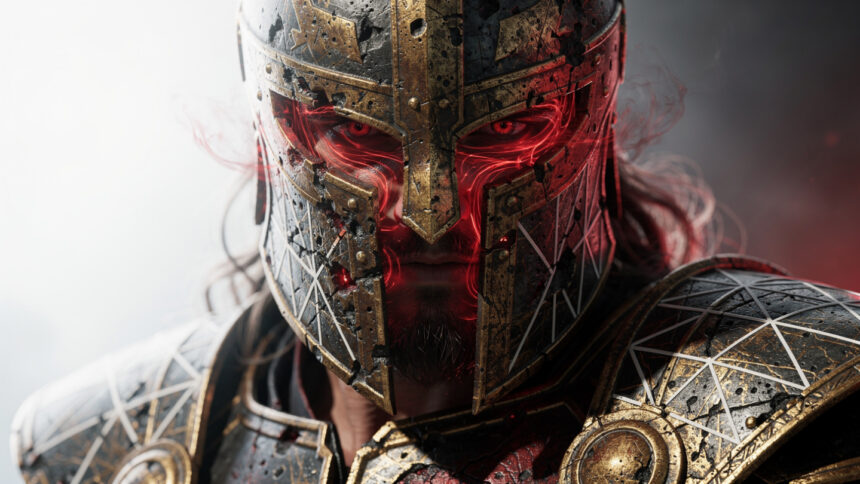




Achilles already knows he will die at Troy.
This is the fact that makes the Iliad what it is, and it is stated directly by Achilles himself in the poem’s ninth book, in the Embassy scene where Odysseus, Ajax, and Phoenix come to persuade him to return to the fighting he has withdrawn from. Agamemnon has offered him ships and silver and seven women and the hand of one of his daughters and seven cities and reconciliation. Achilles refuses everything.
And then he tells Odysseus why, and in doing so delivers the most precise statement about the relationship between life and fame that the ancient world ever placed in a single human mouth.
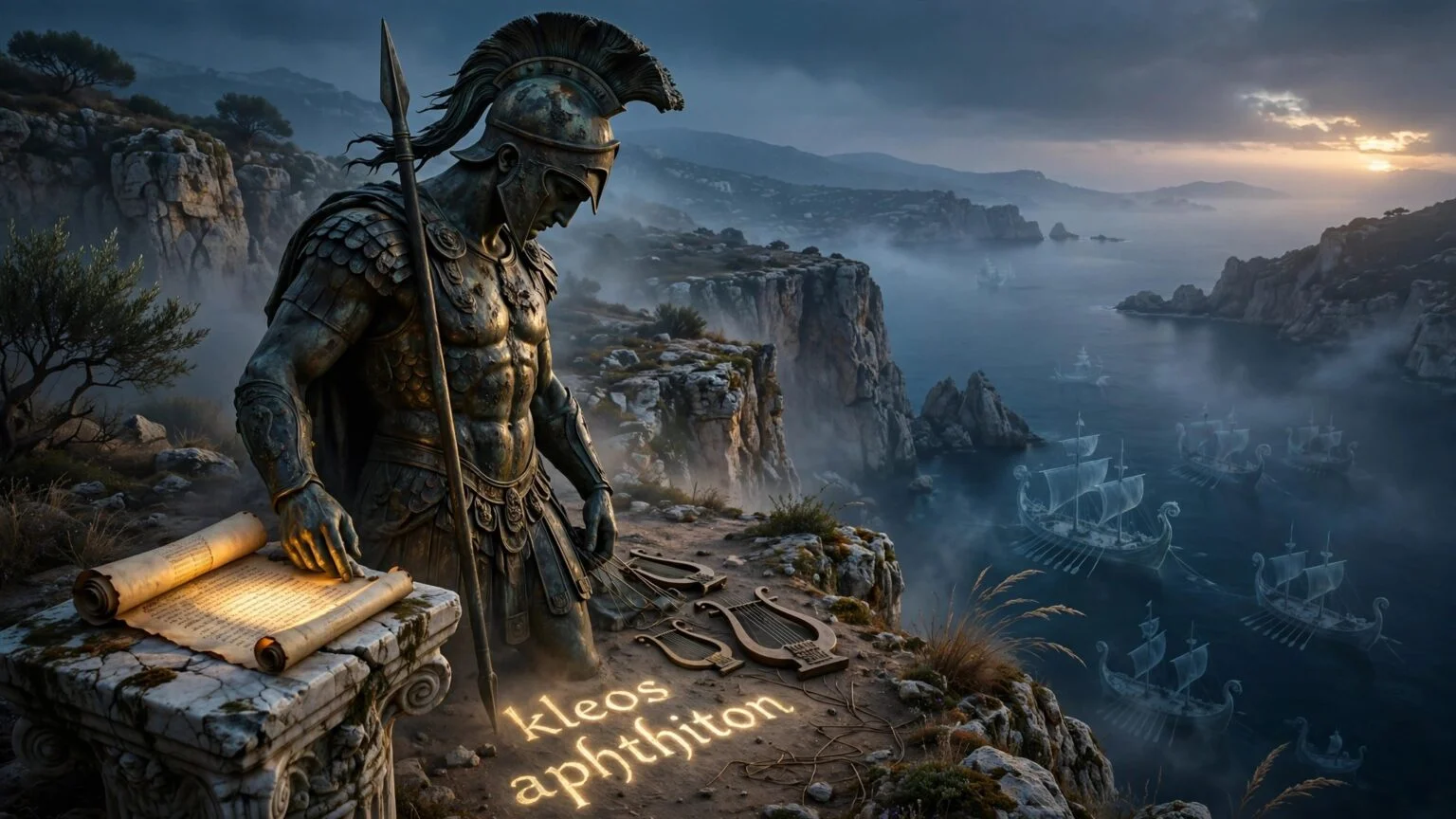
His mother Thetis, he says, has told him of two fates. If he remains at Troy and fights, his homecoming, his nostos, is destroyed, but he will have imperishable glory, kleos aphthiton. If he goes home to Phthia, his glorious fame is lost, but his life will be long and death will not find him quickly. These are the two available paths, and they are mutually exclusive. You cannot have both. The choice is not between life and death in the simple sense that everyone eventually faces it. The choice is between two kinds of life: short, brilliant, permanently recorded in song, structurally incapable of being forgotten because the song that records it is the vehicle of memory itself, or long, ordinary, eventually complete, and as thoroughly forgotten as most long, ordinary, eventually complete lives are.
The poem you are reading is the poem Achilles’s choice produced.
This is not a metaphor. The Iliad is the kleos of Achilles. The imperishable glory he chose when he chose to stay at Troy is the song. Not a song about him. Not a record of events he happened to participate in. The Iliad is what the choice produces: the tradition of performance and transmission that carries the name Achilles forward through time in exactly the way that a long life in Phthia, ending in old age, would not have carried it. Gregory Nagy, whose work on Homeric poetics provides the most rigorous modern account of this relationship, is explicit: the kleos of Achilles and the kleos of Odysseus are the Iliad and the Odyssey respectively, the two poems as the culmination of two distinct heroic traditions, each hero’s choice producing the song that preserves it. Achilles chose glory and got the Iliad. Odysseus chose homecoming and got the Odyssey. The two poems together are the full account of what the two available heroic destinies actually look like when lived to their conclusions.
The phrase itself, kleos aphthiton, appears exactly once in the entire Iliad, at this exact moment in Book Nine. Nagy has argued that its rarity is not an accident of composition but a fossil: the phrase has a close cousin in the Rigveda, the Sanskrit śrávas ákṣitam, meaning precisely the same thing, imperishable fame, built from cognate roots in a wholly separate branch of the Indo-European language family. The two phrases almost certainly descend from a single, far older poetic formula, inherited independently by Greek and Indic epic tradition from a common ancestor thousands of years older than either Homer or the Vedic poets. When Achilles reaches for the words to describe what he is giving up his life for, the Iliad has him reach for what may be one of the oldest surviving poetic phrases in the entire Indo-European world.
The Name Itself
Before any of this is argued through the plot, it is already encoded in the hero’s own name, in a way that scholarship following Nagy and the linguist Leonard Palmer has treated as one of the more significant findings in modern Homeric studies. Akhilleus breaks down into akhos, grief, and laos, the host of fighting men, the army, the people. The reconstructed compound behind the name means, roughly, he whose host of fighting men is grieving, or grief of the people.
This is not a name that announces glory. It announces sorrow, a sorrow that belongs to a collective rather than to Achilles alone. The word akhos itself is the very word the poem uses to describe what Achilles feels in its opening scene, when Agamemnon threatens to take Briseis, and it recurs at the other great hinge of the poem, in Book Eighteen, to describe what Achilles feels on learning of Patroclus’s death. A hero whose name literally means grief of the host spends the entire epic bearing exactly that: his own grief, transmitted outward, becoming the grief of the whole Achaean army when he withdraws from battle, and then, when he returns to it, becoming a source of grief for Troy instead. The name is not decoration. It is the poem’s own thesis about its hero, compressed into a handful of syllables long before the plot ever states it directly.
The Wrath and What It Was Protecting
The Iliad begins with the word menis, wrath, applied to Achilles, and this single word carries more freight than any other opening word in Western literature, not because wrath is intrinsically interesting but because the particular quality of Achilles’s wrath is what makes it philosophical rather than simply temperamental.
Agamemnon takes Briseis, the woman Achilles had been given as a prize of war. This is the trigger, and it looks, at first reading, like a quarrel over property, the kind of dispute that warriors in epics have regularly and that the narrative usually resolves through negotiation or combat. What makes Achilles’s response to the taking of Briseis different from any ordinary warrior’s response to any ordinary slight is the register in which he experiences it.
Briseis was a prize. In the Greek heroic value system, prizes are the external, publicly visible markers of a warrior’s worth: they are how the community acknowledges and records what a particular person has achieved in battle. When Agamemnon takes Briseis, he is doing far more than depriving Achilles of a woman. He is publicly undoing the acknowledgment that the community had made of Achilles’s worth, substituting his own arbitrary authority for the collective recognition that prizes are supposed to represent. He is, in the language the Iliad uses for this kind of transaction, dishonoring Achilles before the whole army.
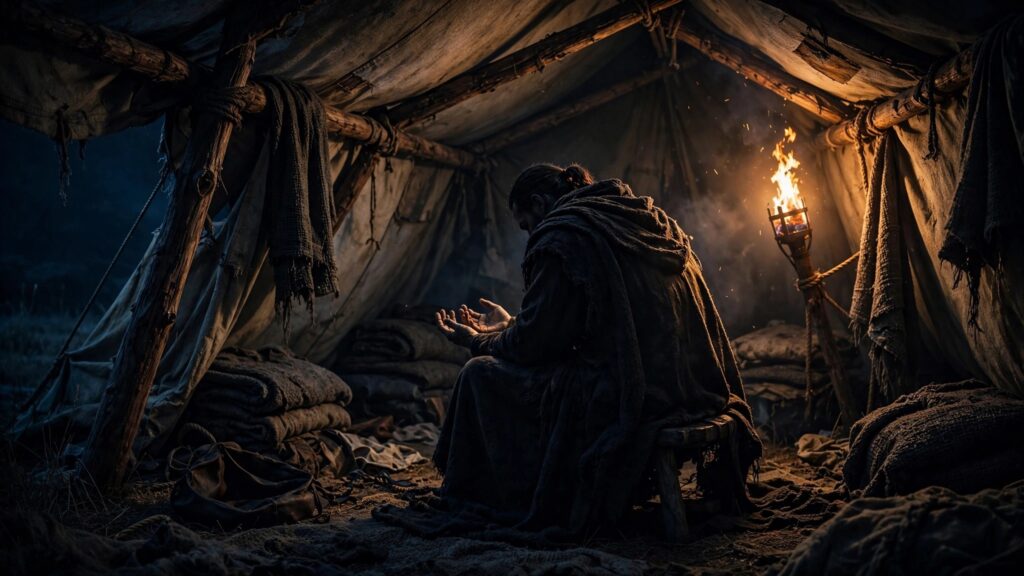
For any other hero, this would be a serious insult requiring a serious response. For Achilles, it is something considerably more structurally dangerous to his entire reason for being at Troy in the first place. He chose kleos. He chose the short life at Troy over the long life in Phthia because the short life at Troy was supposed to produce the imperishable glory that would carry his name forward through time. If the community that was supposed to acknowledge and record that glory is instead the community that publicly dishonors him, then the transaction he came to Troy to complete is not just disrupted. It is potentially voided. He is dying for the glory that the community was supposed to recognize, and the community’s representative has just announced that he does not recognize it.
This is why Achilles withdraws to his tent rather than fighting, or accepting the insult and moving on. He is not sulking in the ordinary sense. He is in a genuine philosophical crisis about whether the choice he made when he chose to stay at Troy rather than go home to Phthia is still the choice the situation can honor.
The Embassy and the Choice Stated Plainly
The Embassy scene in Book Nine, in which Odysseus, Ajax, and Phoenix come to Achilles’s tent with Agamemnon’s offers, is the Iliad’s philosophical center, and it is the scene that the scholarship of Gregory Nagy identifies as the most consequential single passage in Homeric poetry for understanding what the poem is actually about.
Odysseus states Agamemnon’s offer in full and then adds his own: come back and fight, you will have the prizes and the honor, and the Trojans are at the ships and Hector is invincible and the Greeks need you now.
Achilles rejects the offer, and in rejecting it he does something that no other Homeric hero does: he articulates, directly and without evasion, the full structure of the choice he made and what it means that Agamemnon has violated the terms on which he made it. The two fates passage is not merely a description of his situation. It is Achilles’s own account of what he understood he was choosing when he chose to stay at Troy, and what has now changed about the terms of that choice.
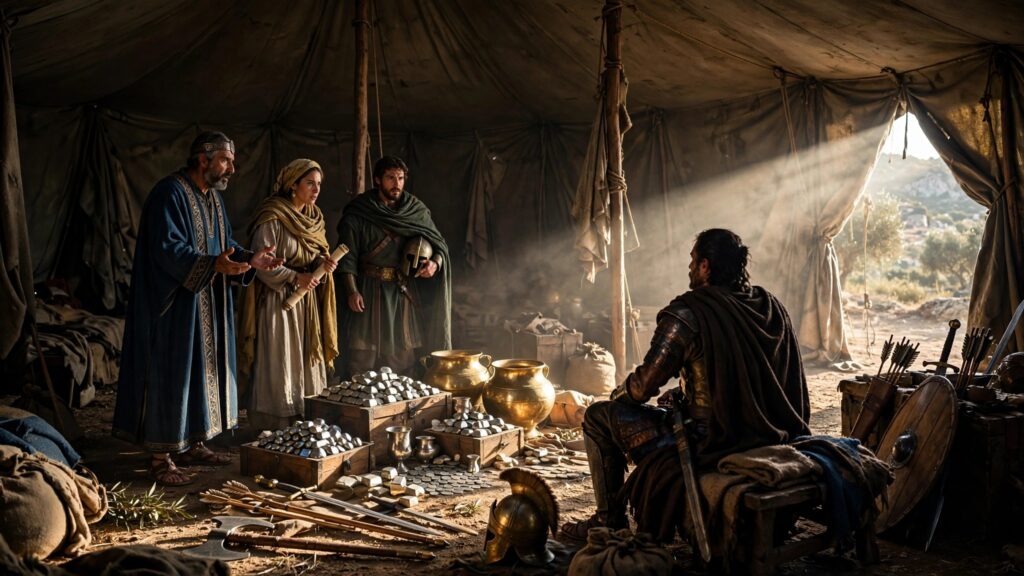
What has changed is not his desire for glory. What has changed is his understanding of whether the community at Troy can actually deliver what it was supposed to deliver. If Agamemnon takes what he wants regardless of what the warrior deserves, then the prizes that were supposed to carry the acknowledgment of heroic worth are not markers of worth at all. They are arbitrary tokens of power, given and removed at the whim of whoever holds the most power in the moment. And if that is true, then the short, glorious life at Troy is not what he was told it would be when he chose it over the long ordinary life in Phthia.
He tells Odysseus this directly. The speech to Odysseus in the Embassy scene is, as Nagy shows, a challenge to Odysseus’s entire heroic personality founded on cunning, the challenge that the hero of kleos addresses to the hero of nostos, each one confronting the other with the alternative choice, in the only scene where both options are simultaneously present in the same room.
Achilles ends by announcing that he will sail home to Phthia in the morning. He does not sail home. He stays, because the choice between life and glory is not one that a mind like Achilles’s, having made it once for reasons he still believes, can reverse on demand when the terms become difficult.
Sarpedon and the Same Logic, Reached by a God’s Own Son
Achilles is not the only figure in the Iliad who articulates this reasoning, and the second instance matters precisely because it comes from someone whose circumstances are, in one crucial respect, entirely different from his.
In Book Twelve, Sarpedon, a son of Zeus himself fighting on the Trojan side, turns to his companion Glaucus before a dangerous assault on the Achaean wall and lays out, independently and in his own words, essentially the same logic Achilles will later give Odysseus. If the two of them could escape this war and live forever, ageless and immortal, Sarpedon says, he would never fight in the front ranks himself, nor send Glaucus into the battle that brings men glory. But since the countless fates of death stand over mortals regardless, and no man can escape or avoid them, they may as well go forward and win glory for themselves, or yield it to someone else. Since death is coming no matter what a person does, in other words, the only real choice available is what a person does with the time death has already claimed.
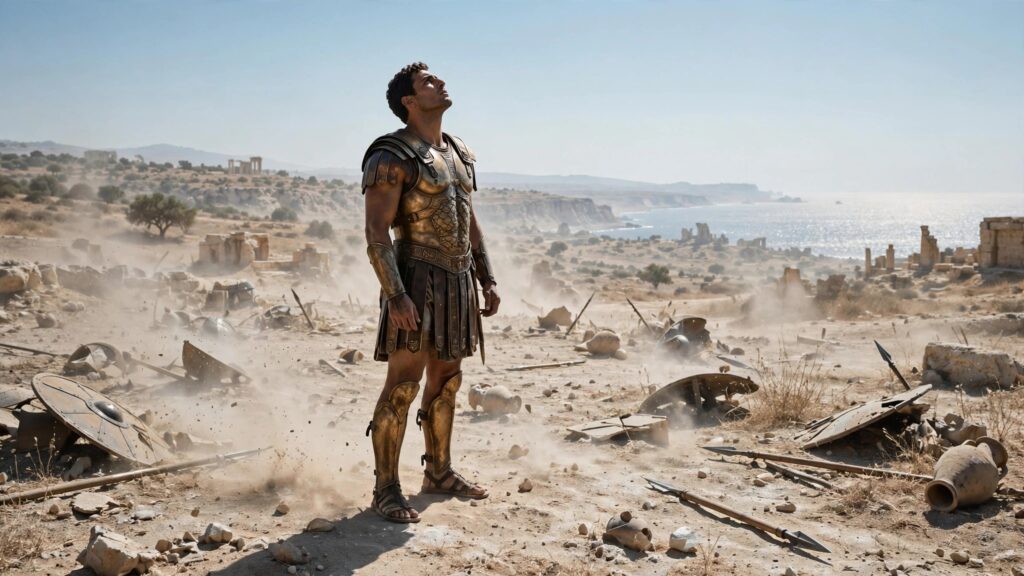
Sarpedon says this without any of Achilles’s own grievance, without a stolen prize or a public dishonoring behind it. It is the position a clear-eyed mortal, even a demigod, arrives at when he actually looks at his own situation. And Zeus, his father, king of Olympus and the one god who might plausibly have the power to change the outcome, cannot save him from it. When Sarpedon is finally killed by Patroclus later in the same book of the war this passage anticipates, Zeus weeps tears of blood and considers, for a moment, snatching his son from the battlefield before fate takes him. Hera talks him out of it, warning him that if he saves one mortal beloved by a god, every other god will demand the same exception for their own favorites, and the whole structure holding fate together will come apart. Zeus lets Sarpedon die. Even the king of the gods operates inside the same logic Sarpedon had already accepted for himself: the fates stand over mortals regardless, and no one, not even Zeus, escapes or avoids them by wanting to.
Patroclus and the Moment the Choice Closes
Achilles does not return to the fighting because Agamemnon’s apology becomes satisfactory. He returns because Patroclus dies.
Patroclus, who had been sent into battle wearing Achilles’s own armor to push back the Trojans from the ships, is killed by Hector. The death of Patroclus is the Iliad’s structural turning point, the event that converts Achilles’s philosophical crisis into something beyond argument: the one person whose death he caused by not being present to prevent it is the person whose death makes the philosophical crisis irrelevant because the emotional reality of grief overrides it entirely.
Achilles’s response to the news of Patroclus’s death is one of the most precise depictions of extreme grief in Western literature, and it is precise in a way that matters here: he does not just weep. He assumes the physical posture of the dead. He lies face-down in the dust, tears the dirt over himself, the physical performance of mourning that collapses the distinction between the mourner and the mourned because grief at this intensity makes the distinction temporarily impossible to maintain. His immortal mother Thetis comes to perform a lament over him while he is still alive, because the grief he is performing is the grief of his own death, and she knows, as he knows, that the decision to avenge Patroclus is the decision that will close the two-fates question permanently in the direction of the short life.
He knows, at the moment he decides to return to battle and kill Hector, that he is choosing to die. His mother has told him that Hector’s death and his own death are linked, that if he kills Hector he will die soon after. He accepts this with an explicitness that no other Homeric hero brings to the question of his own mortality: he says, let me die now, since I was not there to defend my companion.
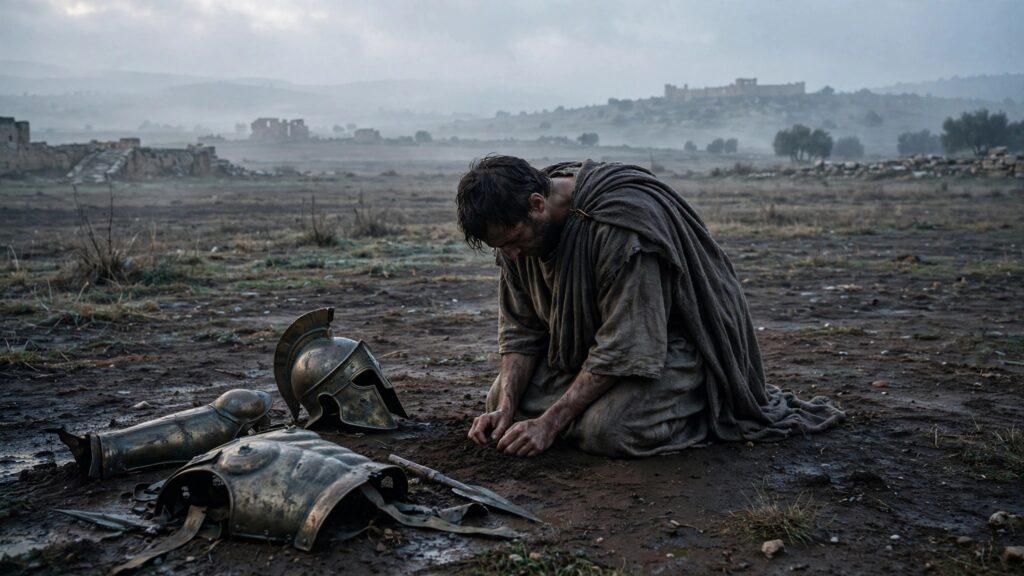
This is not the original choice between kleos and nostos restated. It is something beyond that choice, the decision of a person who has already made the fundamental choice once and who is now, in the grief of an irreplaceable loss, making the second choice that the first was always building toward: not the abstract philosophical selection of the short glorious life over the long ordinary one, but the immediate, grief-driven, love-motivated commitment to a particular course of action that the original philosophical choice merely made possible.
The original choice made him available for this moment. This moment is why the original choice was the right one. Not because glory is worth dying for in the abstract, but because the person Achilles was, the person formed by the original choice and the values it expressed, was the person who, when the moment required it, was capable of choosing grief-driven loyalty over self-preservation without a moment’s hesitation.
Hector and the Other Man’s Choice
The Iliad is not only Achilles’s story. It is also Hector’s, and the contrast between the two men’s relationships to the choice between life and glory is the poem’s most sustained and most carefully constructed philosophical argument.
Hector wants to go home. Everything in his psychology, every scene the poem gives him outside of battle, points toward the life in Troy that the war is preventing him from living: the scene with Andromache on the walls of Troy where she begs him to stay inside the walls, the scene with his infant son Astyanax, who cries at the sight of his father’s plumed helmet, the conversations with Paris, whose irresponsibility and cowardice are the war’s proximate cause and whose continued existence Hector defends because he is his brother. Hector is the Trojan hero who chose nostos, who chose the domestic life, the city, the wife, the child, over the abstraction of imperishable glory, and who is fighting this war not because he wants kleos but because he is too responsible to let his city burn without defending it.
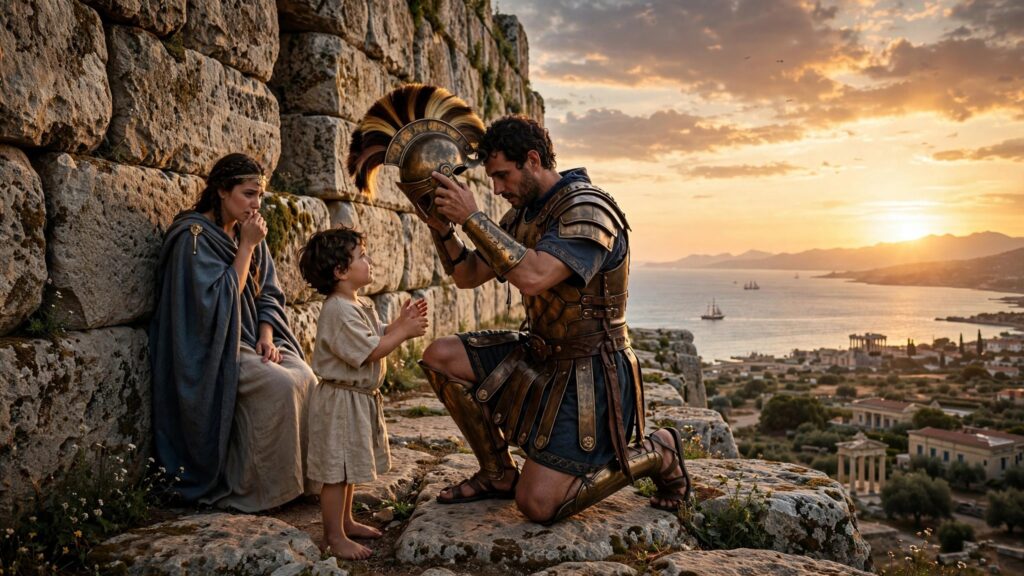
He is also, by almost every metric the poem applies, a better man than almost anyone else in it. He is braver than Paris, more loyal than Agamemnon, more morally consistent than Achilles in his moments of wrathful withdrawal. He is the poem’s most sympathetically drawn figure, and he is the man Achilles kills.
The theology of this is precise. The Iliad is not merely the story of Achilles winning a war. It is the story of a particularly Iliadic mode of heroism, the kleos-oriented, death-accepting, glory-choosing heroism that Achilles embodies, destroying the equally particular nostos-oriented, life-loving, city-defending heroism that Hector embodies. The Trojan War is, in the poem’s own mythological frame, fated to end in Troy’s destruction and Hector’s death. The question the poem asks is not who wins but what it costs and what it means. And the answer it gives is: the kleos of Achilles costs the life of the best man on the other side, the man who chose what Achilles refused to choose and who was destroyed by the person whose life was the argument against that choice.
The Meeting With Priam and What It Reveals About Achilles
The Iliad’s final movement, the meeting between Achilles and Priam in Book Twenty-Four, is the scene that reveals what the choices of the poem have cost both of them and what the cost has produced in Achilles above all.
Priam comes to the Greek camp at night, alone and unarmed, led by Hermes in disguise, to ransom the body of his son Hector from the man who killed him. He enters Achilles’s tent and does something that no king in any heroic literature does: he kneels at the feet of his son’s killer and asks for the body back.
Achilles’s response has been the subject of more commentary than almost any other passage in the Iliad, because it demonstrates a quality of moral imagination that the preceding twenty-three books have given no particular reason to expect. He does not just feel pity. He sees, with real clarity, the structural parallel between Priam’s situation and his own father Peleus’s situation: both old men whose sons have chosen the short glorious life over the long ordinary one, both men who will outlive their children, one already having done so. The grief that Achilles performs with Priam, weeping together over their respective dead while the body of Hector lies on the floor of the tent, is the poem’s most complete account of what the kleos-choosing heroism actually costs the people who are left behind by it.
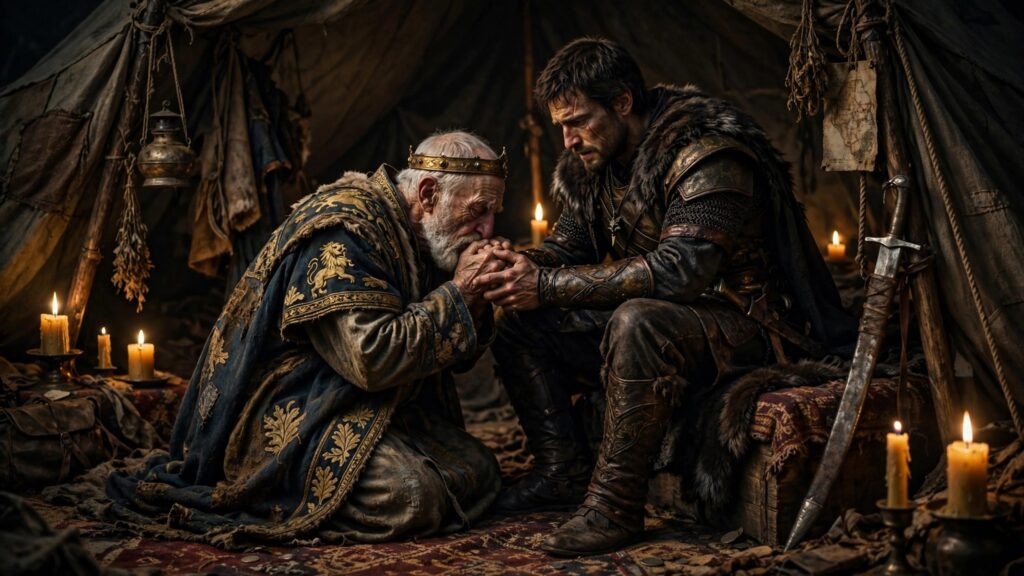
And Achilles, in this scene, becomes capable of something that the Achilles of the first book, who could not manage his wrath in the face of a violated prize, could not have managed: he gives Priam what he came for, gracefully, with genuine kindness, and he guarantees eleven days of truce for Hector’s burial. The hero whose wrath structured twenty-four books of epic poetry finds, at the poem’s end, the form of human connection that his own choice was always preventing him from sustaining: the relationship with another person that costs him something real rather than something abstract.
The poem ends with Hector’s burial. Achilles’s own death is not shown. The Iliad is the kleos of Achilles, not his funeral.
The Underworld and the Second Thoughts
The moment that the entire mythology most consistently fails to read as what it actually is comes in the Odyssey, in Book Eleven, when Odysseus descends to the underworld and encounters the shade of Achilles among the dead.
Odysseus praises Achilles: no man was more blessed than you, he says, before in life and now here among the dead, where you rule as a great king. Achilles responds with what is usually read as the poem’s acknowledgment that Achilles regrets his choice: do not speak soothingly to me of death, he says. I would rather be a hired hand on earth, working for a poor man with little land, than rule as a king over all the dead who have perished.
The standard reading treats this as Achilles admitting that the choice of kleos over nostos was wrong, that when he actually experiences the death the choice required, he wishes he had chosen the long ordinary life. This reading is not wrong, exactly, but it is incomplete in a way that matters.
What the shade of Achilles is expressing in the underworld is not the abstract judgment that kleos was not worth dying for. It is the immediate, embodied experience of death as the absence of the physical life whose quality made the choice of kleos meaningful in the first place. The shade who says he would rather be a slave in the sunlight than a king in the underworld is saying something true about what death is: the loss of the sensory, relational, embodied life that made any choice at all possible. He is not recanting the choice. He is experiencing what the choice cost with the full clarity of having completed the experience.

And the response of the shade to Odysseus’s questions about the living, above all his questions about his son Neoptolemus and about old Peleus, is entirely consistent with the Achilles who chose kleos: when Odysseus reports that Neoptolemus was brave and skilled and returned home safely, Achilles strides away across the field of asphodel with great steps, rejoicing because his son was spoken of as brave. The man who said he would rather be a slave than a king of the dead is striding with joy because his son’s kleos has been reported to him by a living witness. He has not changed his values. He is in the underworld experiencing what the values cost, and the cost is real, and he is still, in some fundamental sense, the person who chose them.
What the Iliad Was Building
The scholarly framework that Gregory Nagy developed for understanding the Iliad places the poem itself at the center of what the story is about, and it is worth stating this directly because it changes the way the whole mythology reads.
The kleos aphthiton, the imperishable glory, that Achilles chooses when he chooses to stay at Troy over going home to Phthia is not only fame in the abstract sense that people will remember his name. It is, more precisely, the glory that comes from being the subject of song, from being the person whose deeds are preserved in the tradition of oral epic performance that the Iliad represents. The kleos is the Iliad. The choice Achilles makes in Book Nine, the choice to stay and die and be remembered, is the choice to become the Iliad’s subject, to trade the life in Phthia for the poem that carries his name forward through time.
This makes the Iliad’s existence a kind of proof of its own argument. The fact that we are reading this poem, twenty-eight centuries after the tradition that produced it was first performed, is the demonstration that Achilles made the right choice in the terms the choice was offered in. He wanted imperishable glory. The Iliad is imperishable glory. Every person who has read the poem since it was first performed has been, in a direct and non-metaphorical sense, the continuation of the transaction Achilles completed when he chose to stay at Troy.
Odysseus went home. He got the Odyssey, which is also imperishable. But the Iliad and the Odyssey together demonstrate the asymmetry that the two choices produced: the Iliad is the poem of a man who chose death, and its emotional register is grief, honor, wrath, and the specific kind of love that a person who knows they are going to die soon directs toward the people and things they are losing. The Odyssey is the poem of a man who chose life, and its emotional register is longing, cunning, patience, and the quality of endurance that surviving requires. Both are complete. Both are their hero’s choice made legible.
Achilles chose the poem. The poem is still here.
What the Choice Means Now
The question the Iliad poses through Achilles’s choice is not a question that the twenty-eight centuries since the poem was first performed have made easier to answer. If anything, the terms in which it is posed have become more rather than less pressing in a world that has more ways than ever to choose between the short brilliant life fully committed to a single, defining purpose and the long ordinary life that keeps its options open.
Achilles’s choice is not the choice between literally dying young and living long. It is the choice between the life organized around a commitment so total that it forecloses the alternatives, and the life organized around the preservation of alternatives, the life that keeps going home possible. The nostos is not only survival. It is the mode of life that values continuity, return, the maintenance of the relationships and the place that make a person’s life legible as their own. Odysseus chooses this, and the Odyssey is his poem because the poem of continuity and return requires twenty years of narrative and the full range of human experience to do it justice.
Achilles chooses the alternative: the life so fully committed to a single, defining purpose that the purpose and the life become identical, the life in which the question of what to do is always already answered by the nature of the commitment, and the only remaining question is whether the commitment will be honored or betrayed by the people who were supposed to honor it.
He chose the poem. He died young. He is still here, in the poem he chose, in the Greek words that the Iliad preserves in the mouth of a hero who knew what he was choosing, told Odysseus exactly what it was, and chose it anyway in front of the person whose own life embodied the alternative.
The poem is the proof that the choice was the right one in the terms the choice offered.
Whether those were the right terms is the question the Iliad leaves open, in the underworld, in the shade of Achilles striding away across the asphodel with great steps, rejoicing at a son’s reported bravery, in a place where all the choices are finished and only their consequences remain.
At Olympus Estate, Tales from Olympus moves through the deeper currents of the Greek tradition. Achilles’s name itself, built from akhos, grief, and laos, the host of fighting men, announces the poem’s argument before the plot ever states it. He tells Odysseus in Book Nine that his mother gave him two fates: a long forgotten life in Phthia, or imperishable glory, kleos aphthiton, a phrase that appears exactly once in the entire Iliad and shares a common Indo-European ancestor with a nearly identical Sanskrit phrase in the Rigveda. Sarpedon, a son of Zeus, reaches the same conclusion independently in Book Twelve, and Zeus himself cannot save him from the fate that logic leads to. Achilles chooses kleos, loses Patroclus, and returns to a battle he knows will kill him. He meets Priam in Book Twenty-Four and becomes, for the first time, capable of a grief that costs him something real. In the underworld, in the Odyssey, his shade says he would rather be a living slave than a dead king, and in the same breath strides away rejoicing at news of his son’s courage. He chose the poem over the life. The poem is still here.