




The three cheeses do different things and the peppers need all three.
Katiki Domokou, the soft fresh cheese made in the mountain town of Domokos in central Greece, is the base: light, mildly acidic, with the creaminess that fresh goat and sheep milk cheeses from the Greek mountain dairy tradition produce. Anthotyro, the whey cheese that the cheesemaker produces from the liquid left after the primary curd has been separated, is granular and slightly sweet, adding texture to a mixture that the katiki alone would make too uniform. Cream cheese is the binder that holds the two together and moderates the acidity of the katiki and the sweetness of the anthotyro into a filling with enough coherence to stay inside the pepper through the baking.
The dill and the parsley do different things too. Dill carries an aromatic character in the Greek kitchen that no other herb replicates: feathery and slightly anise-scented, it is the herb of the fish dishes and the egg dishes and the cheese dishes of the Greek table, present in spanakopita and in the fillings of the stuffed vegetables that the Greek summer table organizes around when the garden is producing more than the household can eat without intervention. Parsley is the brightness, the green freshness that the dill’s warmth requires to stay in proportion. Together, with the sweet paprika that adds color and a mild earthiness to the filling, they produce a mixture that the roasted pepper intensifies and completes.
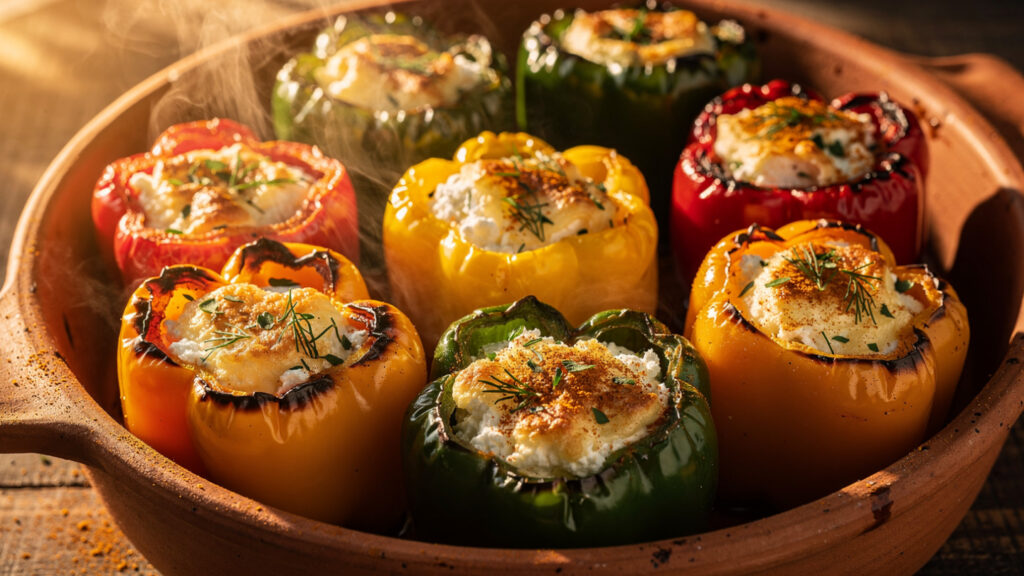
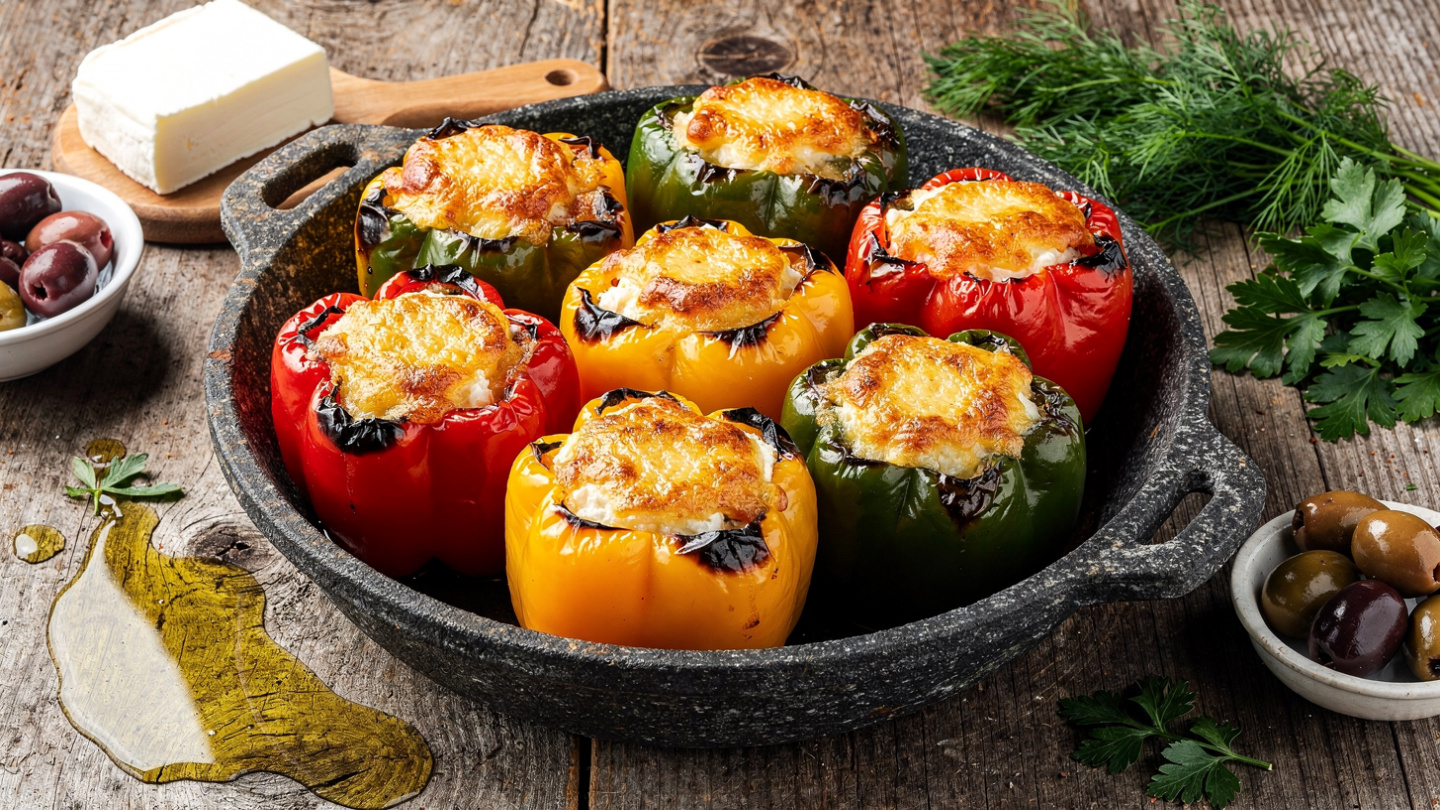
The pepper itself is the vessel and the flavor both. Bell peppers roasted in the oven develop a sweetness that raw peppers do not have, the sugars in the flesh caramelizing as the heat concentrates them, and the slight char that the highest heat produces at the top of the stuffed pepper, where the filling is exposed to the oven air, is the flavor element that distinguishes a properly baked stuffed pepper from one that has been heated rather than cooked. The blanching step that precedes the stuffing, ten minutes in boiling salted water to soften the pepper before it goes into the oven, ensures that the pepper finishes at the same time as the filling rather than requiring a longer oven time that would overbake the cheese.
The Cheeses and Their Origins
The Greek cheese legacy is one of the oldest and most regionally diverse in Europe, and the three cheeses this recipe uses represent three distinct categories within it.
Katiki Domokou takes its name from Domokos, a small town in the Fthiotida regional unit of central Greece near the Thessaly border, where the combination of local goat and sheep milk and the established cheesemaking practice produces a cheese with a Protected Designation of Origin. The PDO status means that Katiki Domokou can only be made in the geographic area the designation defines, using milk from animals raised in that area, according to the recognized method. The result is a cheese that carries the character of the Fthiotida mountain pastures in its flavor in the same way that the Assyrtiko grape carries the character of the Santorini volcanic soil.
If katiki Domokou is unavailable outside Greece, creamy goat cheese or labneh is the closest available substitute: the mild acidity, the soft texture, and the fresh dairy character are the qualities to replicate. The substitute will produce a good filling. It will not produce the flavor that the Domokos cheese produces in its own landscape.
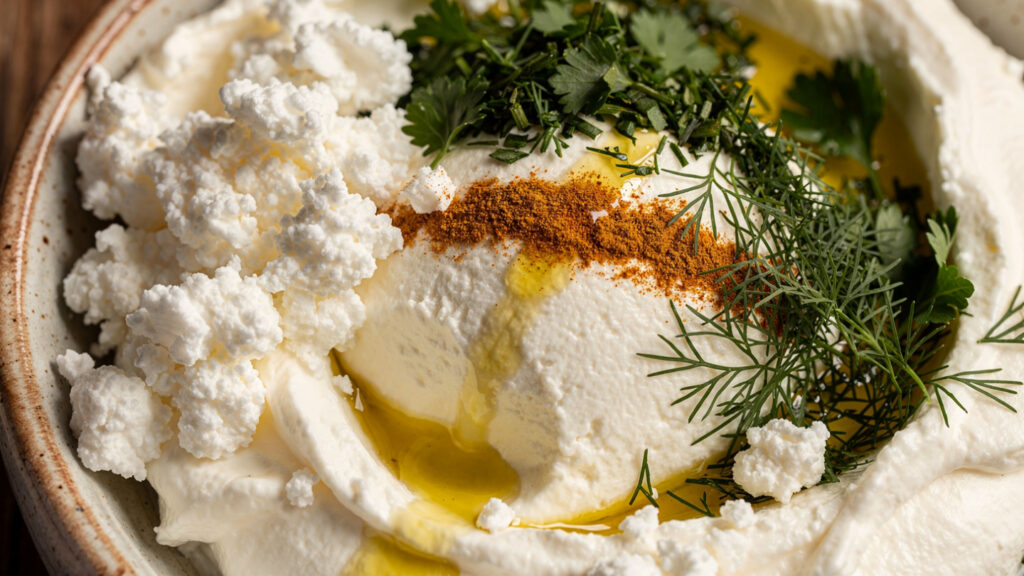
Anthotyro, whose name means flower cheese in the Greek compound, is a whey cheese in the same family as ricotta: made from the whey that the primary cheesemaking process leaves behind, cooked until the remaining proteins coagulate, and then drained into its characteristic mounded form. The fresh version is soft and slightly granular. The aged version is harder and more concentrated. This recipe uses the fresh version, and ricotta is the straightforward substitute where anthotyro is not available.
The optional kasseri topping, the semi-hard yellow cheese that produces a golden crust when grated and baked, is the recipe’s finishing element rather than its structural one. Grated mozzarella achieves the same visual result. The grated parmesan that some versions use has too much concentrated flavor to stay in the background where the topping should be.
The Peppers and Their Selection
Bell peppers vary significantly in sweetness depending on their color, which reflects their degree of ripeness at harvest.
Green bell peppers are harvested before they have fully ripened, which means they retain more of the grassy, slightly bitter character of the unripe fruit alongside their color. Red, yellow, and orange peppers are the same varieties harvested later, after the chlorophyll has broken down and the pigments of the ripe fruit have developed along with the sugars that sweetness requires. A mixture of red, yellow, and green peppers on the same baking dish produces the visual appeal that the recipe’s presentation depends on while also producing three slightly different flavor experiences in the same meal: the sweetest pepper from the red, a lighter sweetness from the yellow, and the more savory character from the green.
The size of the pepper determines how much filling each one holds, which determines the ratio of cheese filling to pepper in each portion. A medium bell pepper of approximately 150 grams, the size that most markets sell as standard, produces a portion in which the filling and the pepper are roughly equal in volume. A large pepper tilts the ratio toward the pepper flavor. A small pepper is dominated by the filling. The medium is the correct size for this recipe.
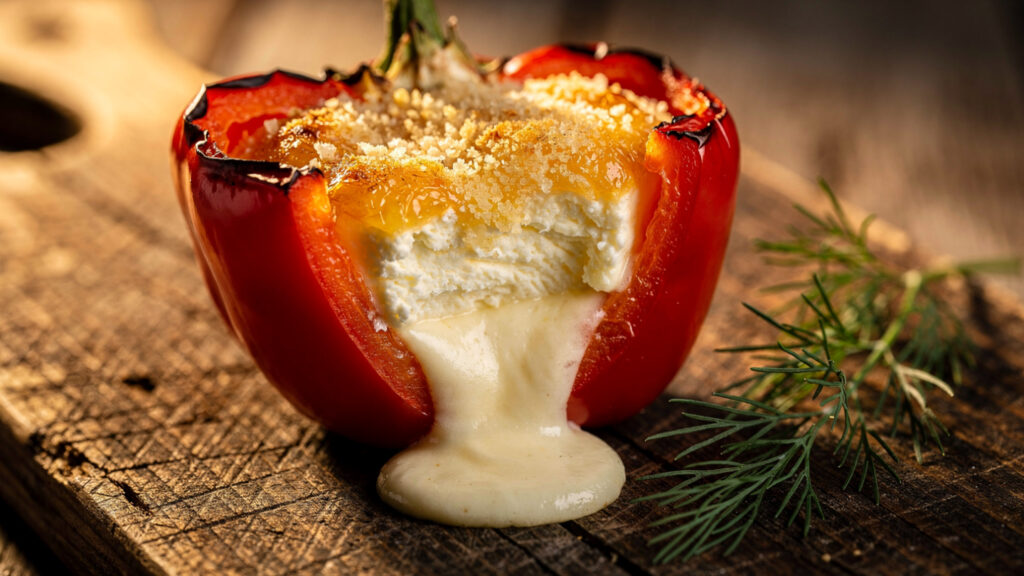
The blanching step is not optional if the goal is even cooking. A raw pepper put directly into the oven at 180°C requires considerably more time to soften than the 25 minutes the recipe specifies, and the longer time would overbake the cheese filling before the pepper reaches the texture that the dish requires. The ten-minute blanch brings the pepper to a state of partial softness, warm all the way through, so that the oven time finishes the pepper and melts and colors the filling simultaneously.
The Recipe
The dish is served warm from the oven with a simple accompaniment: a Greek salad made from the summer vegetables that are in season at the same time the peppers are, dressed with olive oil and dried oregano, or a piece of bread for the filling that escapes the pepper during eating. A dry white wine from the Greek mainland or islands, the Assyrtiko of Santorini or the Robola of Kefalonia, suits the filling’s dairy and herb character.
At room temperature, the stuffed peppers are fully satisfying in a way that many hot dishes are not when cooled: the cheeses firm slightly as they cool, the pepper flavor concentrates, and the herb character of the dill and parsley becomes more pronounced against the cooled fat of the cheese. This is one of the dishes that the Greek kitchen makes as readily for a midday meal eaten outside as for an evening table, and the room temperature version is not a compromise but a different and equally valid expression of the same preparation.
Olympus Estate · Food & Seasonal Life
Stuffed Colorful Peppers with Katiki, Anthotyro and Fresh Herbs
Three Greek cheeses, summer herbs, and roasted sweet peppers. A light Mediterranean recipe for the season when the peppers are at their sweetest.
Ingredients
- Bell peppers, mixed colors (red, yellow, green)6 medium
- Katiki Domokou (or creamy goat cheese)200 g
- Anthotyro (or ricotta)200 g
- Cream cheese200 g
- Extra virgin olive oil4 tbsp
- Sweet paprika2 tsp
- Fresh dill, finely chopped2 tbsp
- Fresh parsley, finely chopped1 tbsp
- Kasseri cheese, grated (optional topping)to taste
- Sea saltto taste
Method
-
1
Prepare the peppers
Wash the bell peppers and slice off their tops. Remove all seeds and internal membranes, leaving a clean cavity for the filling. Set the tops aside if you wish to use them as lids for presentation.
-
2
Blanch until softened (10 min)
Bring a large pot of salted water to a full boil. Add the peppers and blanch for 10 minutes until they begin to soften. Drain and place upright on a clean cloth or kitchen paper to remove excess moisture before filling. This step ensures the pepper and filling finish cooking at the same time in the oven.
-
3
Mix the filling
In a large mixing bowl, combine the katiki, anthotyro, and cream cheese. Use a fork to mash and blend them together until the mixture is smooth and uniform. Add the paprika, olive oil, dill, and parsley. Season with salt. Mix thoroughly until the filling holds together in a creamy, herb-flecked mass.
-
4
Fill and arrange
Preheat the oven to 180°C (350°F). Lightly oil a baking dish large enough to hold the peppers upright without touching. Spoon the filling generously into each pepper, pressing it down to remove air pockets and filling to just below the rim.
-
5
Bake until golden (25 min)
Drizzle a little olive oil over the exposed tops of the filling. If using kasseri, scatter the grated cheese over each pepper now. Bake for 25 minutes until the tops are golden and the filling has a slight crust at the edges. The pepper should be fully tender when pierced with a knife.
-
6
Rest and serve
Remove from the oven and rest for 5 minutes before serving. Serve warm with a simple Greek salad and good bread, or allow to cool to room temperature for a picnic or midday table. The filling sets slightly as it cools and the flavors deepen.
At Olympus Estate, Food and Seasonal Life traces Greek cuisine as a living calendar, from the summer pepper harvest that fills the market stalls of every Greek town in August to the mountain cheese traditions that produce the katiki and anthotyro this recipe depends on. The Greek table is always seasonal. The stuffed pepper is one of its most direct expressions.