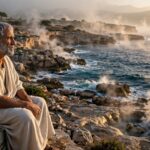


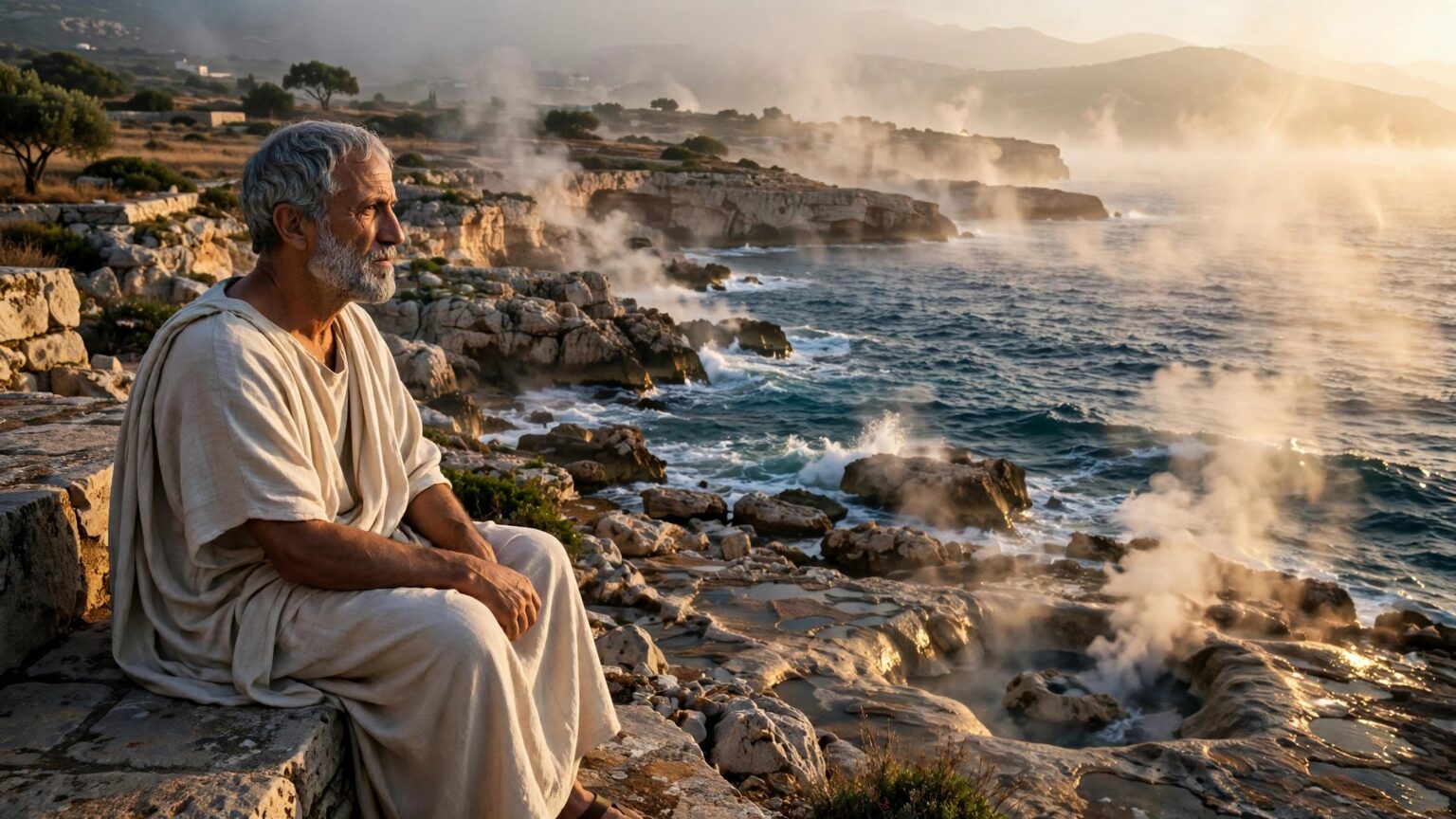
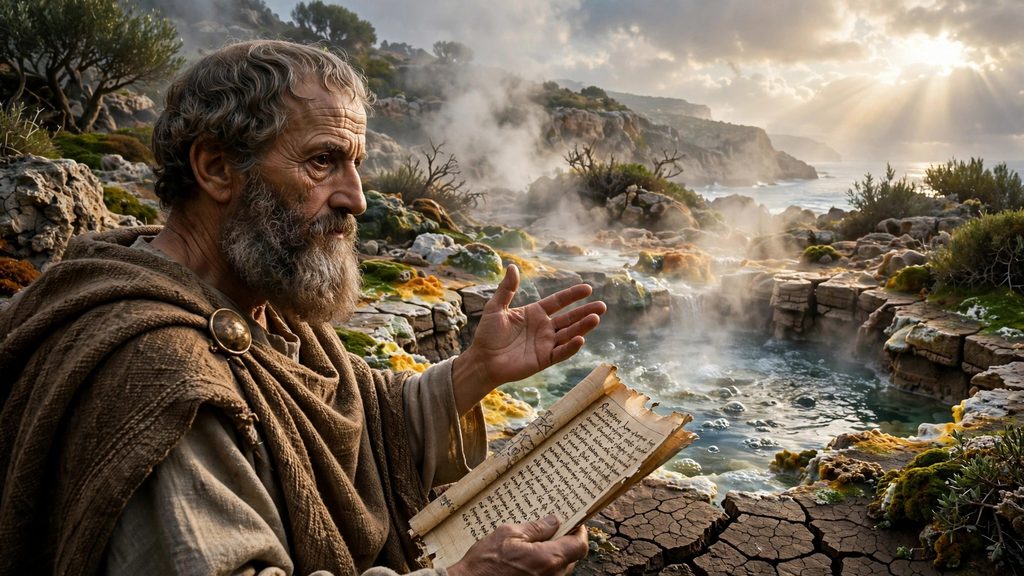
Aristotle did not visit the hot springs of Euboea as a tourist. In his Meteorologica he was working through a much older question, why the earth produces water that arrives already warm, treating the phenomenon as a subject for natural philosophy centuries before anyone thought to build a hotel over the answer. Elsewhere, at the very same springs, an entirely different explanation had already taken hold, one involving gods, heroes, and a landscape where the boundary between the natural and the divine seemed unusually thin. Centuries later, Plutarch records a third kind of visitor entirely: Sulla, the Roman general, crossing to Euboea because his feet had begun to fail him, using the hot waters for relief from what Plutarch identifies as gout. Three different centuries, three different reasons for entering the same water.
That layering is what makes Greek thermal springs more interesting than the spa industry now built around them. The hotels are recent. The bathing is not. Greece sits within one of the most geologically active regions of the Mediterranean, where the South Aegean volcanic arc and the collision of the African and Eurasian plates allow groundwater to descend, heat at depth, gather minerals, and return to the surface across more than seven hundred natural outlets. Modern regulation recognizes a far smaller number, around twenty, as officially certified therapeutic resources, and that distinction between the total number of warm springs and the handful that carry formal medical certification is worth holding onto rather than collapsing into a single romantic claim about ancient wisdom. The Greeks did not have the modern regulatory vocabulary, but they made their own distinctions. A spring could be sacred, useful, famous, or simply strange, and it was not unusual for one spring to become all of those things across different centuries.
The Mythology of Hot Water
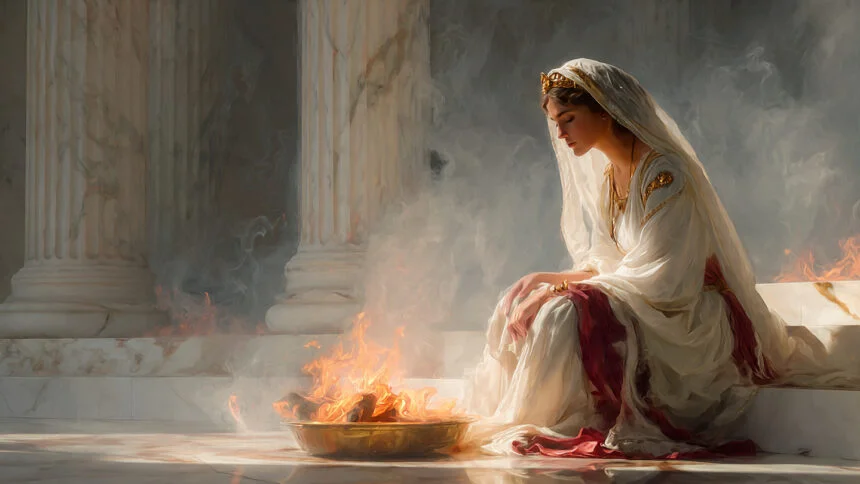
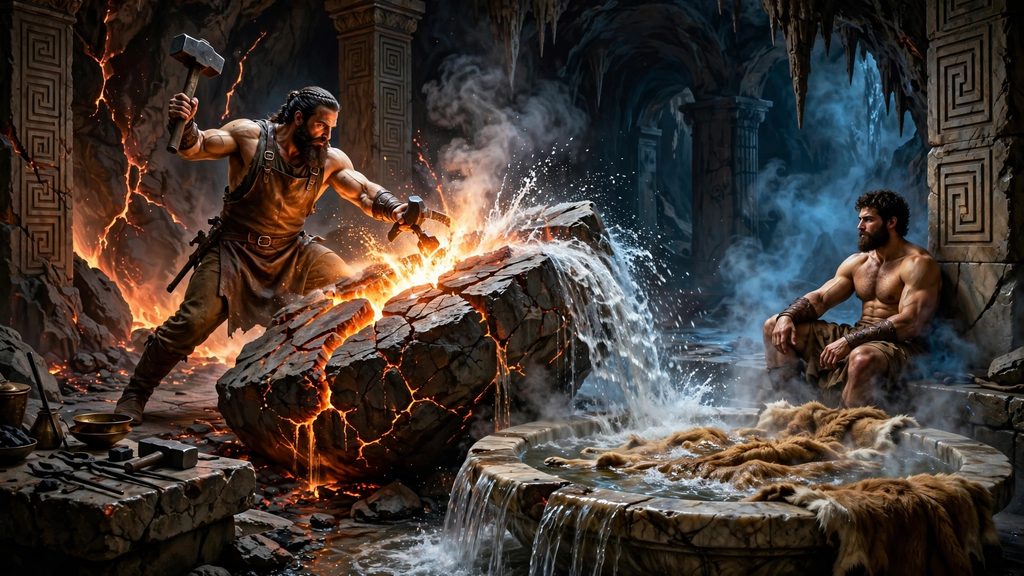
At Edipsos, the tradition preserved locally holds that Athena asked her brother Hephaestus, god of fire and the forge, to open the earth and release water fit to restore her favored hero between labors. What the myth describes Hephaestus producing is not metal but heated water, a forge product delivered for a single purpose, meant for a hero who is said to have returned to these springs again and again through the course of the project of civilizing the world that nearly killed him in the attempt.
A second and older tradition attaches itself to Edipsos, reaching back past Heracles to the flood that nearly ended everything. Hera, the story goes, advised Deucalion and Pyrrha, the two survivors of the great deluge examined in full elsewhere on this site, to bathe in the warm waters of Edipsos so that they might conceive strong and healthy children. The son born afterward was Hellen, not to be confused with the Trojan Helen who belongs to a wholly different story, but the figure Greek genealogical tradition regarded as ancestor of the Hellenes, the origin point of the name they called themselves by.
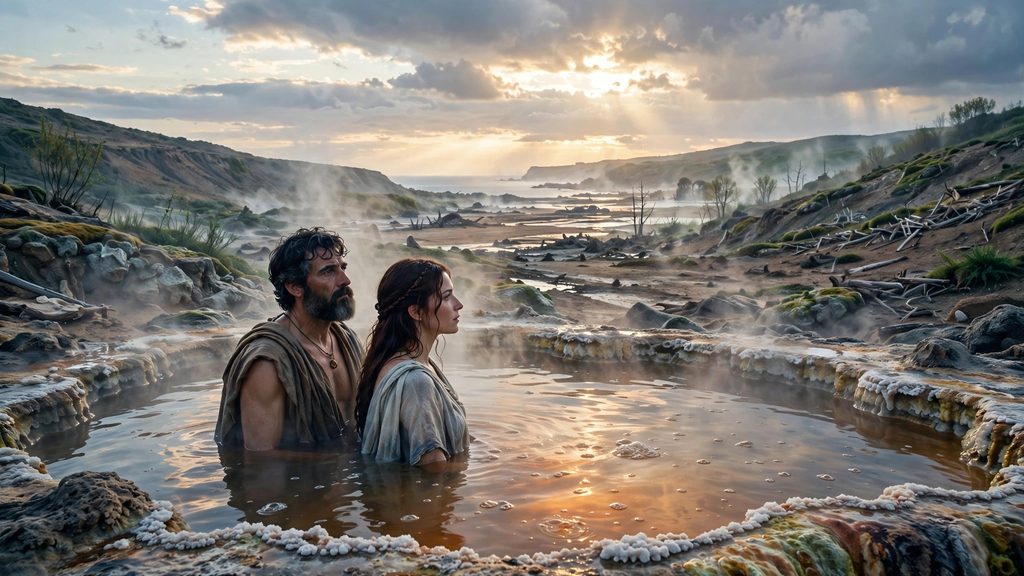
The story is not evidence that Edipsos was literally where the Greek people began. It is something more revealing than that: a local tradition connecting a specific landscape to the renewal of humanity after catastrophe, preserved alongside the Heracles story as a second and equally deliberate way of explaining why this particular water mattered.
Edipsos, Where the Emperors Came
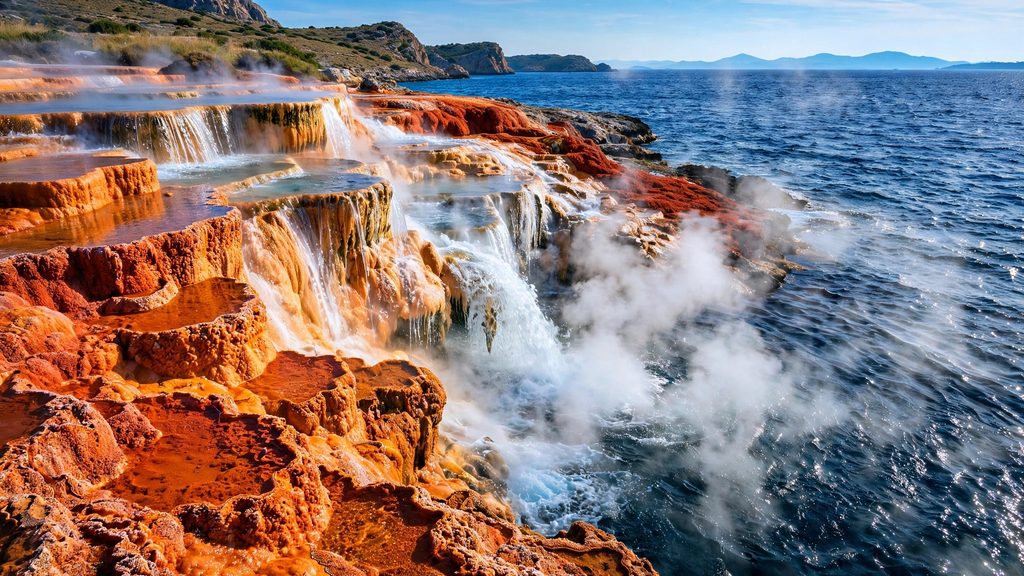
The town now called Loutra Edipsou, on the northwestern coast of Evia roughly ninety minutes from Athens by ferry, has more than eighty natural outlets producing water between twenty-eight and eighty-two degrees Celsius, several emptying directly into the sea, where the effect visitors consistently single out takes place: a shift within a few meters from scalding thermal water to cool salt sea, the two temperatures meeting at the shoreline rather than one yielding gradually to the other.
The Roman baths built here during the imperial period, whose remains still stand near the waterfront, established a pattern of organized bathing infrastructure that the site’s later history never really abandoned. Hadrian is traditionally associated with Edipsos. So is Marcus Aurelius. So, later, is Constantine the Great.
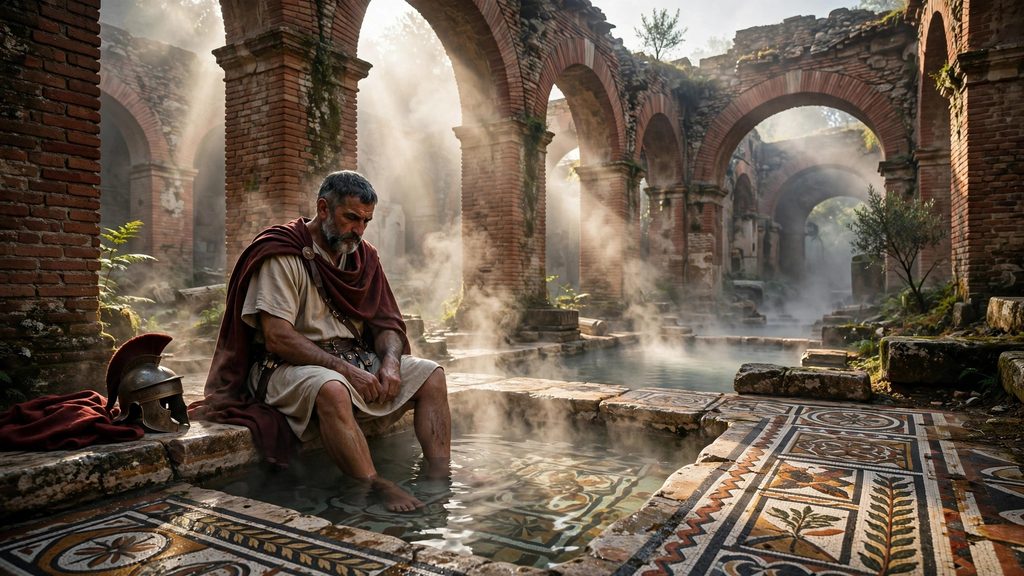
The contemporary Thermae Sylla, a hotel built directly over the springs and named for the general whose gout brought him here two thousand years earlier, is not a separate thing from the tradition it is named after so much as its current form, water piped from the outlets Aristotle wrote about into pools operating on the same principle Plutarch described Sulla using. The certified springs here, along with those of Ikaria, carry a sodium chloride and bicarbonate profile with trace radioactive elements, the mineral signature both the ancient sources and the contemporary medical certification associate with measurable effects on arthritis, rheumatic conditions, and cardiovascular disease, effects that remain the subject of ongoing clinical study rather than settled fact.
Loutraki, the Bath Beside Corinth
Loutraki sits on the Corinthian Gulf, an hour west of Athens, and carried in antiquity the name Thermae, a direct reference to the springs the modern town was later renamed for, Loutraki itself deriving from loutron, the Greek word for bath. It is the spring most woven into the daily life of Athenians rather than the most mythologically dense, and its water differs correspondingly from the high-sulfur springs of Edipsos: lighter, lower in mineral content, associated in both ancient and contemporary practice with kidney and urinary conditions and with the cardiovascular system rather than with joint disease. The water bottled here is among the most widely distributed mineral water in Greece.
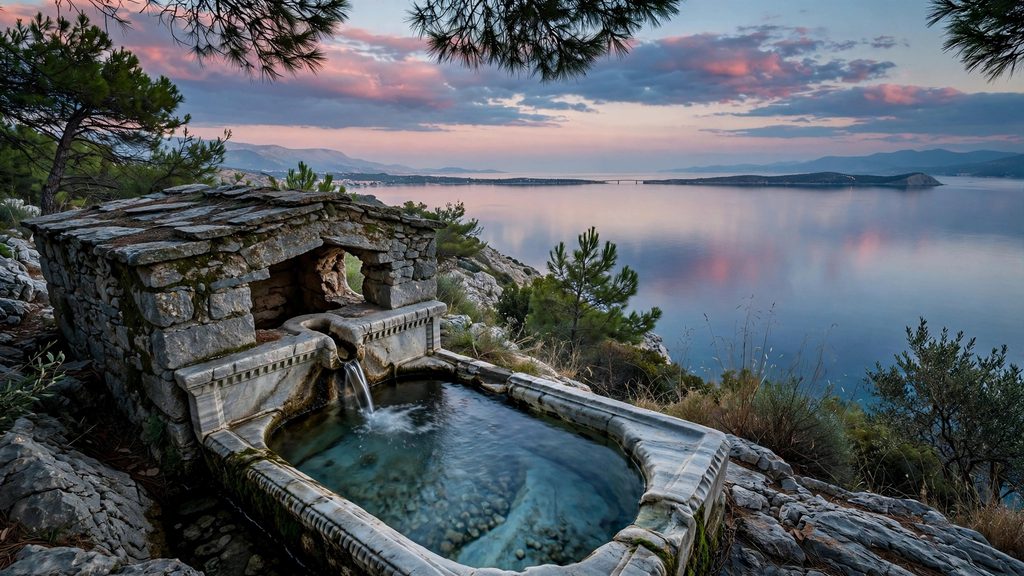
What gave Loutraki its historical weight was its position on the route connecting Athens to the Peloponnese, within reach of ancient Corinth, one of the great commercial centers of the classical world and the city this site has already walked through in the company of Diogenes. Corinth had its own sanctuary of Asclepius, and a traveler in need of both divine intercession and mineral water had, within a short journey, access to both.
Thermopylae, Where the Hot Gates Were Already Sacred
Long before the battle of 480 BCE made the name famous across the world, Thermopylae was already defined by the water that gave it its name. Herodotus records that the springs at the pass were called by the local population the Pots, and that an altar of Heracles stood beside them, a detail that gives the site a religious dimension entirely independent of the later military legend, since the hero’s altar was already there before anyone had reason to fight at the pass at all. Herodotus goes further still, noting that the Phocians had once diverted the hot stream into the pass itself as part of an earlier defensive effort against Thessalian invasion, turning the very feature that gave the place its name into a weapon of the landscape.
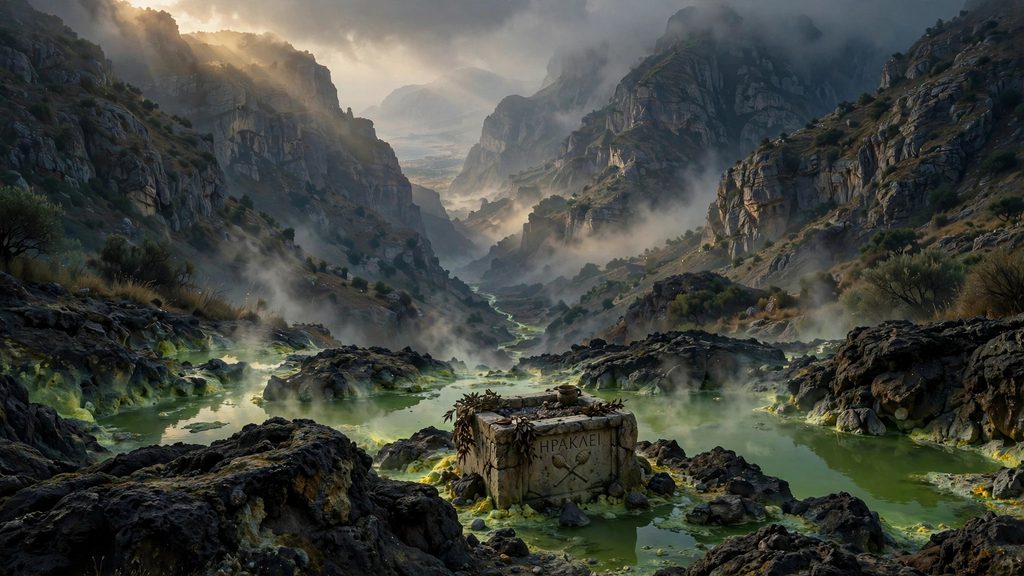
The springs continued to be developed through the Roman period, and later accounts associate their improvement with Herodes Atticus in the second century CE. What makes Thermopylae unusual among the sites on this list is how completely its later fame has eclipsed its original identity. Visitors who arrive today thinking first of the three hundred Spartans are encountering only the second and more recent of two stories the pass has to tell. The water came first.
Ikaria, Where the Spring Has No Schedule
The springs at Therma on Ikaria’s northern coast flow straight into the sea with no admission fee, no attendant, and no schedule. The water emerges from the rocks above the waterline, runs toward the Aegean, and pools wherever the rock happens to catch it, at a temperature that shifts with the season and has to be tested by hand rather than read off a posted sign.
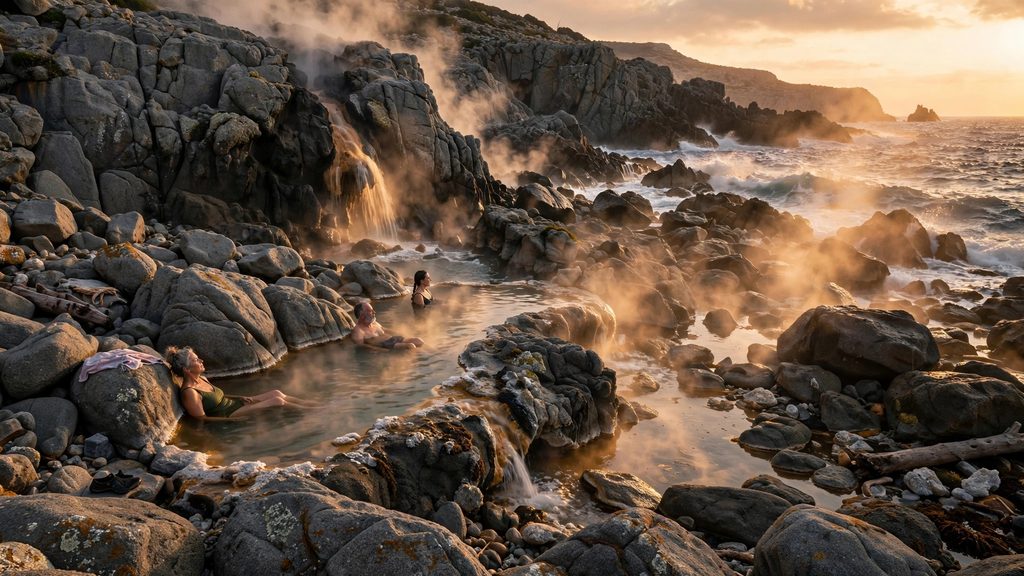
The radioactive character of the water here, measurably above background levels, was known in antiquity and has long been associated with treatment of arthritis and joint disease, though whether the radioactivity itself accounts for the effect or whether the heat and dissolved minerals are doing the work regardless remains a question contemporary balneology has not fully settled. What is not in question is the pattern of people using this water for exactly these conditions across generations, still visible in the older Greeks from the mainland and the diaspora who come to Therma for multi-week courses of treatment.
Samothrace, Where the Sanctuary Is Not the Spring
It is worth being precise about Samothrace, because the island holds two entirely different landscapes that are easy to conflate. The Fonias gorge, with its waterfalls and boulder-carved swimming pools reachable by a forty-minute walk from the main village, is cold mountain water, spectacular but not thermal, and has no place in a history of the island’s healing springs. The actual thermal site sits elsewhere, at Therma on the island’s northern side, where the springs known as Psarotherma emerge from the earth at temperatures close to boiling before being brought down to bathing temperature in the facilities built to receive them.
What makes Samothrace genuinely interesting for this history is not a manufactured link between its sanctuary and its springs but the plain fact of their coexistence. The same island that drew ancient initiates toward the Sanctuary of the Great Gods examined elsewhere on this site, one of the most important mystery cults of the ancient Aegean, also happens to sit above a geothermal system that still defines the settlement of Therma today. The sanctuary belongs to one part of the island’s identity. The springs belong to another. Keeping the two separate, rather than inventing a ritual connection the ancient sources never supply, makes Samothrace’s story stronger rather than thinner.
Methana, Where the Mountain Still Smells of Sulfur
Methana gives the tradition its most unusual piece of evidence, because Pausanias did not simply mention hot baths near the town. He recorded what the people who lived there told him about how the baths had come to exist. About thirty stades from Methana, he writes, were hot springs, and the local account held that the water had first appeared during the reign of Antigonus, son of Demetrius, not as water at all but as a great fire that burst from the earth. When the fire subsided, water began to flow in its place, and by Pausanias’s own time it remained hot and intensely salty. He adds a further detail that has nothing to do with mythology and everything to do with direct observation: there was no cold water to be found nearby, and swimming out into the open sea was dangerous, since the waters swarmed with sharks.
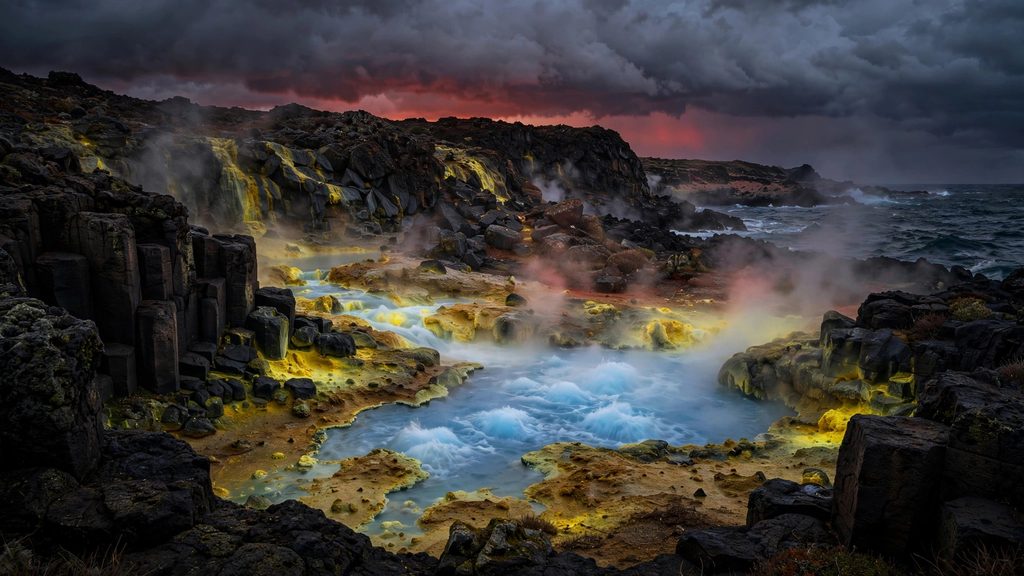
Pausanias is careful to attribute this to what the local population told him rather than to claim it as something he witnessed himself, and that distinction matters. What he preserves is not a modern geological account but a memory, a story the people of Methana told a traveling writer about a transformation their landscape had undergone. Before he ever reaches the baths, Pausanias also notes a sanctuary of Isis in the town and images of Hermes and Heracles standing in the marketplace, which places the hot water within a landscape already marked by cult and by the presence of the gods before the springs themselves come into the account at all. Methana remains, today, part of the South Aegean volcanic arc, its most recent eruption dated to roughly 230 BCE, and its sulfur springs are still associated in contemporary practice with skin conditions, psoriasis and eczema among them, that respond to sulfur’s effect on the skin’s outer layer. The ancient memory of fire preceding water and the modern geological account of a volcanic peninsula are not accounts that need to be forced into agreement with each other. One tells us what the people of Methana remembered. The other tells us what kind of earth could produce a memory like that.
What the Water Is Actually For
The distinction worth carrying into any visit is between the organized facilities, Edipsos, Loutraki, and the certified Ikaria pools, which offer supervised bathing in defined sessions, and the wild springs, Ikaria’s shoreline outlets and Samothrace’s Psarotherma, which ask the visitor to judge temperature and safety independently. September and October are the kindest months for either kind of visit, the summer crowds gone and the air mild enough for the shift between hot pool and open air the whole ritual depends on. Edipsos remains the right place to start for anyone new to this tradition, offering the fullest range from a full spa program at Thermae Sylla down to free water running off the rocks into the sea, with a forty-minute ferry from Arkitsa connecting directly to the highway north of Athens.
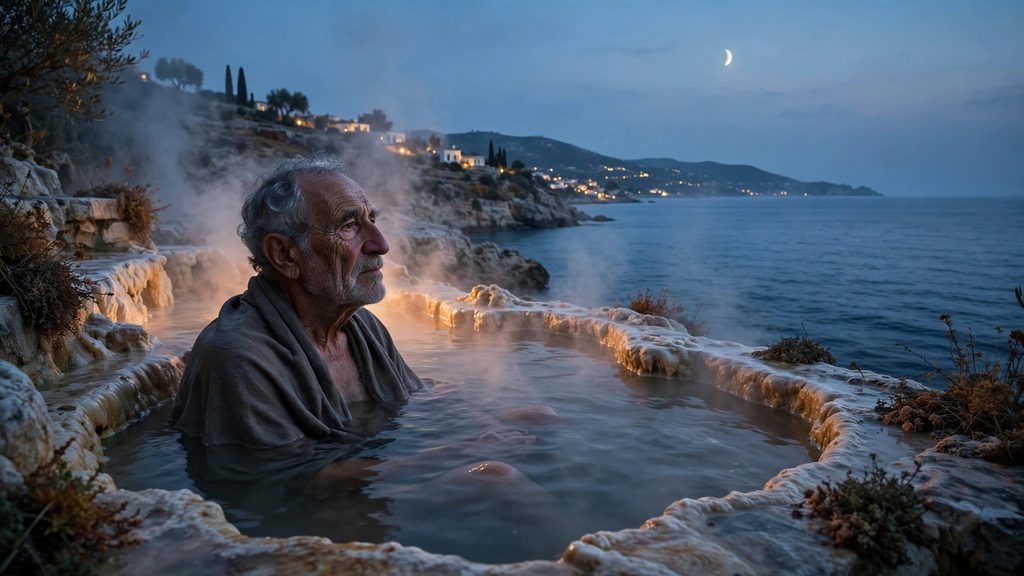
The Roman baths at Edipsos were built over water Aristotle had already written about. The altar at Thermopylae stood beside a spring long before an army ever needed the pass it ran through. The story Pausanias heard at Methana about fire giving way to water sits a few hundred meters from a sanctuary of Isis that had nothing to do with the springs at all. None of these places require a visitor to force the myth and the geology into agreement, or to pretend that ancient reputation and modern medical certification are the same kind of evidence. What they share is simpler than that. The water kept giving people, across every century that had a reason to explain it, something worth returning for.
At Olympus Estate, Wellness & Renewal explores the traditions Greece has used to heal the body for as long as anyone kept a record of it. More than seven hundred thermal springs rise across Greece’s volcanically restless terrain, though only a small number carry official certification as therapeutic resources. At Edipsos, local tradition credits Athena and Hephaestus with creating the waters for Heracles, and a separate tradition holds that Hera sent Deucalion and Pyrrha to the same springs, where their son Hellen, ancestor of the Hellenes, was born. Herodotus records an altar of Heracles beside the springs at Thermopylae centuries before the battle made the pass famous, and Pausanias preserved the story Methana’s own people told him about a fire that gave way to hot, salt water under the reign of Antigonus. On Samothrace, the thermal springs of Therma have nothing to do with the island’s famous Sanctuary of the Great Gods, a distinction worth keeping rather than blurring. Aristotle examined these waters as a natural philosopher, and Plutarch records Sulla using them for his gout, a habit that Hadrian, Marcus Aurelius, and Constantine the Great are all said to have continued.