




The name comes from the Italian and the dish comes from the tomato, and the tomato is the reason the dish exists when it does.
Strapatsada, from the Italian strapazzare meaning to rough-handle, to scramble, arrived in the Greek culinary vocabulary through the same Venetian influence that gave the Ionian Islands their architectural character and the Greek kitchen several of its most enduring preparations. The southern Peloponnese version of the same dish carries the name kagianas, from the Turkish kaygana meaning omelet, the two names together documenting the two cultural streams that shaped the geography of their use: the Venetian-influenced coast and island tradition calling it strapatsada, the Ottoman-influenced interior and southern mainland calling it kagianas.
But the etymology is the less interesting half of the story. The more interesting half is the tomato.
The tomato arrived in the Greek kitchen relatively late: a New World plant introduced to Europe through Spain in the sixteenth century, it did not become a significant component of the Greek culinary tradition until the eighteenth and nineteenth centuries, when the combination of the Mediterranean summer climate and the Greek agricultural tradition produced the variety of tomato, grown without irrigation in full sun, that made the tomato a genuinely extraordinary ingredient rather than a merely useful one. The strapatsada is a dish that could not have existed before the tomato arrived in Greece, and it could not be what it is with any tomato other than the ripe August tomato grown in the conditions that the Greek summer provides.
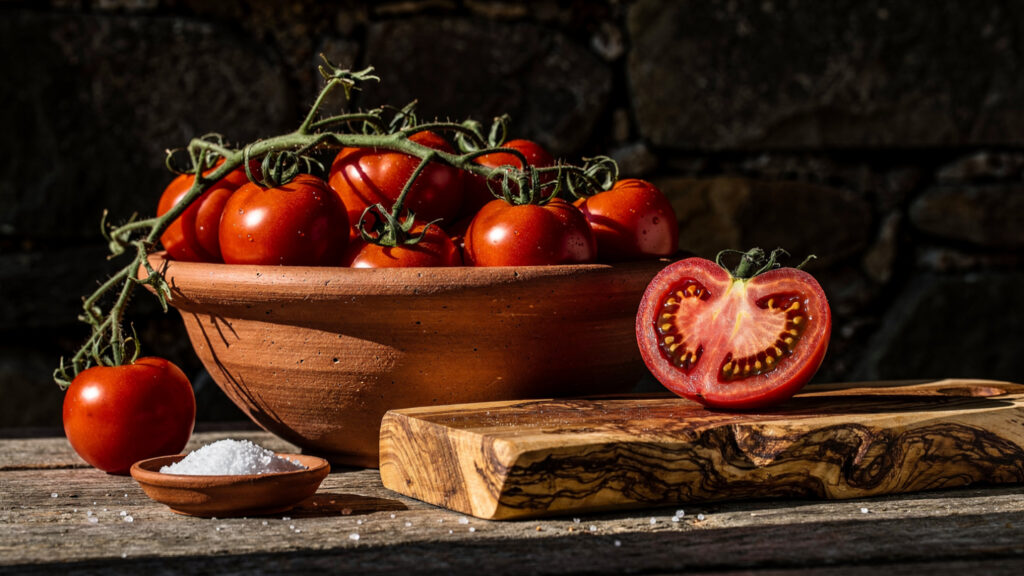
This is the first thing to understand about the dish: its season is the summer tomato season, and outside that season it is a different dish, made with canned tomatoes or greenhouse tomatoes or the imported variety, and these versions are acceptable and nourishing and substantially less than what the summer version is.
What the Dish Is
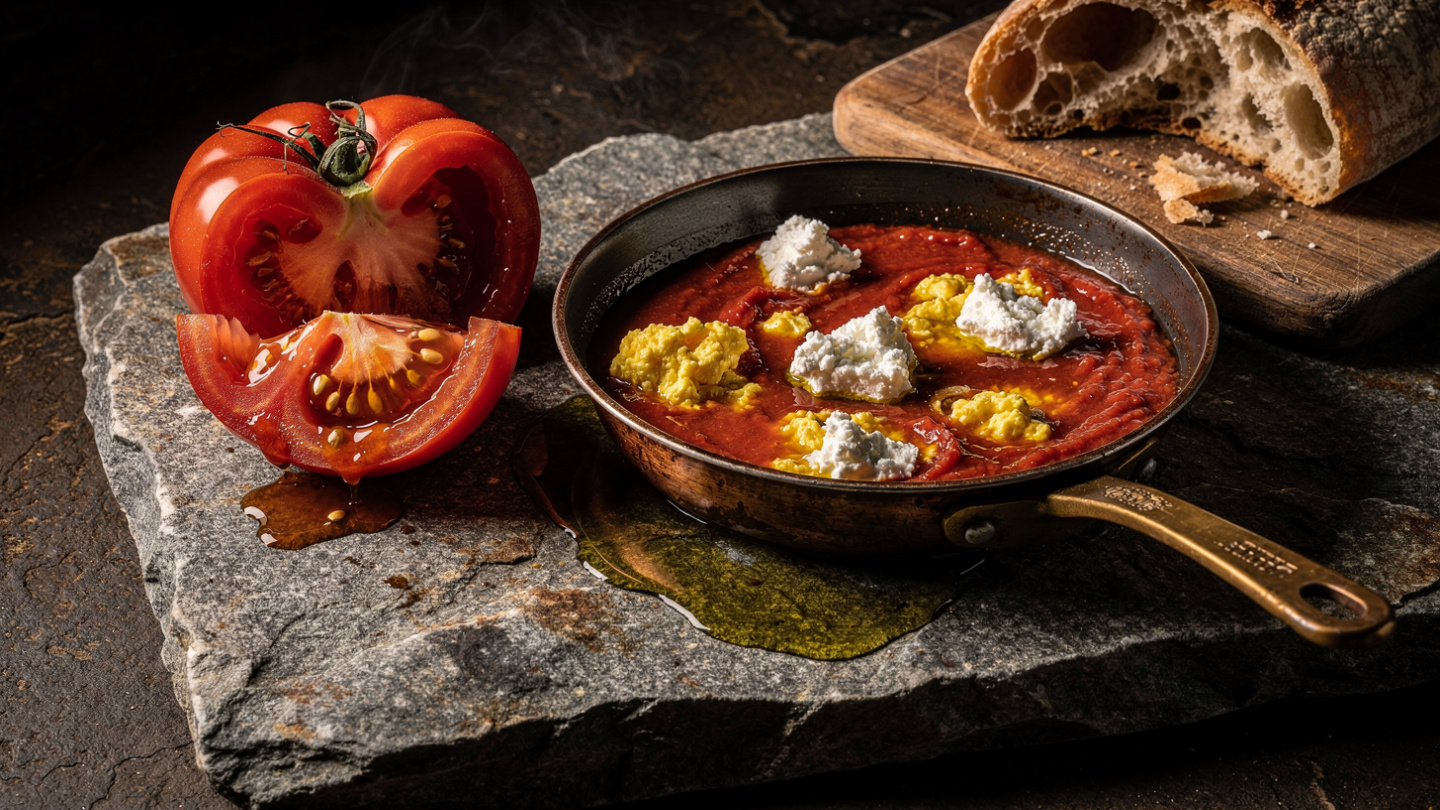
Strapatsada is the preparation of ripe tomatoes and eggs together in olive oil, the tomato reduced to a thick, sweet, jammy base and the eggs stirred into it to set in the heat of the tomato rather than in the heat of the pan directly. It is not a tomato sauce poured over scrambled eggs. It is not a tomato omelette. It is the preparation in which the tomato and the egg cook together, the egg absorbing the flavor of the reduced tomato and the olive oil during the cooking, the result being something that neither the tomato nor the egg alone could produce.
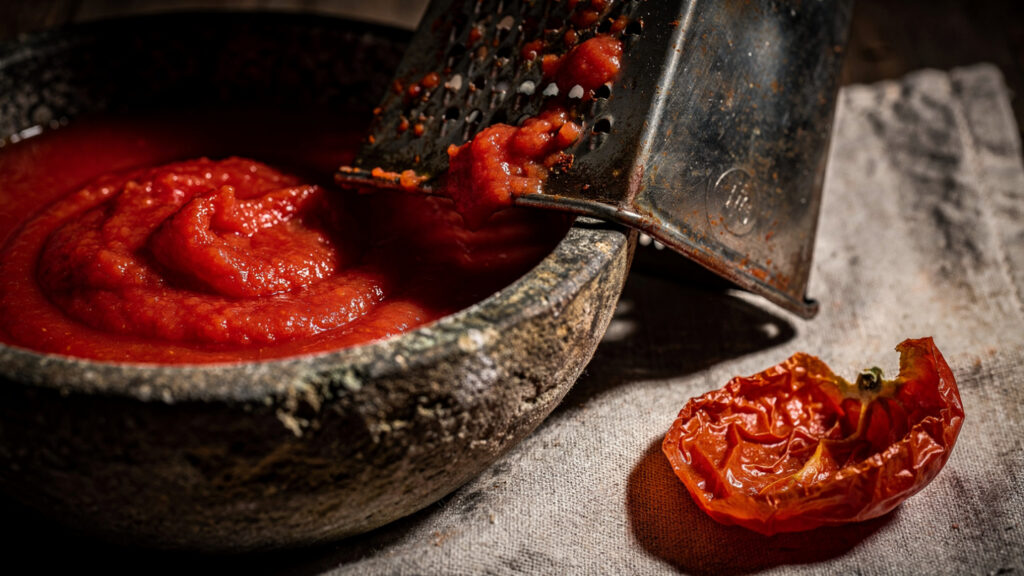
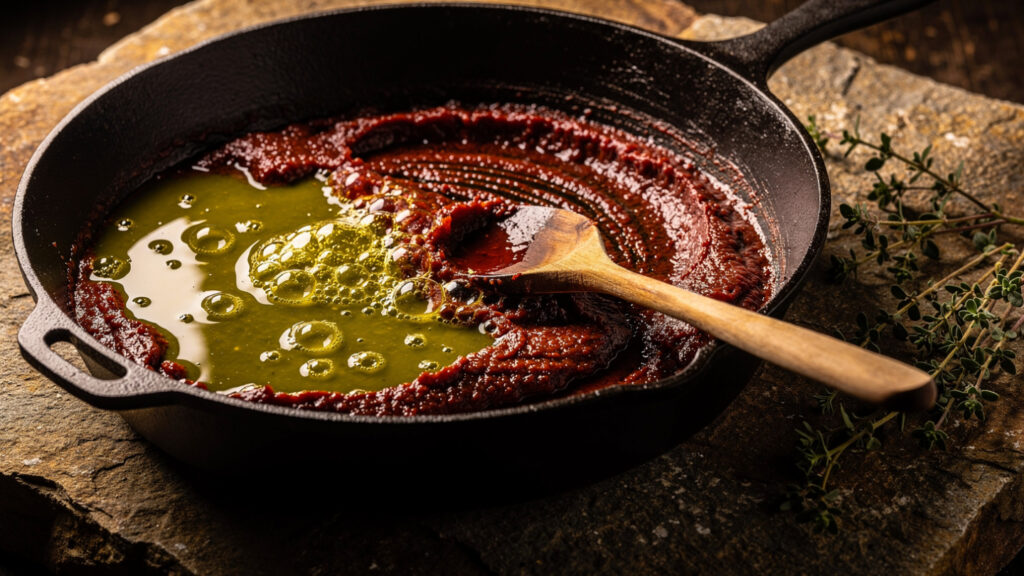
The grating of the tomato is the technique that most directly determines what the dish becomes. A tomato grated on the coarse side of a box grater, with the skin remaining in the hand at the end, produces a pulp of tomato flesh without the skin’s toughness or the seeds’ water content: the most concentrated form of the tomato’s flavor is in this grated pulp, and it reduces in the olive oil to the consistency that the strapatsada requires in approximately eight to ten minutes at medium-high heat.
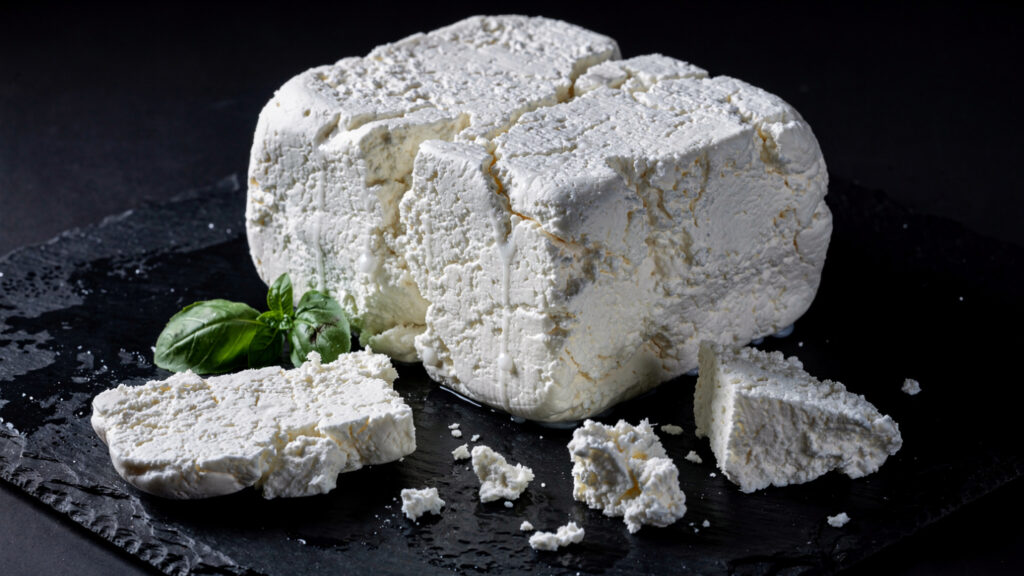
The feta is not obligatory, but it is the addition that most Greek kitchens make: crumbled over the eggs in the final minute of cooking, it adds salt and the sharpness of sheep’s milk cheese that the sweetness of the reduced tomato requires as a counterpoint. The feta does not melt into the preparation in the way that a less acid cheese might: it remains as small creamy pieces distributed through the tomato-egg mixture, providing the textural variation and the dairy richness that makes the dish complete.
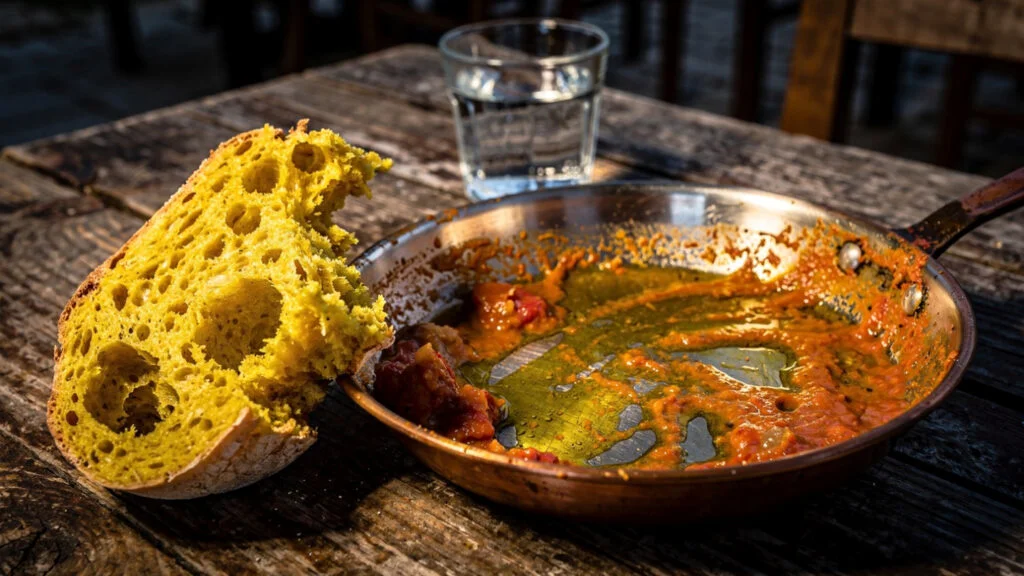
The bread is not optional. The strapatsada is a preparation that leaves olive-oil-and-tomato liquid in the pan after the eggs and tomatoes have been served, and this liquid is what the bread is for. Eating strapatsada without bread is leaving the best part of the dish in the pan.
The Summer Kitchen Context
The Greek summer kitchen organized itself around the abundance of the season’s production, and the strapatsada was one of the preparations that most directly expressed this organization: when the tomatoes were at their peak and the egg supply from the household’s chickens was reliable, the combination that required the least intervention and produced the most satisfying result was the natural choice.
The dish appears on the summer breakfast table, on the lunch table as a light midday meal when the heat makes a heavier preparation unappealing, and in the evening as the meze that accompanies the cold glass of tsipouro or wine before the main meal. Its position in the day is flexible in the way that the best simple preparations are flexible: what determines when it is eaten is not a convention about which meal it belongs to but the availability of the ripe tomato that makes it worth making.
The taverna version, which the summer visitor to Greece will encounter served in a small pan on a wooden board with bread alongside, is the version that most directly expresses the dish’s original character: cooked to order in a small pan, brought to the table still sizzling slightly, the olive oil visible in the reduction, the feta just beginning to soften from the heat of the eggs. This is not the version that restaurants produce by cooking the eggs in advance and reheating them. The strapatsada must be made when it is ordered and eaten when it is made.
The Recipe
The tomato reduction must be complete before the eggs go in. A watery reduction produces watery scrambled eggs. The eight to ten minutes at medium-high heat that the reduction requires is the most important cooking step.
The heat must come down when the eggs are added. The egg in contact with the hot reduction will set faster than the egg in the center of the pan, and the gentle stirring at reduced heat is what produces the soft, creamy scramble that the dish requires rather than the dry, broken egg that excessive heat and insufficient stirring produce.
The eggs should be just set when removed from the heat. They will continue cooking from the residual heat of the pan and the tomato. Remove them while they still look slightly underdone. They will be correct by the time the bread is cut.
Variations That Stay Within the Tradition
The strapatsada has several documented regional variations that expand the dish without departing from its fundamental logic: the tomato and the egg together, in olive oil, as the preparation’s irreducible core.
Onion and garlic, sautéed in the olive oil before the tomato is added, deepen the savory base and add a sweetness of their own that the tomato’s reduction absorbs. Sweet pepper, particularly the long, thin, pale green pepper of the Greek summer market, added to the oil at the same moment as the onion, provides a freshness that the tomato’s jammy sweetness requires in its more elaborate versions.
The spice additions, dried oregano or fresh basil at the end of cooking, are the herb choices that the Greek kitchen most naturally makes with the tomato and egg combination: oregano for the depth of the mountain herb, basil for the brightness of the garden herb, each producing a different but equally valid expression of the same preparation.
The loukaniko addition, slices of the Greek pork sausage cooked in the olive oil before the tomato is added, converts the strapatsada from a light summer preparation into a more substantial meal while retaining the essential character: the sausage fat enriches the olive oil, the tomato absorbs both, and the eggs set in a base that has the complexity of three rendered fats rather than one.
Olympus Estate · Food & Seasonal Life
Strapatsada · Greek Scrambled Eggs with Ripe Tomatoes
The summer tomato reduced to a sweet, jammy base, then combined with eggs and olive oil and finished with feta. The bread at the end is for the oil in the pan.
Ingredients
- Large ripe tomatoes (or canned, well-drained)3 large
- Large eggs4
- Extra virgin olive oil4 tbsp
- Feta cheese, crumbled80 g
- Sea salt and freshly ground pepperto taste
- Fresh basil or dried oreganoto finish
- Crusty breadto serve
Method
-
1
Prepare the tomatoes
Cut the tomatoes in half and remove the seeds. Grate the flesh on the coarse side of a box grater, leaving the skin behind in your hand. If using canned tomatoes, drain thoroughly and chop finely. The grated pulp should be loose and juicy with no large pieces.
-
2
Reduce the tomato base · 8 to 10 min
Heat the olive oil in a wide skillet over medium-high heat until shimmering. Add the tomato pulp with a generous pinch of salt and pepper. Cook, stirring occasionally, until the tomato has thickened to a jammy, almost sauce-like consistency and the water has largely evaporated. This step is critical: a watery base produces watery eggs.
-
3
Add the eggs · 3 to 4 min
Beat the eggs lightly in a bowl. Reduce the heat to medium-low. Pour the eggs into the pan with the tomato. Stir gently and continuously, moving the mixture from the edges toward the center. Cook until just set: the eggs should look slightly underdone when you remove the pan from the heat, as they will continue cooking from the residual heat.
-
4
Finish with feta and herbs
In the last 30 seconds of cooking, scatter the crumbled feta over the eggs and stir gently once or twice to distribute without fully incorporating. The feta should remain in small creamy pieces. Remove from the heat and scatter fresh basil or a pinch of dried oregano over the surface.
-
5
Serve immediately
Spoon onto plates and serve at once with generous slices of crusty bread. The olive oil and tomato liquid that remains in the pan is what the bread is for. Do not leave it behind.
At Olympus Estate, Food and Seasonal Life traces Greek cuisine as a living calendar. The strapatsada is August on a plate: the ripe tomato, the olive oil, the egg from the household’s own chickens, the feta from the cheese cellar. When the tomatoes are this good, the intervention required to make the dish exceptional is minimal. That is the Greek kitchen’s most consistent instruction.