
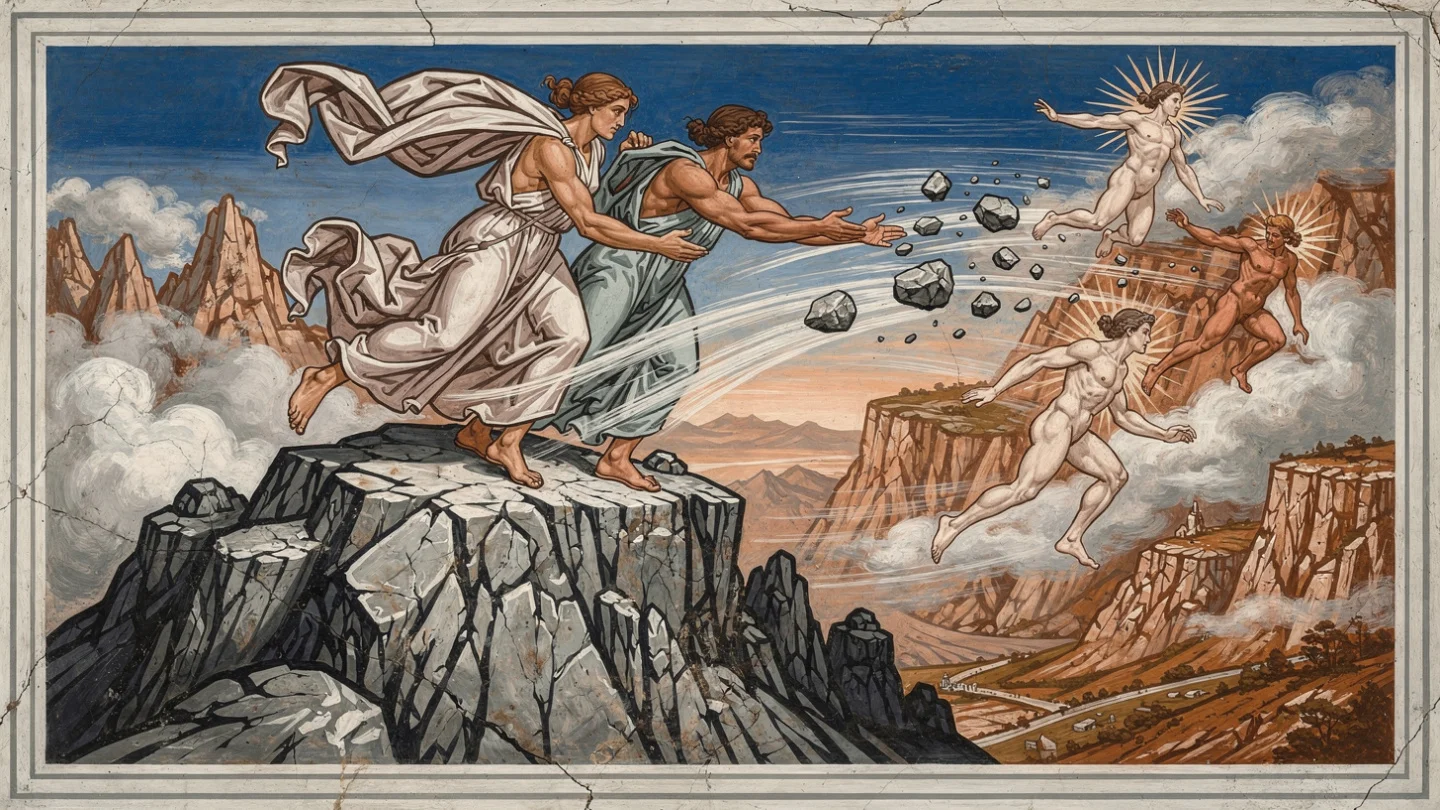
When Deucalion and Pyrrha needed to repopulate the earth, they were told to throw their mother’s bones behind them.
They stood on the slopes of the mountain where the ark had come to rest when the waters receded, and the oracle’s instruction was the oracle’s riddle: cover your faces, cast the bones of your mother behind you. They had consulted Themis at Delphi, the Titaness of divine law who was the oracle’s keeper before Apollo arrived to claim the sanctuary, and Themis had given them the ambiguous instruction that the oracle tradition consistently produced: technically true, immediately opaque, comprehensible only to the person who had the intelligence to understand what the words were actually describing rather than what they appeared to describe.
The bones of their mother. The mother of both Deucalion and Pyrrha, in the mythological logic of the flood narrative, was not a human woman. It was the earth. Gaia was the mother of all living things, and her bones were the stones that the landscape was made of, the limestone and granite and schist of the Greek geological substrate, the material that the Greek terrain exposed in its mountainous and rocky character to a degree that no other landscape in Europe replicated. The bones of the mother were the bones of the rock.
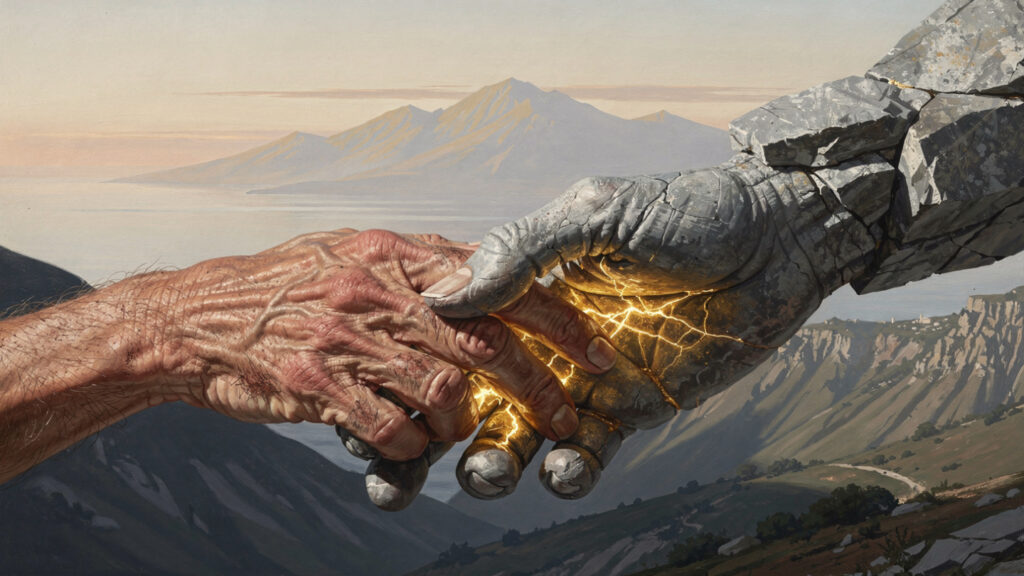
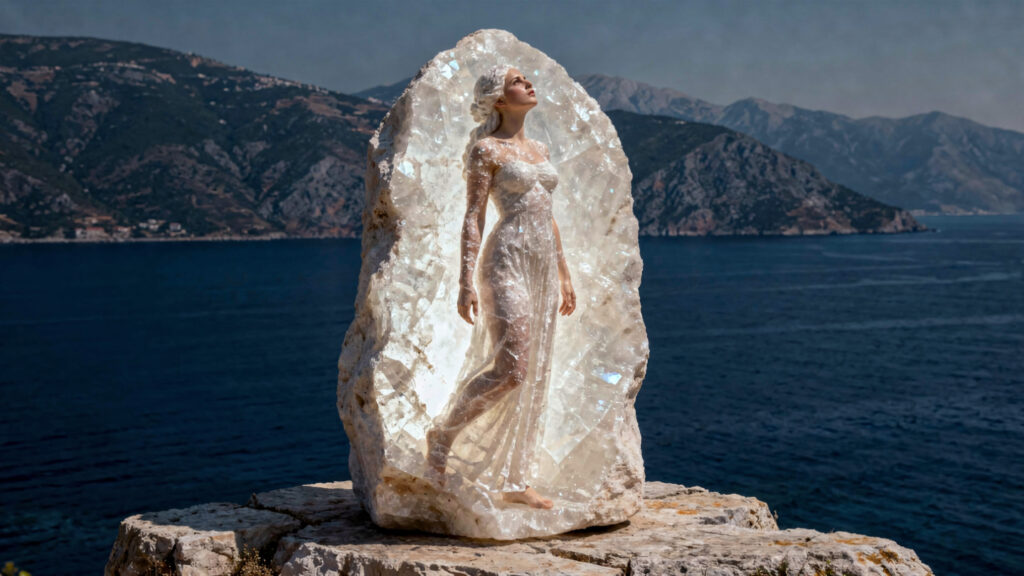
Deucalion understood this. He and Pyrrha covered their faces, bent down, picked up the stones beneath their feet, and threw them over their shoulders. The stones that Deucalion threw became men. The stones that Pyrrha threw became women. The new human race that repopulated the earth after the flood was made of the earth’s own geological substance, the limestone bones of Gaia given the breath of life that the throwing gesture and the divine sanction behind it provided.
This is the theological claim that the Deucalion flood myth makes about what the human being is made of, and it is among the most precise claims in the entire Greek mythological tradition about the relationship between the human community and the material of the landscape it inhabits.
The Stones and Their Meaning
The creation of humanity from stone in the post‑flood tradition is not the same theological claim as the creation of humanity from clay in the Mesopotamian and biblical inheritances, and the distinction matters.
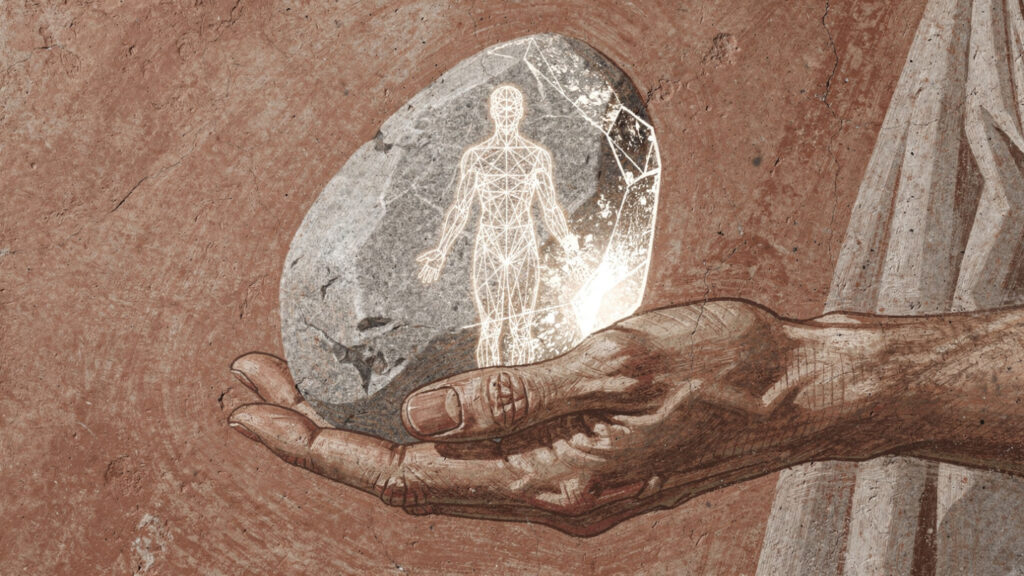
The Mesopotamian creation tradition, preserved most fully in the Atrahasis epic and in the later Babylonian creation myth Enuma Elish, creates humanity from clay mixed with the blood of a slain god. The human being is the product of the divine blood and the terrestrial clay combined, a creature whose constitution includes the divine element as a necessary component. The biblical creation tradition, in Genesis, creates humanity from the dust of the ground combined with the divine breath. The human being is terrestrial matter animated by divine inbreathing, carrying the divine image in the sense that the divine image was imposed on the terrestrial material in the act of creation.
Both of these accounts give the human being a specifically divine component as a necessary ingredient in the original creation. The Deucalion mythos does not. The stones that Pyrrha and Deucalion throw over their shoulders are not mixed with divine blood or animated by divine breath in the Mesopotamian or biblical sense. They are the earth’s geological material thrown in the direction that the oracle prescribed, and the throwing is the human gesture rather than the divine one. Deucalion and Pyrrha are doing the throwing. The oracle has told them to throw. The result is human beings.
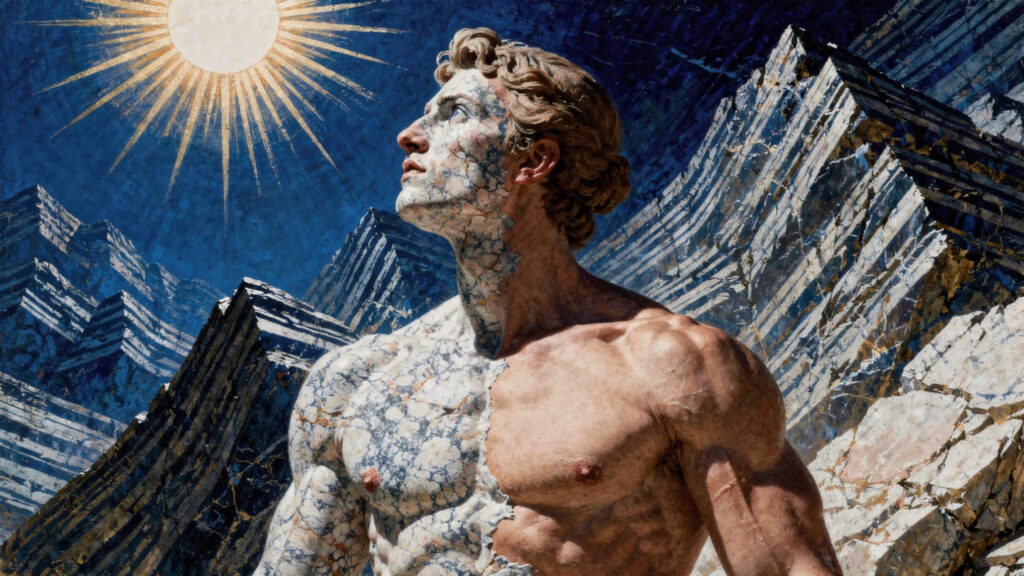
The theological claim this encodes is the claim that the human being is the earth’s own material organized by a human intelligence into the human form: the intelligence that understood the oracle’s riddle, that decoded the bones of the mother as the geological bones of Gaia, that performed the action whose symbolic logic the decoding revealed, was the intelligence that produced the new humanity. Deucalion and Pyrrha repopulated the earth not by receiving a divine gift of new human beings but by understanding what the oracle was telling them and doing it. The human being that results from this process is the human being as the product of the human intelligence applied to the geological material of the landscape, which is the specifically Greek anthropology rather than the Mesopotamian or biblical one.
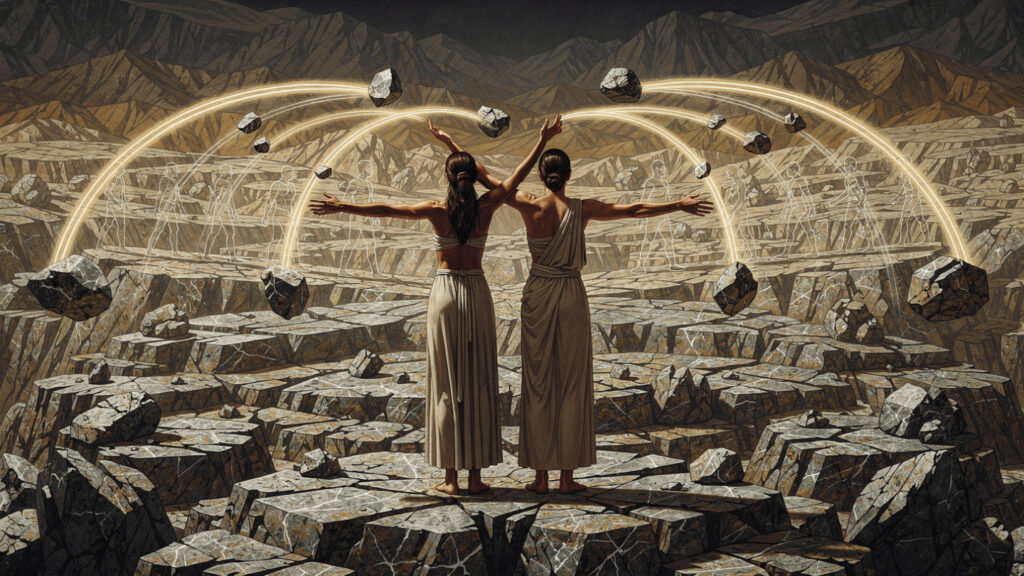
The Greek word for human being is anthropos, and the ancient lexicon offered multiple etymologies for it. The most significant, preserved in Plato’s Cratylus among other sources, was the etymology that connected anthropos to the verb for looking upward, anathron ha opope, the creature that looks upward, the creature that raises its gaze from the ground to the sky. The stones that become human beings in the Deucalion account are the stones that were looking at the ground and are now looking at the sky. The transition from stone to human is the transition from the geological material embedded in the earth’s surface to the upward‑looking creature whose character is the capacity to raise its gaze.
Deucalion and the Parallel Flood Traditions
The Deucalion flood myth belongs to the category of the ancient Near Eastern and Mediterranean flood narrative that appears in multiple independent or partially connected traditions across the ancient world, and the points of convergence and divergence between the Greek version and the other versions give the Greek version its character.
The Mesopotamian flood tradition, preserved most fully in the Atrahasis epic of approximately 1700 BCE and in the Gilgamesh Epic’s eleventh tablet, describes a flood sent by the gods to reduce the noise of humanity that was disturbing their sleep: the motivation of the Mesopotamian flood is the divine irritation at the human population’s excessive sound rather than the divine anger at the human population’s moral corruption. The flood survivor, Atrahasis in the earlier version and Utnapishtim in the Gilgamesh version, is warned by the god Ea/Enki who had participated in the human creation and who felt a responsibility to the creatures whose making he had contributed to. The ark is an architectural structure whose dimensions the text gives in detail. The flood ends when the boat comes to rest on a mountain and the survivor releases birds to test the recession of the waters.
The Noah flood narrative of the biblical tradition, whose relationship to the Mesopotamian account the overwhelming structural and narrative parallels confirm as a transmission relationship, shares with the Mesopotamian version the bird‑release testing sequence and the mountain landing and the divine promise that the flood will not be repeated. The biblical motivation for the flood, the moral corruption of humanity, is different from the Mesopotamian motivation of excessive noise, and the biblical covenantal conclusion, the rainbow as the sign of the divine promise, has no direct parallel in the Mesopotamian tradition.
The Deucalion narrative shares with the Mesopotamian and biblical inheritances the elements of the forewarning, the ark construction, the flood duration, the mountain landing, and the post‑flood sacrifice that moves the divine anger toward divine favor. The differences that distinguish the Greek version are the differences that reveal the Greek theological priorities. The forewarner in the Greek version is Prometheus rather than the sympathetic deity of the Mesopotamian tradition, which gives the flood narrative a direct connection to the Titan mythology of the collection’s Titans sacred‑geography article. The oracle consultation after the flood is the specifically Greek addition that has no parallel in the Mesopotamian or biblical accounts, and the stone repopulation is the Greek origin story that replaces the divine recreation of humanity in the other inheritances.
The question of whether the Deucalion account derived from the Mesopotamian tradition through the commercial and cultural contacts of the Bronze Age Aegean, or whether both derive independently from the same prehistoric flood memory, or whether the structural similarities reflect the universal human experience of catastrophic flooding rather than any cultural transmission, is a question that the scholarship has not resolved and that the available evidence cannot definitively answer. What is clear is that the Greek imagination took the flood narrative structure and gave it the ending whose theological content was characteristically Greek: humanity made from stone by human intelligence rather than recreated by divine action.
Prometheus and the Flood
Deucalion was the son of Prometheus, and the genealogical connection between the flood survivor and the Titan who gave fire to humanity is the connection that gives the Deucalion tradition its place in the broader narrative of the human relationship to the divine.
Prometheus warned Deucalion about the flood, as the sympathetic deity warned Atrahasis and as God warned Noah. But the quality of the Promethean warning is the quality of the Titan who understood the divine plan and chose to circumvent it in favor of the human being whose existence and whose capacities he had consistently defended against the Olympian tendency to limit and to punish. Prometheus had stolen fire from the gods for humanity’s benefit. He had given humanity the technical capacities, in some versions of the tradition, that the gods had not intended them to have. The warning about the flood was the continuation of the same Promethean posture toward the human community: the Titan who stood between the divine destructive intention and the human being whose existence was valuable enough to preserve.
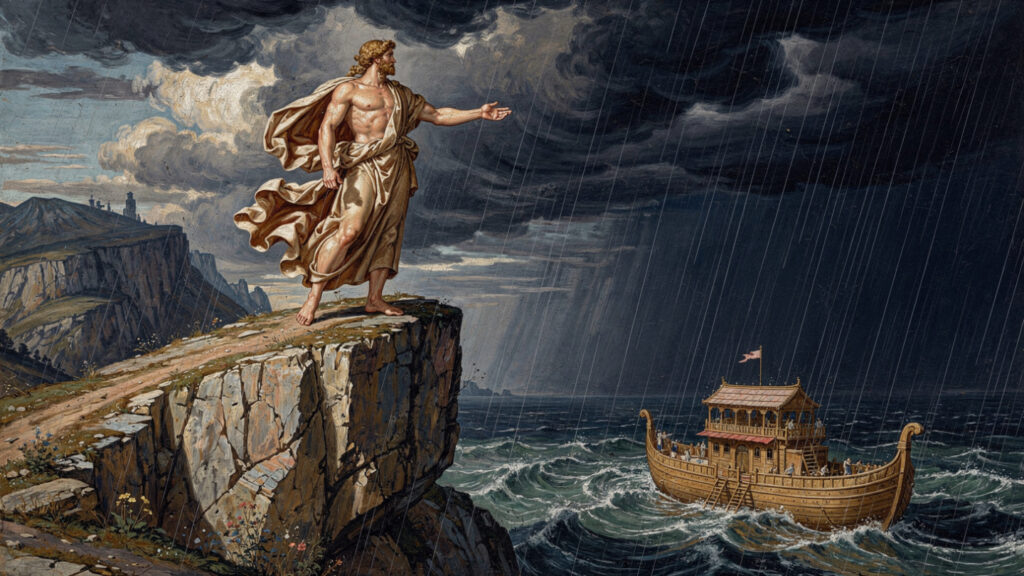
Deucalion inherited from his father not just the warning that saved his life but the orientation toward the human community that the Promethean tradition embodied: the righteous man who does what the divine authority requires and then acts with the intelligence to restore what the divine authority had destroyed. Prometheus was the intelligence that gave humanity its capacities. Deucalion was the intelligence that decoded the oracle and threw the stones. The father and the son are the two expressions of the same specifically Greek understanding of what the human being needed from its divine connections: not the clay and the divine blood of the Mesopotamian creation but the fire, the intelligence, and the instruction from the oracle that the human being could understand and act on.
Themis at Delphi
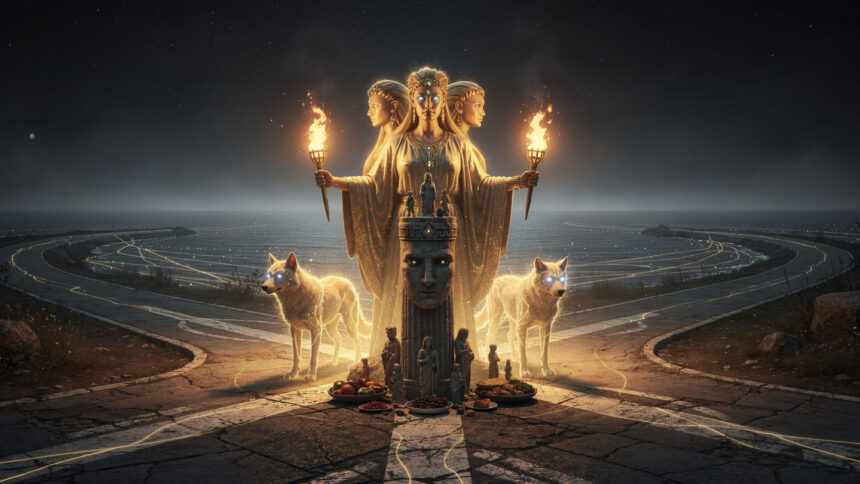
The oracle that Deucalion and Pyrrha consult after the flood is the oracle of Themis at Delphi, and the attribution of the post-flood oracle to Themis rather than to Apollo is the detail that most directly engages the religious history of the Delphi sanctuary.
Themis, the Titaness of divine law and natural order, was the oracle’s keeper at Delphi before Apollo. The tradition that gives Delphi its pre‑Apollonian history is the tradition that Aeschylus preserves most completely in the opening of the Eumenides, where the Pythia names the succession of the sanctuary’s divine owners: Gaia first, then Themis, then Phoebe, then Apollo who received the sanctuary as a gift from Phoebe. The succession from the chthonic and Titanic divine order to the Apollonian Olympian order at Delphi is the religious history that the sanctuary’s successive divine owners encoded, and the Deucalion account preserves the memory of the Themis phase by placing its post‑flood oracle in the Delphi sanctuary before Apollo’s tenure.
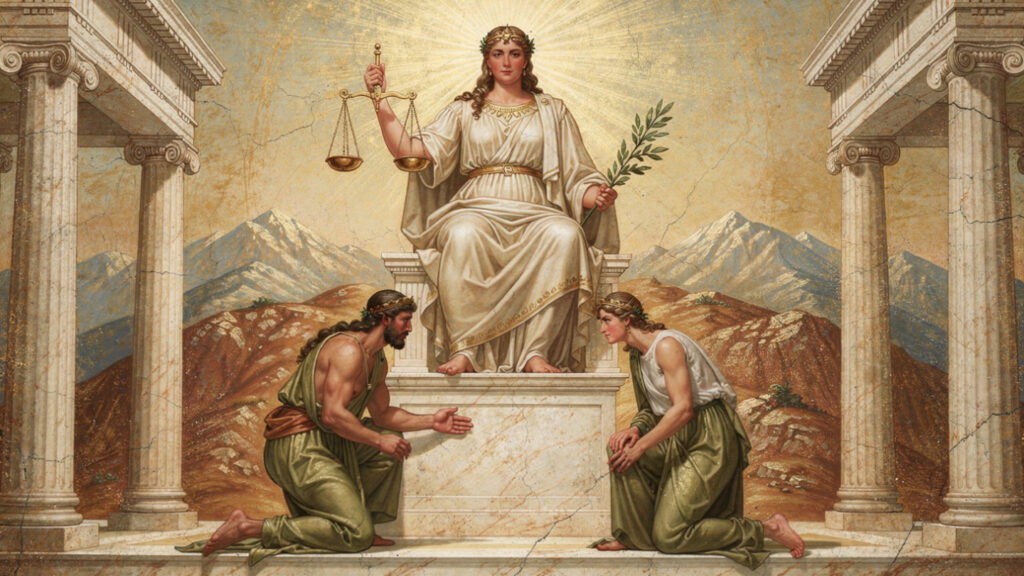
Themis as the oracle keeper is the appropriate divine authority for the instruction that the Deucalion oracle delivers: the divine law of natural order, whose character is the law that connects the human being to the natural world it comes from rather than the prophetic oracle of the Apollonian tradition whose character is the divine communication about the future. The instruction to throw the bones of the mother, the stones of the earth, is the instruction whose content is precisely the content of the Themis tradition. The human being is connected to the natural order through the material relationship of the geological substance, and the restoration of humanity after the flood is the restoration of this material connection. Themis, the keeper of the divine law of natural order, gives the instruction whose content expresses the law she keeps.
Apollo, the Apollonian oracle tradition would have given a different kind of answer: a prophecy about the future rather than an instruction about the natural order’s material logic. The Deucalion account required the Themis oracle rather than the Apollonian one because the question was not about what would happen but about what the natural order required, and the natural order was Themis’s domain rather than Apollo’s.
The Landscape of the Flood Narrative
The mountains that the different versions of the Deucalion tradition give as the ark’s resting place encode the regional claims to the flood narrative that the different communities of the Greek world maintained.
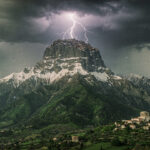
Mount Parnassus, above Delphi, is the resting place in the most widely distributed version of the tradition, and the geography of this version gives the post-flood oracle consultation its most natural logic: the ark rests on Parnassus, Deucalion and Pyrrha descend to Delphi below, they consult the oracle at Themis’s sanctuary, and they perform the stone-throwing on the slopes below. The visual relationship between Parnassus above and Delphi below on the mountain’s southern slope is the visual relationship that the myth was encoding in the sequence of the events: the high place of survival and the lower place of divine communication connected by the path of descent.
Thessaly that the ancient tradition associated with the Titans’ stronghold during the Titanomachy, is the resting place in the Thessalian version of the account whose character reflects the connection between the Deucalion narrative and the Titan mythology. Deucalion’s father Prometheus was a Titan, and the Titans occupied Othrys during the war with the Olympians, and the account that placed the flood survivor’s ark on the Titans’ mountain was the account that maintained the most direct genealogical connection between the flood narrative and the Titanic lineage.
Mount Athos in northern Greece, Gerania in Megara, and several other mountains in different regional inheritances all claim the distinction of the ark’s resting place, and the proliferation of these claims reflects the mechanism by which the Greek imagination distributed the significant mythological events across the landscape. Every community that could claim a connection to the foundation narrative of the human species was the community that had the local account of the ark’s resting on its sacred mountain.
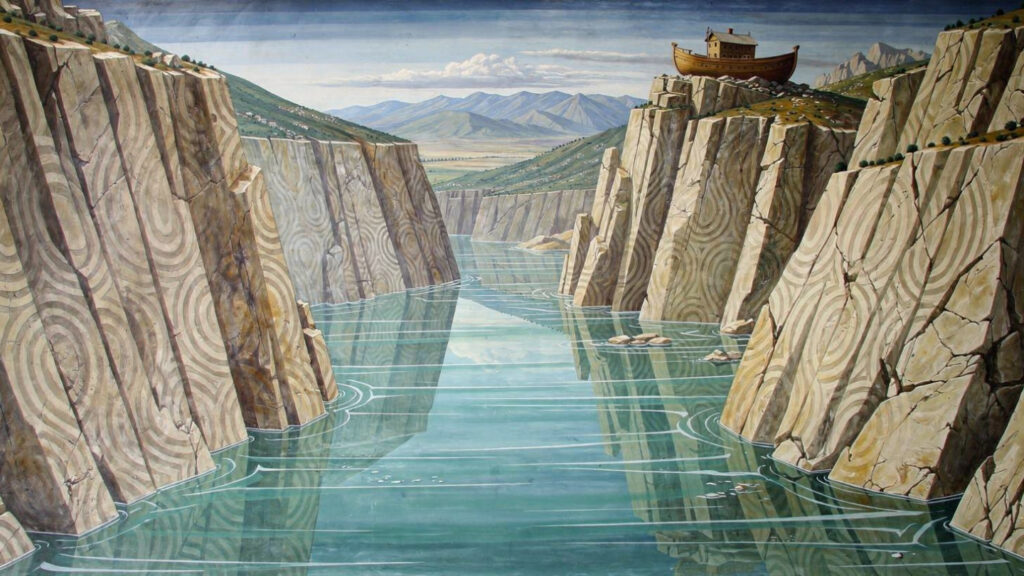
The flood’s Thessalian geography is the most deeply embedded in the ancient sources. Thessaly’s topography, the flat plain enclosed by mountains whose drainage system, when imagined at the catastrophic scale of the mythological flood, would produce a lake whose waters could only escape through the Tempi gorge to the sea, gave the Thessalian plain the visual logic of a basin that could be flooded and that could drain. The tradition that identified the Vale of Tempi as the channel through which the Thessalian flood waters escaped to the Aegean was the tradition that used the geography of the landscape to explain both the flood and its recession.
Hellen and the Greek Identity
From the first stone that Deucalion threw, in the lineage that the ancient sources preserve, sprang Hellen: the eponymous ancestor of the Hellenes, the name‑giver of the Greek people, the figure whose genealogical position at the beginning of the post‑flood human inheritance made him the origin point of the Greek ethnic and cultural identity.
Hellen’s sons, Doros and Xouthos and Aeolus, gave their names to the three major dialect groups of the Greek world: the Dorians, the Ionians through Xouthos’s son Ion, and the Aeolians. This genealogical encoding of the Greek dialectical and tribal diversity in the line that descended from the stone that Deucalion threw was the ancient tradition’s mythological account of the Greek world’s ethnic unity beneath its linguistic diversity. All Greeks were the descendants of Hellen, and Hellen was the product of the stone that the righteous flood survivor had thrown over his shoulder on the instructions of the oracle at Delphi.
The claim that the Greek people descended from a stone that Deucalion threw is the anthropological claim of the Greek mythological tradition about the Greek people’s relationship to the Greek landscape: the stones of the Greek terrain, the geological bones of Gaia that the characteristically rocky Greek landscape exposed in its mountains and its cliffs and its coastal outcrops, were the material from which the Greek people came. The Greek people and the Greek landscape are made of the same material. The bond between the community and the terrain is the bond of the shared geological substance rather than simply the bond of historical occupation.
This is the most precisely Greek of the flood myth’s theological claims, and it is the claim that no other ancient flood tradition makes in the same form.
At Olympus Estate, Mythic Essays moves through the deeper currents of the Greek tradition. Deucalion decoded the oracle. The bones of the mother were the stones of the landscape. He and Pyrrha threw them over their shoulders and the stones became people and the people were the Greek people and the Greek people were made of the same geological material as the Greek landscape. Themis gave the instruction from the Delphi sanctuary before Apollo arrived to claim it. Prometheus warned his son about the flood. The human being in the Greek tradition is the earth’s own material organized by the intelligence that understood what the oracle was saying. The stones of the Greek terrain and the people who walk on them are made of the same substance. This is what the flood myth was encoding. It is still encoded in the landscape.