

Thucydides did not stop to explain it.
In the spring of 431 BC, a force of Thebans slipped through the gates of Plataea by night and opened the Peloponnesian War. They came in, Thucydides writes, peri prōton hypnon, about the time of the first sleep. Eighteen years later, on a summer night outside Syracuse, the Athenian general Demosthenes led his men up the cliffs of Epipolae for a desperate night assault. He set out, the historian says, apo prōtou hypnou, after the first sleep.
Translators usually smooth the phrase into “the first watch” or “early in the night.” The Greek is more intimate. It tells the time by the sleep of ordinary people. Everyone reading knew which hour was meant, because everyone lived by it. The night had a shape, and its first mark was the moment the houses went quiet.
That shape, the rest at the edge of the night, the pause in the heat of the day and the god who presided over both, is the subject of this piece. The Greeks did not treat sleep as wasted time. They gave it a god, a family tree, a medicine, sanctuaries and, eventually, a place in the law of every Greek neighbourhood.
First Sleep | The Night That Had Two Halves
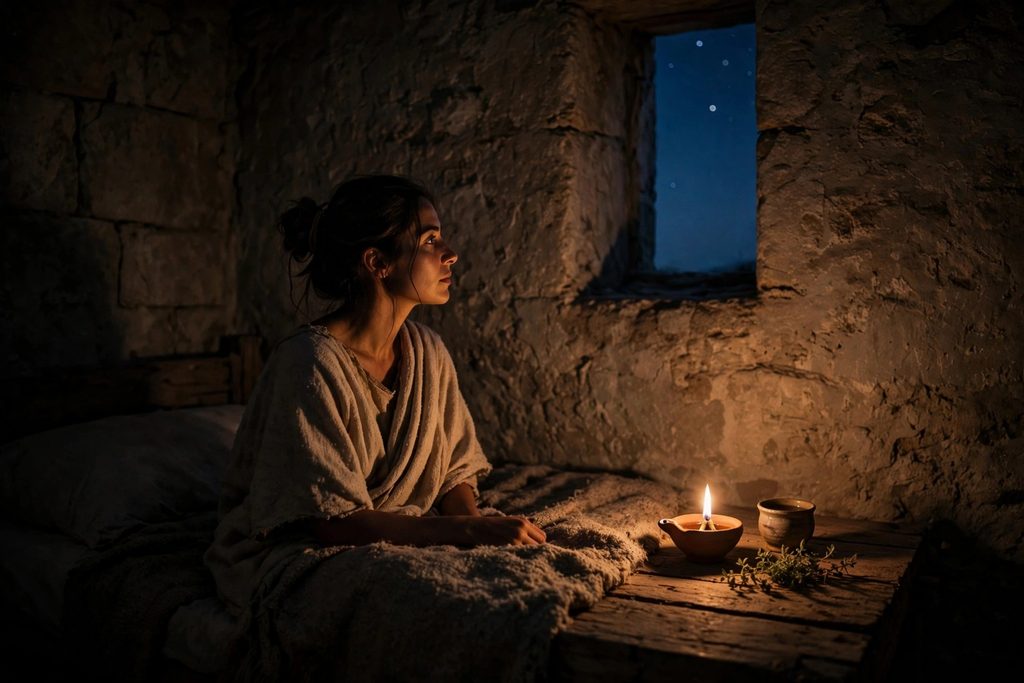
Did a first sleep imply a second? The American historian Roger Ekirch thinks so. Over many years of reading diaries, court records, medical books and prayer manuals, he found that people in pre-industrial Europe spoke routinely of a first sleep and a second sleep, with an hour or so of wakefulness between them. People rose in that gap to tend the fire, pray, make love, talk quietly or simply lie and think. Ekirch traced the expression back to classical writers, Thucydides among them, and found that it faded from common use as artificial light pushed bedtimes later, disappearing almost entirely by the early twentieth century.
A laboratory experiment gave the idea unexpected support. In the early 1990s the psychiatrist Thomas Wehr, at the National Institute of Mental Health in the United States, put volunteers on fourteen hours of darkness every night for several weeks. Their sleep gradually split in two, with a calm waking interval of one to three hours around midnight, during which levels of prolactin, a hormone linked to rest and relaxation, stayed high.
Honesty requires the other half of the evidence. When researchers recorded the sleep of three traditional peoples living without electricity, the Hadza of Tanzania, the San of the Kalahari and the Tsimane of Bolivia, in a study published in 2015, they found mostly one main block of sleep a night, timed to the falling temperature of the dark hours. Segmented sleep may be what bodies do on very long winter nights, rather than a universal human design. And the Greek phrase itself can be read more simply, as the hour when people had just fallen asleep.
Either way, the lesson for a modern reader is the same. Waking in the small hours is not necessarily a disorder. For much of history it was simply part of the night.
Hypnos and His Brother | The Family of the Night
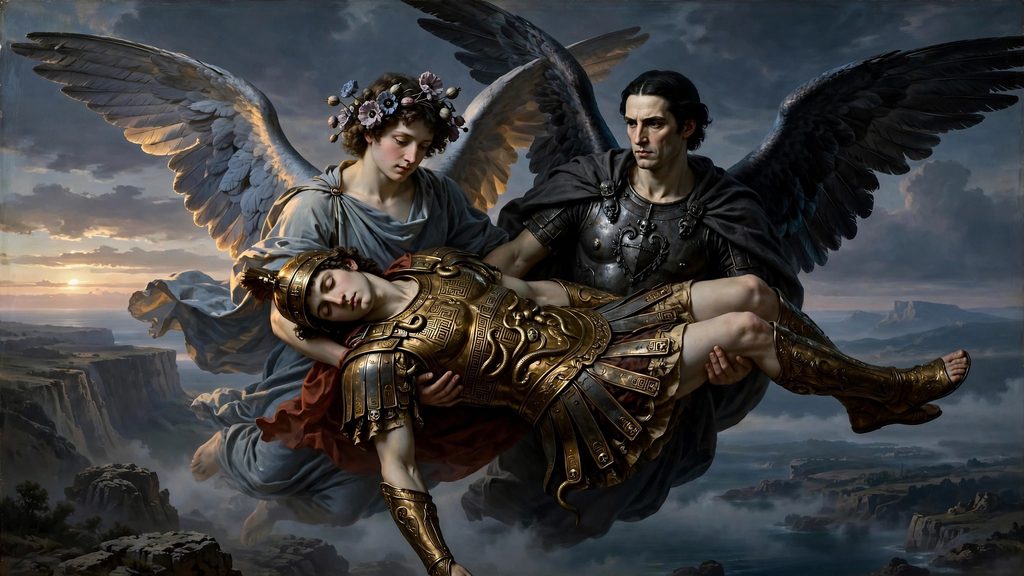
The Greeks gave sleep a body and a genealogy. In Hesiod’s Theogony, Hypnos is a child of Nyx, the Night, and the twin of Thanatos, Death. The two brothers live together at the edge of the world below, where the sun never looks on them. Hesiod draws the difference between them in two lines. Sleep wanders gently over land and sea and is kind to human beings. Death has a heart of iron and lets go of nothing he takes.
It is a remarkable piece of family thinking. Sleep and death are twins, alike in nature and opposite only in their return. Every night, the Greeks believed, a sleeper went partway down the road the dead travel all the way. The dreams that came in sleep belonged to the same household. Hesiod counts the tribe of Dreams among the children of Night, and later poets made the shape-shifting Morpheus a son of Sleep himself.
Homer gives the twins their most famous scene. In the sixteenth book of the Iliad, when Zeus’s own son Sarpedon falls at Troy, the god sends Sleep and Death to carry the body home to Lycia. Around 515 BC the Athenian painter Euphronios showed the two winged brothers lifting the bleeding hero between them, one of the most moving images in Greek art. Sleep, in that picture, is not an escape from grief. It is one of grief’s two bearers.
Hypnos also has a comic side. In the fourteenth book of the Iliad, Hera persuades him to put Zeus to sleep so she can turn the war against the Trojans. He is reluctant, because he has done it before. The last time, Zeus woke in a fury and went hunting for him through the sky, and only the protection of his mother Night saved him. Hera has to promise him one of the Graces, Pasithea, as a wife before he agrees, and then he perches in a tall fir on Mount Ida disguised as a bird of the night and pours sleep over the king of the gods. Even Zeus, the poem quietly insists, must sleep.
The Cave Where Nothing Moves | The First Perfect Bedroom
The Roman poet Ovid, writing in the time of Augustus, gave Sleep a home, and it reads like a sleep specialist’s checklist. In the eleventh book of the Metamorphoses, the house of Somnus, the Latin Hypnos, is a deep cave in a hollow mountain near the land of the Cimmerians, where the sun never enters. Twilight hangs in the air. No rooster crows there, no dog barks, no goose cackles, no branch stirs in the wind. From the foot of the rock runs the stream of Lethe, the river of forgetting, murmuring over its pebbles and inviting sleep. Poppies and countless herbs grow at the entrance, and Night gathers their juices to scatter over the dark world.
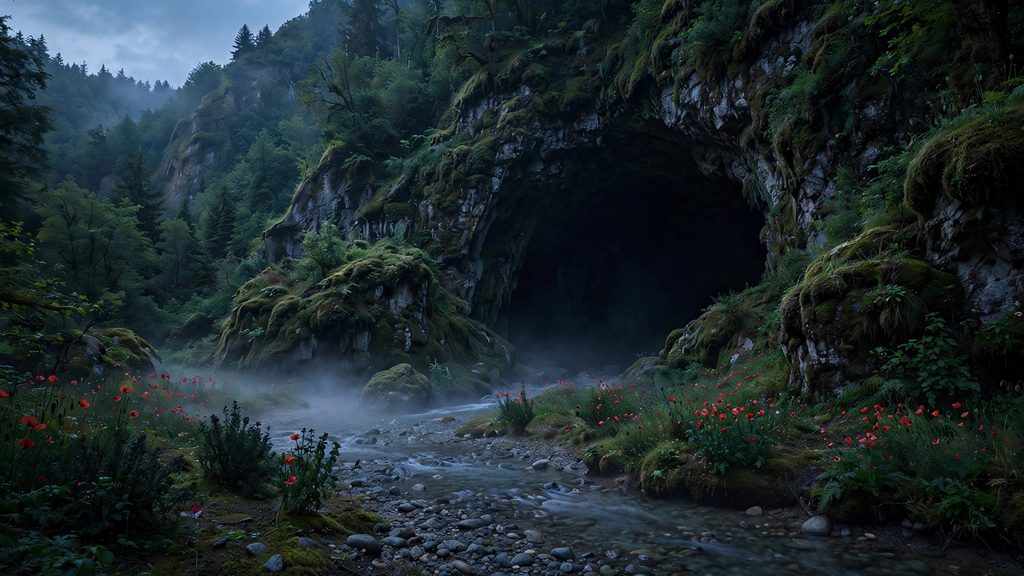
Dark, cool, silent, and soothed by the steady sound of water. Two thousand years before anyone spoke of sleep hygiene, a poet described the ideal bedroom and called it the house of a god.
Medea’s Song | Sleep as a Drug
The Greeks also knew sleep could be forced. In the Argonautica of Apollonius of Rhodes, the young sorceress Medea leads Jason through the grove of Colchis to the serpent that never sleeps, coiled around the tree of the Golden Fleece. She calls in a sweet voice on Hypnos, the highest of the gods, to charm the beast, and then sprinkles its eyes with a potion from a fresh sprig of juniper. The great coils relax, the head sinks to the ground, and Jason takes the fleece.
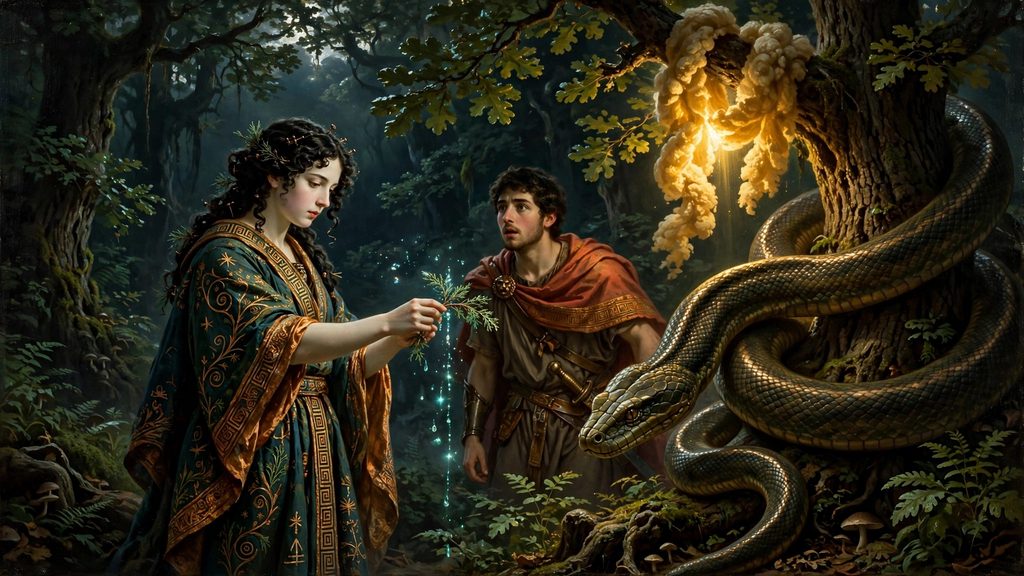
Song, prayer and pharmacy work together in the scene, and the combination was not only poetic. Greek and Roman physicians prescribed poppy and other plants to bring sleep and dull pain. The god and the drug were two routes to the same state.
What the Doctors Read in Sleep | Hippocrates and Aristotle
Greek medicine treated sleep as a sign to be read. The Hippocratic Aphorisms, the compact rules of the medical school of Kos, return to it again and again. In any illness, one aphorism warns, sleep that brings distress is a deadly sign, while sleep that helps is not. Another says simply that sleep and wakefulness, both of them, become disease when they pass their measure. A physician at the bedside asked how the patient slept before almost anything else.
The Hippocratic treatise known as On Regimen goes further and gives a whole book to dreams. Its author argues that while the body sleeps, the soul keeps watch over it and reports its condition in images. Dreams of the sun and stars shining clearly mean health. Dreams of a dim or troubled sky point to disorder inside, which the physician should correct with diet, exercise and rest. Dreams, in this view, were diagnostic messages, and a careful doctor read them alongside the pulse and the fever.
Aristotle, in his short works On Sleep and On Dreams, tried to explain the mechanism. He thought food, as it was digested, gave off warm vapours that rose to the head, cooled there and sank again, bringing on drowsiness. That, he said, is why people grow sleepy after meals. The physiology was wrong, but the observation was exact. Every Greek who has ever felt the pull of a pillow at three in the afternoon would recognise it.
Sleeping in the God’s House | Enkoimesis at Epidaurus
The boldest Greek idea about sleep was that it could heal. In the sanctuaries of Asklepios, the god of medicine, sick people practised enkoimesis, incubation, sleeping in a sacred building in the hope that the god would appear in a dream and cure them or tell them what to do. By some counts there were more than three hundred Asklepieia across the Greek and Roman world, and the most celebrated stood at Epidaurus, in a green valley of the Argolid.
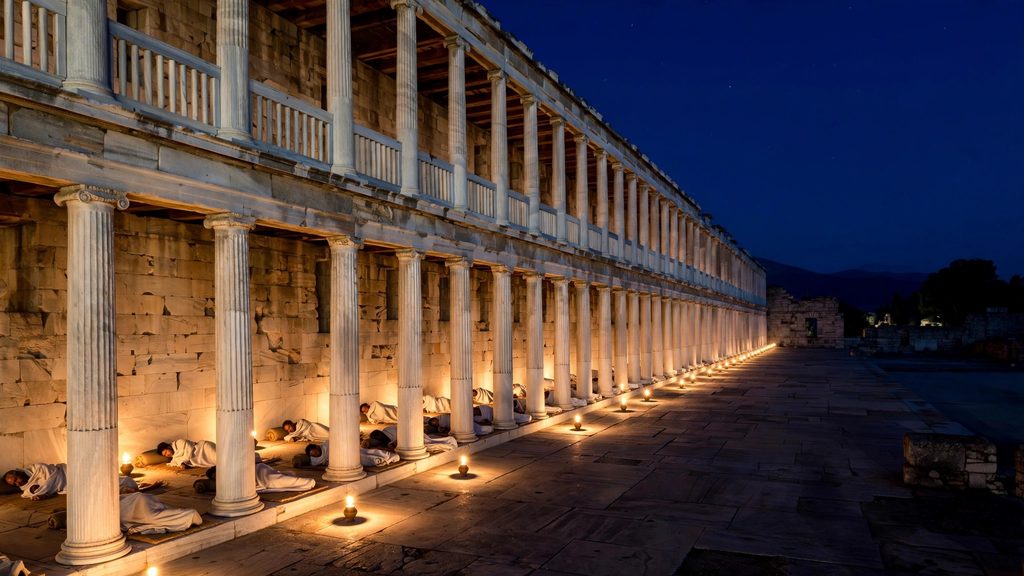
Pilgrims bathed, made offerings and waited. At nightfall they lay down in the abaton, the long two-storey colonnade where only suppliants could sleep. Lamps were put out. Priests moved quietly among the sleepers. In the morning, what each had dreamed was told and interpreted. At Epidaurus the sanctuary set up stone tablets recording the god’s cures. One tells of Ambrosia of Athens, blind in one eye, who mocked the stories of lame men walking and the blind seeing. In her dream the god promised to heal her if she dedicated a silver pig to him as a memorial of her foolishness, then opened her eye and poured in a drug. She woke able to see.
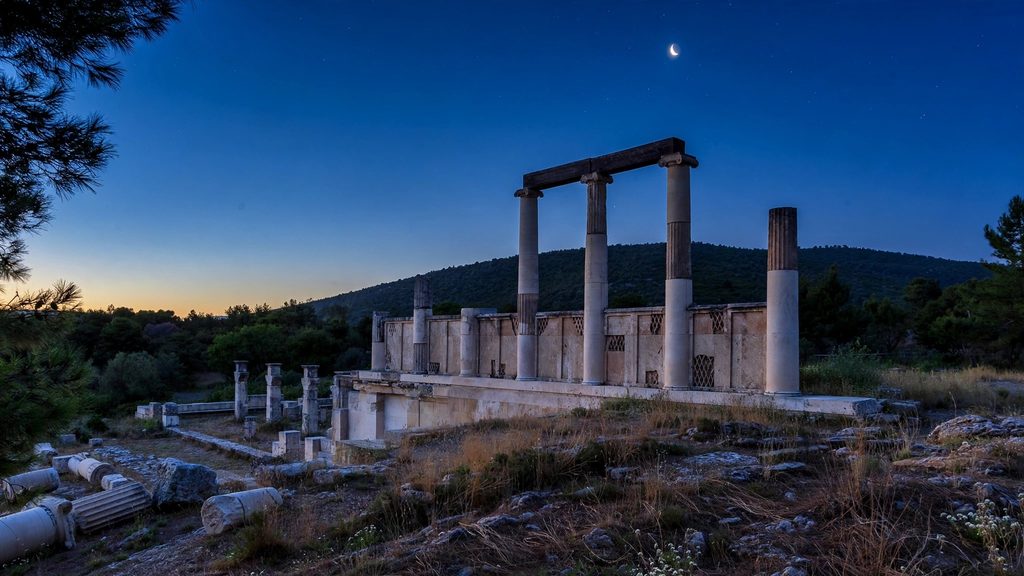
Not everyone was reverent. In 388 BC Aristophanes put a night in an Asklepieion on the comic stage in his play Wealth, where a slave lies awake in the dark watching the priest sweep the offerings off the altar into his bag. But the institution lasted for close to a thousand years. Another dream sanctuary, sacred to the seer Amphiaraus, drew sleepers to its hillside above Oropos, as told in The Reluctant Seer, and the healing god’s place in the Greek year is followed in Asclepius Awakens. Whatever one makes of the cures, the Greeks built entire sanctuaries around a simple conviction. A person who rests in a calm, sacred, carefully prepared place may wake better than they lay down.
Mesimeri | Why Greece Still Stops at Midday
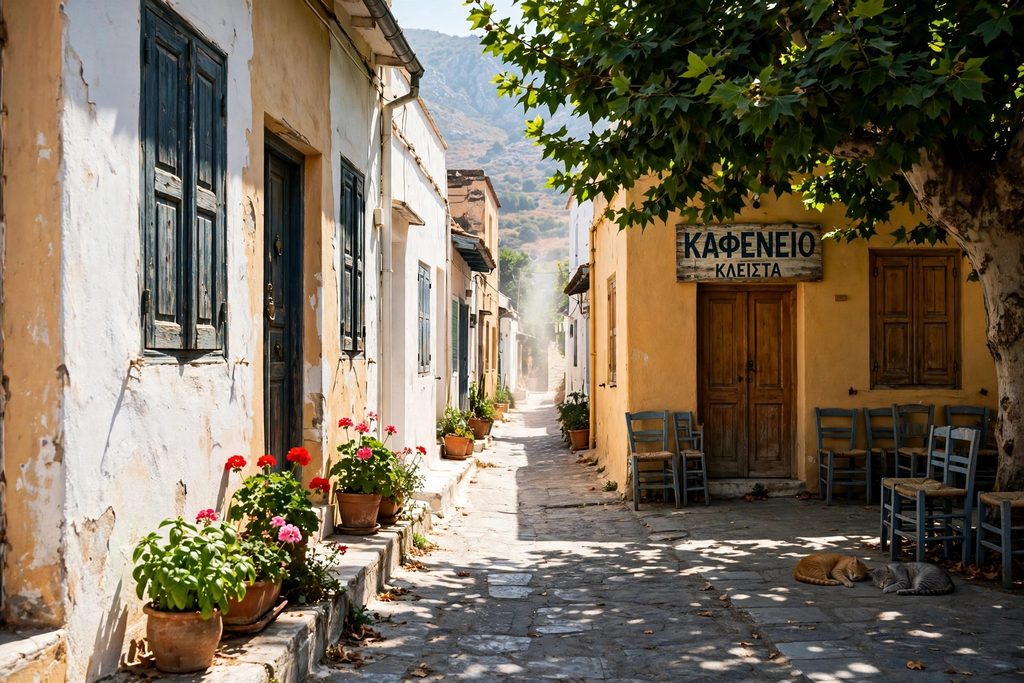
Ask a Greek grandmother when not to telephone and she will answer at once. Not in the early afternoon. The mesimeri, the middle of the day, is still the hour of the shutters, the hour when villages empty, cats sleep in doorways and the only sound is cicadas. For generations Greek municipalities set official quiet hours that covered the early afternoon as well as the night, and many Greeks still know them by heart. The daily rhythm built around that pause, from the nap to the evening stroll, is traced in Siestas, Volta, and Kafeneion.
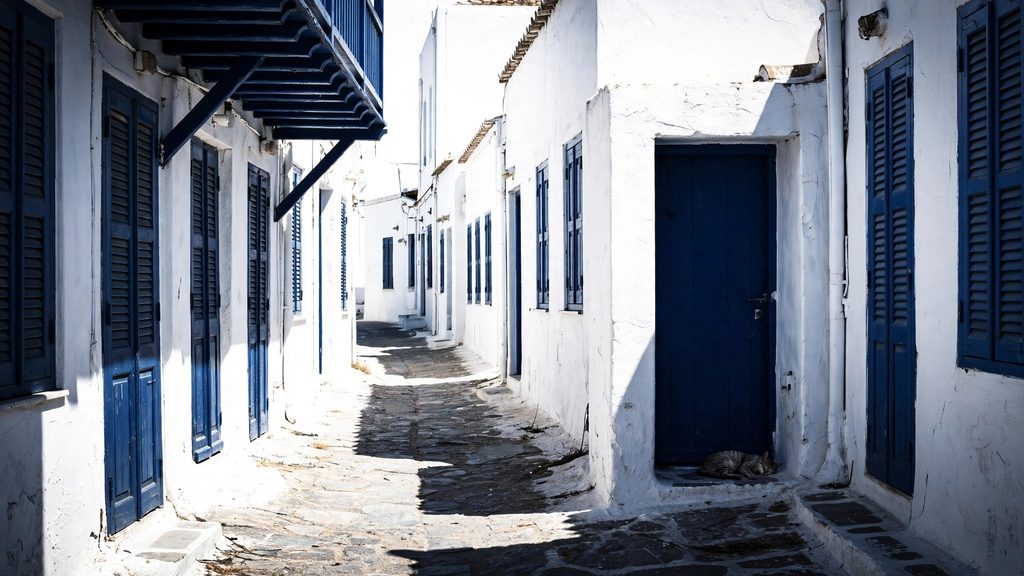
It is not laziness. It is the climate and the body agreeing with each other. In July and August the Greek afternoon is the hottest and most dangerous part of the day for hard work outdoors, which is why the old farming year started at dawn and stopped when the sun stood high. The body has its own reason too. Sleep researchers describe a natural dip in alertness in the early afternoon, built into the daily circadian rhythm and present even when people skip lunch. Aristotle blamed the meal. Modern science blames the clock inside us. The mesimeri answers both.
Greek data has even entered the medical literature. In 2007, researchers led by Androniki Naska at the University of Athens Medical School published a study of 23,681 Greek adults followed for about six years. Those who took a regular siesta, at least thirty minutes three times a week, had a 37 percent lower risk of dying from heart disease than those who never napped, after allowing for other risk factors, and the link was strongest among working men. It is an observational study, so it cannot prove that the nap itself did the protecting. But it suggests the old Greek habit deserves more respect than the modern office gives it.
Ikaria | The Island Where People Forget to Sleep by the Clock
On Ikaria, the Aegean island famous for the number of its people who live into their nineties, time keeps its own hours. Shops open late, evenings run long, village festivals carry on until dawn, and the afternoon belongs to rest. Studies of the island’s elderly residents have found that daily naps are part of ordinary life for many of them, alongside a diet rich in vegetables, olive oil and herbs, steady physical work on steep land, and close ties with family and neighbours.
Nobody can isolate the nap as the secret of Ikarian longevity, and it would be dishonest to claim it. But it belongs to a whole way of living that does not fight the body’s rhythms. Ikarians sleep when they are tired, rest when the sun is high and rarely set an alarm. The ancient Greek night and the modern Ikarian afternoon share the same principle. The body is allowed to keep its own time.
The Greek Art of Rest | Taking It Home
Put the pieces together and a complete philosophy of rest appears. Sleep was a god, kind to mortals and brother to Death. It had a perfect house of darkness, silence and running water. It could be summoned by song or drug, read by physicians as a sign of health, entered in sacred buildings as a route to healing, and taken at midday as the sensible answer to the sun. None of this needs a temple to put into practice.
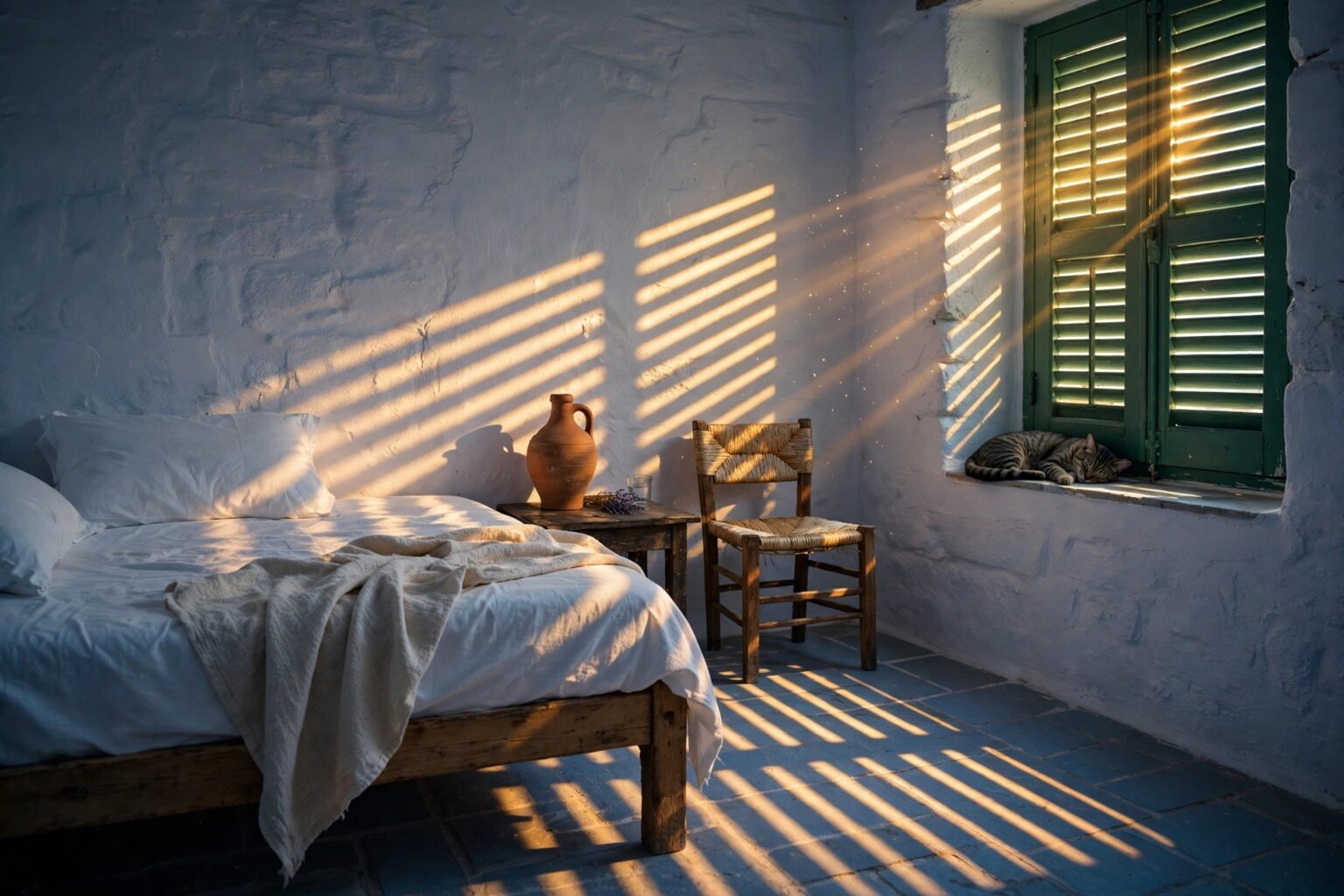
Make a cave of Hypnos. Ovid’s checklist still works. Keep the bedroom dark, cool and quiet, and if silence is impossible, choose a steady, gentle sound like the murmur of Lethe over noise that rises and falls.
Do not fear the small hours. If you wake around the middle of the night, it may be the old two-part night reasserting itself. Keep the light low, read a little or lie still, and let the second sleep come. If waking at night leaves you exhausted day after day, that is a matter for a doctor, as it would have been for the physicians of Kos.
Keep a mesimeri. Even twenty minutes lying down in a shaded room in the early afternoon counts, especially in summer. In the heat of July, do the hard work in the morning, rest when the sun is high and come back to life in the evening, as Greek villages always have.
Treat sleep as a sign. The Hippocratic doctors asked first how a patient slept. It is still a good question to ask yourself. Sleep that comes easily and leaves you rested is one of the plainest measures of a life in balance.
The God Whose Mother Is the Night
Thucydides wrote about war, and so he wrote about the night as soldiers use it, as cover. But even he told time by the sleep of ordinary people, because sleep was the clock everyone shared. The houses went quiet, the first sleep began, and the city lay for a while in the keeping of a gentle god.
That god has not gone anywhere. He still wanders over land and sea, as Hesiod said, kind to human beings. He still comes at midday to the shuttered rooms of Greek villages. All he has ever asked is that we stop long enough to let him in.
At Olympus Estate, Wellness and Renewal looks for the Greek ideas about health that still make sense today. The Greek art of rest begins with Thucydides telling time by the first sleep, a phrase the historian Roger Ekirch reads as evidence of a two-part night, supported by Thomas Wehr’s long-night experiments and questioned by studies of hunter-gatherer sleep. It runs through Hypnos, gentle twin of Death and child of Night, who carried Sarpedon home and lulled Zeus on Mount Ida, through Ovid’s silent cave beside the river Lethe and Medea’s sleep-song in Colchis. It reaches the doctors of Kos, who read sleep and dreams as signs of health, Aristotle’s after-dinner drowsiness and the healing sleep of enkoimesis at Epidaurus and Oropos. It ends in the living mesimeri, the Greek afternoon rest that a 2007 Athens study linked to lower heart disease deaths, and on Ikaria, where people still let the body keep its own time.