

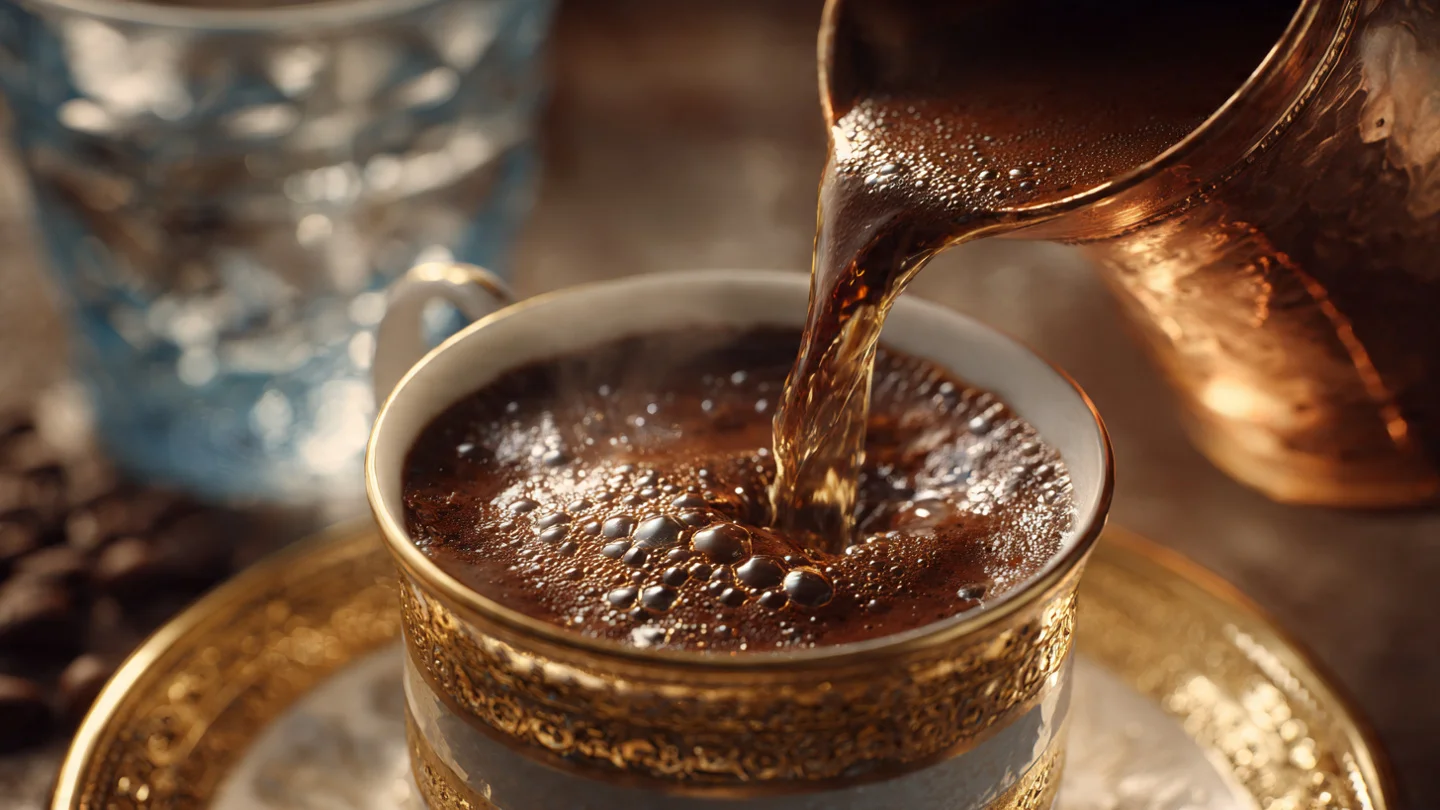
Coffee arrived in the Greek world as a luxury trade item moving through Ottoman commercial networks, and it became something considerably more permanent: the daily fixture around which village and city life still organizes its mornings. The practice began in urban centers under Ottoman rule and moved outward into the rural provinces of Macedonia and the Peloponnese. The preparation itself is technical rather than casual. The briki is a narrow-necked copper or brass pot built specifically to concentrate heat, and the coffee inside it is ground to a near-powder consistency to maximize the surface area exposed to the water. The density this produces allows the flavor to release slowly, which is exactly the point: the cup is built to be drunk over time rather than quickly.
Archaeological findings in old marketplaces confirm the presence of dedicated areas for coffee preparation dating well back into the Ottoman period, spaces that functioned as informal courts and town halls as much as places to drink. The ritual is defined by kaimaki, the thick foam that seals in heat and aroma, and by the continued use of the hovoli, the heated sand pit, as the preferred method for achieving even, gentle heat. The point of the hovoli is to keep the coffee from ever reaching a violent boil, since a hard boil destroys the delicate oils the bean releases at lower temperatures.
Morning Heat and the Domestic Hearth
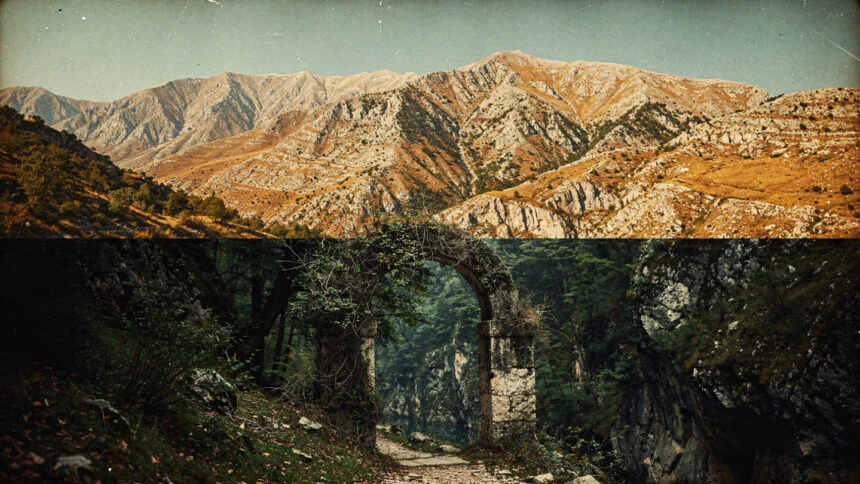
The morning air in the mountains of Macedonia is often sharp, carrying the scent of damp pine and cold earth. In the small villages on these slopes, the day does not begin with machinery. It begins with the sound of a metal spoon against the side of a briki. The vessel itself is small and unremarkable to look at, but it carries a long, continuous history behind it. The heat goes in slowly, over a low flame or inside the mineral warmth of the hovoli, and the process resists being rushed: move too quickly and the texture and taste of the finished cup suffer for it. The preparation requires a deliberate, unhurried relationship with fire and water that the modern kitchen rarely asks of anyone anymore.
The Physical Craft of the Brew
The preparation of Ellinikos coffee is a study in the management of heat and pressure. The ultra-fine grind creates a large surface area, which allows rapid extraction even at temperatures below boiling. The kaimaki that forms on the surface is the clearest indicator of whether the preparation succeeded: the foam is trapped gas and oil producing a velvety texture on the palate, and its presence or absence tells the maker immediately whether the heat was managed correctly. The coffee is served in a small porcelain cup alongside a glass of cold water to clear the palate between sips, and this pairing of hot and cold, bitter and clean, is the standard sensory profile of the Greek morning.
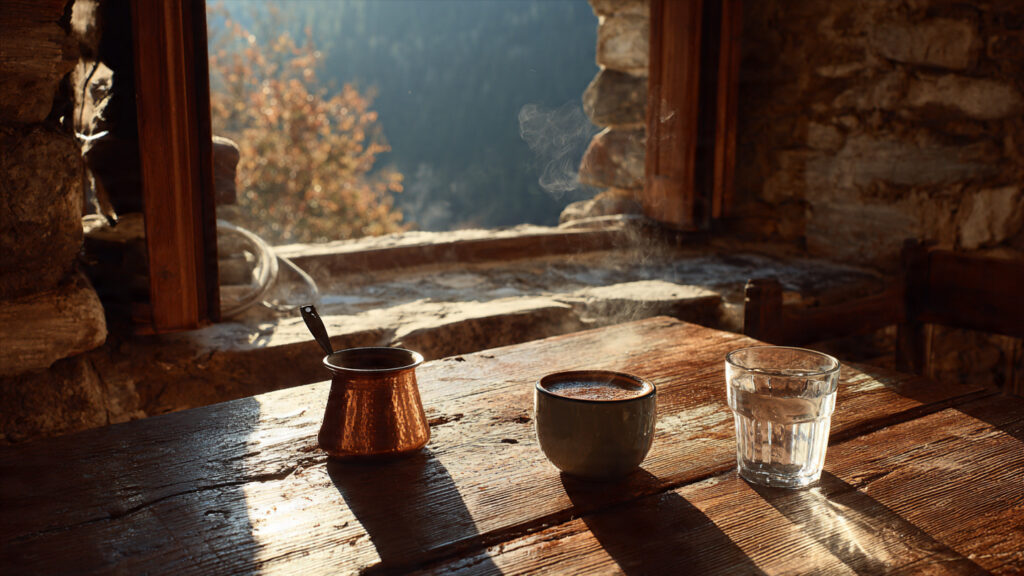
The water itself often comes from local springs in regions like Thessaly or Attica, where mineral content gives the finished drink a distinct regional character. The hovoli matters particularly for maintaining steady temperature: the sand acts as a thermal buffer around the pot, preventing the hot spots that would otherwise scorch the grounds directly against the metal. The method descends directly from older heating techniques used in metalworking and cooking, and it produces a cup that is dense and structurally stable in a way flash-brewed coffee simply is not.
In the coastal towns along the Aegean, the ritual is often performed outdoors, where sea air mixes directly with the aroma of the roasting beans. The materials involved, the copper of the pot, the ceramic of the cup, the water drawn from local ground, are all sourced from the immediate landscape, which gives the whole practice a continuity between the person making the coffee and the place they are making it in.
The Kafeneio and the Shape of Community
The kafeneio functions as the primary social hub of a Greek community, occupying roughly the role the agora once did: neutral ground where people gather to exchange news and keep the village’s social fabric intact. The chairs typically face the street, allowing whoever is sitting to watch the public space as a matter of course rather than deliberate effort. A single cup of coffee is, in practice, the entry fee for as much time at the table as the drinker wants to take.
In the Peloponnese, these establishments are often among the oldest buildings in town, their thick stone walls keeping the interior cool through the height of summer. The atmosphere inside runs on a calm, predictable repetition: regulars have their own seats, and the pace of service follows the needs of the people in the room rather than any external schedule. This is where local history gets preserved through direct retelling, the stories of the town passed on over the steam of the brew, in a setting flat enough in its social structure to let genuinely cross-generational conversation happen in a way busier environments rarely allow.
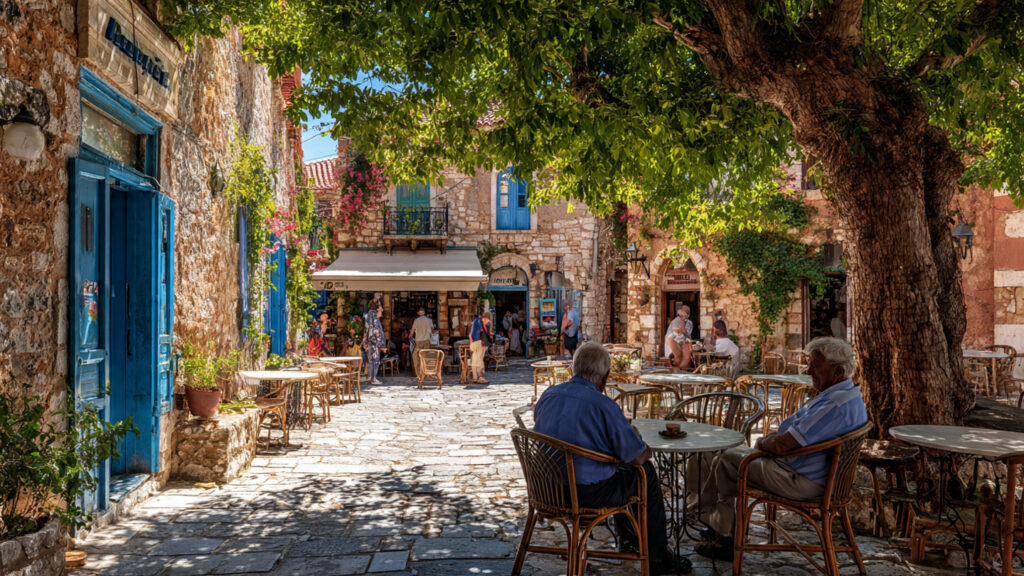
Sitting down is as much a part of the ritual as drinking is. Taking a coffee to go is a recent urban adaptation that still sits somewhat outside the tradition’s actual spirit, since the point of the kafeneio was never speed. The value was always in how long a person could reasonably stay, and the Greek preference for long, uninterrupted coffee sessions reflects a culture that has generally organized itself around relationships over transactions.
Reading the Grounds
Kafemanteia, the reading of the coffee grounds, is a traditional practice for talking through the future without pretending to any real certainty about it. After the coffee is finished, the cup is turned over onto a saucer, and the thick residue settles into shapes as it drains and dries. An experienced reader, often an older woman in the community, interprets the resulting patterns. Whatever one makes of its predictive claims, the practice functions socially as a structured way of discussing hopes and worries that might otherwise go unspoken.
The tradition runs particularly deep in Crete and the other islands, where the relative isolation of island life gave local, informal forms of knowledge like this one more room to persist. Reading the grounds together is a genuinely collaborative act, and the patterns read into the residue, trees, birds, mountain paths, tie the interpretation back to the physical landscape the drinkers actually live in. The ritual gives the coffee session a clear ending and, in practical terms, a natural point to get up and move on to whatever comes next.
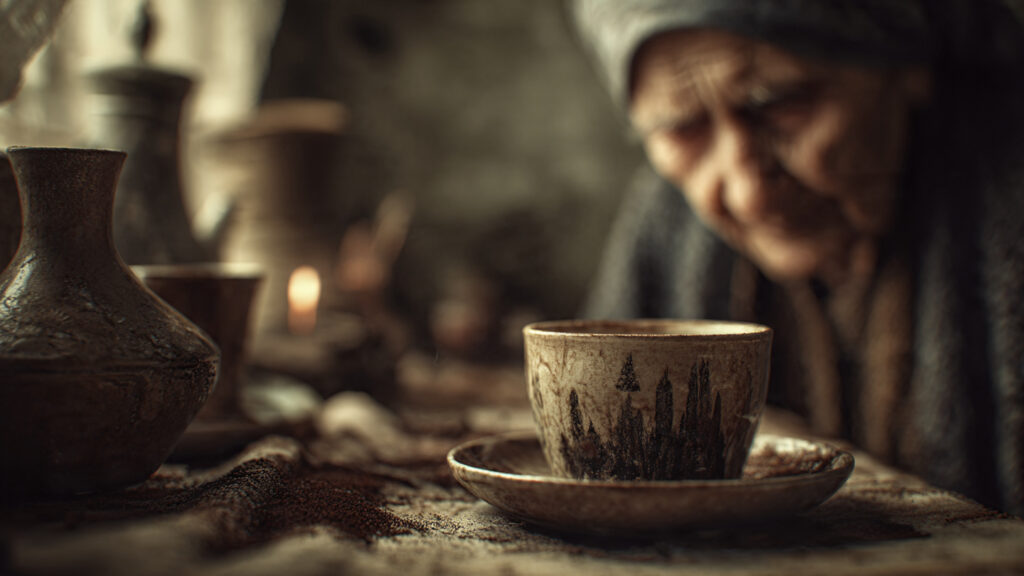
The grounds themselves are the physical evidence that a cup was made the traditional way at all. Filtered coffee leaves nothing behind. This method leaves a visible residue every time, and kafemanteia is simply the practice of doing something deliberate with that residue rather than washing it straight down the sink.
The Athenian Adaptation
In Athens, the ritual has adapted to a faster urban pace without losing its underlying shape. The freddo espresso and freddo cappuccino, introduced toward the end of the twentieth century, gave the city a cold version suited to the Athenian summer. Both are made by mixing hot coffee with ice at high speed to produce a dense, stable foam, a method that keeps the coffee’s structure intact even once it has been chilled. The Athenian coffee shop sits comfortably between the traditional and the modern, ancient marble providing the backdrop for a considerably faster contemporary rhythm.
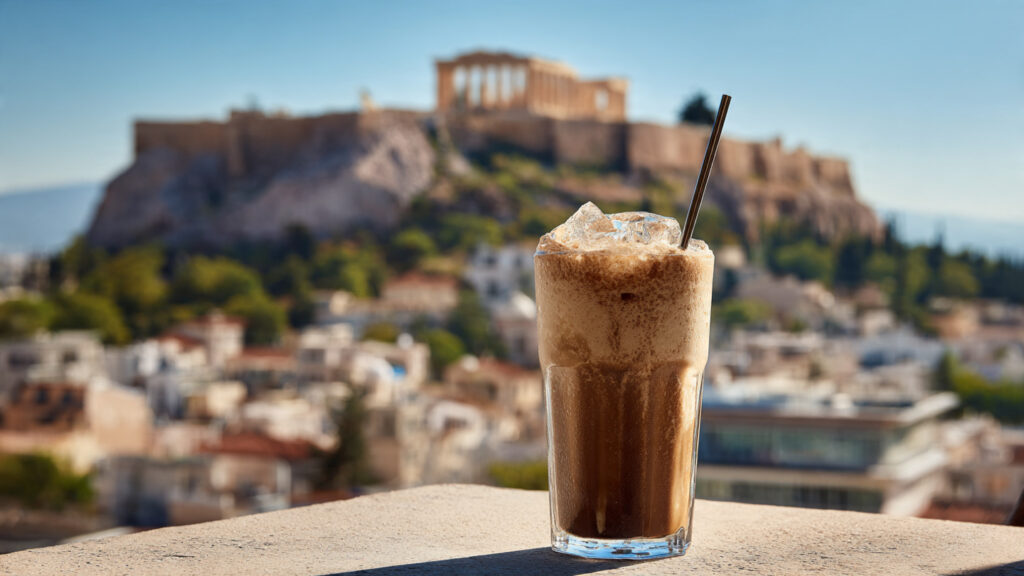
The temperature of the drink has changed. The social habit around it largely has not. City dwellers still sit for extended periods, using the coffee as a reason to pause whatever the rest of the day has planned for them, in a high-traffic square or a quiet Attica side street alike. The shift from the hot briki to the cold shaker is a technical change in method. The underlying cultural logic, that coffee marks a deliberate pause in the day, has carried over intact.
This adaptability is itself part of what has kept Greek coffee culture intact: it absorbs new technology and new trends without being replaced by them. The freddo is now as thoroughly part of everyday Greek life as the traditional hot briki ever was, and the cup itself, hot or cold, still connects a mountain village kafeneio to an Athenian street corner through the same basic understanding of what a coffee break is actually for.
The Final Sip
The ritual ends with the last sip, the thick silt at the bottom of the cup left undisturbed. The heat of the morning has been managed, whatever conversation needed to happen has happened, and the day can proceed from there. In traditional homes, where the hearth is still treated as the domain of Hestia, this daily act of making coffee is one of the ways the household maintains its own order. It requires nothing more than a pot, some grounds, and enough time to do it properly.
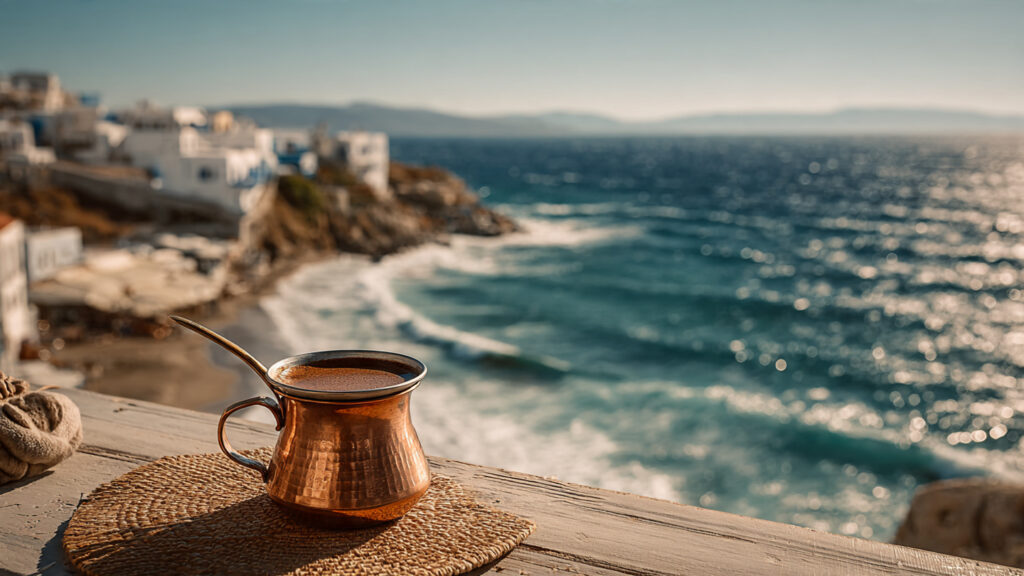
The endurance of coffee in Greece is not much of a mystery once the practical logic behind it is clear. It survives because it works. It provides a physical and social function that faster alternatives simply do not replicate, and it holds a shape to the day that a culture built around long conversation has never had strong reason to give up. The smell of the roasting beans and the sight of the rising foam are still the clearest markers of where the morning actually begins.
The sun moves across the sky and the shadows shift in the square. The next cup will come in the afternoon, marking another turn in the day’s own cycle. The ritual continues.
The coffee is ready. The world can wait.
At Olympus Estate, Greek Living traces the domestic and daily traditions of the Hellenic world from the ancient household to the contemporary table. The briki concentrates heat in its narrow copper neck. The coffee is ground to a microscopic powder so that even below boiling point the large surface area allows for rapid extraction. The hovoli, the heated sand pit, surrounds the pot with thermal mass and prevents the hot spots that would scorch the grounds. The kaimaki, the thick foam on the surface, is the indicator of a successful preparation. The kafeneio is the modern equivalent of the ancient agora: a neutral ground where a single cup justifies an entire morning of conversation. The regulars have their assigned seats. To take a coffee to go remains foreign to the traditional spirit of the ritual. After the coffee is consumed, the cup is turned over onto a saucer and the thick residue settles into patterns read as kafemanteia, a material record that filtered coffee never leaves behind. In the traditional homes where the hearth is still honored as the domain of Hestia, the daily ritual maintains the order of the household. The coffee is ready. The world can wait.