
In the high, thin air of the Greek mountains or the salt-crusted edges of the Saronic Gulf, the end of winter is not marked by a sudden explosion of green. It is a subtler shift. It is found in the way the dampness leaves the limestone and the way the light begins to linger on the silver-grey leaves of the olive trees. This is the time when Asclepius awakens. The god of medicine was never a figure of frantic energy or instant cures. He was a god of process, of sleep, and of the slow, deliberate transition from depletion to restoration.
Winter in Greece is a season of endurance. It is a time when the wind from the north, the Boreas, forces the body to contract. We pull our shoulders inward, we gather around the hearth, and we wait. By the time late February arrives, the weight of this stillness becomes a physical burden. The ancients understood this exhaustion as a form of spiritual and physical stasis. They knew that before the labor of spring could begin, the body required a ritual of release. This is why the ancient Greek healing rituals associated with the cult of Asclepius were so vital during these weeks of transition. They provided the necessary bridge between the dark months of survival and the coming light of renewal.
The Fire and the Forest of the First Healer
The story of the god of healing begins not in a temple, but in the trauma of his birth. Asclepius was the son of Apollo and the mortal Coronis. When Coronis died while still carrying the child, Apollo rescued the infant from the funeral pyre. This act of pulling life from the very edge of the flames defined the nature of the god. He was born from rupture and loss, which made him uniquely suited to understand the vulnerabilities of the human condition. He was not a distant deity of perfection but a survivor who had mastered the art of recovery.

Apollo did not raise the boy in the golden halls of Olympus. He carried him to the slopes of Mount Pelion and placed him in the care of Chiron, the Centaur. This choice of location was deliberate. Pelion mythology is rooted in the dense forests and the hidden springs that still define the mountain today. Chiron was a teacher of the wild, a master of herbs and the rhythmic patterns of the natural world. He taught the young god that healing was not an act of conquest over the body. It was a matter of alignment with the seasons.
During the late winter on Pelion, the forest is a place of deep, damp silence. The air smells of wet earth and decaying chestnut leaves. It is a landscape that demands observation. To find the right root or the most potent leaf, one must look closely at the shadows. This training in attention became the cornerstone of the Asclepieion tradition. The healers who followed in the footsteps of the god were taught to watch the patient with the same patience that a gatherer watches the forest floor. They knew that the body, like the mountain, had its own internal weather and its own slow cycles of repair.
The Architecture of Stillness and the Abaton
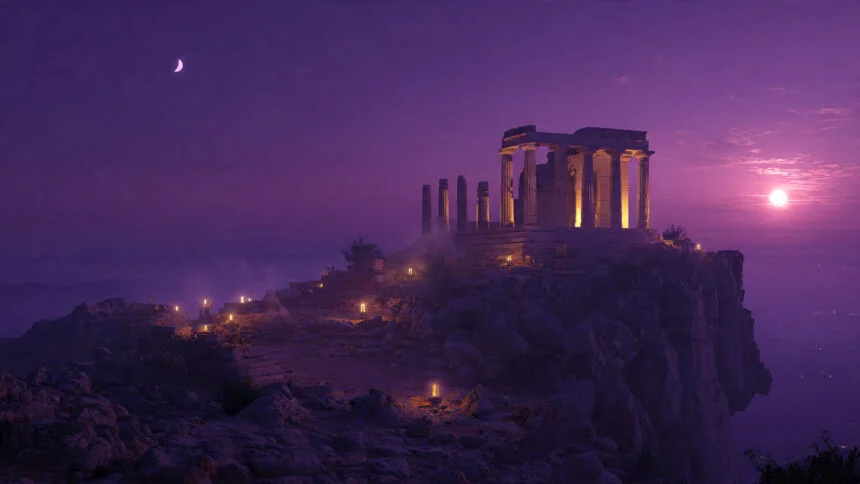
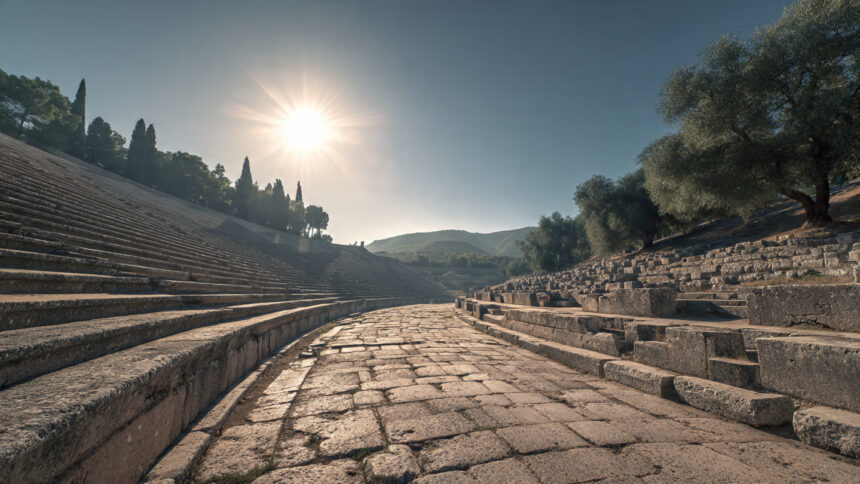
As the cult of the healer god spread across the Mediterranean, the sanctuaries became more than just places of prayer. They were the world’s first wellness retreats, designed with a sophisticated understanding of how environment influences the nervous system. The most famous of these, the sanctuary at Epidaurus, was placed in a gentle bowl of hills where the air was scented with pine and the acoustics of the landscape amplified the silence.

The primary keyword in these spaces was not cure, but dream incubation. When a pilgrim arrived at the sanctuary, they did not immediately see a physician. They were first required to undergo a period of preparation. This involved bathing in the sacred springs, fasting from the heavy foods of winter, and walking the grounds in contemplative silence. The goal was to peel away the layers of the external world until only the essential self remained. Only then were they allowed to enter the Abaton, the sacred hall of sleep.
The ritual of enkoimesis, or incubation, was the heart of the ancient Greek healing rituals. The sick would lie down on the cold floor or on simple pallets, surrounded by the shadows of the temple. In the deep quiet of the night, it was believed that Asclepius would appear in their dreams. Sometimes he would perform a symbolic surgery, sometimes he would offer a cryptic piece of advice, and sometimes he would appear as a serpent to lick the afflicted part of the body. This was not a passive experience. It was a deep dive into the subconscious, a recognition that the mind held the keys to the body’s recovery.
The Serpent and the Staff as Symbols of Living Change
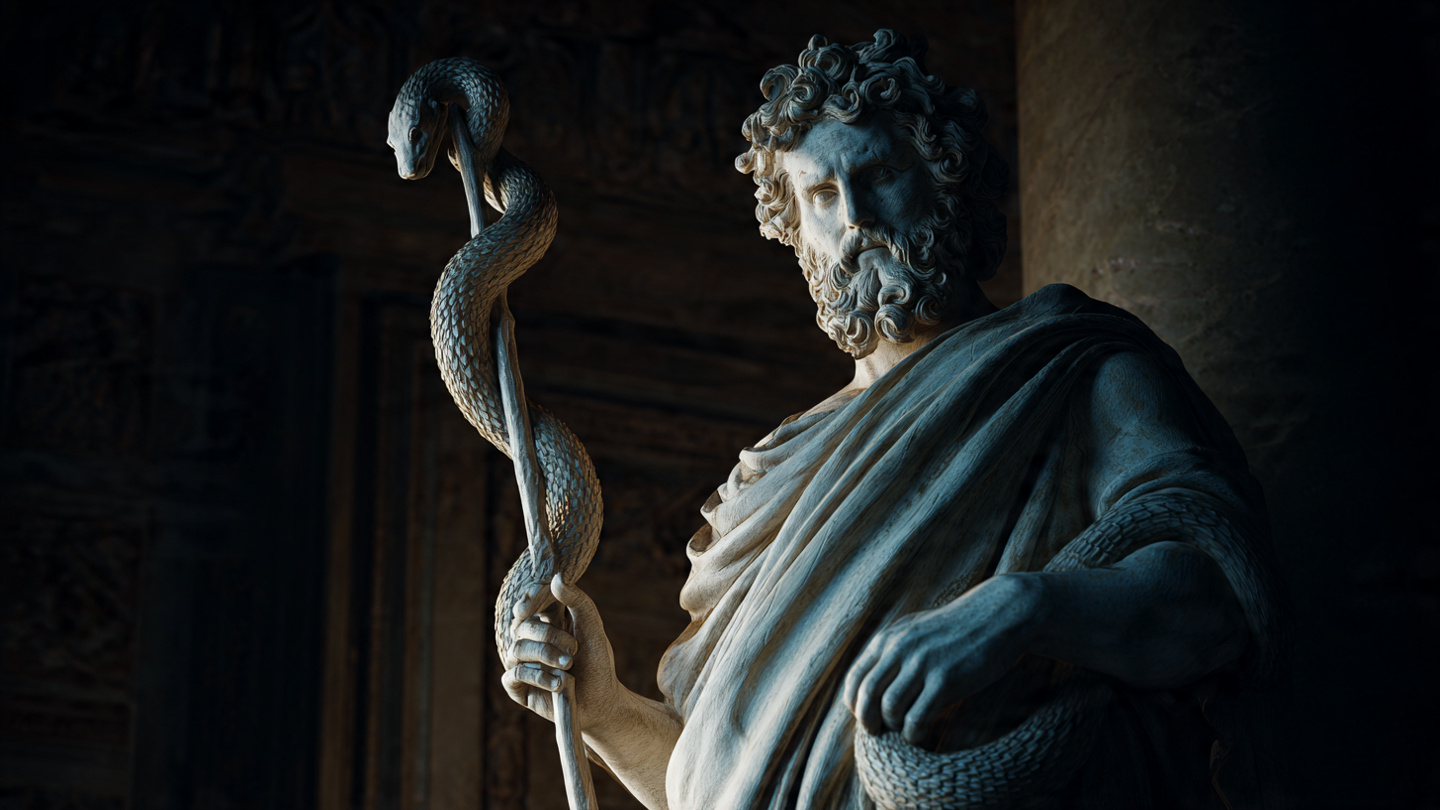
The imagery of the serpent is perhaps the most enduring legacy of this tradition. In the modern world, the snake is often feared, but for the Greeks, it was a creature of profound wisdom. The serpent was an animal of the earth, a dweller in the cracks and shadows who understood the secrets of the deep. Most importantly, the serpent possessed the ability to shed its skin. This act of sloughing off the old to reveal the new was the ultimate metaphor for Greek winter wellness.
In the sanctuaries, live serpents were kept and cared for. They were seen as the living extensions of the god’s power. Their presence reminded the pilgrims that healing was a natural process of shedding what was no longer needed. The staff that the god carried was equally significant. It was not a scepter of power but a simple walking stick, a tool for those who were weak and needed support as they moved toward health. It represented the reality that recovery is a journey that requires effort and a steady hand.

By late winter, the human body feels much like the serpent before its shed. We are heavy with the remnants of the cold months, our skin dry and our energy low. The rituals of the Asclepieion were designed to facilitate this shedding. Through the combination of rest, water, and the psychological impact of the dream ritual, the patient was encouraged to leave behind the stiffness of winter and prepare for the vitality of the coming year.
Thermal Springs as the Breath of the Earth
If sleep was the spiritual component of healing, then the thermal springs Greece offered were the physical medicine. The Greek landscape is a geologically active one, a place where the internal heat of the planet frequently breaks through to the surface. For the ancients, these springs were not merely hot water. They were the breath of the earth, a divine gift that allowed for healing even when the air was freezing.
The Loutraki thermal baths and the Edipsos hot springs were legendary even in antiquity. The waters at Edipsos were said to have been created by Hephaestus at the request of Athena, so that Heracles could recover his strength after his labors. In late winter, these sites became essential. The high mineral content of the water, rich in sulfur, magnesium, and calcium, provided immediate relief for the aching joints and respiratory issues that plagued the population during the damp months.
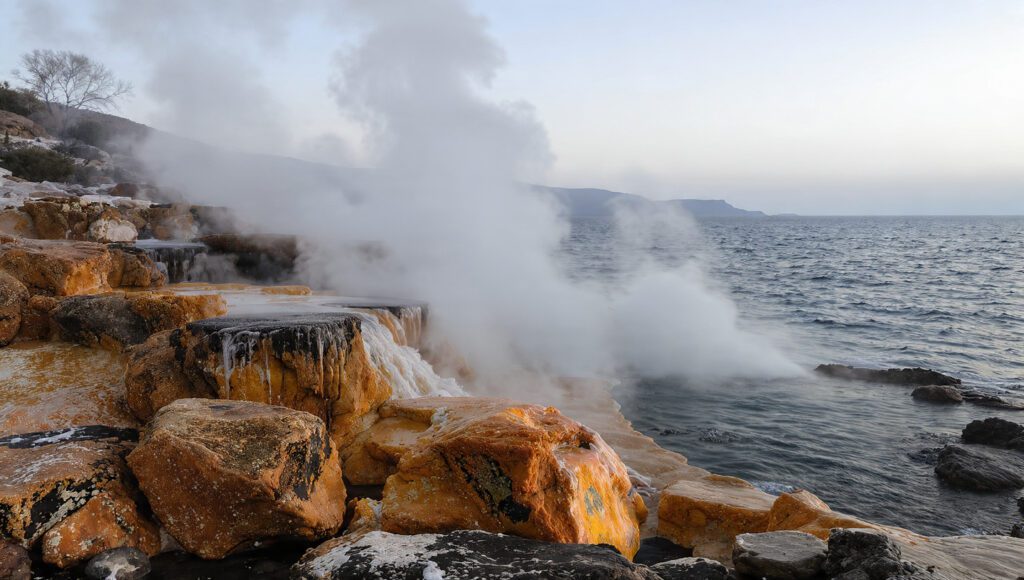
The experience of bathing in these waters was a form of total surrender. The pilgrim would sit in the steam, watching the grey mists rise from the water to meet the grey sky of the Aegean. The heat would penetrate the deep tissues, forcing the muscles to release the tension they had held since November. It was a passive form of healing, a reminder that sometimes the most productive thing a human can do is to sit still and let the earth do the work. This logic persists in modern Greece, where the pilgrimage to the springs remains a vital part of the annual calendar for many.
The Sacred Limits of the Healer
Despite his power, the story of Asclepius contains a sharp warning about the limits of human intervention. According to the myth, the god became so skilled that he began to bring the dead back to life. This act of overstepping the natural order disturbed the balance of the cosmos. Zeus, fearing that the distinction between gods and mortals would be erased, struck the healer down with a thunderbolt.
This part of the narrative is crucial for understanding the Greek approach to wellness. It was never about achieving immortality or a state of permanent, youthful perfection. It was about harmony within the existing cycles of life and death. Healing was seen as a way to return a person to their proper place within the natural order, not a way to escape that order entirely. Winter had its purpose, just as illness did. They were periods of contraction that allowed for the subsequent expansion.

After his death, the god was placed among the stars as the constellation Ophiuchus, the Serpent Bearer. His earthly sanctuaries did not close. If anything, they became more popular, serving as centers of medical learning that eventually gave rise to figures like Hippocrates. The transition from myth to science was a seamless one in Greece, because both were rooted in the same fundamental respect for the laws of nature and the power of the environment to shape human health.
The Modern Geography of Ancient Healing
To look at a map of modern Greece is to see the shadow of the ancient sanctuaries. The places where people still go to recover are the same places where the pilgrims of three thousand years ago sought the help of the god. The Loutraki thermal baths are still a center of wellness, and the water of the Peloponnese is still bottled and sent across the world for its purity and mineral content.
In the mountains, the traditions of the herbalists have never fully vanished. In the villages of Pelion, you can still find people who know which wild greens to gather in late February to cleanse the blood and which mountain tea will ease a winter cough. This is a form of living memory, a cultural lineage that has survived empires and ideologies. It is the practical application of Pelion mythology in the daily lives of people who still live in the shadow of the centaur’s forest.
The landscape itself remains the primary teacher. When you walk through the ruins of an Asclepieion, you are struck by the deliberate beauty of the site. They were always placed in locations that offered a wide view of the horizon or the calming presence of ancient trees. The healers knew that the eye needs to travel as much as the body needs to rest. In our modern age of screens and confined spaces, the wisdom of this architectural approach feels more urgent than ever.
Recovery as a Cultural Rite of Passage
In the contemporary Greek calendar the weeks before the spring equinox are still treated as a period of transition, a recognition that before celebrating the return of the sun the body requires a period of quiet preparation.
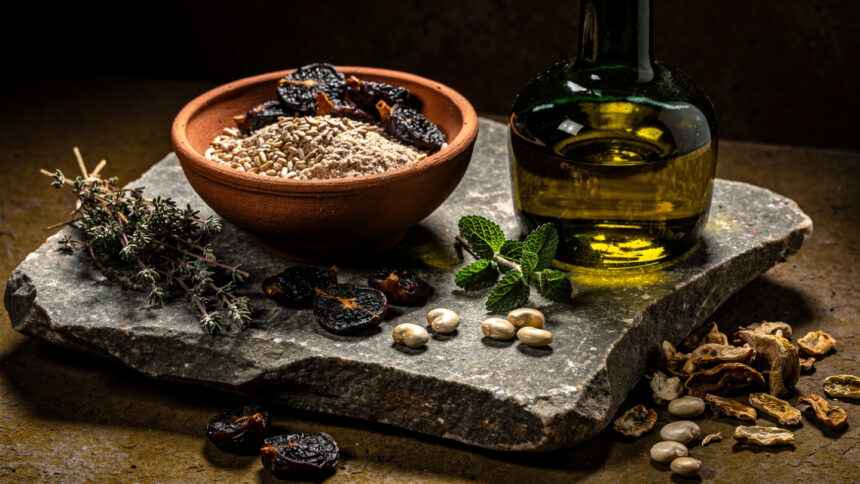
During this time, the diet shifts away from meat and heavy fats, moving toward the elemental flavors of the sea and the earth. The body is given a rest from the burden of digestion, just as the mind is given a rest from the noise of the social world. This is the modern version of the preparation phase of the ancient Greek healing rituals. It is a recognition that before we can celebrate the return of the sun, we must first clear away the cobwebs of the dark.

For the traveler who visits Greece in late winter, this atmosphere of quiet preparation is palpable. It is not a time of spectacle. It is a time of deep, resonant authenticity. You see it in the way the coffee is poured in a village square, and you feel it in the brisk, salt-scented air of the coastal paths. It is a season that asks for nothing and offers everything to those who know how to listen.
The Final Loosening of the Winter Grip
As the days lengthen, the presence of Asclepius becomes more obvious. You see it in the first blossoms of the almond trees, which appear while the air is still cold, a brave signal of the coming change. You feel it in the way the thermal waters seem even more potent as the seasons shift. The god is not a figure of the past. He is a personification of a biological and spiritual reality that we all inhabit.

Renewal is not an event. It is a loosening. It is the gradual realization that the cold has lost its power and that the body is ready to expand once more. We learn that healing is not something we do to ourselves, but something we allow the world to do to us.
The landscapes of Greece continue to offer this sanctuary. From the steam of the Edipsos hot springs to the silent Abaton of Epidaurus, the invitation remains the same. To lay down the burdens of the winter, to listen to the wisdom of the serpent, and to trust in the slow, inevitable return of the light. The god still waits in the shadows of the temple, and the water still rises from the heat of the deep earth, patient and enduring as the land itself.
At Olympus Estate, Greek Living traces the domestic and daily traditions of the Hellenic world from the ancient household to the contemporary table. Asclepius was born from a funeral pyre: pulled from the flames when his mother died carrying him, placed by Apollo in the care of Chiron on Pelion, trained in the patience of the gatherer who watches the forest floor. He was not a distant deity of perfection but a survivor who had mastered the art of recovery. The pilgrims who arrived at the Asclepieion were first required to bathe, to fast, and to walk the grounds in contemplative silence before they were permitted to enter the Abaton. In the deep quiet of the night Asclepius appeared in their dreams. The live serpents in the sanctuaries were the living extensions of the god’s power: creatures who understood the secrets of the deep and who shed their skin as the ultimate metaphor for healing as the leaving behind of what was no longer needed. When Asclepius began to bring the dead back to life, Zeus struck him down with a thunderbolt. Healing was never about escaping the natural order but about returning to it. The god is still there in the shadows of the temple. The water still rises from the heat of the deep earth, patient and enduring as the land itself.