

The pass no longer exists.
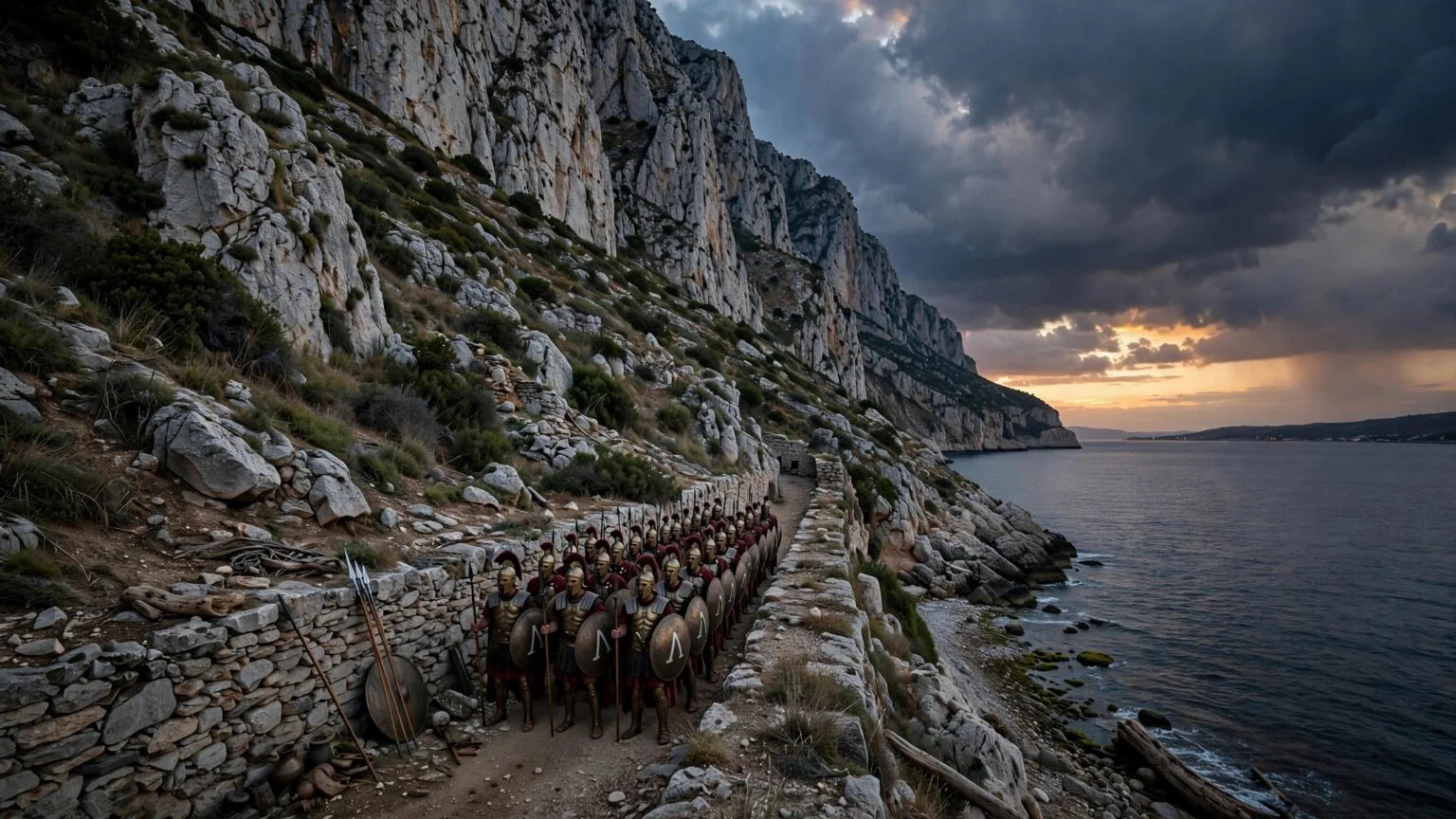
This is the fact that has to come first, because almost everything else about Thermopylae depends on understanding it. In August 480 BCE, the gap between the cliffs of Mount Kallidromo and the waters of the Malian Gulf was, at its narrowest points, less than a hundred meters wide. Some ancient measurements put the tightest sections at barely fifteen or twenty meters, room enough for a single wagon and not much else. It was a natural chokepoint so severe that a small, disciplined force could hold it against almost any number of attackers, which is the entire reason anyone chose to fight there at all.
The Spercheios River has been depositing silt into the Malian Gulf for twenty-five centuries. The coastline has retreated by as much as nine kilometers in places. The narrow shelf where the Greeks stood is now buried under many meters of alluvial soil, farmland, and a national highway. Visitors who arrive today, drawn by the bronze statue of Leonidas standing where the road cuts through, are not looking at the battlefield. They are looking at open agricultural plain roughly five kilometers from where the fighting happened, with the real terrain sitting somewhere beneath their feet, buried by a river that kept working long after the history stopped.
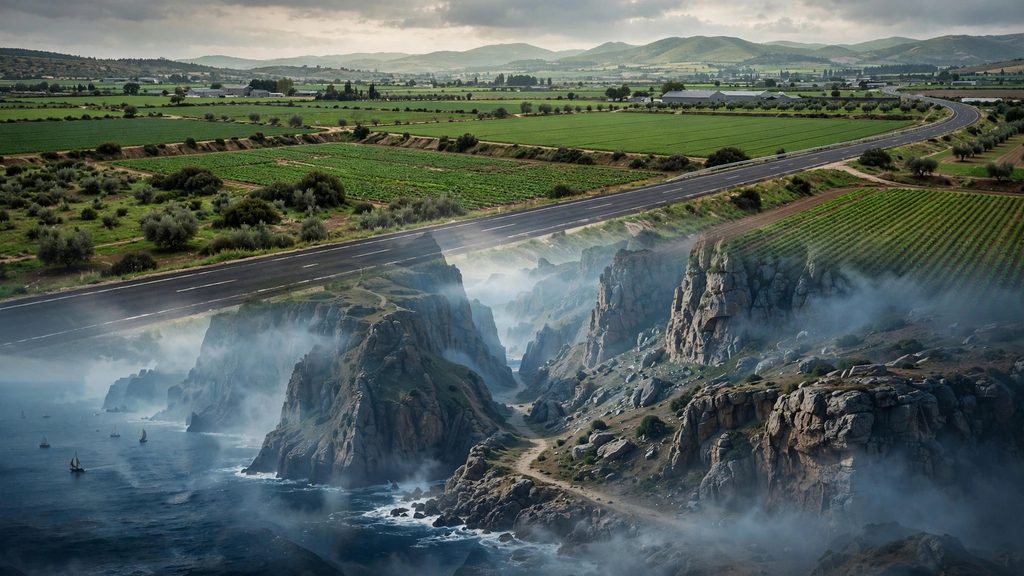
Understanding what happened at the Hot Gates requires the same kind of correction the geography does: separating what occurred from what accumulated on top of it in the centuries since, one grateful, patriotic, or simply better story at a time.
It Was Never Just Three Hundred
The number that survived in popular memory is the smallest true number available, and it was true for only the final day of a battle that lasted three.
Herodotus, writing within living memory of participants’ children, gives a detailed breakdown of the Greek force assembled at Thermopylae: 300 Spartiates and their attendant helots, 2,120 Arcadians, 1,000 Lokrians, 1,000 Phokians, 700 Thespians, 400 Corinthians, 400 Thebans, 200 men from Phleious, and 80 Mycenaeans, adding up to a total force in the range of seven thousand men. This was the army that held the pass for the first two days, repelling repeated Persian assaults, including attacks by Xerxes’s own elite Immortals, without being broken.
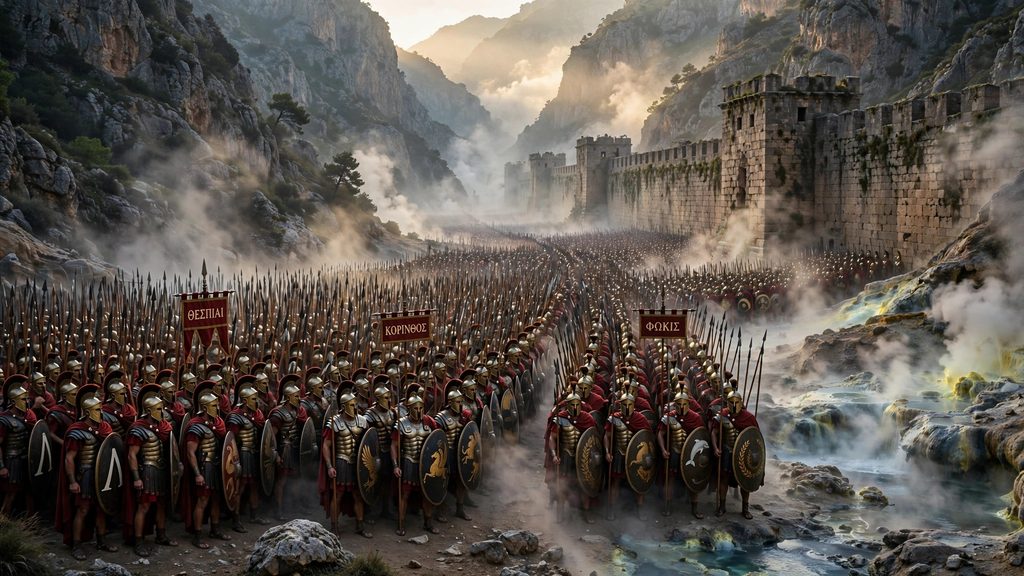
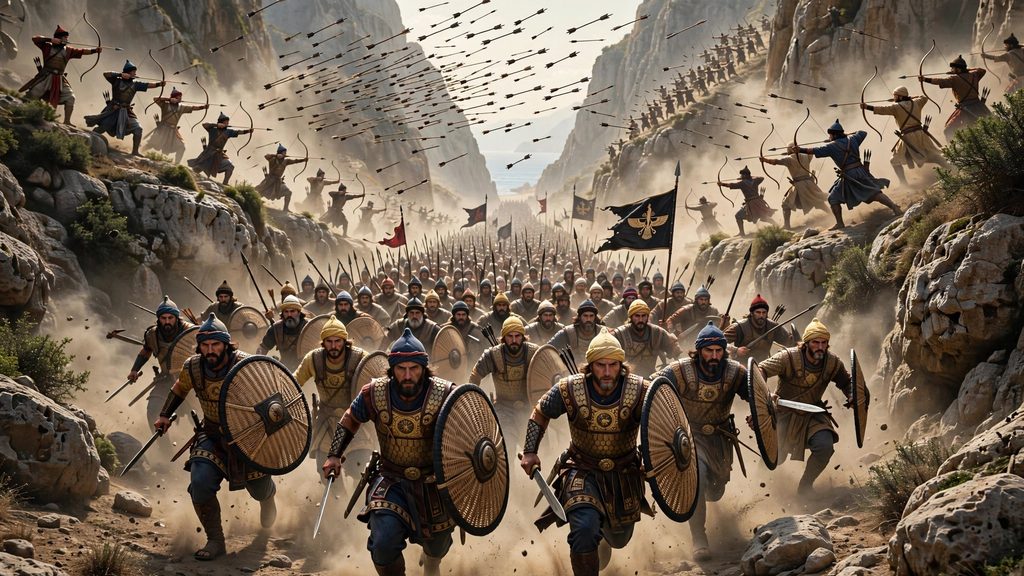
The Persian force these seven thousand faced is itself a genuine puzzle. Herodotus’s own figure, close to two million fighting men plus support personnel, is almost universally rejected by modern historians as a wild exaggeration, the kind of number a culture reaches for when it wants to describe overwhelming rather than count precisely. Modern estimates vary considerably, from roughly one hundred thousand to as high as three hundred thousand, and even the most conservative of these figures leaves the Greeks outnumbered by at least ten to one, quite possibly by a great deal more.
Only on the third day, after the position had been outflanked and the battle was already lost in every strategic sense, did the defending force shrink to something close to the number the legend remembers. Leonidas dismissed the majority of the allied contingents once the encirclement became clear, preserving those soldiers for the battles Greece would need to fight later. What remained to make the final stand were the 300 Spartans, roughly 700 Thespians who chose to stay of their own will, and, in Herodotus’s account, 400 Thebans held back against their wishes as hostages to the alliance. Three different positions occupied the same pass on the same morning, and the difference between them is the actual substance of the story. The Spartans stayed because Spartan law did not permit retreat: theirs was a death of obligation. The Thebans stayed because Leonidas did not trust them to leave: theirs was a death, or in the end a surrender, forced on them by circumstance rather than chosen at all, a detail modern historians treat with real caution, since Herodotus wrote from a broadly anti-Theban Athenian perspective and the accusation conveniently justified what happened to Thebes politically in the years after. The Thespians alone chose. They were bound by no Spartan law and held as no one’s hostage, and after the battle, the Persian army burned Thespiae to the ground, its citizens having already fled toward the Peloponnese with nothing left to defend.
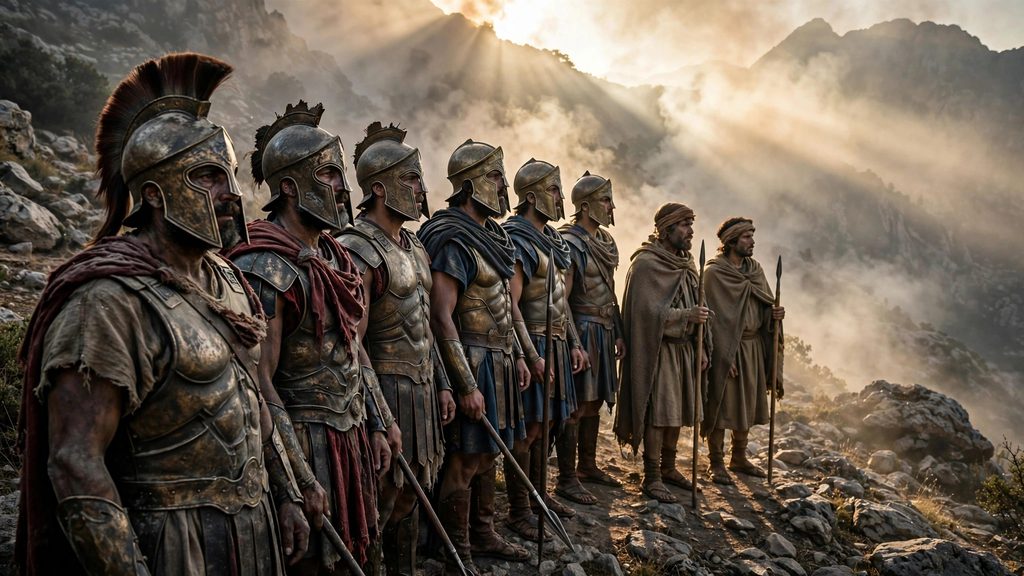
The seven hundred men who stayed at the pass knew their city could not be saved by their staying and stayed anyway. Obligation, coercion, and choice, standing in the same widened stretch of pass on the same morning, are not the same thing, and only one of the three required nothing of the men who accepted it.
Two Quotes, and Only One of Them Is Real
The single most famous line associated with Thermopylae almost certainly was never spoken there.
Molon labe, come and take them, is the phrase carved into the base of the modern Leonidas monument and adopted as a motto by military units and gun-rights movements alike, attributed to Leonidas’s written reply when Xerxes demanded the Greeks surrender their weapons. The difficulty is straightforward and well established among historians who have traced the sourcing carefully: the phrase appears nowhere in Herodotus, our earliest and closest source, who does not record any exchange between the two kings at all until Xerxes has Leonidas’s corpse decapitated after the battle. It appears for the first time in Plutarch’s Apophthegmata Laconica, the Sayings of Spartans, written roughly five hundred and eighty years after the battle it describes, as part of a written correspondence rather than a face to face exchange. Many of the pithy Spartan sayings collected in that text are now believed by classicists to have been composed generations after the events they describe, invented as moral examples during the Hellenistic period when Sparta had lost its power and needed a usable legend more than a documented history.
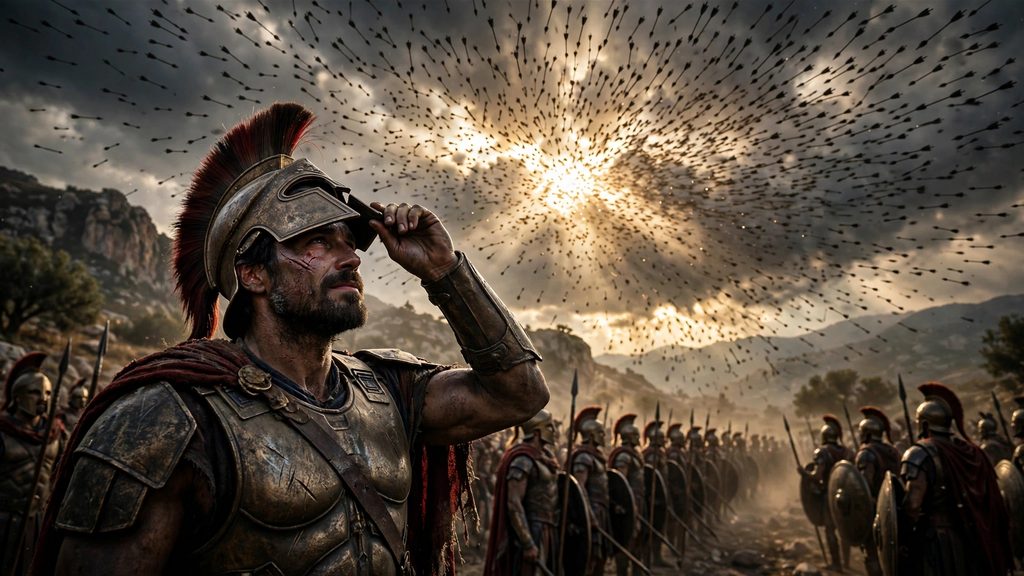
What Herodotus does record, from a source close enough to the events to carry real weight, is a different exchange entirely, and it happened to a different man. A Spartan named Dienekes, whom Herodotus explicitly names as the soldier judged bravest of the entire force, was warned before the fighting began that Persian arrows would be so numerous they would block out the sun. Dienekes’s reply, preserved in Herodotus’s own words: good news, then, since it means we will fight in the shade. Herodotus adds that Dienekes said many other memorable things in the same spirit, none of which survived as well as this one line, and this line survived well enough that Plutarch himself later recorded a version of it, several centuries afterward, with the joke moved from Dienekes’s mouth into Leonidas’s. The king’s fame absorbed the soldier’s wit, which is a smaller and more revealing story about how legends form than any single invented sentence could be.
The Path Ephialtes Sold
The battle did not end because the Greeks were beaten in the pass. It ended because someone showed the Persians a way to stop needing to be.
Ephialtes, son of Eurydemus, a native of the nearby town of Trachis, approached Xerxes on the second night of the standoff and offered, in exchange for a substantial reward, to guide a Persian detachment along the Anopaea, a steep mountain track over Mount Oeta that the local population had long used for their own purposes and that led out behind the Greek position entirely. Xerxes accepted immediately and dispatched Hydarnes with the Immortals, setting out, in Herodotus’s specific detail, at the hour when lamps are lit, so that the detachment would cover the mountain trail under cover of darkness and arrive behind the Greeks by the following morning.
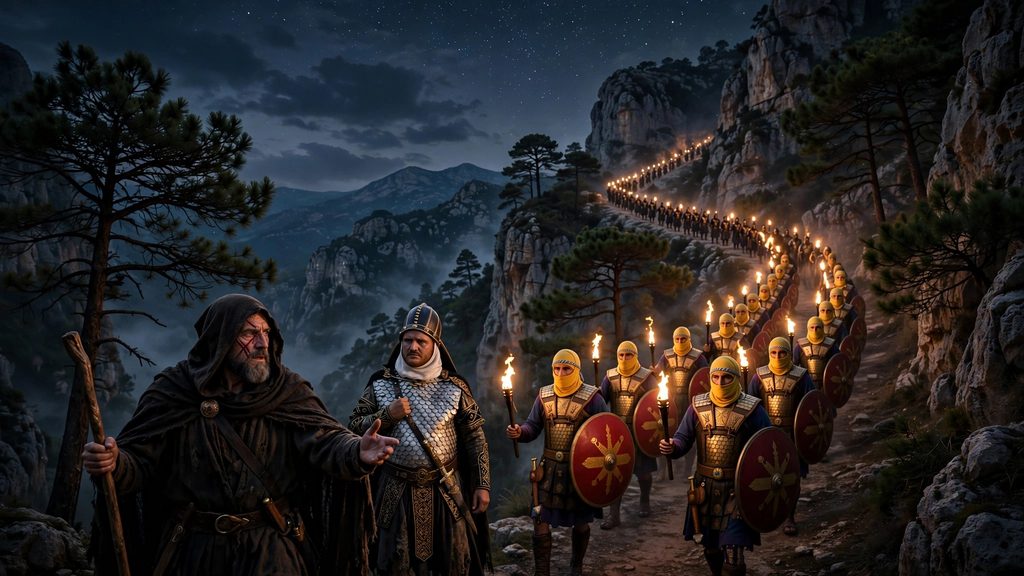
A thousand Phocian soldiers had been posted on the path specifically to prevent this. They were surprised at dawn by the arriving Persians, assumed, according to Herodotus, that the attack was aimed at their own home territory rather than at Leonidas’s rear, and withdrew to higher ground to defend it rather than holding the trail itself. The Persians simply continued past them. Herodotus records that two other men, Onetas of Carystus and Corydallus of Anticyra, were also accused of the betrayal at the time, and notes that the postwar reward offered by the Greek alliance was placed specifically on Ephialtes’s head rather than either of theirs, which he takes as reasonably strong evidence for who was responsible. Some modern historians have gone further still, arguing that the Anopaea path may have been known to the Persians independently and that the Phocian failure looks less like innocent confusion and more like a second, quieter act of collaboration, tied to local political grievances involving control of the nearby sanctuary of Delphi. The single traitor is a cleaner story than the version the evidence supports.
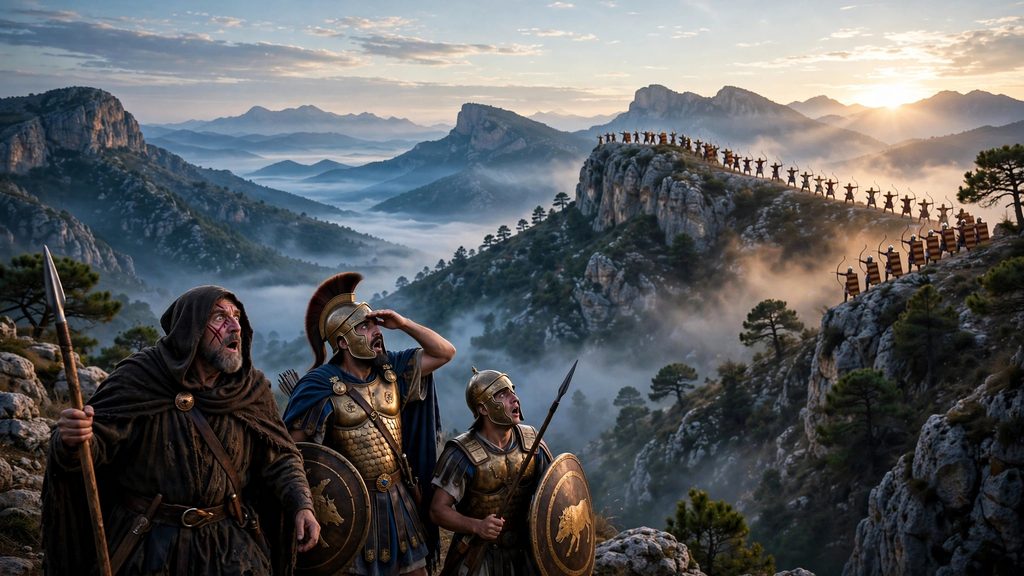
Ephialtes did not enjoy his reward for long. Fearing Spartan retribution, he fled into exile in Thessaly, and the Amphictyonic League, the pan-Hellenic body that governed the sanctuary at Delphi, placed a price on his head. He eventually returned and was killed near Anticyra by a man named Athenades of Trachis, for a reason Herodotus explicitly says he intended to explain later in his history and never did. The killing had nothing to do with the betrayal at Thermopylae. Sparta honored Athenades for it regardless.
Word reached Leonidas that the position had been outflanked, either late on the second day or in the hours before dawn on the third. What he did with that information is the part of the story that made him permanent.
The Third Day
Leonidas dismissed the bulk of the allied army. This was not a gesture. It was a calculation, and a cold one: the position was lost, and the only remaining question was whether Greece would lose seven thousand trained soldiers along with the pass, or whether a smaller number could buy the rest enough time to escape and fight again where the odds would be less absolute. The Spartans stayed because leaving was never a genuine option within Spartan military culture. The Thespians stayed by choice, a decision that cost their small city seven hundred of its own men and that Herodotus records with something close to awe. The Thebans, in Herodotus’s telling, stayed because Leonidas did not trust them to leave, and surrendered once the position finally collapsed.
The remaining Greeks did not wait passively for the pincer to close. Herodotus records that they advanced out of the fortified position and into the open ground where the Persian numbers could be brought fully to bear, choosing to inflict the maximum possible casualties rather than die defensively. They fought, in his account, until their spears shattered, then continued with swords, and when the swords broke or were lost, with their bare hands and teeth. Leonidas was killed during this phase of the fighting. A fierce struggle developed specifically over recovery of his body, which the Greeks succeeded in dragging back four times before they were finally overwhelmed. What remained of the Greek force retreated to a small rise now known as Kolonos Hill, where Hydarnes’s Immortals, arriving from the rear, joined the frontal assault already underway.
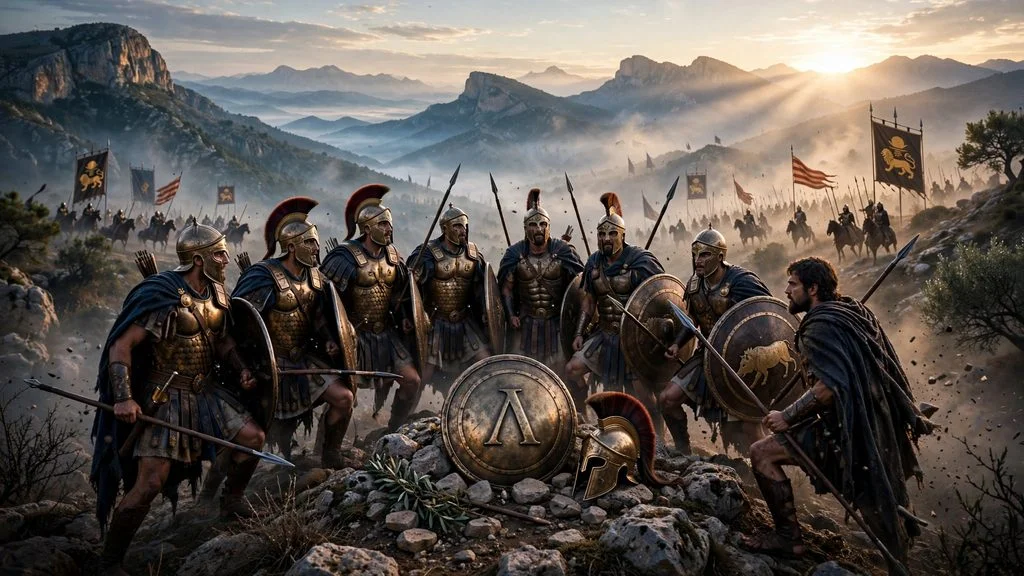
The Persians who could not close with the surviving Greeks directly fell back and finished the engagement with archers. Xerxes had Leonidas’s body found afterward, decapitated, and the head mounted on a stake, a treatment Herodotus notes was unusual for the Persian king and suggests a personal fury the numbers alone do not explain.
What the Stone Actually Says
A monument was raised on Kolonos Hill afterward, carrying an epitaph attributed to the poet Simonides, a contemporary of the battle rather than a later embellishment. The Greek is compact in the way Simonides’s epigrams generally are, and the standard English rendering carries the same compression: go tell the Spartans, stranger passing by, that here, obedient to their laws, we lie.
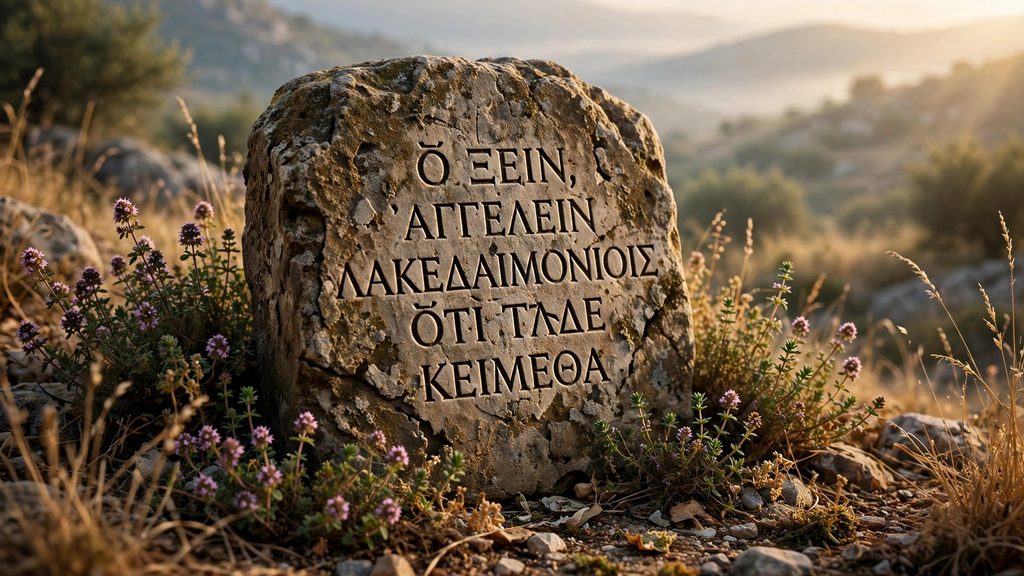
The word choice matters more than it first appears to. The epitaph does not claim victory, does not claim the Persians were stopped, does not even claim the sacrifice changed the war’s outcome, all things later tradition would eventually credit it with. It claims only obedience: that the men buried under the stone did what their city’s law required of them, and stayed. Sparta’s actual military culture, the agoge that trained its citizens from childhood for exactly this kind of discipline under exactly this kind of pressure, is what the epitaph is describing, more precisely and more honestly than any of the later additions managed. The heroism the epitaph describes was already extraordinary without needing Xerxes’s supposed offer of kingship over Greece, without needing a defiant two-word reply that no contemporary source records, without needing to be the battle that saved Greece rather than the battle that bought Greece time to save itself at Salamis and Plataea the following year.
Visiting What Remains
Thermopylae sits directly on the A1 motorway between Athens and Lamia, roughly a three and a half hour drive from Athens and closer still from Thessaloniki, making it an easy stop for travelers moving between the two cities rather than a dedicated destination requiring its own detour.
The bronze statue of Leonidas, erected in 1955, stands opposite Kolonos Hill, the same modest rise where the final stand took place and where a stone lion monument, along with a separate memorial to the Thespians, now stands. A small visitor center and information panels explain what the surrounding terrain looked like in antiquity, since almost nothing about the current landscape communicates it on its own: open farmland stretches toward a coastline now several kilometers distant, with the genuine battlefield terrain sitting an estimated twenty meters or more beneath the modern surface. The hot sulfur springs that gave the pass its ancient name, Thermopylae, the hot gates, still flow nearby and remain visible and, in places, safe to touch, one of the only pieces of the original sensory experience of the place that the intervening centuries have left untouched.
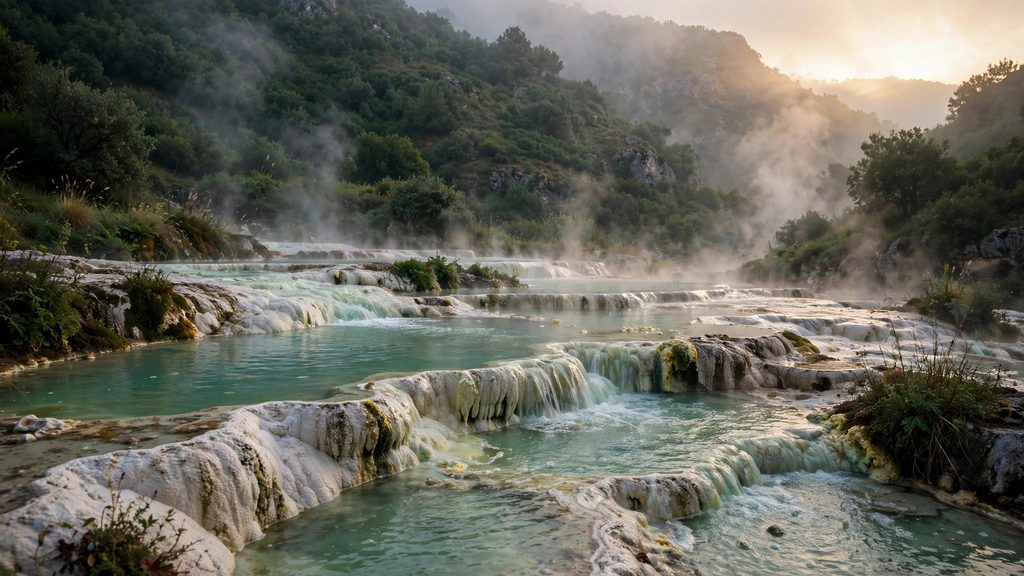
The strategic logic that made this location worth fighting over more than once, mountains meeting lowland at a single controllable seam, remained relevant for far longer than most visitors realize. Gallic invaders were fought off near this same pass in 279 BCE. Roman forces clashed with the Seleucid Empire here in 191 BCE, a battle that also decided the fate of the small Athamanian kingdom to the west. In April 1941, Australian and New Zealand troops made a defensive stand against the German invasion of Greece at very nearly the same location, twenty-four centuries after Leonidas, for exactly the same geographic reason.
What Obedient to Their Laws Actually Cost
Thermopylae did not save Greece. That happened at Salamis a month later and at Plataea the following summer, battles that receive a fraction of the cultural attention Leonidas’s three days have accumulated across twenty-five centuries. What Thermopylae actually did was buy time, demonstrate that the Persian army could be made to bleed for every meter of ground, and give the rest of the Greek world a story precise enough and honest enough, once the embellishments are stripped back off it, to organize a continued resistance around.
The river kept depositing its silt regardless of what the battle meant. The pass it once guarded is gone, filled in, paved over, turned into the kind of ordinary agricultural plain that gives no visual hint of what once made it worth an empire’s attention. The stone with Simonides’s epitaph is a modern reconstruction, since the original has not survived. Molon labe was never said, or if it was, no one thought it worth recording until half a millennium had passed. What is left, once the later centuries stop adding to it, is smaller and more specific than the legend, and considerably harder to argue with: several thousand men held an impossible position for two full days against odds no serious historian disputes, and when the position was betrayed out from under them, several hundred of them chose to stay anyway, and did.
At Olympus Estate, Tales from Olympus returns often to the gap between what a culture remembers and what its own earliest sources actually say. The pass at Thermopylae no longer exists, buried under kilometers of silt the Spercheios River has been depositing since 480 BCE. The battle itself involved roughly 7,000 Greeks, not 300, and lasted three days, with the famous final stand made by 300 Spartans, 700 Thespians who chose to stay, and, disputedly, 400 Thebans. Molon labe first appears five hundred and eighty years later in Plutarch, never in Herodotus, who instead records a genuine, contemporary joke from a soldier named Dienekes about fighting in the shade, a line Plutarch later reassigned to Leonidas himself. Ephialtes sold the Persians a mountain path for a reward, and the epitaph on Kolonos Hill claims nothing more, and nothing less, than obedience to the law. The Spartans this piece describes are examined at length in this site’s own essay on the city that produced them.