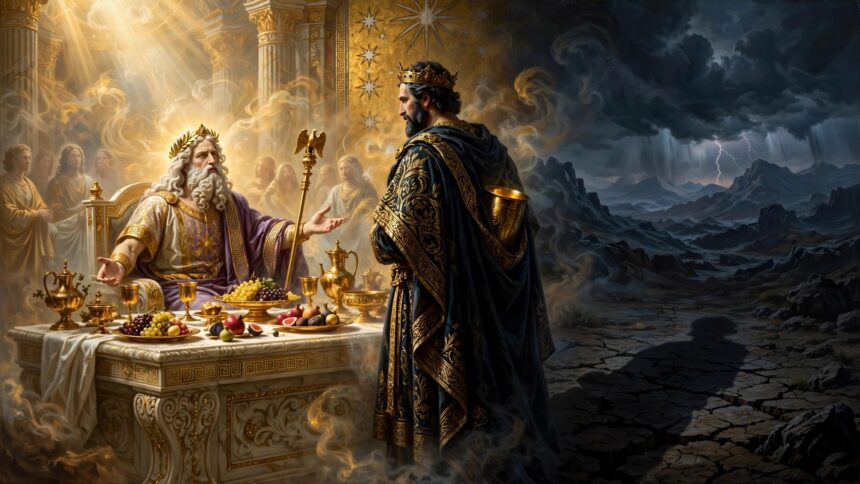





Zeus punished Atlas by placing him at the edge of the world.
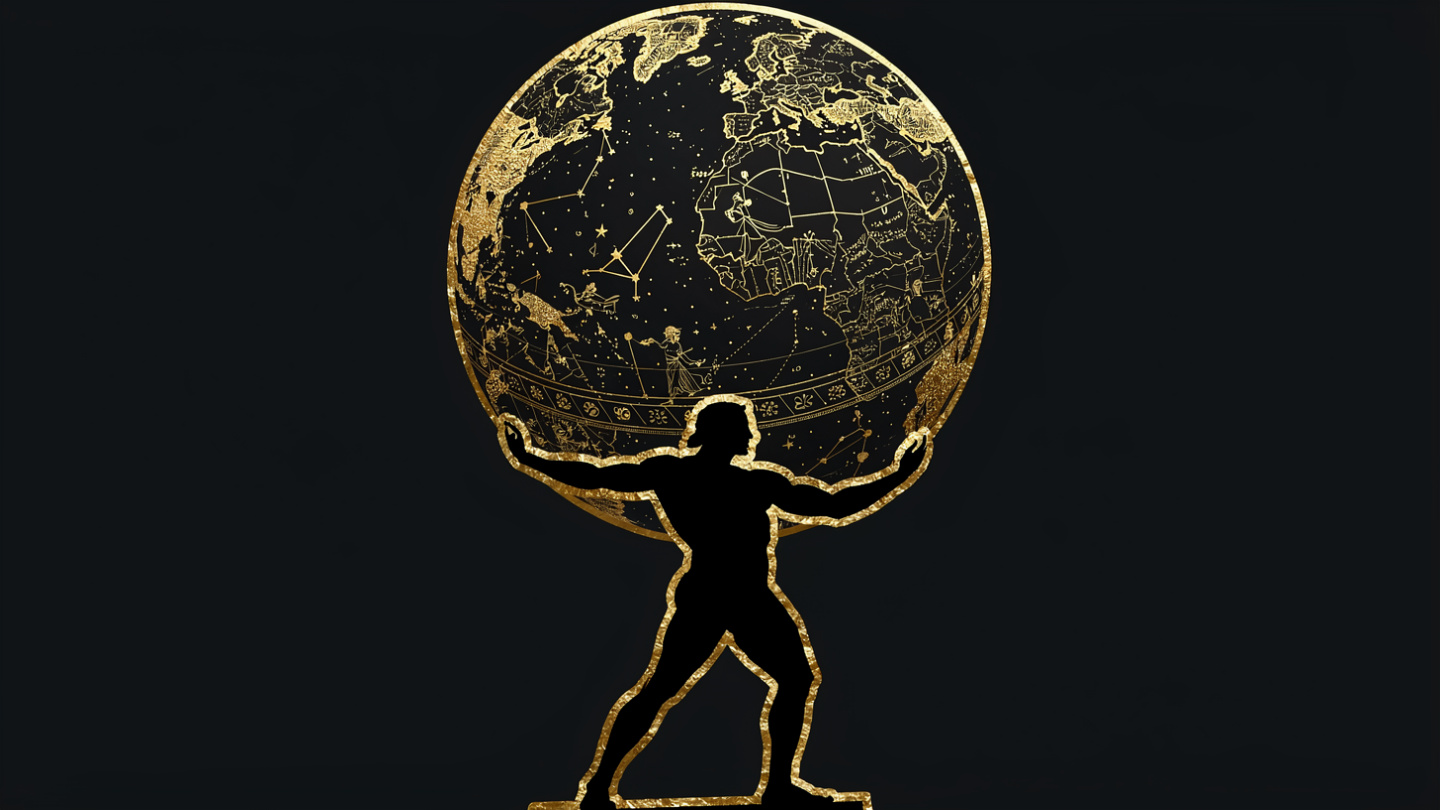
The standard description of this punishment names the weight: the sky on Atlas’s shoulders, the celestial sphere whose mass the Titan bears without ceasing, the burden whose eternal character makes the punishment one of the most iconic images of suffering in the entire Greek mythological tradition. The weight is real. But the weight is the instrument of the punishment, not the punishment itself.
The punishment itself was the location.
Atlas was placed at the western edge of the world, at the boundary where the earth met the ocean stream and where the sky met the earth, at the precise point that the Greek geographical imagination understood as the limit of the known world. The location was not chosen for its convenience as a place to station a being strong enough to hold the sky. It was chosen for its theological meaning as the place that was furthest from the center of the divine world, furthest from Olympus, furthest from the organized community of the divine beings whose collective existence was the organized divine world that the Titanomachy had established.
Zeus punished the other defeated Titans by casting them into Tartaros, the abyss beneath the underworld whose darkness and whose distance from the surface world constituted the punishment of the complete removal from existence as it was organized in the divine world. Atlas was punished differently. He was not removed from existence. He was removed from the community whose existence he had fought against and placed at the location where the existence of the divine community was least present: the edge, the boundary, the place beyond which the organized world did not extend.
He was still in the world. He was at its furthest point from the center. He was visible from the world’s center, holding the sky in place, performing the function whose performance was the condition of the organized world’s continued existence, and entirely alone.
The Titanomachy and the Logic of the Punishment
The Titanomachy was the war whose outcome established the hierarchy of the organized divine world that the Olympian tradition maintained. The Titans who had held the positions of divine authority before Zeus’s victory were the beings whose defeat the Titanomachy constituted, and the punishments assigned to the defeated were the expressions of the theological logic of the defeat.
The Styx article in this collection develops the Titanomachy through the first defection: Styx’s decision to bring her children Nike and Kratos and Bia and Zelus to Zeus at the war’s beginning, before the outcome was determined, as the act of loyalty whose reward was the privilege of the divine oath sworn on her waters. The Titanomachy was not simply a war between two generations of divine beings. It was the cosmic event whose outcome determined the structure of the organized divine world for the age that followed it.
Atlas fought for the Titans. The character of his participation in the Titanomachy is not developed in the surviving sources with the detail that some other participants receive, but the tradition is consistent: he was among the most prominent of the Titan warriors whose opposition to Zeus was the most complete and the most sustained. The Hesiodic tradition names him as the Titan whose strength made him the appropriate choice for the punishment of holding the sky.
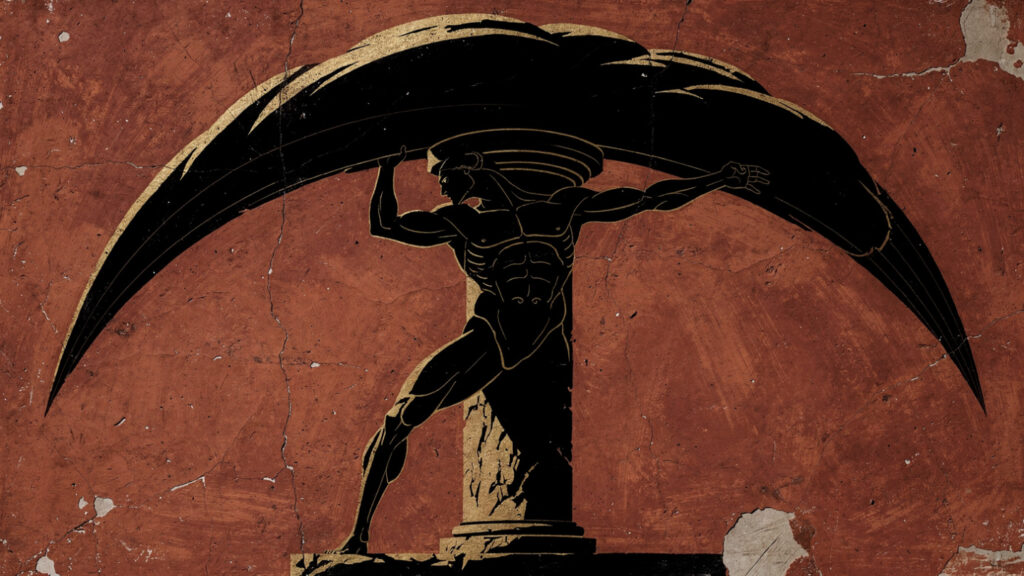
The punishment’s logic was the logic of the cosmic irony: the being whose strength had made him the most dangerous opponent of the established divine order was assigned the function whose performance was the condition of the established divine order’s continued existence. Atlas holds the sky in place. Without the sky in place, the organized world cannot be organized. The defeated Titan whose capacity for sustained effort under enormous force was the capacity that had made him dangerous to the divine order was now the being whose sustained effort under enormous force was maintaining the divine order against the tendency toward collapse.
He was not simply imprisoned. He was conscripted. His punishment was the permanent performance of the function that the organized world required and that no other available being possessed the capacity to perform.
The Daughters and the Garden at the World’s Edge
The Hesperides were the daughters of Atlas.
This genealogical connection is the element of the Atlas tradition whose content gives the entire myth its most unexpected depth, because it is the connection that transforms the figure of the isolated Titan bearing the sky at the world’s edge into the figure of the divine father whose family was located at the site of his punishment.
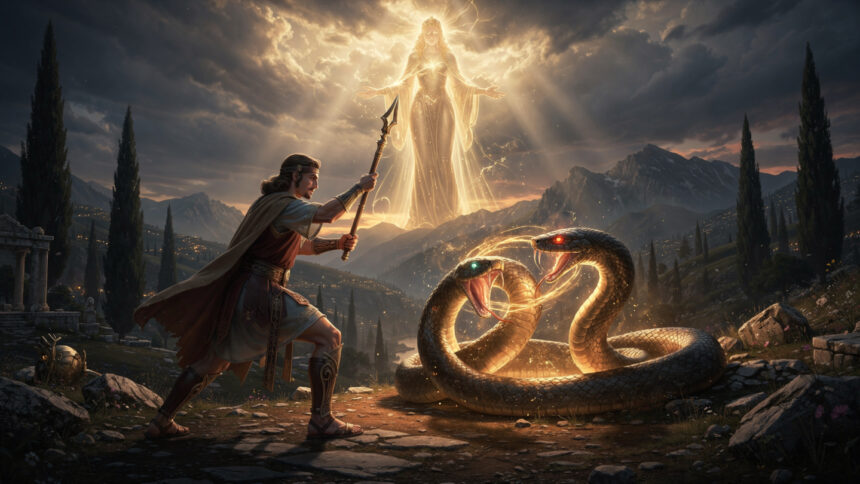
The Hesperides, whose name means the daughters of the evening or the daughters of the west, were the nymphs who tended the garden of the golden apples at the western edge of the world: the location that was the location of Atlas’s punishment. Their garden was at the place where their father stood. The golden apples that Gaia had given to Hera at the divine wedding between Hera and Zeus were the apples that the Hesperides tended and that the serpent Ladon guarded in the garden whose location was the location of their father’s eternal labor.
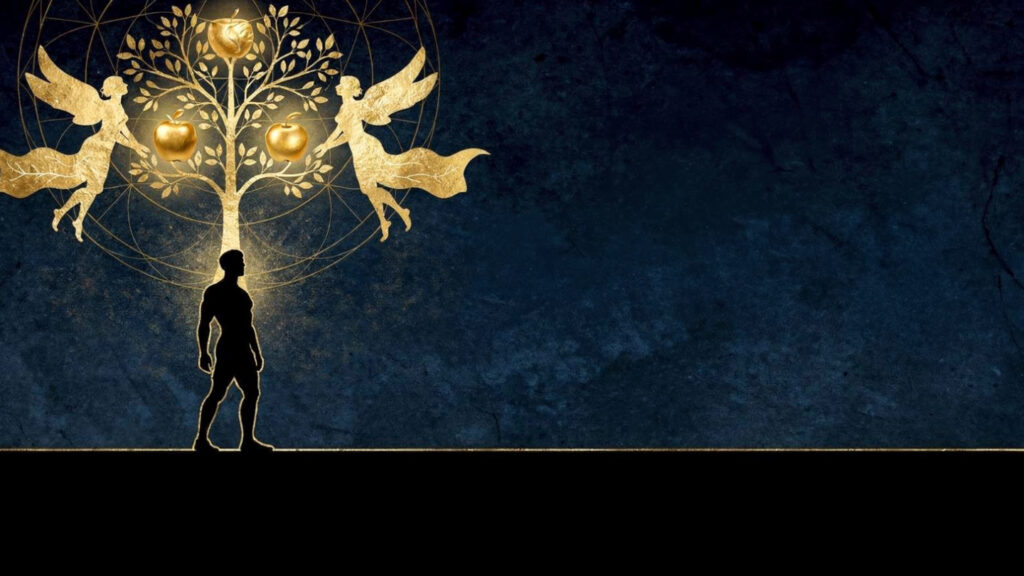
The theological content of this family arrangement is the content whose development the standard treatment of the Atlas myth consistently overlooks: Atlas was not simply placed at the world’s edge and left in absolute isolation. He was placed at the world’s edge where his daughters tended the most sacred garden in the divine world, where the golden apples that symbolized the gift of divine abundance were maintained by the beings whose existence was the most intimate available testimony to the fact that the punishment had not removed everything from Atlas that made existence worth enduring.
He held the sky. His daughters tended the garden below him. The family configuration of the Titan’s punishment was the configuration that placed the symbol of divine abundance, the golden apples, in the care of the beings whose presence at the location of the punishment was the mitigation that the tradition preserved in the myth’s geographical details.
Heracles and the Intelligence of the Eleventh Labor
The eleventh labor of Heracles required him to obtain the golden apples of the Hesperides.
The problem that the eleventh labor presented was the problem whose character gave Heracles his most extended encounter with the limits of his own primary competence: the direct application of overwhelming physical force. The garden of the Hesperides was not accessible to a hero who simply walked to the western edge of the world and took what he found there. The obstacles whose combination made the garden inaccessible, the Hesperides themselves who would not willingly surrender what they tended, the serpent Ladon who guarded the tree, and the fundamental inaccessibility of the place itself to anyone whose approach had not been properly negotiated, required a different approach.
Heracles went to Atlas.
The proposal Heracles made to Atlas is the proposal whose intelligence the Lernaean Hydra article in this collection names as the characteristic of the Heracles tradition at its most genuinely sophisticated: not the direct application of force but the recognition of the configuration of the situation and the identification of the being whose position gave him the access that Heracles needed.
Atlas could enter the garden of the Hesperides because it was his daughters’ garden. He could obtain the golden apples from his daughters because he was their father. He could do what Heracles could not do regardless of how much force Heracles applied, because the access to the garden was the access of the father to his children’s domain rather than the access of the warrior to the guarded threshold.
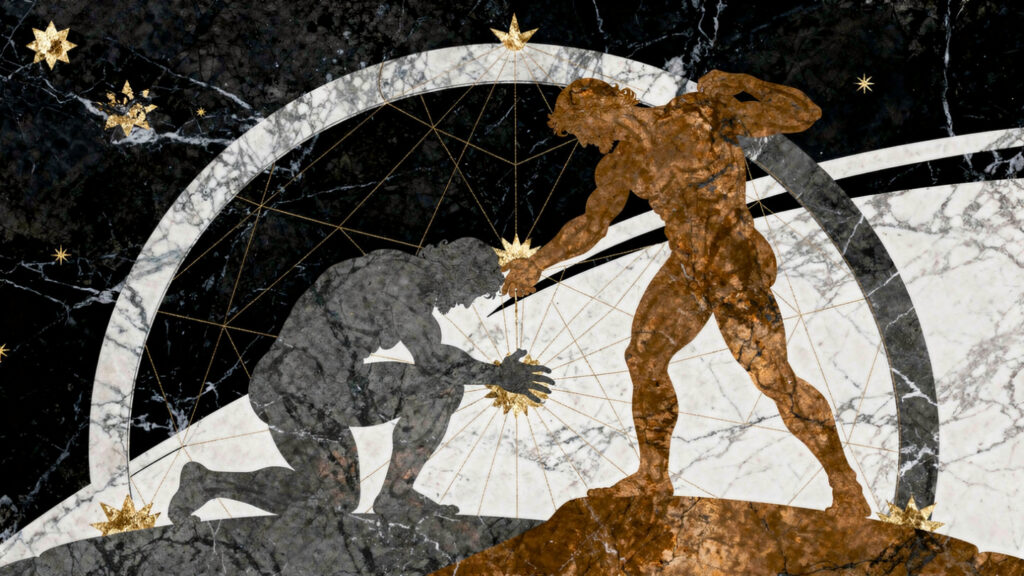
Heracles offered to hold the sky while Atlas obtained the apples.
This offer was the exchange whose logic addressed the situation with the precision that the Heracles tradition most values: the hero used what he had, his capacity for sustained physical effort under enormous force, in exchange for what Atlas had, his access to his daughters and to the garden whose contents the labor required. The hero’s strength became the instrument of the negotiation rather than the weapon of the assault.
Atlas obtained the apples. He returned with them and announced that he would deliver them to Eurystheus himself, relieving Heracles of the burden of the return journey and placing Atlas himself back in the world rather than at the world’s edge.
The trick by which Heracles recovered from this attempt to reverse the terms of the exchange was the trick whose character was the character of the intelligence that the Heracles tradition celebrates when it is operating at its highest level: Heracles asked Atlas to take the sky back for a moment while he adjusted his cloak to protect his shoulders from the weight. Atlas took the sky back. Heracles took the apples and left.
The tradition does not treat Heracles’s trick as a moral failure or as the deception whose ethical content requires the condemnation that deception in other contexts receives. It treats it as the appropriate response to the attempt to reverse the terms of a legitimate exchange: Atlas had agreed to obtain the apples in exchange for temporary relief from the sky. He had obtained the apples and then attempted to make the temporary relief permanent. Heracles’s trick restored the original terms of the exchange and completed the labor.
Atlas returned to the sky. The garden remained. The family configuration of the Titan’s punishment was restored.
The Astronomical Encoding
The location of Atlas at the western edge of the world, holding the celestial sphere in place, encoded an astronomical observation whose content the ancient Greek intellectual tradition developed with increasing precision across the centuries between Hesiod’s first formulation of the Atlas myth and the astronomical achievements of the Hellenistic period.
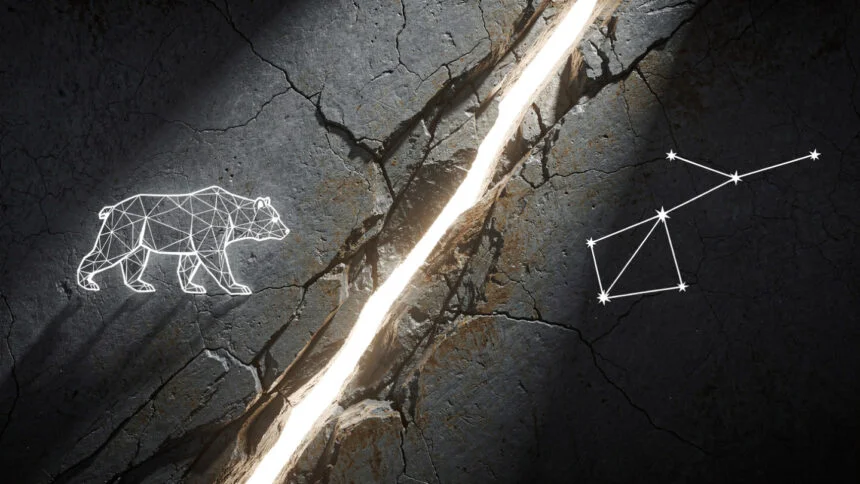
The celestial sphere rotates. Anyone who observes the night sky across a sufficient period of time observes that the stars move through the sky in a pattern of rotation whose center is a fixed point: the celestial pole. The stars appear to circle around this fixed point, rising in the east and setting in the west, with the circumpolar stars rotating around the pole without ever setting below the horizon.
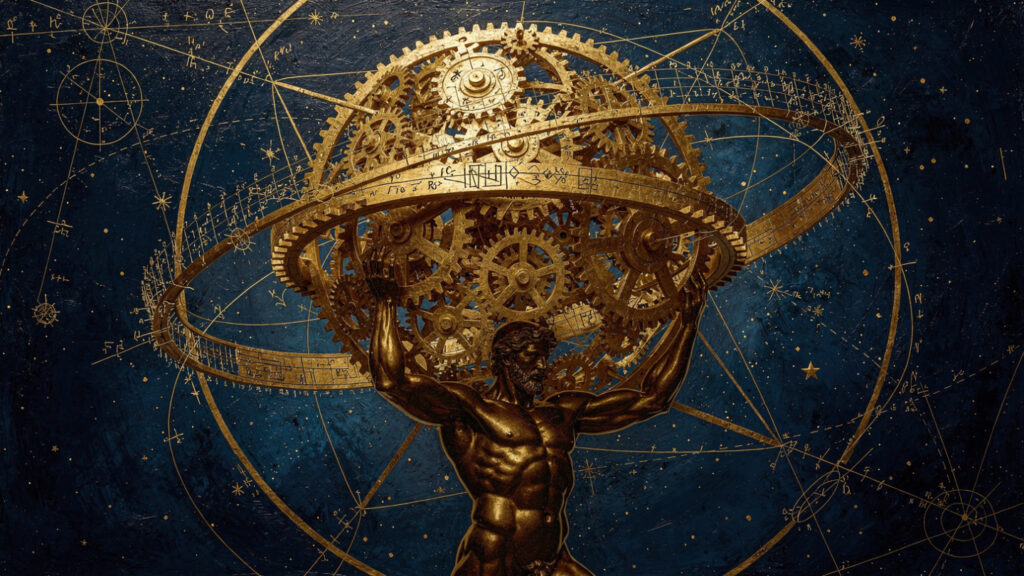
The ancient Greek observation of this rotation produced the cosmological model in which the celestial sphere was understood as a literal sphere whose rotation around the fixed earth produced the observed movement of the stars. The axis of this rotation was the axis whose two ends were the celestial north pole and the celestial south pole: the axis whose existence was the condition of the celestial sphere’s organized rotation rather than its chaotic tumbling.
Atlas holds this axis in place.
The formulation of the Atlas punishment in the Hesiodic tradition names him as holding the sky and the earth apart: the function that the cosmological axis performs in the ancient model of the celestial sphere is the function of maintaining the relationship between the sky’s rotation and the earth’s fixed position, of holding the organized structure of the heavens in its correct relationship to the organized structure of the earth below it.
This is the astronomical content that the Atlas myth encodes: the visible fact of the celestial sphere’s organized rotation around a fixed axis, translated into the mythological vocabulary of the Titan whose strength holds the structure in its position at the boundary between the sky and the earth.
The Atlas Mountains of North Africa, whose location at the western edge of the Mediterranean world gave them their name in the ancient geographical tradition, were the mountains that the Greek geographical imagination understood as the physical location of the Titan’s function: the mountains at the western edge whose height appeared to support the sky above them were the mountains named for the Titan who supported the sky.
The Antikythera Mechanism article in this collection develops the astronomical achievements of the Hellenistic Greek tradition: the differential gear whose function was the computation of the celestial cycles that Hipparchus had calculated with the precision that the mechanism’s gear ratios preserved. The Atlas tradition is the mythological encoding of the cosmological observation whose scientific development the Antikythera Mechanism represents: the organized rotation of the celestial sphere around a fixed axis, understood first as the sustained effort of the divine being at the world’s edge and then as the mathematical relationship between the observable periods of the celestial bodies whose computation the gear trains of the mechanism performed.
The myth came first. The science developed from the careful observation of the phenomenon the myth had already named.
What the Endurance Was For
The name Atlas derives from the Greek atlaō: to endure, to sustain, to bear. The Virgilian epithet that the tradition most consistently associated with the figure was durus: hard, steadfast, unyielding. The two characterizations together name the quality that the punishment required and that Atlas provided: not simply the strength to lift enormous weight but the capacity for sustained effort without diminishment, the endurance whose character was the character of the being who does not stop.
The other Titans in Tartaros do not hold anything in place. They are removed from the world and from the function of the world. Their punishment is the punishment of the complete separation from the organized existence they had fought to maintain their position within. They endure their punishment in the sense of experiencing it without cessation, but their endurance produces nothing for the organized world that has excluded them.
Atlas’s endurance produces the organized world. Every moment that he holds the sky in place is a moment in which the celestial sphere continues its organized rotation, in which the days and the nights continue their alternation, in which the seasons continue their cycle, in which the agricultural calendar that the Demeter tradition organizes and that the trahanas article in this collection develops as the domestic expression of continues its progression from the spring planting through the summer growth through the autumn harvest through the winter preservation.
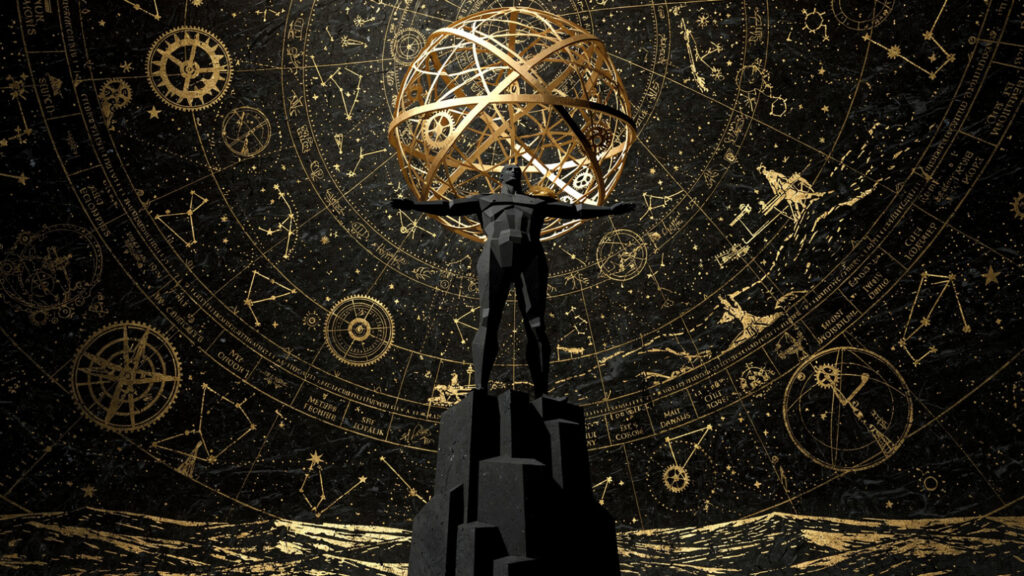
The Titan who fought against the established divine order was placed in the position where his capacity for sustained endurance was the capacity that the established divine order most required. His punishment was his function. His function was the condition of the world he had fought against.
He endured. The world continued. The astronomy he encoded in his posture at the world’s edge was the astronomy that the Hellenistic tradition would spend centuries refining into the precision that the Antikythera Mechanism preserved in bronze.
The sky has not fallen. He has not stopped.
At Olympus Estate, Mythic Essays moves through the deeper currents of the Greek tradition. Zeus punished Atlas not with the weight but with the location: the furthest point from the center of the organized divine world. The Hesperides were his daughters and the garden of the golden apples was at the site of his punishment. Heracles did not assault the garden. He recognized that Atlas had access his strength could not purchase and offered to hold the sky in exchange for the apples. Atlas returned to the sky. The celestial sphere rotates around a fixed axis. Atlas holds the axis in place. This is the astronomical observation the myth encoded: the organized rotation of the heavens around the fixed point at the world’s edge where the Titan stands. The myth came first. The science developed from the careful observation of the phenomenon the myth had already named. He has not stopped. The sky has not fallen.