



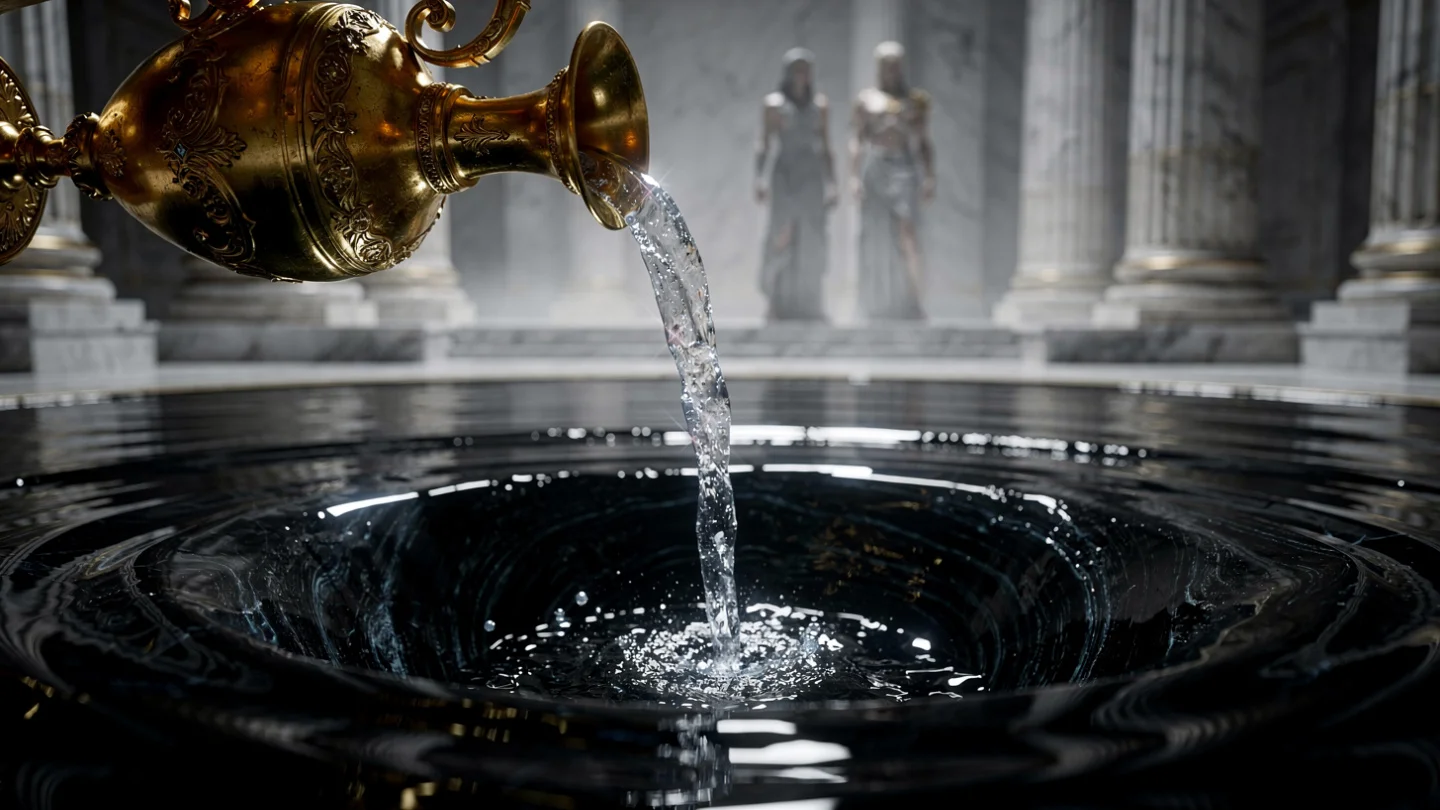
The gods swore by the Styx when they meant it.
Not for politeness, not for the formal gesture a social occasion demanded, not for the ordinary performance of a serious promise. When the Olympian gods needed a commitment that was genuinely inviolable, one the entire divine structure would enforce against the violator regardless of rank or power, they swore by the Styx.
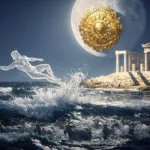
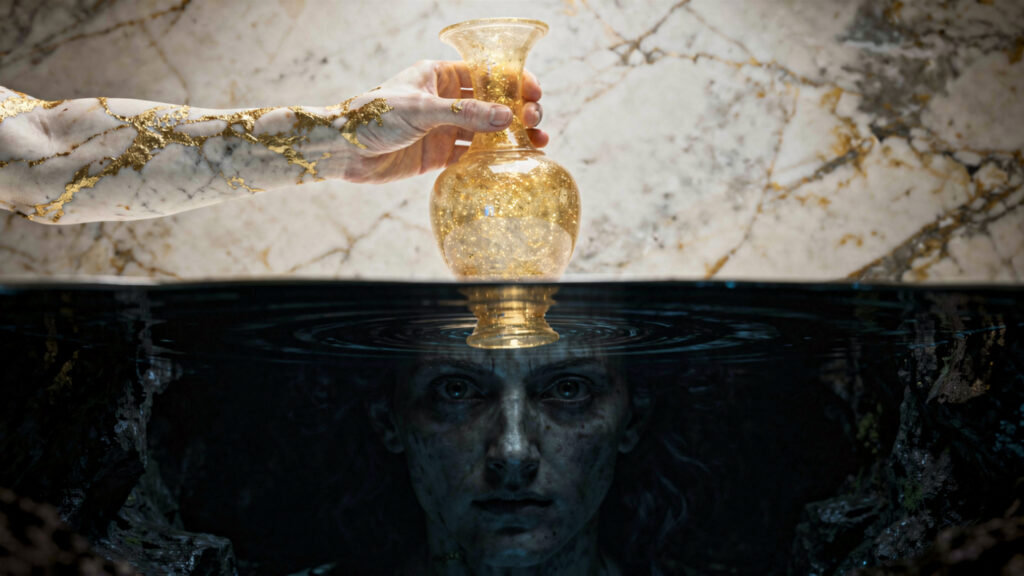
Hesiod describes the exact mechanism in the Theogony: when a god required this oath from another god, the messenger Iris was sent with a golden ewer to the spring at the edge of the world, and the water she brought back was poured as a libation while the oath-taker spoke the words of the commitment. From that moment, nothing bound a god more completely.
The punishment for breaking it made the oath’s weight real rather than merely ceremonial: a god who violated it lay without breath and without voice for a full year, as if dead, unable to touch the nectar and ambrosia that sustained divine life, unable to speak or move at all. At the year’s end, the violator was barred from the Olympian community for nine further years, excluded from the feasts and councils that made up divine social life, cut off from the very company whose membership made an Olympian existence worth having.
Ten years. For a being whose existence is eternal, ten years is no brief exclusion. It is a span equal to a significant stretch of any human civilization’s entire history, concentrated into total isolation from the one community whose membership made Olympian life meaningful at all.
No god swore by the Styx casually.
Who the Styx Was
The Styx was never primarily a river. She was a divine being: one of the three thousand Oceanids, daughters of Oceanus and Tethys, the primordial pair whose encircling of the world the divine constellation article in this collection develops through the cosmological architecture of the Theogony.
That article develops Oceanus and Tethys as the Titan couple who encircled the entire cosmos like twin serpents of living water, marking the boundary between the organized world and the undifferentiated outside beyond it: the Oceanos potamos, the Ocean stream, was both the boundary river of the organized cosmos and the origin of all the world’s rivers and springs, and the three thousand Oceanids and three thousand river gods born from Oceanus and Tethys were the local, individual expressions of that whole organized water system.
Among the three thousand daughters of Oceanus and Tethys, the Styx was the most honored, not the most beautiful, not the most powerful in any ordinary divine sense, but the one whose character was most directly necessary to keeping the organized divine order actually running. That order, established by Zeus after the Titanomachy, needed some mechanism for an enforceable divine commitment, a promise whose violation carried consequences no god could escape regardless of individual power, and the Styx was the being whose character provided exactly that.
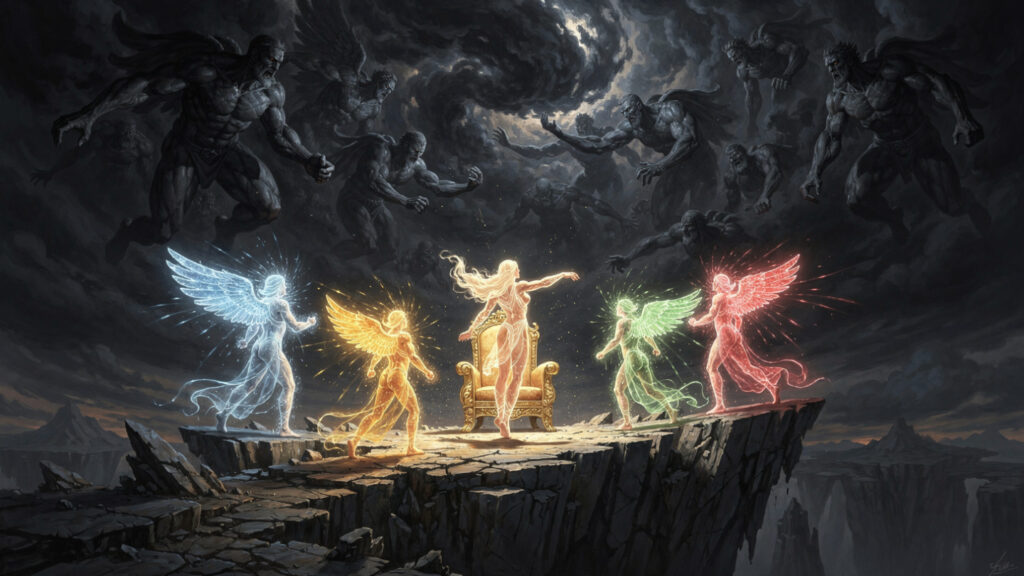
She had four children with the Titan Pallas: Zelus, Zeal; Nike, Victory; Kratos, Strength; Bia, Force. These were never simply members of some secondary divine generation. They were the abstract qualities the Titanomachy demanded and the subsequent governance of the cosmos kept needing, sitting permanently by Zeus’s throne, ready to be dispatched wherever divine governance required them, because Zeus had honored the mother who brought her children to his side first, while the Titanomachy’s outcome was still genuinely uncertain.
The Titanomachy and the First Defection
What earned the Styx her particular honor was a commitment made under genuine uncertainty: she carried Titan blood, born as she was from Oceanus and Tethys, and the war between the Olympians and the Titans had no certain outcome at the moment she chose her side.
She chose Zeus.
She gathered her children, Zeal, Victory, Strength, and Force, and brought them to Zeus’s side before the outcome was clear. This was exactly the kind of loyalty later oaths would come to honor: a commitment made before the outcome was certain, not after it, the risk of backing the losing side rather than waiting to see who would win and declaring for them afterward.
When the Titanomachy ended and the Olympian order was established, Zeus honored the Styx in a way that gave the whole divine oath its theological content: he decreed that the most solemn oath available to any god would be sworn by the Styx, and that breaking it would carry the punishment its inviolability required. Her loyalty under uncertainty, sustained through the war’s uncertain middle stretch, was honored with an institutional form that made it the permanent model of an unbreakable commitment in the divine world.
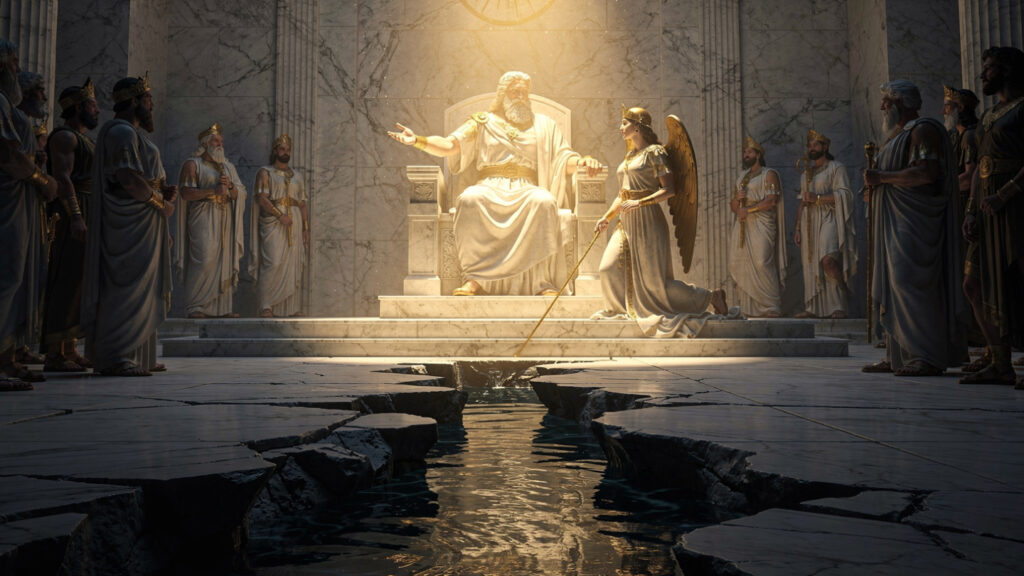
Every god who swore by the Styx after the Titanomachy was swearing by the one being whose own commitment under uncertainty the divine order most needed to hold up as its model for a binding promise. The oath’s power was never simply the power of the Styx’s own divine force. It was the power of that original historical moment, when the outcome was uncertain and she had already chosen the side that would go on to become the ruling authority of the entire cosmos.
The oath itself was the Titanomachy’s institutional legacy.
The Styx in the Divine Geography
The Styx’s place in the underworld’s divine geography is exactly what the Hades article in this collection develops through the underworld’s river system: the boundary river of the underworld, the most theologically significant of its rivers, the water by which the gods swore their most inviolable oaths, and the river whose crossing was the condition for any dead soul’s entry into the underworld proper. Her role in this river system parallels the Acheron‘s function as the threshold river, both physical expressions of the same underworld geography. This river belongs to the same chthonic order the Chthonic Deities article develops, where the powers of the earth govern the boundaries between worlds.
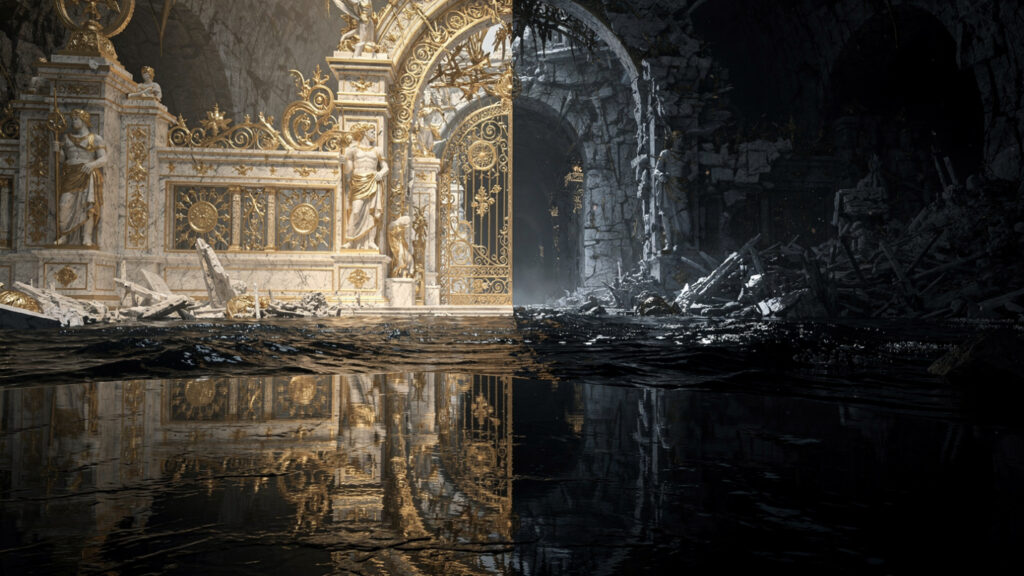
The Styx’s water was understood as both the most sacred and the most dangerous of all the waters in the organized cosmos: sacred, because the oath sworn by it was the most inviolable divine commitment available; dangerous, because the same water carried a toxicity that dissolved any living body it touched.
That tension, between the sacred and the toxic, is exactly what her character was built to encode: the guarantor of the divine order’s commitments and the substance whose direct contact with the living produced death, the most concentrated available expression of the underworld’s own character.
Iris carried the Styx water in a golden ewer because gold was the one material the water could not dissolve: the divine world’s most precious material resisted the dissolving action of its most dangerous water, a detail that encodes its own claim, that the organized divine order’s most valued resources were exactly the ones that could withstand the underworld’s concentrated force where lesser materials could not.
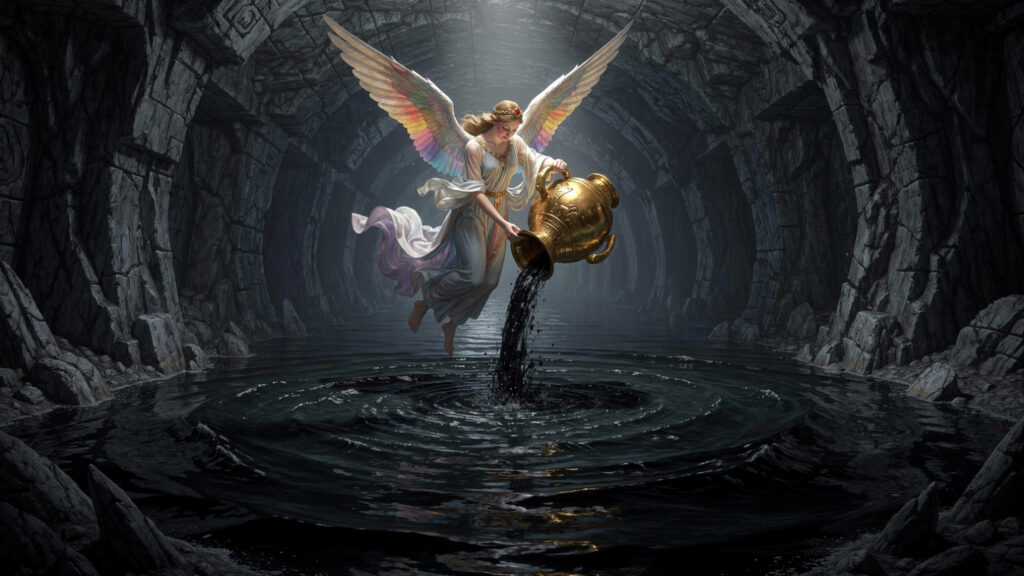
Every god who swore by this water was swearing by a substance that was simultaneously the guarantor of divine order and the dissolution of the living, sacred and toxic at once in the very same material. That combination is exactly what gave the oath its real weight: swearing by the Styx meant swearing by the one material that could kill the living and bind the divine at the same time, standing at the boundary between the organized world and its own dissolution.
The Achilles Story and Its Source
The story of Thetis dipping the infant Achilles in the Styx to make him invulnerable, holding him only by the heel that remained his one vulnerable point, survives most completely in Statius’s Achilleid, a first-century CE Latin epic whose account of the infant Achilles’s preparation for his heroic destiny gave the West the image behind the phrase “Achilles heel.”
None of this is in Homer. The Iliad‘s Achilles knows he will die young and accepts this as the condition of the heroic life he has chosen, but the mechanism of near-invulnerability through the Styx dipping appears nowhere in Homer. Pindar mentions Thetis’s attempt to make Achilles immortal without specifying the dipping at all. The heel-as-vulnerable-point version reaches its fullest early form in Statius, then gets developed further by Hyginus and later in Servius’s commentary on Virgil.
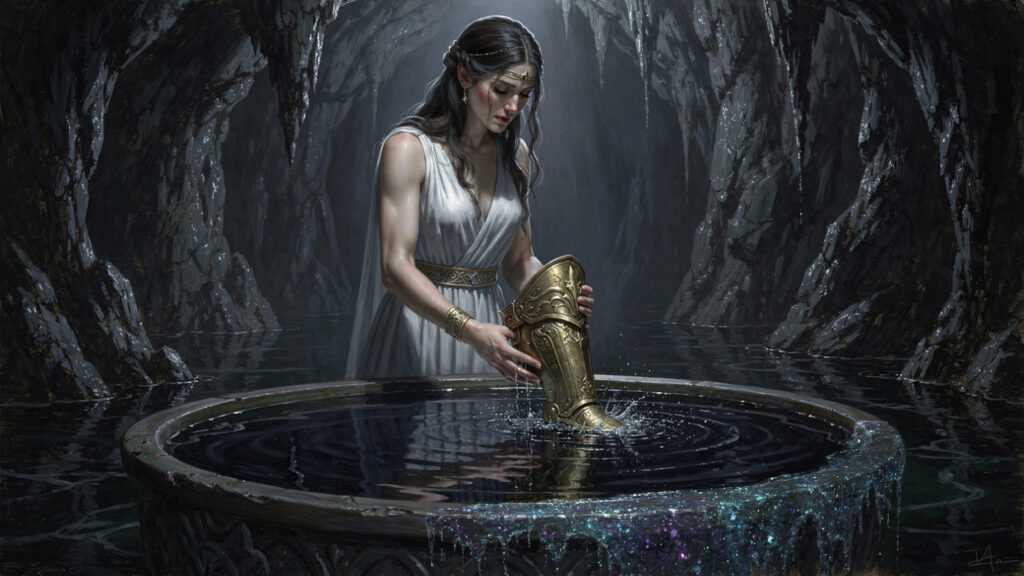
The theological content this story eventually accumulated is really the content of protection left incomplete by the very act of providing it: a mother attempting complete protection for her child with the most powerful available divine water could not actually complete that protection, because giving it required physical contact, and that contact’s own mechanism left exactly the point of contact unprotected. Complete protection was impossible for the simple reason that the grip needed to apply it was the same grip that kept it from being complete.
This is the same tragic structure the Phaethon article in this collection names elsewhere, where the very action taken to provide protection becomes the mechanism of vulnerability: the dipping designed to make Achilles completely invulnerable left him specifically vulnerable at precisely the point its own application was physically constrained.
The Spring at Nonacris and the Death of Alexander
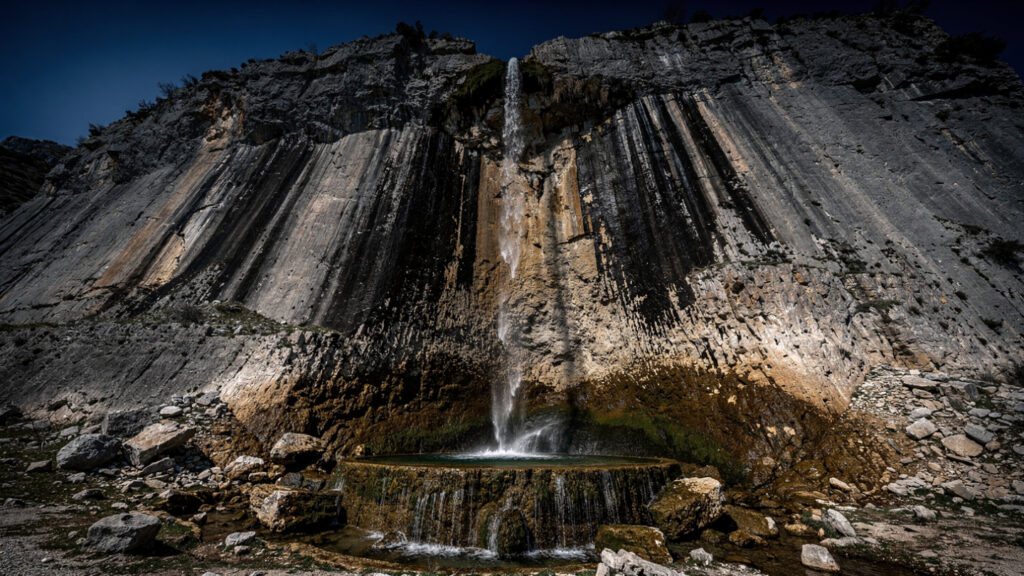
Ancient sources consistently connected the Styx’s mythology to a real spring at Nonacris in Achaea, in the mountainous northern Peloponnese, where ancient geography had already identified the physical location of this mythological river.
Pausanias, in his second-century CE Description of Greece, identified the Styx with a cliff face near Nonacris: a sheer rock face down which a black-streaked column of water fell, striking a high rock first before descending into the Crathis River below. He described the water as cold and deadly, capable of killing any animal that drank it, and noted that a horse’s hoof was the one traditional vessel that could hold it, since the water dissolved every other available container.
The Nonacris spring’s actual geology, cold, acidic water from the limestone karst springs of the northern Peloponnese, matches the ancient descriptions closely: the combination of high acidity, cold temperature, and mineral content in this karst spring water would genuinely produce the reputation for extreme toxicity that mythology went on to encode as the Styx, the most dangerous water in the ancient world.
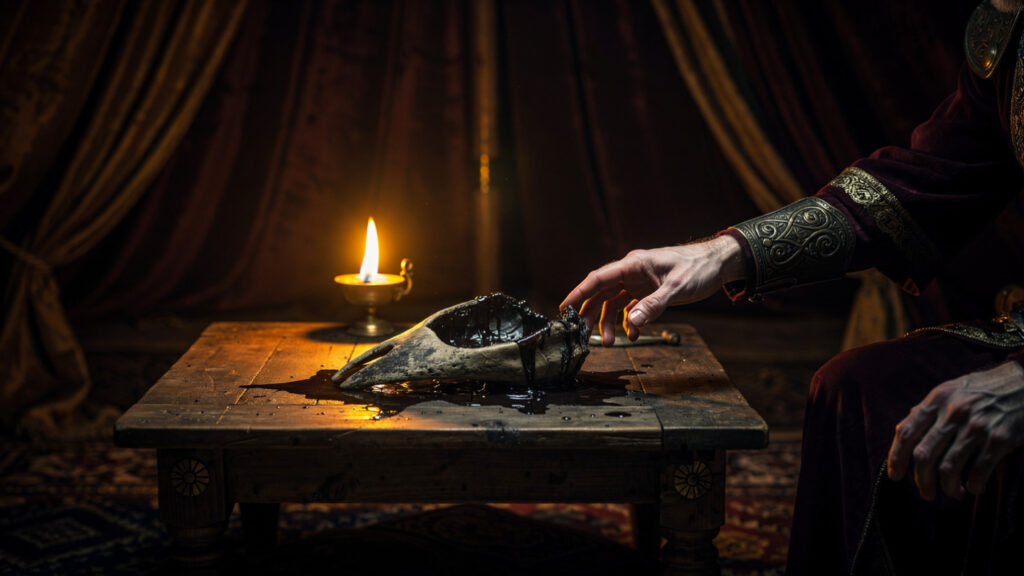
Several ancient sources explicitly connected the Nonacris water to Alexander the Great’s death in Babylon in 323 BCE, though modern scholarship treats this as among the least well-documented theories about his death. Multiple ancient accounts attribute Alexander’s death to poison carried in a mule’s hoof, the vessel these particular sources associated with Styx water from the Nonacris spring, naming as instigators of the poisoning various members of Alexander’s inner circle, including Antipater and his sons.
The mule’s-hoof detail gives the poisoning claim its particular mythological resonance: the one vessel said to withstand the water’s dissolving power, resisting where every other material failed, was the same vessel said to have carried the most powerful poison from the most sacred and most toxic water in the ancient world to the most powerful man alive.
Whether Alexander was actually poisoned at all, rather than dying of natural illness, and whether the Nonacris water was really the substance involved, is a question the available evidence cannot definitively answer, and modern scholarship continues to debate it. A 2010 analysis of the Nonacris spring’s geological and chemical character, by researchers including Leo Schep, proposed the bacterium Calicheamicin, or a related compound whose effects on the human body over days or weeks would match the timeline of Alexander’s reported symptoms, as the actual toxic agent.
What is certain is that ancient sources connected the most dramatic death in the ancient world to a mythological substance that was simultaneously sacred and toxic: the water that bound the gods’ most inviolable oaths, and destroyed any living thing it touched, was said by ancient writers to have destroyed the most accomplished living man the ancient world had produced.
The Styx in the Traveler’s Peloponnese
The stretch of northern Peloponnese landscape identified with the mythological Styx still preserves the geological features ancient sources described.
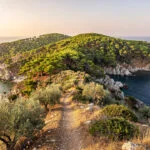
The area around the modern village of Souvardos in the Achaea regional unit, near ancient Nonacris, matches the ancient descriptions most closely: limestone cliff faces streaked black by karst spring mineral deposits, cold water descending from the high rock to the Crathis River below, and the mountainous character of the northern Peloponnese, where high elevation and limestone geology together produce exactly the spring conditions ancient sources described.
This is not a developed tourist destination on the scale of Delphi, Olympia, or Epidaurus. It is a landscape whose features an informed visitor, one who has come prepared with the ancient geographical sources, can actually recognize as the physical location that gave this mythology its home.
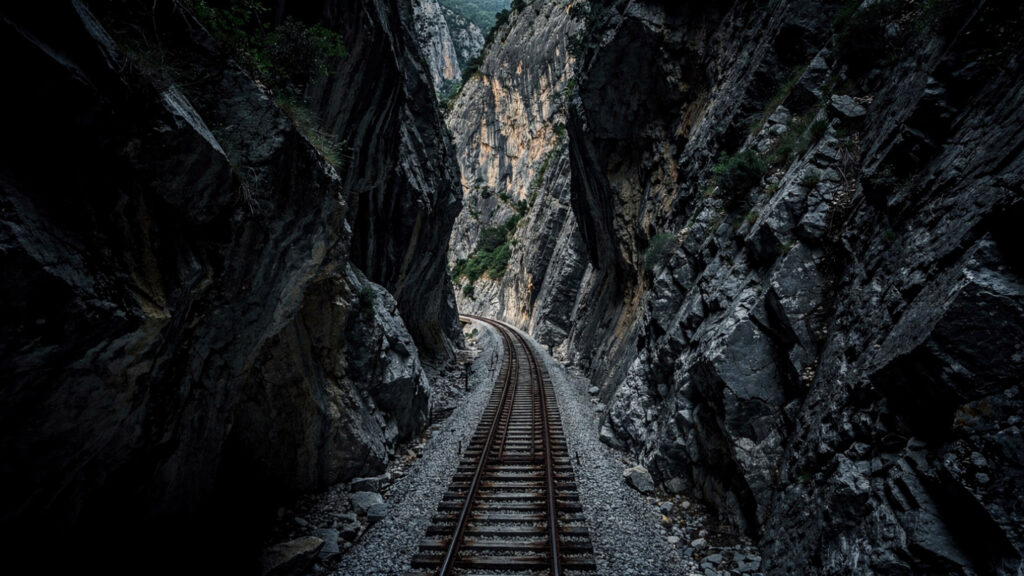
The Vouraikos Gorge, with its dramatic limestone cliffs and narrow passage between the high walls of the northern Peloponnese’s mountain terrain, gives this landscape exactly the enclosed, dramatic quality ancient writers consistently associated with the underworld’s approaches. It is accessible by the rack railway connecting Diakofto on the coastal plain to Kalavryta in the mountain interior, and the journey through the gorge, its limestone walls closing above the railway line, is the closest a modern visitor can come to experiencing the geological character this mythology was actually encoding.
What the Styx Encodes
Across all of its dimensions, the divine oath, the Titanomachy loyalty, the Nonacris spring, the Achilles dipping, the Styx encodes a single theological claim about the organized world’s relationship to a force that is simultaneously sacred and dissolving: a force that maintains order through the inviolability of commitment, and destroys the living through the toxicity of contact.
The Styx was the divine being whose loyalty under uncertainty became the model the organized order most needed to acknowledge for a binding promise, and whose character as the water that both bound the divine and dissolved the living gave theological expression to the order’s own most fundamental requirement: a commitment made under uncertainty that could never be taken back, a promise whose violation carried consequences no power in the organized world could shield the violator from.
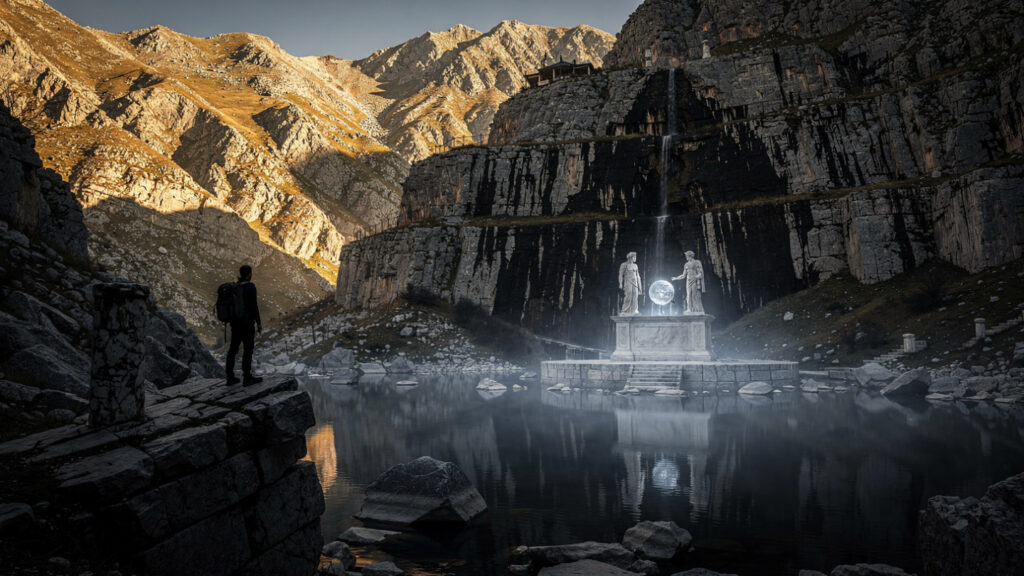
Every Styx oath sworn in the divine world acknowledged that the organized divine order was made up of beings who had made commitments under specific conditions and remained bound by them regardless of whatever changed afterward, regardless of whether those original conditions still made the commitment seem reasonable. The oath was the Titanomachy’s own institutional legacy: recognition that the organized world was built around commitments made under uncertainty, not around the power of whoever happened to be strongest at any given moment.
The water that bound the gods and dissolved the living carried, in that combination, its own claim: that the organized world’s commitments were built to outlast the individual life the same water could dissolve.
At Olympus Estate, Mythic Essays moves through the deeper currents of the Greek tradition. The gods swore by the Styx when they meant it. The violation carried ten years of divine exile. The Styx was the first to defect to Zeus in the Titanomachy and brought her children Zeal and Victory and Strength and Force, and Zeus honored her loyalty by making her name the most inviolable oath in the divine world. The water that Iris collected in a golden ewer was the water that dissolved every other vessel. Pausanias identified the Styx with a cliff face near Nonacris in Achaea. Ancient sources attributed Alexander the Great’s death in Babylon to poison carried in a mule’s hoof, the vessel that tradition associated with the Nonacris water. Whether Alexander was poisoned by the Styx spring is the question the evidence cannot definitively answer. The Vouraikos Gorge is accessible by rack railway from Diakofto. The limestone walls still close above the gorge. The water is still cold.