




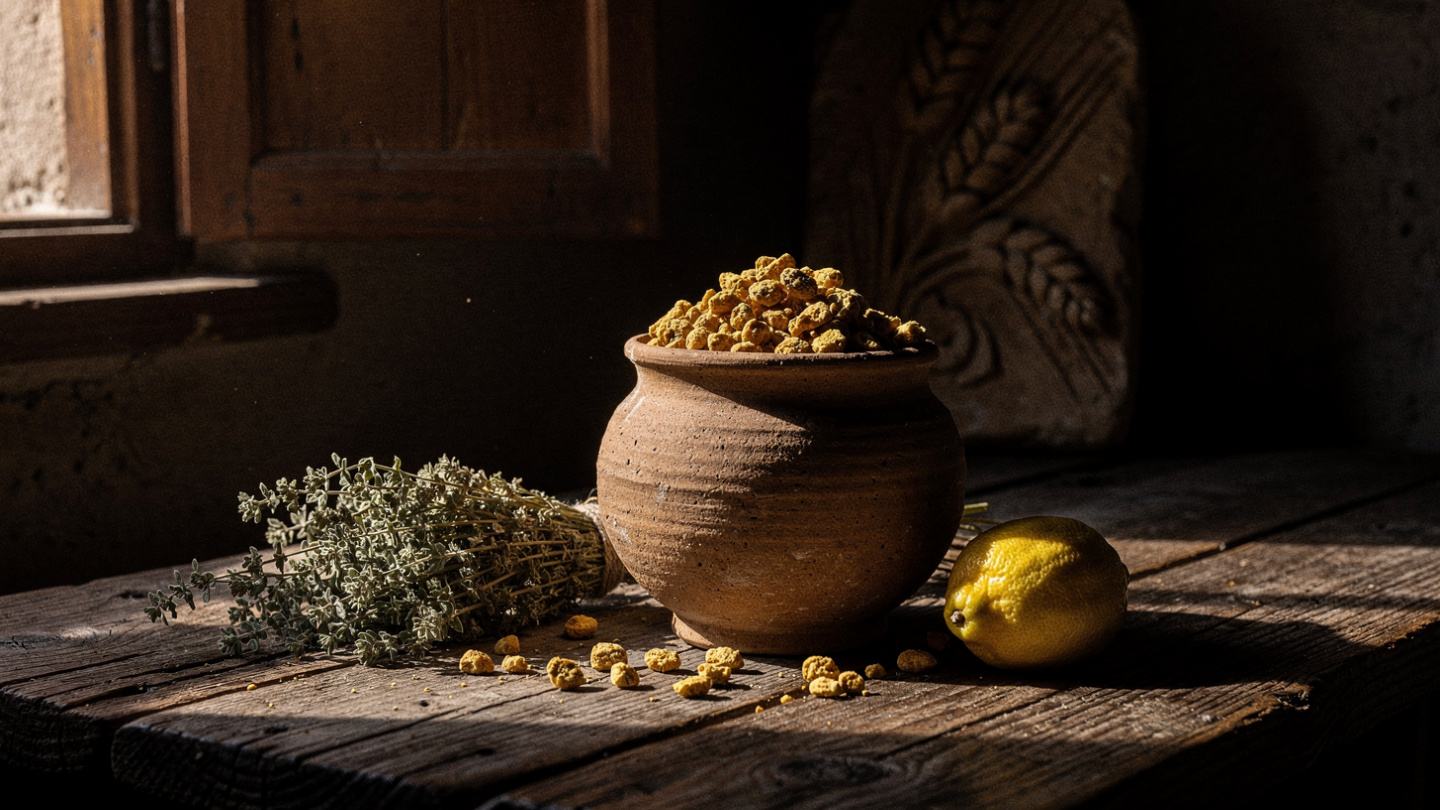
The trahanas was made in August, when the milk was richest.
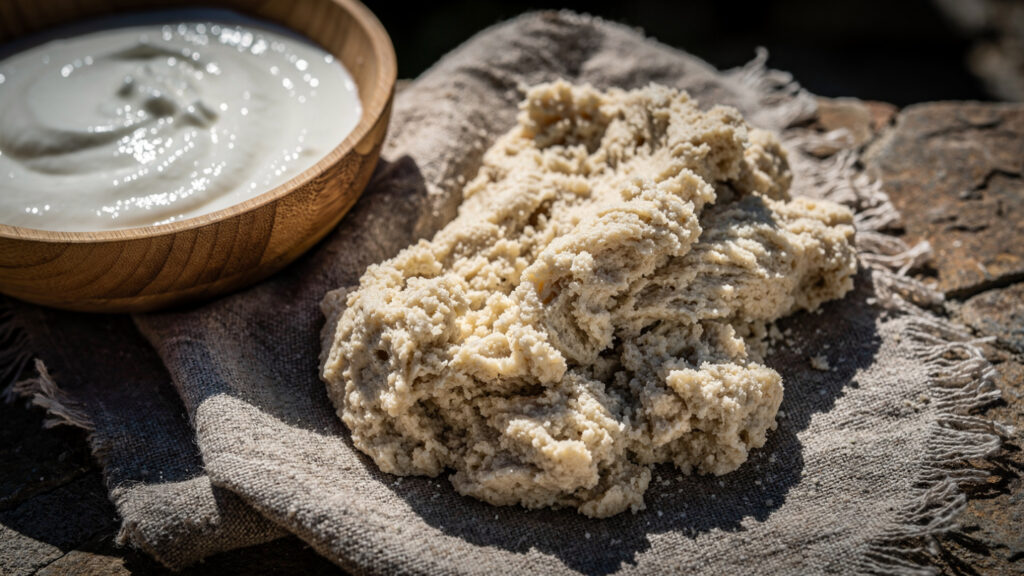
This timing was never incidental. Late summer milk, drawn from animals that had spent the grazing season on mountain pastures where wild herbs grow densest, carried the flavor of the year’s warmest months in concentrated form. Yogurt or fresh milk was mixed with cracked wheat or flour and kneaded into a coarse dough, then spread on clean cloth in the August sun to dry. The Aegean sun in August does something specific: it dries the dough completely through within days without ever cooking it, removing the moisture that would allow bacteria to grow while preserving both the dairy’s fermented character and the flavor compounds the drying process concentrates rather than destroys.
Once fully dry, the dough was broken into small, irregular pieces and stored in cloth sacks or ceramic vessels in the cool of the larder, where it would keep through winter and into the following spring without refrigeration. When the cold arrived and fresh milk grew scarce and summer’s vegetables were long gone, a handful of trahanas dropped into boiling water or stock produced, in twenty minutes, a thick, nourishing soup that tasted like the August pasture reconstituted in a December kitchen.
This was the technology. Behind it stood the theology of Demeter.
The Demeter Calendar and the Grain
The Greek agricultural year was built around a single theological understanding of the bond between the human community and the forces governing the grain’s own cycle. The Thesmophoria, celebrated in late October at the time of the autumn plowing, was the women’s festival marking the moment when Persephone descended and Demeter’s grief began to withdraw the earth’s fertility. The Haloa, celebrated in late December around the winter solstice, marked the moment when the grain lay dormant in the earth, seeds waiting in the dark for the warmth that would let them split and send their first shoots upward.
The entire agricultural calendar traced Demeter’s own story: a year-long sequence of ritual acknowledgments, marking the grain’s cycle at each of its real turning points, carrying the same content as the Persephone myth but expressed through the actual agricultural year rather than through narrative alone.
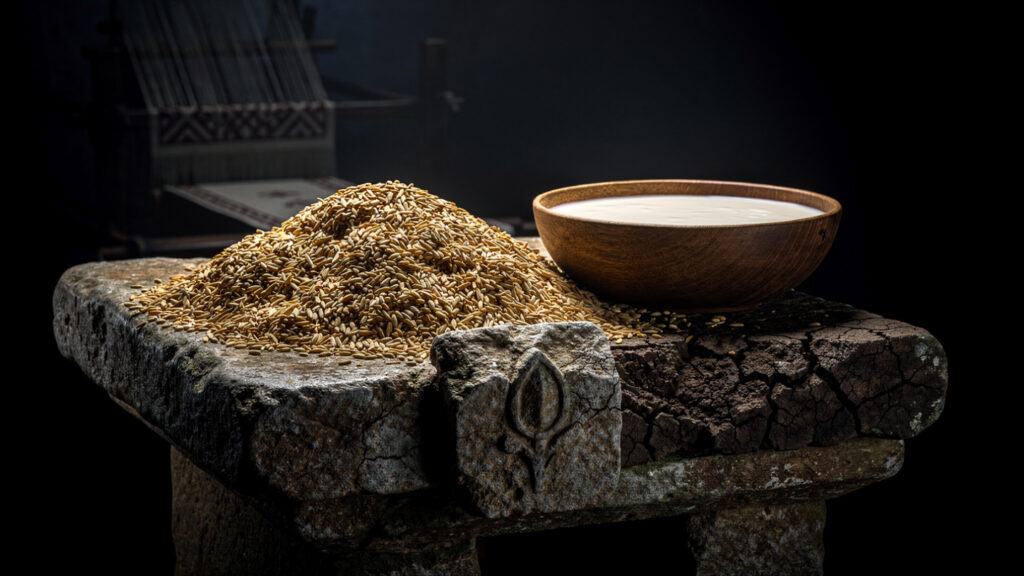
Trahanas belongs to exactly this calendar, made at the moment of the late summer harvest, when the year’s grain had just been threshed, the year’s milk was at its richest, and preservation technology was needed to carry summer’s abundance through winter’s scarcity. Making trahanas was a domestic act that placed the household inside this same larger cycle: the summer’s surplus transformed into a preserved form able to sustain the family through the earth’s own dormancy.
This is not metaphor. Trahanas was actual food, made from actual grain and actual dairy at the actual end of an actual summer, and eaten during an actual winter. Its theological dimension belonged to the practice itself rather than sitting on top of it as an imposed meaning. Ancient Greek life never separated the practical from the theological the way the modern world tends to. Making trahanas at the right moment in the agricultural year was, simultaneously, food preservation and a genuine participation in the logic the Demeter calendar had already laid out.
The Technology of the Fermented Grain
Greek trahanas preserves a distinction contemporary reception of the dish has partly lost: the difference between sweet trahanas and sour trahanas, glykotrahanás and ksinotrahanás, whose different characters come from the different dairy each is built on.
Sweet trahanas uses fresh milk added to the grain dough unfermented, its natural sugars intact, before any bacterial culture has had time to convert them into lactic acid. It produces a soup that is mild and slightly sweet, the grain’s nuttiness meeting the clean note of fresh dairy.
Sour trahanas uses yogurt or fermented milk, dairy whose bacterial culture has had time to convert its sugars into lactic acid, giving it a distinctly sour edge that Greek yogurt has carried since antiquity. It produces a soup that is complex and slightly astringent, the grain’s earthiness meeting the dairy’s acidity, a combination the mountain kitchens of Epirus and Arcadia developed into the version best suited to a highland winter.
The fermentation behind sour trahanas is older than the word trahanas itself. Scholars researching the dish’s origins, notably Stephen Hill and Anthony Bryer in their study of Byzantine porridge, trace its lineage back to tracta, the dried dough Apicius describes in first-century Rome as a thickener for sauces, itself likely descended from still older Greek practice. The name trahanas has cousins across the entire Eastern Mediterranean and beyond, tarhana in Turkish, xynohondros in Crete, tarkhineh in Persian, a spread that reflects a shared, very old technology rather than a single point of invention. What all these versions share is the same basic insight the Hippocratic writers had already recorded in their comments on soured dairy: fermented milk supports digestion in a way fresh milk does not, and combining fermented dairy with grain answers the body’s winter needs in a way neither ingredient can address alone.
The Byzantine Transmission
Byzantine monasteries carried this preservation technology across the entire Greek-speaking world. Monastic communities kept their own agricultural calendar, one that included late-summer trahanas production as the preserved food best suited to the nutritional demands of a monastic winter, when the Orthodox fasting calendar narrowed the available foods to whatever the season and the rule together permitted.
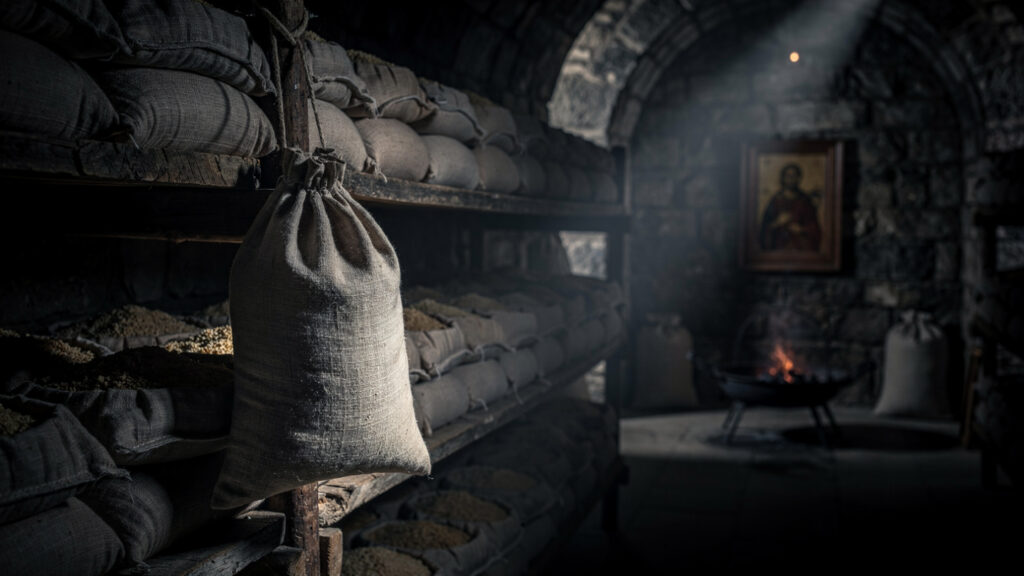
Monastic trahanas served two purposes at once across the Byzantine and post-Byzantine centuries: a fasting food, since its dairy component counted as fermented rather than fresh, and a survival food, since its grain component supplied the caloric density winter demanded. This double usefulness gave the dish an institutional endorsement that Byzantine monasticism’s own wide geographic reach then carried across the Greek-speaking world, from Anatolia to the Ionian Islands to the mountain villages of Epirus and Arcadia, where it survives today in its fullest, most continuous form.
Epirus and Arcadia as the Heartland
The two regions where trahanas survives most completely in the contemporary village kitchen are the two whose mountainous, pastoral character made them exactly the conditions the technology was built for.
Epirus in northwestern Greece is where the Sarakatsani and Vlach pastoral communities maintained the most continuously documented transhumance in the country, the seasonal migration between alpine summer pastures and sheltered winter lowlands. Sarakatsani dairy, built around sheep and goat milk that followed the mountain grazing calendar, made late-summer trahanas the natural way to preserve the surplus each grazing season left behind.
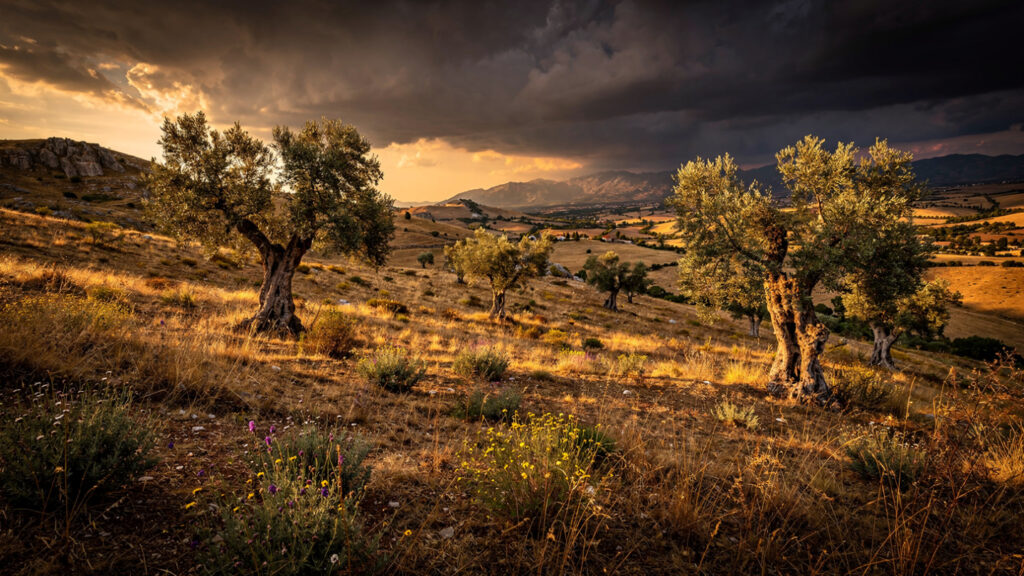
Sarakatsani trahanas, made from rich end-of-summer sheep’s milk yogurt and dried on the high pastures before the autumn descent, traveled with the community through the migration itself: concentrated, lightweight, durable, capable of sustaining a family through months when fresh milk production dropped and the journey between summer and winter grounds had already used up the fresh provisions.
Arcadia in the central Peloponnese carries a pastoral reputation for the simple and the unassuming, a landscape that rewards sustained attention rather than the immediate drama of the islands or the ancient cities. Its trahanas reflects the same character: the sweet version, made with fresh milk, dominates the lower Arcadian villages built around cattle, while the sour version, made with sheep’s yogurt, dominates the higher villages, where transhumance still sustains a sheep and goat herding culture whose dairy gives Arcadian sour trahanas its particular intensity.
The Horta and the Soup
Wild greens, horta, connect the contemporary Greek table to some of the oldest layers of the Greek relationship with the landscape’s own plants, a connection the sacred table article and the pharmakeia article both develop further. In trahanas soup, these greens mark the exact point where the two oldest food practices in Greece meet.
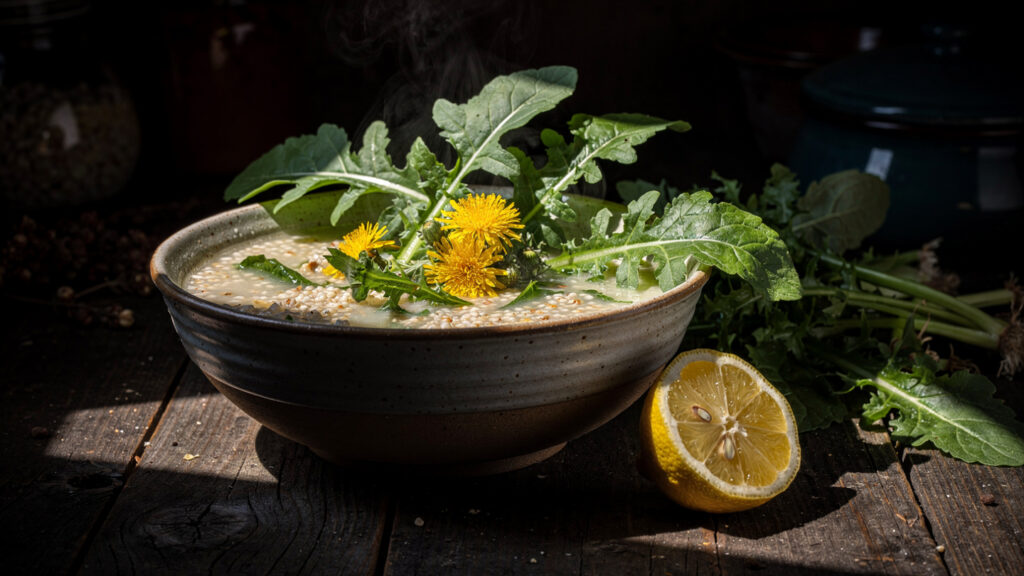
Adding wild greens in the last minutes of cooking produces the dish that most fully expresses the Greek winter kitchen’s self-sufficiency: preserved summer grain and dairy meeting the fresh plants winter’s own landscape still offers, for anyone who knows where to look.
The greens themselves shifted by region and season. In Epirus, wild amaranth and dandelion greens from the lower slopes went into the pot in early winter, before the higher ground disappeared under snow. In Arcadia, mountain greens, chicory, sorrel, and endemic species documented as far back as Theophrastus, whose engagement with the Greek botanical world the pharmakeia article develops, went into pots kept full by communities who passed plant knowledge down through direct experience, one generation teaching the next where and what to gather.
Lemon, added at the end, brightens the grain’s earthiness and the dairy’s sourness in exactly the balancing role citrus plays across Greek winter cooking. It is the one ingredient that appears consistently across every regional version of trahanas, a small, deliberate reminder that summer’s warmth survives, latent, in the fruit, even once the landscape that grew it has gone dormant.
The Demeter Logic in the Bowl
When trahanas is eaten in December, the bowl contains August.
Not metaphorically. The flavor compounds of the August pasture, the bacterial cultures of the August dairy, the drying work of the August sun, all of it is still present in the soup, reconstituted the moment December water meets it. A bowl of trahanas in a winter kitchen is a material connection between the season it is eaten in and the season it was made in, the physical form of a technology built for exactly one purpose: carrying summer’s abundance through winter’s scarcity.
This is Demeter’s own logic, expressed in food rather than ritual: grain preserved at summer’s end carries summer’s abundance through the earth’s winter dormancy all the way to the spring, when the whole cycle begins again. Trahanas is the household-scale version of the same argument the Thesmophoria, the Haloa, and the Eleusinian Mysteries made at the civic and sacred level: that what disappears in winter is not gone, only preserved, and that the earth’s dormancy is not death but the condition under which summer’s abundance waits for spring to release it again.
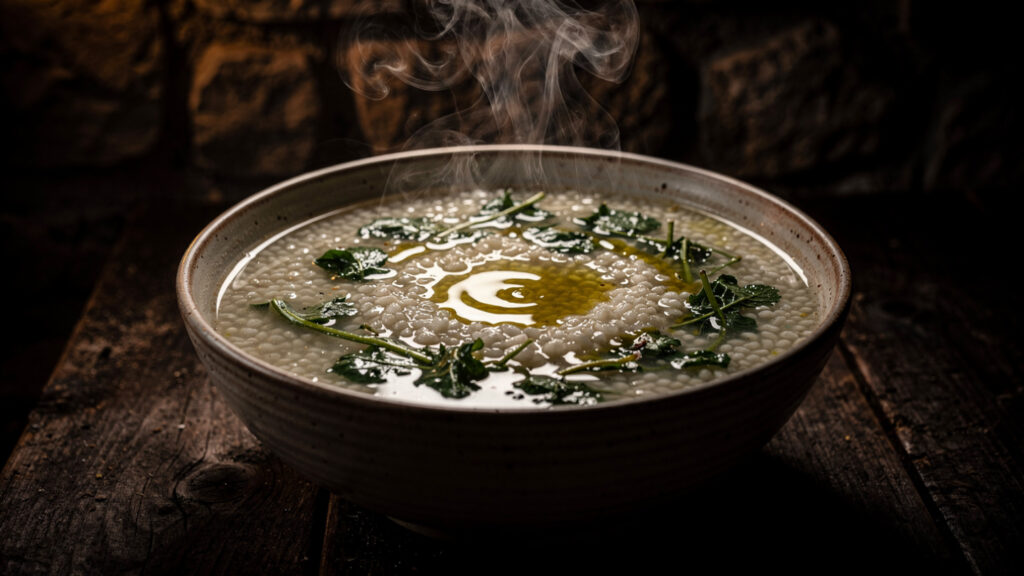
A family that makes trahanas in August and eats it in December is performing a domestic act carrying exactly this logic, expressed through the technology of preserved, fermented grain. It is not a ceremony. It is simply the practice of a household that understands, at whatever level it puts into words, that summer and winter are the same cycle seen at two different moments, and that the food made at one end of that cycle and eaten at the other is the proof the understanding is correct.
Demeter’s grief did not end the agricultural year. It suspended it. The grain lay in the earth through winter and returned in spring. The trahanas lay in the larder through winter and returned to the table in December. Both carry the same idea: the preservation of summer’s abundance as proof that summer itself will return.
At Olympus Estate, Food and Seasonal Life traces the culinary traditions of the Greek world from the ancient harvest through the Byzantine kitchen to the contemporary table. The trahanas was made in August, when the milk was richest. The August sun dried the fermented grain and dairy dough completely without cooking it, concentrating the flavor of the summer pasture into a form that could sustain a household through winter’s scarcity. Byzantine monasteries carried the technology across the entire Greek-speaking world. The Sarakatsani carried it on the autumn migration from summer pastures to winter lowlands. The Arcadian mountain villages preserved the sour version made from sheep’s yogurt, among the oldest forms of the dish. When trahanas is eaten in December, the bowl contains August. Grain preserved at summer’s end carries summer’s abundance through winter’s dormancy to the spring when the new cycle begins. This is Demeter’s own logic, expressed in food.