




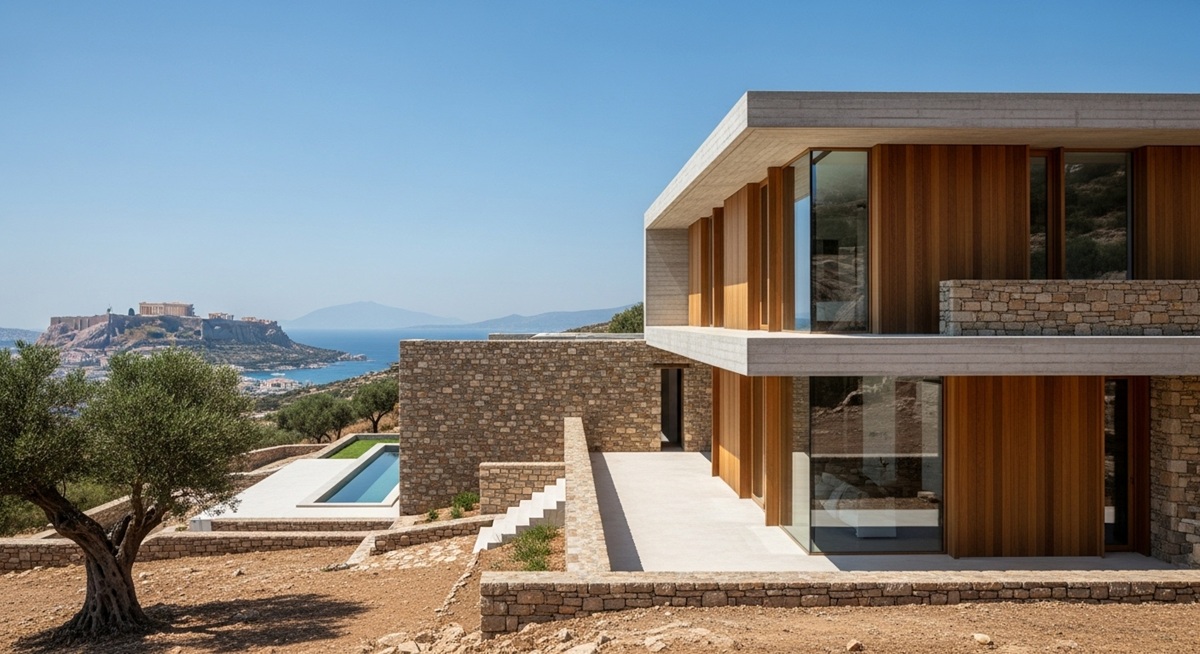
Every architect who has ever built in Greece has had to answer the same question.
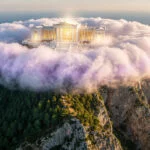
The Parthenon is visible from most of central Athens. It sits on its rock above the city with the authority of a building that has been there for two and a half thousand years and that has absorbed, in that time, every attempt to rival it, ignore it, be inspired by it, or simply pretend it is not there, and has emerged from all of these relationships unchanged. The question it poses to anyone who builds within its visual range is not a gentle one: what are you doing here, and why should the world contain both of us?
For a long period in the twentieth century, the answers were inadequate. The neoclassical buildings of the nineteenth century attempted to speak the Parthenon’s language in diminished form and produced, in most cases, the embarrassment of the copy that cannot hide its distance from its original. The modernist buildings of the mid-century period turned their backs on the question entirely and produced buildings that were indifferent to their context in a way that reads, from the present moment, as a different kind of inadequacy. Neither approach found a way to inhabit the same city as the Parthenon without either submission or denial.
The architects who began working in Greece from the 1990s onward found a third position, and the buildings they produced with it are among the most philosophically interesting built in Europe in the past three decades.
The Question the Acropolis Museum Was Forced to Answer
No building in Greece has been more scrutinised or more consequential than the Acropolis Museum, completed in 2009 to the designs of Bernard Tschumi with the Athenian architect Michael Photiadis. Its site, in the dense urban fabric immediately below and southeast of the Acropolis, was its fundamental problem and its fundamental opportunity simultaneously.
The problem: a building housing the sculptural programme of the Parthenon, placed within direct visual connection to the Parthenon, in a neighbourhood where archaeological remains were distributed through the ground at every depth. To build here was to build on top of history and in the sight line of its most perfect expression.
The solution Tschumi developed was to stop treating the historical material as a constraint and start treating it as the building’s primary content.
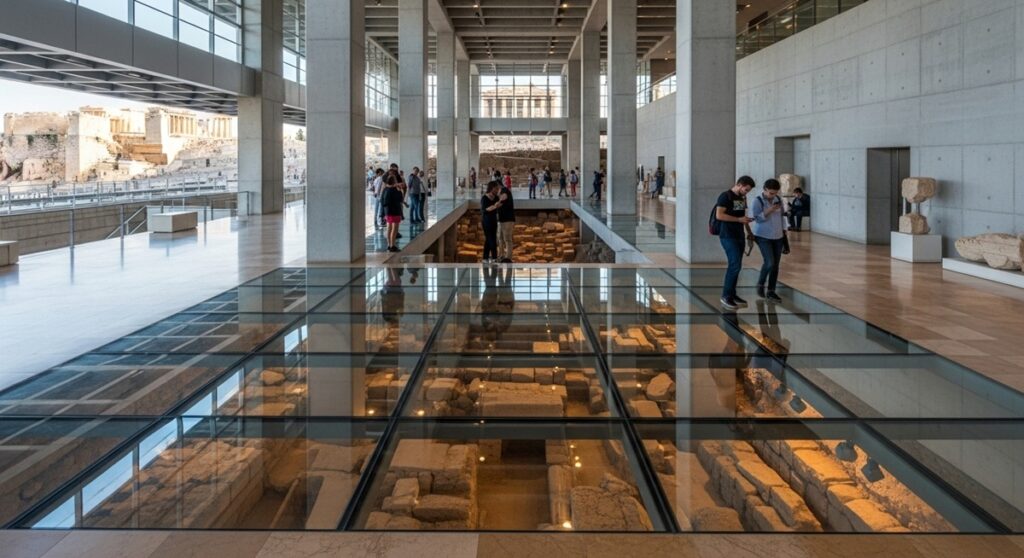
The ground floor of the Acropolis Museum is transparent. Glass floors reveal the archaeological excavations beneath, which remain active and visible: the domestic and civic remains of the ancient Athenian neighbourhood that occupied this site from the fifth century BCE through the Byzantine period, preserved in situ and illuminated from above by the building that rests on pilotis above them. The visitor arrives at the museum entrance and immediately looks down through the floor at the ancient city rather than walking across ground that conceals it. The building does not occupy the archaeological site. It stands above it, making it visible in a way that any other construction would have prevented.
The Parthenon Gallery at the top of the building is rotated precisely to align with the Parthenon itself. The orientation was not incidental. It was a deliberate act of spatial acknowledgement: the gallery that houses the surviving frieze panels, the metopes, the pediment sculptures, is oriented so that the Parthenon is continuously visible through the glass walls from every point in the room. The sculptures in the room and the building they came from exist in direct visual relationship. The light that falls on the marble inside the gallery is Attic light, the same quality and direction of light that fell on the same marble when it occupied the building visible through the glass.
This is the architectural decision that distinguishes the Acropolis Museum from every other museum built in proximity to a major ancient site: it refused to separate the objects from the context that gave them their meaning. The conventional museum argument is that the controlled interior environment preserves the object. Tschumi’s argument is that the object without its context is not fully itself, and that the building’s responsibility is to maintain that relationship, not to sever it in the name of conservation.
The exposed concrete, the structural glass, the warm marble floors: these materials are not trying to speak the Parthenon’s language. They are speaking their own language clearly, which is the condition of genuine conversation. You cannot have a dialogue with a building by imitating it. You can only have a dialogue by being fully present as something else.
What Light Has Always Been in Greek Architecture
The Parthenon was designed around an understanding of light that the ancient architects did not articulate as a theory but that is legible in every decision they made.
The Doric columns of the Parthenon are not uniform cylinders. They are slightly convex, swelling toward the middle in a curve called entasis, and the spacing between them varies from the corners toward the centre. These adjustments, invisible to the casual observer and only fully measurable with instruments, were made to counteract the optical distortions that the Attic light produces in long horizontal and vertical lines: the apparent concavity of what is actually straight, the apparent inward lean of what is actually vertical. The Parthenon looks like a building of perfect geometric regularity because its geometry is not regular. It is precisely distorted to produce the appearance of regularity under light conditions.
This is not a minor detail. It is evidence that the Greek architects understood light as the primary medium within which their buildings would be perceived, that they designed not for the abstract geometry of the building in isolation but for the geometry of the building as it would be read by human eyes in atmospheric conditions. The building was designed for how it would look, which required a precise understanding of how the Attic light, intense and high-angled and casting deep shadows, would interact with the surfaces and proportions of what they were building.
Contemporary Greek architects who work well do the same thing, using different materials and different means. The Attic light does not change. The shadows it casts at noon in summer are still the same shadows that the ancient architects accounted for. A building in Athens that ignores this light, that treats it as a background condition rather than as the primary expressive medium available to it, is not simply missing an aesthetic opportunity. It is declining to engage with the fundamental condition of architectural experience in this place.
The best contemporary Greek buildings are made of materials that the Greek light rewards: stone that whitens in direct sun and darkens in shadow, concrete whose surface carries the grain of its formwork as a texture that light reads and gives depth to, water whose surface fractures and reflects the high Attic sky. These are not choices made because the Parthenon used similar materials. They are choices made because the light is the same light, and the materials that the ancient builders discovered worked best in it still work best in it.
The Stavros Niarchos Foundation Cultural Centre | The Agora Reimagined
Renzo Piano’s building for the Stavros Niarchos Foundation, completed in 2016 on the Faliro coastal front south of Athens, presents a different version of the same architectural problem. It is not adjacent to a major ancient site. It is not building within the shadow of the Acropolis in any literal sense. What it is attempting is something more abstract and more ambitious: the reinvention of a Greek civic institution, the agora as the open public space of democratic life, at the scale and with the programme of a contemporary cultural centre.
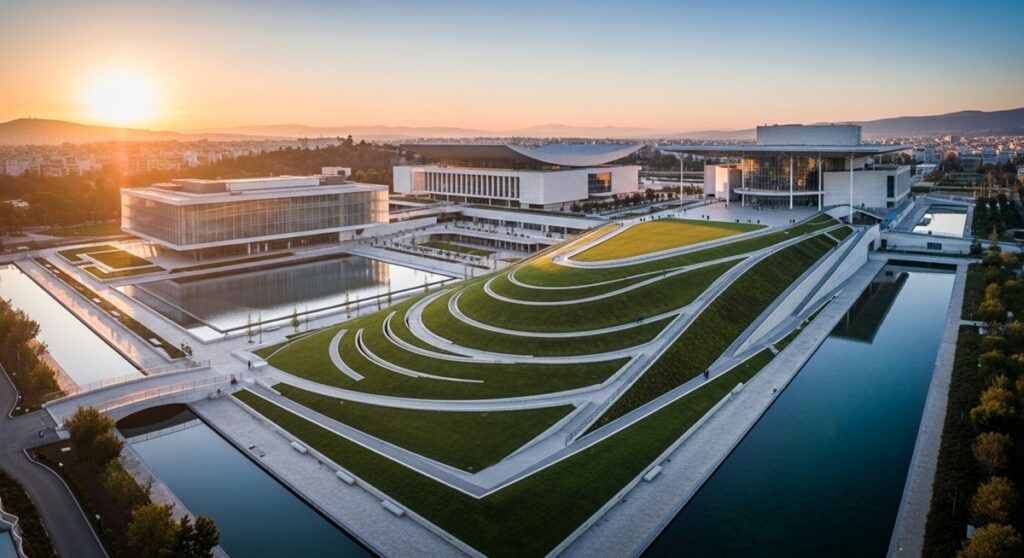
The building is topped by a sloping green hill that is its most immediately visible feature from the sea and from the coastal road: an artificial topography that creates a public park above the building’s roof, accessible by escalator and on foot, with the sea visible in one direction and the city in the other. The hill is not decorative. It is the building’s primary civic space, the outdoor public realm that the agora represented in the ancient city: the place where people gather not to consume a cultural product but to be present in a shared public space with each other.
The canopy that shelters the opera house is the structure’s most technically ambitious element: a thin roof projecting far beyond the building’s envelope, carried on a minimal steel structure, providing shade in the way that the stoa, the colonnaded walkway of the Greek public space, provided shade: a covered outdoor zone that is neither fully inside nor fully outside, that extends the habitable public space beyond the walls of the building without enclosing it. The stoa was Greek architecture’s solution to the problem of outdoor public life in a climate of intense heat, and the canopy is its contemporary equivalent, using different structural means to produce the same experiential and social result.
The canal and reflecting pool to the south of the building introduce water in a way that is simultaneously functional and deeply Greek: water as the element that moderates the heat of the paved exterior, that reflects the sky and the light back into the shaded spaces around it, that provides the quality of acoustic and thermal comfort that the ancient Greeks consistently sought at the edge of cultivated water. Sacred springs marked sacred sites. Water bounded the temenos. The Niarchos canal does not reference these ancient precedents directly. It addresses the same experiential needs that they were built to address.
Tegea | Modesty as the Most Demanding Position
The Archaeological Museum of Tegea in the Peloponnese is the least famous of the three buildings discussed here and the one whose architectural position is, in a certain sense, the most difficult to maintain.
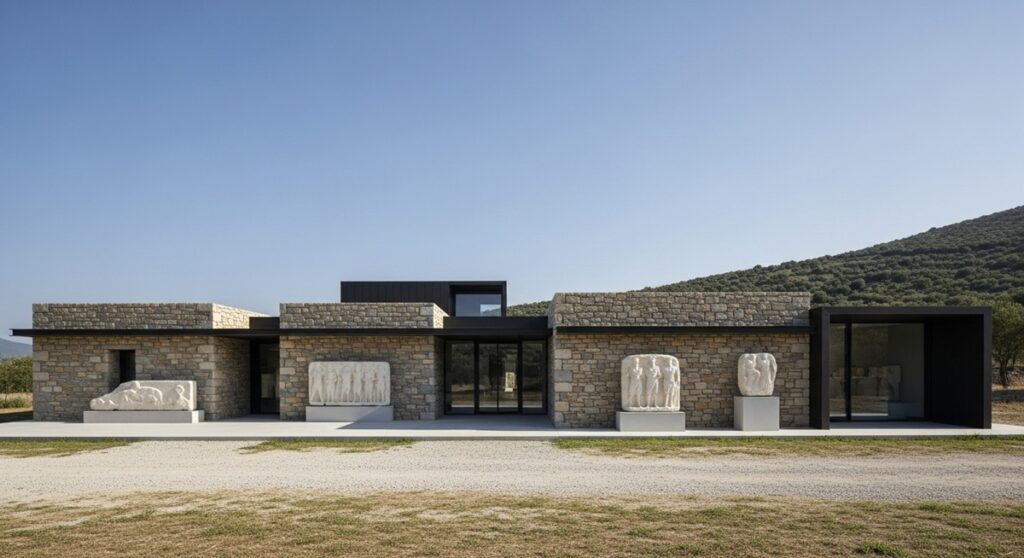
The building is low. It uses local stone. The modern additions are dark steel and clear glass that recede rather than assert. It does not compete with the ancient artefacts it contains or with the Arcadian landscape it sits within. It has made the architectural decision that its responsibility is to disappear as much as possible, to create the conditions for encounter with the objects and the landscape without inserting itself between the visitor and those things.
This sounds simple. It is not. The decision to recede requires as much precision as the decision to assert. A building that recedes incompetently produces the impression of failure or poverty. A building that recedes with full intention and technical mastery produces the impression of intelligence: the intelligence of a building that understands what the situation requires and has achieved it completely.
The strategic placement of openings in the Tegea museum walls, calibrated to minimise glare and heat gain while casting the quality of diffuse northern light that stone sculpture requires for its surface texture to be fully readable, represents the same order of knowledge as the entasis of the Parthenon columns. The effect is humble. The knowledge that produces it is not.
Arcadia has always been the region of Greece most associated with the pastoral, with the simple and the unassuming, with the landscape that does not announce itself but that rewards sustained attention with a depth of beauty that the dramatic landscapes of the islands and the ancient urban sites, already doing the work of being magnificent, never quite produce. The Tegea museum understands the landscape it is in.
The Principle Behind the Buildings
The three buildings above share a principle that is not yet a movement with a name but that the best contemporary Greek architectural practice consistently demonstrates.
The principle is that the relationship between a contemporary building and its historical context is a genuine relationship, requiring the same qualities that any genuine relationship requires: full presence, genuine attention, the willingness to be changed by the encounter rather than merely to acknowledge it, and the honesty to speak in one’s own voice rather than to imitate the voice of the person one is in conversation with.
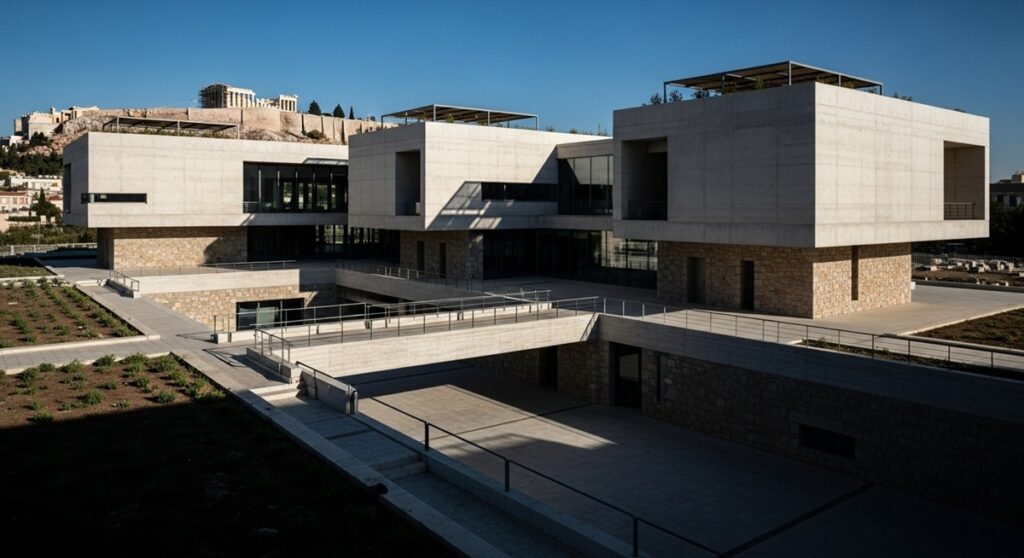
The Parthenon cannot be improved upon within its own terms. What can be done, and what the best contemporary Greek architecture has demonstrated can be done, is to build in genuine conversation with it: to make buildings that acknowledge the full weight of what the landscape and the tradition contain, that bring to the encounter the full resources of contemporary knowledge and contemporary means, and that produce in the resulting dialogue something that neither the ancient nor the contemporary tradition could have produced alone.
The shadows the Parthenon casts are not oppressive. They are the evidence of what the architecture of this landscape, in this light, has been able to achieve over twenty-five centuries of continuous development. They are the standard that the contemporary practice inherits.
What the generation of architects working in Greece now has discovered is that the standard is not a ceiling. It is the ground they are standing on.
At Olympus Estate, Cultural Chronicles traces the practices and institutions that defined Greek civilization from the inside. The Parthenon looks like a building of perfect geometric regularity because its geometry is not regular. It is precisely distorted to produce the appearance of regularity under light conditions. The Acropolis Museum stands on pilotis above the ancient neighbourhood whose remains are visible through the glass floor below. The Parthenon Gallery is rotated to align with the Parthenon so that the marble inside and the building it came from exist in direct visual relationship. You cannot have a dialogue with a building by imitating it. You can only have a dialogue by being fully present as something else. The standard is not a ceiling. It is the ground they are standing on.