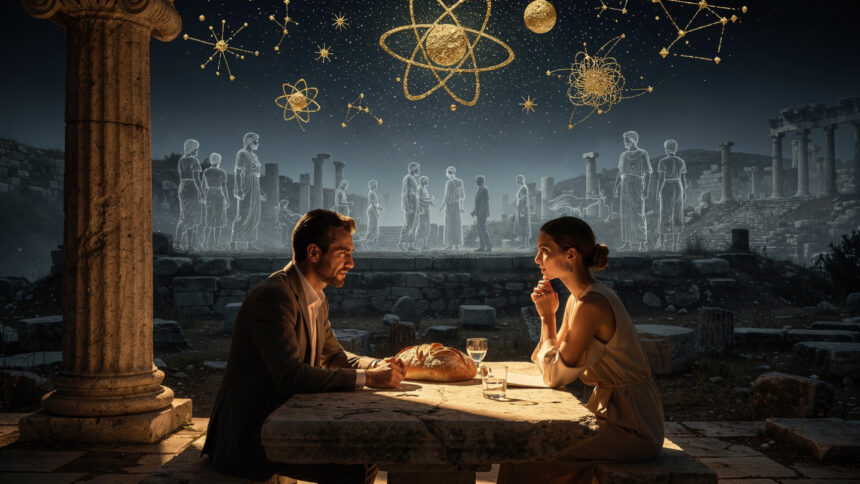
The structural organization of ancient Greek sanctuaries followed a rigorous system of temenos laws that defined the spatial boundaries between the human and the divine. The ancient Greeks classified ritual space into Ouranic space, belonging to the celestial deities, and Chthonic space, belonging to the powers of the earth and the dead. These classifications dictated the timing of access as much as the geography of it. Sanctuary regulations at several sites stipulated that no human remain within the sacred precinct after the transition into night.
This was not simple religious fear. It was a technical requirement for maintaining the ritual purity known as hagnos. The physical design of these sites used natural acoustics, light deprivation, and geological features to reinforce the separation between the human world and whatever the sanctuary was built to contain. Night functioned as a boundary condition, the hours in which the site belonged to something other than its daytime visitors.
The Acheron Descent

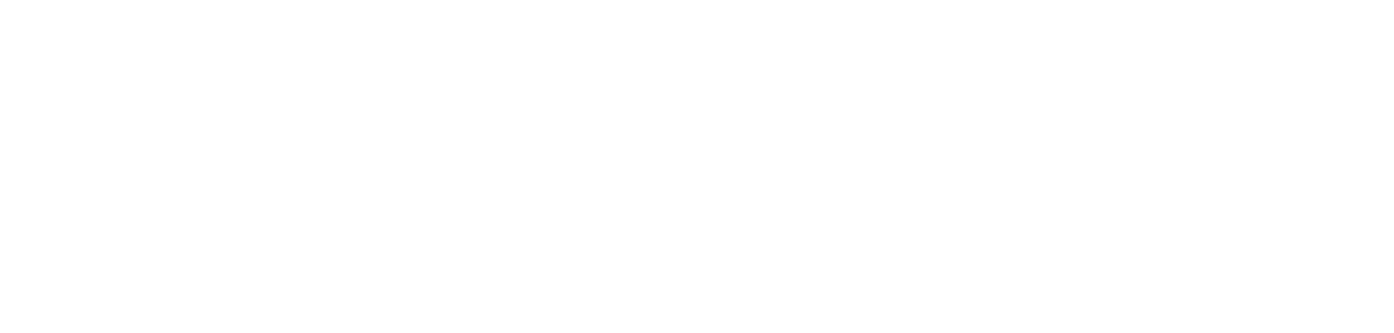
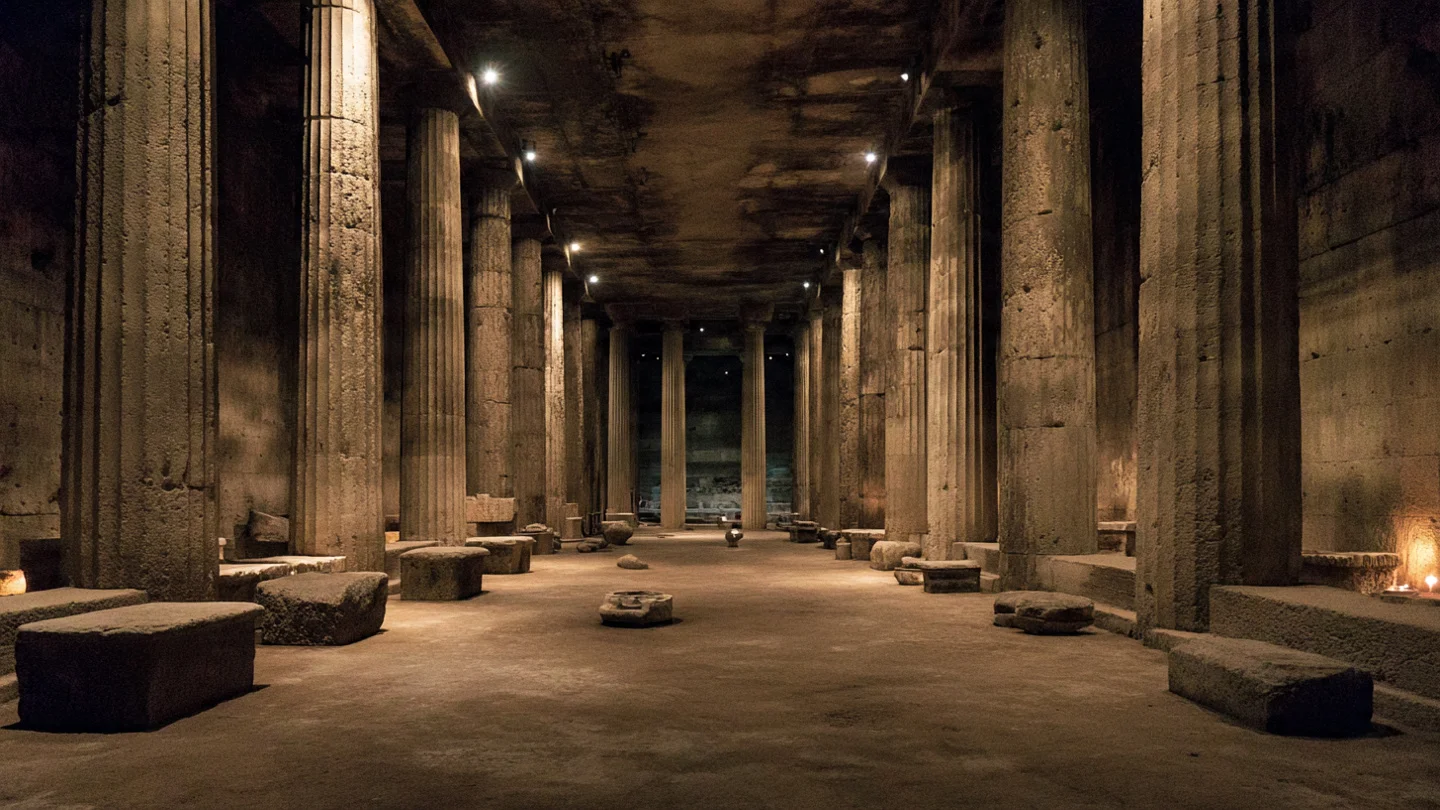
The air in Epirus, near the junction of the Acheron and Cocytus rivers, carries a high level of humidity that traps the scent of damp earth and limestone. The landscape here is defined by the polygonal masonry of a Hellenistic structure that Greek archaeologist Sotirios Dakaris excavated between 1958 and 1977 and identified as the Necromanteion, the Oracle of the Dead, on the strength of its location at the confluence of the rivers Homer names in the Odyssey’s underworld episode. The walls, built from local stone roughly two meters thick, were clearly designed to isolate the interior from the outside world, whatever the interior’s actual purpose. As the sun moves below the horizon, the temperature in the valley drops sharply, the river’s current runs heavy and constant, and the water reflects nothing once daylight has gone.

Dakaris’s identification of the Necromanteion of Acheron as a facility for inducing visions of the dead, a place where pilgrims spent days in dark, corridor-like rooms on a restricted diet before being led into a central hall, has never gone unchallenged. The German archaeologist Dietwulf Baatz argued in 1979 that the bronze fittings Dakaris had read as parts of a ritual lifting device for producing apparitions were actually components of Hellenistic catapults, and that the site’s layout better matches a fortified Hellenistic farmstead than a religious sanctuary. The debate remains genuinely unresolved among archaeologists. What is not in dispute is that the site’s builders constructed something with unusually thick walls, minimal light, and a labyrinthine internal layout, whatever function that combination was actually built to serve, and that the popular identification as the Oracle of the Dead has shaped how the site is understood and visited regardless of the ongoing scholarly argument.
Iron Gate of Tainaron
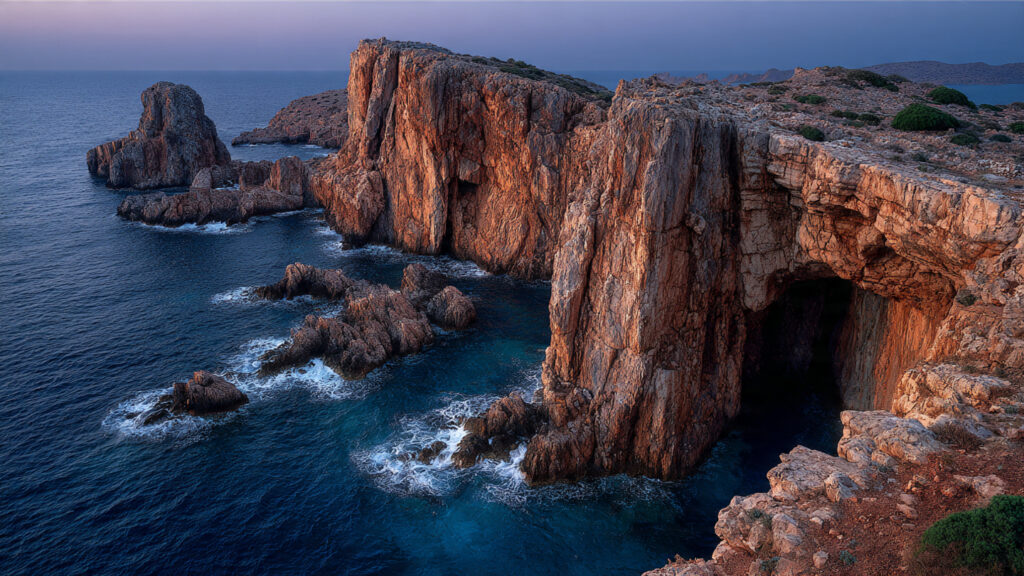
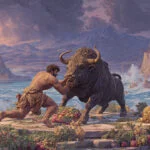
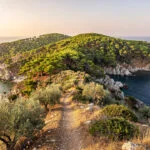
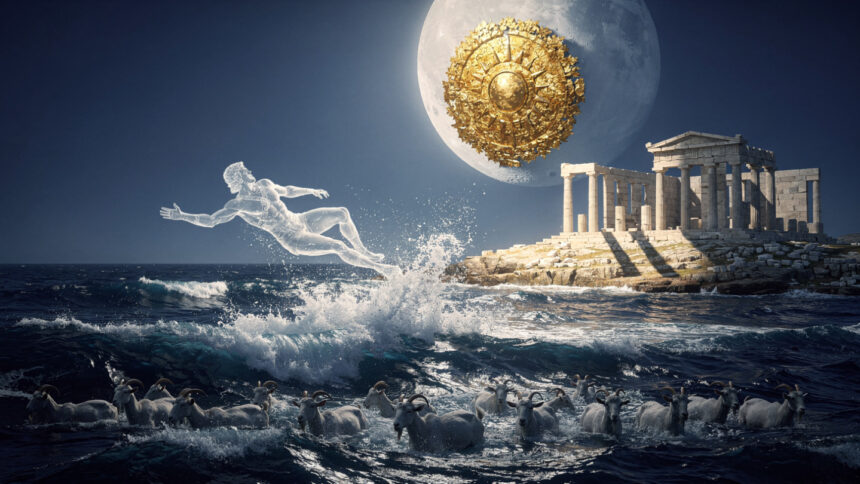
At the southern tip of the Peloponnese, the geography turns harsh and unforgiving. This is Cape Tainaron. The landscape is jagged marble and low, resilient scrub, and the ruined temple of Poseidon stands near the entrance to a sea cave the ancient world identified as a direct portal to the realm of Hades, the site where Heracles was said to have dragged Cerberus into the light. The sea here runs deep, and the currents are unpredictable.
The cave at Tainaron is a genuine geological fracture extending into the limestone of the Mani. At sunset its entrance becomes a black void, and the water at its mouth produces a rhythmic, percussive sound against the stone that the ancient world read as the earth’s own breathing. Ancient maritime communities used the site as a place of asylum, a protection extended even to slaves, but the protection was tied specifically to daylight. Once darkness arrived, the site was understood to belong to the chthonic powers rather than to any human claim on it. The limestone of the Mani is prone to sinkholes and caverns, and the ancient Greek observer did not read these as accidents of erosion. They were treated as genuine openings in the world’s crust, and at night, without visual cues for safe navigation, the cave becomes exactly the trap that reputation always suggested it was.
Panic of the Corycian Heights
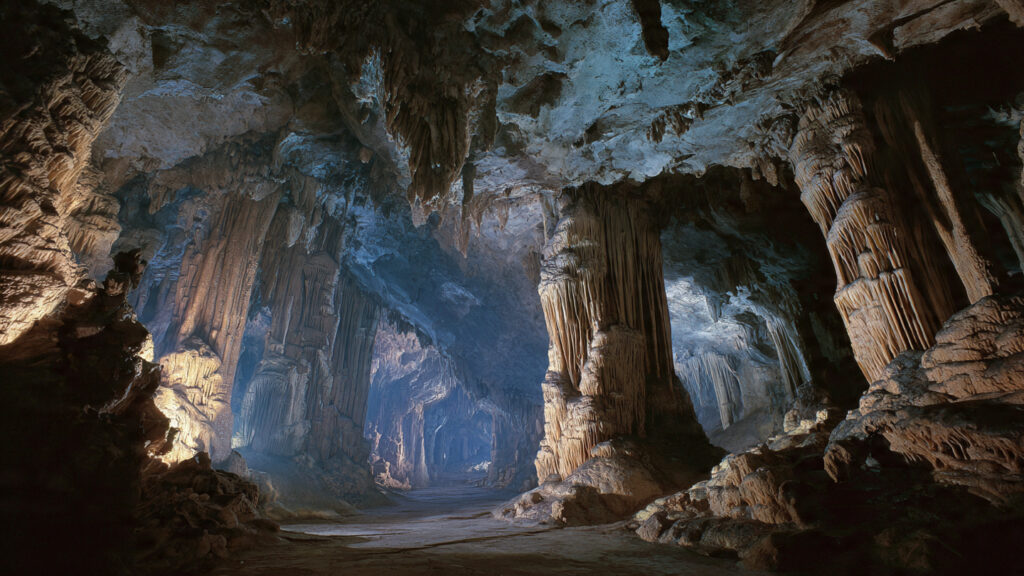
High on the slopes of Mount Parnassus, the Corycian Cave sits at an elevation of 1,360 meters, dedicated to Pan and the Nymphs. Pan governed the wilderness and the sudden terror the mountain could produce without warning. The cave itself is massive, ninety meters long and forty meters wide, its interior filled with stalactite and stalagmite formations that take on the shape of standing figures in dim light. At night, air currents moving through the stone produce low-frequency sounds capable of triggering genuine anxiety in the human nervous system, a physiological response that gave the Greek language the word panic in the first place. After sunset, the cave was left to whatever it belonged to. People retreated to Delphi or the lower villages, and the mountain reverted to Pan’s own domain until morning.
The Vertical Authority of Olympus

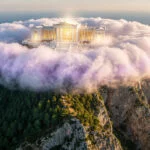
Mount Olympus is the highest point in the Greek world, rising to 2,917 meters, its upper peaks grey limestone frequently lost to cloud. To the ancient Greeks this was the home of the Olympian gods, a site of vertical authority the ordinary human world did not challenge. The boundary of human reach effectively ended at the lower slopes, where the shrines to Zeus and the Muses were located. Night on Olympus is absolute: the absence of light pollution reveals a density of stars invisible from the valleys below, and the environment becomes genuinely dangerous for anyone caught unprepared on its upper reaches. The Greeks did not attempt the summit. They understood it as a violation of the Sacred Geography to attempt it, a place where the ordinary rules of the mortal world simply ceased to apply, and darkness only reinforced that isolation.
The Artificial Night of Eleusis
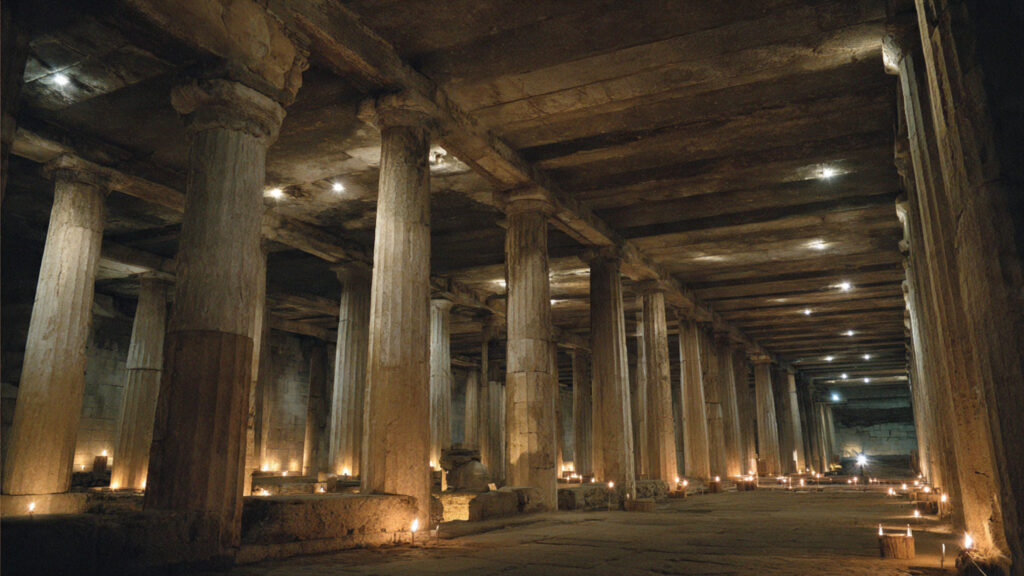
The sanctuary of Eleusis held the most famous secret rites of antiquity. The Eleusinian Mysteries centered on the myth of Demeter and her daughter Persephone, and its rituals turned on the cycle of life, death, and rebirth those two goddesses embodied. The Telesterion, the hall of initiation, was a large square building designed to hold thousands of people, built without windows and lit only by torchlight: an artificial night constructed on purpose. Candidates for initiation were kept in darkness deliberately, so that the transition from darkness to light, arriving at the rite’s climax, could carry the full theological weight of Persephone’s own return from the underworld. Without the darkness the architecture itself created, the revelation of the sacred objects at the center of the rite would have had none of the force ancient sources consistently describe it as having.
Night as the Boundary Condition

The Greek relationship with the night was never framed as something to be conquered or controlled. It was a boundary condition that altered the terms of human presence in a given place. Daylight revealed a landscape’s surface. Night revealed, or was understood to reveal, whatever lay beneath it. Heraclitus wrote of a hidden order moving beneath ordinary appearances, and the sanctuaries that restricted access after sunset were the places where that hidden order was felt most directly. To cross their thresholds after dark was to enter a zone where the ordinary rules of daytime perception no longer straightforwardly applied. The Hecate Threshold article in this collection develops the same liminal logic through the goddess who governed exactly this kind of boundary space.
The temenos marked the separation between the sacred and the profane in spatial terms, but the operative boundary at many of these sites was temporal rather than physical. Sanctuary regulations preserved the character of a site by limiting human activity during the hours the site itself was understood to belong to something else.
To visit these sites today is to walk into a landscape whose ancient regulations still shape how the place feels after dark, whatever the exact original function of any given ruin turns out to have been. The stone still holds the day’s heat after sunset. The silence that follows sundown is still real. The sacred geography these sites were built into assumed, at minimum, a working understanding of how darkness changes a place, and that understanding is still legible in the walls.
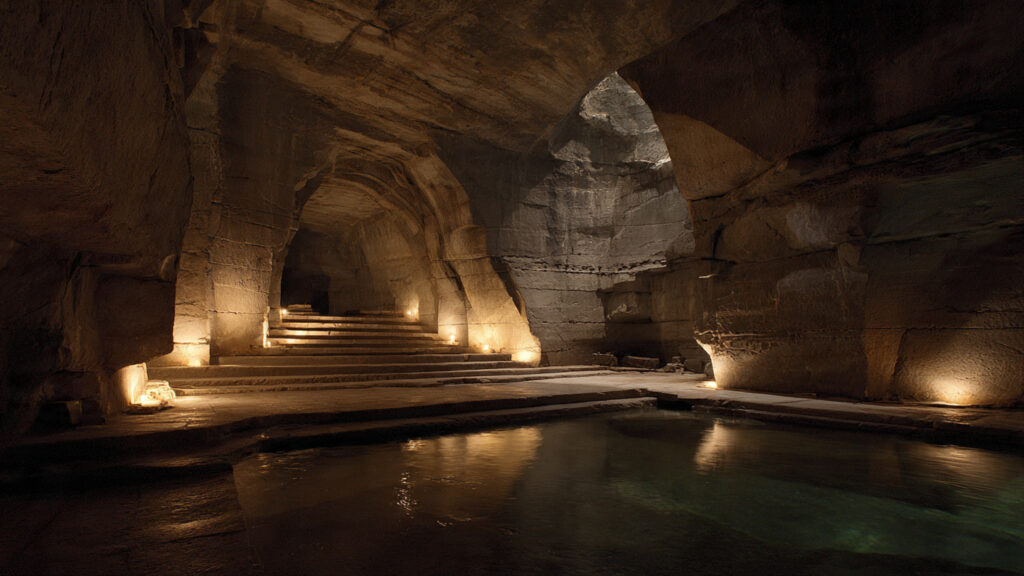
The practical rule the ancient sites still suggest is a simple one: use daylight for movement through these landscapes, and treat their closure after dark as a boundary worth respecting rather than a photo opportunity worth pushing past. The caves, the mountain slopes, and the river mouths were built into a system that assumed the night belonged to something other than the daytime visitor, and nothing about the archaeology has changed that basic fact, whichever specific theological reading of any single site eventually wins the argument.
At Olympus Estate, Cultural Chronicles traces the practices and institutions that defined Greek civilization from the inside. The ancient Greeks classified ritual space into Ouranic space for the celestial deities and Chthonic space for the powers of the earth and the dead, and these classifications dictated the timing of access as much as the geography. The site identified since 1958 as the Necromanteion of Acheron remains genuinely contested among archaeologists, some reading it as an oracle of the dead, others as a fortified Hellenistic farmstead, but its thick walls and dark corridors were built for some deliberate purpose. The Corycian Cave on Parnassus was left to Pan after sunset: low-frequency air currents moving through the stone triggered the physiological response that gave the Greek language the word panic. Cape Tainaron at the southern tip of the Peloponnese was the sea cave identified as a direct portal to Hades, the site where Heracles was said to have dragged Cerberus into the light. The Telesterion at Eleusis had no windows at all. Night was the essential medium of the rite, and without the darkness the revelation of the sacred objects would have carried none of its force.