
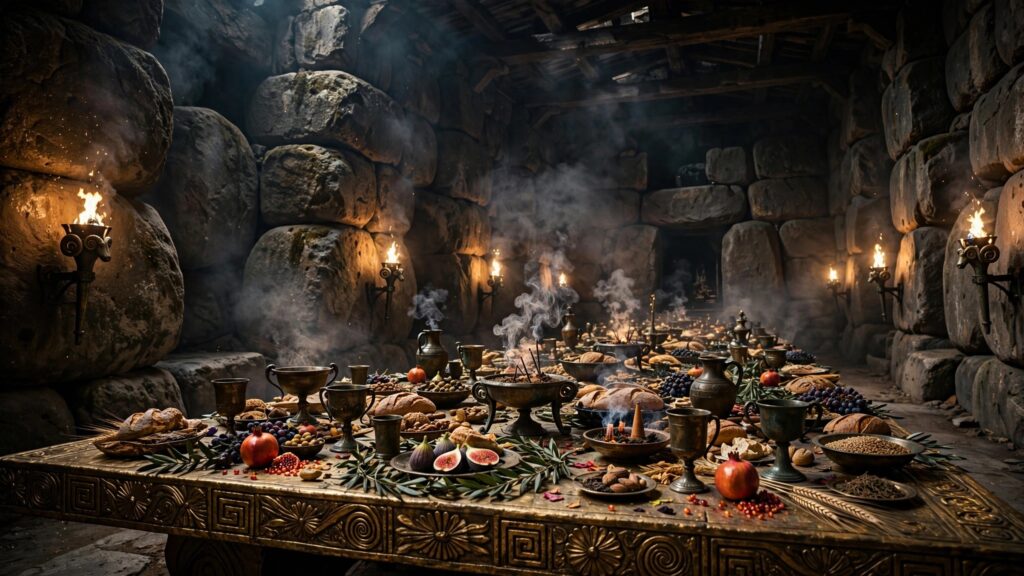
The peninsula is named for a man whose flesh Tantalus served to the gods.
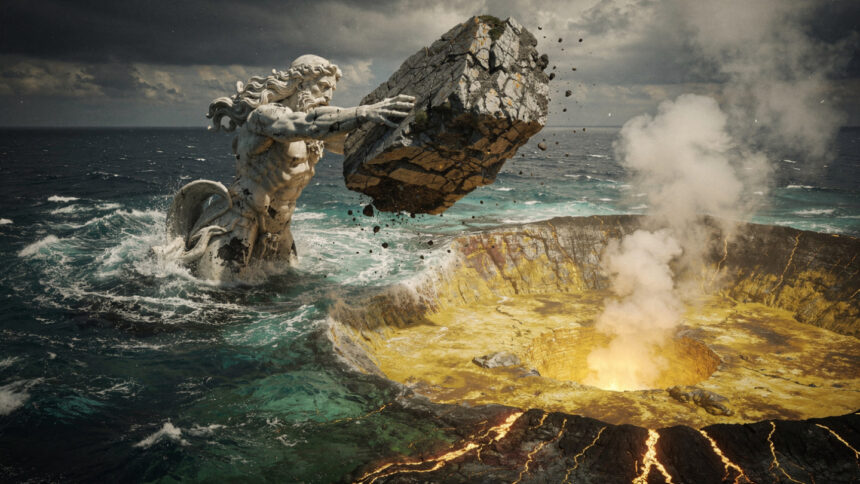
Pelops, son of Tantalus, king of Sipylus, was killed by his own father and offered as a meal to the Olympian gods at a banquet that Tantalus hosted in his honor, either to test whether the gods were truly omniscient or from the specific madness of a man who had been given too much divine favor and could not find a worthy use for it. The gods recognized what was in front of them and refused to eat, with the exception of Demeter, still grief-struck from Persephone’s abduction, who consumed a piece of Pelops’s shoulder before understanding what it was. The gods restored Pelops to life, replacing the eaten shoulder with one of gleaming ivory. Poseidon, who loved him, brought him to Olympus. Eventually Pelops returned to the mortal world, married Hippodamia by winning a chariot race in which his rivals customarily died, and unified the great landmass that juts into the Mediterranean south of Corinth.
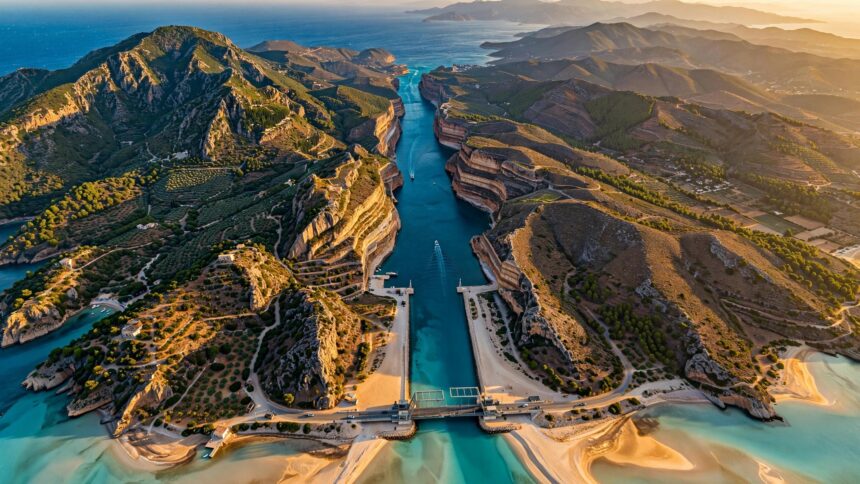
The Greeks named that landmass for him: Peloponnisos, the island of Pelops. It is not an island. It is attached to the mainland at the Isthmus of Corinth, narrowly enough that the ancients twice attempted a canal and the modern Greeks eventually built one in the 1890s. But it was understood as an island in spirit and in mythological geography, Pelops’s inheritance, the land shaped by the family history that the curse on his descendants would eventually produce: the House of Atreus, Agamemnon and Clytemnestra and Orestes, the Trojan War, the entire mythological architecture of the Greek world’s ur-narrative.
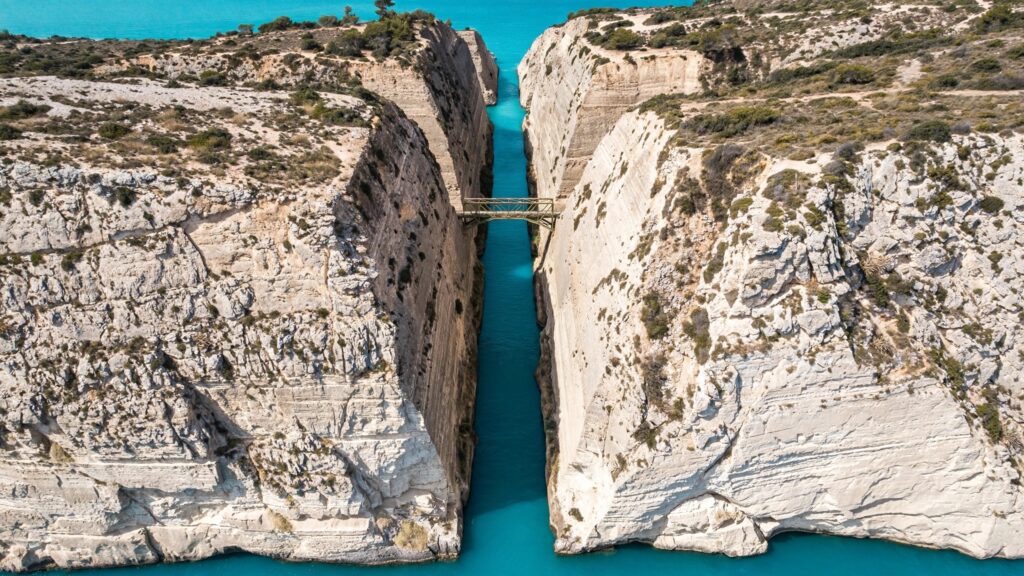
The Peloponnese is where most of that happened, and where most of its physical evidence remains.
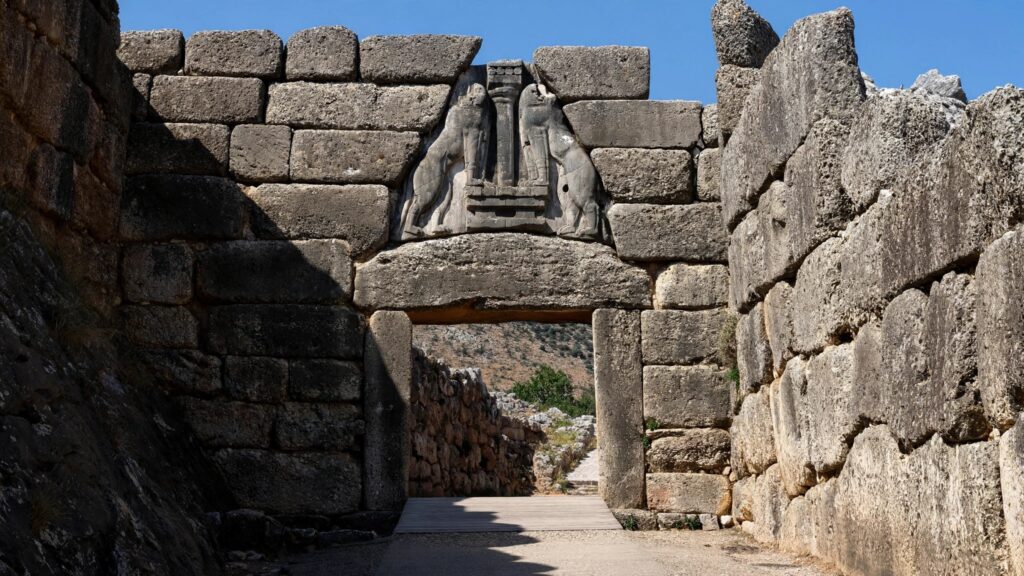
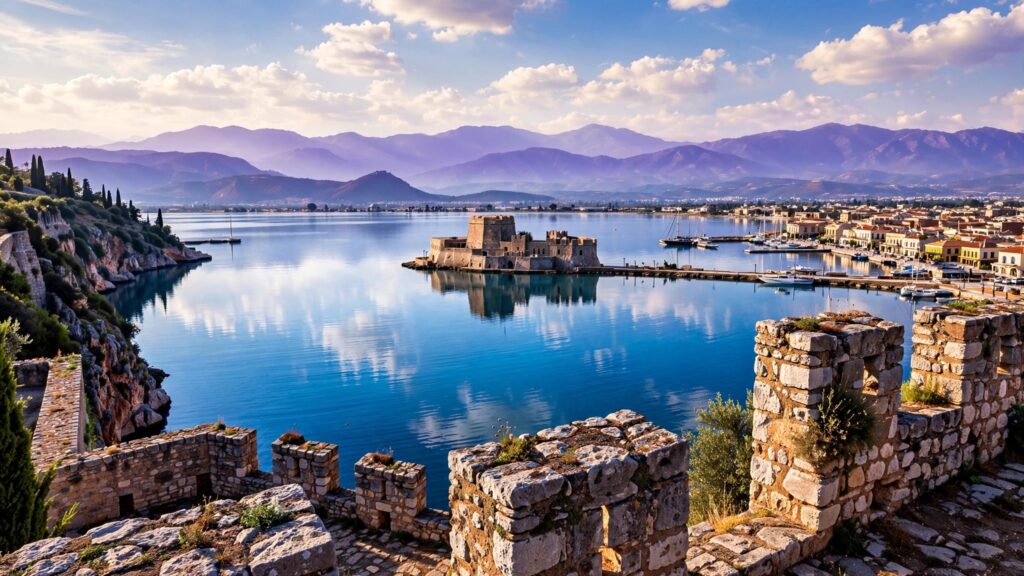
Within this single peninsula, within a drive of four or five hours from one end to the other, you can walk the Lion Gate at Mycenae, the oldest surviving monumental sculpture in Europe. You can stand in the theatre at Epidaurus, whose acoustics remain the subject of genuine scientific study more than two thousand years after it was built. You can visit the sanctuary at Olympia where the Olympic Games were held every four years for more than a thousand years. You can climb to Mystras, the Byzantine ghost city whose frescoes are among the finest surviving examples of late Byzantine painting. You can cross the causeway to Monemvasia, the medieval rock-city that the Venetians called the Gibraltar of the East and that the Ottomans could not take for twenty years. And you can stand in Nafplio, the first capital of the modern Greek state, and look across the harbor to the Bourtzi fortress in the water and understand, in a single view, that this peninsula has been fortifying itself against something for five thousand years and has not quite finished.
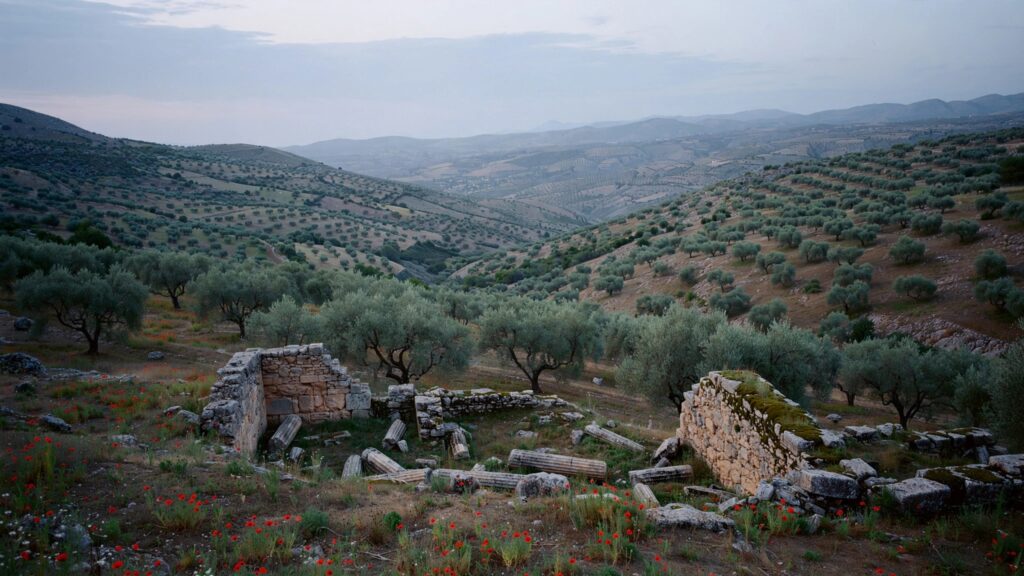
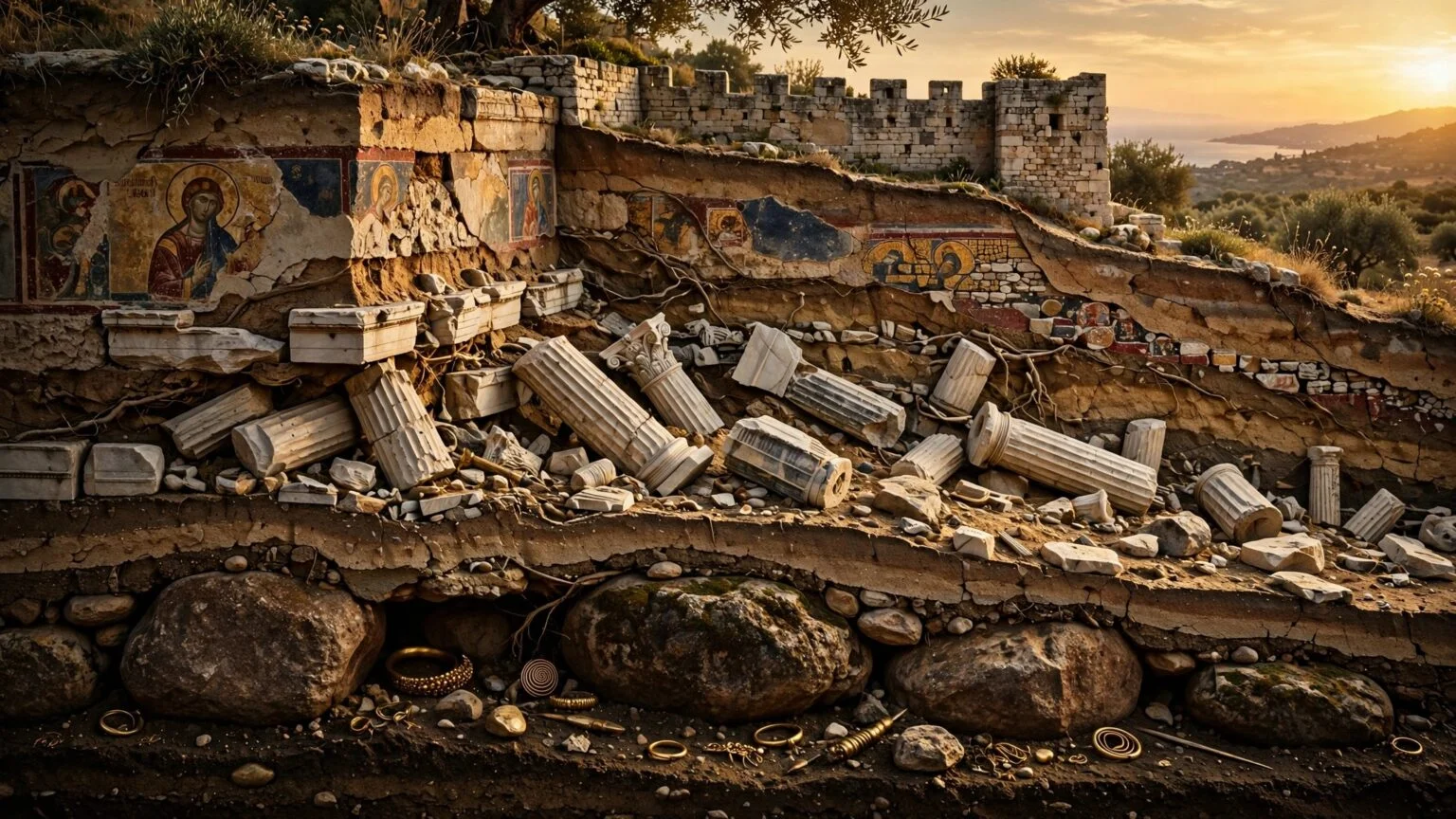
This is the Peloponnese: not a region with historical interest but a landscape that is, layer by layer, the entire history of the Greek world in compressed, walkable, stubbornly physical form.
The Argolid | Where the Bronze Age Still Stands
Begin in the northeast, in the Argolid, the triangular coastal region whose rich agricultural plain supported three of the greatest Mycenaean citadels in the Bronze Age world.
Mycenae is covered at length in a dedicated article on this site, and the detail of the Lion Gate, the Grave Circle, the Treasury of Atreus, and the full archaeological and mythological depth of the site deserves the treatment that article gives it. What is worth adding in the context of a Peloponnese master article is the relationship between Mycenae and what surrounds it: the citadel on its hill commands the entire Argive plain in a way that makes its strategic choice immediately comprehensible to any visitor who stands on the Lion Gate terrace and looks outward. The plain below produced the agricultural surplus that fed the palace. The roads converging from every direction in the valley below explained why this specific hill was chosen for the citadel rather than any other elevation in the vicinity. Mycenae was not simply a powerful city. It was the correct place for a powerful city, and the Bronze Age rulers who built it there chose well enough that the site remained meaningful for three thousand years after the palace collapsed.
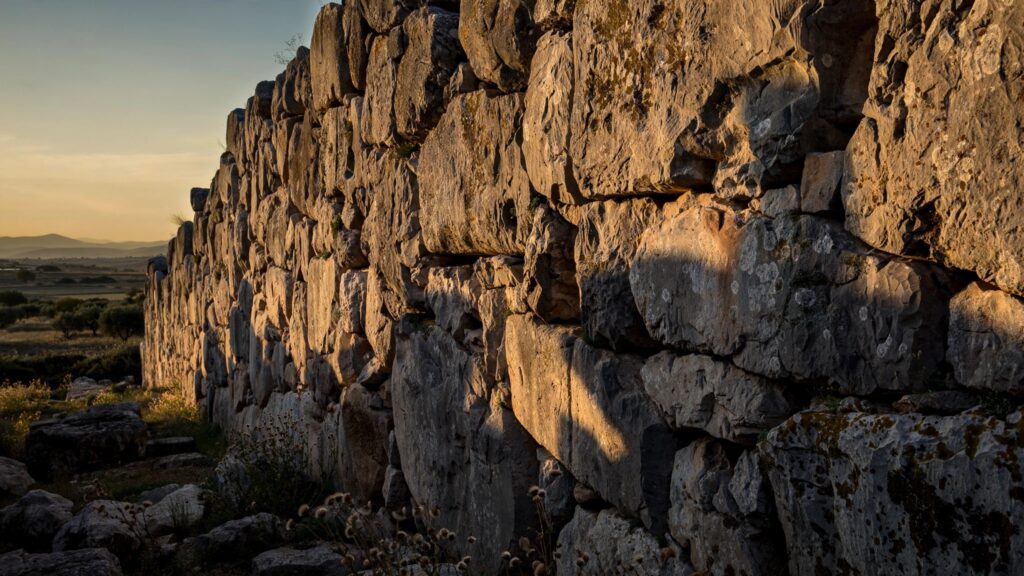
Tiryns, fifteen kilometers to the southeast near the coast at Nafplio, deserves considerably more attention than the tourist infrastructure typically allocates to it. The site receives a fraction of Mycenae’s visitors and carries, in its preserved cyclopean walls, something that Mycenae’s more famous ruins do not quite offer: the direct physical experience of standing beside Bronze Age masonry so massive that the classical Greeks who saw it genuinely believed it had been built by the Cyclopes, the one-eyed giants whose supernatural strength alone could have moved stones of this scale.
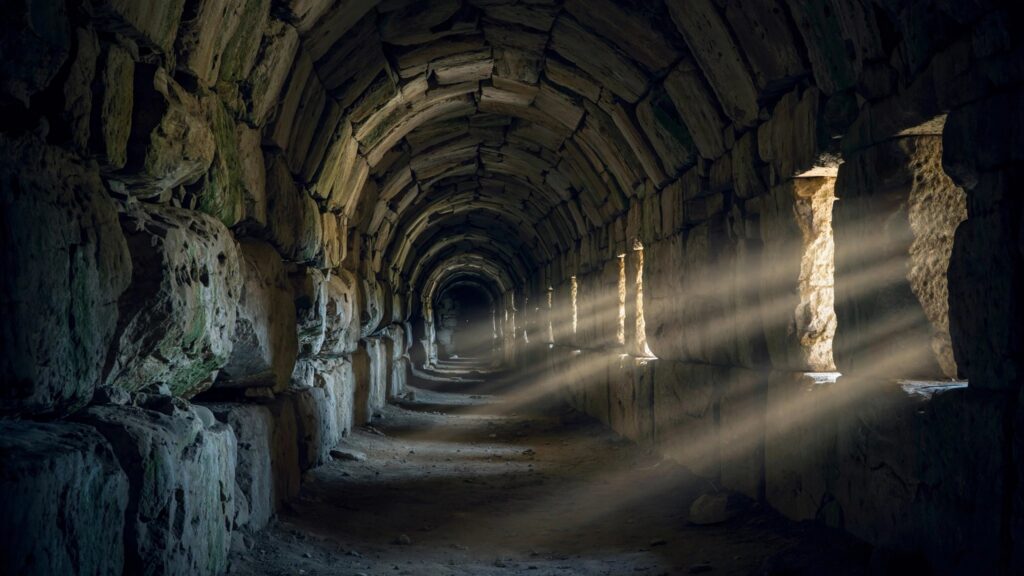
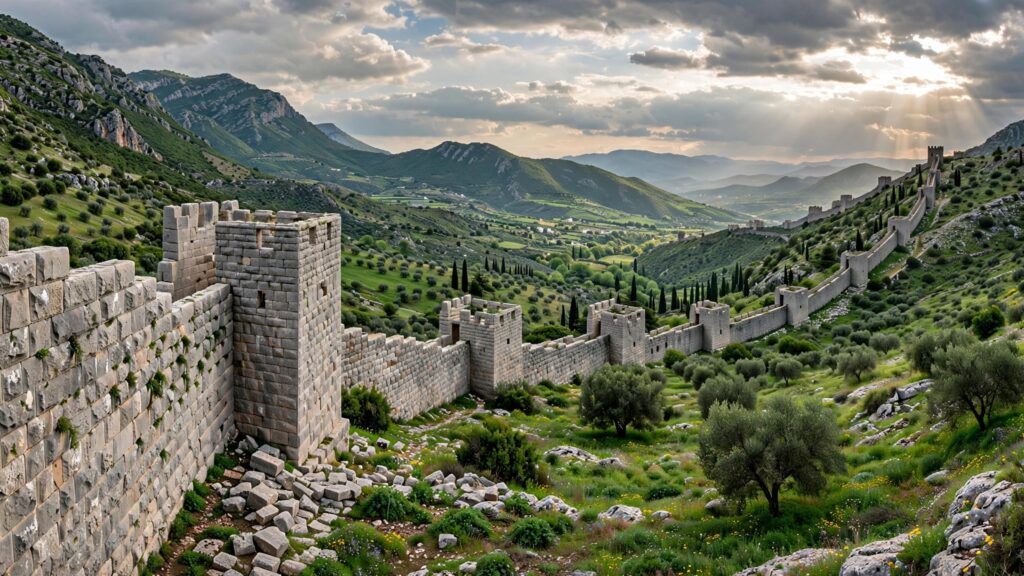
The walls of Tiryns at their most impressive reach seven and a half meters in thickness and are built from blocks of limestone so large that their weight per stone reaches thirty tonnes in some cases. They were constructed without mortar, their stability achieved through the precise fitting of irregular shapes into interlocking courses that have held their position for over three thousand years without mechanical assistance. Inside these walls, the covered galleries cut through the wall’s own thickness, corbelled passageways that create some of the first surviving examples of vaulted interior space in European architecture, were used for storage and possibly for defensive purposes, their stone ceilings stepping inward course by course in the same building logic as the Treasury of Atreus at Mycenae.
The experience of walking through these corbelled galleries in the afternoon, when the light comes in at a low angle through the narrow openings and the temperature drops several degrees inside the thick stone, is one of the closest available physical encounters with the interior conditions of a Bronze Age palatial structure anywhere in Greece.
Tiryns was first excavated by Heinrich Schliemann in 1884 and was recognized as a UNESCO World Heritage Site in 1999, its excellent state of preservation making it one of the finest surviving examples of Mycenaean palatial architecture and fortification anywhere in Greece. It is also, in the mythological tradition, deeply woven into the Heracles story, though not, as popular retellings sometimes claim, as his birthplace: the standard tradition, going back to Homer’s own account in the Iliad, places Heracles’s birth at Thebes, where his mother Alcmene and stepfather Amphitryon had fled after Amphitryon accidentally killed her father. Tiryns’s connection runs through Amphitryon’s own bloodline instead, since his father Alcaeus had ruled the city, and, more consequentially for the myth, through Eurystheus, the cousin whose Hera-engineered birth just hours before Heracles’s own cost Heracles the throne Zeus had intended for him and who ruled from Tiryns and Mycenae when he set the Twelve Labors in motion. The cyclopean masonry that surrounds the visitor at Tiryns is, in the mythological imagination, the seat of the very rival whose command sent Heracles out into the world to clear it of monsters.
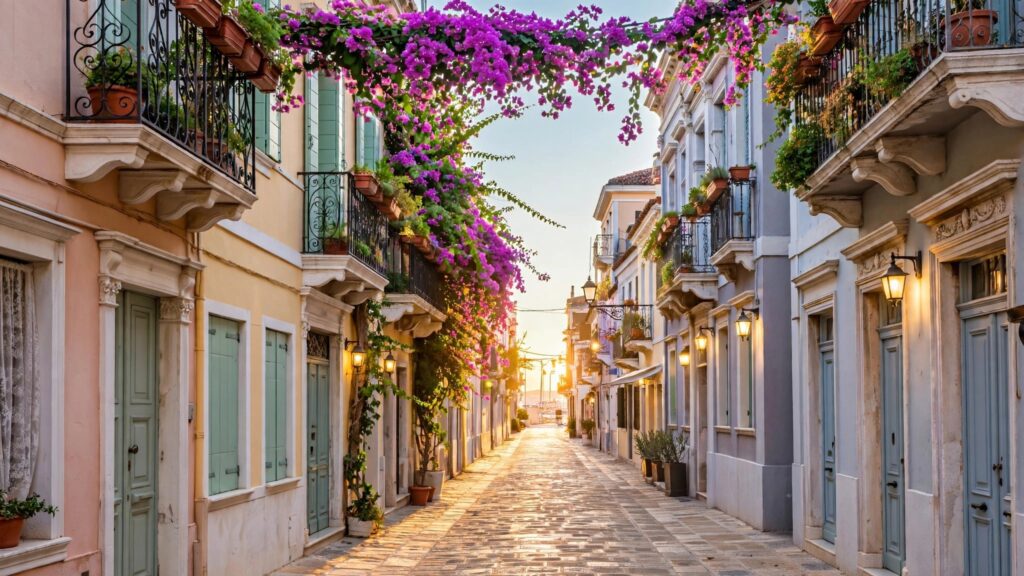
Nafplio, on the coast eight kilometers from Tiryns, is both the practical base for Argolid exploration and a significant destination in its own right. The first capital of the modern Greek state, it holds in its compact old town the full physical record of every power that has governed this part of the Peloponnese since the medieval period: There are the Venetian mansions that line Syntagma Square, whose neoclassical and baroque facades are among the finest concentrations of Venetian domestic architecture in mainland Greece.
There is the Palamidi fortress above the town, built by the Venetians between 1711 and 1714 on a cliff that rises almost two hundred meters directly from the sea, whose famous staircase, most often counted at 999 steps though the actual figure is disputed depending on which route up is used, connects the harbor to a fortification of extraordinary scale and ambition. And there is the Bourtzi, the small castle on an islet in the harbor that the Venetians built and that subsequent administrations maintained as a maritime fortress and eventually as a hotel, its position on the water making it simultaneously the harbor’s most photogenic feature and its most legible strategic statement.
Ioannis Kapodistrias, the first president of independent Greece, was assassinated in Nafplio in 1831. The church of Agios Spyridon on Staikopoulou Street still has the bullet holes from the assassination in its wall, marked but not repaired, the physical evidence of the political violence that punctuated the new state’s founding preserved in the stone of the church that witnessed it.
Epidaurus | The Theatre That Still Works
Forty-five kilometers east of Nafplio through pine forest, in a valley whose landscape the ancient sources consistently described as exceptionally beautiful, the sanctuary of Asklepios at Epidaurus was the most celebrated healing center in the ancient world, among the earliest organized medical institutions anywhere in it.
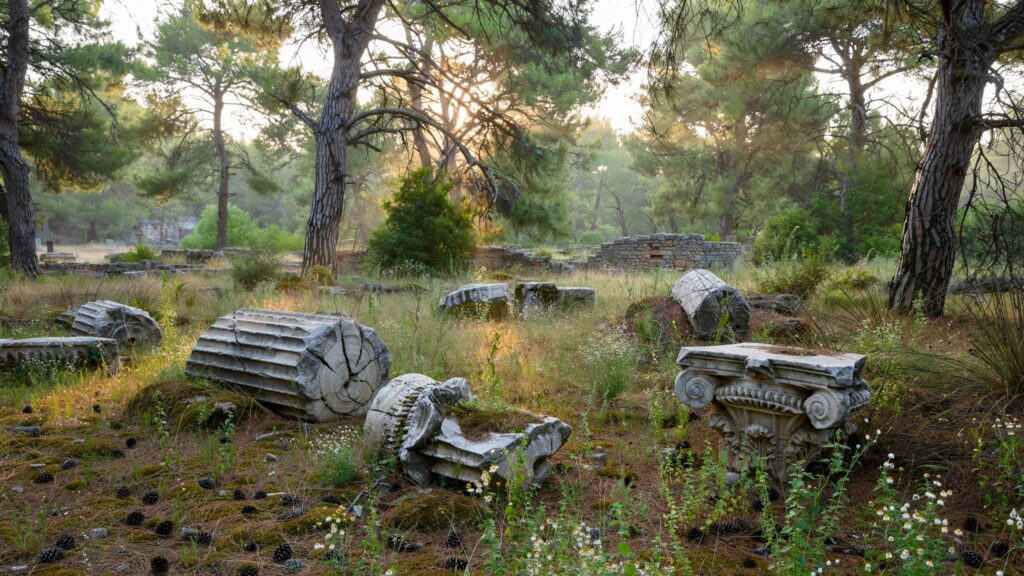
The abaton, the long stoa where patients slept in the hope of receiving a healing dream from the god, the tholos whose circular plan and elaborate underground chambers still puzzle archaeologists, the baths and the guest houses and the administrative buildings of what was, by the Roman period, a spa resort of international reputation: all of these are present on the site and together constitute an archaeological complex of genuine complexity and interest.
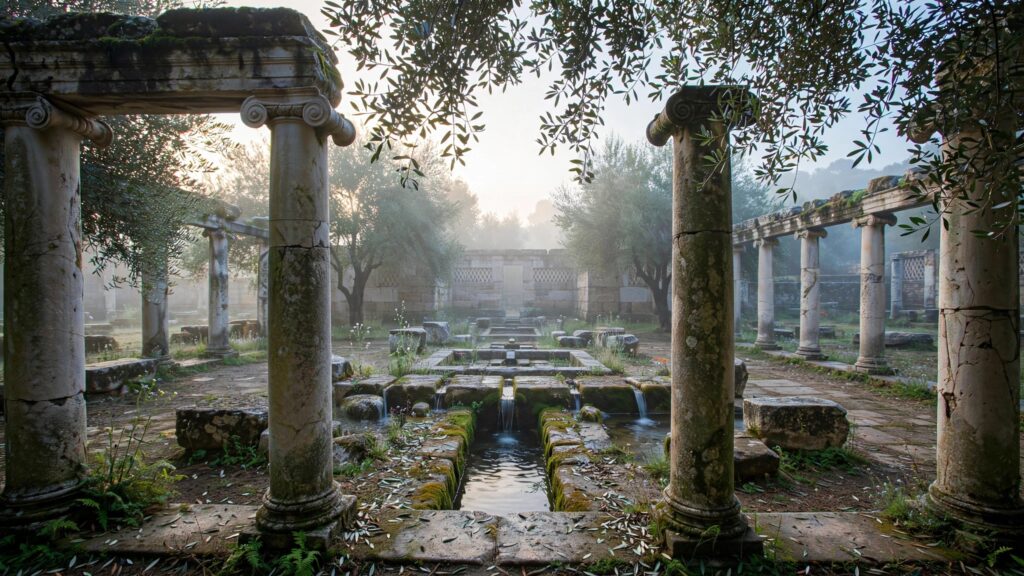
But the theatre is the reason almost everyone comes, and the theatre deserves its reputation more fully than most celebrated ancient sites justify their reputations.
Built in the fourth century BCE, it continues to host performances today as one of the principal venues of the annual Athens Epidaurus Festival, the ancient structure still doing the job it was built for after twenty-four centuries. Its seating capacity reached approximately fourteen thousand in its final form, its cavea carved into the natural slope of the hill and expanded upward in two phases, the lower thirty-four rows attributed to the fourth-century BCE architect Polykleitos the Younger and the upper twenty-one rows added in the Hellenistic period. The orchestra, the circular performance area at the base of the cavea, is complete and level, and standing at its center and speaking in a normal voice while companions spread across the upper rows confirm they can hear every syllable is one of those rare encounters between a physical phenomenon and its explanation that produces genuine surprise rather than simply confirming what you expected.
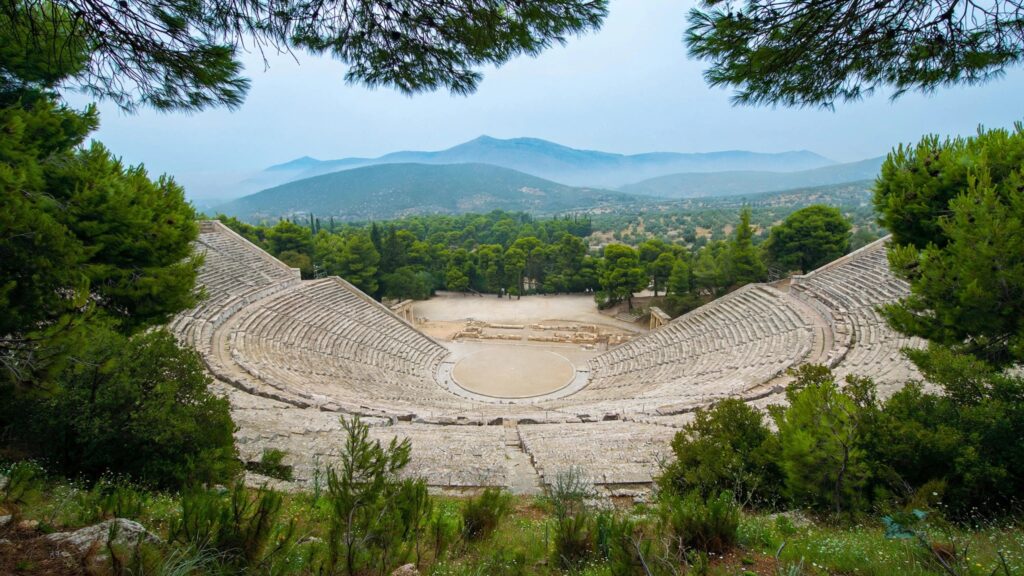
The acoustic effect has been the subject of sustained scientific investigation since the 1990s. The current best explanation attributes it to the geometry of the cavea, whose curvature and angle relative to the orchestra reflect and channel sound upward through the seating in a way that concentrates it rather than allowing it to dissipate, combined with the low-frequency noise filtering effect of the limestone seating itself, which absorbs bass frequencies that would otherwise create the ambient rumble that open-air theatres in less carefully designed spaces suffer from. The limestone does the work that modern sound engineering attempts to replicate with considerably more complexity and considerably less success.
The summer festival that uses the theatre from June through August stages ancient drama in the original space, and the experience of attending a performance of a Sophocles or Euripides tragedy in the theatre for which it was originally written, with the pine forest of the valley beyond the stage and the acoustics working as their builder intended, is one of the most direct available encounters with ancient Greek theatrical performance anywhere in the world.
Sparta | What Archaeology Found When It Looked
Sparta is the Peloponnese site that most consistently disappoints visitors who arrive expecting ruins proportionate to the city’s reputation in the literary sources, and the disappointment is itself historically significant rather than simply a function of inadequate preservation.
The Spartans did not build monumental architecture because monumental architecture was, in their civic value system, a form of weakness: the declaration that your city required defensive walls and impressive buildings rather than the courage of its citizens. Thucydides said this directly, noting that if Sparta were to be destroyed and only its temples and building foundations remained, future generations would find it difficult to believe it had been as powerful as it was, because nothing about the visible remains suggested great power. He contrasted this explicitly with Athens, where the visible monuments far exceeded the city’s actual power.
What this means for the visitor is that the ancient Sparta archaeological site, on the outskirts of the modern city of the same name, preserves a sanctuary of Artemis Orthia, where the ritual flogging of Spartan boys took place as a test of endurance, and a theatre of the Roman period whose cavea was built partly from earlier architectural material, and the general outlines of a civic center, but nothing that the uninstructed eye would immediately recognize as the capital of the most feared military power in the classical Greek world.
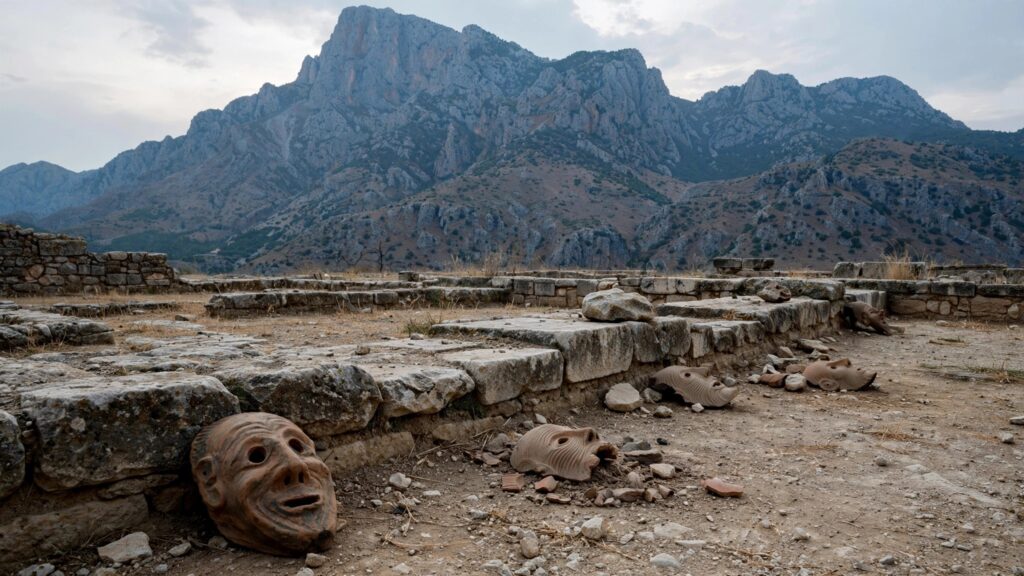
The museum compensates, partially: the collection of votive offerings from the sanctuary of Artemis Orthia, lead figurines and ivory carvings and terracotta masks, gives the visitor a genuine sense of the material culture of the city rather than simply its absence of surviving monuments. And the Byzantine city of Mystras on the mountain ridge above Sparta, seven kilometers to the west, provides what the ancient city cannot: the visual and architectural drama that the Spartan tradition deliberately declined to build.
Mystras, the hilltop city that the Franks founded in the thirteenth century and that the Byzantine Despotate of the Morea developed into one of the last great centers of Byzantine intellectual and artistic culture in the fourteenth and fifteenth centuries, is the Peloponnese site whose frescoes and palace architecture most completely preserve the Byzantine visual tradition that the fall of Constantinople in 1453 interrupted. The painters who worked at Mystras in the late Byzantine period produced work of a quality that art historians connect directly to the tradition of Byzantine painting that would eventually influence the early Italian Renaissance, and the churches of the Pantanassa and the Peribleptos and the Metropolis contain fresco cycles of extraordinary sophistication and preservation, their colors still vivid despite centuries of gradual abandonment after the Ottoman conquest of 1460.
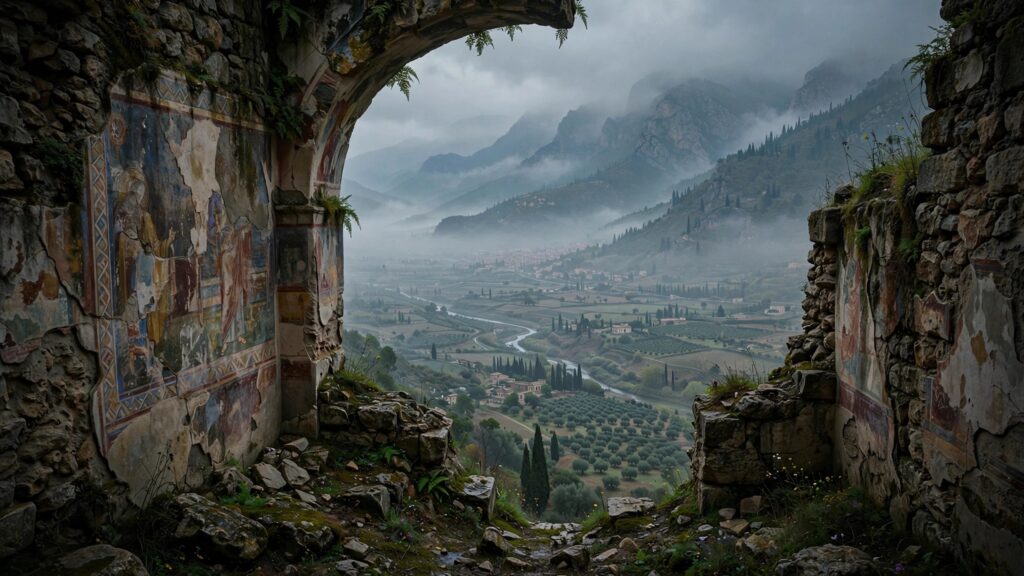
The palace of the Despots at the summit of Mystras’s hill, ruined but legible in its ambitious architectural program, was the seat of the court where the philosopher Gemistos Plethon, whose restoration of Platonic philosophy in the late Byzantine period influenced the Florentine Academy of Lorenzo de’ Medici and through it the European Renaissance, taught in the final decades before the Ottoman conquest.
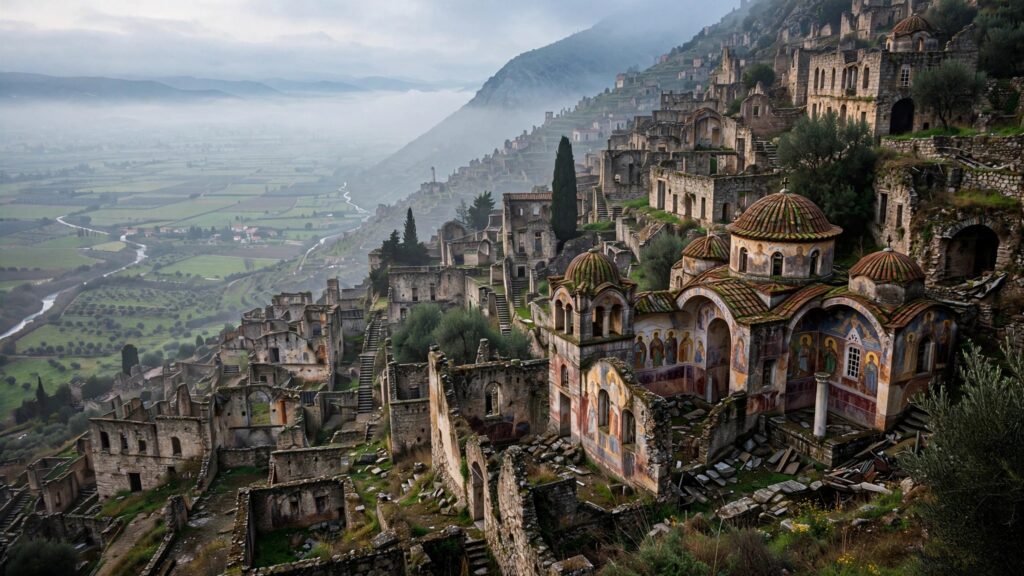
Mystras is where Byzantine civilization made its last great intellectual stand, and the quality of what it produced there in the fourteenth and fifteenth centuries has never been adequately acknowledged outside the specialist scholarship of Byzantine studies.
Olympia | The Sanctuary That Stopped Wars
Olympia sits in the fertile valley between the Alpheios and Kladeos rivers, an area inhabited since the late Stone Age. By the tenth century BCE it had become a sanctuary for the worship of Zeus, and in 776 BCE the Olympic Games were first staged there. They were held every four years until the fourth century CE, marking Olympia as a major religious and athletic center for over a thousand years.
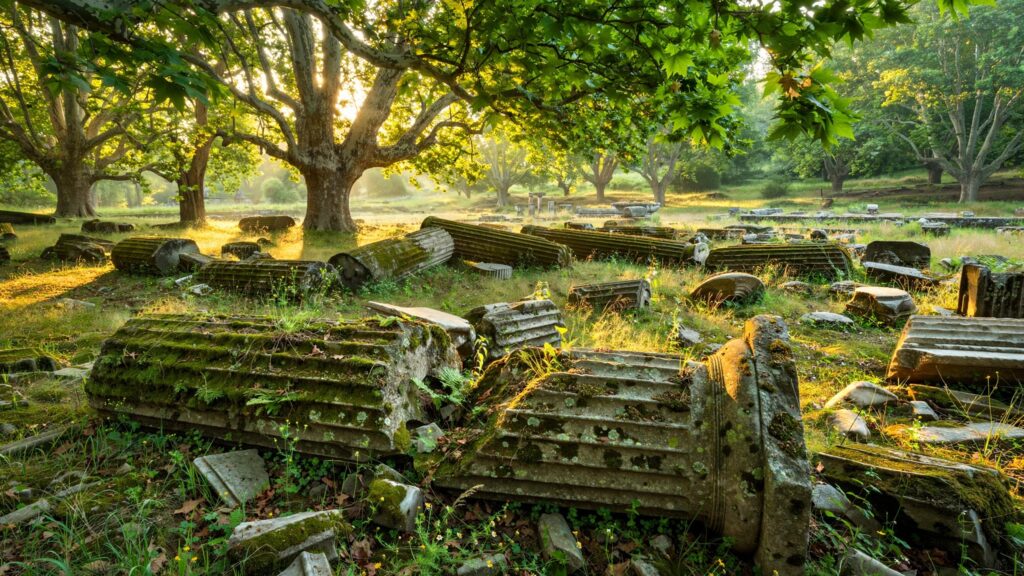
The physical site at Olympia is unusual among major ancient Greek sanctuaries in the density and variety of its surviving structures: There is the Temple of Zeus, whose massive Doric columns are now lying on the ground where an earthquake toppled them in late antiquity, and which once housed the chryselephantine statue of Zeus by Pheidias, examined in full elsewhere on this site and consistently described by ancient testimony as one of the most overwhelming single objects in the ancient world. There is the Temple of Hera beside it, the older of the two, where the Olympic flame is still lit each quadrennial before its relay to the host city. There is the Philippeion, the circular monument that Alexander the Great completed to honor his father Philip II, the Palaistra and the Gymnasion where athletes trained, and the stadium whose stone starting blocks are still in situ. And there is the workshop of Pheidias, identified by archaeologists partly through the discovery of clay moulds for the gold and ivory work of the Zeus statue and partly through a cup found on the site inscribed with the words “I belong to Pheidias.”
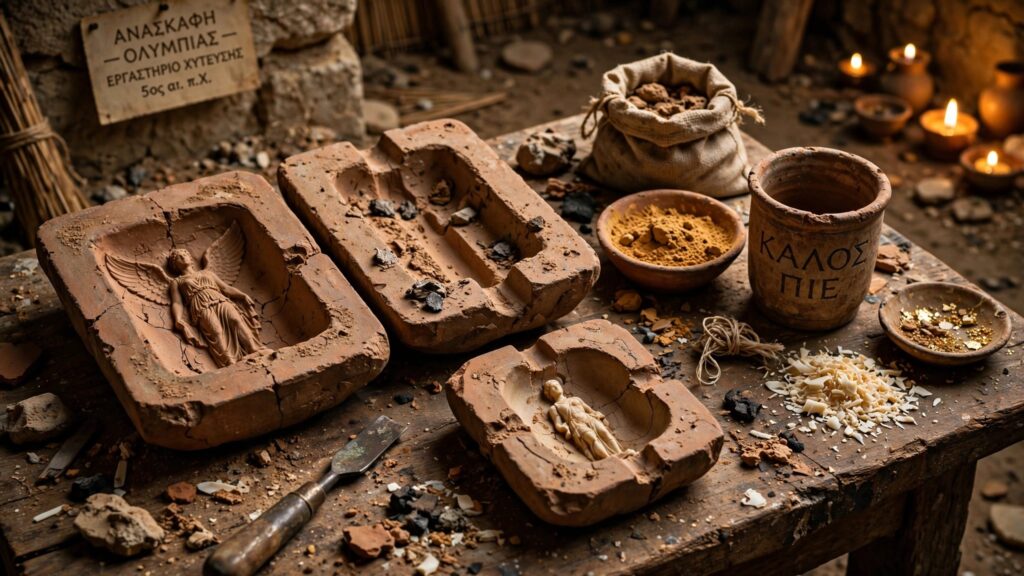
The cup is in the Olympia museum. The moulds are in the Olympia museum. The workshop whose floor plan the museum covers with a protective roof is the actual building where the most celebrated work of art in the ancient world was assembled, on this specific site, by a specific craftsman whose drinking cup survives two and a half thousand years after his death in the soil of the floor where he worked.
This is what the Peloponnese does repeatedly and without apparent effort: it offers the visitor an encounter not with the abstraction of ancient civilization but with its physical residue, the actual starting blocks of the actual race, the actual cup of the actual sculptor, the actual walls that stood at the center of the actual myth.
The ekecheiria, the sacred truce that the ancient Olympic Games required, suspended all hostilities between Greek states for the period of the games and the travel time required to reach and return from Olympia. Every four years, across the entire span of the games’ existence from 776 BCE to 393 CE, more than a thousand years, the wars that were constantly being conducted across the Greek world paused for the duration of an athletics festival held in this specific valley. The institutional achievement this represents, the creation and maintenance of a mechanism for pan-Hellenic peace that actually worked, repeatedly, for over a millennium, is perhaps the most underappreciated accomplishment in the entire ancient world.
Monemvasia | The Rock That Refused to Fall
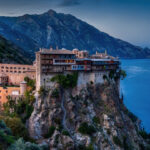
On the southeastern corner of the Peloponnese, a causeway eight hundred meters long connects the mainland to a massive rock that rises two hundred meters directly from the sea, its sheer limestone walls dropping on three sides directly into the water and its single eastern landward face so steep that no approach is possible without the single narrow gate set into the wall at sea level.
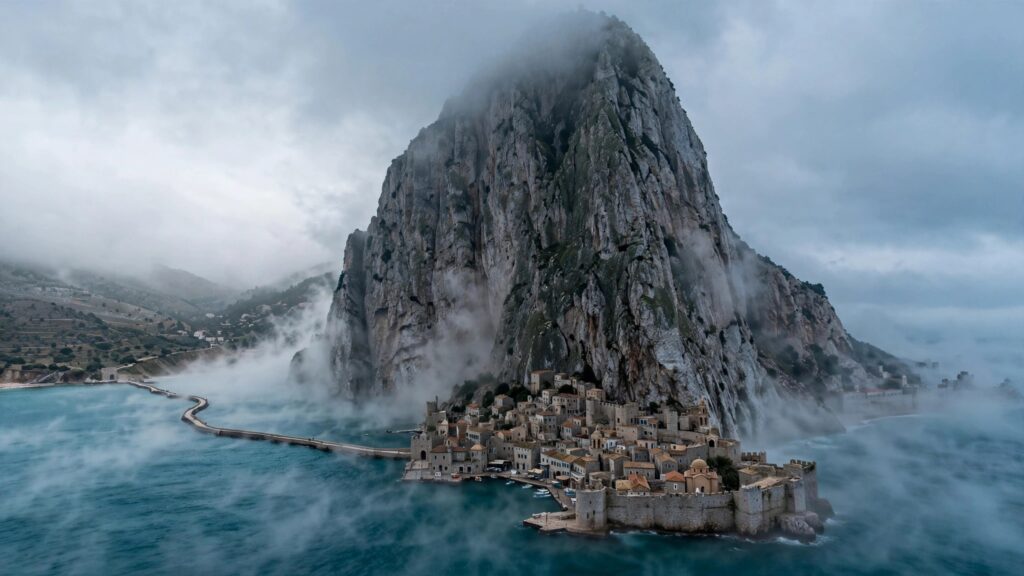
Monemvasia means single entrance, mone embasia, and the name is the site’s entire strategic argument stated in two words: one gate, controlling a rock whose other three sides are the sea, producing a fortification whose natural advantages are so extreme that it required no elaborate military engineering to be effectively impregnable. The Venetians, who called it Malvasia and gave the name to a wine tradition, understood this and held it. The Ottomans, who captured most of the Peloponnese with relative ease, spent twenty years attempting to take Monemvasia in their first siege before finally succeeding through famine rather than assault.
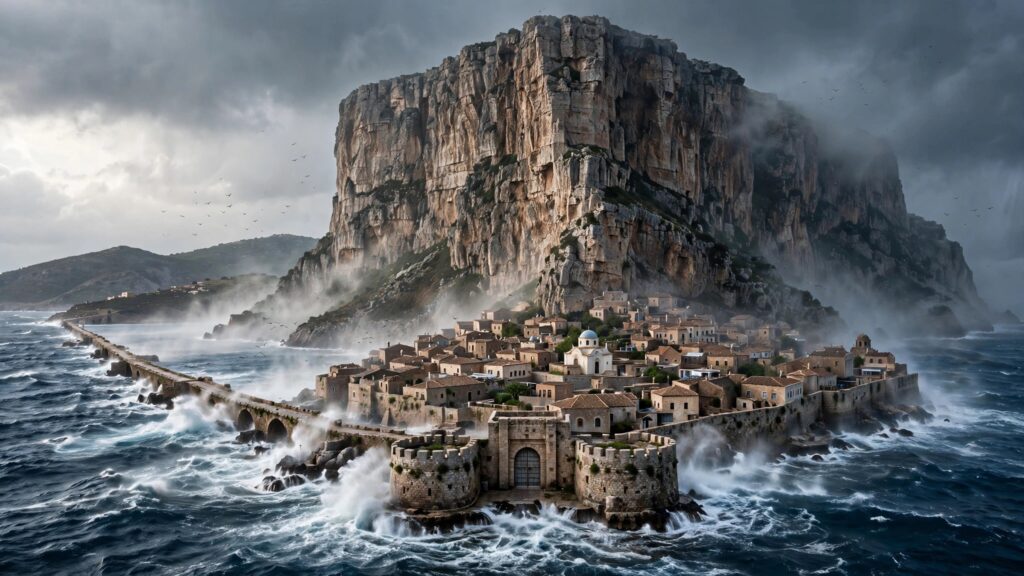
The medieval city inside the rock’s single gate is layered in the same pattern as Nafplio and Mystras: Byzantine foundations beneath Frankish constructions beneath Venetian additions beneath Ottoman modifications, all of them preserved in a state of partial ruin and partial habitation that makes Monemvasia, today, one of the most completely intact medieval urban environments in Greece. Roughly forty permanent residents live within the rock, in houses whose restoration has been conducted with a care for original materials and spatial character that most Greek heritage sites have not matched. The Church of Agia Sophia on the upper rock, a thirteenth-century Byzantine structure whose floor plan echoes that of the Hagia Sophia in Constantinople at drastically reduced scale, sits at the cliff’s edge with an unobstructed view of the open sea three hundred meters below.
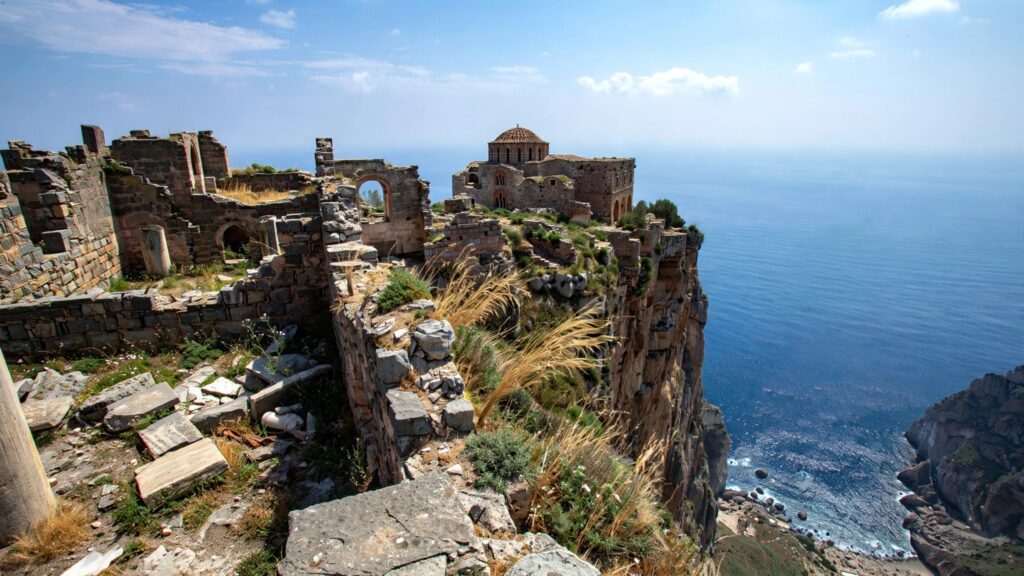
The upper town, largely in ruins but accessible by paths that the original Byzantine street plan has preserved, gives Monemvasia the quality of a ghost city that is simultaneously inhabited and abandoned: people live at the base, the ruins of the larger medieval settlement occupy the upper terraces, and the cliff’s edge is the boundary between both and the sea below.
How to Travel the Peloponnese Properly
The Peloponnese is not a destination that rewards the itinerary built around maximum coverage in minimum time. Its sites are distributed across a peninsula of approximately twenty-two thousand square kilometers, connected by a road network that ranges from excellent national highway between Corinth and Kalamata to narrow mountain roads requiring genuine attention through the Arcadian interior. The distances are deceptive: Monemvasia is three and a half hours from Nafplio, Olympia is two hours from Nafplio, Mystras is two hours from Nafplio. The Argolid sites cluster within forty-five minutes of each other. The logical approach builds the journey around the natural geographic clusters rather than attempting a comprehensive circuit.
The Argolid cluster, based in Nafplio, covers Mycenae, Tiryns, and Epidaurus in two to three days without rushing any of them. Nafplio itself requires at least one evening spent doing nothing more purposeful than walking from the old town to the harbor and eating at one of the restaurants above the water, because Nafplio is one of the most genuinely beautiful small cities in Greece and deserves the time to communicate this rather than being treated simply as a logistics base.
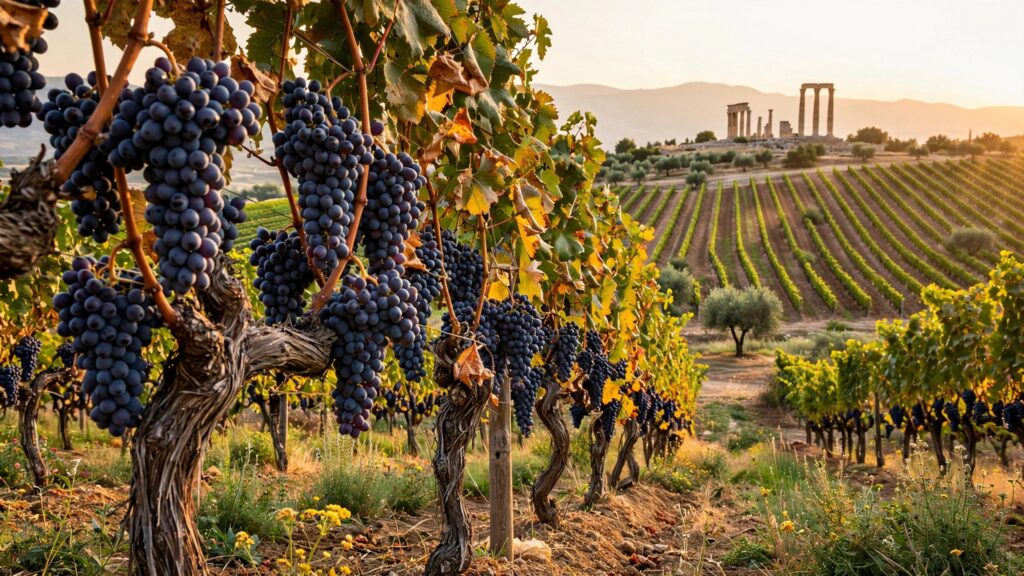
The central Peloponnese, accessed from Nafplio or from a base in Tripoli, covers Ancient Corinth and Acrocorinth to the north, the Nemea sanctuary and its wine region, and Arcadia to the west. Nemea is specifically worth noting in the wine context: the agiorgitiko grape variety that produces the region’s most celebrated red wine is grown on the same hillsides where the mythological Nemean Lion was said to have made the valley uninhabitable before Heracles cleared it, and the Nemea wine trail connects working wineries to the ancient sanctuary in a combination of cultural and agricultural tourism that the region does particularly well.
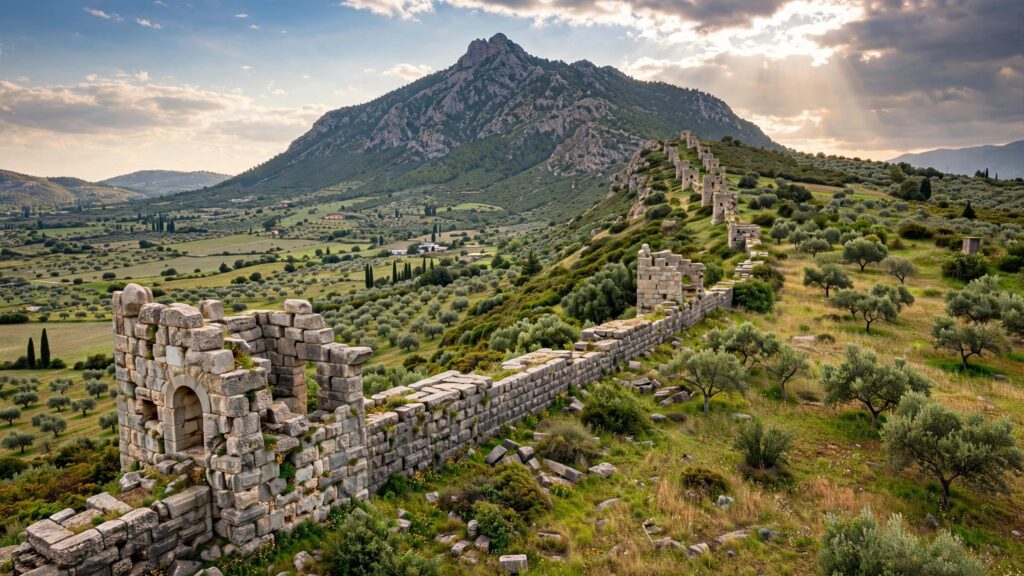
The western Peloponnese, covering Olympia and Ancient Messene, requires either a separate overnight base at Olympia itself or an ambitious long day from Nafplio. Ancient Messene, which receives fewer visitors than its size and quality of preservation justify, is an extraordinarily complete ancient city whose circuit walls, stadium, theatre, and agora are preserved at a level that gives the visitor the clearest available sense of what a functioning classical Greek polis actually looked like as a complete urban settlement rather than as isolated ruins.
The southern Peloponnese, covering Sparta, Mystras, the Mani Peninsula, and Monemvasia, requires at minimum three days and ideally four or five. Mystras and the Mani can be combined from a Spartan or Gythion base. Monemvasia is best reached after the Mani rather than before it, allowing the journey south along the Laconian coast to build toward the rock’s dramatic first appearance around a headland.
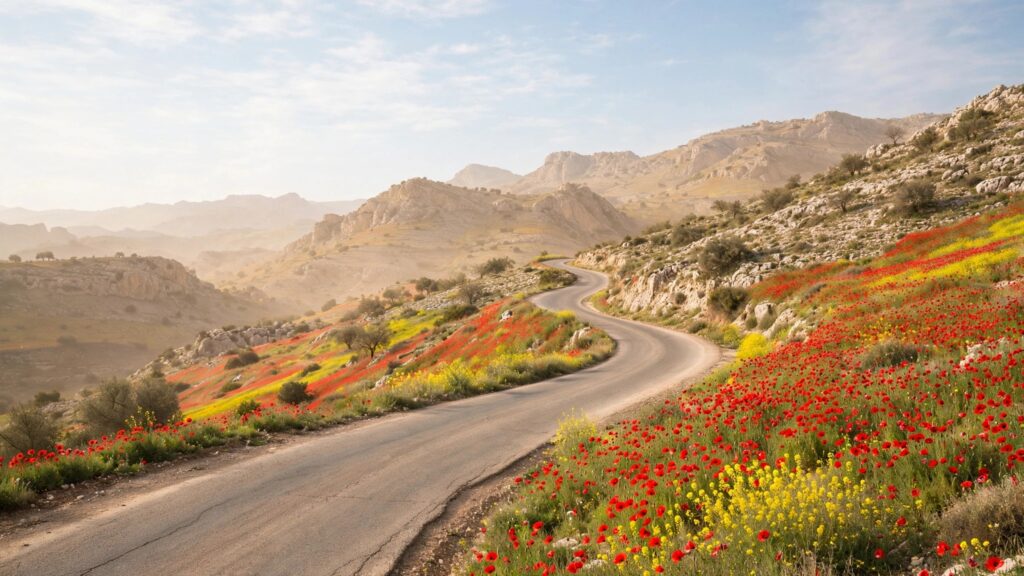
Spring, particularly April and May, is the correct season for the Peloponnese. The archaeological sites are not crowded, the wildflowers cover the limestone hillsides of Arcadia and the Mani in combinations that the summer heat will have eliminated by June, the sea is warm enough for swimming at Monemvasia by early May, and the light at the Argolid sites in the long afternoon hours before sunset is the light that the Bronze Age builders understood when they chose which direction to face their palace gates.
What the Peninsula Gives You That Nowhere Else Does
The quality of the Peloponnese travel experience that distinguishes it from every other archaeological destination in Greece, and from most archaeological destinations in Europe, is the compression of time it makes physically present.
In a single journey through this peninsula, you can stand in front of walls built three and a half thousand years ago by a civilization whose writing we cannot fully read, watch a theatre whose acoustic precision still works after twenty-four centuries, observe the starting blocks of the race that gave its name to the world’s oldest continuing sporting institution, stand inside a medieval city that refused Ottoman conquest for twenty years, and look at frescoes painted six hundred years ago in a ghost city on a hill above the ancient capital of the most feared military power in the classical world.
These are not separate historical interest points connected by the accident of geography. They are a connected sequence: the Bronze Age citadels that the Trojan War mythology made famous, the classical sanctuaries that the city-states of the post-Bronze Age world built to replace the palatial religion that the collapse had ended, the Byzantine culture that preserved and transformed the classical inheritance, the Venetian and Ottoman administration that overlaid and sometimes preserved what came before it, and the modern Greek state whose first capital is in this same peninsula and whose founding mythology drew on every layer beneath it.
The Peloponnese is where the history of the Greek world, from its Bronze Age foundation to its modern national expression, is most continuously and most physically legible as a single connected story whose chapters are still standing within a day’s drive of each other.
The Peloponnese is where you go when you want not just to see Greece but to understand what being five thousand years old actually feels like from the inside.
At Olympus Estate, Wanderlust Greece guides you across the sacred and storied terrain of the Hellenic world. The Peloponnese takes its name from Pelops, whose father Tantalus served him to the gods at a banquet, and whose shoulder Demeter unknowingly ate before the gods restored him to life with ivory in its place. Within one peninsula stand the Lion Gate at Mycenae, Europe’s oldest surviving monumental sculpture, the cyclopean walls of Tiryns, seat of the cousin whose birth cost Heracles his throne, the theatre at Epidaurus, whose acoustics remain a live subject of scientific study, the sanctuary at Olympia, where a sacred truce suspended war across Greece every four years for over a thousand years, the Byzantine ghost city of Mystras, where Gemistos Plethon taught in the years before Constantinople fell, and Monemvasia, the rock the Ottomans could not take by force. Five thousand years, standing within a day’s drive of each other.