


Poseidon did not build Nisyros. He threw it.
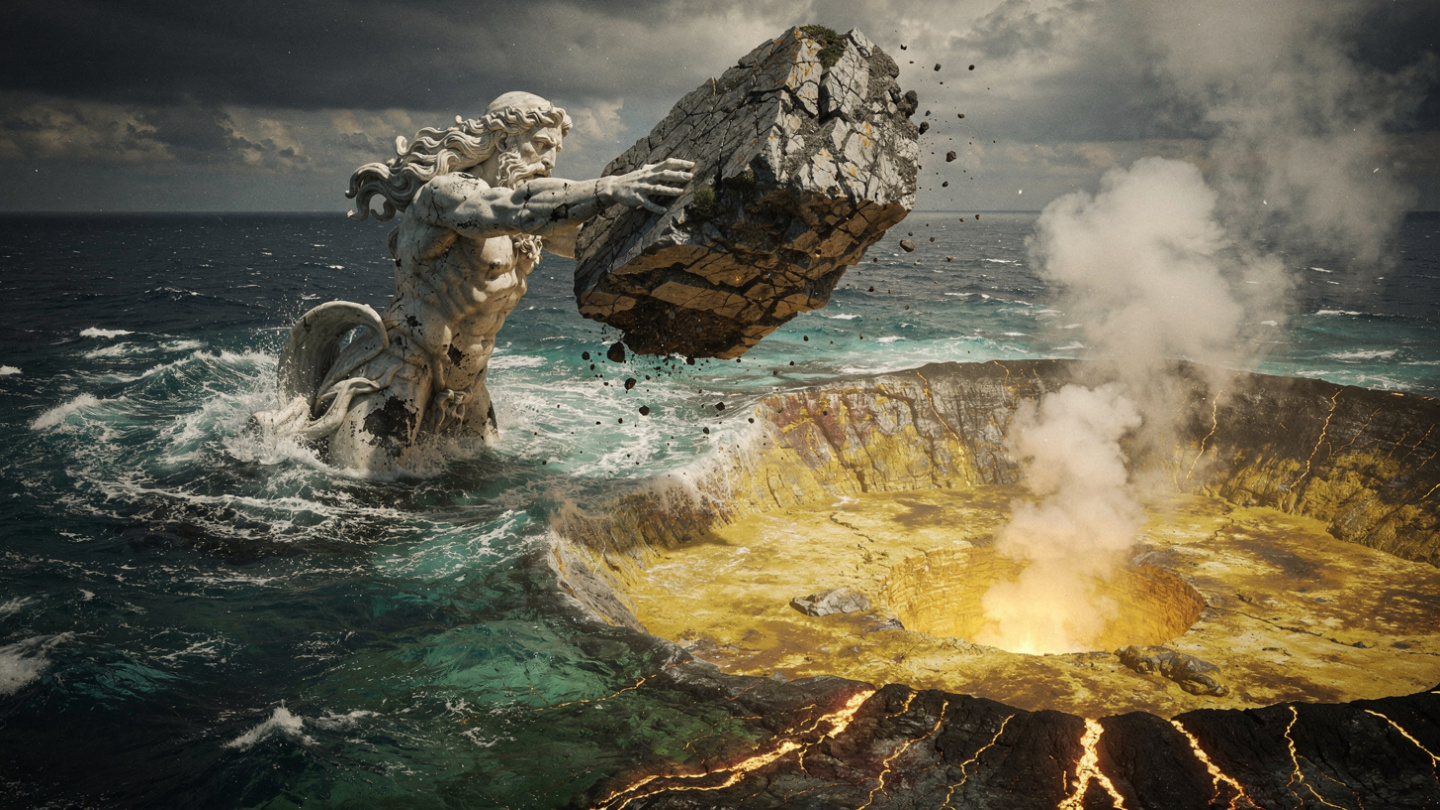
During the Gigantomachy, the war in which the Olympian gods defeated the Giants whose rebellion had threatened the cosmic order they had established, the Giant Polybotes fled across the sea toward safety. Poseidon, whose domain was the sea that Polybotes was crossing, tore a piece from the island of Kos and hurled it after the fleeing Giant, crushing him beneath it before he could escape. The piece of Kos that Poseidon threw became the island of Nisyros. Polybotes is still beneath it, still trying to work free from the weight of the rock that the god threw onto him at the moment of his almost-escape, and the volcanic activity of the island, the steam that rises from the crater floors, the sulfurous vents, the hissing of the Stefanos crater, is the breath and the movement of the Giant whose imprisonment has been measured not in years but in the time since the gods defeated the Giants and imposed the Olympian order on the cosmos.
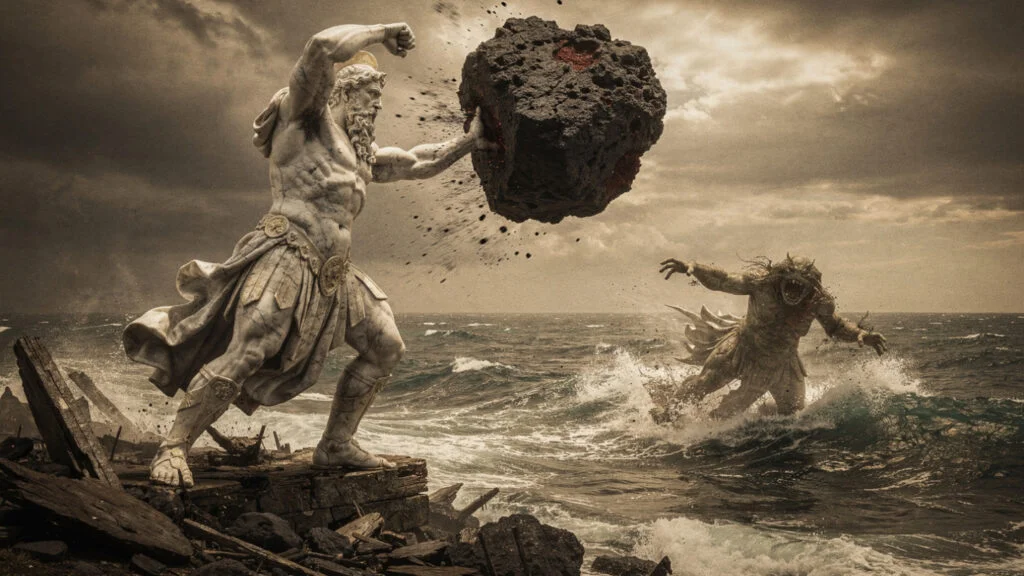
This is not an allegory. In the ancient Greek theological understanding it was the literal account of what Nisyros was and why it behaved as it behaved: the island that hissed and steamed and rumbled was the island built on a living prisoner, and the prisoner’s continued movements were the geological events that the island’s inhabitants experienced as the earth’s own activity. The mythology and the geology are two accounts of the same physical phenomenon, and the ancient account predates the geological one by approximately two thousand years. The geological account is more complete. The mythological account is more honest about what it feels like to stand on the crater floor of the Stefanos and hear the earth making sounds beneath your feet as if something very large is breathing.
The Geological Reality
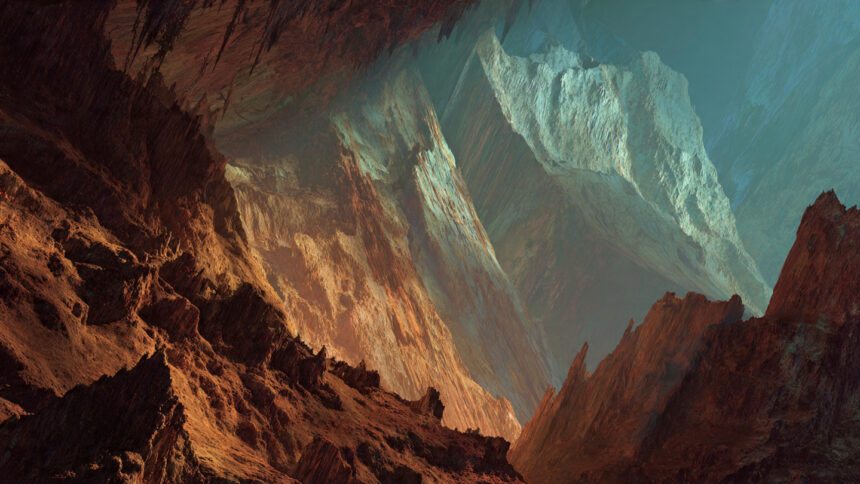
Nisyros is a volcanic island in the southern Dodecanese, part of the same volcanic arc that includes Santorini to the northwest and Kos to the northeast, produced by the subduction of the African tectonic plate beneath the Eurasian plate along the geological boundary that runs through the eastern Mediterranean. The island’s circular shape, approximately 8 kilometers in diameter, is the characteristic shape of a volcanic island whose current form was produced by the collapse of a caldera following a major eruption: the outer ring of the island is the rim of the original volcanic cone, and the interior basin, now cultivated and partially forested, is the collapsed caldera floor.
Within the caldera floor there are five active craters, of which the Stefanos crater is the largest and the most accessible: approximately 30 meters deep and 300 meters in diameter, it is the crater whose visual and olfactory character most completely expresses the island’s volcanic present rather than its volcanic past. The floor of the Stefanos crater is pale yellow with sulfur deposits, crossed by the cracks and fissures from which the hydrothermal gases emerge, and the smell of hydrogen sulfide, the characteristic rotten-egg smell of volcanic gas, is present throughout the crater in varying concentrations depending on the wind direction and the temperature of the day.
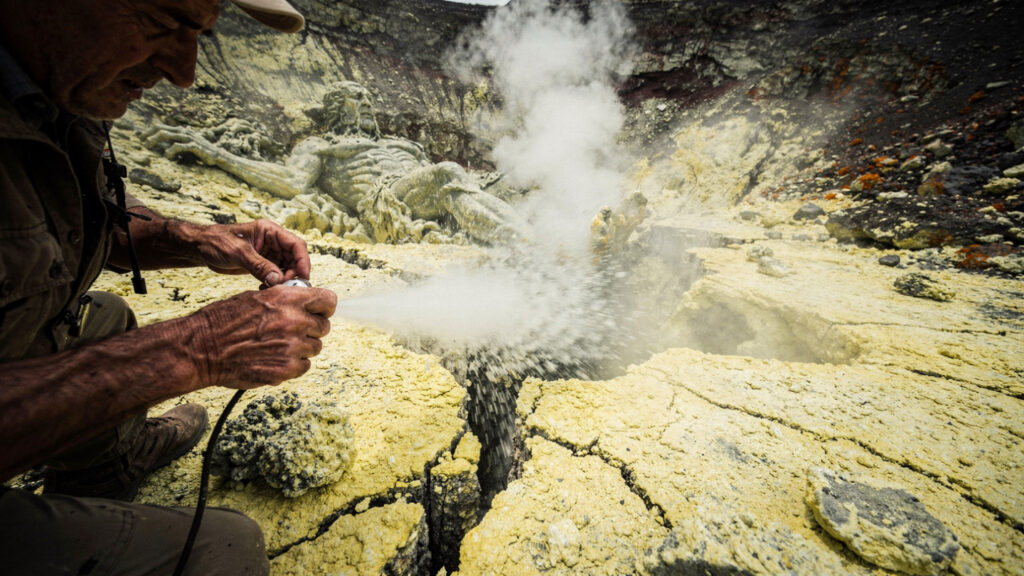
The last significant hydrothermal activity on Nisyros occurred in the early 1990s, when a series of seismic events and increased fumarolic activity raised concern about a potential eruption that did not materialize. The Stefanos crater’s floor shifted noticeably during this period, new fumaroles opened, and the temperature of the hydrothermal gases increased. The Nisyros volcanic system is classified as active rather than dormant: the hydrothermal system that supplies the crater gases is a functioning system driven by a magmatic heat source that remains active beneath the island.
The ancient geological event that the Polybotes myth was encoding, in the form available to the pre-scientific tradition, was an event of this order: not the Giant’s breathing but the actual hydrothermal system’s actual activity, the actual steam and sulfur and rumbling of a volcanic system operating in the geological present rather than in a concluded geological past. The myth recognized that Nisyros was not simply an island that had once been volcanic but an island that remained in an active relationship with the volcanic forces that created it.
The Gigantomachy and Its Geography
The Gigantomachy, the war of the gods and the Giants, was the mythological tradition’s account of the Olympian order’s most severe internal threat: not the Titans, who had been the previous cosmic order that Zeus’s generation superseded, but the Giants, who were the specifically embodied physical forces of the earth that challenged the established Olympian divine administration from below rather than from the preceding generation above.
The Giants in the Hesiodic tradition were born from the blood of Uranus that fell on Gaia when Kronos castrated him: the children of that moment of cosmic violence were the forces whose defining characteristic was the violent energy of the wound’s origin. They were not simply large or strong: they were the embodiment of the undirected physical force that the earth contained and that the Olympian order could not fully absorb into its organized administration of the cosmos. Their rebellion against the gods was the earth’s rebellion against the organization that the gods had imposed on it, and the way in which the gods defeated them was the way that organized intelligence defeats physical force: by using the physical force’s own energy against it, by redirecting what the Giants threw and turning what the earth produced into the instrument of the Giants’ defeat.
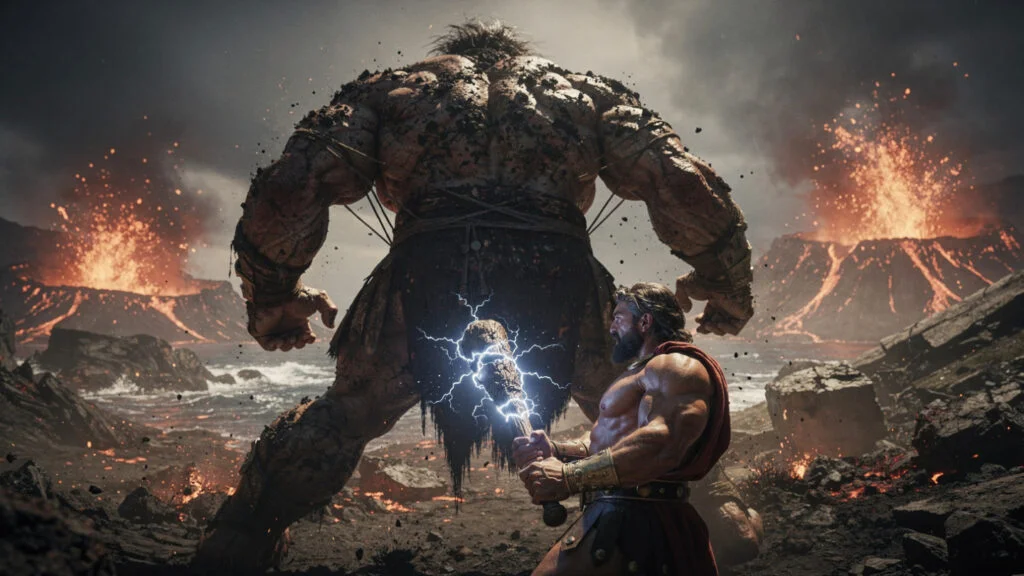
The account that the gods needed the assistance of a mortal hero, Heracles, to defeat the Giants is the theological claim that purely divine power was not sufficient to overcome the earth’s own force. The mortal dimension was required in the combination that the battle demanded. Heracles was present at the Gigantomachy because the Olympian order needed the quality that only a mortal hero possessed, the combination of divine capacity and mortal embodiment that the gods themselves could not provide.
The geographical belief that the Gigantomachy left traces in the landscape is the belief that most directly connects the mythic narrative to the physical world it was meant to explain. The volcanic islands of the Aegean, the hot springs, the sulphur vents, and the seismic activity were the physical evidence that the Giants were still present beneath the earth and still moving. The mythology that placed Giants under volcanic sites was the mythology that gave the geological character of these places its theological meaning.
Polybotes beneath Nisyros is the most completely preserved of these placements: the myth gives the mechanism, Poseidon tearing a piece of Kos and throwing it, and the location, the island that the thrown piece became, and the ongoing consequence, the volcanic activity that is the imprisoned Giant’s continued movement. The island’s circular shape, the collapsed caldera, the active craters: all of these geological features are consistent with the mythological claim that the island was a piece of rock thrown from somewhere else and that the force that created the current landscape is still active beneath it.
Mandraki and the Paleokastro
Mandraki, the island’s main settlement and port, is the village that occupies the northern rim of the ancient caldera above the sea, and its position on the rim’s edge, with the volcanic interior visible to the south and the Aegean visible to the north, is the position that gives the village the dual character of a community that inhabits the boundary between the geological world of the island’s interior and the maritime world of the Aegean that surrounds it.
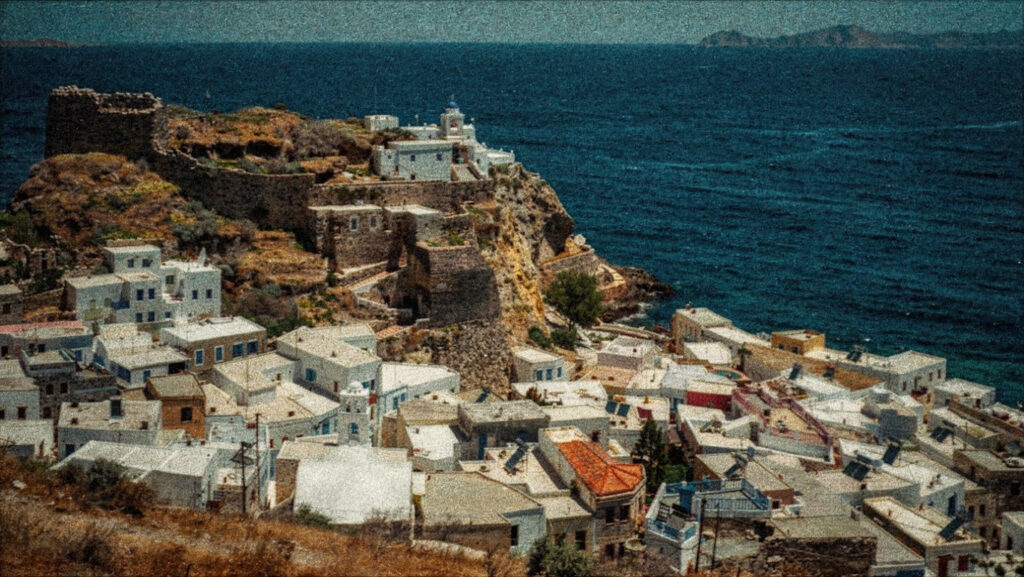
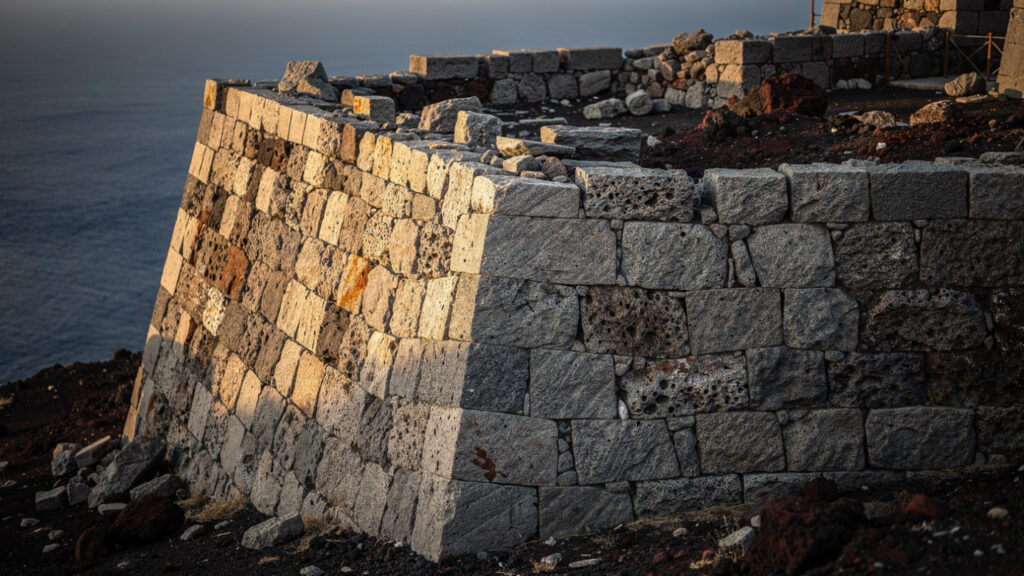
The Paleokastro, the ancient acropolis whose Cyclopean walls the tradition dates to the fifth century BCE but whose construction technique, the massive polygonal limestone blocks fitted together without mortar in the manner that the later Greeks consistently attributed to the Cyclopes, suggests a Bronze Age origin that the archaeological investigation has not fully resolved, is among the best-preserved ancient fortification walls in the Dodecanese. The scale of the blocks, some measuring several meters in their longest dimension, gives the Paleokastro its character as a fortification built with the geological material of the island itself: the volcanic limestone that the island produces is the building material that the ancient community used, and the walls that contain it carry the heaviness of the volcanic stone.
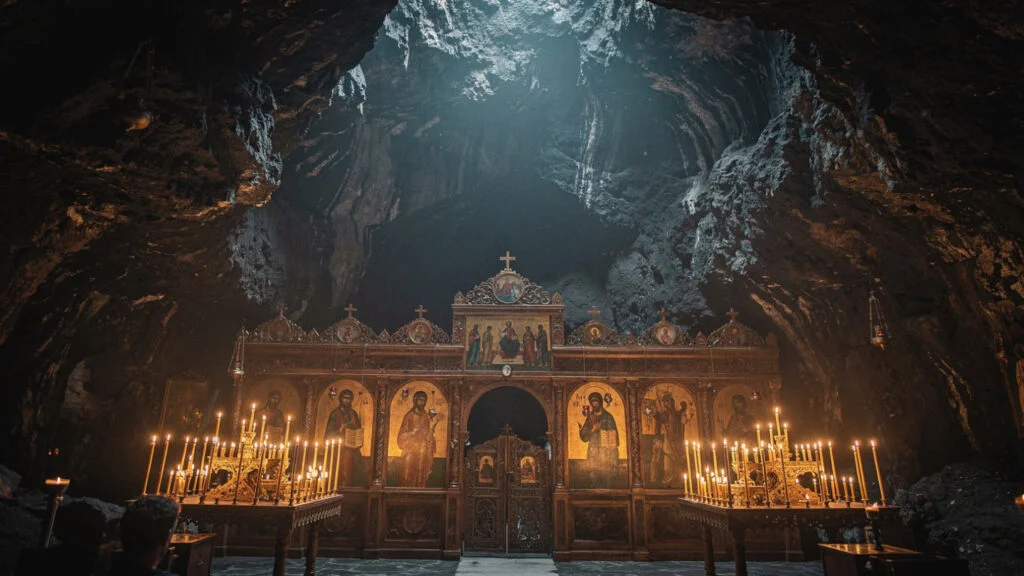
The Monastery of Panagia Spiliani, the Cave of the Virgin, cut into the cliff face below the Paleokastro on the western edge of Mandraki, is the medieval religious site that occupies the geological feature, the natural cave in the volcanic cliff, that gave it its dedication and its name: the cave that the volcanic activity of the island’s geological history produced in the cliff face is the cave in which the Byzantine tradition recognized the sacred character of the enclosed volcanic darkness and built the church within it. The quality of the interior, the cave ceiling above the iconostasis and the cool and slightly sulfurous air of the volcanic stone, is the quality that distinguishes this church from every other church in the Dodecanese.
The Archaeological Museum of Mandraki is small and should be visited by every visitor who goes to the island: the collection of objects from the ancient city, the ceramics and the bronze objects and the funerary material from the necropoleis of the ancient settlement, gives the ancient community’s material culture a tangible form that the surviving architecture of the Paleokastro alone cannot fully provide.
The Stefanos Crater
The descent into the Stefanos crater is the experience that distinguishes the Nisyros visit from every other Aegean island visit available.
The path from the caldera floor’s road to the Stefanos crater rim takes approximately fifteen minutes on a well-marked path, and the descent into the crater from the rim to the crater floor takes approximately ten minutes on the zigzag path that the visitor management system has established for the approach. The transition from the caldera floor’s cultivated landscape, the olive trees and the fig trees and the small garden plots that the caldera floor’s fertile volcanic soil supports, to the pale yellow and grey surface of the Stefanos crater floor is the transition that most directly expresses what the island is: the boundary between the organized human landscape above and the active geological system beneath.
The crater floor is crossed by the marked path that the site management maintains for visitor safety, directing the visitor away from the areas of highest hydrothermal activity and toward the sections of the crater floor where the temperature of the surface and the gas concentrations are within the range that the safety standards permit. The sounds of the crater floor, the hissing of the gas vents and the deep rumbling that the crater produces during periods of higher activity, are the sounds that the Polybotes tradition was encoding: the sounds of something very large still moving beneath the weight of the rock that was thrown onto it.
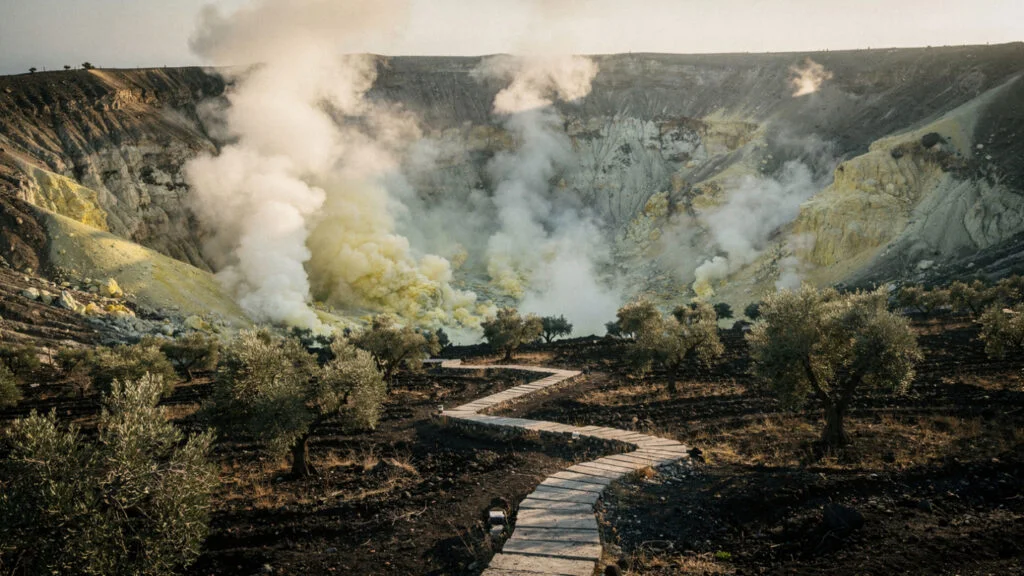
The best time to visit the Stefanos crater is early morning, before the day’s heat has concentrated the hydrothermal gases in the crater’s enclosed atmosphere and before the day excursions from Kos have brought the maximum visitor load. The early morning crater, in the quality of the light that the Dodecanese September morning produces, with the steam rising from the vents in the cool air and the yellow of the sulfur deposits catching the low sun, is the crater in the condition that most completely expresses its geological character without the management of the visitor infrastructure.
Emborios and Nikia: The Villages Above the Volcano
Emborios, the village that occupies the caldera’s western rim at approximately 400 meters above the sea, is the near-abandoned settlement whose character, the whitewashed houses that the small permanent population of a few families maintains while the majority of the village’s buildings stand empty or seasonally inhabited, expresses the relationship between the human community and the volcanic landscape that the island’s history has produced.
The population of Nisyros has declined from an early twentieth century peak of approximately ten thousand residents to the current permanent population of fewer than a thousand, and the mechanism of the decline is the mechanism of the volcanic island’s long-term human settlement pattern: the island was prosperous in the periods when the volcanic soil’s fertility supported a larger agricultural community and when the island’s position in the Dodecanese trade routes provided the commercial activity that the community required, and the population declined when the commercial opportunities shifted to other islands and the agricultural economy could no longer support the community that had grown around it.
Emborios’s abandoned quality, the empty houses with their open windows and the stillness of the village’s lanes in the middle of the day, is not simply the consequence of economic decline: it is the condition of a community that has lived in direct proximity to the volcanic system long enough to have developed the relationship with the landscape’s geological activity that the long inhabitation of active volcanic terrain produces. The village is not abandoned because the volcano is dangerous: it is partially abandoned because the economic conditions that supported the village’s larger population no longer exist, and the quality of the remaining community is the quality of the people who have chosen to remain in proximity to the geological system that the rest of the island’s former population has moved away from.
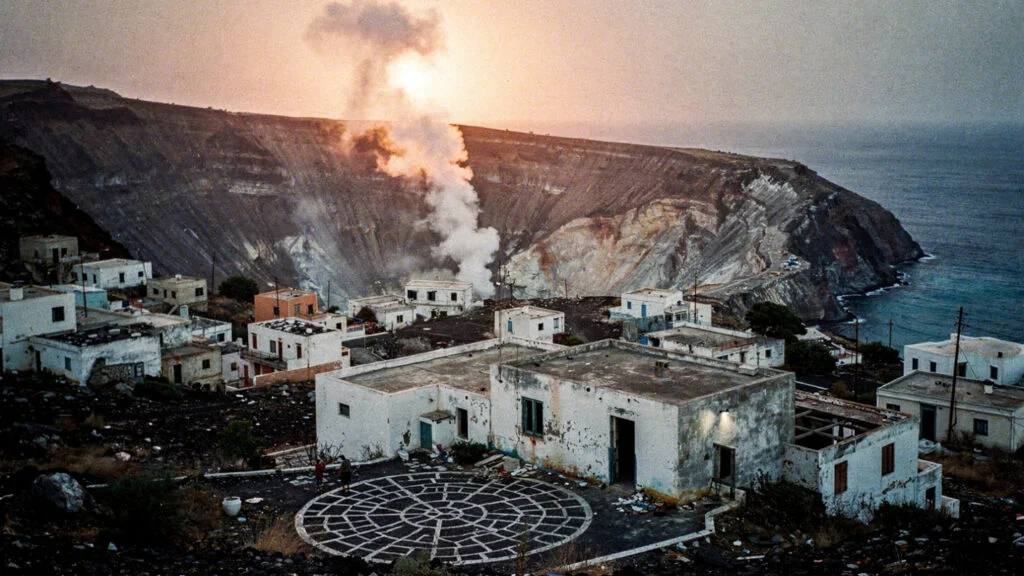
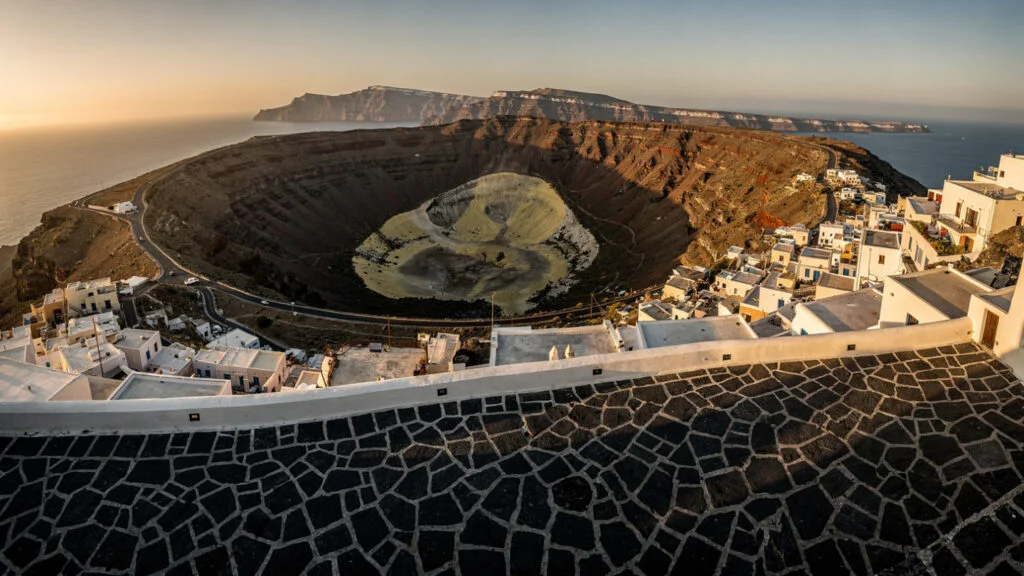
Nikia, on the caldera’s southeastern rim, is the more intact of the two rim villages and the one whose architectural character, the whitewashed houses and the lava stone paving of the Plateia Porta, the circular village square whose mosaic-like surface is made from the volcanic stone of the caldera rim, is most completely preserved. The view from the Nikia rim across the caldera interior to the Stefanos crater and the opposite rim of Emborios is the view that gives the caldera its full scale: the geological event that produced the caldera visible in the landscape that the event created, with the human settlement of the rim villages providing the scale reference that makes the caldera’s dimensions legible.
Getting There and When to Go
Nisyros is accessible by ferry from Kos, the closest major island, with a crossing of approximately 45 minutes by the fast catamaran service that operates in the summer season. Ferry connections also run from Rhodes and from Tilos and from the other southern Dodecanese islands, with less frequency but with the quality of the Aegean inter-island ferry journey that the Ionian and Cycladic routes cannot replicate: the quality of the boat crossing between two volcanic islands across the deep southern Aegean.
Day excursions from Kos are possible and are the most common form of visit, bringing the majority of the visitors who enter the Stefanos crater in the summer months. But the day excursion misses what the overnight stay provides: the island at the hours of the early morning and the evening, when the day excursion visitors have departed and the island is inhabited only by its permanent residents and the few visitors who have chosen to stay. Emborios at dusk, with the sun dropping behind the caldera rim and the steam from the Stefanos crater catching the last light, is the Nisyros experience that the day excursion visitor will not have and that the overnight visitor will remember as the quality of the island at its most itself.
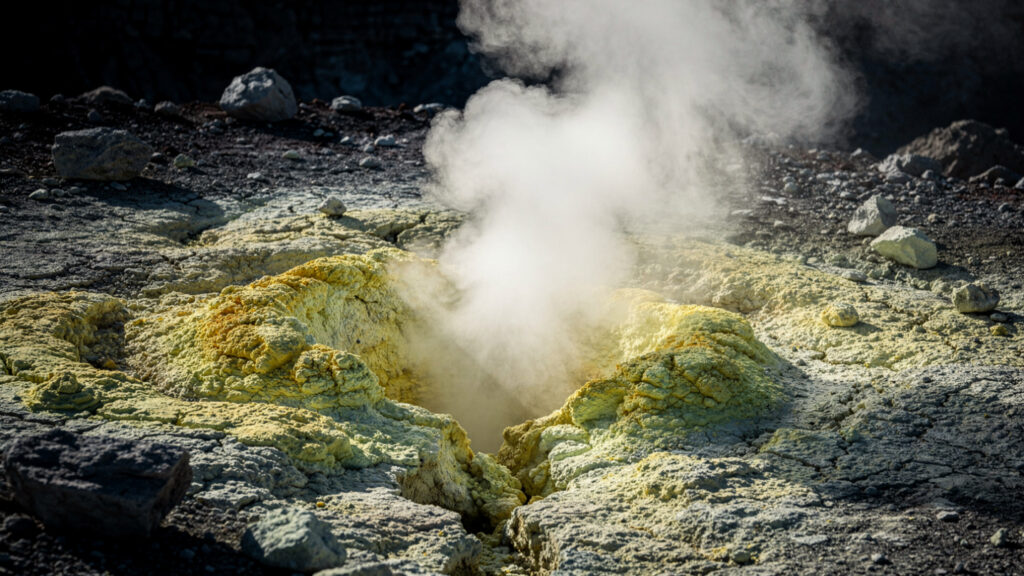
The optimal visiting months are May through June and September through October: the shoulder season months when the Kos day excursion traffic is reduced and the caldera visit is possible without the summer crowd management that July and August impose. The volcanic geology’s engagement with the season, the quality of the hydrothermal activity in the cooler months when the temperature contrast between the heated volcanic gas and the cooler air produces the most visible steam from the crater vents, makes the shoulder season and the early morning the conditions in which the Stefanos crater is most dramatically expressive of what it is.
At Olympus Estate, Wanderlust Greece guides you across the sacred and storied terrain of the Hellenic world. Poseidon tore a piece of Kos and threw it onto the Giant Polybotes. The piece became Nisyros. Polybotes is still beneath it. The Stefanos crater is his breath. The steam rises from the vents in the early morning and the sound of the hissing and the deep rumbling of the hydrothermal system is the sound of something very large still moving beneath the weight of the rock that was thrown onto it in the moment the ancient imagination first tried to explain what this island was. Go there. Stand on the crater floor. The earth is not a metaphor.