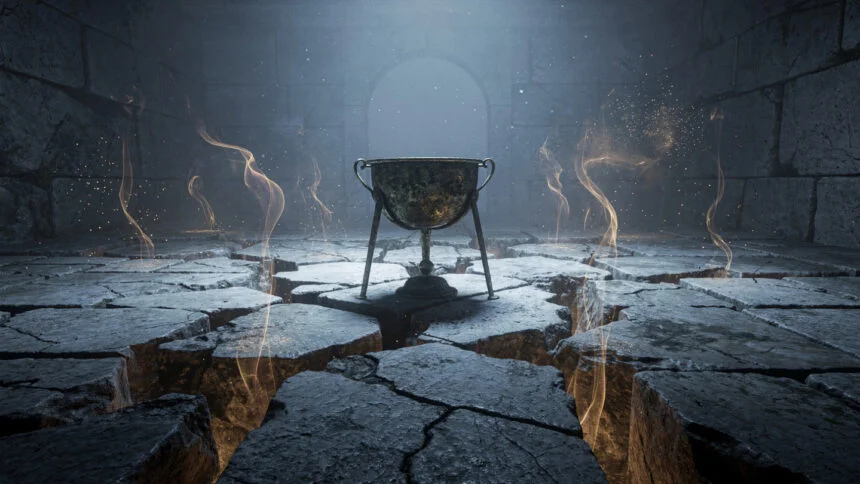


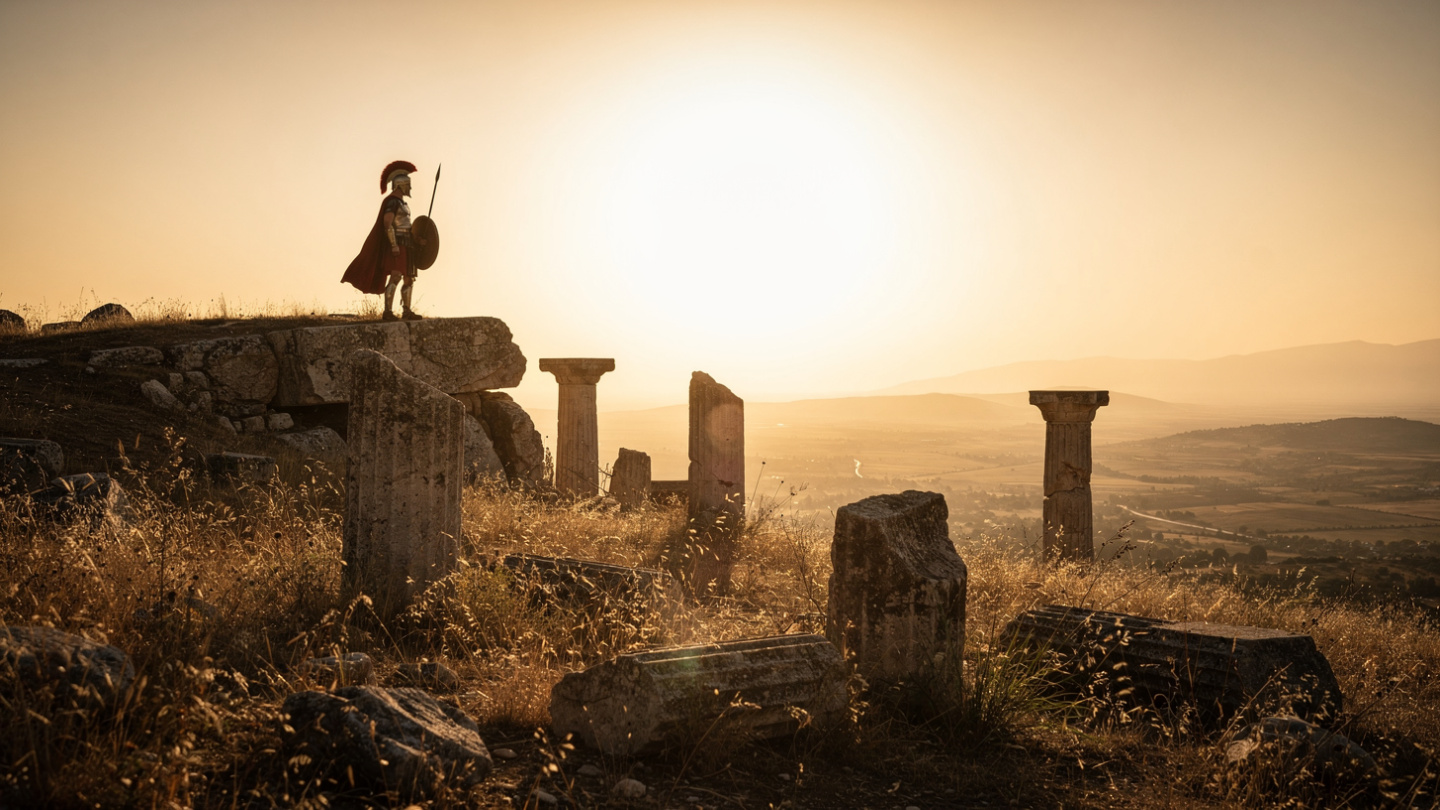
Almost everything we know about Sparta was written by people who were not Spartans.
This is not a peripheral problem in understanding Sparta. It is the central problem, and it is the problem that every honest account of the city must address before making any claims about what Sparta was or what it valued or how its people lived. The Athenians wrote about Sparta. The Romans wrote about Sparta. The Plutarch who gave the Western tradition most of its memorable Spartan anecdotes, the Plutarch of the Sayings of the Spartans and the Lives of Lycurgus and Solon, was writing in the second century CE about events that had occurred five to seven centuries earlier, drawing on sources whose own relationship to Spartan reality was already filtered through the ideological needs of the inheritances that produced them.
The Spartans themselves wrote almost nothing. The cultural value of brevity, the lakonismos that gave the English language the word laconic, produced a tradition of short memorable statements rather than extended prose, and the Spartan educational tradition, the Agoge, was organized around the oral transmission of values rather than the literary production of texts. The books that might have given us Sparta in Sparta’s own words were not written, and the absence of those books is not simply a gap in the evidence. It is the condition that made the Spartan mirage possible.
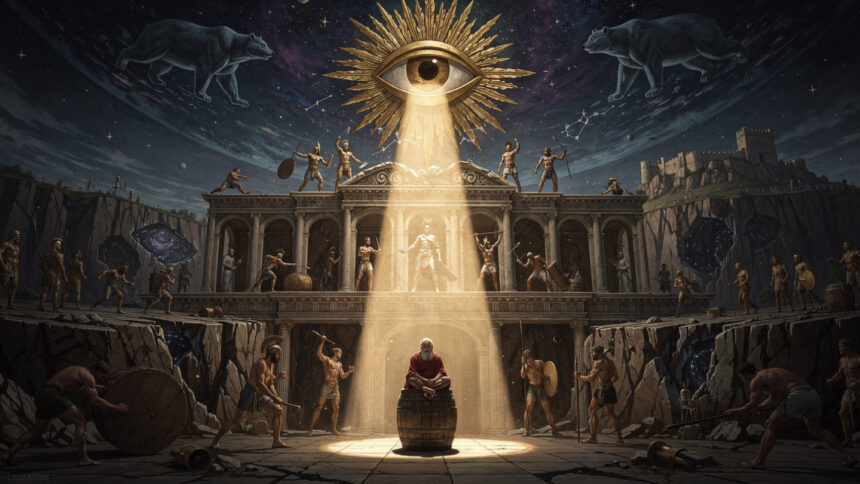
The Spartan mirage, the Lakonismos in its broader sense, was the phenomenon by which the non-Spartan world, primarily Athens and subsequently Rome, constructed an idealized counter-Sparta that served their own ideological needs. The Athenian who admired Sparta was often the Athenian who wanted a critique of Athenian democracy that did not require him to explicitly criticize Athenian democracy: he could instead admire the Spartan alternative, the discipline, the equality, the contempt for luxury, in a way that implicitly condemned the Athenian excess he actually wanted to condemn. The Roman who admired Sparta was admiring the ancestral virtue, the mos maiorum, that he believed Rome had lost. Both admirers were constructing Sparta for their own purposes.
This does not mean that Sparta was not extraordinary. It was extraordinary. It simply means that the extraordinary Sparta we have inherited is a construction built partly from Spartan reality and partly from non-Spartan need, and separating the two is the intellectual challenge that the honest account of Sparta requires.
The Helots and What They Made Possible
The Spartan way of life that the ancient admirers and the modern popular tradition celebrate, the military training from age seven, the communal meals, the contempt for commerce and luxury, the full‑time dedication of the citizen male to military and civic life, was possible for one reason that the admiring tradition consistently minimizes.
The helots.
The helot population, the enslaved Messenians whose subjugation the Spartan state had organized following the Spartan conquest of Messenia in the eighth and seventh centuries BCE, outnumbered the Spartiate citizen class by approximately seven to one by the classical period. They worked the land, the kleroi that the Spartan state assigned to each citizen family, producing the agricultural surplus that freed the Spartiate male from the need to work and allowed him to dedicate his adult life to military training and civic participation. The Spartan freedom from economic necessity was the helot’s economic necessity transferred.
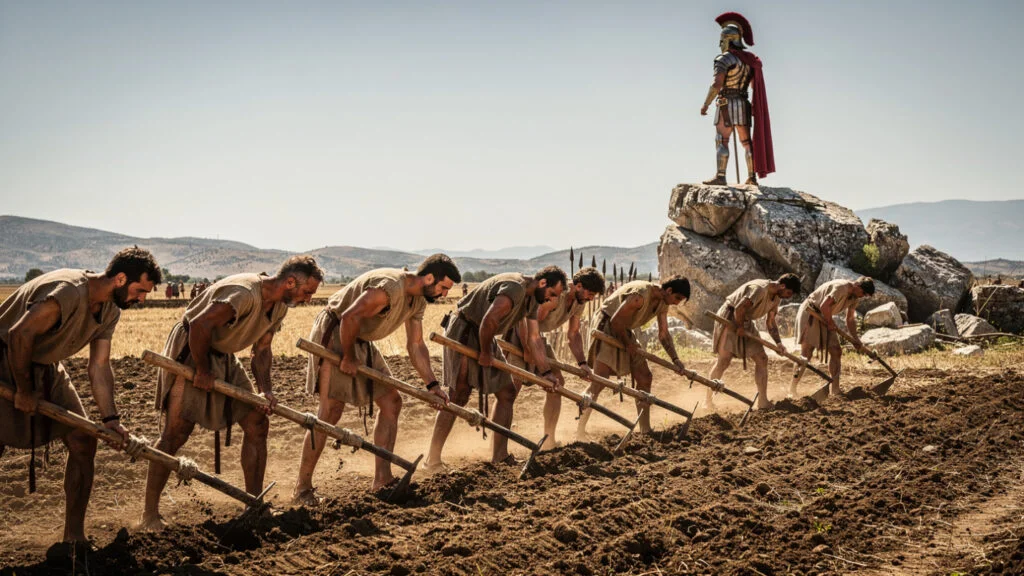
The consequence of this demographic structure was the institution that the Spartan state maintained to manage it: the krypteia, the secret police operation whose function was the systematic killing of helots who showed leadership potential or who seemed likely to organize resistance. Each year, the ephors, the five annually elected magistrates who shared power with the dual kings, formally declared war on the helots, which gave the krypteia’s killings the legal status of military action rather than murder and absolved the young Spartiates who carried them out from the ritual pollution that killing ordinarily incurred.
Thucydides, whose account of the Peloponnesian War is the most careful surviving ancient analysis of the Greek political world, noted that Spartan policy was consistently shaped by the fear of helot revolt above all other strategic considerations. The decision to recall Spartan forces from critical campaigns, to avoid commitments that would leave the Spartan heartland without its citizen military garrison, was consistently the decision that the helot demographic reality imposed. Sparta’s legendary military caution, which the admiring tradition read as the discipline of a people who chose their battles wisely, was in significant part the caution of a state that could never fully commit its forces elsewhere because it could never fully trust the population at home.
This does not reduce the Spartan military achievement. The Spartiate soldier at Thermopylae was as brave as the tradition says. It contextualizes the achievement within the social structure that made it possible: the full-time professional warrior class whose professionalism was subsidized by the labor of the people they had conquered.
The Women and What Their Freedom Actually Meant
Spartan women’s relative freedom compared to Athenian women is one of the most frequently cited facts about Sparta, and it is genuinely true and genuinely significant in the comparative history of the ancient Greek world. But the explanation for that freedom is less flattering to the Spartan social ideal than the popular tradition presents.
Spartan women managed the Spartan economy because the Spartan men were not there to manage it. The Agoge removed boys from their families at age seven. The syssitia, the communal mess system, kept the adult male in the military communal structure rather than in the household. Military campaigns removed the men from the domestic sphere for extended periods. The consequence of this organization was that the Spartan household was a female-managed institution by structural necessity rather than by ideological commitment to female autonomy.
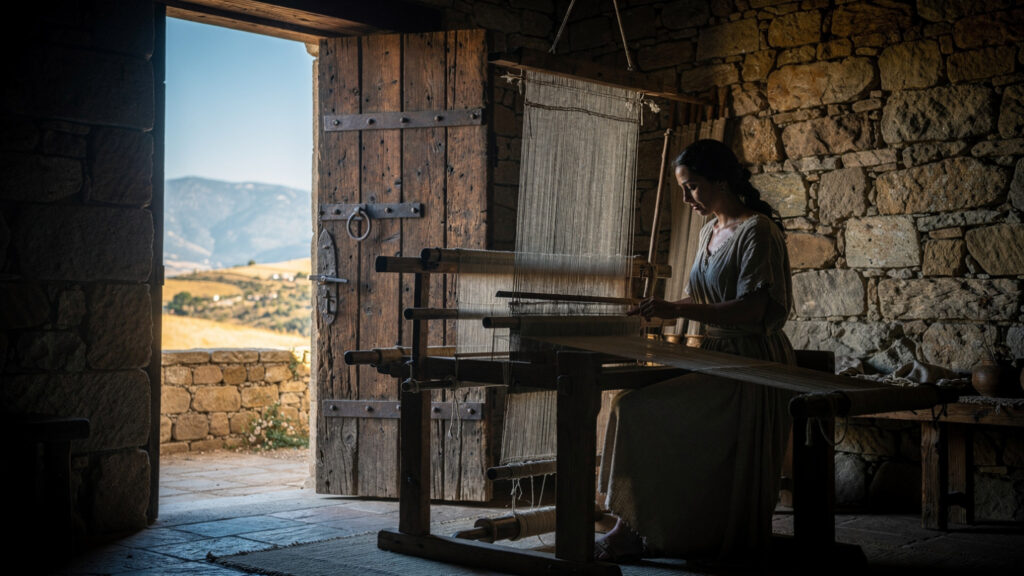
The ownership of land by Spartan women, which by the classical and Hellenistic periods may have reached forty percent of Spartan territory, was the consequence of the Spartan inheritance system combined with the demographic attrition of the male citizen class through military casualties: as the Spartiate population declined through the losses of the fifth and fourth centuries BCE, and as the inheritance rules allowed women to hold property in the absence of male heirs, the concentration of land in female hands was the unintended consequence of the demographic and legal structure rather than the programmatic expression of a feminist political philosophy.
What is genuine in the Spartan women’s reputation is the cultural value of the physically capable and intellectually sharp woman whose strength was interpreted as the foundation of the military class’s biological reproduction. The Spartan women who trained physically and who were educated to speak with the directness that the laconic tradition valued were the women whose bodies and whose minds were understood as the infrastructure of the military state’s continuation. The famous saying attributed to a Spartan mother, return with your shield or on it, whether historical or legendary, captures the quality of a culture in which the woman’s role in the military tradition was the role of the institution that produced the warriors rather than simply the role of the mourner who received them back.
Lycurgus and the Rhetra
The figure whose authority organized the Spartan constitution, the great rhetra, the foundational law code whose provisions established the Spartan social and political system, was Lycurgus, the legendary lawgiver whose historical existence the ancient tradition itself doubted.
Plutarch, who gave the Western tradition its most complete account of Lycurgus in the Life of Lycurgus, noted that even in his own time nothing certain was known about Lycurgus, not his dates, not his family, not the circumstances of the constitution’s creation. Some ancient accounts made him a contemporary of the Trojan War, others a contemporary of the first Olympiad, a chronological difference of several centuries. Plutarch concluded that the uncertainty was itself significant. A figure about whom nothing could be established with certainty was a figure who had become more mythological than historical, the personification of a constitutional order that had developed through processes too gradual and too complex to be attributed to a single founder.
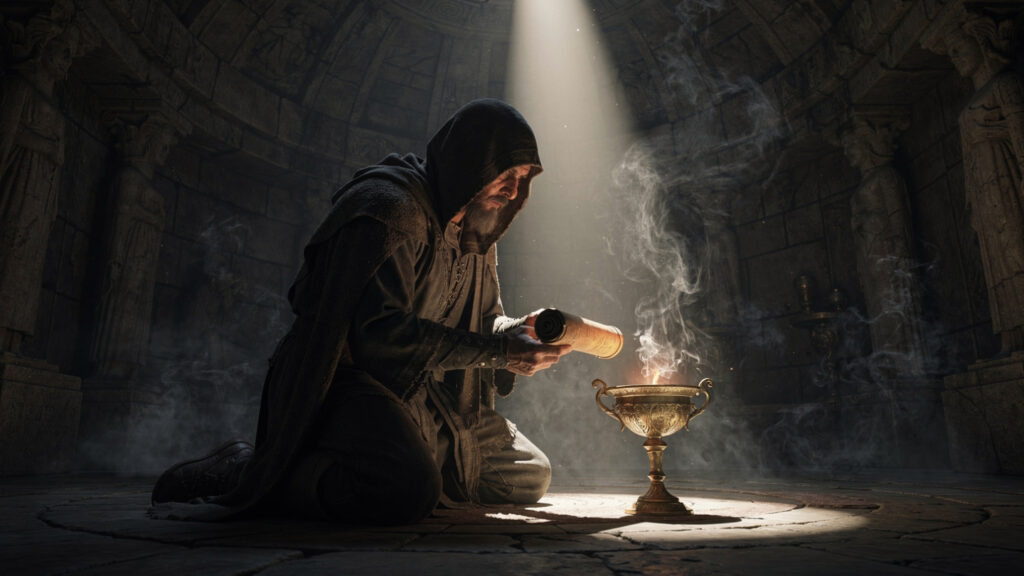
The Delphic Oracle’s role in the Spartan constitutional tradition is one of the most direct ancient connections between the Spartan political order and the divine sanction that the tradition consistently attributed to it. The Delphic Oracle confirmed Lycurgus’s legislation, and subsequent Spartan decisions were regularly submitted to the Oracle for validation. The relationship between the Spartan state and the Apollo sanctuary at Delphi was among the closest of any Greek state, and the Spartans’ regular consultation of the Oracle was the mechanism through which the divine sanction for the constitutional order was continuously renewed.
The Dioscuri and Their Spartan Cult
The divine figures most specifically associated with Sparta in the ancient religious tradition were the Dioscuri, Castor and Pollux, the twin sons of Zeus and Leda who were born from the egg whose mythological production, the result of Leda’s union with Zeus in the form of a swan, also produced Helen of Troy and Clytemnestra.
The genealogical connection between the Dioscuri and Helen and Clytemnestra gave the twin cult its direct link to the Trojan War tradition that was central to Spartan mythological identity: the war that the Greeks fought to recover Helen, the sister of the Dioscuri, was the war whose heroes included Menelaus, the king of Sparta, and whose connection to the Spartan landscape the Menelaion shrine above the Eurotas valley preserves.

Castor was the mortal twin, the horse‑tamer and warrior. Pollux was the immortal twin, the boxer and the son of Zeus. The arrangement that the tradition preserved about their immortality was the arrangement of the shared immortality. Castor, killed in battle, was given the option by Zeus of alternating between Olympus and the underworld with his brother, each spending alternate days in each realm. Pollux chose this over a permanent individual immortality because the choice of the shared and divided immortality over the full individual immortality was understood as the expression of the bond between the brothers.
The Dioscuri were the patrons of sailors, whose vulnerability at sea made the divine protection of the twins particularly valuable, and the weather phenomenon of St. Elmo’s fire, the electrical discharge visible at the tips of masts during storms, was understood in the ancient tradition as the visible presence of the Dioscuri attending their devotees in the moment of maximum danger. The twin lights visible at the masthead during the storm were the twin brothers’ presence in the crisis.
The Sanctuary of Apollo Hyakinthos at Amykles, approximately five kilometres south of modern Sparti, was the site of the Hyakinthia festival that was among the most significant in the Spartan religious calendar and that combined the cult of Apollo with the specifically Spartan mourning tradition for Hyakinthos, the beautiful youth whom Apollo had loved and accidentally killed with a discus throw, whose blood produced the hyacinth flower and whose connection to the dying vegetation cycle gave the Amyklaion sanctuary its character as the site of the annual divine mourning and renewal. The Dioscuri’s connection to the Amyklaion tradition, the festival that preceded the Carneia in the Spartan religious calendar, gave the twin divine patrons their Laconian sacred geography.
Mount Taygetos and Its Actual Character
Mount Taygetos, the mountain range that forms the western boundary of the Eurotas valley and whose summit ridge reaches 2,404 meters at Profitis Ilias, is among the most dramatic mountain landscapes in the Peloponnese, and its character as the defining natural feature of the Spartan landscape gives it the quality that the Spartan tradition encoded in its mythology and its social practices.
The mountain is named for Taygete, one of the Pleiades, the seven daughters of Atlas and Pleione whose transformation into stars the mythological tradition preserves as the consequence of the grief they shared for their father Atlas’s burden and for their sisters the Hyades’ mourning: the Pleiades rose to the sky to escape the pursuit of Orion, or in other versions were transformed by Zeus in compassion for their grief, and the star cluster that bears their name is visible in the winter sky above the Taygetos range whose name preserves the memory of the one whose earthly form the mountain holds.
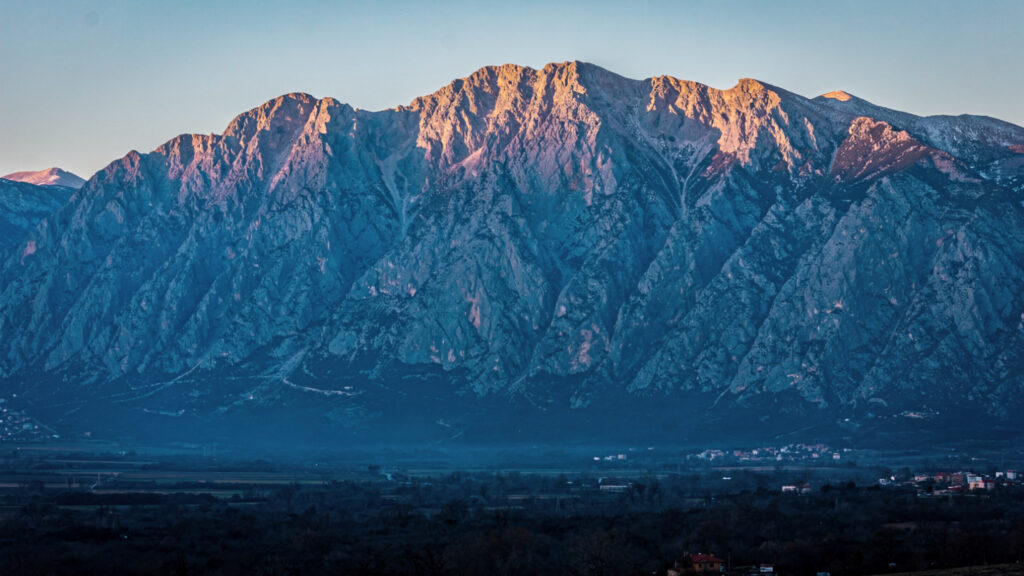
The practical relationship between the Spartan community and the Taygetos range was the relationship of the mountain as the immediate geographical boundary of the Eurotas valley’s agricultural world: the range’s eastern slopes and lower valleys provided the summer pasture and the forest resources and the hunting territory that the Spartan economy used, and the Langada pass that crosses the range to the Messenian plain on the other side was the strategic route whose control was among the practical military considerations that the Spartan state maintained throughout the classical period.
The tradition of the Apothetae, the location on Taygetos where infants deemed physically unfit were exposed, is the tradition whose historical reality the modern scholarship regards with significant skepticism. The practice of infant exposure was widespread in the ancient Greek world and was not specifically Spartan, but the detail of the designated mountain location for Spartan exposure may be the later elaboration of the general Greek practice into the Spartan institutional form that the admiring tradition needed to demonstrate the Spartan commitment to physical excellence. The practice may have occurred. The location and the institutional form may be the ideological elaboration.
Mystras | The City That Replaced Sparta
The most historically significant site in the modern Laconian landscape is not Sparti, the modern city, or the archaeological remains of ancient Sparta, which are considerably less impressive than the ancient city’s reputation suggests: the centuries of systematic stone robbing for the construction of medieval Mystras and the relative absence of monumental architecture in the deliberately austere Spartan tradition have left a fragmentary material record whose physical impression does not match the literary one.
The most significant site is Mystras, the Byzantine city built on the spur of the Taygetos ridge approximately five kilometres west of modern Sparti, whose construction beginning in the thirteenth century CE and whose subsequent development as the capital of the Byzantine Despotate of the Morea produced one of the most complete surviving Byzantine urban ensembles in the Greek world.
Mystras is a UNESCO World Heritage Site whose significance is the significance of a complete Byzantine city preserved on its hillside in a condition of controlled decay that gives the visitor access to the quality of the Byzantine urban landscape without the modern urban context that obscures comparable sites elsewhere. The churches of Mystras, the Pantanassa, the Peribleptos, the Metropolis, contain fresco programs whose artistic quality represents the last flowering of the Byzantine pictorial tradition in the generation before the Ottoman conquest: the frescoes of the Peribleptos in particular, whose combination of the Italian influence absorbed through the Palaeologan court’s contact with the Renaissance world and the Byzantine iconographic tradition’s structural depth, are among the finest surviving medieval paintings in the eastern Mediterranean.
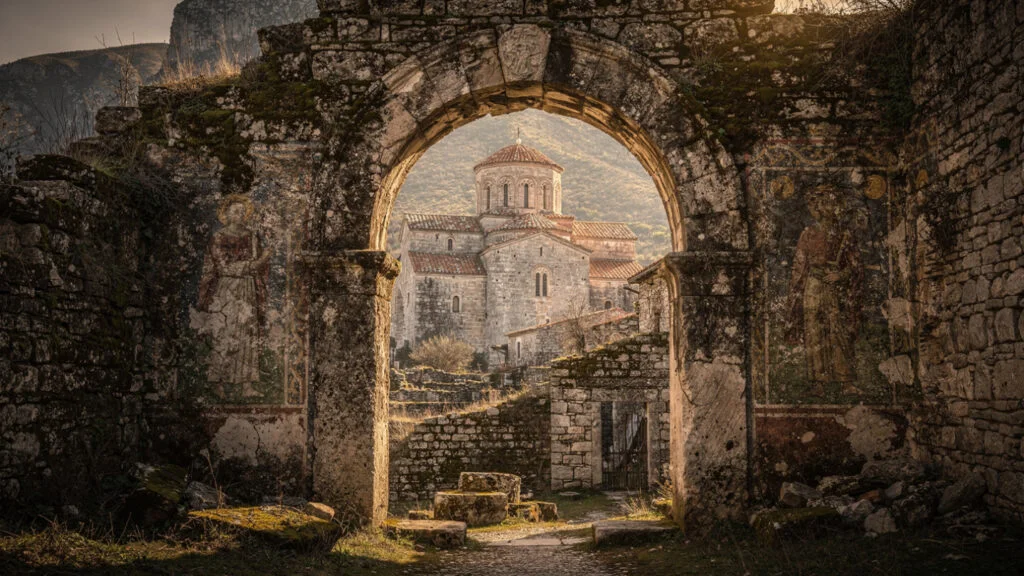
The philosopher Gemistos Plethon lived and wrote at Mystras in the early fifteenth century, and the philosophical tradition he developed there, the revival of Platonic and Neoplatonic thought in the last generation of the Byzantine Empire, was the inheritance whose transmission to Florence through the Council of Ferrara‑Florence in 1438 provided one of the intellectual catalysts of the Italian Renaissance. The Byzantine Platonic revival that influenced Ficino and Pico della Mirandola and the Florentine Academy began in the shadow of the Taygetos range, in the Byzantine city built above the ruins of ancient Sparta.
Visiting the Laconian Landscape
Modern Sparti, the city founded on the Eurotas valley floor in 1834 by order of the newly independent Greek state as the modern successor to the ancient city, is a functional Peloponnesian market town whose interest to the serious visitor is the Archaeological Museum and the proximity of the ancient site fragments and the Sanctuary of Artemis Orthia rather than the modern city’s own character.
The Archaeological Museum of Sparta holds the material culture of the Laconian region across the prehistoric, classical, and Byzantine periods: the collection of votive lead figurines from the Sanctuary of Artemis Orthia, whose character as the mass-produced dedications of the Spartan citizen class gives the collection its particular quality of the ordinary rather than the exceptional, and the collection of Roman portrait sculpture from the Spartan region that documents the Roman-period revival of interest in the Spartan tradition, are the most directly relevant collections for the visitor developing the themes of this article.
The Menelaion, the sanctuary of Menelaus and Helen on the hill above the Eurotas valley southeast of modern Sparti, is the site that most directly connects the Spartan landscape to the Trojan War tradition: the hilltop sanctuary whose position above the valley gives it the commanding view of the Eurotas plain and the Taygetos range that the hero cult’s sacred geography required is accessible by a short walk from the road below and is among the most evocative of the Laconian archaeological sites in its combination of the landscape setting and the mythological resonance.
Amykles and its Apollo Hyakinthos sanctuary is a fifteen-minute drive south of Sparti and is the site that most directly gives the Spartan religious tradition its physical location in the landscape: the relationship between the Amyklaion sanctuary and the Spartan calendar, whose most significant religious festivals were organized around the Amyklaion cult, gives the site its particular importance for the visitor who wants to understand Sparta’s spiritual geography.
Mystras requires the full day that it rewards: the site is large, the terrain is steep, and the quality of the fresco programs in the multiple churches requires the time to move between them and to allow the eye to adjust to the light conditions of the Byzantine church interior that the frescoes were painted for.
At Olympus Estate, Wanderlust Greece guides you across the sacred and storied terrain of the Hellenic world. Almost everything we know about Sparta was written by people who were not Spartans. The helots outnumbered the citizen class by seven to one. The women ran the economy because the men were never home. Lycurgus may not have existed. The Dioscuri attended their devotees as twin lights at the masthead in the storm. Gemistos Plethon wrote Platonic philosophy at Mystras in the shadow of the Taygetos and his students carried it to Florence where it helped start the Renaissance. The ancient city’s material remains are fragmentary. Mystras is extraordinary. Go to Mystras.