
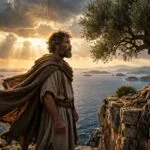



Midas appears in two myths and they are the same myth told twice.
The first is the golden touch: the Phrygian king who served Dionysus faithfully and was granted any wish he named, who asked that everything he touched be turned to gold, and discovered that his wish was the most precise possible statement of the most catastrophic possible desire. The roses turned to gold. The bread turned to gold. The water turned to gold when he tried to wash the gift away. His daughter turned to gold when he embraced her. The king who had asked to convert the living world into a single dead substance of maximum immediate value did exactly that, and found the living world was not available to be converted without losing the very quality that made it worth converting in the first place.
The second is the donkey ears: the king present at the musical contest between Apollo and Pan on the slopes of Mount Tmolus, who disagreed with the mountain god’s judgment that Apollo’s lyre surpassed Pan’s pipes, and received from Apollo a punishment that was the most precise possible statement of the perceptual failure his disagreement had just expressed. The ears of a donkey: the animal most completely defined by its orientation toward the immediate and the earthy, over the ordered and the elevated.
Both myths name the same character. Midas wanted everything converted to its immediate maximum. He wanted music that spoke directly to the blood rather than music whose qualities demanded cultivated perception to hear as the higher beauty that cultivation exists to receive.
Greek myth gave him two chances to demonstrate this. He demonstrated it twice.
The Phrygian King and the Weight of the Wish
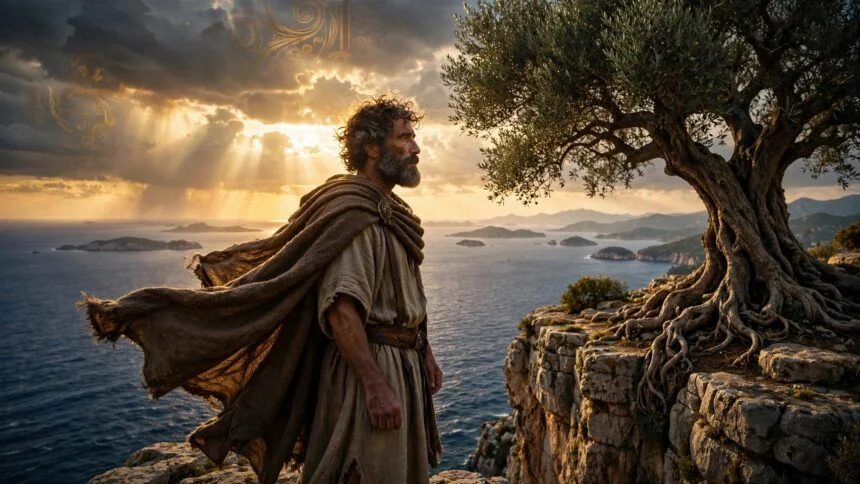
Midas was a historical figure before he was a mythological one.
The Phrygian kingdom of the eighth century BCE was a real political entity, and its capital at Gordion is the archaeological site whose tumulus burials, royal tombs, bronze cauldrons, and textile fragments give the mythological reputation of Phrygian wealth its actual material grounding. Excavations at Gordion produced gold and silver objects whose technical quality reflects genuinely sophisticated metalworking. The wealth of Midas was never invented from nothing.
The historical Midas lived at the boundary between the Hellenic world and the eastern cultures of the ancient Near East. He sent offerings to Delphi, and ancient sources record him as the first non-Greek to do so, the first foreign king to send the kind of acknowledgment of Apollonian authority Delphi represented. He knew exactly what Apollo stood for. He asked for the golden touch anyway.
This is what gives the golden touch myth its sharpest edge. A king who had already recognized Apollo’s own authority at Delphi is the king whose myth records the most complete possible failure of exactly what that authority most precisely warns against.

Midas found Silenus, the old satyr and companion of Dionysus, wandering drunk through the Phrygian countryside. He treated Silenus with the hospitality xenia required and returned him safely to Dionysus. In gratitude, Dionysus told Midas to name his wish.
The wish was granted because a divine gift, once given, could not be recalled. The Cassandra article in this collection develops this same principle: a god who has committed a portion of divine nature to a recipient cannot take back what has already left the divine source. Dionysus gave what Midas asked. The consequences followed immediately: the roses, the bread, the water, the daughter. The king who had asked to convert the living world into gold discovered gold was not food, not water, not his daughter’s embrace. Gold was simply the instrument humanity had developed to exchange living value for other living value, and once it became the only thing left, there was nothing remaining to exchange it for.
He begged Dionysus to take the gift back. Dionysus told him to wash in the Pactolus River. The gold transferred to the water, and ancient geography confirms this river as the actual historical source of the alluvial gold that gave the Lydian and Phrygian kingdoms their legendary wealth.
The gift was gone. The desire that produced it was not.
Tmolus and the Contest on the Mountain
Pan was the god of the uncultivated natural world: mountain terrain, wild animal life, the immediate sensory experience of unorganized landscape. His instrument was the syrinx, reed pipes made from raw natural material, producing music that bypassed the intellect and spoke directly to the blood. It was real music. It was the best available music of its kind.
Apollo’s lyre was a crafted instrument, its construction demanding the technical knowledge an organized human community develops over generations, its physical form expressing the same mathematical proportions Pythagorean thought would later name as the actual relationship between structure and audible beauty. The lyre’s music organized the air itself. It was the sound of the world made legible.
Tmolus was the mountain god presiding over the contest on his own slopes. Before he listened, he cleared the trees from his ears.
This detail carries the whole myth’s most concentrated philosophical weight. The trees were the immediate natural world itself, and their presence in the judge’s ears was precisely the obstacle blocking the quality of attention real judgment required. Clearing them was a deliberate act, removing the immediate natural world from the organ of perception in preparation for music whose qualities demand unimpeded attention. Not better hearing in the biological sense. Better preparation in the philosophical one.
Tmolus listened to Pan first, and recognized it for exactly what it was: the immediate natural world in its most honest expression. Then he listened to Apollo, and recognized that for what it was too: the organized world in its highest expression. He judged for Apollo.

Midas disagreed. He preferred Pan.
Apollo’s punishment was precise: the ears of a donkey. A donkey hears everything in its immediate vicinity with maximum acuity. Its large ears exist for the immediate practical demands of the animal’s own survival. A donkey does not hear the mathematical proportions of harmonic relationships. It hears the immediate sonic environment with the maximum sensitivity available to a creature whose perceptual equipment serves the immediate world and nothing else.
Midas had listened to the contest with exactly this kind of perception already. Apollo simply gave him the ears that matched it.
This is the same Ovidian transformation logic the Arachne and Echo and Narcissus articles in this collection develop elsewhere: the capacity itself is preserved, but its true character becomes visible in whatever material form most precisely expresses what that capacity actually was all along. Midas could still hear. He heard everything the way a donkey hears everything. The higher beauty that cultivated perception exists to receive was simply never available to the perceptual equipment he now carried.
He covered the ears with a tall turban. He could not cover them from the inside.
The Barber and the Reeds
Midas’s barber discovered the secret while cutting the king’s hair. He could tell no one: the king had forbidden it, and the consequences of violation were immediate and clear.
The barber went to the riverbank. He dug a hole in the earth. He whispered into the hole: Midas has donkey ears. He covered the hole and left.

From that spot, a bed of reeds grew. Whenever the wind blew through them, the reeds repeated what had been whispered: Midas has donkey ears.
This ending is the myth’s most philosophically original element, and the one most standard treatments of Midas consistently undervalue.
The barber had not actually violated the prohibition. He whispered into the earth, not into human ears. But the earth received what was given to it and returned it in the form its own natural process produces. The reeds grew because the earth received the truth. The wind spoke because wind always blows through reeds. The truth was spoken because a truth deposited in the earth will be spoken by the landscape’s own natural processes, regardless of whatever human authority tried to prevent the speaking.

The earth is not subject to the prohibitions of kings.
This is the most precise mythological statement Greek storytelling ever developed about the relationship between truth and landscape: truth spoken into the earth persists, and the earth returns it in the form and at the time its own natural process determines. Human authority can stop the barber from speaking. It cannot stop the reeds from growing.
The trahanas article in this collection develops preserved grain as the material that carries summer’s abundance through winter’s scarcity and returns it to the table in whatever form the preservation process produces. The Cabbage of Lycurgus develops a plant that carries grief into the winter kitchen as an instrument for moderating the Dionysian force. The reeds of Midas encode the same underlying principle in the register of truth rather than food: what is given to the earth returns from the earth, in the form and at the time the earth determines, never the king.
The reeds still grow by rivers. The wind still blows through them. They are still speaking.
What Midas Was
Together, these two myths give the complete theological statement Midas was built to make.
The golden touch: the desire to convert the living world into its maximum immediately available value ends in a world where that value is the only thing left, and the living world itself is gone.

The donkey ears: a preference for the immediate and unmediated over the cultivated and organized produces exactly the perceptual equipment best suited to the immediate and unmediated, and least suited to the higher beauty cultivated perception exists to hear.
The barber and the reeds: a person’s true character cannot be suppressed by the authority of their position. The earth receives the truth and returns it in whatever form its own natural process produces, regardless of any king’s wishes.
Midas was never simply a foolish king. He was a precise mythological statement about a genuinely recognizable human character: someone whose desire for the immediate maximum had never been subjected to the cultivation Apollonian thought understood as the single most important instrument of human excellence.
He was a man with ears perfectly designed for the world he had chosen to hear.
At Olympus Estate, Mythic Essays moves through the deeper currents of the Greek tradition. Midas appears in two myths and they are the same myth told twice. The golden touch converted the living world into the maximum immediately available value and left nothing else available. The donkey ears were the perceptual equipment that most precisely matched the perception whose failure the disagreement with Tmolus expressed. Tmolus cleared the trees from his ears before he listened. The barber dug a hole in the riverbank and whispered the secret into the earth. From that spot the reeds grew. The wind blew through them and they spoke what had been whispered. The earth does not maintain the secrets that human authority wishes to maintain. The reeds still grow by rivers. The wind still blows through them. They are still speaking.