
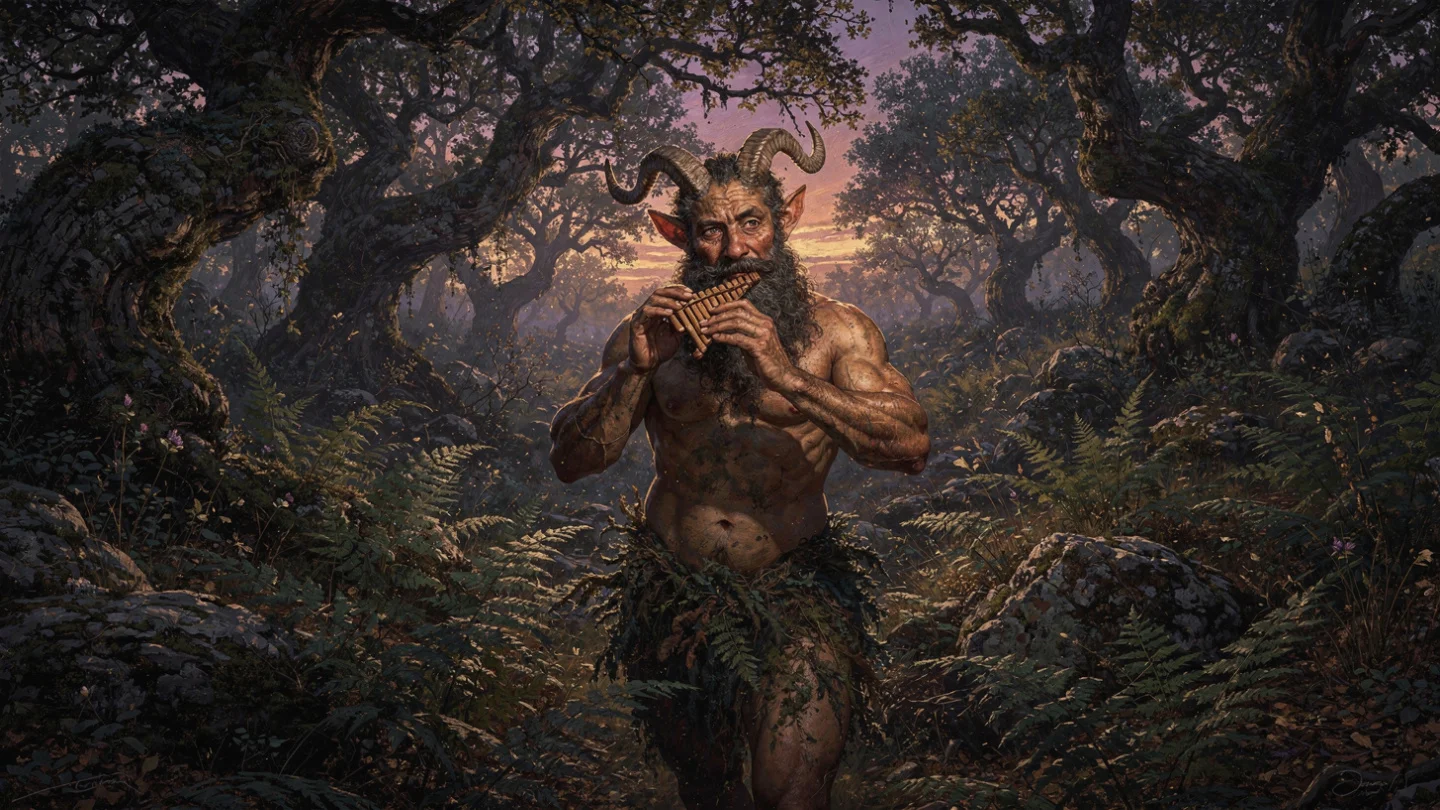
There is a sound that the ancient Greek world called panic, and Pan made it.
The word comes directly from the god’s name: Panikon deima, the fear of Pan, the terror that overtakes a person alone in the wilderness when something in the landscape changes, when the light shifts or the wind stops or a sound arrives from a direction that cannot be located, and the quality of the presence in the surrounding natural world becomes suddenly threatening rather than indifferent. The ancient tradition attributed this experience to Pan’s proximity: the god who haunted the wild places was the god whose unseen presence in the landscape produced the irrational fear that empty places generate in the person who has moved beyond the boundary of the organized human world into the territory that Pan governed.
Panic was not a figure of speech for the ancient Greek world. It was the theological explanation for a genuine and human experience: the sudden overwhelming terror that has no identifiable object, that arrives without warning and departs without explanation, that the person who has felt it cannot fully account for even when the moment has passed. Pan was the explanation for this experience because Pan was the divine principle of the wild world’s indifference to the human world’s categories of safe and dangerous, known and unknown, ordered and chaotic. The wilderness did not threaten the person who entered it through any act of will directed at that person specifically. It threatened them through the quality of its otherness, and Pan was the name of that otherness.
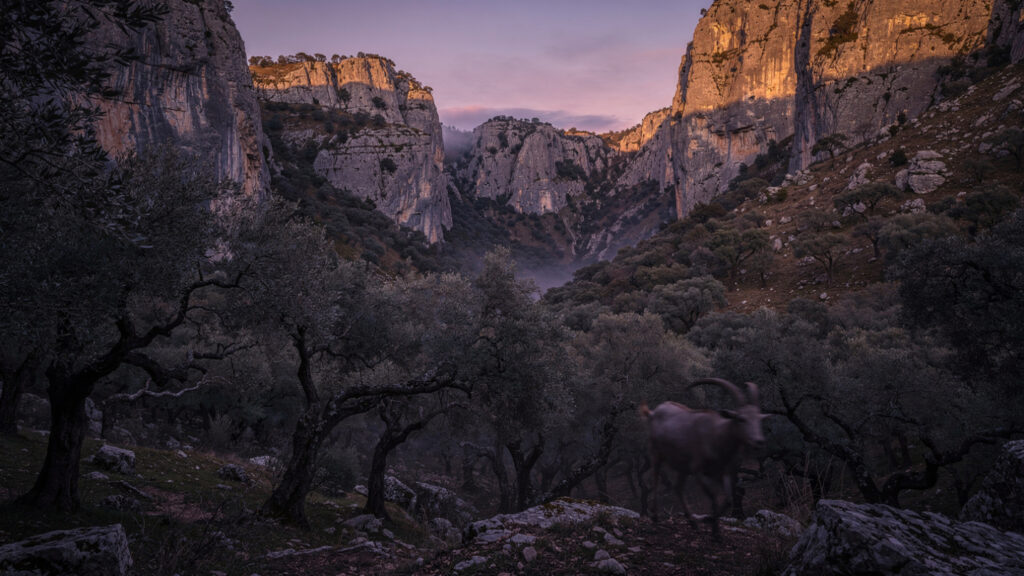
This is the god who made the syrinx from the reeds of the transformed Syrinx, who frightened armies with the sound of his presence, who haunted the Arcadian hillsides before the Olympian tradition had fully organized the divine world around the twelve gods of the summit, and who died in the reign of the Emperor Tiberius in a way that shook the ancient world and has not been fully explained in the two thousand years since.
The Origin and the Parentage
Pan’s parentage in the ancient sources is the parentage of a divine figure whose character, the combination of the divine and the animal, required an origin that could account for both dimensions simultaneously.
The most commonly cited parentage in the ancient tradition gives him Hermes as his father, which is the attribution that the Homeric Hymn to Pan supports and that gives Pan his relationship to the divine messenger who was himself the god of the threshold between worlds: Hermes moved between the divine world and the human world and the underworld as easily as he moved between them, and his son’s movement between the organized world of the gods and the unorganized world of the wilderness is the inheritance of the threshold-crossing quality.
The mother’s identity varies across the ancient sources, with nymphs and mortal women appearing in different versions, and the variant that makes Penelope his mother, the Penelope of the Odyssey who waited faithfully for Odysseus across the twenty years of his absence, is a genuine ancient tradition that certain ancient sources preserve. This variant places Pan’s origin in the complexity of Penelope’s faithfulness: in some accounts, Pan is the child of Penelope’s encounter with all the suitors rather than with any one of them, which would make the god of all, pan in Greek, the product of the faithfulness that was tested by the faithlessness of everyone around it. The etymology is probably wrong but the mythological poetry of the association is genuine.
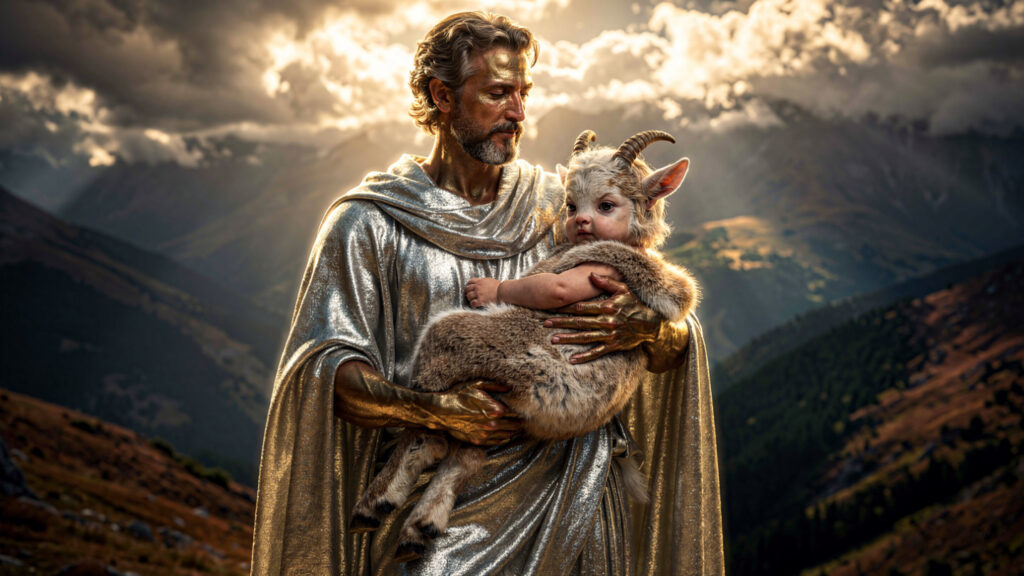
In all versions, the infant Pan caused a sensation: born with goat legs, a bearded face, and horns already present, he was the divine infant who looked least like what the Olympian tradition expected a divine infant to look like. Hermes carried him to Olympus wrapped in a hare’s skin, and the other gods were delighted by him. The Homeric Hymn says that the god who was most glad when he saw him was Dionysus, which is the mythological observation that the god of ecstasy and the god of the wilderness recognized each other as allies in the divine world’s organization: both represented what the Apollonian tradition could not fully contain.
The Arcadian Landscape and Its God
Pan was an Arcadian god before he was a Greek god, and the character of Arcadia, the highland plateau of the central Peloponnese that the ancient world consistently presented as the most ancient and most preserved of the Greek landscapes, is the character that gives Pan his divine function.
Arcadia in the ancient imagination was the landscape that had not been fully organized by civilization. It was high, cold, forested, isolated by surrounding mountain ranges, and inhabited by the oldest communities of the Peloponnese whose religious and cultural practices the wider Greek world had not fully assimilated. The god who belonged to Arcadia was the god who belonged to the landscape before it had been shaped for human use. He was the god of the wild grazing land, the unmarked path, and the spring that emerged from the rock without any human intervention.
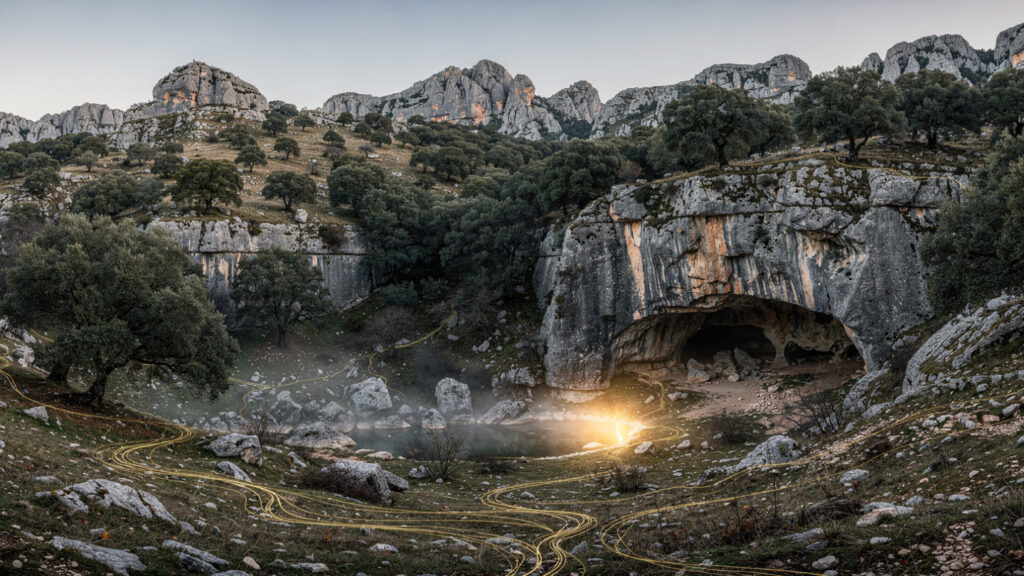
The Arcadian locations associated with Pan were the locations of the pre-Olympian sacred geography that the mythological essays on the Titans in this collection have partially mapped: Mount Lykaion, the sacred peak of Arcadia where the cult of Zeus Lykaios also operated and where the ancient sources describe both divine and deeply unsettling ritual practices, was one of the primary Pan sanctuaries of the ancient tradition. The cave at the foot of Mount Lykaion, the cave where Rhea was said to have given birth to Zeus before hiding him from Kronos, is the cave in whose shadow Pan’s cult operated, which is the mythological geography of the pre-Olympian and the Olympian existing at the same location in the layered way that the ancient sacred landscape consistently produced.
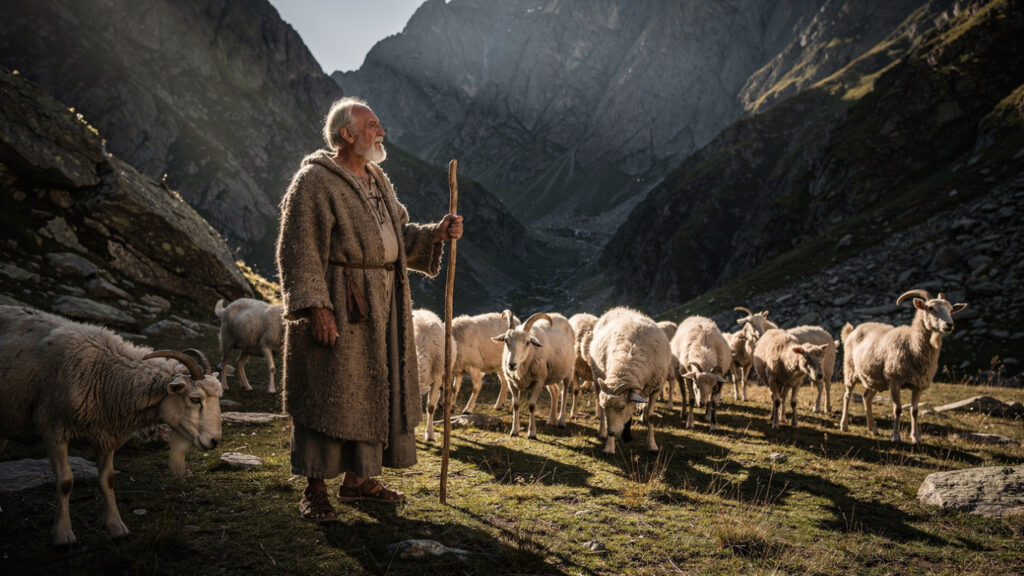
The shepherds who grazed their flocks on the Arcadian hillsides prayed to Pan as the god who determined whether the flocks prospered or declined, who brought the predators or kept them away, who made the grazing land good or bad. This was not an abstract theological relationship: the shepherd’s livelihood depended on the condition of the wild landscape that Pan governed, and the prayer to Pan was the acknowledgment that the shepherd’s organized human enterprise existed within and was dependent on the unorganized natural world that Pan represented.
The Syrinx and What the Music Means
The Pan and Syrinx myth, which this collection develops in full in the Tragic Loves mythological essay, is the myth whose ending is the most concentrated available statement of what Pan’s relationship to the natural world was: the desire that cannot reach its object becomes the instrument that produces the music.
Syrinx was a nymph devoted to Artemis, living the chaste woodland life that the Artemis world organized for the maidens who served the goddess of the hunt. Pan saw her and desired her with the intensity that the ancient sources consistently attribute to his encounters with the natural and divine beauty he met in the wild places he inhabited. She fled. He pursued. The geography of the pursuit, the path through the Arcadian forest to the river Ladon, is the geography of the god of the wild chasing through the wild in the configuration of desire that the ancient world called divine madness.
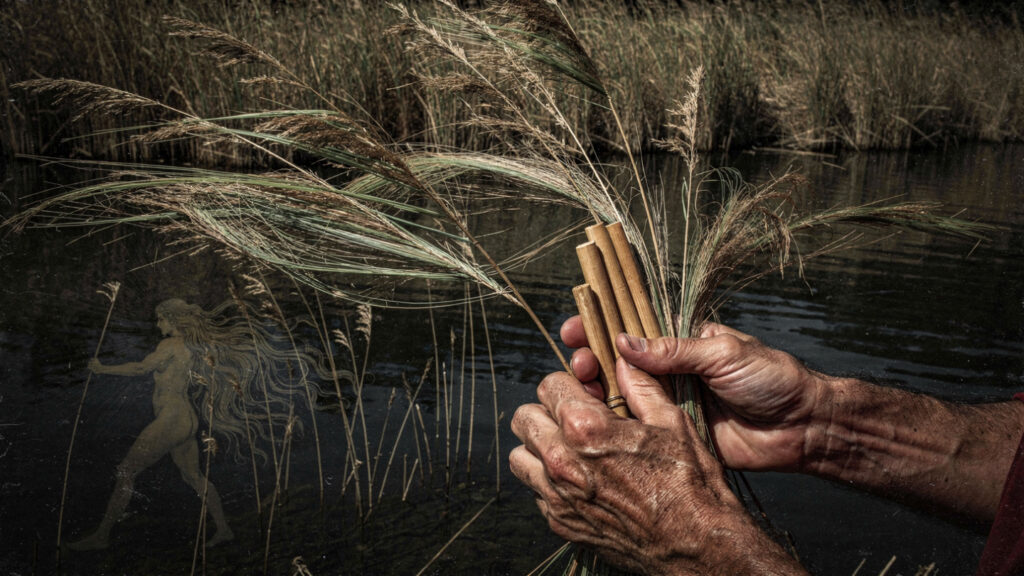
At the river Ladon, Syrinx called to the river nymphs and was transformed into a clump of reeds in the moment before Pan’s hands closed on her. His hands closed on the reeds. The wind through the reeds produced a sound. The sound was the sound of what his desire had become, and Pan, hearing it, cut the reeds of different lengths and bound them together with wax and produced the instrument that bears her name: the syrinx, the panpipes, the instrument that is the permanent form of the desire that could not reach its object.
The music of the panpipes carries in the open air in a way that the lyre and the kithara do not: the breathy, slightly plaintive quality of the sound across the open pipe, the way it carries across the hillside and into the gorge and through the forest, is the sound that the Arcadian landscape amplifies and that Pan’s outdoor domain makes the appropriate instrument for the divine presence in the wild places. When the shepherd in the Arcadian hills hears a sound that might be the wind through the reeds or might be the panpipes of the absent Pan, the ambiguity of the auditory experience is the quality of the encounter with the divine in the wild: the god who cannot be seen can be heard, and the sound of the hearing cannot be fully distinguished from the sound that the landscape itself produces.
Pan and Apollo | The Two Musics
The contest between Pan and Apollo, in which Tmolus the mountain god judged the competition between the panpipes and the lyre, is the mythic expression of the opposition that the ancient Greek world maintained between the two musical principles the instruments represented.
Apollo’s lyre, as the mythological essays on Iris and Ares and the ancient Greek music article in this collection develop, was the instrument of the precise and the controlled: the individual string whose pitch and duration were exactly determined by the player’s fingers, the instrument of the Pythagorean mathematical ratios and the Apollonian rational order. The panpipes were the instrument of the approximate and the atmospheric: the breath across the open pipe that produces a tone whose quality varies with the pressure and the angle and the condition of the player’s lips, the instrument of the Arcadian pastoral and the wilderness and the god who made it from the reeds of the transformed nymph.
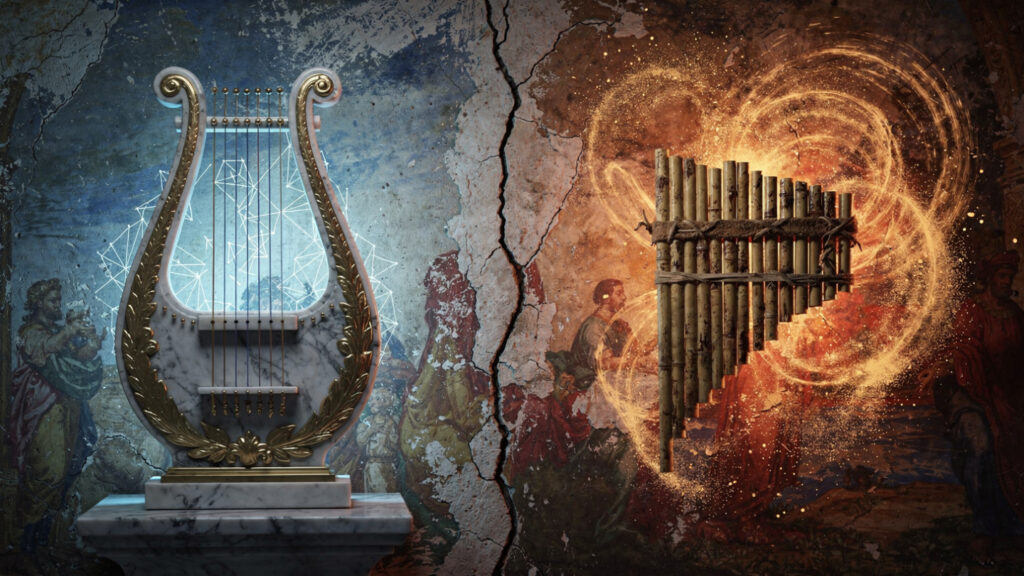
Tmolus gave the victory to Apollo, and his judgment was the judgment that the Apollonian tradition endorsed: the precise, the controlled, and the mathematically correct superior to the approximate, the atmospheric, and the emotionally immediate. King Midas, who was present at the contest and disagreed with the verdict, received donkey ears from Apollo as the punishment for preferring the panpipes to the lyre: the punishment for preferring the imperfect music of the wild to the perfect music of the divine order was the animal attribute that most directly marked the recipient as belonging to the category of the irrational.
But the myth preserves the dissent as well as the punishment. Midas preferred Pan’s music. He was wrong according to the divine judgment of Tmolus and the Apollonian tradition. He had ears enough to hear what Pan’s music contained that Apollo’s did not, and the content of his aesthetic judgment was not entirely wrong even if his public expression of it produced consequences he had not anticipated.
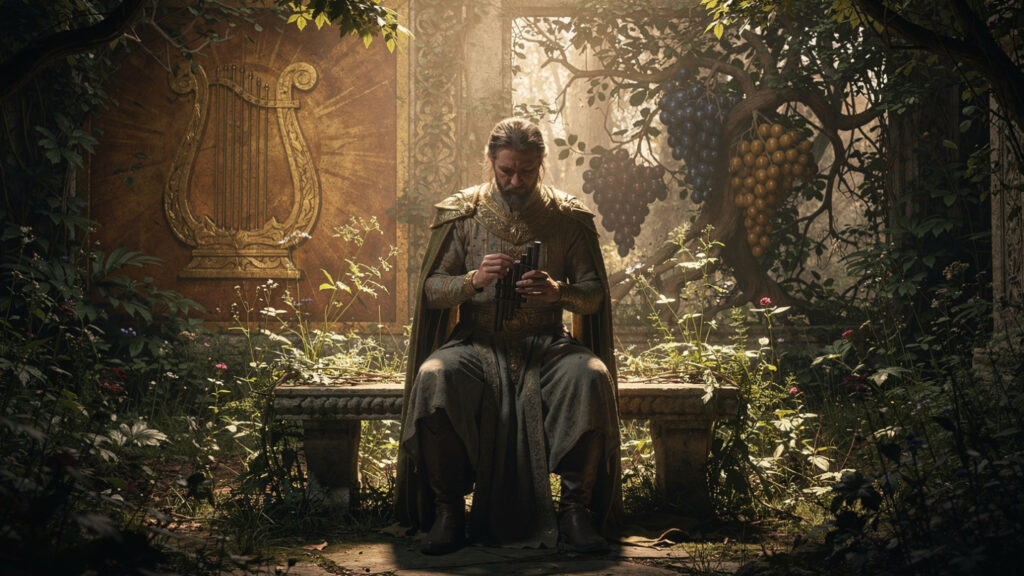
The panpipes carried something that the lyre did not carry. They carried the sound of the wilderness, the emotional register of the music that the natural world produces when the wind moves through the reeds and the shepherd stands alone on the hillside as the darkness comes down from the mountain. This is not a better music than Apollo’s. It is a different music, and the ancient world that preserved both the contest and Midas’s dissent was the world that understood the difference.
The Death
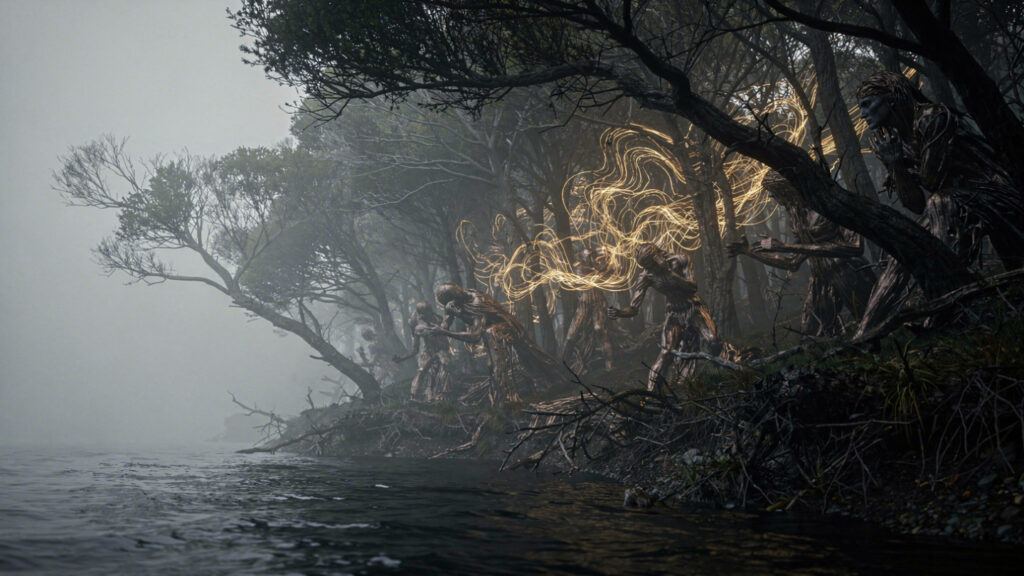
In the reign of the Emperor Tiberius, in the period that the ancient calculations placed within a few years of the crucifixion of Jesus of Nazareth, a ship was sailing from Greece toward Italy. The pilot’s name was Thamus, and he was an Egyptian by birth. As the ship passed near the island of Paxi in the Ionian Sea, a voice called to him from the shore: Thamus, are you there? When you reach Palodes, announce that the great god Pan is dead.
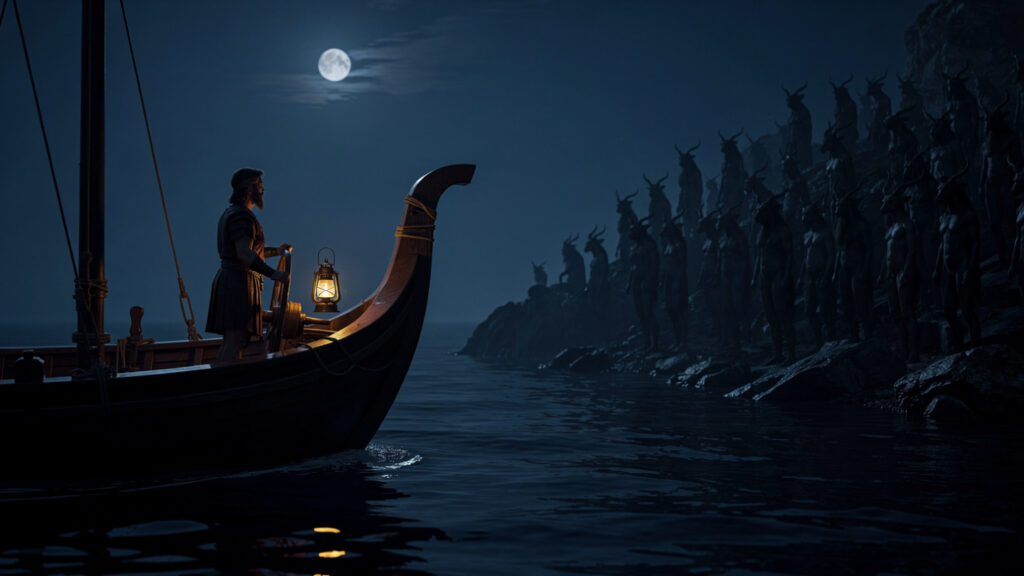
Thamus said nothing until the ship reached Palodes. Then, as the voice had instructed, he announced from the ship: the great god Pan is dead. The shore responded with a great sound of lamentation, not from one voice but from many, the collective grief of many people or many beings receiving the news simultaneously.
This is Plutarch’s account, preserved in his dialogue On the Failure of Oracles, written in the late first or early second century CE when the Delphi oracle was visibly declining and the question of why the gods seemed to be withdrawing from the world was the question that serious philosophical minds were engaging with. Plutarch gives the account as something he heard from a reliable source who had heard it from a reliable source, the chain of transmission that the ancient tradition used for events that could not be directly documented. He also gives the Emperor Tiberius’s response: Tiberius was so disturbed by the report that he convened a council of scholars to discuss it.
The theological implication that Plutarch’s dialogue develops is the implication that made the account so resonant for the later Christian world. If divine beings could die, then the gods of the pagan order were not eternal in the way the philosophical schools had assumed. The Christian reading that carried the Thamus story through the early church, attaching it to the moment of the crucifixion as the announcement of the end of the pagan divine world, was the reading that Eusebius of Caesarea shaped in the fourth century CE. It was this interpretation that gave the story its longest subsequent life in the West. The death of Pan was the death of the old gods, announced at the moment when the new divine dispensation began.
Plutarch’s own interpretation is more philosophically careful and more interesting: he was engaged with the question of what kind of beings the oracular and divine presences at the ancient sanctuaries were, and his dialogue develops the possibility that they were daimons rather than gods in the full sense, intermediate beings of greater power and longer life than mortals but not eternal, capable of improvement and degradation and ultimately of death. If the oracle at Delphi was failing, in this account, it was failing because the daimonic being whose presence had sustained the oracle was declining or had departed, and the announcement of Pan’s death was the announcement of the death of a daimonic presence in the natural world rather than of a divine principle.
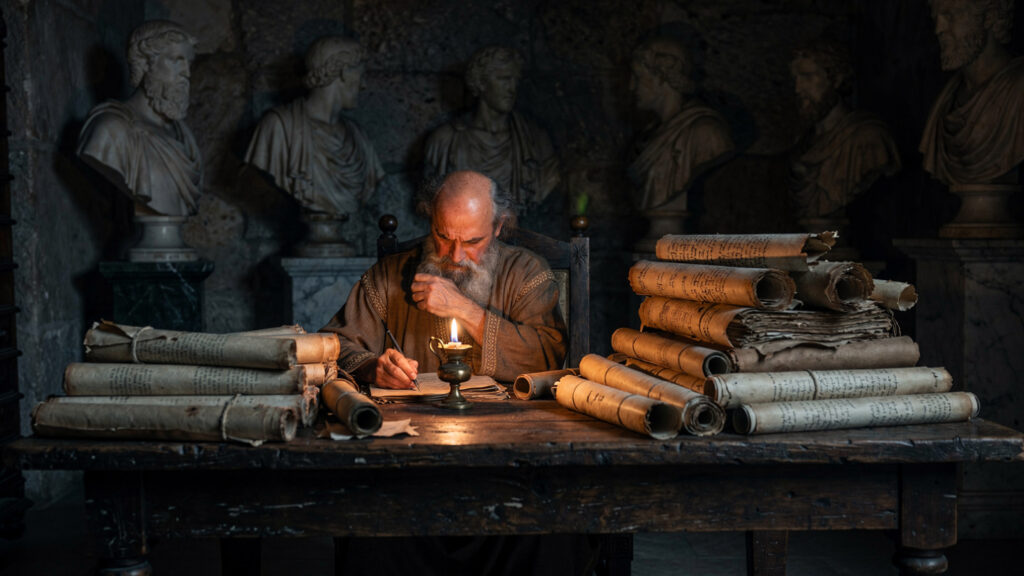
The honest answer to the question of what the Thamus account means is that nobody knows. The account is genuine: Plutarch is not fabricating it, he had it from a source he trusted, and the emperor Tiberius’s reaction suggests that the report reached Rome in some form. What Thamus heard at Paxi and what was lamented at Palodes and what the death of Pan meant in the context of the reign of Tiberius are questions that the historical record does not answer and that the philosophical tradition has been engaged with since Plutarch first committed the account to writing.
What the account communicates with absolute clarity is the quality of Pan’s presence in the ancient world: the god who died was the god whose death could be announced as a single event that the surrounding world responded to with collective grief. The forests wept. The animals fell silent. The voice from the shore had waited for Thamus’s ship to pass near Paxi to give the pilot the instruction that a dying god needed a human voice to announce his death. The great god Pan is dead.
The Legacy
The panpipes that Pan made from the reeds of the transformed Syrinx are still being played.
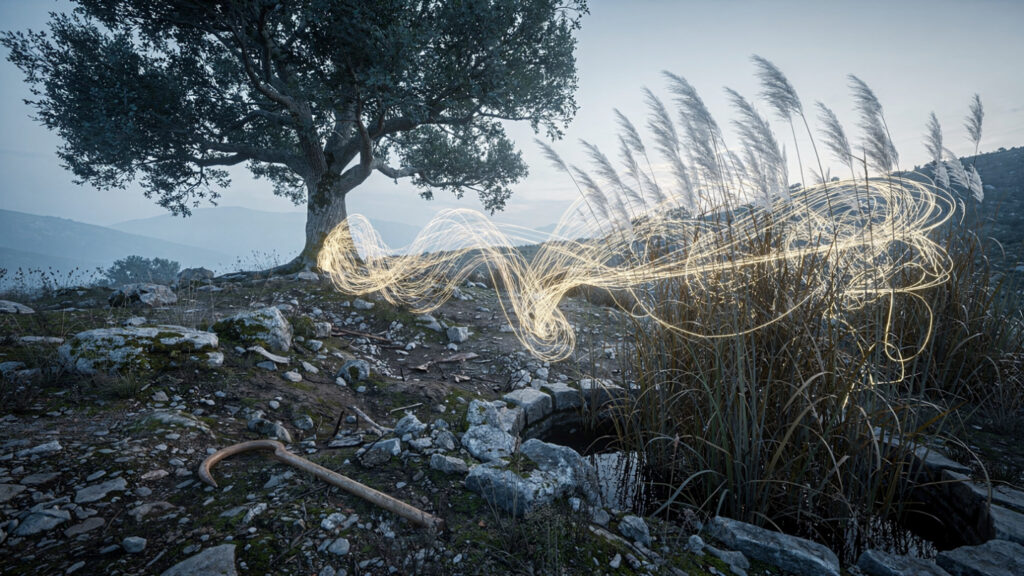
The instrument has not changed in any fundamental way from the one the mythic world placed in Pan’s hands at the riverbank in Arcadia. It is still the series of pipes of different lengths, bound together, played by the breath across the open end of each pipe, producing the sound that carries across the open air. The Romanian nai, the Andean siku, and the pan-flute traditions of the Balkans and the African highlands all developed their own versions of the instrument independently or in contact with the Greek world, and the sound of the breath across the open pipe is the sound that the wilderness makes in the instrument that the wilderness generated.
The god of the wild places is the god who is most easily lost and most urgently needed in the civilization that has moved furthest from the wild places. The ancient cities prayed to Pan at the boundary of the cultivated land because the wild world beyond the boundary was the world that the cultivated land depended on and could not fully control. The prayer was the acknowledgment of the dependence: the organized human world at its most organized is still surrounded by and dependent on the unorganized natural world that Pan represented.
The word panic is still in the language. The sound that the wind makes through the reeds is still the sound that the panpipes make. The god whose death was announced from a passing ship at Paxi is the god whose presence is still felt in the quality of the empty wild landscape at the moment when something in the surrounding world changes and the irrational fear arrives without an object.
Pan is dead, said Thamus at Palodes, and the shore responded with grief. But the reeds are still there. And when the wind moves through them, the sound that emerges is the sound of a desire that became music, which is what Pan made of everything he wanted and could not have.
At Olympus Estate, Mythic Essays moves through the deeper currents of the Greek tradition. The word panic is from Pan. The word syrinx is from Syrinx. The sound of the wind through the reeds is the sound of the desire that could not reach its object. The great god Pan is dead. The announcement was made at Palodes in the reign of Tiberius. The shore responded with grief. The instrument is still being played.