

There is a quality of attention that arrives when the place you are sleeping in is older than the country you live in.
Not the attention of the museum visitor, careful and respectful and slightly detached. Something more unsettled than that. The attention of someone who has been placed inside a continuity they did not arrange and cannot entirely account for, who falls asleep in a room whose walls have absorbed three hundred years of Aegean weather and wakes to a view that Venetian merchants looked out at before the concept of tourism existed.
Greece is one of the few places in Europe where this quality of attention is widely available. The historic property stock is large, the landscapes are saturated with the events and ideas that formed Western thought, and the distances between a rented room and a significant ancient site are short enough that the relationship between where you sleep and where history happened is not theoretical but physical.
These five landscapes are chosen not for the properties that happen to be there but for what the landscape does to the experience of staying in a good one.
The Valley Below the Oracle
The town of Arachova sits six kilometres east of Delphi on the southern slopes of Parnassus, and the stone houses that climb its steep lanes above the Pleistos Valley have been looking down at the sacred precinct below them since the Byzantine period.
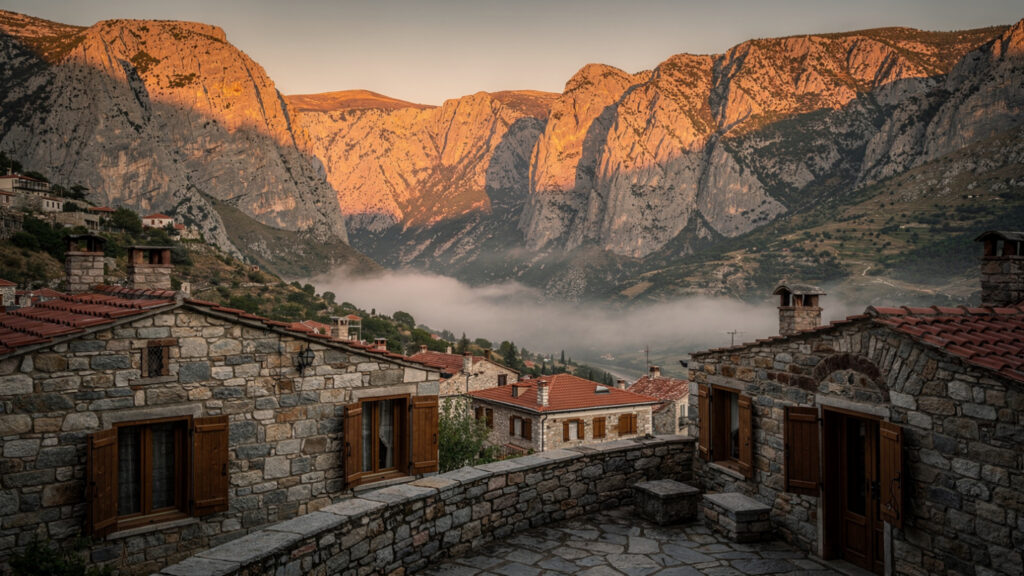
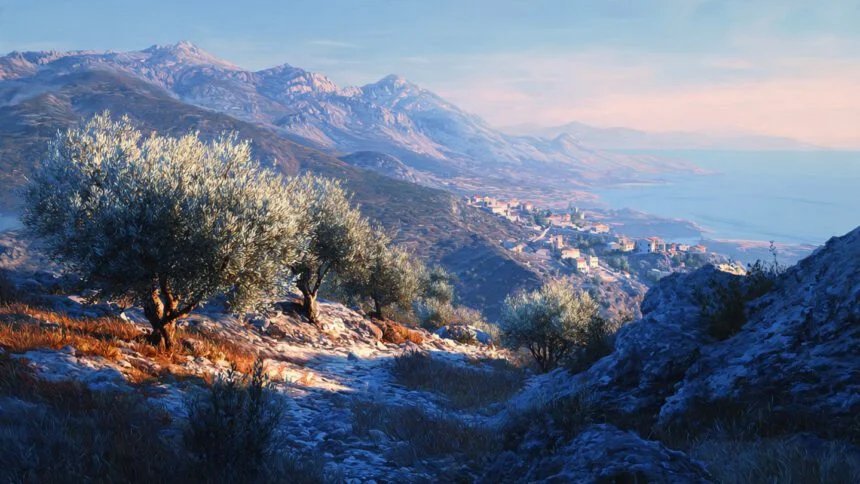
Renting in Arachova rather than in the modern village adjacent to the archaeological site gives you the experience of the landscape rather than the site. The valley below Delphi is one of the finest in central Greece: the silver mass of the olive groves extending south toward the Gulf of Corinth, the limestone walls of the Phaedriades cliffs visible above the site, the quality of the morning light that arrives here before it reaches the valley floor.
The ancient sources describe the experience of approaching Delphi as a progressive separation from the ordinary world, a heightening of attention produced by the landscape rather than by the site itself. The road from the east follows the Pleistos gorge upward and arrives at the sanctuary having already done the work of transition. A property in Arachova places you in this approach rather than at its terminus, and the experience of walking down to the site each morning, descending into the precinct that generations of petitioners climbed toward, reverses the ancient approach in a way that is itself a form of engagement with what the oracle was.
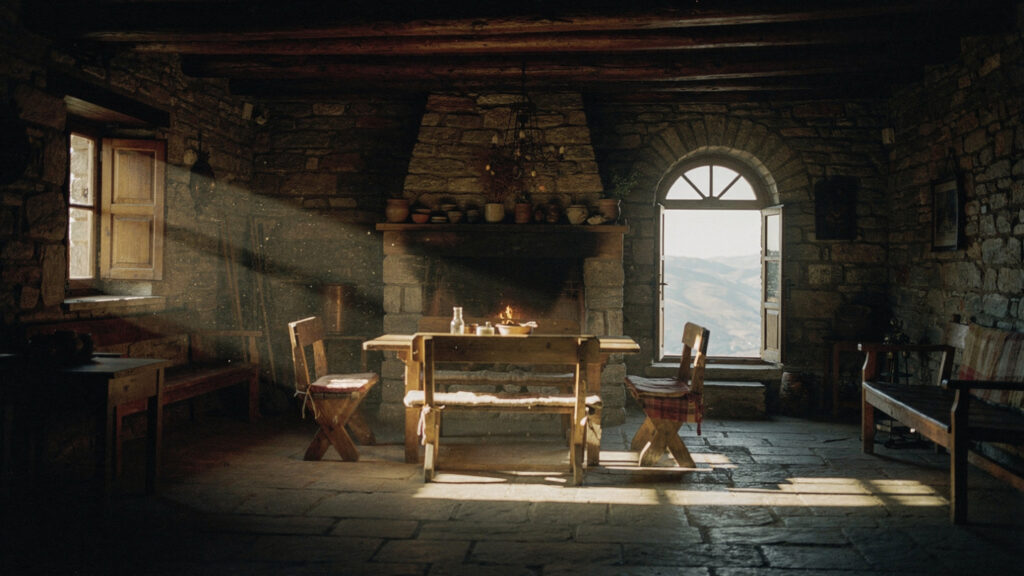
The stone houses of Arachova have thick walls, wooden-beamed ceilings, and hearths that were built for winters at eight hundred metres. They are cold in spring and warm in summer and very dark at the time of afternoon that the ancients called the hour of Pan, when the heat is absolute and the silence is the silence of a landscape that has decided not to perform.
The Venetian Foundation on Crete
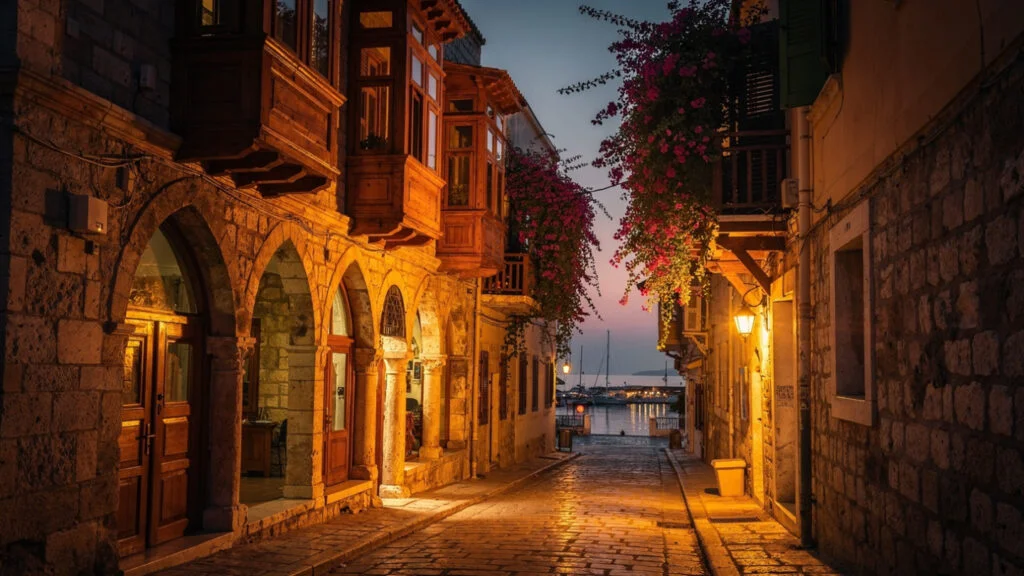
Chania’s old town survived the twentieth century better than most Cretan urban fabric, and the Venetian-Ottoman hybrid buildings of the neighbourhood behind the harbour contain a category of property that has no equivalent elsewhere in Greece.
The ground floors are Venetian stone, the arches Gothic in their proportions, the walls thick enough to have absorbed four centuries of Aegean summer without losing their thermal competence. The upper floors carry the Ottoman timber framing and the projecting bay windows, the sahnisin, that belong to the period when the harbour was one of the most commercially significant in the eastern Mediterranean. Staying in one of these buildings is not staying in a historic neighbourhood. It is staying in a document of the sequence of powers that found Crete worth holding and the architectural arguments they made about permanence.
The Minoan layer is not in Chania. It is at Knossos, forty-five minutes east, and at the Palace of Phaistos on the south coast, and at the dozens of smaller sites that a week on the island can reach without exhausting. But the quality of mind that produced the Minoan civilisation, the confidence, the openness, the sophistication of a culture that built without defensive walls because it trusted its own power, is legible in the Cretan landscape even where the Minoan buildings are not visible. The soil produces it. The light produces it. The food, which is the Minoan agricultural inheritance prepared by people whose relationship to their own land is unbroken, produces it.
A week in a Venetian house in Chania, eating from the market at the end of the harbour, driving south to swim at the foot of the White Mountains, and spending two afternoons at Knossos and one at the Archaeological Museum of Heraklion: this is the Cretan experience that the island’s depth justifies and that the heritage property makes spatially coherent.
The Plaka Apartment and the Agora Below
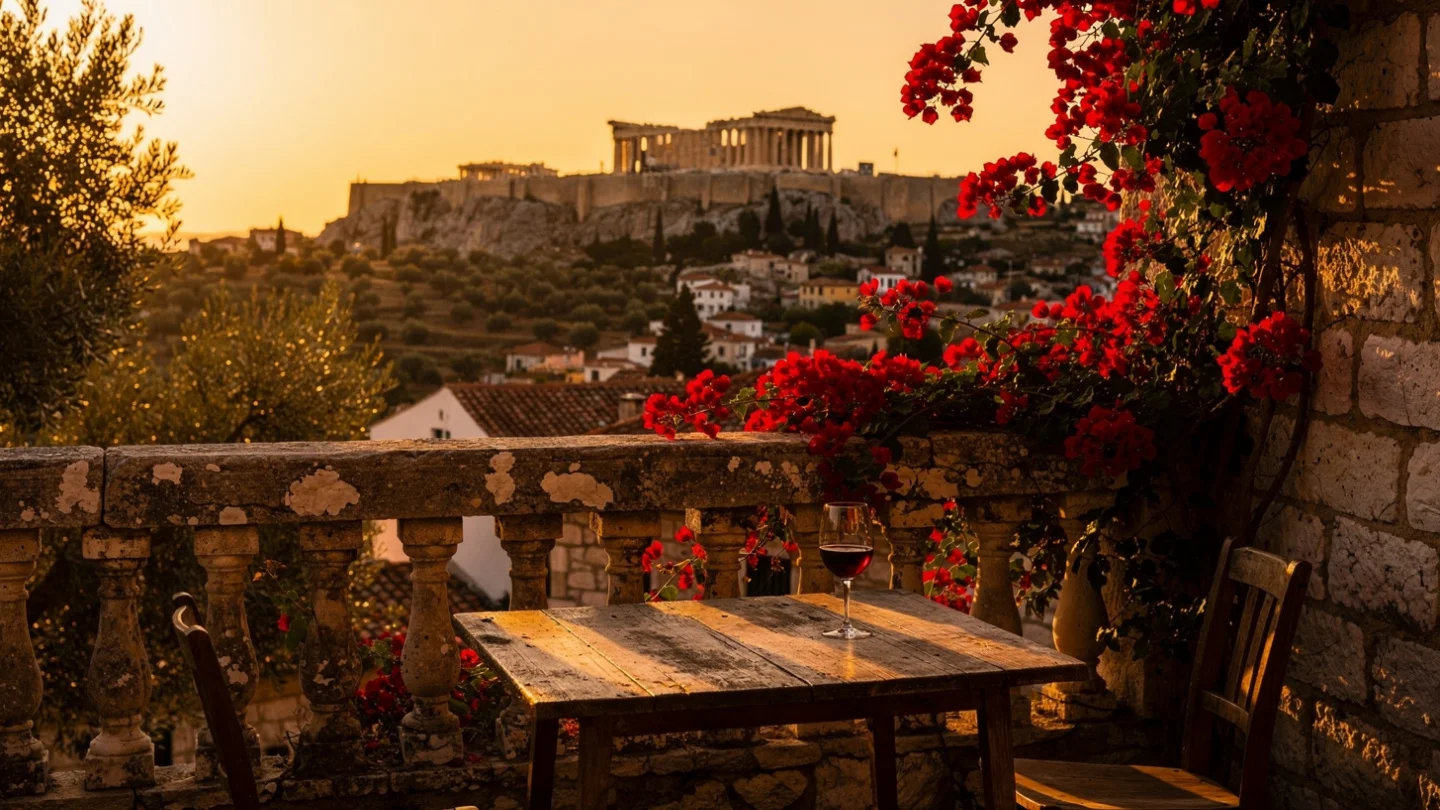
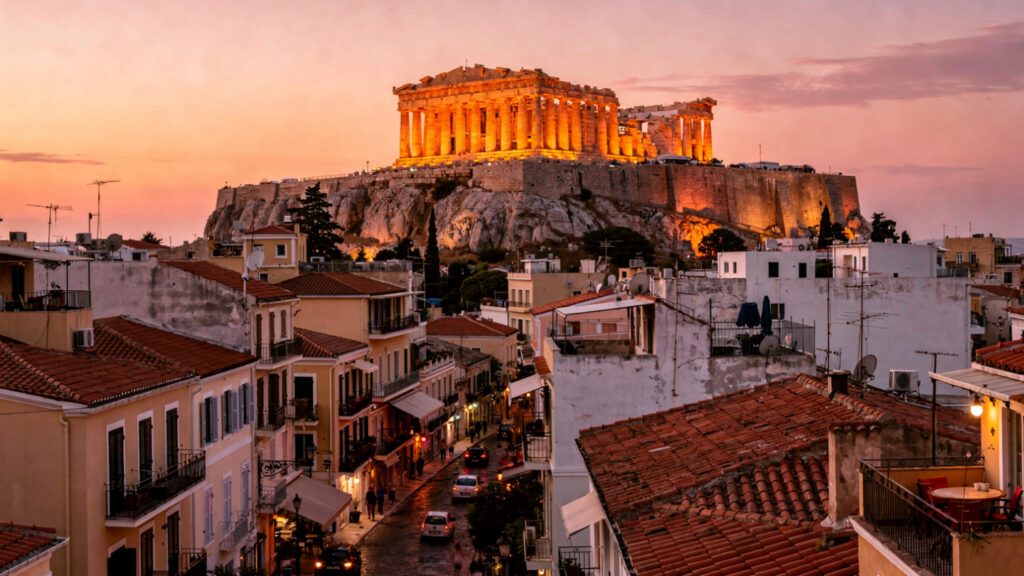
The Plaka sits between the Acropolis and the Ancient Agora, and an apartment in its upper lanes, above the tourist zone and inside the residential fabric of the neighbourhood, places you within walking distance of both while being inside neither.
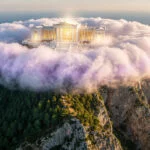
This is the correct spatial relationship to the Acropolis for anyone who wants to understand it rather than simply visit it. The Parthenon seen from the lanes of Plaka, above the rooftops, at the angle and the distance that the neighbourhood was built to provide, is a different object from the Parthenon seen from the Propylaea entrance at the beginning of a guided tour. At a distance, at the hour when the low sun catches the marble columns at an angle that makes them glow, it is the architectural achievement that its builders intended: a structure that commands the skyline of a city and communicates, from a distance, the quality of intellectual and political confidence that the Athenian fifth century produced.
The Ancient Agora is ten minutes on foot from the upper Plaka. The Agora is where the actual conversations happened: the market and the law court and the philosophical school and the civic assembly, all in the same space, all visible to each other, all part of the same argument about what a city is and what its citizens owe each other. The philosophical tradition that the Western world inherited from Athens was not produced in the Academy or the Lyceum alone. It was produced in the Agora, in the midst of the commercial and political and social life of the city, by people who understood that thinking about the world required being present in it.
An apartment in the Plaka that allows a morning walk through the Agora to become a daily rather than an occasional habit changes the relationship between the philosophy and the place. The ideas did not arise in a vacuum. They arose here, in this density of human activity, under this light.
The Ionian House on Ithaca
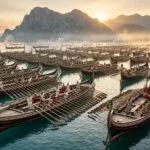
Ithaca has a permanent population of approximately three thousand people and a coastline of such variety and beauty that a week is insufficient to see it. It also has the atmospheric quality of an island that has been narratively significant for long enough that the narrative has entered the landscape.
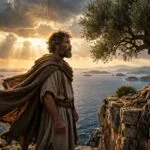
The spirit of homecoming inhabits Ithaca in the way that the spirit of other great stories inhabits other great landscapes: not as a literary reference that the visitor brings with them but as a quality of the place that the visitor discovers. The small bays visible from the hillside roads above Vathy, the quality of the light on the water in the late afternoon, the sense of being at the end of something and the beginning of something else simultaneously: these are properties of the landscape that the Odyssey located here because they were already there.
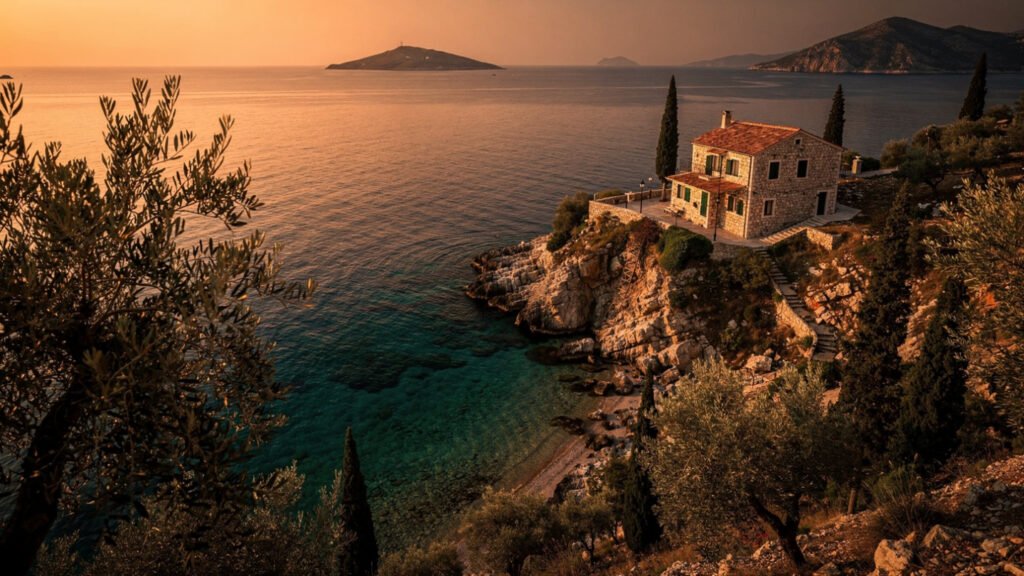
A stone house on the slopes above Vathy, or in one of the smaller villages on the north of the island where the tourist infrastructure thins and the agricultural character of the place becomes the primary visible reality, provides the solitude that Ithaca’s small size and limited infrastructure impose on all its visitors. There is not much to do on Ithaca in the sense that the resort islands of the Ionian chain provide things to do. There is the sea, and the hills, and the quality of the evening in the harbour, and the time that an island this size at this distance from its nearest neighbour naturally produces.
For the reader, the writer, or anyone whose relationship to the Odyssey is sufficiently close that being in its landscape is a meaningful form of engagement with the text, Ithaca is the only Greek island where the myth and the place are so precisely matched that the stay and the reading reinforce each other rather than competing.
The Rural House Near Epidaurus
The Theatre of Epidaurus seats fourteen thousand people and its acoustics are perfect. A match struck at the centre of the orchestra is audible in the back row. Performances in the ancient theatre during the summer Epidaurus Festival draw audiences from across Greece and Europe, and the experience of watching a Greek tragedy in the theatre for which it was written, under the sky that the ancient audience also sat under, is one of the few genuinely irreplaceable encounters available to a visitor to Greece.
The Sanctuary of Asclepius at Epidaurus was the most significant healing centre of the ancient world. People came here from across the Mediterranean to sleep in the enkoimesis, the sleeping hall, and to receive healing through dreams. The combination of theatrical performance and therapeutic sleep under divine supervision was not two separate activities at Epidaurus. It was the same activity understood in two registers. The ancient Greeks, who gave Western culture both its medical tradition and its dramatic tradition, did not distinguish between the health of the body and the health of the imagination. Both were conditions of the soul.
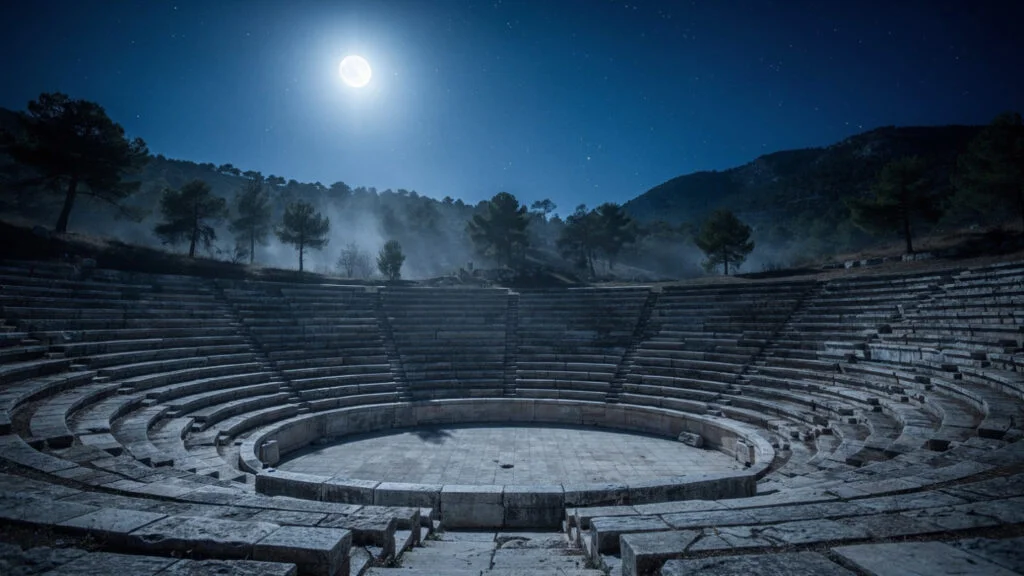
A rural stone house in one of the villages of the surrounding Peloponnese countryside, within twenty minutes of the sanctuary, provides the base for the kind of visit that the site rewards rather than the kind it typically receives: not a morning excursion from a coastal resort followed by an afternoon at the beach, but several days of return visits at different hours, the site at dawn before the tour groups arrive, the theatre at sunset, the museum twice.
The countryside around Epidaurus is the Peloponnese at its most quietly beautiful: pine-covered hills, small agricultural valleys, the smell of the Greek summer in inland Peloponnesian countryside where the wild herbs are dense and the heat is dry rather than humid. A stay in this landscape rather than in transit through it is the condition under which the sanctuary gives back what it was built to give.
The Logic of the Heritage Stay
The five landscapes above are not simply locations where historic accommodation happens to be available. They are places where the relationship between where you sleep and what the place is produces something that a hotel cannot replicate and a day visit cannot reach.
The Delphi valley at dawn from a terrace in Arachova. The Agora on a Tuesday morning with no particular agenda. The Theatre of Epidaurus on a night when the moon is full and the performance runs past midnight. The view of Ithaca’s bays from a hillside house at the hour when the light turns the water to copper. The Venetian arch of a Chania doorway with the sound of the harbour market beginning outside.
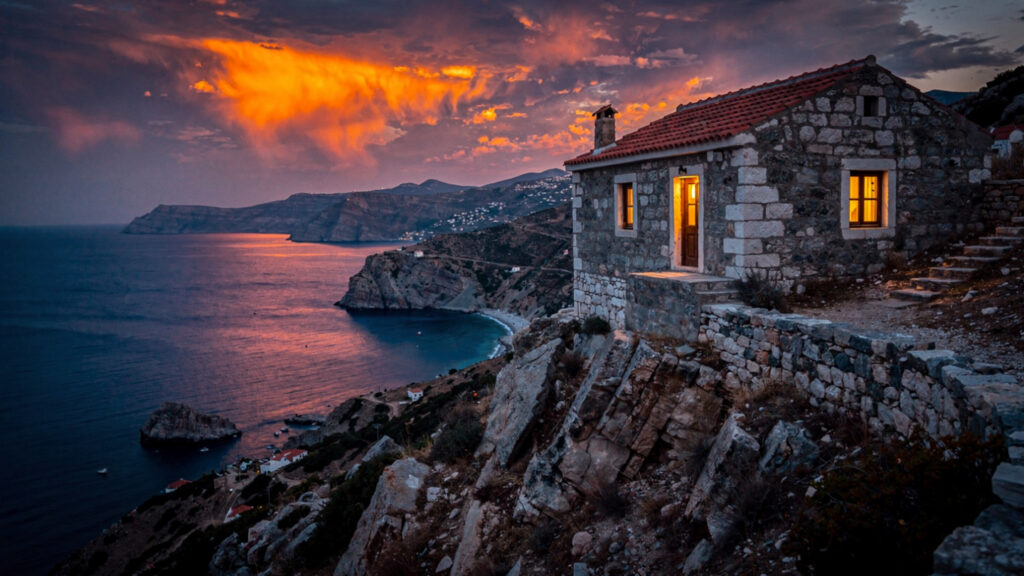
These are not experiences that can be booked. They are experiences that can only be arrived at by staying long enough and in the right place for the landscape to stop performing and start being itself.
That is what a heritage stay in Greece actually is, and why the property matters as much as the destination.
At Olympus Estate, Wanderlust Greece guides you across the sacred and storied terrain of the Hellenic world, and through the properties in it that are worth staying in. The place you sleep shapes what you see. A terrace above the Pleistos Valley is not the same as a hotel room in the village below the archaeological site. An apartment in the Plaka’s upper lanes is not the same as a suite in the tourist zone. A stone house on Ithaca’s north coast is not the same as a resort on Kefalonia. The distinction is not about comfort. It is about which part of the landscape you are inside.