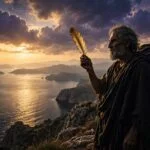
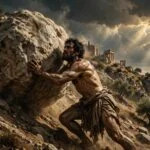
Amphiaraus knew he was going to die.
Not in the vague and general sense that all mortals know they will die eventually: in the sense of the seer who could read the future clearly enough to know the date and the manner and the campaign whose failure would kill him. The Seven Against Thebes, the expedition organized to restore Polynices to the Theban throne that his brother Eteocles was refusing to share, was the campaign that Amphiaraus foresaw as catastrophic from the beginning. He knew the seven leaders would not take Thebes. He knew he would not return. He refused to go.
His wife Eriphyle made him go.
Eriphyle had been bribed with the necklace of Harmonia, one of the most cursed objects in the Greek mythological tradition, a piece of jewelry whose origin in the wedding of Cadmus and Harmonia and whose subsequent history of producing destruction in every household it entered was the curse that Polynices deployed when he needed to move Amphiaraus from refusal to compliance. Eriphyle received the necklace and used the power that the agreement between Amphiaraus and Adrastus had given her: the two men had agreed, after an earlier quarrel, that any future dispute between them would be resolved by Eriphyle’s judgment. Polynices brought the necklace to Eriphyle. Eriphyle ruled that Amphiaraus must join the expedition. Amphiaraus knew this was how it would happen. He went.
Before he left, he instructed his sons to kill their mother when they came of age, and to mount a second expedition against Thebes to avenge his death. He told them the future because he could not prevent it, and the quality of his prophetic knowledge, the knowledge that sees the outcome without being able to change it, was the quality that made the ancient tradition understand his subsequent divine status as the appropriate consequence of his human condition: a man who had lived entirely inside the truth of what would happen was the man whose death could not be simply the end of his existence.
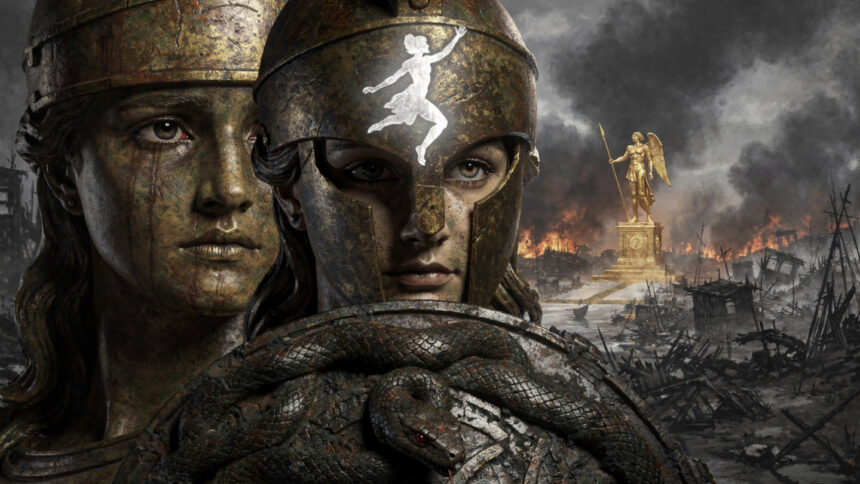
The campaign failed as he had said it would. The seven were defeated. And at the moment when the Theban forces were about to kill Amphiaraus from behind, Zeus opened the earth.
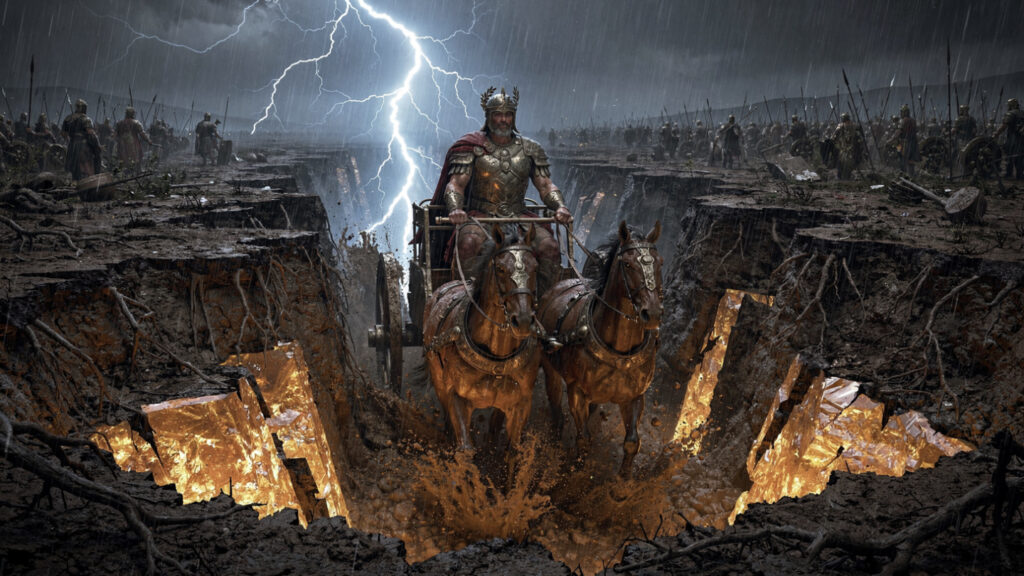
The intervention was the intervention of a thunderbolt: Zeus struck the ground before the pursuing warrior could reach Amphiaraus, and the earth opened, and Amphiaraus and his chariot and his horses descended into the earth alive, swallowed by the chthonic world that his prophetic vision had always occupied more than the ordinary surface world of the living. He became a chthonic deity, a figure of the underworld whose gift was the communication of divine wisdom to the mortals above who sought it through the mechanism of the dream.
The Theology of the Dream Oracle
The Amphiaraus sanctuary at Oropos belongs to the category of the ancient Greek dream oracle, the form of sacred site whose therapeutic and prophetic function operated through the mechanism of the sacred sleep rather than through the mediated pronouncement of the inspired prophet.
The distinction between the dream oracle and the Apollonian oracle is the distinction between two different ancient Greek understandings of how divine communication reached mortal recipients. The Apollonian oracle at Delphi, which the collection’s dedicated article develops in full, operated through the Pythia whose altered state of consciousness produced the pronouncements that the sanctuary’s prophetes then mediated into communicable form. The divine communication in the Apollonian model was the communication filtered through the human intermediary, shaped by her physiological state and then reshaped by the interpreter’s organizational intelligence.
The dream oracle, the enkoimesis tradition that the Amphiaraus sanctuary at Oropos and the Asclepius sanctuary at Epidaurus both practiced, operated through the direct communication of the divine to the sleeping recipient: the person who had performed the required purifications and made the required offerings and lay down in the sacred sleeping hall, the enkoimeterion, received the healing or the prophetic knowledge directly in the dream rather than through the mediated channel of the Pythia’s trance. The divine spoke in the language of the dream, and the dreaming recipient was the direct recipient rather than the audience for the professional intermediary’s interpretation.
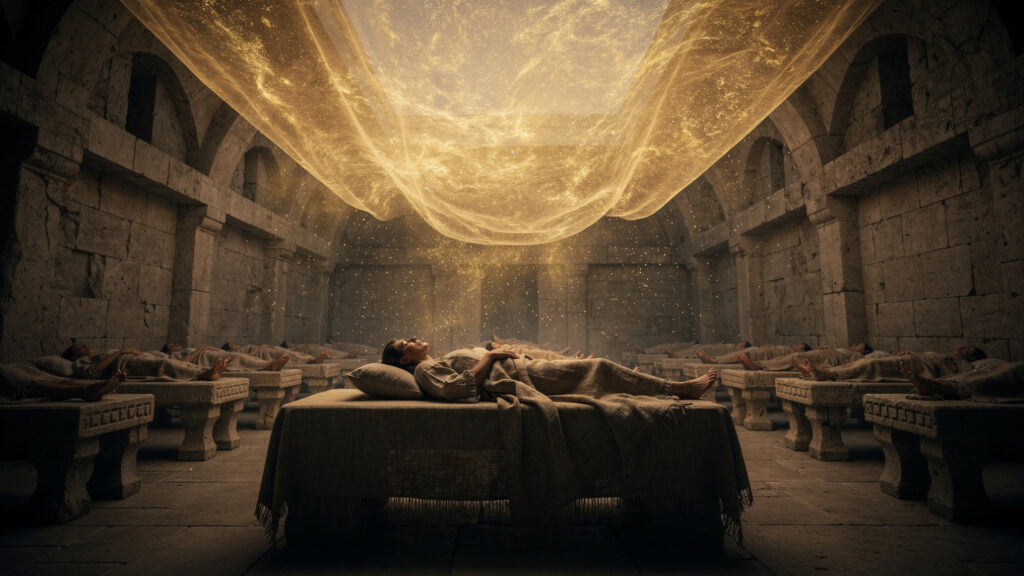
The ancient Greek world understood the dream as the medium in which the boundary between the divine and the human was most permeable. The dreaming person was the person whose ordinary waking consciousness, with its resistance to the divine communication, had been suspended, and the suspension made the reception possible. The Homeric world consistently uses the dream as the mechanism for divine messages to human recipients: Agamemnon’s dream in the second book of the Iliad, the dream of Penelope in the Odyssey, the dream of Achilles in which Patroclus appears. These are the literary examples of the broader ancient Greek understanding that the divine reached the human most directly through the dream.
What the healing sanctuaries did was institutionalize this understanding into a therapeutic practice: they created the physical and ritual conditions that the dream oracle required, the purification that prepared the recipient’s body and mind, the sacred sleeping space that made the receipt of the divine dream the purpose of the sleep rather than simply its incidental possibility, and the trained interpreters who could help the dreamer understand what the dream had communicated if the communication required interpretation.
The Myth of Amphiaraus and What It Encoded
The character of Amphiaraus in the ancient mythological tradition is the character that the Oropos sanctuary preserved and developed in its ritual form: the figure who sees the truth and cannot act on it freely because the social world in which he lives will not allow the truth-seer’s freedom from the obligations that the truth-seer would not otherwise accept.
This is the tragic dimension of the prophetic gift as the ancient Greek tradition consistently understood it: the prophet who knows the future is not the prophet who is freed from the consequences of the future by the knowledge of it. The prophet is more thoroughly trapped by the future than the ordinary person, because the ordinary person does not know what is coming and can therefore hope that the present course of action will produce the outcome they desire. The prophet knows it will not and must act in the full knowledge of the futility of the action. Amphiaraus going to Thebes was not the action of a man who hoped he might survive: it was the action of a man who knew he would not and went anyway because the social structure in which he lived gave him no alternative.
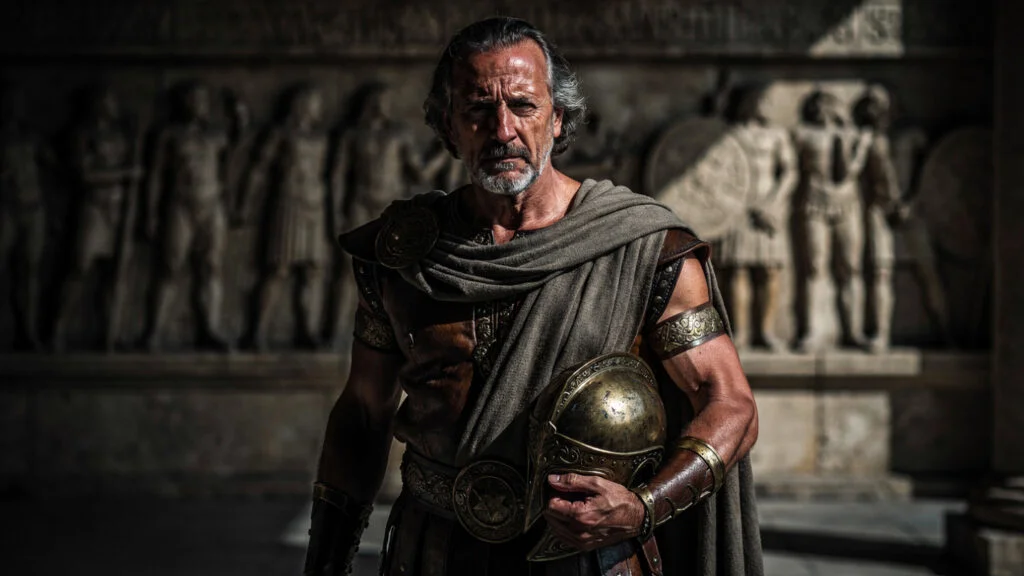
The Amphiaraus tradition also encoded the ancient Greek understanding of the relationship between the prophetic gift and the prophetic lineage: Amphiaraus was the descendant of Melampus, the mythological figure who was the founder of the prophetic tradition in the Greek mainland, the man whose capacity for the prophetic was the capacity that the lineage had transmitted and refined across the generations. The prophetic gift in the Greek tradition was understood as something that passed through families rather than appearing randomly across the population, and the Amphiaraus tradition was the tradition of the prophetic lineage at its fullest development: the descendant who had inherited the gift in its most complete form, who could see clearly enough to know his own death, and who died as the consequence of being unable to refuse the social obligations that the ordinary man who could not see was able to resist more easily.
The divine rescue, the earth opening and swallowing Amphiaraus alive at the moment of his death, was the ancient tradition’s theological response to this character: the man who had lived his life at the intersection of the mortal and the divine, who had always seen more clearly into the divine dimension of the world than ordinary mortals could, was the man who at the moment of his death crossed the boundary completely rather than dying in the ordinary sense. He did not die. He descended. And from the chthonic world into which he descended, the world whose boundary his prophetic vision had always been touching, he could speak to the mortals above him through the medium that the chthonic world and the mortal world shared: the dream.
The Sanctuary at Oropos
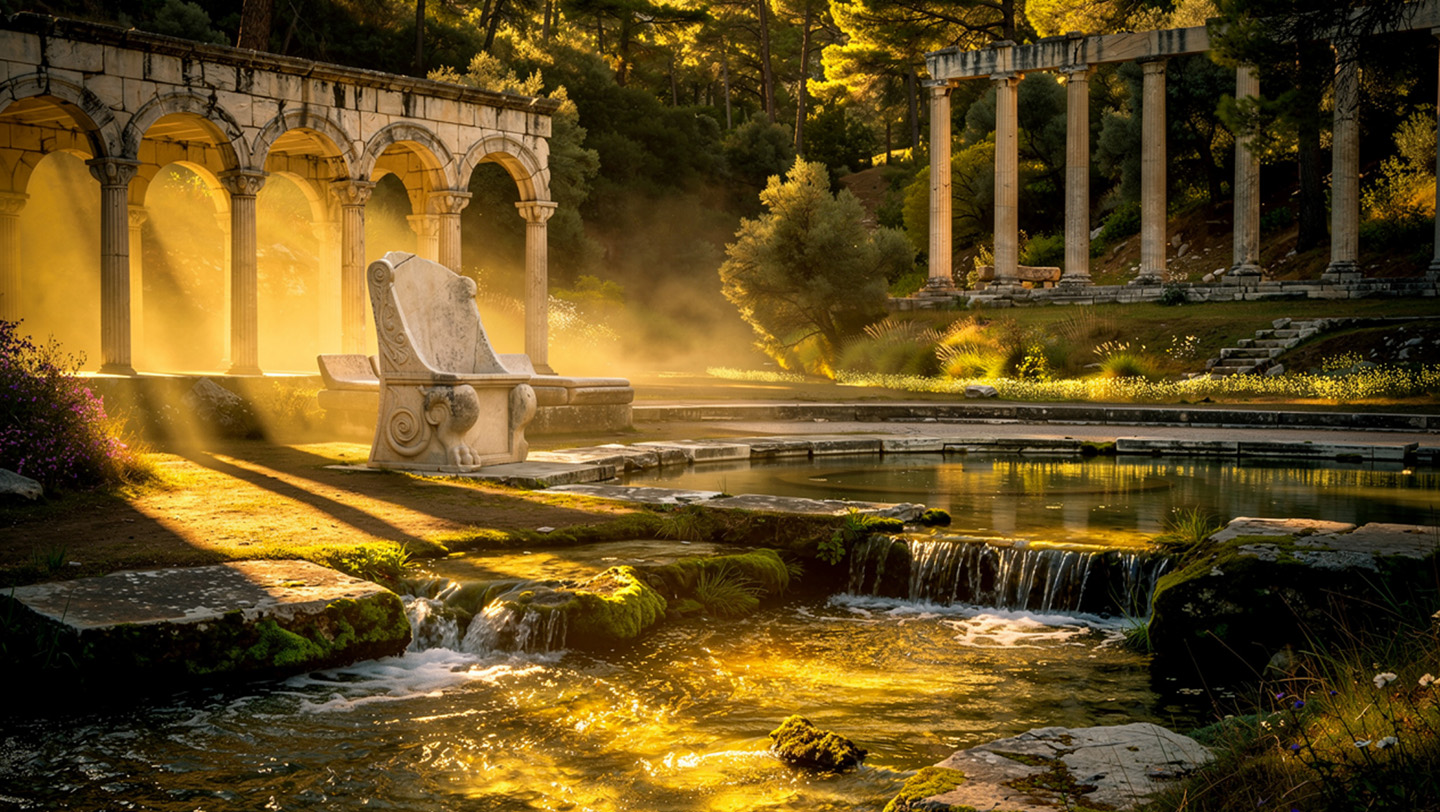
The Sanctuary of Amphiaraus at Oropos lies in a small wooded valley in the borderlands between Attica and Boeotia, approximately forty kilometres north of Athens on the road that runs along the coast toward Chalcis. The site is enclosed by the valley’s gentle slopes, the Charadros stream running through the sanctuary’s center, and the quality of the enclosed woodland valley gives the site the atmospheric character that the ancient healing sanctuary tradition consistently sought: the separation from the ordinary world of the road and the town, the enclosure of the natural landscape that made the sanctuary a distinct space rather than simply a designated area within the continuous landscape.
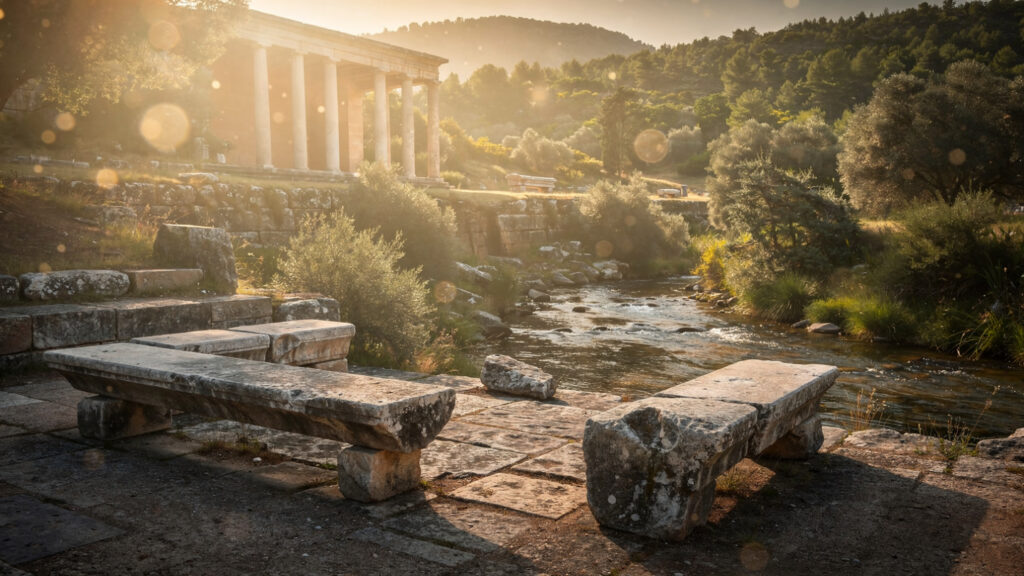
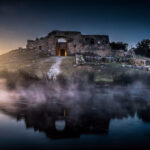
The archaeological site preserves the physical components of the ancient healing sanctuary in a state of completeness that the equivalent sites in other parts of Greece do not always maintain. The temple of Amphiaraus, whose foundations and partial column drums give the building’s plan clearly, was the central sacred building of the sanctuary, housing the cult image and serving as the focus of the ritual activity that preceded the sleep. The enkoimeterion, the sacred sleeping hall, is the building whose function distinguishes the Amphiaraus sanctuary from other ancient Greek sacred sites. The long colonnaded building whose interior was lined with the klinai, the couches on which the pilgrims lay down to receive the healing dream, is the architectural expression of the enkoimesis world.
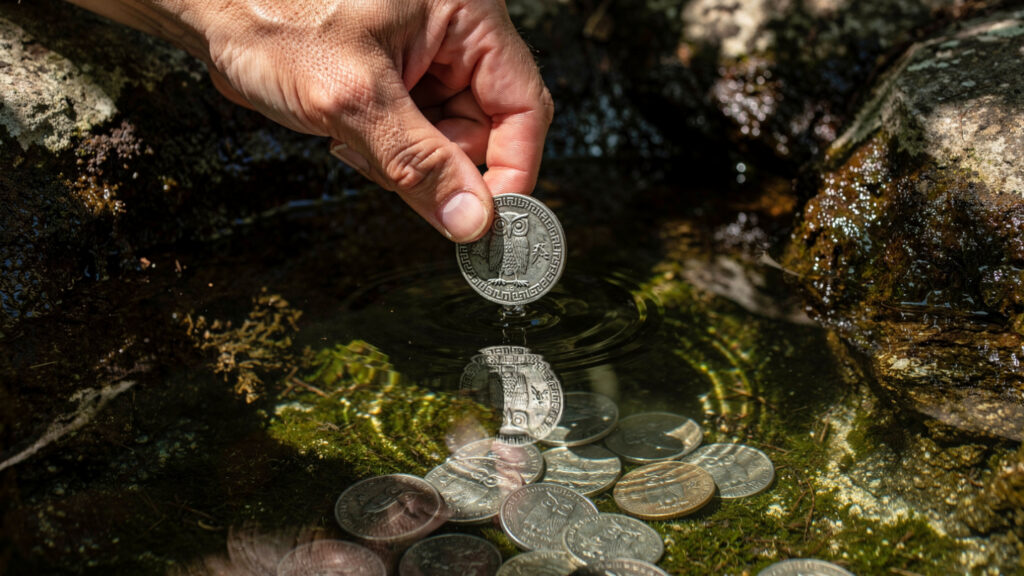
The spring whose healing properties the Amphiaraus world attributed to the deity’s chthonic power emerges at the site’s western edge and has been flowing continuously since the classical period. The quality of the spring water, whose analysis has not revealed the mineral composition that would explain the ancient attribution of healing power in purely chemical terms, was the quality that the ritual understanding of the site attributed to the chthonic deity’s presence in the earth through which the water passed. The pilgrims who threw their coins into the spring as the votive offering that the Oropos world required were performing the same gesture that the modern visitor performs at ancient spring sites across the Mediterranean, and the gesture’s meaning in the ancient context, the acknowledgment of the divine presence in the water and the request for the divine favor that the water might carry, is the gesture whose significance the ritual framework of the sanctuary made explicit.
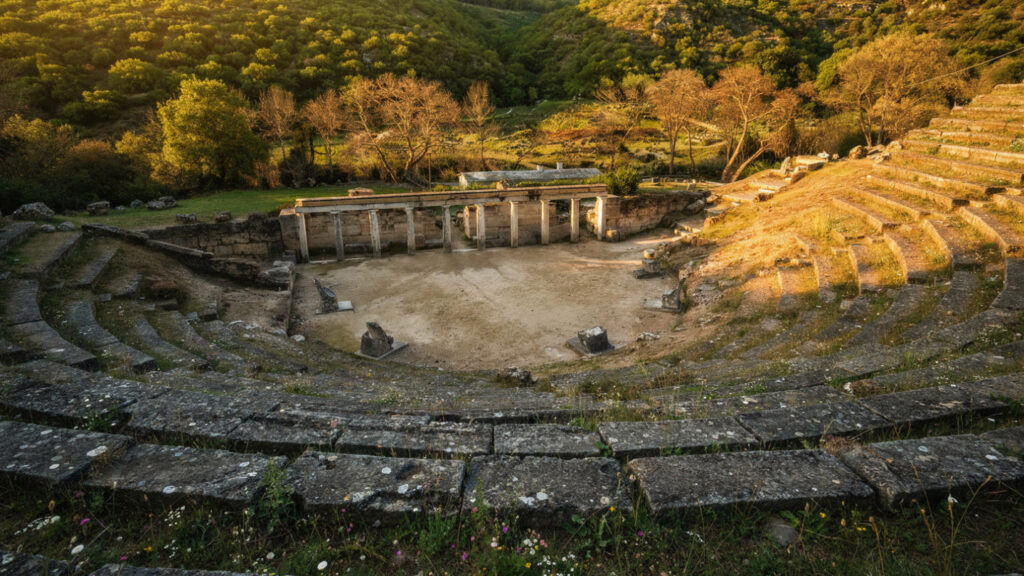
The theater of Oropos, whose well-preserved remains include the complete circular orchestra and substantial sections of the stone seating, is among the best-preserved small ancient theaters in Attica. Its presence at the healing sanctuary reflects the same understanding that the theater at Epidaurus embodies: the theatrical performance and the therapeutic practice occupied the same sacred space because the ancient Greek tradition understood them as related activities rather than separate ones. The theater at Oropos may have hosted the musical and dramatic performances that the Amphiaraia, the sanctuary’s quadrennial festival, organized alongside the athletic competitions and the sacred rituals.
The Amphiaraia Festival
The Amphiaraia was the quadrennial festival organized by the sanctuary in honor of the divine Amphiaraus, whose program combined the elements that the major Panhellenic festivals maintained: athletic competitions, musical contests, and the sacred rituals of the deity’s own cult.
The festival’s character as a celebration of a figure who was simultaneously a hero and a chthonic deity gave it the combination of the athletic and the sacred that the Panhellenic tradition associated with the hero cult: the games honored the divine hero’s memory by demonstrating in the bodies of the competitors the excellence that the hero had embodied in life. The Amphiaraia’s games, which included the standard athletic competitions of the running, the wrestling, and the equestrian events, were the competitions whose results the sacred space of the sanctuary validated with the divine presence of the figure they honored.
The musical contests of the Amphiaraia, whose program is documented in several inscriptions recovered from the site, included both instrumental and vocal competitions organized by age category: boys and men competed separately, and the prizes of the competition, the crowns of white poplar whose symbolic connection to the chthonic tradition the white poplar’s association with the underworld in the ancient Greek botanical symbolism explained, gave the winners the mark of the deity’s favor that the festival was designed to express.
The Ritual Process and What It Required
The ritual sequence that the pilgrim to the Oropos sanctuary followed was the sequence that the healing sanctuary tradition had developed to prepare the recipient’s body and mind for the reception of the healing or prophetic dream.
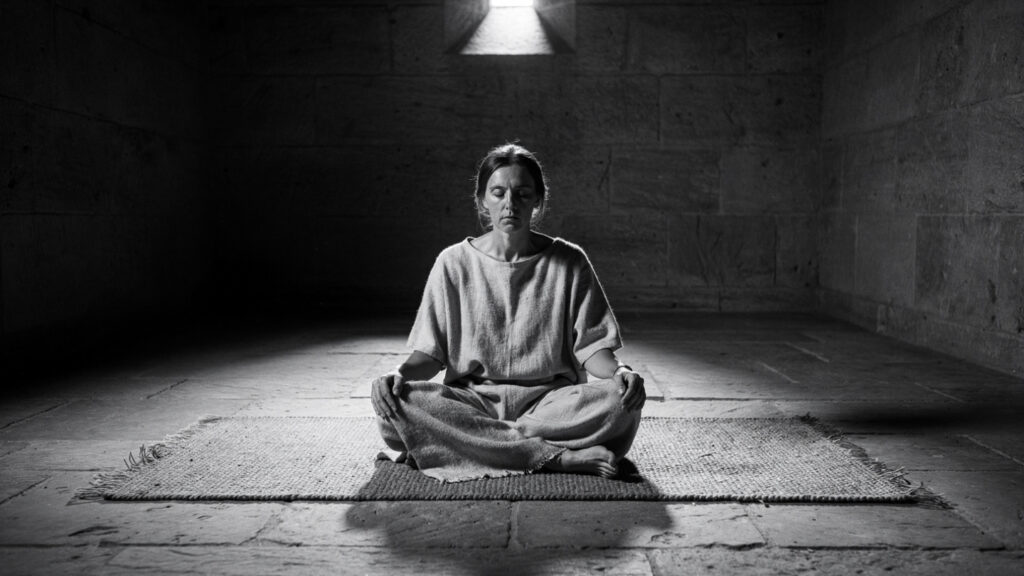
The purification was the first stage. The pilgrim who arrived at the sanctuary was required to fast for a period before the dream incubation, to abstain from foods and activities that the ritual understanding of the sanctuary’s world identified as incompatible with the state of receptivity that the dream required. The fasting and abstinence were not simply the external markers of religious observance. They were the physical preparation that the ancient medical world, which the healing sanctuary operated within rather than in opposition to, understood as the condition that made the body receptive to the dream communication.
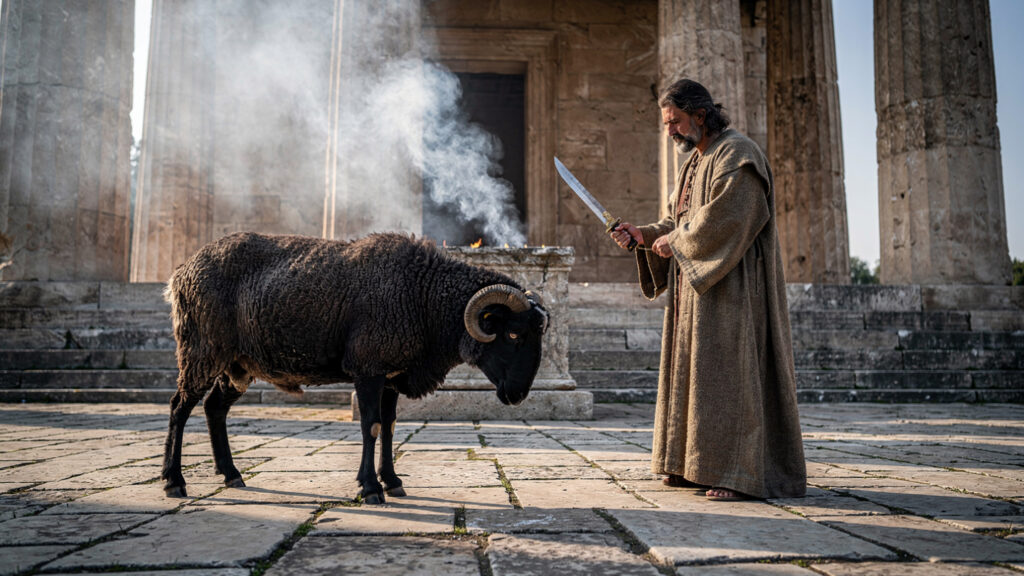
The sacrifice was the second stage. The pilgrim offered an animal sacrifice at the altar before entering the sleeping hall, and the animal offered, typically a ram in the Amphiaraus world, was the votive that the deity’s character and the sanctuary’s world prescribed. The offering was simultaneously the acknowledgment of the divine and the request for the healing or prophetic dream that the pilgrim had come to receive.
The coin offering at the spring was the third stage: the pilgrim threw coins into the sacred spring as the votive that the Oropos tradition required in addition to the animal sacrifice, acknowledging the chthonic source of the healing water and the chthonic deity whose presence the water carried.
The sleep itself, in the enkoimeterion, on the couch prepared for the purpose, was the fourth stage: the pilgrim lay down in the sacred sleeping hall and received whatever the dream brought. The interpreters who were available at the sanctuary the following morning were the professionals who could help the pilgrim understand what the dream had communicated, if the communication required the mediation of interpretation rather than being immediately intelligible.
The currency of the healing dream oracle was the currency of the symbolic language of the dream: the god might appear in the dream directly and indicate the treatment for the ailment, or the dream might communicate through the symbolic imagery whose interpretation the sanctuary’s trained personnel could provide. Both forms were valid, and the flexibility of the dream oracle’s communication mode was the flexibility that made it accessible to the widest possible range of pilgrims rather than requiring the interpretive expertise that the Delphi oracle demanded of its consultants.
Oropos and Epidaurus | The Two Healing Sanctuaries
The Amphiaraus sanctuary at Oropos and the Asclepius sanctuary at Epidaurus are the two most significant dream incubation healing sanctuaries in the ancient Greek world, and the relationship between them is the relationship between the two dominant healing worlds of classical antiquity.
The Epidaurus world, whose development the five landscapes article in this collection discusses through the connection between theatrical performance and therapeutic sleep, was the world of the divine physician Asclepius, the son of Apollo who was educated by Chiron on Mount Pelion and who the Zeus mythology article in this collection connects to the Olympian world through the thunderbolt that killed him for restoring the dead. The Asclepian world was the more widely distributed of the two. The Asclepieion spread across the Aegean world through the network of sanctuaries that the Epidaurus mother sanctuary generated, establishing the healing dream oracle in cities from Athens to Pergamon to Rome.
The Amphiaraus world was more specifically Attic‑Boeotian in its distribution. The Oropos sanctuary was the primary Amphiaraus healing site, and the geographical position of the sanctuary in the borderlands between Attica and Boeotia gave it the character of a site whose ownership the two regions disputed in the classical period. Athens controlled the sanctuary through much of the classical period, incorporated the Amphiaraia festival into the Athenian religious calendar, and treated the Oropos sanctuary as an Attic sacred site despite its geographical position at the frontier.
What the two sanctuaries shared was the therapeutic understanding of the dream’s relationship to healing. The ancient Greek medical world, from the Hippocratic texts through the Galenic synthesis, consistently integrated the dream oracle’s role in diagnosis and treatment recommendation with the rational medical practice of dietary regulation and pharmaceutical treatment. The sanctuary was not an alternative to the physician. It was the complement to the physician, the site where the divine communication could provide the diagnostic information that the physician’s observation and reasoning could not always supply.
Visiting Oropos
The Amphiaraus sanctuary at Oropos is approximately forty kilometres north of Athens by the coastal road that runs through Malakasa and Kalamos: the journey by car takes approximately fifty minutes from central Athens in normal traffic conditions. The site is also accessible by bus from the Athens KTEL Liossion terminal, with services running to Oropos town, from which the sanctuary is a further four kilometres by taxi or on foot along a walkable path.
The site is open year-round, with the standard Greek archaeological site hours varying seasonally. The small site museum provides the context for the excavated material that the outdoor site alone cannot supply: the bronze surgical instruments, the anatomical votives representing the body parts that pilgrims sought healing for, and the inscriptions documenting the festival program and the rituals of the sanctuary’s operation are the objects that transform the visitor’s experience of the outdoor remains from the experience of impressive old stones to the experience of an ancient institution whose human content the museum makes legible.
The spring still flows at the site’s western edge. The quality of standing beside the Charadros stream in the enclosed valley, with the sanctuary’s remains visible on the terraced slope above and the woodland of the valley sides enclosing the space, is the quality of an ancient sacred site in its actual landscape rather than the reconstructed landscape of the major tourist circuit sites. The site has not been over-managed: the weeds grow between the column drums and the birds are audible in the trees above the theater’s stone seating, and the quality of the slightly unkempt ancient site is the quality that the visitor who has exhausted the major sites and is looking for the experience of the ancient world in a less mediated form will find most rewarding.
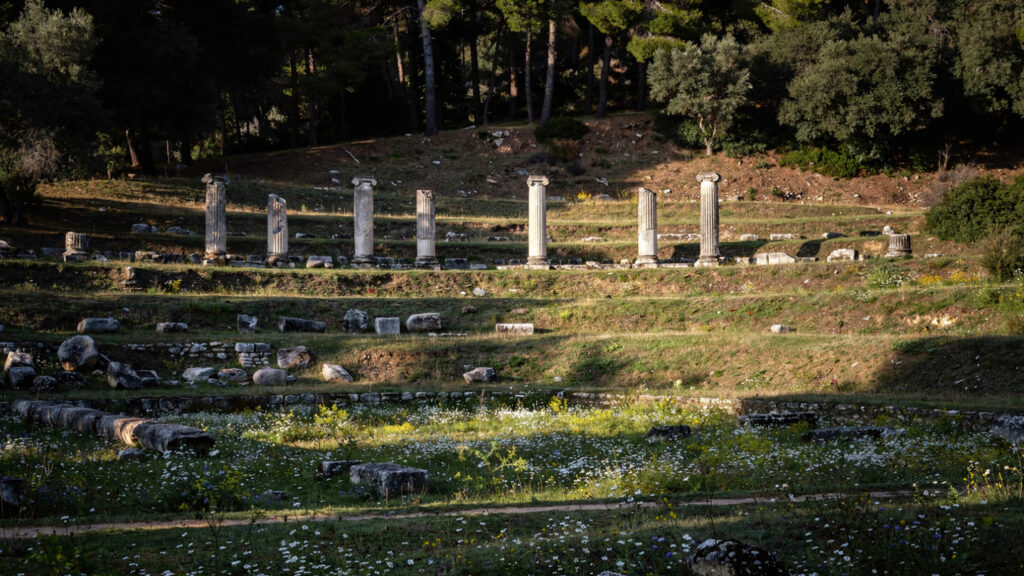
Come in the morning, before the spring light has moved to noon, and sit for a moment in the theater’s stone seats before the day’s visitors have arrived. This is a site that requires the quality of attention that the quiet morning provides, and the quiet morning at Oropos is more available than the quiet morning at Delphi or the Acropolis.
At Olympus Estate, Wanderlust Greece guides you across the sacred and storied terrain of the Hellenic world. Amphiaraus knew he was going to die at Thebes. He went anyway. The earth opened before the killing blow could land and he descended alive into the chthonic world. From below the ground he spoke to the mortals above through the medium of the dream. The sanctuary at Oropos is the place where the mortals came to receive what he was sending. The spring still flows. The sleeping hall’s foundations are still there. The theater’s seats still hold the morning light. Go there in the morning before anyone else arrives. The site is an hour from Athens and most people who love Greece have never heard of it.