
The Greeks did not always have Apollo.
This is a claim the ancient sources themselves preserve, and it defines Apollo’s whole character among the Olympians: he arrives in the Greek world from somewhere else. The ancient sources consistently place his origins in Lycia and Lydia, the Anatolian regions across the Aegean that Bronze Age trade had long connected to Greece, but whose own religious life was distinct from the pre-Greek Aegean cults the early Greek world had already inherited.
The Homeric Hymn to Apollo opens with his birth at Delos and moves toward his establishment at Delphi, and that trajectory, from Aegean island to mainland sanctuary, retraces the direction of his actual arrival in Greece: from the east, across the sea, into the heart of the mainland, where Python and an older oracular practice had already been operating before he ever appeared. The god who kills Python and takes over the oracle at the very site where the older prophetic power had worked is a god whose own mythological life story records a real historical process: an ordering force arriving in, and imposing itself upon, a religious landscape that already existed.
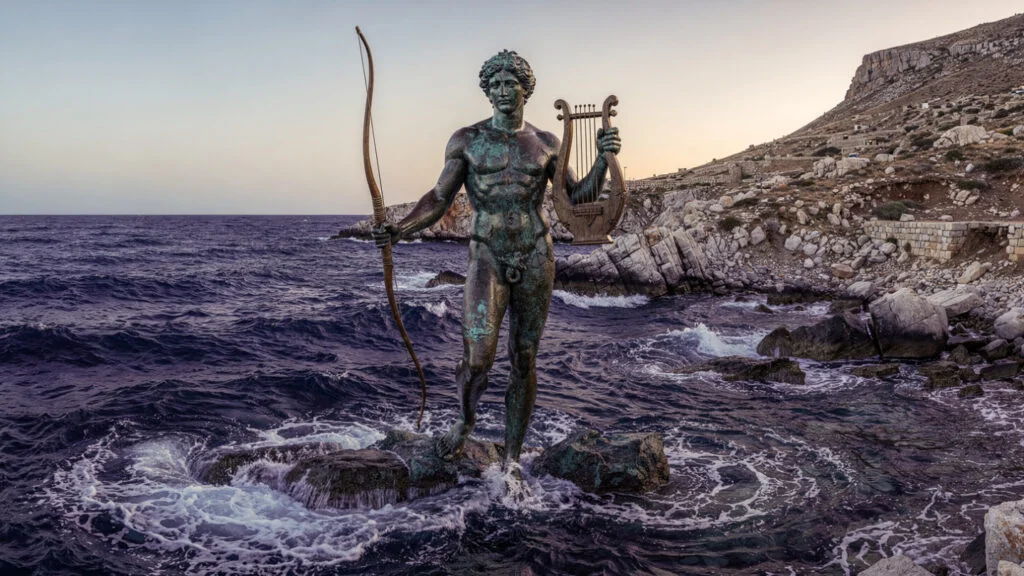
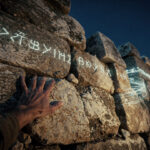
What arrived with Apollo was a theological principle the ancient sources consistently describe in the same terms: the measured, the luminous, the rational, the self-knowing. The three maxims inscribed at the entrance to his sanctuary at Delphi are Apollo’s own: Know yourself, Nothing in excess, Surety brings ruin. Together these three injunctions are the most concentrated statement of what Apollo represented that survives from antiquity, and understanding what they actually meant is understanding why the Greek world needed him at all.
The Three Delphic Maxims and What They Actually Said
Know yourself: Gnothi seauton.
Modern engagement with this maxim has been almost entirely philosophical, built around its later adoption by Socrates as the foundation of the examined life, and almost entirely wrong about what it originally meant. The inscription at Delphi was not a philosophical call to self-knowledge in Socrates’s sense, understanding one’s own nature and limits through rational inquiry. It was a theological warning aimed at a specific kind of visitor: the powerful, the wealthy, the overconfident, people whose position and resources had shielded them from ever having to recognize the limits the sanctuary’s entrance demanded they recognize.
Know yourself, in this context, meant something closer to: know that you are mortal, know that you are not a god, know that the certainty with which you arrived here demanding the guidance your circumstances have convinced you that you deserve is exactly the certainty the oracle’s ambiguity exists to challenge. This was, famously, the warning Croesus ignored, whose assumption that he understood the oracle’s prophecy correctly produced the catastrophe the Delphi oracle article in this collection develops. It applied equally to anyone who arrived at Delphi already convinced their own reading of their situation was the correct one.
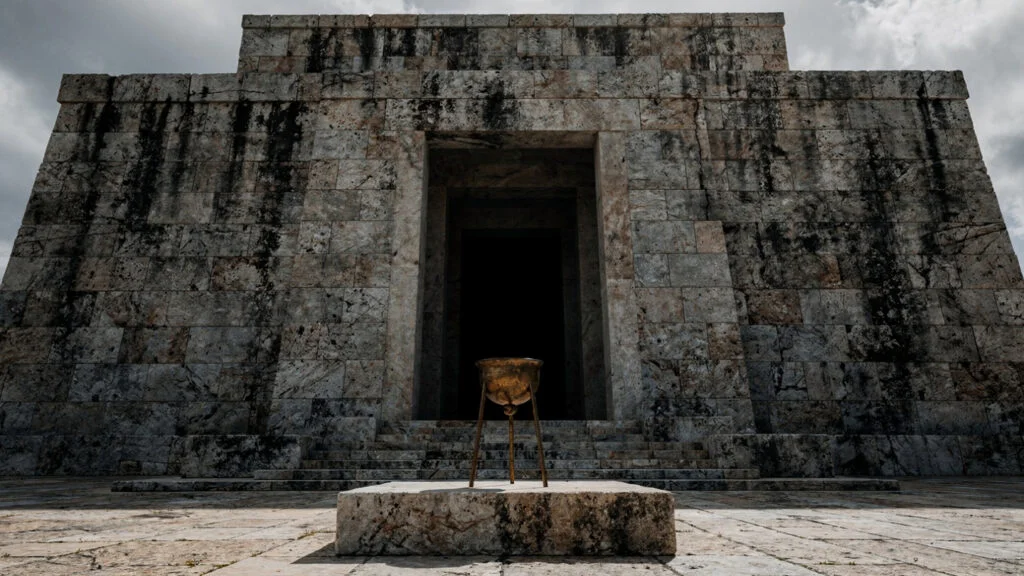
Nothing in excess: Meden agan.
The Greek word agan means too much, beyond the appropriate measure, and this maxim’s real subject is hubris, the concept Greek tragedy would go on to develop more fully than any other genre. It was never a counsel of moderation in the modern therapeutic sense, advice to avoid extremes for the sake of psychological balance. It was a claim about the structure of the cosmos itself and the price of violating the measure that structure depends on: whoever exceeded the proportion appropriate to their own nature and condition was, in effect, trespassing on divine ground, and the response to that trespass was the same catastrophic correction Greek tragedy would come to call nemesis.
The measure at stake was never a human one. It was cosmic, the proportion whose maintenance kept the world functioning at all, and Apollo was the force that imposed this measure on the cosmos and enforced it against the excess Greek tragedy would spend centuries documenting.
Surety brings ruin: Engye para d’ate.
This third maxim is the least known of the three, and unlike the other two, its meaning was already disputed in antiquity. The Greek verb at its root, engyao, means to pledge or to stand surety, the practice of guaranteeing another person’s debt or legal obligation with one’s own property. The maxim’s most literal sense is a warning against exactly this: stand surety for someone, and disaster follows. Ancient commentators, including Diogenes Laertius, extended the warning beyond the strictly financial into a broader caution against binding oneself, through a pledge, an oath, or an overconfident assertion, to a commitment whose consequences cannot be fully foreseen. Applied to the person entering the Delphic sanctuary, the maxim’s force is the caution against arriving already bound to a fixed interpretation of what the god’s answer will mean, before the answer has even been given.
The Delphic oracle’s ambiguity was never a flaw in its prophetic method. It was Apollo’s own theological claim about the relationship between divine communication and human intelligence: the divine does not hand over an answer that removes the need for human intelligence to keep working. It offers a communication whose interpretation demands that intelligence work at its very highest capacity, and whoever treats the oracle’s words as a simple answer rather than a complex message requiring real interpretation is exactly the person whose certainty brings the ruin this maxim predicts.
Apollo and Dionysus | The Two Poles
The opposition between Apollo and Dionysus is the one Friedrich Nietzsche made central to The Birth of Tragedy in 1872, and it has shaped most later Western thinking about both gods since. What Nietzsche’s formulation preserves from antiquity, and what it distorts, is worth examining before turning to how the ancient sources themselves actually understood the pairing.
Nietzsche identified the Apollonian with the dream, the individual, the plastic arts, the controlled and form-giving, and the Dionysian with intoxication, the dissolution of the individual into the collective, music, the orgiastic and the formless. In his account, Greek tragedy resolved this opposition by combining Apollonian plastic form with Dionysian choral music, a combination that made tragedy the artistic achievement whose later collapse marked, for Nietzsche, the beginning of Western cultural decline.
The ancient evidence tells a less systematic, more historically grounded story. Apollo and Dionysus actually shared the sanctuary at Delphi. Dionysus occupied it during the winter months, when Apollo was said to be away visiting the Hyperboreans, and the character of the sanctuary shifted accordingly, from Apollo’s oracular order to the ecstatic winter rites of the Thyiades, the Dionysian women who danced on the slopes of Parnassus above the sanctuary during exactly this season.
The two gods shared the sanctuary because what they embodied was never simple opposition but genuine complementarity. Apollo’s organized intelligence and Dionysus’s ecstatic dissolution were the two poles between which the Greek understanding of both the divine and the human condition actually operated. A person who was only Apollonian had let rational order calcify into rigidity, a measure so fixed it could no longer accommodate whatever cannot be measured. A person who was only Dionysian had let ecstasy collapse into pure dissolution, a liberation from measure that became a formlessness the cosmos itself could not sustain.
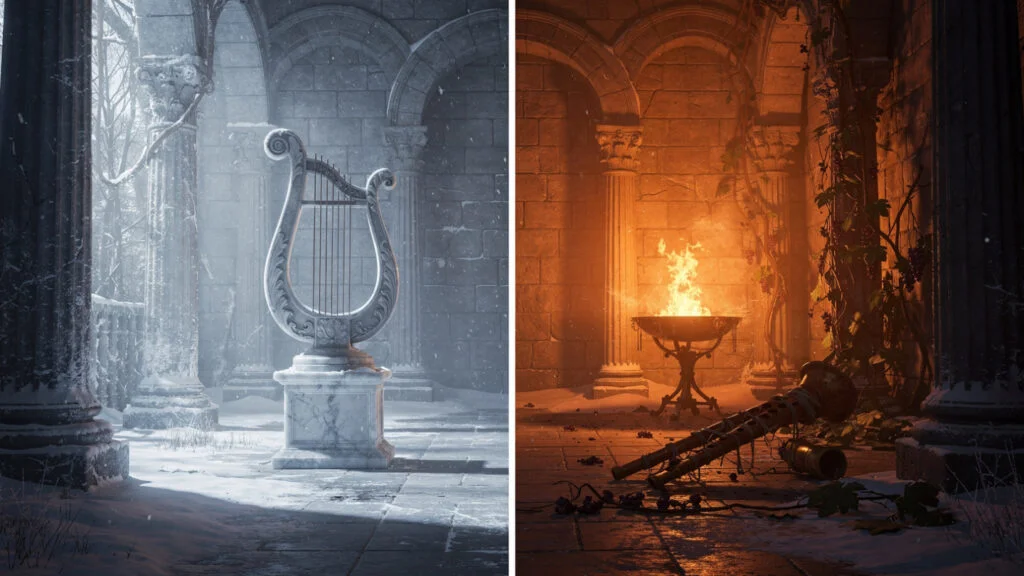
Greek theater, which the ancient music article in this collection develops further, was built on this opposition at its most basic institutional level. The dithyramb, the Dionysian choral performance from which drama itself grew, was performed at the festival of Dionysus, and the tragedies that developed from it were staged in the theater of Dionysus. But the intellectual and moral structure those tragedies embodied, the study of what happens when the cosmic measure is violated, the analysis of the relationship between human hubris and divine correction, the tracing of choices through to their consequences, was Apollonian intelligence applied directly to Dionysian material.
Greek tragedy was this combination in its most complete surviving form.
The God Who Came from Outside
Placing Apollo’s origins in Lycia and Lydia is not simply a scholarly reconstruction. It is what his own mythology states almost literally: Homer’s Iliad makes Apollo the explicit protector of Troy and the enemy of the Greek forces besieging it, a position that makes real theological sense once Apollo is understood as belonging, in origin, to the Anatolian world Troy represented rather than to the Achaean world of the Greek besiegers.
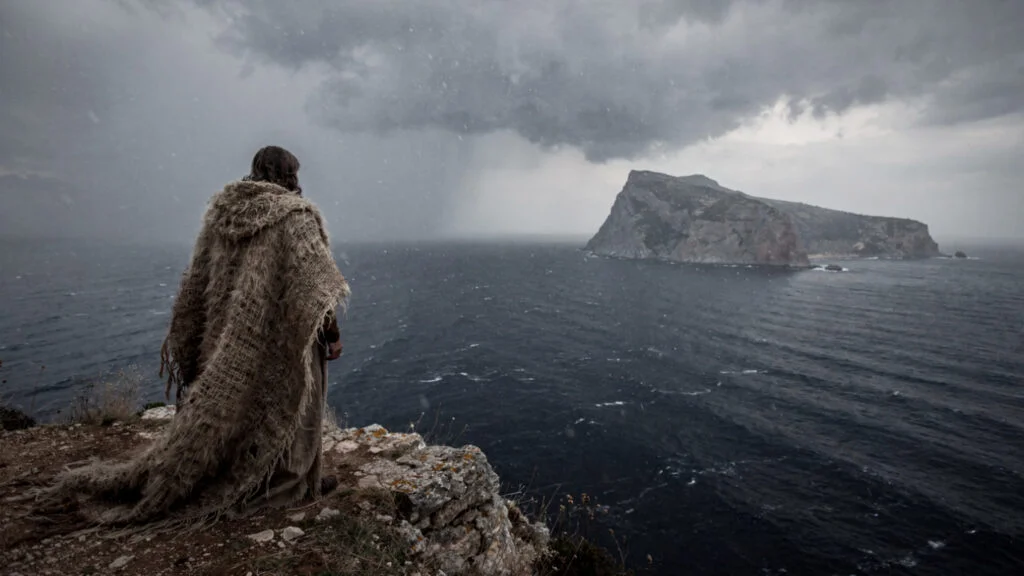
The Apollo of the Iliad is the most openly hostile Olympian toward the Greeks in the entire poem: he sends the plague that opens the action, he protects Hector, and he eventually guides the arrow that kills Achilles. This anti-Greek stance is the literary trace of a genuine historical fact: a deity whose origins lay outside the Greek cultural world, and whose authority within it had to be negotiated rather than simply assumed.
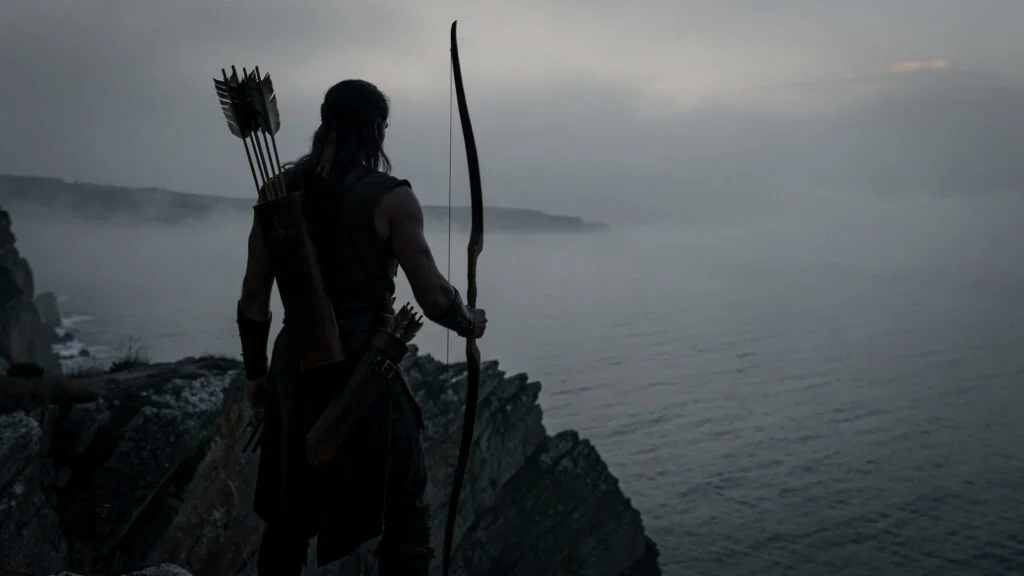
That negotiation happened at Delphi. Apollo, killing Python and taking over the very site where an older chthonic oracle had already operated, represents the Anatolian ordering force arriving on the Greek mainland at exactly the place where a pre-Greek Aegean prophetic practice already stood. Killing Python was never simply the heroic monster-slaying the surface narrative presents. It encodes a real theological transaction: the chthonic earth-serpent, whose prophetic power arose from the ground’s own geology, the same hydrothermal activity at Delphi the Delphi oracle article in this collection develops, represented the older, pre-Apollonian understanding of that prophetic power. Apollo’s killing of Python installed his own ordered oracle at the exact site where that older power had once worked.

The Pythia’s own name preserves the serpent she replaced: the priestess who became Apollo’s prophetic instrument at Delphi took her title directly from Python, the very power she now channeled in the newly ordered form Apollo had given it. The god who killed the dragon kept the dragon’s name on the oracle he built at the dragon’s own home.
Apollo as the Sun | A Late Attribution
Popular culture now treats the sun as one of Apollo’s defining features, but the ancient Greek world only made this identification gradually and incompletely, and its full development belongs to the Hellenistic and Roman periods rather than to the classical age, when Greek theology about Apollo was at its most sophisticated.
In the earlier Greek imagination, the sun belonged to Helios, the solar deity whose task was the daily crossing of the sky in his chariot, the same chariot the Phaethon myth develops in the Phaethon article in this collection. Apollo was a god of light in a different sense entirely: the organized, rational, illuminating light of the mind rather than the physical light of the sun, the light that reveals and clarifies rather than the heat and glare a solar body actually produces.
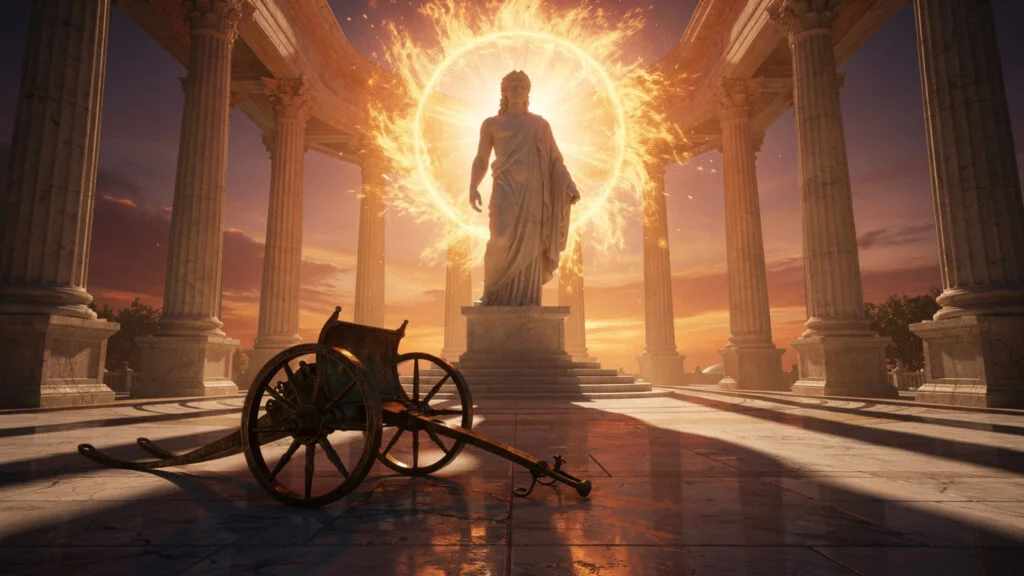
The distinction matters because it maps directly onto what the three Delphic maxims are actually telling the visitor to do. Know yourself: look honestly at what you actually are in the clear light of real self-examination. Nothing in excess: keep the proportion that same clear light reveals as appropriate to your own nature. Surety brings ruin: the light that reveals also reveals the danger of binding yourself in advance to a certainty the situation does not yet warrant.
The solar Apollo of the Hellenistic world, later identified outright with Helios as Sol Invictus under Rome, represents this same principle pushed toward its most cosmological form: the light of the mind becomes the light of the universe itself, the same organizing intelligence that makes the cosmos legible now understood as identical to the force that makes the physical world visible.
The Lyre and the Bow
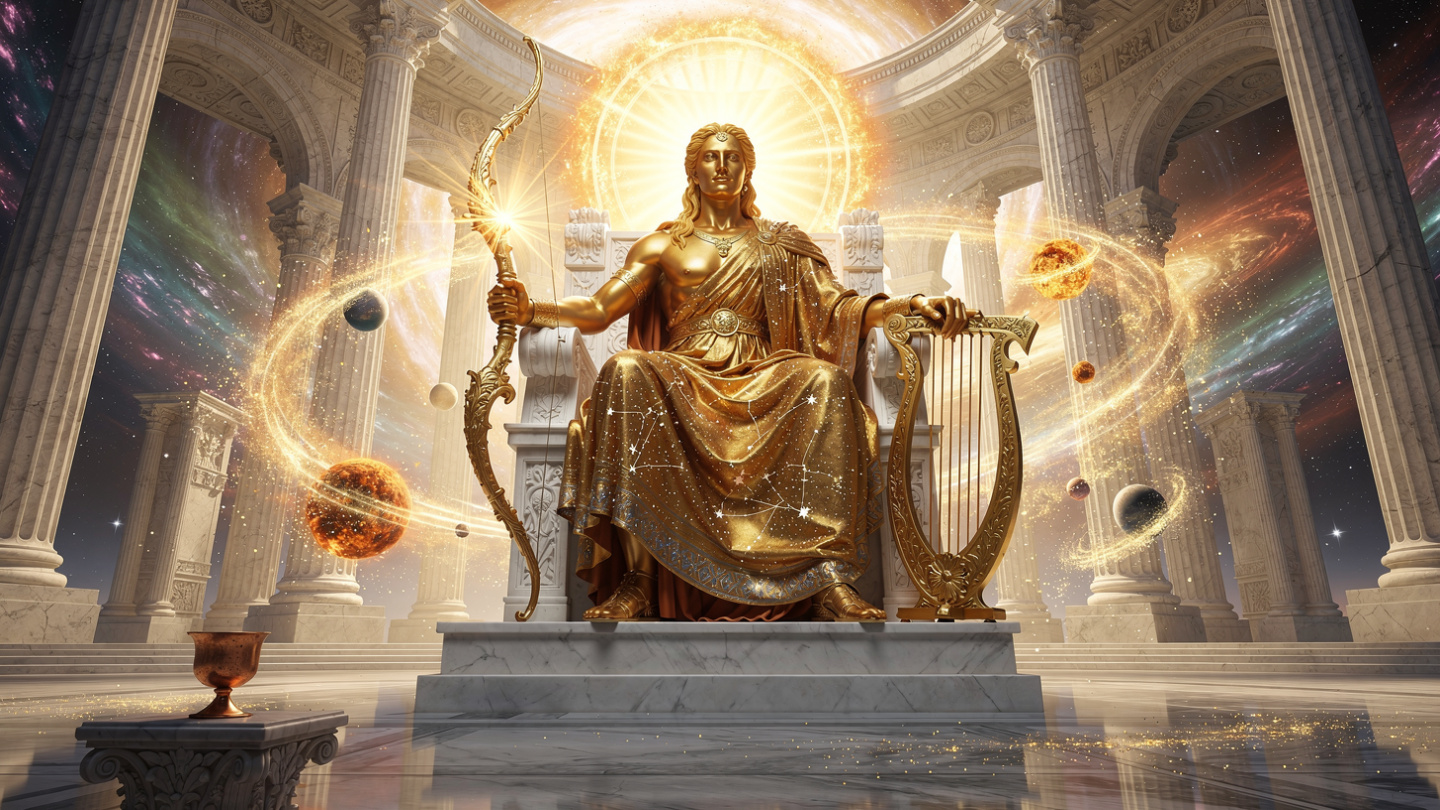
Apollo’s two most characteristic objects, the lyre and the bow, carry his dual character in the most concentrated symbolic form ancient art ever gave him.
The bow belongs to the archer whose kills happen at a distance, through the air, through trained precision rather than the brute physical force of a sword or spear. Apollo’s arrows kill from far away, with an accuracy that leaves the cause invisible in the moment: the plague that opens the Iliad, the sudden death of an apparently healthy person, death arriving from a source the victim never even sees. The bow is the weapon whose actual mechanism most resembles how Apollo himself was consistently described as acting, through hidden means, on a target that cannot see where the shot came from.

The lyre belongs to organized music, the theological opposite of the aulos, the pipe Dionysian performance favored and that Athena herself threw away in disgust once she saw what playing it did to her own face. The lyre’s strings produce the mathematical proportions of harmonious intervals whose theoretical foundation Pythagoras would go on to identify as the very structure underlying the cosmos, and this made the lyre Apollo’s instrument in the fullest sense: organized sound whose proportions expressed the same mathematical order that governs the celestial spheres, sonic harmony offered as proof that the universe itself runs on rational, mathematical principles.

The archer and the musician, both striking from a distance, one through invisible air and the other through organized sound, are two expressions of the same underlying force: organized, trained technique achieving its effect far from its own source.
Delos and Delphi | The Two Sacred Centers
Apollo’s two principal sanctuaries, Delos and Delphi, carry the two dimensions of his character in their own geography and architecture.
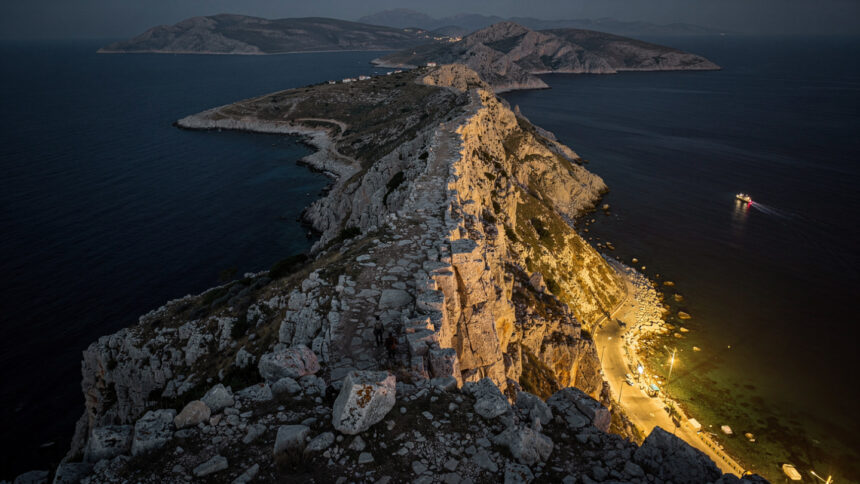
Delos, the floating island his birth anchored permanently to the seabed, marks his actual point of arrival in the Greek world, the site where the newborn god, according to the Homeric Hymn, took his very first action before ascending immediately to Olympus to receive his father’s gifts. No one was permitted to be born or die on Delos, a rule that kept the island’s purity untouched by the ordinary cycles of mortal life, the most sacred site in the Aegean maintained in exactly the unbroken purity Apollo’s own principle required.
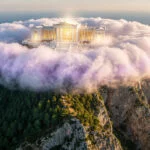
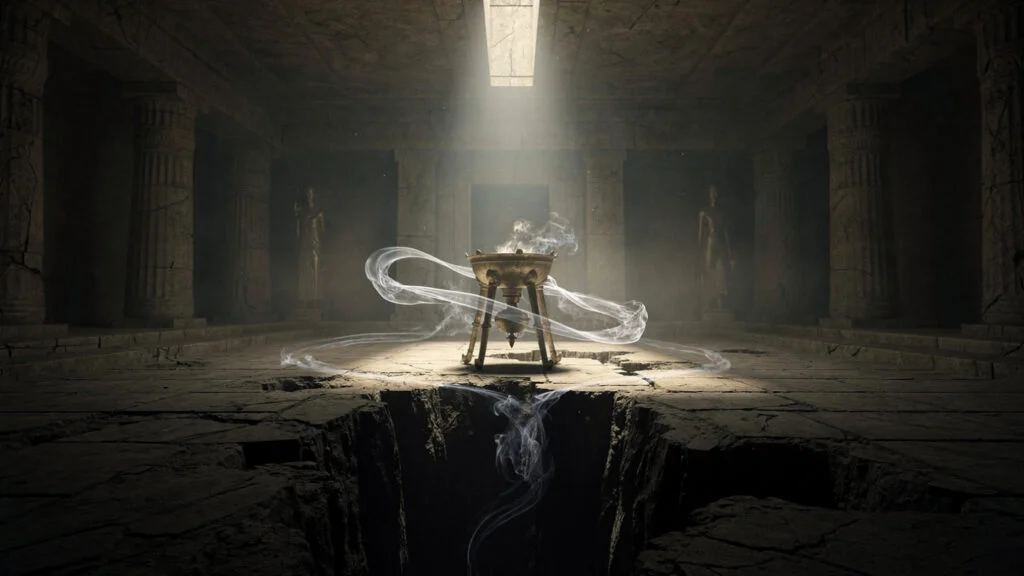
Delphi, the sanctuary on the southern slopes of Parnassus where Apollo killed Python and founded the oracle, marks his authority over the Greek mainland: the place where his ordering force imposed itself on an existing chthonic practice and built, in its place, the institution through which divine communication reached mortal consultants. The sanctuary’s own layout traces this same imposition step by step, from the entrance maxims through the treasuries the Greek city-states competed to build, to the temple itself and the Pythia’s inner chamber: approach organized around the three maxims, treasuries organized around civic rivalry, and the oracle itself organized around the meeting of Apollo’s own order with the chthonic volcanic force that produced the actual prophetic speech.
The line running from Delos to Delphi, from the god’s Aegean birthplace to the mainland seat of his oracular authority, retraces his own arrival in Greece: east to west, island to mainland, the same route that carried him from his Anatolian origins across the Aegean and into the Greek heartland.
What Apollo Means
Apollo means organized intelligence meeting the world and imposing on it the measure the cosmic order requires. He means the light that reveals, and so demands the self-knowledge whatever it reveals then requires of you. He means the music whose mathematical proportions prove the cosmos runs on rational principles. He means the oracle whose ambiguity challenges the certainty human excess always tends to produce. He means the archer whose arrows kill at a distance through the precision of a trained aim rather than the brute force of direct assault.
He means the pole of the Greek religious imagination that had to stand in tension with the Dionysian pole to produce Greek tragedy, the art form whose combination of the two, in the same theater, gave the fullest surviving answer to what the human condition actually needs from its relationship to the divine.
He came from outside. He killed the dragon and kept the dragon’s name on the oracle he founded. He shared his sanctuary with the god he stood most opposed to. He arrived in the Greek world and imposed the very measure the Greeks would come to identify most closely with their own civilization’s excellence.
The three maxims at his sanctuary’s entrance remain the clearest surviving statement of what he demands from anyone who approaches him: know what you actually are, keep the measure appropriate to what you are, and understand that the certainty you feel about what you know is precisely the danger a god who speaks only in ambiguous prophecy is warning you against.
At Olympus Estate, Mythic Essays moves through the deeper currents of the Greek tradition. The Greeks did not always have Apollo. He arrived from Anatolia across the Aegean, killed the Python at Delphi, and kept the dragon’s name on the oracle he established there. The three maxims inscribed at the sanctuary entrance were not philosophical advice. They were theological warnings. Nothing in excess was the injunction against the hubris whose consequences Greek tragedy traced across an entire dramatic tradition. Surety brings ruin warned against the pledge given before its consequences could be known, and by extension against arriving at the oracle with the answer already decided. Apollo shared the Delphi sanctuary with Dionysus. The two poles could not exist without each other. The lyre and the bow are the two instruments that strike from a distance through organized technique. The light he represents is the light of the mind, not the light of the sun. He was the ordering force the Greek world needed, and received, from somewhere east of the Aegean.