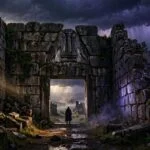



The altar on the summit of Mount Lykaion was already ancient when Zeus was born.
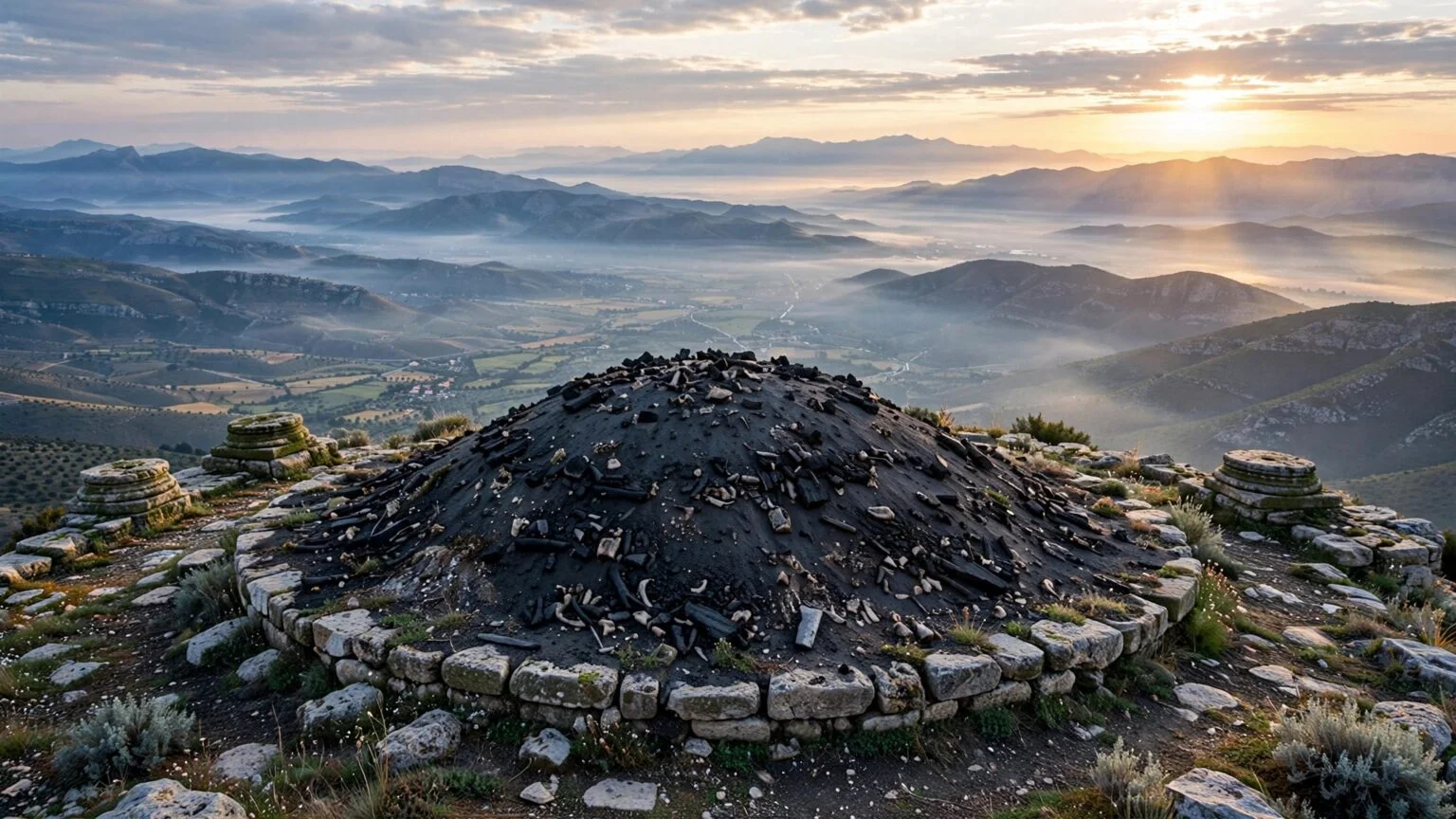
This is not a rhetorical formulation. The ash altar, a cone of earth located atop the southern peak of Mount Lykaion where dedications were made in antiquity, was in use as early as 5,000 years ago, at least 1,000 years before the early Greeks began to worship the god Zeus. Whatever was being worshipped on this specific mountain summit before Zeus arrived was being worshipped with sufficient continuity and sufficient intensity that the ash of burned offerings accumulated, layer by layer, over more than a millennium, into the mound whose archaeology the University of Arizona and the Greek Archaeological Service have been reading since 2004.
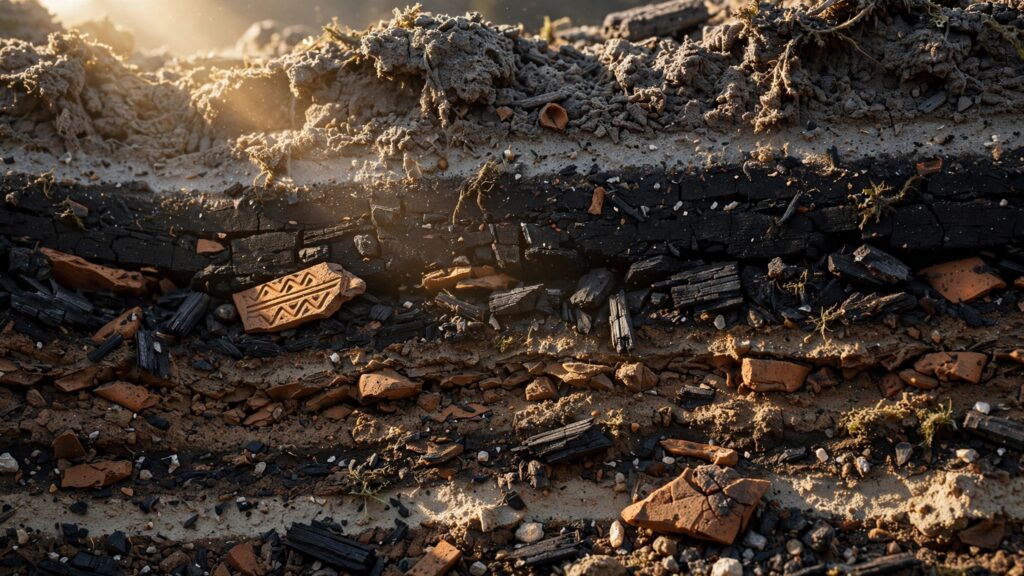
The question that this discovery made available, and that the excavators have been asking ever since, is the most consequential question in the archaeology of Greek religion: if Zeus wasn’t around yet, who was being worshipped on Mount Lykaion some 5,000 years ago, and by whom?
Nobody has answered it definitively. The ash holds the record of the burning. It does not hold the name of what was burned for.
The Mountain and What It Is
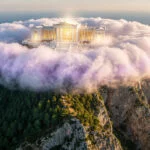
Mount Lykaion sits in the southwestern corner of Arcadia, the mountainous heartland of the Peloponnese, at an altitude of approximately 1,382 meters. The ash altar has been located on the mountain’s southernmost peak, at an altitude of nearly 1,400 meters, offering panoramic views across the mainland Peloponnese.
Arcadia in the ancient imagination was not simply a region with a map reference. It was the original pastoral landscape, the mountain territory that the Greek mythological tradition placed outside the cycles of history that afflicted the coastal civilizations: older than Mycenae, older than Troy, older than the Olympian settlement, inhabited since before the moon existed according to Arcadian tradition itself. The Arcadians called themselves proteselenes, those who existed before the moon, and the boast was the mythological version of a genuine archaeological fact: the Arcadian highlands were inhabited continuously from Palaeolithic times, their population maintaining traditions of pastoral and cultic life that predated the Bronze Age palatial system and survived its collapse.
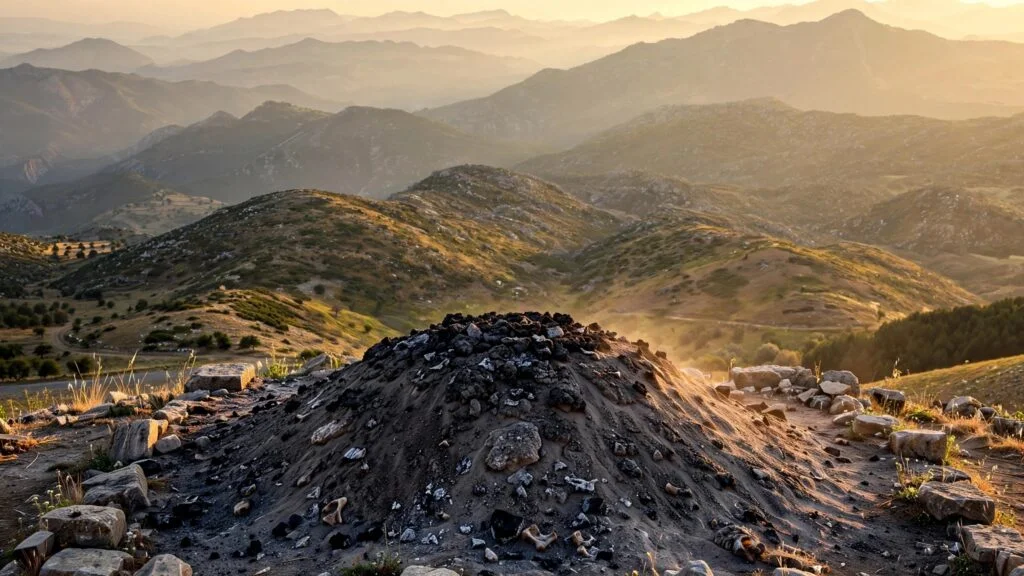
Mount Lykaion was this landscape’s sacred summit. The mountain is the highest point of its immediate massif, visible from vast distances across the Peloponnese, and from the mound of the ash altar most of the Peloponnese can be seen. What the mountain saw, in the Greek theological imagination, was everything: the entire Peloponnese spread below it in the clear Arcadian air, a panorama so complete that the altar on the summit was the correct place for Zeus Lykaios, Zeus of the Wolf Mountain, the sky father in his most ancient and most specifically Arcadian form, whose witnessing function required exactly this kind of total visibility.
The name Lykaion has two competing etymologies that the tradition has never fully resolved. It derives either from lykos, wolf, which gives the mountain its most sinister mythological associations, or from the same root as leukos, bright or shining, which connects it to the sky father’s illumination. There are terrifying stories about activities there including ritual human sacrifice, transformation into a wolf, and death within a year of stepping into the temenos. The landscape is fantastic. And the textual references to the sanctuary are rich, complex, and intriguing.
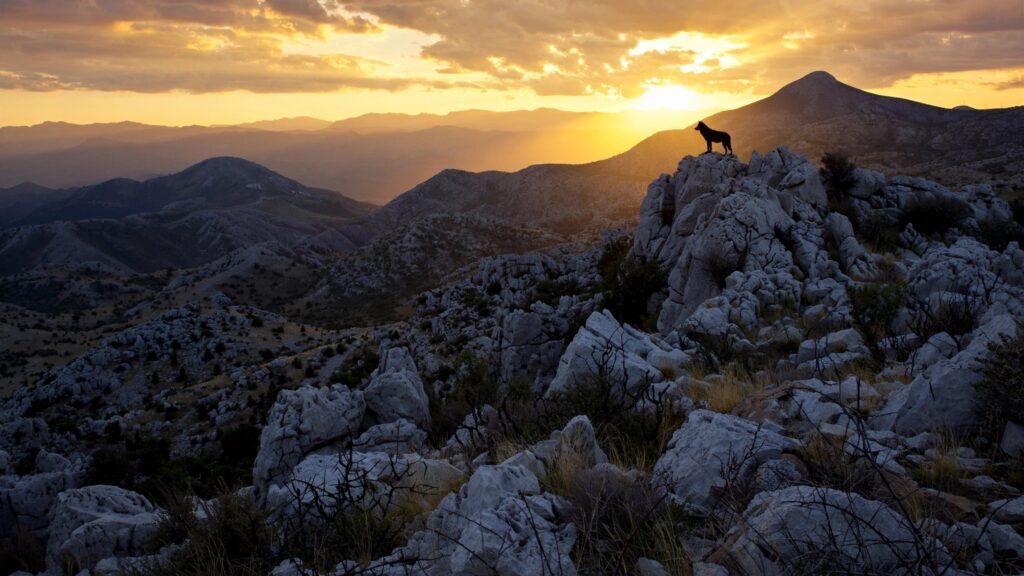
Both etymologies may be true. The wolf and the light are not incompatible attributes for a mountain deity operating at the boundary between the human world and what lies beyond it.
Five Thousand Years of Ash
The ash altar itself is the physical record of an unbroken religious practice conducted at a single location across a span of time that makes almost every other cult site in the Aegean world look recent by comparison.
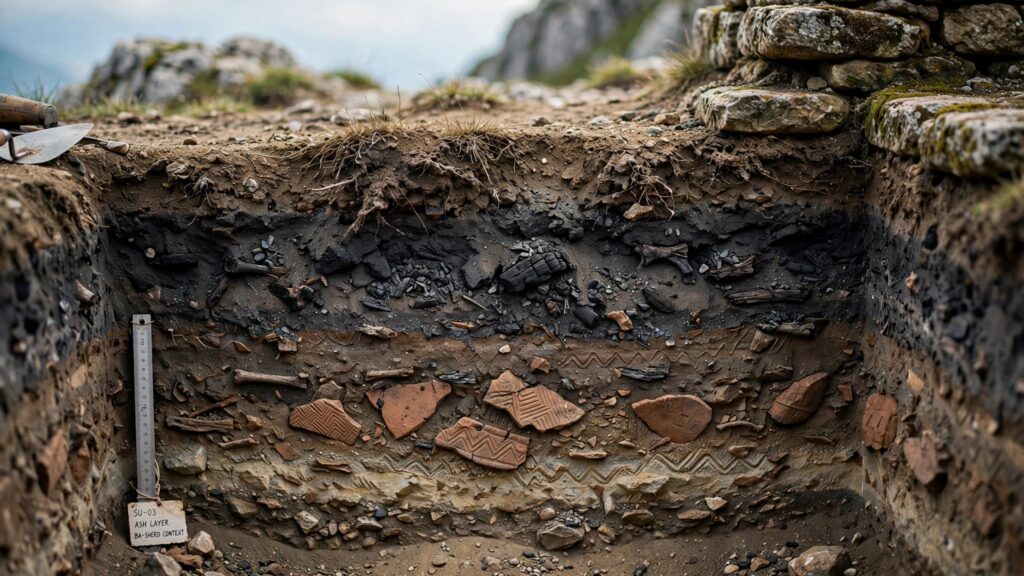
The ash altar to Zeus consists of a thick, anthropogenic deposit that formed as a result of repeated deposition of burnt offerings, roughly thirty meters across at its widest point. Excavations conducted from 2007 to 2010 uncovered evidence of a long history of use of the mountain summit as a purely ritual locality. Micromorphological analyses of sediment from the southern area of the altar confirm that a majority of the sedimentary components are microscopic artifacts sourced from combustion activities.
The early twentieth century excavations by Kourouniotes of the Greek Archaeological Society, the first serious investigation of the site, found approximately 1.5 meters of fill above bedrock composed of ash, burned bone, pottery sherds, stone, and various dedications. The earliest evidence for cult activity from the altar consisted of two bronze tripods of the late 8th or early 7th century BCE. Kourouniotes concluded that the cult site had originated around 700 BCE.
The University of Arizona and University of Pennsylvania excavations that began in 2004, using ground-penetrating magnetometry, remote sensing, and micromorphological analysis unavailable to earlier excavators, found something entirely different beneath the layers that Kourouniotes had read. Early Helladic pottery sherds indicated activity from as early as 3,000 BCE. The tradition of devotion on this summit was not eight centuries old when the archaic Greeks built their bronze tripods. It was already twenty-two centuries old at that point, and the pre-Greek worship whose specific character remains undetermined had been accumulating its ash for a thousand years before the name Zeus had yet been spoken. What Greek and later Roman sources attest is that the altar remained in continuous use from roughly the sixteenth century BCE through the fourth century BCE, the whole of the Greek Bronze and Iron Ages compressed into a single burning site on one mountain summit.
David Gilman Romano, co-director of the Mount Lykaion Excavation and Survey Project, said: the fact that the ash altar to Zeus includes early material dating back to 3,000 BCE suggests that the tradition of devotion to some divinity on that spot is very ancient. The altar is long standing and may, in fact, predate the introduction of Zeus in the Greek world. We do not yet know how the altar was first used, and whether it was used in connection with natural phenomena such as wind, rain, light, or earthquakes, possibly to worship some kind of divinity, male or female, or a personification representing forces of nature.
The honest scholarly position, which Romano’s own words articulate with precision, is that the earliest layer of Lykaion’s cult is genuinely unknown. The ash is there. The pottery is there. The burned bone is there. Whatever was burned for and to has not left a text or a name, only the physical residue of its consumption.
The Minoan Seal and What It Implies
Among the objects recovered from the altar excavations, one in particular creates a specific interpretive puzzle whose significance extends beyond Lykaion itself.
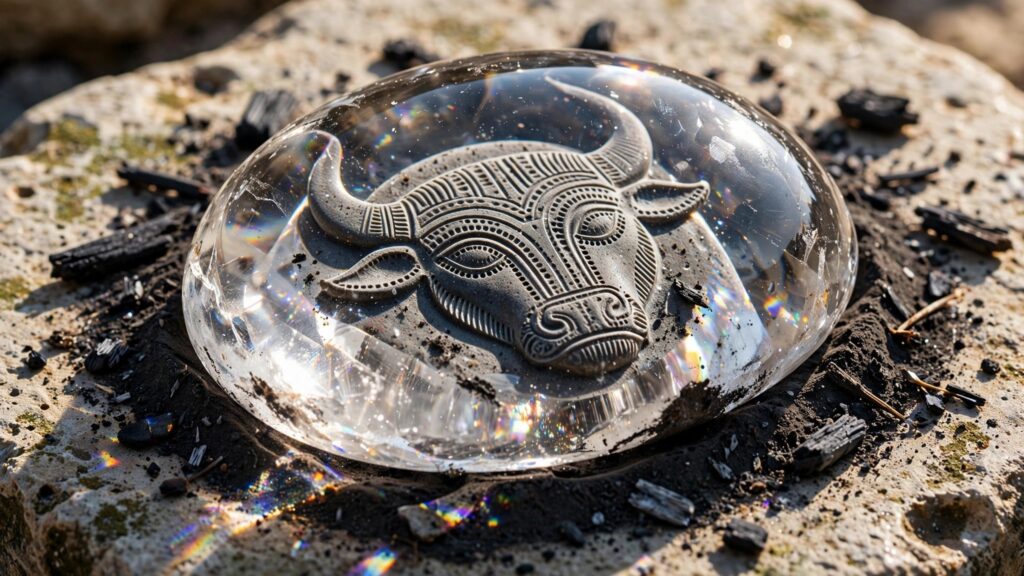
A rock crystal lens-shaped seal bearing the image of a bull with full frontal face, likely of Late Minoan I or Late Minoan II date, 1500 to 1400 BCE, has, as of yet, no related materials to accompany it, but it does show at least some early connection between the two cultural areas.
A Minoan seal, of the type found in Cretan palace contexts and in the graves of elite Mycenaean families who had acquired Minoan luxury objects through the trade networks of the late Bronze Age, deposited in the ash altar of a mountain sanctuary in Arcadia in the middle of the second millennium BCE.
The connection this object implies is not simple. It suggests an intriguing early connection between the Minoan isle of Crete and Arcadia, and bears witness to another chapter in what now appears to be an especially long history of activity atop the mountain. Crete and Arcadia are two of the Greek world’s competing claims for the birthplace of Zeus: the Cretan tradition placed his birth in the caves of Dikte or Ida, the Arcadian tradition placed it on this mountain. The presence of a Minoan bull seal in the Arcadian altar is the physical evidence of a connection between the two traditions that was already active in the Bronze Age.
The bull-worship tradition of Minoan Crete, with its bull-leaping frescoes and its bull-headed rhytons and the myth of the Minotaur that the Greek tradition built from its engagement with Cretan culture, examined in full elsewhere on this site, is related to but distinct from the Greek sky-father tradition that the Zeus mythology eventually absorbed. The seal from Lykaion is the evidence that the two traditions were already in contact in the second millennium BCE, that something on this Arcadian mountain was speaking the same cultural language as the palatial religion of Minoan Crete, and that the god who eventually inherited the altar was the heir to a tradition already in conversation with the most sophisticated religious culture the Bronze Age Aegean had produced.
What Pausanias Saw and Refused to Describe
Pausanias visited the sanctuary of Zeus Lykaios in the second century CE and climbed to the altar on the summit. He described what he saw with his characteristic combination of precision and deliberate reticence: on the highest point of the mountain is a mound of earth, forming an altar of Zeus Lykaios, and from it most of the Peloponnese can be seen. Before the altar on the east stand two pillars, on which there were of old gilded eagles. On this altar they sacrifice in secret to Zeus Lykaios. I was reluctant to pry into the details of the sacrifice. Let them be as they are and were from the beginning.
Let them be as they are and were from the beginning. This is one of the most eloquent silences in ancient travel writing, and it has been generating speculation about what Pausanias witnessed ever since. He was a man who described everything: the architecture, the statues, the myths, the ritual practices of hundreds of sanctuaries across the Greek world, with a thoroughness that makes his work the primary literary source for classical Greek religion in its lived, practical, locally various form. He did not hesitate to describe what he saw in other sanctuaries, even those that carried secrecy requirements, when he judged that the public interest outweighed the requirement. At Lykaion, he declined. Whatever he witnessed in the secret sacrifice on the summit altar was something he chose not to transmit.
The ancient sources that mention what the secret sacrifice involved are consistent in their implication: terrifying stories about activities there including ritual human sacrifice, transformation into a wolf, and death within a year of stepping into the temenos. Several ancient authors, including Plato and Theophrastus alongside Pausanias, mention that human sacrifice was practiced at the altar of Zeus.
The archaeological response to this tradition has, for most of the site’s excavation history, been consistently careful. To date, no evidence has been found of human sacrifice in the literal sense that modern forensic analysis can document: no human bones in the ash layers, no perimortem trauma on human remains, no isotopic evidence of human bodies having been burned in the altar’s complex deposits.
And then came 2016.
The Burial in the Middle of the Altar
New and highly important data came to light during that year’s excavations at the sanctuary of Zeus on Mount Lykaion. Among the most important new elements was a human burial found in the middle of the altar.
The skeleton, articulated and in an excellent state of preservation, lay in a stone-lined cist oriented east to west, head toward the west, similar stones covering the pelvic region. The remains belonged, in the excavation team’s initial assessment, to an adolescent male, and the associated pottery suggested a date in the eleventh century BCE, the early Iron Age, more than four centuries before Plato and Pausanias would write about the mountain’s reputation for human sacrifice. That dating itself has since become a point of dispute rather than a settled fact, a complication the initial press coverage did not anticipate.
The discovery was significant enough to require careful scholarly framing, and Romano himself supplied it directly to the press covering the find: whether it’s a sacrifice or not, this is a sacrificial altar, he told the Associated Press, so it’s not a place where you would bury an individual. A human burial in the middle of the ash altar is not, on its own, proof of the literal human sacrifice that the ancient authors describe. It might be a burial in the ordinary sense, an act of inhumation that used the altar’s sacred ground for the interment of someone who, in life or in death, warranted placement in the most sacred location available. What made the find impossible to set aside was precisely its location: not beside the altar, not near it, but within it, at its center, alongside the animal bones that had been accumulating there for thousands of years.
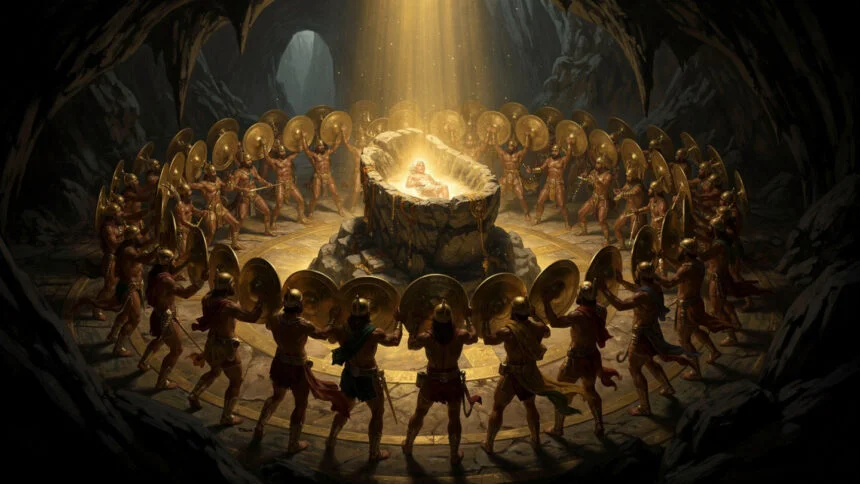
The ancient tradition of human sacrifice at Lykaion was built around the myth of Lykaon, the Arcadian king who offered Zeus the flesh of a human being, either a child or a prisoner, at a sacrificial feast, and was transformed into a wolf as punishment. The myth was the foundation of the werewolf tradition in European folklore: the man who ate human flesh at the Lykaion altar was said to become a wolf for nine years, during which time he could not return to human form. If he abstained from human flesh during those nine years, he was restored to his human body. If he ate it again, he remained a wolf permanently.
The myth presupposes a ritual reality: that something happened at the Lykaion altar involving human flesh and divine punishment and the specific boundary between the human and the animal that the wolf represents. The 2016 burial does not confirm the literal reading of the ancient sacrifice accounts. It confirms that a human being, a young man, was placed in the middle of the altar, in the ash that accumulated from thousands of years of animal sacrifice, at a time the excavators initially placed in the eleventh century BCE and that later scholarship has not treated as settled.
That later scholarship is worth stating plainly rather than leaving the 2016 headlines as the last word. Jan Bremmer, in his 2019 collection The World of Greek Religion and Mythology, describes the find generating “much publicity” but argues that “a certain scepsis seems preferable until a more detailed analysis has appeared.” Daniel Ogden, in The Werewolf in the Ancient World (2021), goes further, writing that renewed investigation of the altar has turned up “no relevant traces of human material” beyond this single find, and reports that David Romano, the excavation’s own co-director, told him directly in a private communication that the skeleton “will prove to be not ancient.” No peer-reviewed publication has yet settled the question either way, in either direction, which means the honest position is neither the original headlines nor a confident debunking, but genuine, unresolved doubt from within the excavation team itself.
After four years at Mount Lykaion we have literally only scratched the surface, the excavation team wrote at the time. We hope that our continuing excavations in the altar will shed further light on the origins and development of the cult of Zeus. The excavation project continued through 2020 and beyond. The questions the altar raises are not yet fully answered.
The Temenos and the Rule of Shadowlessness
Around the altar’s summit, the ancient sources describe a temenos, a sacred precinct, whose specific rule was one of the most unusual in the entire Greek religious tradition.
No shadow fell within the temenos of Zeus Lykaios.
This is not a metaphor and not a description of shade in the ordinary sense of the word. The ancient sources consistently record that within the sacred boundary of the Lykaion temenos, human beings did not cast shadows, a phenomenon that the ancient world treated as a divine marker of the precinct’s special status: the place where Zeus was born and raised was a place where the normal physical relationship between the human body and the light of the sun was suspended.
The practical consequence was lethal. Any person who crossed into the temenos uninvited, or who entered it without the appropriate ritual preparation, was said to die within the year. The ancient sources present this as a regular occurrence rather than a legend, describing instances in which individuals who wandered into the sacred boundary suffered the predicted fate. Whether this represented the enforcement of the sanctuary’s rules by its own community, the psychological power of a prohibition believed literally, or some actual phenomenon associated with the mountain’s specific atmospheric conditions at altitude remains, like so much else about Lykaion, unresolved.
The shadow rule belongs to the same complex of ideas as the werewolf tradition and the secret sacrifice: the Lykaion sanctuary was a place where the boundary between human and non-human was genuinely permeable, where the normal rules that governed human existence were suspended or inverted, and where the divine presence associated with the mountain operated according to its own logic rather than the logic of the ordinary world below.
The Lykaia Games and the Lower Sanctuary
Below the summit altar and its terrifying temenos, on a broad plateau at a lower elevation, the ancient sanctuary of Zeus Lykaios maintained a second site whose character was entirely different from the summit’s mystery: a stadium, a hippodrome, and the infrastructure of athletic competition that made the Lykaia, the games held here, one of the ancient world’s significant athletic festivals.
The Lykaia Games have striking parallels with the sanctuary of Zeus at Olympia: both had a huge ash altar, evidence for an ancient cult of Zeus, and both held important athletic events in antiquity. The Lykaia were among the festivals that the ancient tradition considered to have preceded the Olympic Games in their establishment, with some ancient sources placing their founding before Olympia’s. The hippodrome and stadium at the lower sanctuary have been documented by the excavation project’s architectural team, who have been producing the first stone-for-stone drawings of the entire lower sanctuary complex, a project that continues to make the full extent of what was here legible to scholarly and general audiences in the way that the summit’s ash altar has already become.
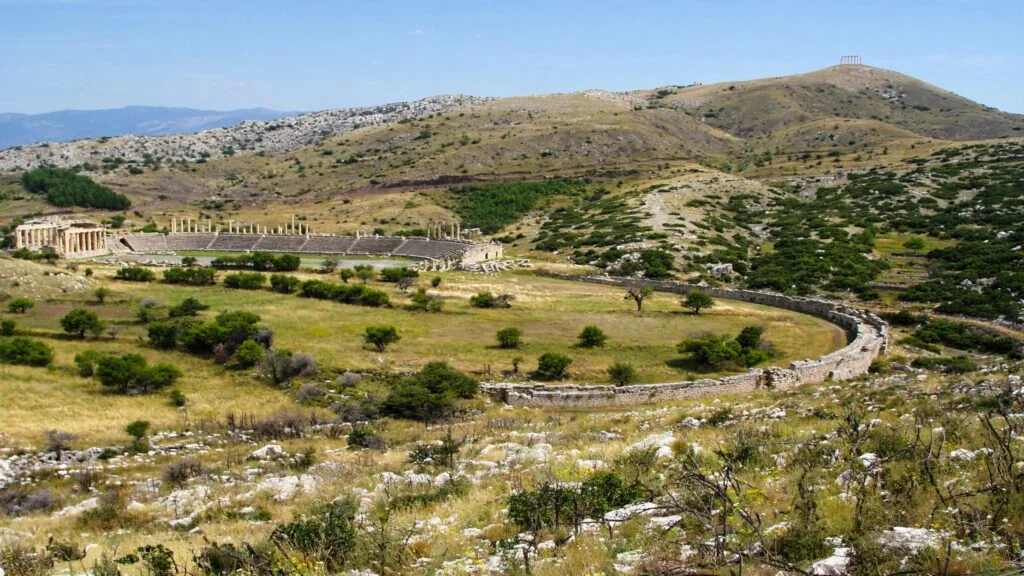
The coexistence of the terrifying summit sanctuary and the athletic festival on the plateau below is precisely the structure that the Zeus mythology this site has documented in the dedicated Zeus essay requires: the sky father in his most ancient, most pre-Olympian form on the summit, consuming secret sacrifices in a precinct where no shadow fell and human beings died if they entered uninvited, and the same deity in his Olympian, ordered, publicly accessible form on the plateau, presiding over athletic competition that was open to Greek athletes from across the world. The two aspects of Zeus Lykaios occupied the same mountain at different altitudes, and the pilgrim who came to Lykaion experienced both.
Visiting the Mountain
Mount Lykaion is in the southwestern corner of Arcadia, accessible from the village of Ano Karyes, approximately forty kilometers from Megalopolis and ninety kilometers from Tripoli. There is no organized tourist infrastructure at the site: no visitor center, no regular shuttle service, no staffed entrance. This is the most significant gap sanctuary in the Peloponnese, visited by serious classicists, archaeologists, and the small number of travelers who have specifically sought it out, and almost entirely unknown to the broader touring public that fills the Acropolis and Delphi and Olympia every summer.
The approach road from Ano Karyes climbs through pine forest and limestone scrub to the plateau area of the lower sanctuary, where the stadium’s outline and the hippodrome’s remains are visible in the terrain for those who know what they are looking at. The summit climb from the lower plateau takes an additional forty-five minutes to an hour on foot, along a path that climbs through the specific Arcadian mountain vegetation, the low aromatic scrub and the limestone outcrops that the ancient travelers who came to sacrifice here would have climbed through, to the summit with its panoramic view and the location of the ash altar.
The altar mound itself is visible as a slight elevation in the summit terrain, roughly thirty meters across, its archaeological significance not immediately apparent to the uninstructed eye but comprehensible to anyone who understands what the ash accumulated here represents: five thousand years of burning, in a place that was sacred before the name of the god it became sacred to had yet existed, attended by a shadow rule and a secret sacrifice and eventually a human burial whose full significance is still being determined.
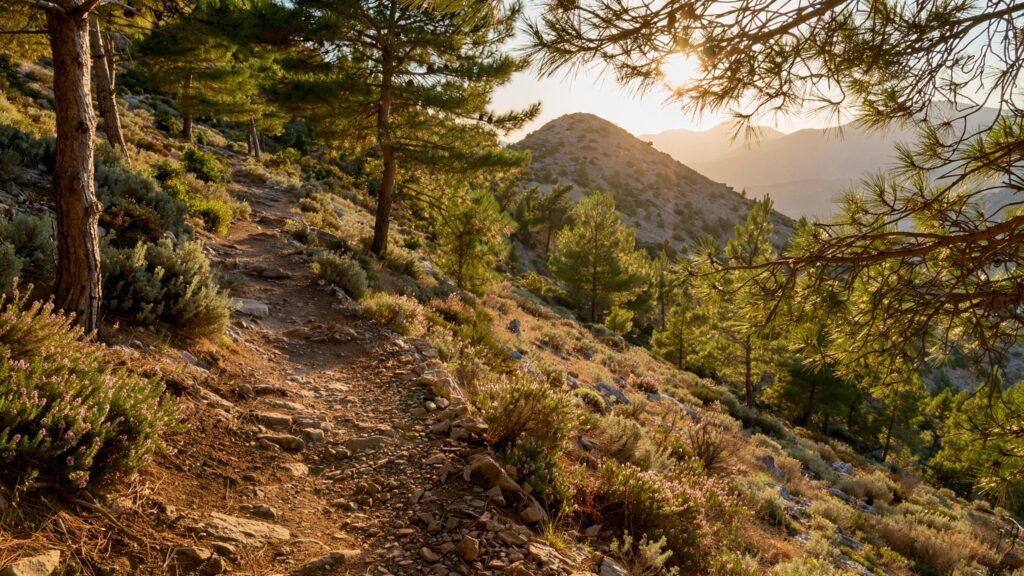
Carry water. The mountain is exposed and the summit climb in summer heat requires preparation. Go in spring if the weather and the road condition permit, when the Arcadian wildflowers are at their most abundant on the lower slopes and the air at the summit carries the specific quality of mountain clarity that the panorama the altar was designed to command becomes fully visible in.
The two gilded eagles that stood on pillars before the altar, described by Pausanias, are gone. The altar mound they flanked is there. The view across the Peloponnese that the ancient sources said could be seen from the summit is there. The ash is still in the ground.
The Question the Mountain Keeps Asking
We do not yet know how the altar was first used, and whether it was used in connection with natural phenomena such as wind, rain, light, or earthquakes, possibly to worship some kind of divinity, male or female, or a personification representing forces of nature.
This is the question that the ash altar on Mount Lykaion places before archaeology and before religious history simultaneously: not who Zeus was or what the classical Greek cult of Zeus Lykaios involved, since those questions have answers of varying completeness, but what the divinity was that occupied this specific mountain summit for a thousand years before anyone had given it the name Zeus, and what its worshippers understood themselves to be doing when they climbed to nearly 1,400 meters in the Arcadian mountains and burned their offerings in the cold clear air above the Peloponnese.
The ash kept the record. The seal from Minoan Crete arrived and was deposited there. The bronze tripods came, and the miniature vases, and the iron spits, and the silver coins, and the evidence of Mycenaean ritual burning in the lowest layers. Pausanias came and declined to describe what he saw. The excavators came and found the ash and the animal bones and, in the summer of 2016, the young man buried in the middle of all of it.
I was reluctant to pry into the details of the sacrifice. Let them be as they are and were from the beginning.
Pausanias’s silence is still the most honest response available to what the mountain holds. The beginning, which the archaeology now places five thousand years ago and the mythology places at the birth of the god himself, is still being excavated. The ash altar is still being read. The question of what was burned for before the name existed is still open.
The mountain is still there. The view across the Peloponnese is still what it was. The shadow still does not fall the way it does elsewhere, if you believe what the ancient sources said about it.
At Olympus Estate, Tales from Olympus moves through the deeper currents of the Greek tradition. The ash altar on the summit of Mount Lykaion has been in continuous ritual use since roughly 3,000 BCE, at least a thousand years before Greek worship of Zeus began, according to the University of Arizona’s own excavation team. A Minoan bull seal found in the ash, dated 1500 to 1400 BCE, links the Arcadian sanctuary to Crete’s own rival claim on the god’s birthplace. Pausanias visited the summit in the second century CE and declined to describe the secret sacrifice he witnessed there. In the summer of 2016, excavators found a human burial, an adolescent male, at the very center of the altar, initially dated to the eleventh century BCE, though subsequent scholarship, including a private assessment attributed to the excavation’s own co-director, has since cast real doubt on that dating. The excavation continues. The question of what, exactly, this mountain was worshipping before it had a name for it remains open, and now so does the 2016 burial itself.