



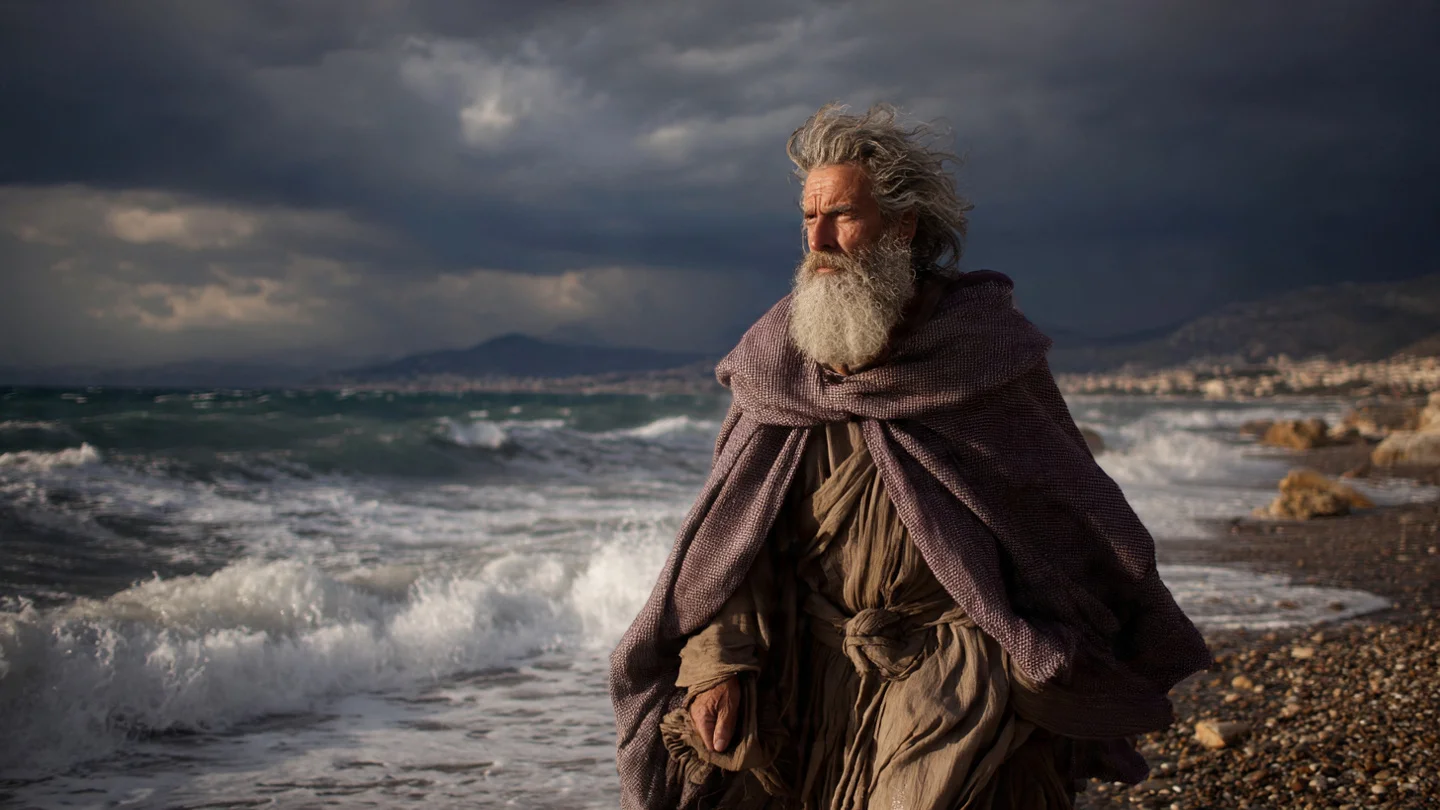
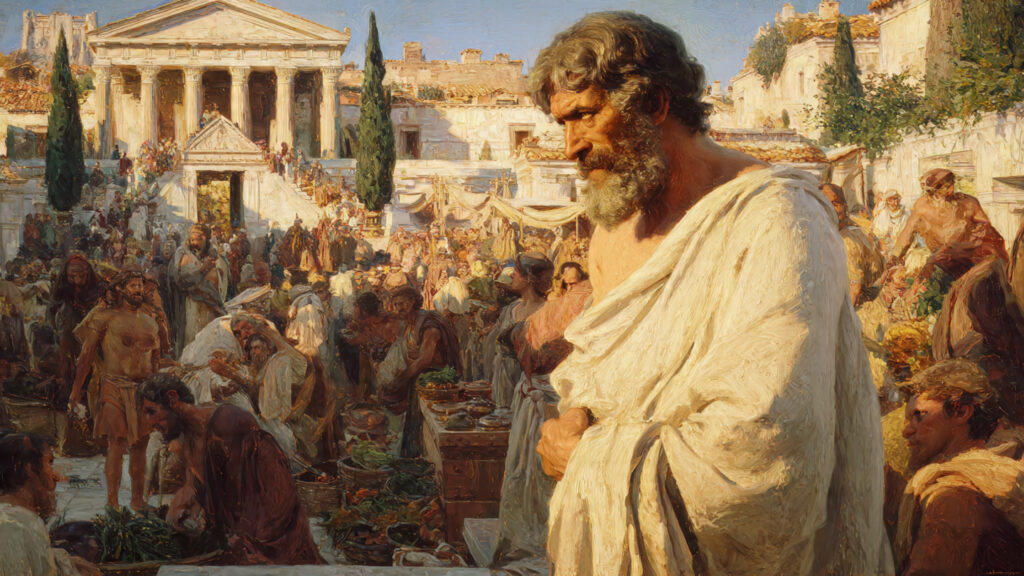
Zeno of Citium arrived in Athens around 300 BCE after surviving a shipwreck near Piraeus that cost him his entire cargo of Phoenician purple dye. Diogenes Laertius records that the loss pushed him toward philosophy rather than away from it: Zeno wandered into a bookshop, encountered Xenophon’s account of Socrates, and asked where he might find a man like that. Pointed toward Crates the Cynic, who happened to be passing by, Zeno began his philosophical education under him before eventually founding his own school in the Stoa Poikile, the Painted Porch, an open colonnade on the northern edge of the Athenian Agora.
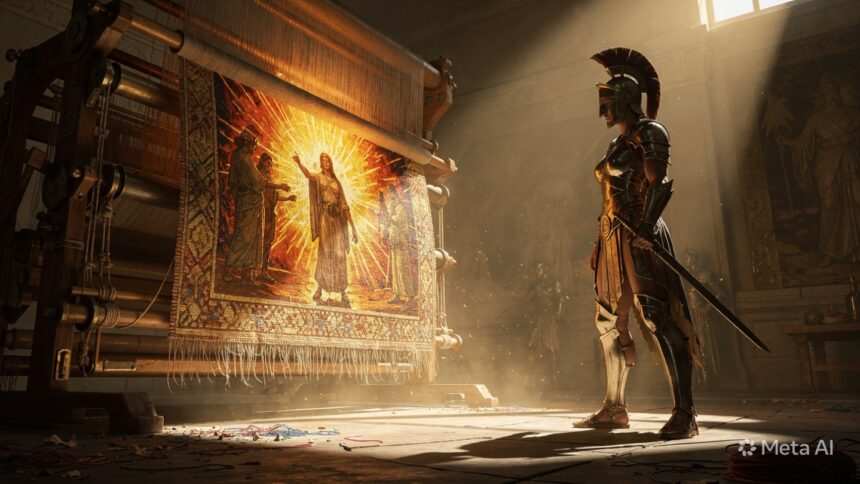
Unlike the Academy or the Lyceum, the Stoa was not a private retreat set apart from the city. It was a working civic space, decorated with murals attributed to Polygnotus and Micon depicting the Battle of Marathon and the Sack of Troy, and it gave the philosophical school that met there its name: Stoicism, the philosophy of the Porch. Zeno’s students studied in a colonnade exposed to the ordinary weather, noise, and traffic of the Agora rather than in a garden or a gymnasium set apart from daily life, and that choice of location was not incidental to what the philosophy became.
The Painted Porch as a Public Philosophy
The Stoa Poikile was a genuine civic landmark as much as a philosophical meeting place. The murals were not decoration in any casual sense. They depicted real, weighty subjects from Athenian and mythological history, and any student gathering to hear Zeno teach did so beneath scenes of the city’s own founding conflicts. The space was open to the elements: no walls held back rain, dust, or the winter cold, and anyone studying there had to do so alongside the market’s noise and the crowd’s ordinary business rather than apart from it.
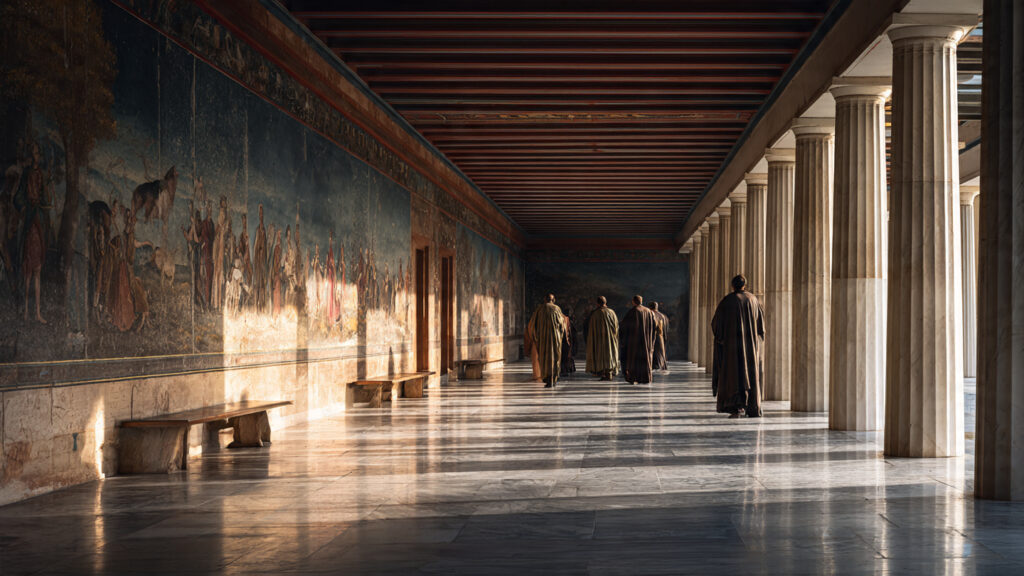
This location choice reflected something genuinely central to early Stoic thought. The Stoics rejected the idea, associated with Epicurus’s Garden, that philosophical clarity required withdrawal from public life. They located their school deliberately in the busiest civic space in Athens, on the theory that a mind capable of remaining clear amid the Agora’s noise and cold had actually proven something a mind cultivated in quiet isolation had not yet been tested on.
The Stoa also sat at a genuine crossroads of the ancient Mediterranean, its daily traffic including merchants, sailors, and travelers from across the Greek world and beyond. This cosmopolitan setting reinforced the Stoic concept of the cosmopolis, the idea that every individual was, in the fullest sense, a citizen of the world rather than simply of one city. Zeno’s own biography, a Phoenician from Cyprus who became one of the most influential philosophers in Athenian history, was itself a kind of argument for the idea.
Simplicity and Physical Discipline
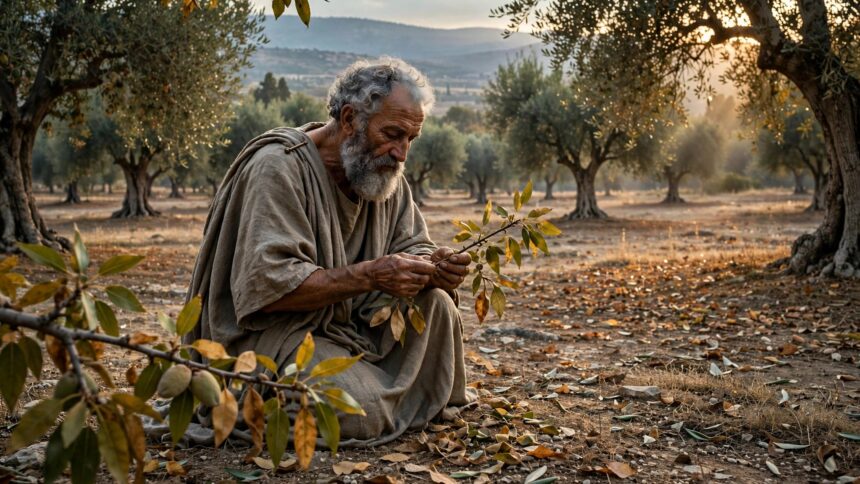
The tribon, the thin cloak associated with Cynic and early Stoic practice, offered minimal insulation by design, a genuine ascetic choice rather than simple poverty. Ancient sources describe the early Stoics maintaining a similarly restrained diet: dried figs, cheese, barley bread, water, and wine diluted well below the strength a symposium would normally serve. This was not asceticism pursued for its own sake. It reflected the Stoic conviction that a mind preoccupied with appetite and comfort was a mind less available for clear thought, and that reducing physical demands freed attention for the things that actually mattered to Stoic ethics.
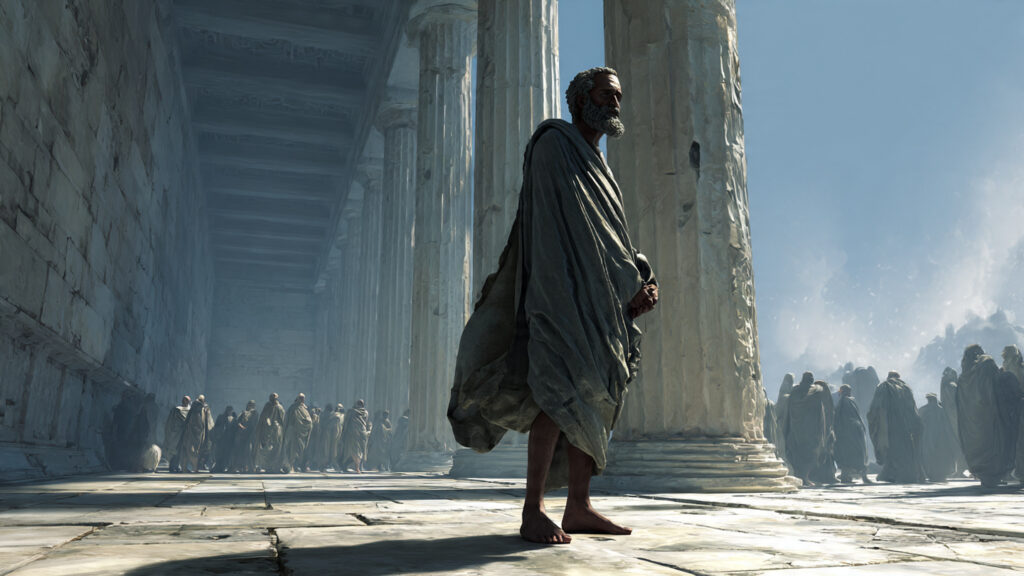
The early Stoics treated the capacity to remain composed under real physical discomfort, cold, hunger, discomfort of any ordinary kind, as connected directly to the capacity to remain composed under emotional and circumstantial pressure. The two were not separate skills in their view. Practicing one trained the other.
What Is and Is Not Within Our Control
Stoic ethics rests on a single, foundational distinction: the line between what lies within a person’s control and what does not. Zeno’s own preferred image for this, later developed at length by his successors, was a dog tied to a moving cart. The cart moves according to forces entirely outside the dog’s control. The dog can run alongside it willingly or be dragged behind it resisting, but the cart moves regardless of which the dog chooses. The only real freedom available to the dog is in how it responds to a motion it cannot itself direct.
This distinction shares real conceptual ground with the Chronos-Kairos tradition this collection develops elsewhere, the difference between time as an unstoppable, indifferent progression and the specific opportune moment within it where genuine action becomes possible.
Weather, civic politics, and the body’s own health belonged, in Stoic terms, to the category of things outside a person’s direct control. A winter storm was not treated as a crisis demanding emotional response. It was simply a condition to be met practically, by seeking shelter or enduring it as necessary. The Stoic logic held that energy spent resisting or lamenting the uncontrollable was energy wasted, better spent entirely on the narrower category of things a person could actually shape.
The early Stoics were not, on this account, attempting to change the world through sheer force of will. They were attempting to change their own relationship to a world that would keep changing regardless of their preferences. Seasons turn. Bodies age. Political fortunes rise and fall. The Stoic position was that resisting these facts produced needless suffering, while working within them, actively rather than passively, produced something closer to genuine stability.
Heraclitus and the Stoic Logos
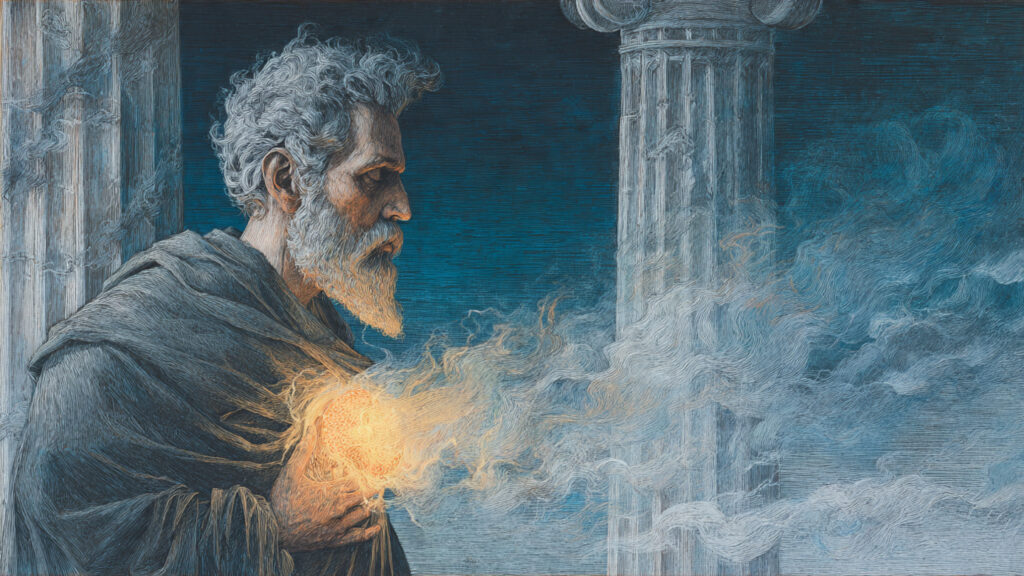
The Stoics inherited a great deal directly from Heraclitus of Ephesus, who taught that everything is in flux and that a rational principle, the logos, governs the pattern of that change. The Stoics developed this into the idea of the cosmos as a rational, ordered whole, sustained by a creative fire, with a portion of that same fire present in every individual human mind. Aligning one’s own reason with the reason governing the cosmos as a whole was, on this view, the actual substance of wisdom.
Winter, in this framework, was simply the visible seasonal expression of the same logos: the cold of winter no more random or meaningless than the loss of a ship at sea, each one a specific instance of the larger, rational order the Stoics believed governed everything. Heraclitus had also taught the unity of opposites: that the path up and the path down are the same path, that winter and summer together constitute a single year rather than two competing seasons. The Heraclitean fire that underlies this thinking gave the early Stoics a way to hold difficulty and ease as two phases of one continuous process rather than as separate, opposed states to be sought or avoided.
Hestia and the Domestic Hearth
Hestia presided over the hearth, the fixed, unmoving center of the ancient Greek household, providing warmth, light, and a kind of domestic continuity that outlasted any single member of the family. The Stoic idea of an inner discipline maintained regardless of external circumstance runs along broadly similar lines: a stability cultivated within the individual that external cold, in the literal and figurative sense, was not supposed to be able to extinguish.
Winter, with its longer nights and reduced outdoor activity, was treated by the Stoics as well suited to exactly this kind of internal work. The practice of reviewing one’s actions each evening, a discipline later Stoics like Seneca describe explicitly, fits naturally into a season that already turns attention inward simply through reduced daylight and colder air.
The Agora as a Testing Ground
The Athenian Agora, full of commerce, political argument, and ordinary civic noise, was exactly the environment early Stoic practice was designed to be tested in. Composure amid distraction, clarity amid gossip and rumor, and consistency amid shifting political fortune were not abstract virtues for a Stoic operating in this space. They were skills under constant, immediate demand.
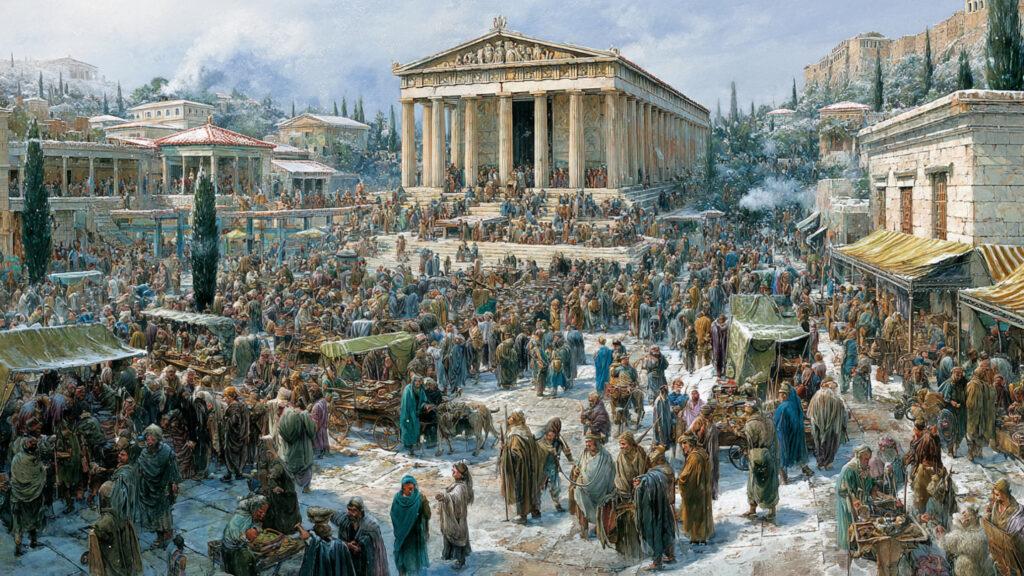
Zeno himself became known across Athens for a personal reputation of calm and frugality. Diogenes Laertius records that the Athenians honored him during his own lifetime with a golden crown and a public tomb, a level of civic recognition few philosophers received while still alive, and one that suggests his personal reputation for restraint was widely respected well beyond his own immediate circle of students.
Athens itself went through real political upheaval across the span of Zeno’s life, including wars and shifting alliances among the Successor kingdoms that emerged after Alexander’s death. The Stoic emphasis on the cosmopolis, the idea of citizenship extending beyond any single city’s fortunes, offered a framework for engaging with civic life without being entirely undone by its instability.
The Greek Landscape and Stoic Temperament
Greece is a landscape of real physical limits: mountainous terrain, scarce fertile land, isolated valleys, and an unpredictable sea that ancient communities had to plan their whole economic lives around. It is not a coincidence that a philosophy built around distinguishing the controllable from the uncontrollable, and around disciplined endurance of what could not be changed, emerged from a landscape that had been teaching exactly that distinction to its inhabitants for centuries already.
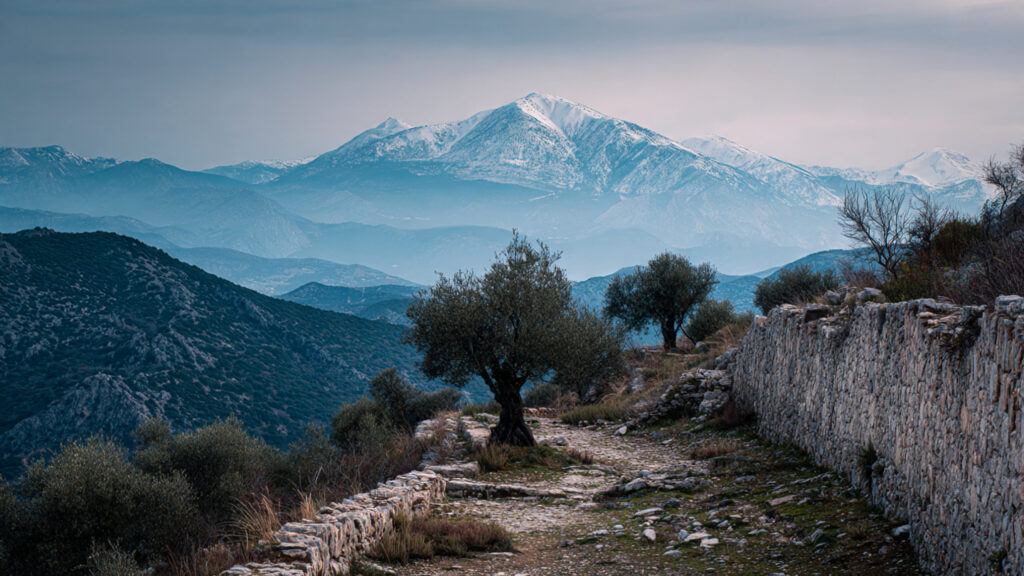
The winter paths of Attica and the lower slopes of Mount Olympus still present the same basic conditions the early Stoics worked within: cold, wind, exposed stone, and a landscape that gives back very little comfort in exchange for effort. Stoicism, in this sense, took the practical discipline the Greek terrain had always demanded of the people living in it and gave that discipline an explicit philosophical vocabulary.
Zeno’s Legacy
Ancient tradition, recorded by Diogenes Laertius, holds that Zeno died after stumbling and breaking a toe in old age, and interpreted the accident as a sign that it was time to die, after which he held his breath until he stopped breathing. Whatever the literal truth of that account, it is consistent with the philosophy he taught: a final act of accepting what could not be controlled and choosing his own response to it.
The school he founded in the Painted Porch went on to shape philosophical and political thought from Athens to Rome, its later adherents including the freed slave Epictetus and the emperor Marcus Aurelius, two men whose circumstances could hardly have been more different and who both found the same core discipline useful. The philosophy endured for that reason above all: it was built to be practiced under exactly the conditions, cold, uncertainty, civic disorder, personal loss, that most philosophies are content to theorize about from a distance.
At Olympus Estate, Mythic Essays moves through the deeper currents of the Greek tradition. Zeno arrived in Athens around 300 BCE after a shipwreck near Piraeus cost him his cargo of Phoenician purple dye, and Diogenes Laertius records that he found his way to philosophy through a chance encounter with Xenophon’s account of Socrates in an Athenian bookshop. He studied under Crates the Cynic before founding his own school in the Stoa Poikile, the Painted Porch, decorated with murals of Marathon and Troy. Zeno’s own image for the Stoic view of freedom was a dog tied to a moving cart: the cart moves according to forces the dog cannot control, and the only real freedom available is in how the dog responds to that motion. The Stoics inherited the logos from Heraclitus, treating winter’s cold as no more random than any other part of a rational, ordered cosmos. Athenians honored Zeno in his own lifetime with a golden crown and a public tomb. His school went on to shape Epictetus, a former slave, and Marcus Aurelius, an emperor, and endured because it was built to be practiced under exactly the hard conditions most philosophy only theorizes about.