

The poem does not begin with Odysseus leaving Troy. It begins nine years after he already left, with him still not home, and it does not even begin with him at all.
It begins with his son.
The Odyssey is a poem about a homecoming that takes so long the audience needs four full books before the hero it is named for even appears on stage. This is not a structural accident. It is the poem’s first and most sophisticated decision, and understanding why Homer made it is the fastest way into what the Odyssey is: not simply an adventure story, though it contains the most famous adventures in Western literature, but a study in what happens to the people left behind when a homecoming is delayed past the point anyone can still reasonably hope for it.
The Book About the Son
Ithaca, when the poem opens, has been quietly consumed. More than a hundred suitors from the surrounding islands have taken up residence in Odysseus’s house, eating his stores, courting his wife Penelope, and waiting for either her surrender or his confirmed death, whichever comes first. Telemachus, Odysseus’s son, was an infant when his father sailed for Troy twenty years earlier. He is now a young man with no real authority in his own house, watching strangers consume his inheritance while his mother stalls a decision she has no legal power to refuse indefinitely.
Athena, who has favored Odysseus since the war, appears to Telemachus disguised as a family friend and gives him two things: the confidence to call an assembly and formally challenge the suitors’ occupation of his house, and a mission, to sail in search of news of his father from the men who fought beside him. At Pylos, the aged Nestor receives him warmly and tells him what he knows, and at Sparta, Menelaus and the recovered Helen do the same. Both stops accomplish the same narrative work from a different angle: they update the audience on what happened to the Greek commanders after Troy fell, and they introduce, explicitly and repeatedly, the story that will hang over the rest of the poem as an unspoken threat.
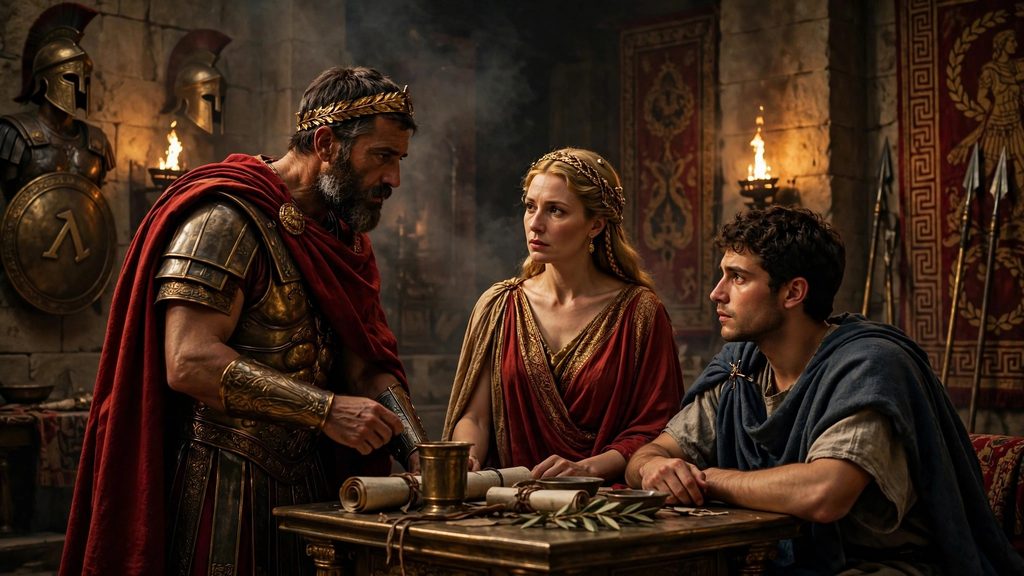
That story is Agamemnon’s. The commander of the whole Greek expedition returned home from Troy to find his own wife, Clytemnestra, had taken a lover, Aegisthus, during his ten-year absence, and the two of them murdered him within days of his arrival, in his own house, at his own homecoming feast. His son Orestes eventually avenged the murder, a story this collection’s own account of the war that started everything touches only at its edges, since the full tragedy belongs to a different telling. Nestor raises it. Menelaus raises it again. Homer is not simply filling narrative time with a second story while Telemachus travels. He is asking the question the whole poem depends on without ever asking it directly: Odysseus has also been gone twenty years, his wife is also besieged by men who want his position, and Ithaca has every ingredient required to become a second Mycenae. Will it?
The Man Who Tells His Own Story
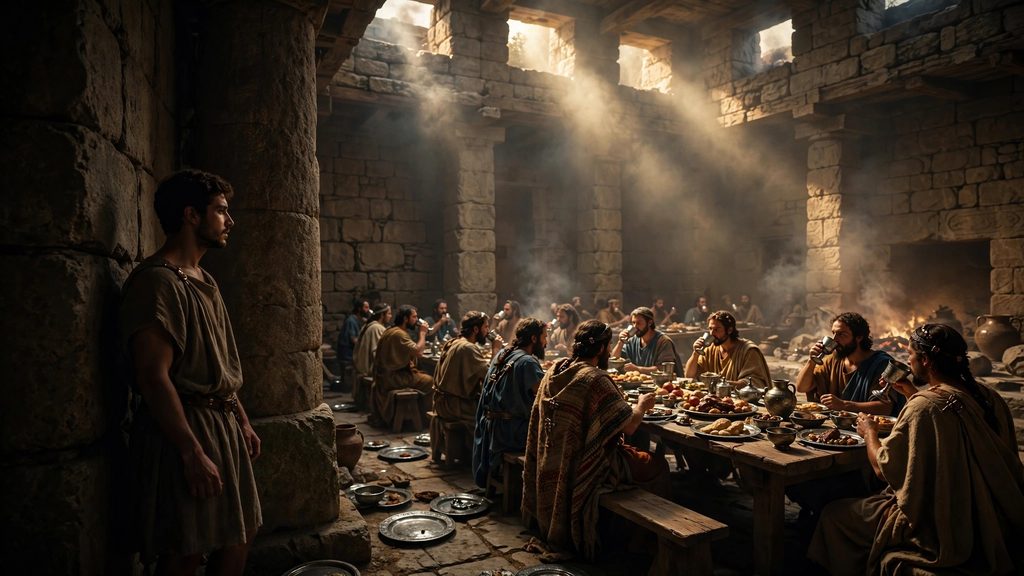
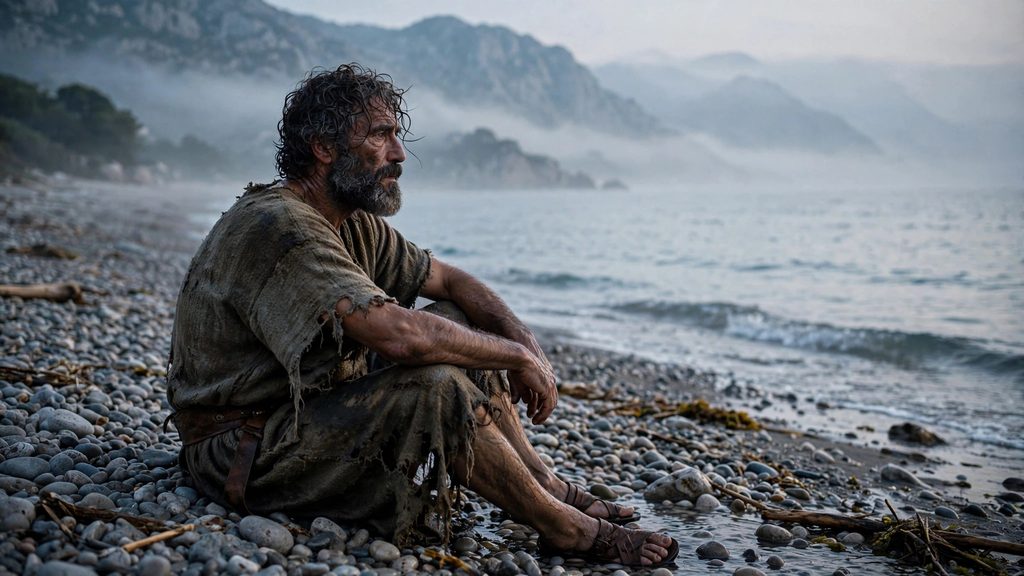
Odysseus himself finally enters the poem in its fifth book, not triumphant but weeping on a beach, held for seven years as the reluctant lover of the nymph Calypso on the remote island of Ogygia, wanting nothing more than to go home to a wife the goddess cannot understand he would prefer over her own immortality. Zeus, petitioned by Athena, finally orders his release. Poseidon, still furious at Odysseus for an injury the poem has not yet explained, wrecks the raft that carries him away, and Odysseus washes up, alone and naked, on the shore of Phaeacia, where the princess Nausicaa finds him and her father Alcinous offers him the hospitality of a royal feast.
It is at this feast, asked to identify himself, that Odysseus does something the poem has been building toward since its opening line invoked a man of many turns: he becomes the narrator of his own story. Books nine through twelve are not told by Homer’s external narrator at all. They are Odysseus’s own account, delivered to a dinner table of strangers, of everything that happened between leaving Troy and washing up on this beach, and the choice to hand the narration to the hero himself, rather than simply reporting his adventures from outside, is one of the more sophisticated narrative techniques anywhere in the ancient epic tradition.
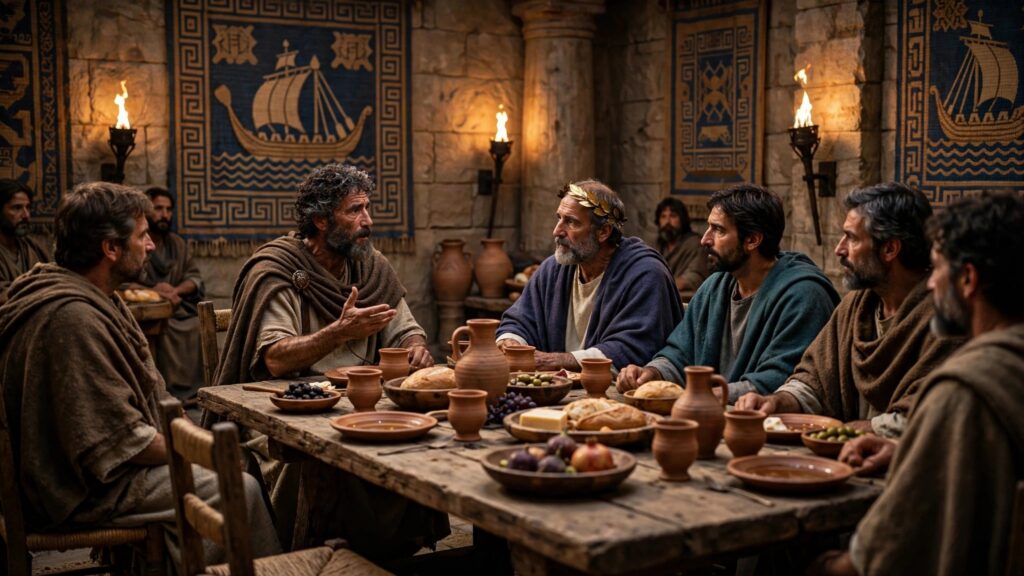
The audience receives the Cyclops, the witch, the descent to the dead, and the sea monsters filtered through the memory and self-presentation of the one man who survived them, which means every story Odysseus tells is also, quietly, an argument for his own cleverness and endurance, told to an audience whose goodwill he badly needs.
What Actually Happened at Sea
The adventures themselves, compressed by two thousand years of retelling into a checklist of monsters, are worth taking at the pace Homer gives them.
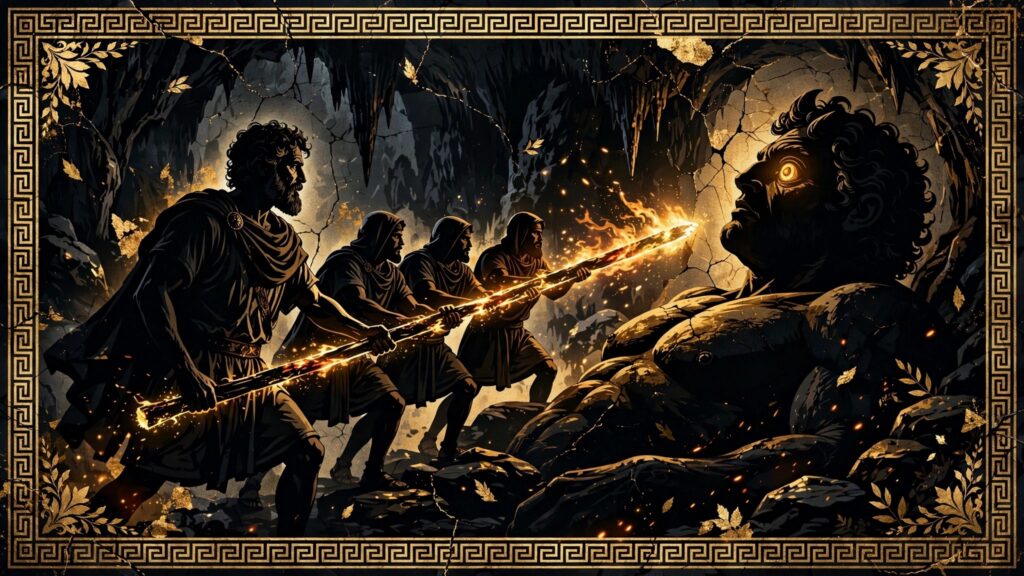
The Cyclops Polyphemus, a one-eyed son of Poseidon, trapped Odysseus and his crew in his cave and began eating them two at a time until Odysseus got him drunk, told him his name was Nobody, and blinded his single eye with a sharpened, fire-hardened stake while the crew escaped clinging to the undersides of his sheep. The blinded Polyphemus, calling for help, told his neighbors that Nobody was attacking him, and they, reasonably concluding no one was attacking him at all, left him alone. It is a trick that works because of a pun, and Odysseus, sailing away triumphant, could not resist shouting his actual name back at the blinded god’s son, a piece of pride that gave Polyphemus something to pray to his father Poseidon for by name. This single act of vanity, more than any other single decision Odysseus makes, is the reason the god of the sea spends the rest of the poem making sure his voyage home takes as long and costs as much as possible.
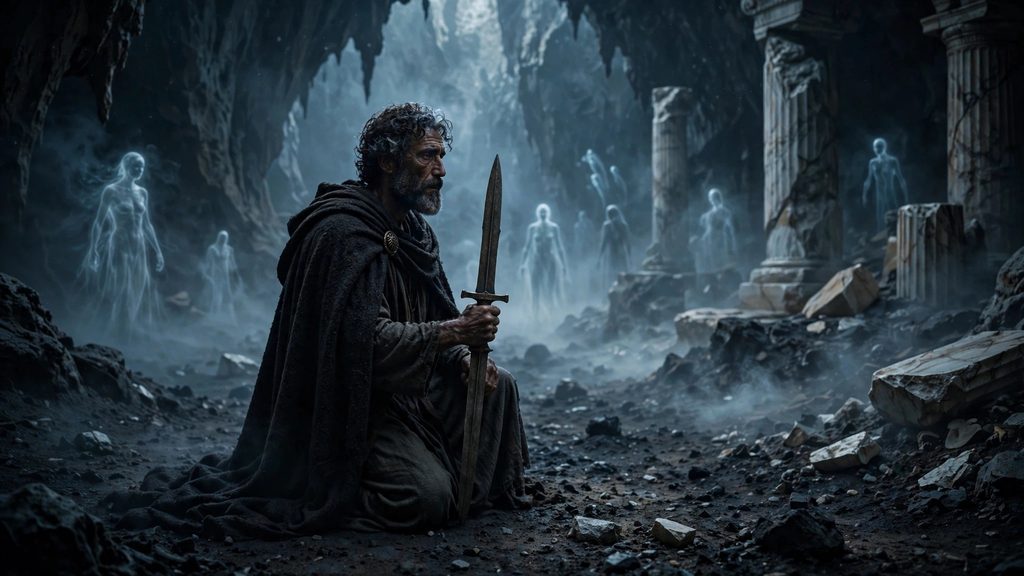
The witch Circe turned half of Odysseus’s landing party into pigs with a drugged feast, and would have done the same to Odysseus himself had the god Hermes not given him an herb, moly, that protected him from her magic. Rather than fighting her, Odysseus, following Hermes’s specific advice, drew his sword and forced her to swear an oath not to harm him further, after which the two became lovers and Odysseus’s crew spent a full year on her island before his own men had to remind him it was time to leave. Circe, before he left, gave him the instructions that took him somewhere no other Homeric hero visits while still alive: the entrance to the underworld, where the spirit of the prophet Tiresias, examined in this collection’s own account of Tiresias’s own strange history, told Odysseus what he still needed to survive, and where he met, among the crowding shades, his own mother, who had died of grief during his absence, and the ghost of Agamemnon himself, who told Odysseus his murder directly and warned him never to trust a wife’s welcome fully, a warning that lands with real weight against everything the poem has already suggested about Penelope’s own uncertain position back on Ithaca.
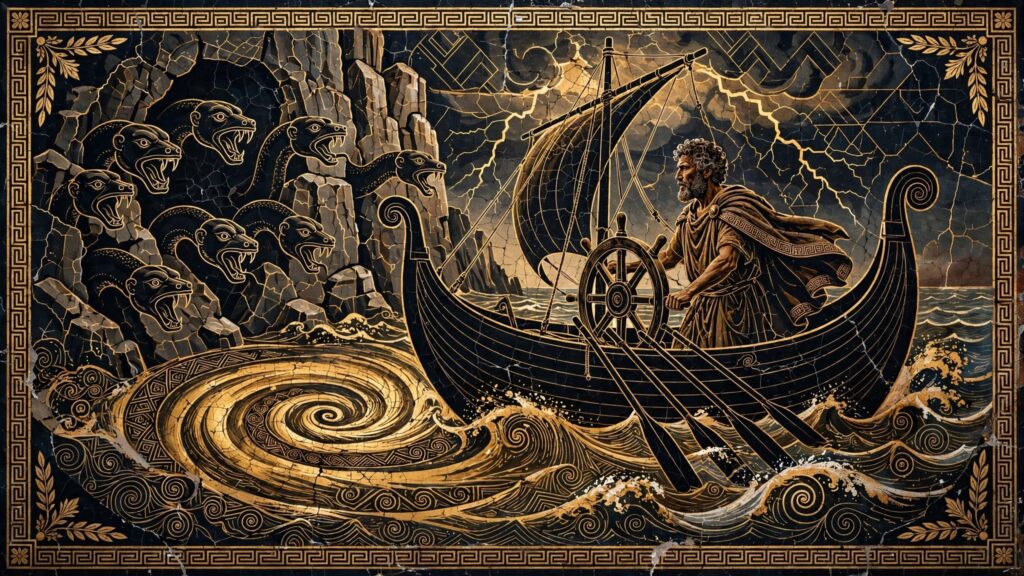
The Sirens, whose song lured sailors to their deaths on the rocks, were survived because Odysseus had his men plug their own ears with wax while he alone, lashed to the mast and forbidden to be untied no matter how he begged, became the only mortal in the tradition to hear the song and live. Scylla, a six-headed monster fixed permanently in a cliff face, and Charybdis, a whirlpool that swallowed the sea itself three times a day, guarded a strait so narrow that avoiding one monster meant sailing within reach of the other, and Odysseus, choosing the lesser loss, sacrificed six of his men to Scylla’s mouths rather than risk his whole ship in Charybdis’s throat.
And on the island of the sun god Helios, starving crewmen, against every explicit warning, slaughtered and ate the god’s own sacred cattle, a violation of hospitality and divine property so severe that Zeus destroyed the ship with a thunderbolt on the open sea and drowned every man aboard except Odysseus himself, who alone survived to wash up, finally, on Calypso’s island, where the narration he has been giving the Phaeacians catches up to where the poem itself began.
The Beggar at His Own Door
The Phaeacians, moved by the story and famous throughout the tradition for their extraordinary generosity to strangers, give Odysseus a ship and crew of their own and finally deliver him to Ithaca itself, asleep, in the poem’s thirteenth book, twenty years after he first left it.
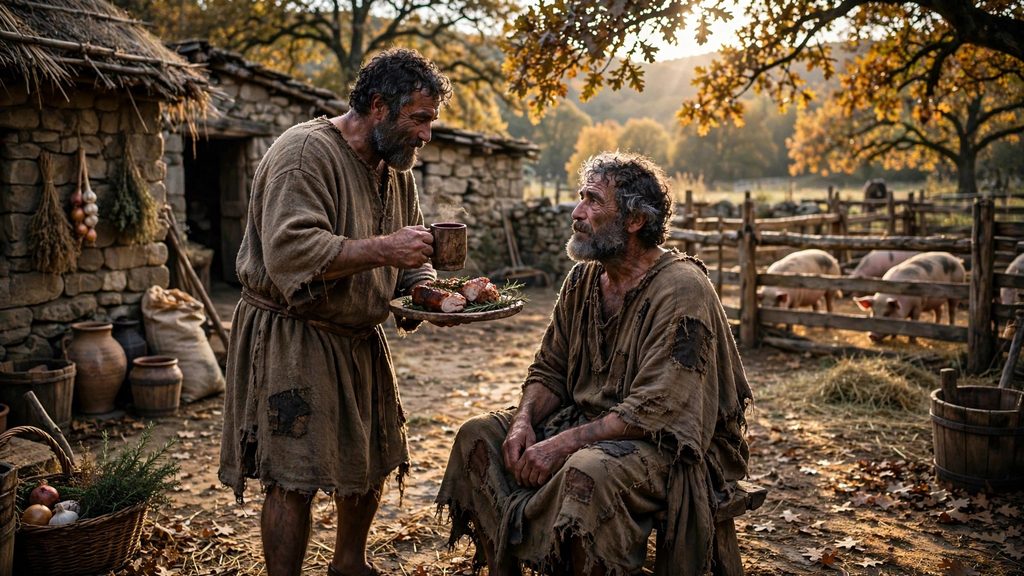
He does not walk into his own house and announce himself. Athena disguises him as an elderly beggar, and the second half of the poem is built on the tension of a man watching his own household, his own wife, and his own son from behind a disguise he cannot yet safely drop, gathering exactly what he needs to know before he acts. He is welcomed first not by anyone who recognizes him but by Eumaeus, his loyal swineherd, whose simple, genuine hospitality to a ragged stranger stands in direct, deliberate contrast to the suitors’ violent contempt for the same beggar once he reaches the house itself, a contrast the poem draws with real precision: xenia, the obligation of hospitality to strangers, is the moral yardstick against which nearly every character in the Odyssey is measured, and the suitors fail it as completely as Eumaeus passes it.
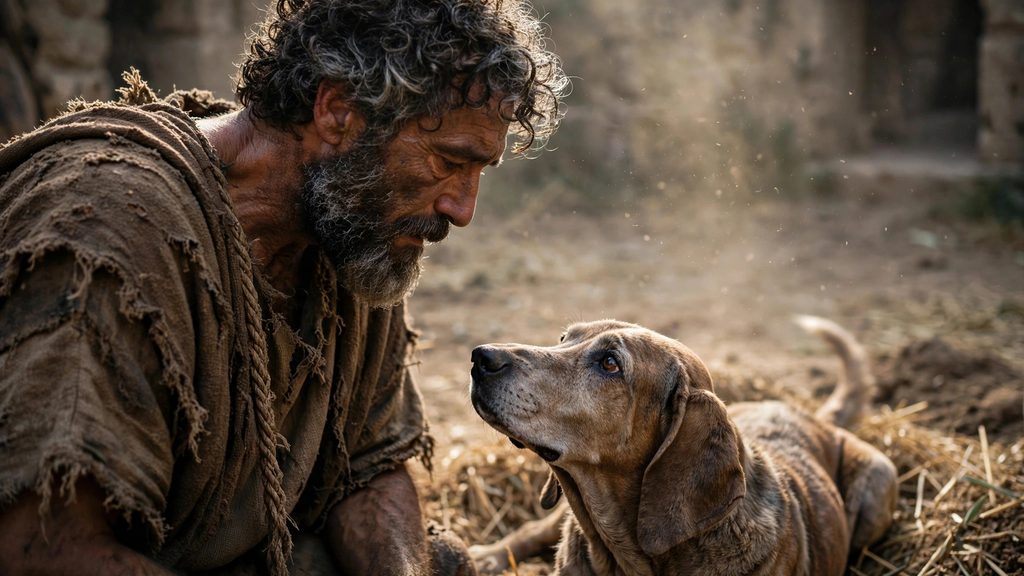
Only his old dog Argos, dying on a dung heap, recognizes him instantly, wags his tail, and expires. Telemachus, reunited with his father at the swineherd’s hut, is told the truth directly.
Penelope is not, not yet, even as she and the disguised beggar speak at length in her own hall, in a conversation whose emotional undertone modern scholarship increasingly reads as her own growing, unstated suspicion of exactly who she is talking to.
The Contest Penelope Set
Penelope, after three years of unraveling by night the burial shroud she claimed to be weaving for Laertes as her excuse to delay remarriage, a trick finally exposed by a disloyal servant, sets the suitors a final test: whichever man can string Odysseus’s own great bow and shoot an arrow through the aligned sockets of twelve axe heads in a row will have her hand.
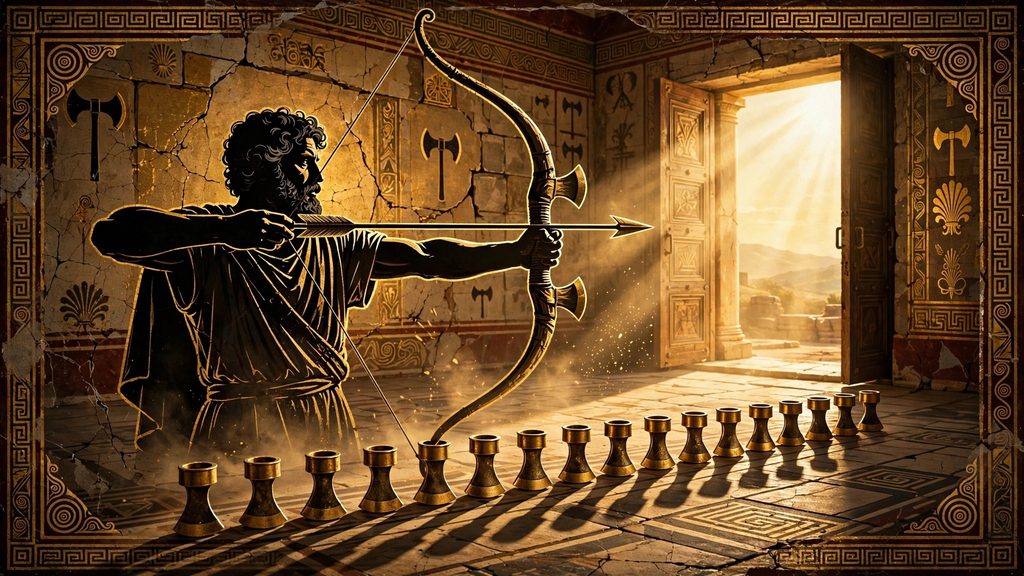
None of the suitors can even bend the bow enough to string it. The disguised beggar asks to try. Mocked and refused at first, he is eventually permitted the attempt, strings the bow that only his own hands remember how to draw, and puts the arrow cleanly through all twelve axes on the first shot. In the same motion, he turns the bow on the suitors themselves. With Telemachus, Eumaeus, and one other loyal herdsman at his side, and the doors of the hall sealed by Athena’s own hand, Odysseus and his small household slaughter every one of the suitors, more than a hundred men, in the single most violent extended sequence in the poem, a homecoming that ends not in an embrace but in a massacre the poem does not flinch from describing in full.
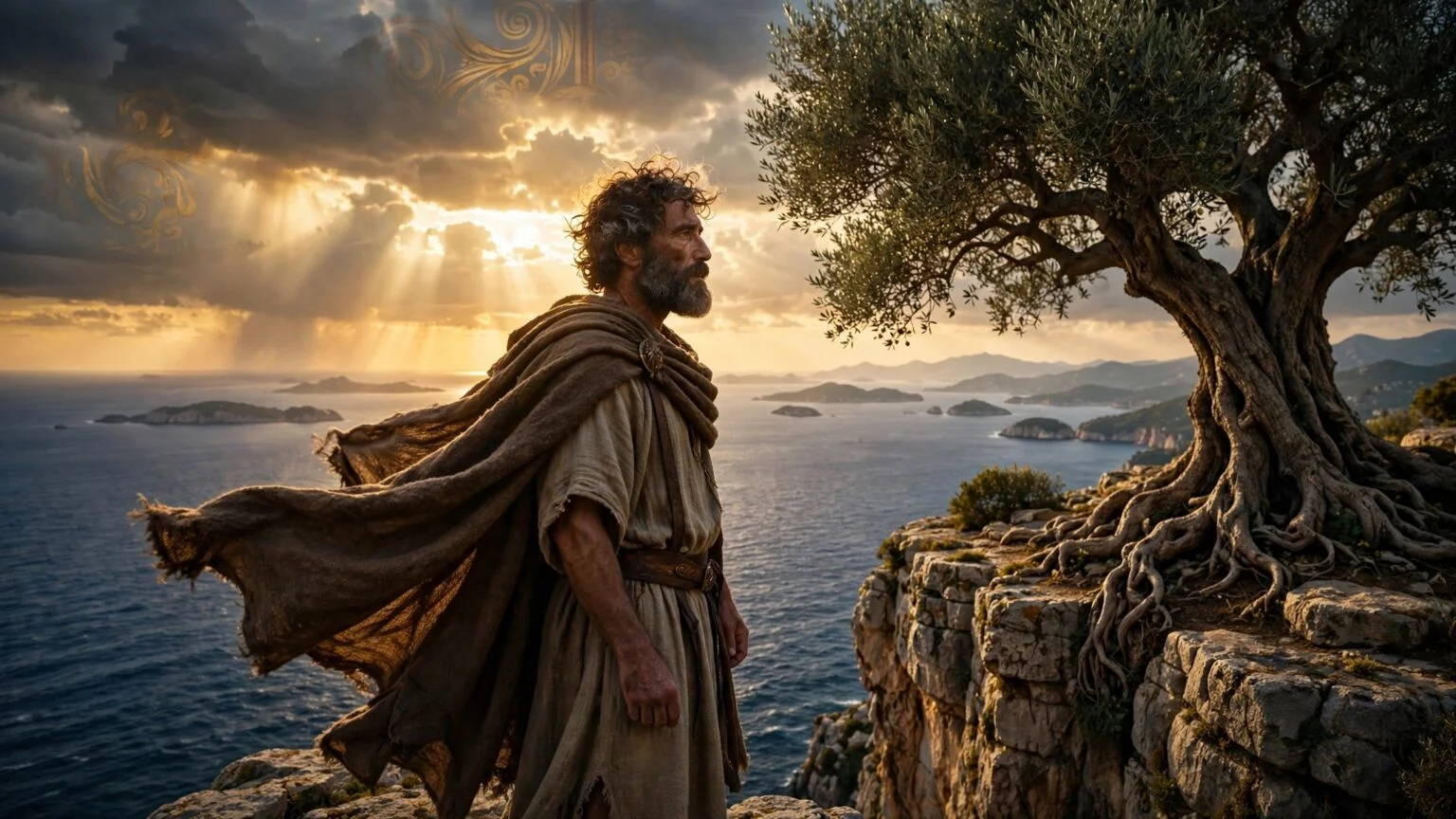
Penelope, told the beggar has killed every suitor and is in fact her own husband, does not run to him. She tests him one final time, ordering a servant to move the immovable bed Odysseus built around a living olive tree still rooted in the ground, a bed whose specific, secret construction only the two of them could know.
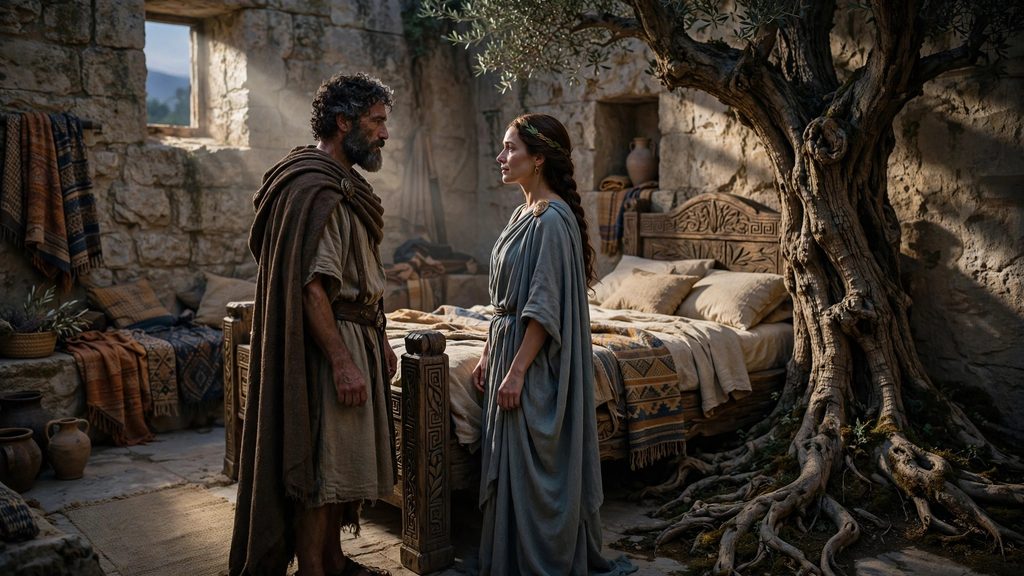
Odysseus’s furious reaction, that the bed cannot be moved because he built it around a tree that has never been cut, is the proof Penelope actually needed. Twenty years of waiting end not on the promise of his return but on a piece of furniture only a husband could correctly describe.
What Popular Memory Leaves Off
The poem does not actually end with the reunion. Book twenty-four, routinely dropped from popular summaries that prefer to stop at the bow contest and the embrace, sends Odysseus out to his elderly father Laertes, living in rural isolation and grief, to reveal himself to him as well, while in Ithaca the suitors’ families, discovering their sons and brothers are dead, gather in genuine fury to avenge them, and a second, smaller war very nearly breaks out between Odysseus’s household and the suitors’ surviving relatives. It is Athena, intervening directly and decisively, who ends the conflict before it can properly begin, imposing peace on a community that has just absorbed the deaths of over a hundred of its own young men in a single afternoon.
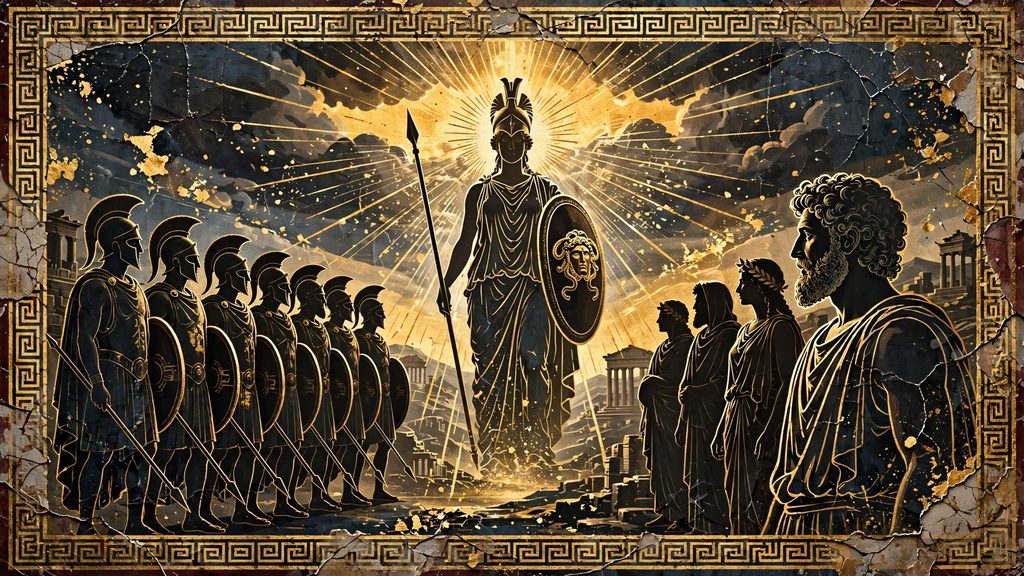
The ending the popular tradition remembers, husband and wife reunited, is real, and it is genuinely the emotional peak of a poem that has spent ten years and twenty-four books earning it. But the actual final book is quieter and considerably darker than the popular version admits: a father meeting a son he thought he would never see wear a full grown man’s face, and a whole island community, having just watched its ruling household execute a mass killing in its own great hall, forced by a goddess’s direct intervention to accept peace rather than choose it.
The Question the Odyssey Actually Answers
Return to the question Nestor and Menelaus raised, unasked but unmistakable, in the poem’s opening books: would Ithaca become a second Mycenae. Would Penelope become a second Clytemnestra. Would Telemachus have to become a second Orestes, avenging a father’s murder instead of welcoming his return.
The Odyssey’s structure, the long delay before Odysseus even appears, the extended, cautious approach to his own house in disguise, Penelope’s careful, unhurried testing before she will believe what she is told, is built around answering that question as slowly and as thoroughly as the poem’s audience needs it answered. Homecoming, in the world the Odyssey describes, is not a guaranteed reward for survival. It is a thing that has to be verified, tested, and earned twice over, once by the traveler and once by the household he left behind, because the alternative, the one Agamemnon actually lived and died, was sitting in the audience’s memory throughout, exactly where Homer wanted it.
At Olympus Estate, Tales from Olympus moves through the deeper currents of the Greek tradition. The Odyssey opens not with Odysseus but with his son, four full books before the hero himself appears, weeping on Calypso’s island in his poem’s fifth chapter. Odysseus narrates his own most famous adventures directly, the Cyclops he blinded and named himself to, the witch Circe he outwitted with Hermes’s help, the Sirens only he survived hearing, the cattle of the sun his men should never have touched. Agamemnon’s murder by his own wife, raised repeatedly before Odysseus ever reaches home, hangs over the entire poem as the fate Ithaca might have shared. Penelope tests her returned husband with a bed built around a living tree before she accepts he is truly home, and the poem’s real ending, a near second war averted only by a goddess’s direct intervention, is darker and quieter than most retellings remember. This collection’s own complete account of the war that came before it tells the story this one assumes its audience already knows.