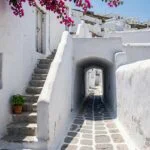
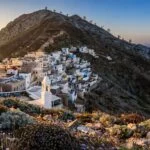
The Argo was built from the timber of this mountain.
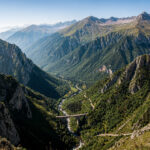
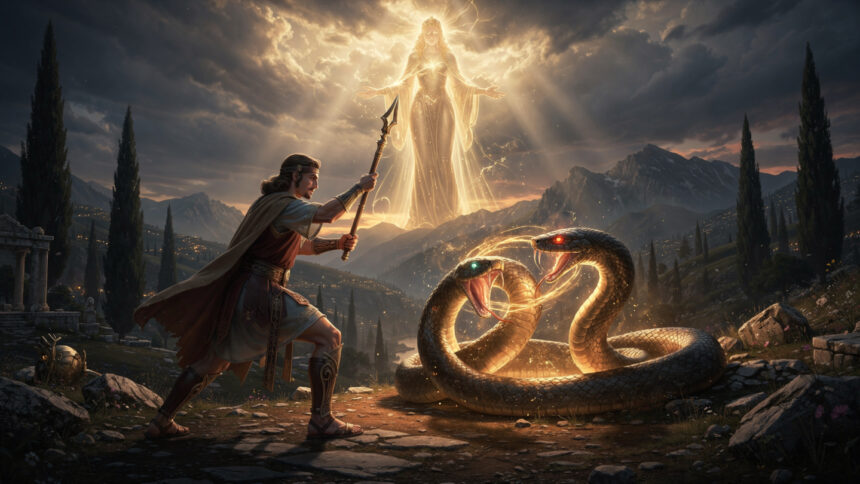
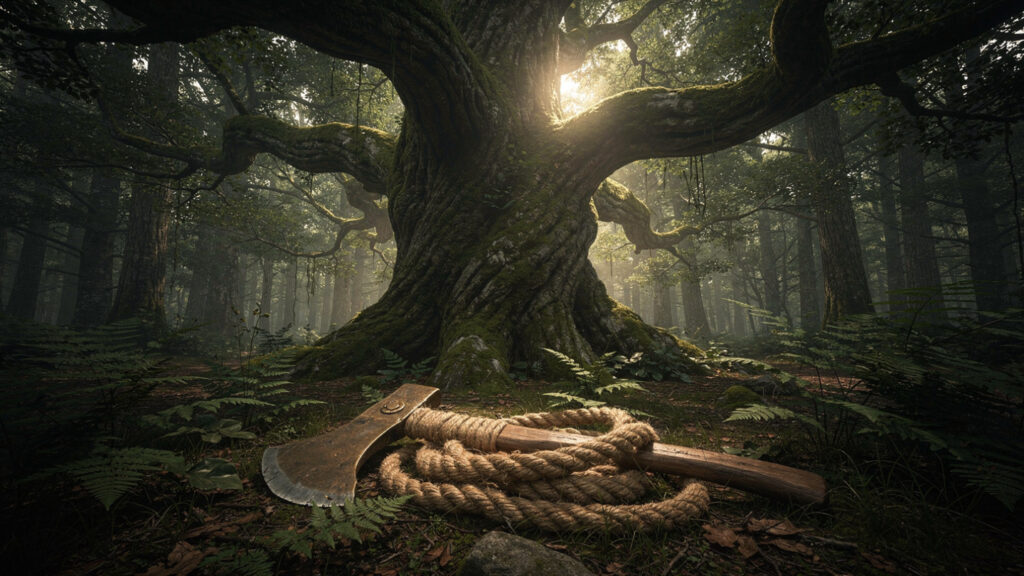
The detail is in Apollonius of Rhodes, whose Argonautica opens with the construction of the ship at Pagasae, the port at the foot of Mount Pelion whose location corresponds to the modern Volos: Argus built the ship under Athena’s supervision, using the timber of the Pelion forest, and the beam of speaking oak that Athena herself inserted into the Argo’s prow was cut from the sacred oak grove of Dodona. The Pelion timber was the Argo’s hull. The hull that carried the greatest assembly of heroes in the mythological tradition before the Trojan War was made from the forest that Makrinitsa now looks down on from the western slope of the mountain.
This is the mythological density of Mount Pelion: the mountain is not simply the setting for one mythological world but the convergence point of several, each contributing a different dimension to the character of the place. Chiron educated the heroes whose subsequent deeds the mythological world built its most significant narratives around. Jason assembled his crew at the mountain’s foot and departed from the gulf that the mountain overlooks. Achilles, who Chiron educated on these slopes, would go from Pelion to Troy. Asclepius, who Chiron educated in the medical arts on Pelion, would become the divine physician whose cult at Epidaurus the collection has already developed. The mountain was the school that trained the generation.
Chiron and the School on the Slope
Chiron was not a Centaur in the sense that the other Centaurs were Centaurs.
This distinction matters and the ancient world maintained it with care. The Centaurs of the mythological mainstream, the violent and lustful horse-men who appear in the Centauromachy of the Parthenon metopes and the Lapiths’ wedding feast, were the offspring of Ixion and the cloud Nephele: born from the union of the Thessalian king whose crime was the attempted seduction of Hera and the cloud that Zeus substituted for the goddess to expose the crime. They were the children of transgression, and their character in the mythology, the combination of the physical power of the horse and the appetitive disorder of the human-but-without-the-reason-that-makes-humans-fully-human, was the mythological encoding of what the ancient world understood as the result of the moral failure that produced them.
Chiron’s parentage was entirely different: he was the son of Kronos and the Oceanid Philyra, the Titan’s child by a different mother than the Olympians, making him the half-sibling of the generation of Zeus and Hera and Poseidon rather than the product of the mortal transgression that produced the other Centaurs. His character in the mythology, the wisdom and the moral clarity and the intellectual gifts that made him the educator of the greatest heroes of the mythological world, was the character that his different parentage and his different origin encoded. He was the Centaur who was not of the Centaurs’ lineage, the horse-man who had the fully human intellectual virtues in their fullest possible development.
The curriculum that Chiron taught was the curriculum of the complete human being as the ancient Greek world understood human completeness: medicine from the pharmacological knowledge of the mountain’s botanical resources, music from the lyre practice that the mythological world consistently associated with the formation of moral character, hunting as the education in the virtues of patience and attention and the correct relationship between the human predator and the natural world it moved through, and ethics as the philosophical foundation that the other subjects served.
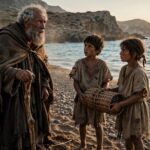
Achilles was brought to Chiron on Pelion by his father Peleus and his mother Thetis when he was an infant. The account of Achilles’ Pelion education includes the detail of the boy being fed on the marrow of bears and the entrails of lions and wild boars to develop his physical constitution alongside the intellectual formation that the musical and medical education provided. The contradiction of the greatest warrior of the Trojan War having been educated by the wisest of the Centaurs is the mythology’s most precise statement about what the warrior world required for its fullest expression: not simply the physical capacity for violence but the intellectual and moral formation that the violence of the warrior required to be purposive rather than simply destructive.
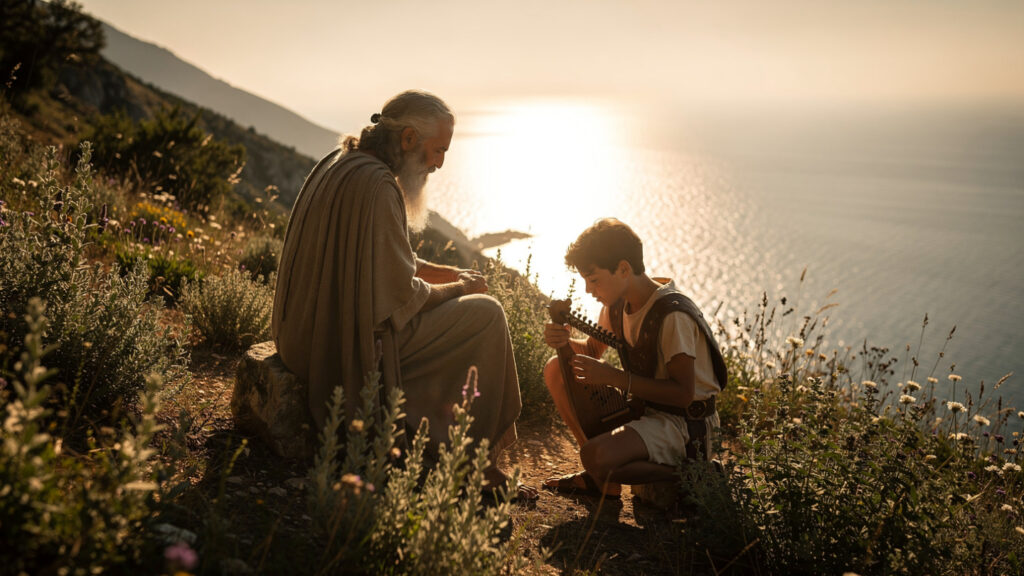
Asclepius was brought to Chiron after his mother Coronis was killed by Apollo for her infidelity. The orphaned child of Apollo and the mortal woman Coronis was given to Chiron to educate in the medical arts, and the medical knowledge that Chiron transmitted to Asclepius through the Pelion education was the medical knowledge that the ancient world encoded as the origin of the Western medical world. The mountain that Asclepius was educated on is the mountain whose botanical richness, the herbs and the plants of the Pelion forest that Chiron used as his pharmacological materials, gave the education its content.
Jason received from Chiron the formation that the Argonaut expedition required: the leadership capacity, the courage, the relationship to the divine that the expedition’s divine patronage required of its leader. The meeting point between Chiron’s Pelion school and Jason’s Argonaut expedition was the mountain’s own timber, the hull of the Argo cut from the same forest where Jason had received his formation from the teacher who would have understood precisely what the expedition was for.
The Pagasitic Gulf and the Argo’s Departure
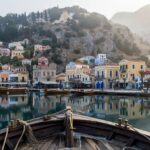
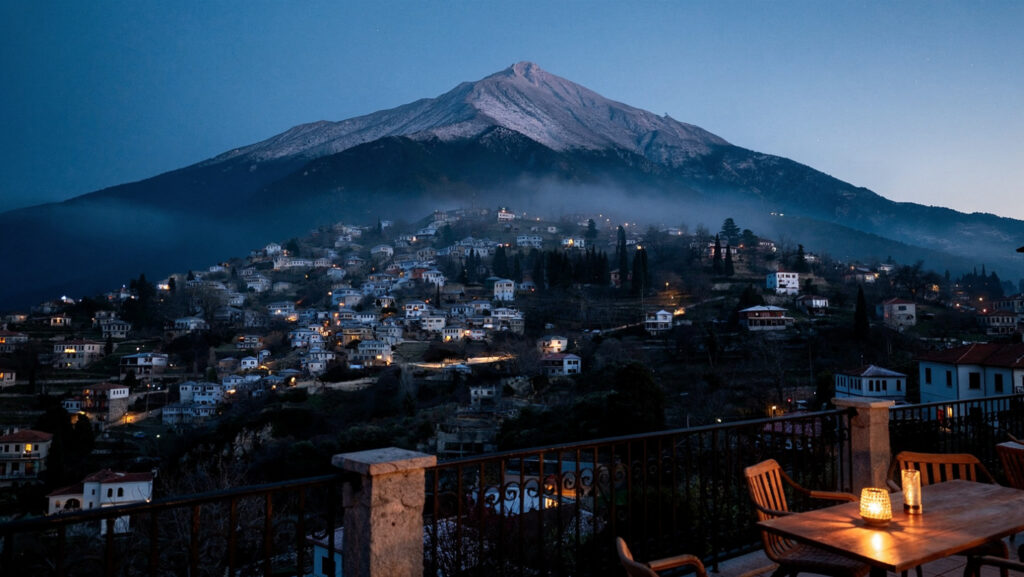
The Pagasitic Gulf, the enclosed bay at the foot of Mount Pelion that Makrinitsa looks down on from its western slope, is the body of water from which the Argo departed and to which, in the mythological tradition, the Argonauts eventually returned.
The ancient city of Iolcos, whose location in the Pagasitic Gulf corresponds to the area of the modern Volos, was the city of Pelias, the usurping king who sent Jason on the quest for the Golden Fleece precisely because the quest seemed certain to result in the hero’s death rather than his successful return. The political logic of the Argonaut quest, the delegitimized heir sent by the illegitimate king on the impossible mission, is the political logic that gives the departure from the Pagasitic Gulf its weight: Jason was leaving from the kingdom that was rightfully his and that he would only be able to reclaim by succeeding in the task that was designed to prevent him from returning.
The Gulf itself, whose character as the most enclosed large bay on the Greek mainland’s eastern coast gives it the navigational character of a sheltered harbor from which the open Aegean is accessible after the exit from the bay’s mouth, was the natural departure point for the maritime expedition that the Argo represented. The Pelion forest provided the timber. The Pagasitic Gulf provided the harbor. The mountain above the harbor provided the educator who had prepared the expedition’s leader. The mythology of Pelion is the mythology of a geography that provided the resources that the narrative required.
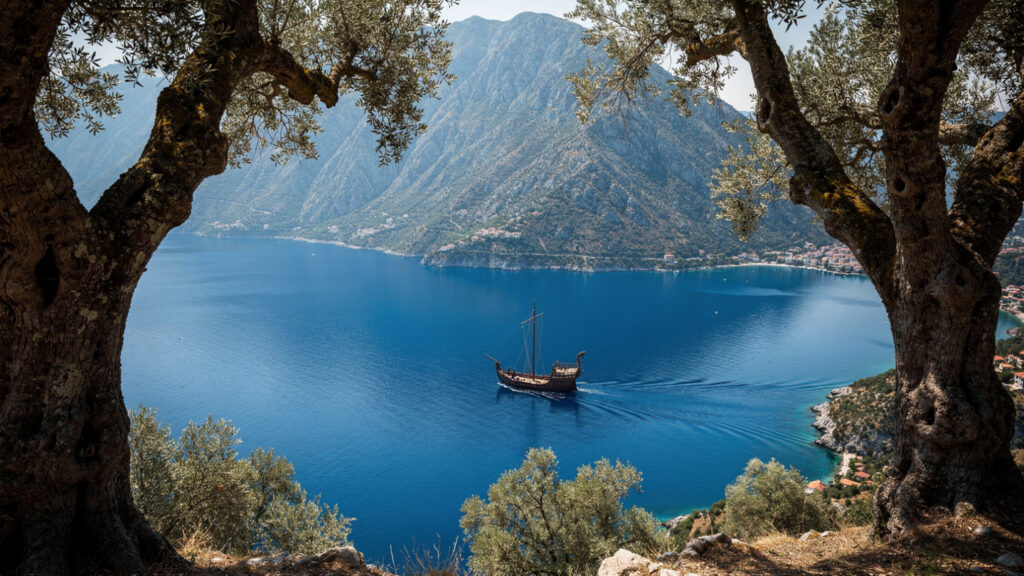
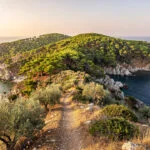
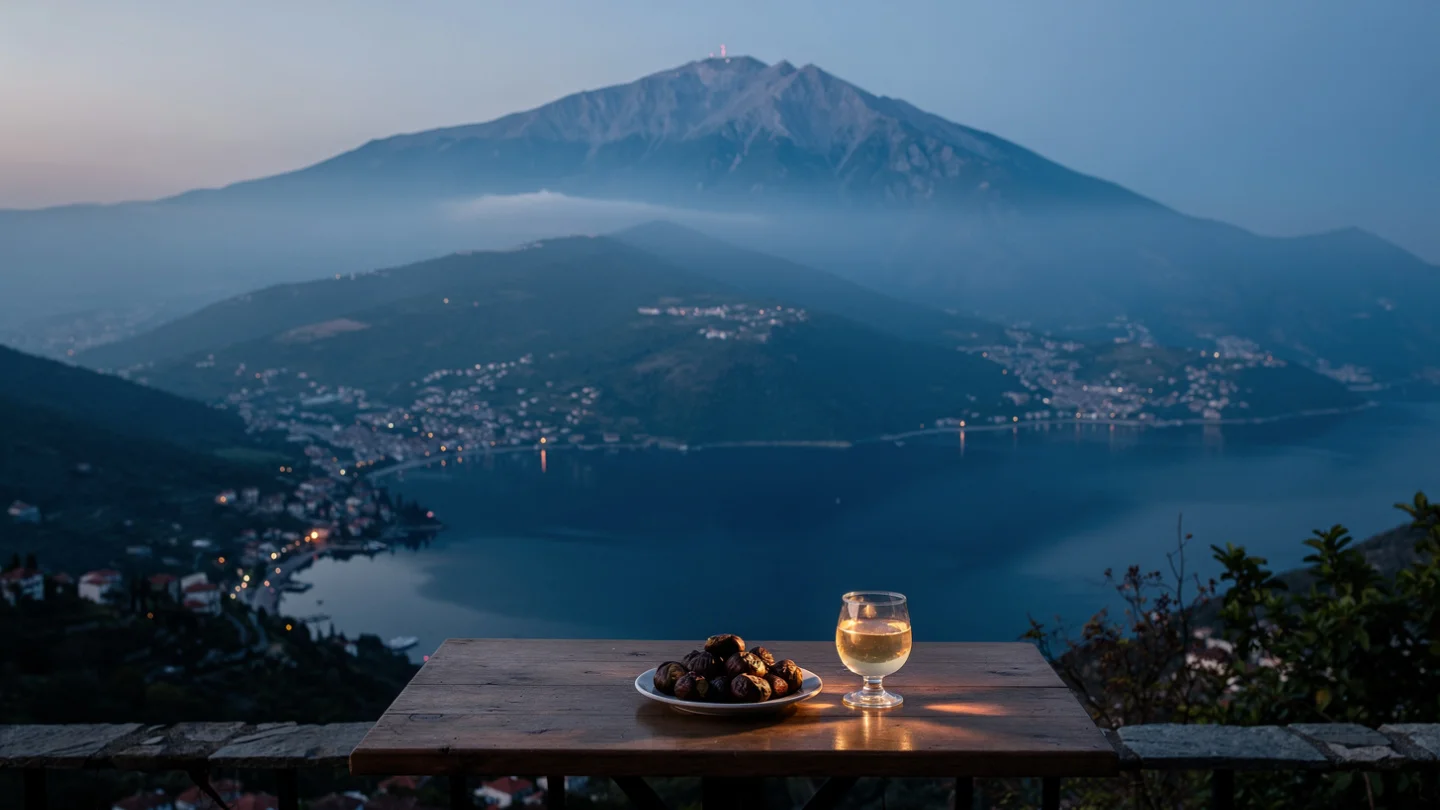
The view from Makrinitsa across the Pagasitic Gulf to Volos and the flatter coastal landscape to the west is the view across the body of water that the mythology placed at the center of the most significant pre‑Trojan War expedition in the heroic world. The shimmering quality of the enclosed gulf in the afternoon light, the way that the Pelion mountain’s shelter from the prevailing winds produces the still surface that the enclosed bay maintains while the open Aegean beyond is rougher, is the view that would have been visible from the mountain slope during the period that the mythology was encoding in the Chiron and Argonaut worlds.
Makrinitsa and the Pelion Architectural Tradition
Makrinitsa preserves the most complete surviving example of the architectural world that Mount Pelion developed during the period of the Greek merchant community’s greatest prosperity under the Ottoman administration: the archontika, the mansions of the wealthy Greek merchants who controlled the silk and textile trade of the Pelion peninsula and who expressed their prosperity in the architectural form that the Pelion world developed between the seventeenth and nineteenth centuries.
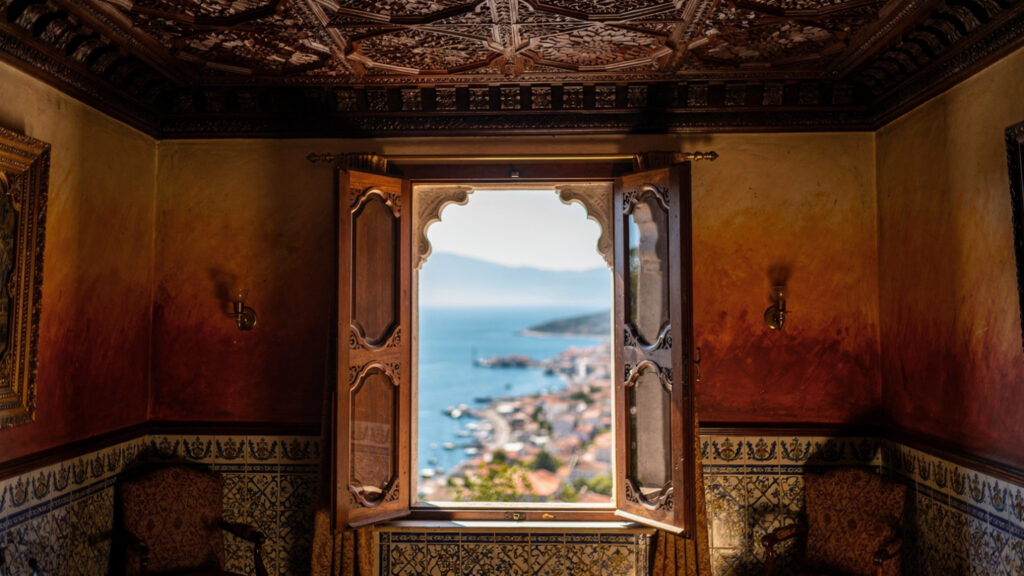
The archontika of Pelion are distinguished from the vernacular architecture of other Greek mountain regions by the combination of the exterior stone construction and the elaborately decorated interior: the stone exterior was the functional response to the mountain climate and the defensive consideration, the same logic that produced the stone architecture of the Agrafa and the Epirus mountains. The interior decoration, the carved wooden ceilings and the ceramic tiles and the hand-painted walls and the specifically elaborate woodwork of the upper-floor reception rooms, was the expression of the prosperity of the merchant class and the cultural aspiration of a community that understood its own sophistication in relation to the Ottoman cultural world it was embedded in.
The historical context that produced this prosperity was the context of the Ottoman system’s relationship to the non‑Muslim merchant communities: the Greeks of Pelion, like the Greeks of the other mountain communities that maintained practical autonomy through the Ottoman period, developed their commercial networks through the combination of the textile skills that the Pelion world had developed and the trading connections that the Greek diaspora communities in central Europe and the Mediterranean maintained. The Pelion silk and textile production, which the mountain’s climate and the mulberry cultivation that the silk production required supported, was the economic foundation of the prosperity that the archontika expressed.
The Topali Mansion in Makrinitsa, built in 1844 and now housing the Museum of Folk Art and History of Pelion, is the most accessible surviving example of the archontika world: the building’s combination of the exterior stone construction and the interior elaboration, the carved wooden ceilings and the proportions of the reception rooms and the decorative program of the wall paintings and the tile work, is the combination that gives the Pelion archontika its character within the broader world of the Ottoman‑period Greek merchant mansion.
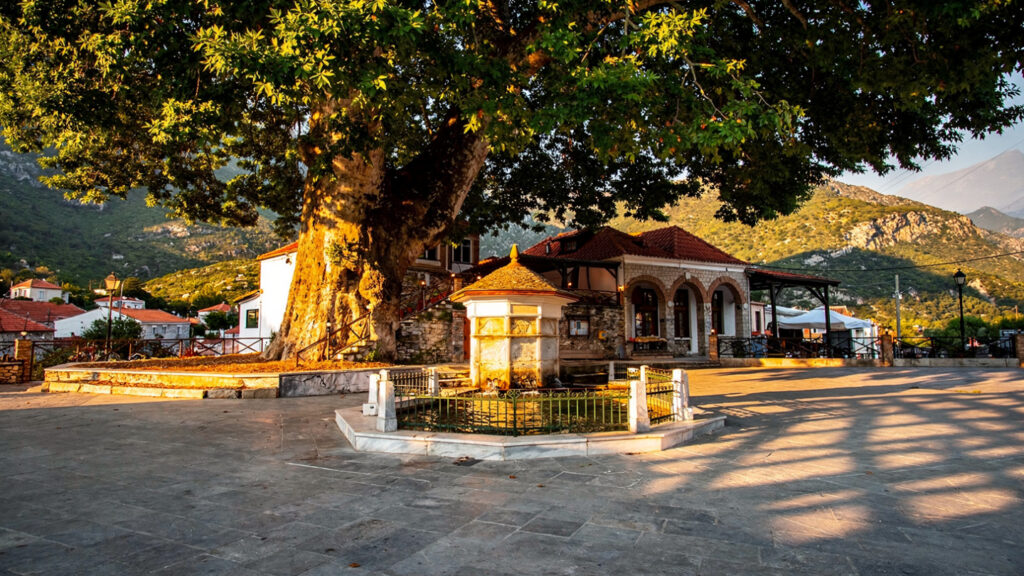
The central square of Makrinitsa, with the centuries‑old plane tree whose canopy covers the outdoor gathering space that every Greek village organizes its social life around and the marble fountain inscribed with the words Immortal Water, is the spatial center of the village in the way that the central square with its plane tree is the spatial center of the traditional Greek village. The combination of the shade and the water and the gathering space that the plane tree and the fountain together provide is the combination that the Greek village world consistently placed at the center of its social geography.
The Pelion Food Tradition
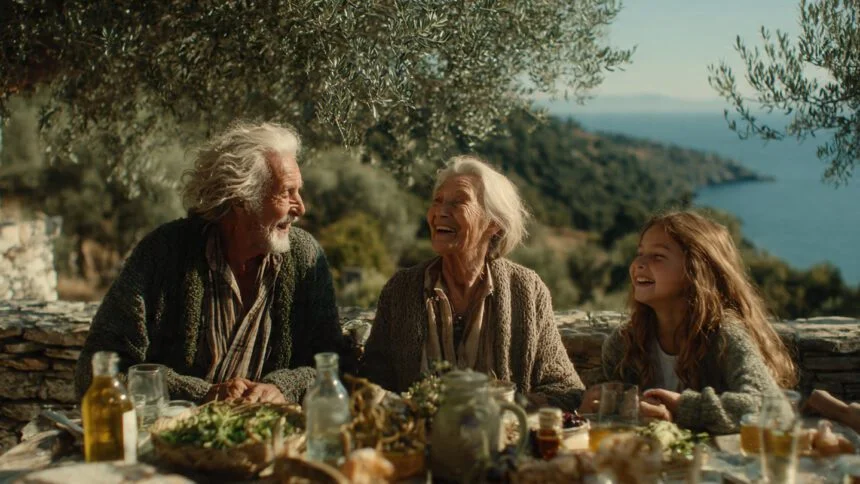
The Mount Pelion culinary world is the world of a mountain community with exceptional agricultural resources: the combination of the altitude, the high rainfall, and the soil of the Pelion peninsula produces the botanical richness that the Chiron medical education world was encoding in its pharmacological dimension and that the contemporary Pelion kitchen continues to use in its emphasis on the mountain’s own products.
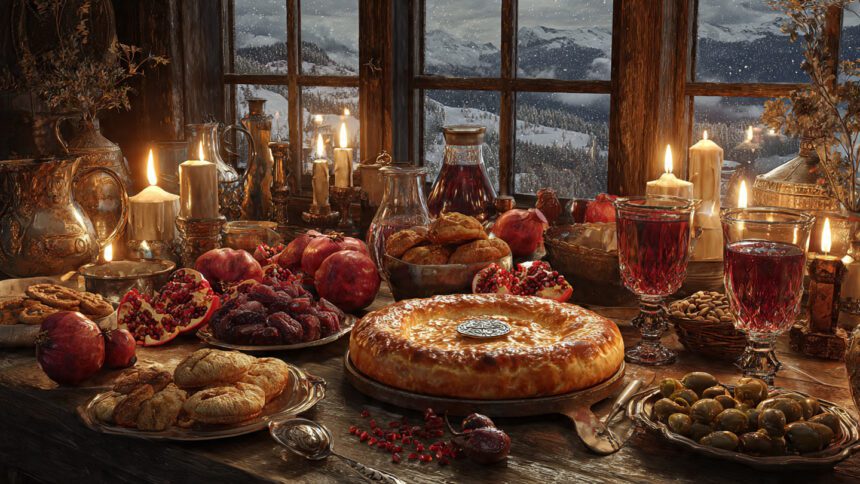
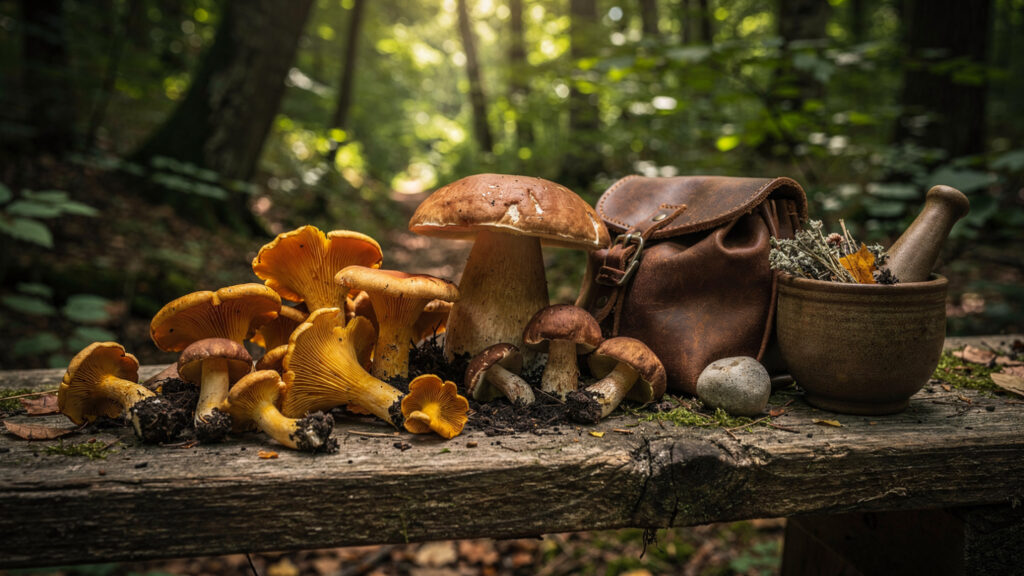
The wild mushrooms of the Pelion forest, which the autumn rains bring in the abundance that the intact forest floor produces, are the ingredient that the Pelion kitchen uses in the preparations that the mountain autumn makes possible: the mushroom pies and the mushroom stews that the traditional tavernas of Makrinitsa and the other Pelion villages serve in September and October are the preparations of the fresh mountain mushroom that the autumn harvest makes available in the quality that the drying or preserving process cannot replicate.
The chestnuts of the Pelion forest, whose harvest the October and November months produce in the abundance of the mature chestnut groves that have been part of the mountain’s agricultural landscape for centuries, are the ingredient that the Pelion sweet world has developed most completely: the chestnut spoon sweets and the chestnut marmalades and the preparations that the Pelion pastry world has developed around the chestnut harvest are the products of the mountain’s own botanical abundance.
The spoon sweets of Pelion, the glika tou koutaliou that the collection’s dedicated article develops, are the preserves of the mountain’s fruit production prepared in the Greek world of the fruit preserved whole or in large pieces in heavy syrup: the quince and the cherry and the green walnut and the sour cherry that the Pelion orchards produce are the fruits that the Pelion spoon sweet world has developed its most celebrated preparations from.
The tsipouro of Pelion, the grape spirit that the mountain communities distilled from the grape pomace of the local wine production, is the spirit whose anise‑flavored variation, the tsipouro me glykaniso, is the Pelion version of the wider Greek tsipouro world. The cold mountain air of the Pelion winter and the warming quality of the anise‑flavored spirit are the combination that the world has maintained as the appropriate closing of the Pelion meal and the appropriate accompaniment of the Pelion conversation.
Visiting Makrinitsa
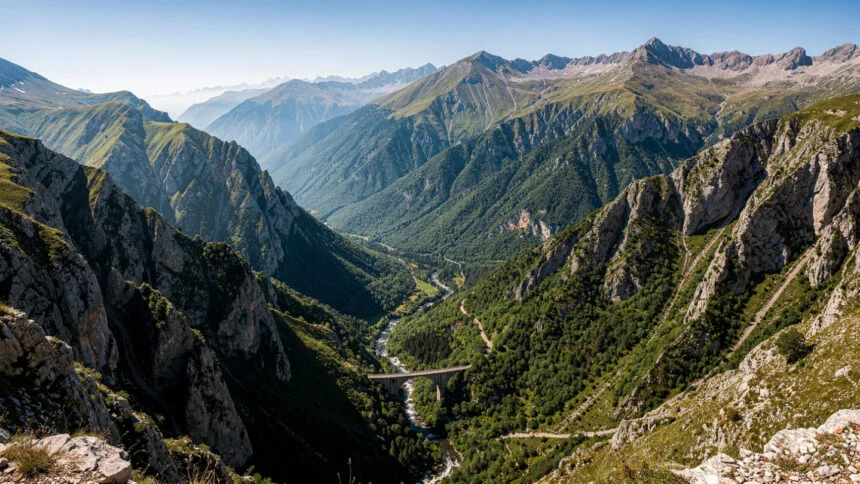
Makrinitsa is eleven kilometers from Volos by the mountain road that climbs from the coastal plain through the Pelion foothills to the village’s position on the western slope. The drive takes approximately twenty minutes in the absence of traffic, and the road’s quality of the winding ascent through the olive groves of the lower slope and the chestnut and plane tree forest of the middle slope is the approach that gives the arrival in Makrinitsa its character of having moved from the coastal urban world to the mountain village world in a continuous transition rather than in the abrupt discontinuity of a longer journey.
Volos is connected to Athens by train on the main Athens-Thessaloniki line’s Larissa branch, with a journey of approximately four hours from Athens, and by intercity bus from the Athens KTEL terminal with a similar journey time. The Volos to Makrinitsa road is the approach that most visitors use from the Volos base.
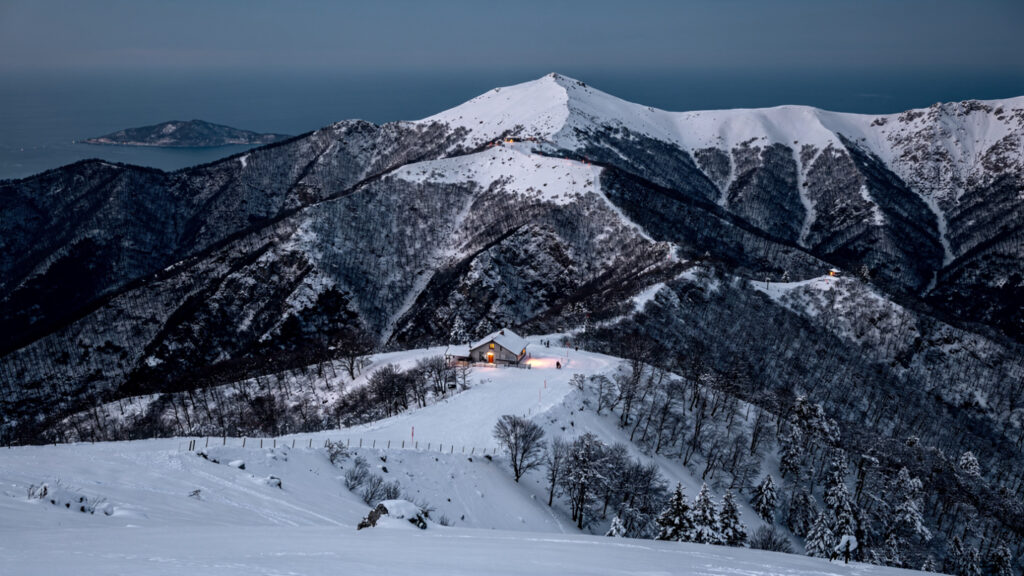
The optimal visiting months are May, June, September, and October: the spring months for the flowering of the mountain vegetation and the quality of the chestnut forest’s leaf emergence, and the autumn months for the mushroom season and the chestnut harvest and the autumn coloring of the Pelion forest. The summer months bring the largest visitor numbers and the coolest temperatures of the coastal summer to the mountain altitude, and the winter months bring the snow that gives the Pelion village its winter character and the proximity of the Pelion ski area at Agriolefkes.
The accommodation in Makrinitsa is primarily the restored archontika mansions that the heritage tourism program has developed into boutique guesthouses: the quality of the overnight stay in a restored Pelion archontika, the carved wooden ceiling and the fireplace and the view from the wooden balcony across the Pagasitic Gulf to the Volos waterfront, is the quality that gives the Makrinitsa overnight its distinctive character within the range of the Greek mountain overnight experiences.
At Olympus Estate, Wanderlust Greece guides you across the sacred and storied terrain of the Hellenic world. Chiron taught medicine and music and hunting and ethics on these slopes. The Argo’s hull was cut from this forest. Achilles was educated here before Troy. Asclepius learned medicine here before Epidaurus. The Pagasitic Gulf visible from Makrinitsa’s western slope is the gulf from which the Argo departed. The archontika mansions were built by the Greek merchants who traded Pelion silk through the Ottoman world. The autumn mushrooms come up in the forest that Chiron used as his pharmacological garden. The mountain teaches what it always taught. Go in October. Look at the gulf from the central square. The view across the water is the view across the beginning of the most significant expedition in the pre-Trojan War mythological tradition.