

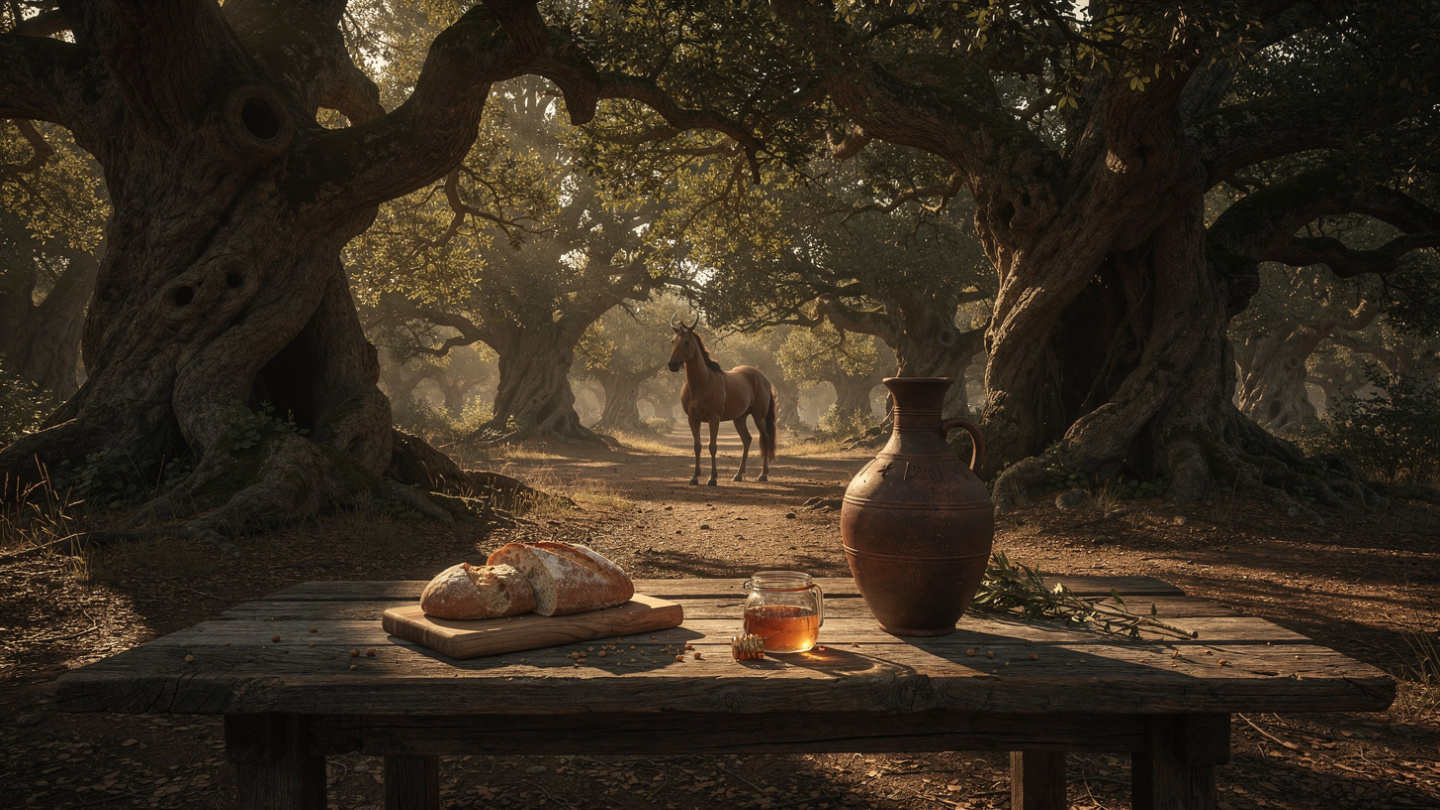
Pholus did not die in battle.
He died from curiosity.
When Heracles came to the Forest of Foloi during the fourth labor, the hunt for the Erymanthian Boar that lived on the slopes of Mount Erymanthos above the forest, he was received with the hospitality that Pholus, the centaur who lived in the forest’s cave and who was the son of Silenus and a naiad nymph rather than the product of Ixion’s transgression that made most centaurs what they were, extended to the divine hero as a matter of genuine warmth rather than social obligation. Pholus cooked meat for Heracles and set the table in the manner of the hospitable host whose pleasure is the guest’s comfort. But for the wine he hesitated.
The wine jar in the cave was not simply Pholus’s wine. It was the wine that Dionysus had given the centaurs collectively, a communal property that Pholus had no right to open for a single guest without the agreement of all the centaurs who shared it. Heracles asked for wine. Pholus hesitated because he knew what opening the jar would mean: the smell of the wine would travel through the forest and the other centaurs, who had not been asked and who had not agreed, would come.
He opened the jar anyway, because the guest had asked and the host could not refuse.
The centaurs came. The smell of Dionysus’s wine reached them across the forest and they came with rocks and fire-brands and uprooted fir trees, and Heracles drove them off with his poisoned arrows, the arrows dipped in the Hydra’s blood that he had killed in the second labor and whose poison was so concentrated that the smallest wound was fatal. The centaurs fled across the Peloponnese toward Cape Malea and to Chiron’s cave on Pelion and to Eleusis, and Pholus, when the battle was over and the forest was quiet again, walked among the fallen and looked at the arrows lying beside the dead.
He picked one up to examine it. The arrow that could kill a centaur with a scratch: how did such a small thing do such a thing? He turned it over, studying it, and it slipped from his hand and pierced his foot.
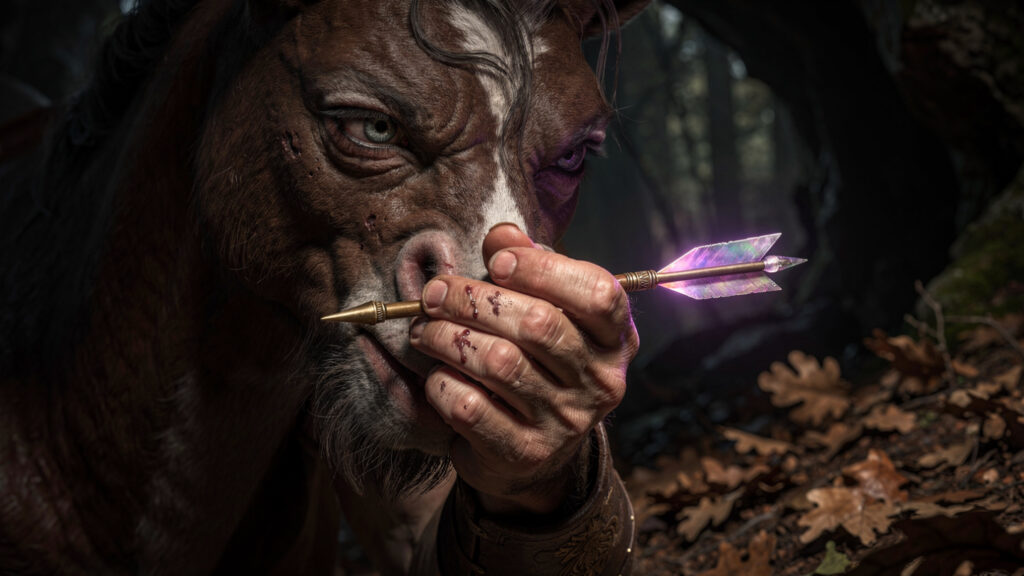
Pholus died of the wound. He died examining the weapon that his guest had used to defend the hospitality that Pholus had offered and that had caused the very trouble that Pholus had been afraid it would cause. He was killed by his own curiosity about the weapon of the guest who had made his hospitality dangerous.
What the Pholus Episode Encodes
The Pholus episode is the most underexamined tragic sequence in the twelve labors, and its content encodes a set of moral observations that are more precisely aimed at the costs of virtue than most of the labor tradition’s accounts of the monsters Heracles defeated.
Pholus was virtuous in the way that the tragic tradition finds most dangerous: he was genuinely hospitable, genuinely kind, and genuinely curious. He opened the wine because refusing the guest’s request would have been the inhospitable act that a host of his character could not perform. He examined the arrow because the intelligent creature who has just witnessed something remarkable wants to understand how it works. Both of these actions were the actions of a good person, and both of them contributed to the chain of events that killed him.
The wine that was communal property but that the individual host opened for a guest encodes the tension between the obligations of hospitality and the obligations of community that the ancient Greek tradition consistently identified as one of the most practically difficult moral situations: the guest’s claim on the host and the community’s claim on the shared resource cannot both be fully honored simultaneously, and Pholus honored the guest’s claim at the cost of the community’s claim, and the community’s claim arrived with rocks and fire-brands to collect what it was owed.
The arrow that Pholus examined and dropped encodes the ancient Greek moral observation about the danger of curiosity about weapons: the Hydra’s blood that made the arrows fatal was the substance whose danger was not visible in the arrow’s appearance, and Pholus’s curiosity about the weapon was the curiosity of the person who believed that the careful examination of a dangerous thing was safe as long as the examination was careful. The arrow that slipped from his fingers was the arrow that refuted this belief in the most direct possible form: the careful examination of the Hydra-poison arrow required only the smallest error to produce the fatal wound, and the smallest error was the error that Pholus made.
The tragic quality of Pholus’s death is the quality of the accident rather than the defeat: he was not killed in battle, not killed by a monster, not killed by the divine anger that stories of hubris consistently deployed as the mechanism of the hero’s downfall. He was killed by dropping something. The most gentle, most hospitable, most intellectually curious creature in the centaur lineage died from the combination of his own virtue and his own curiosity, and the forest in which he died kept his name.
The Forest Itself
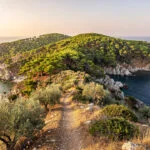
The Forest of Foloi occupies approximately 42,000 acres of the rolling hills of the Ilia prefecture between the Erymanthos River to the north and the Alpheios River to the south, in the geographical position that places it at the transition zone between the high mountain terrain of Mount Erymanthos above and the flat coastal plain of the Ilia Prefecture below. The forest’s elevation, ranging from approximately 250 meters at its lowest margins to approximately 700 meters at its highest ridges, gives it the climatic character of the transition zone between the coastal Mediterranean climate and the continental mountain climate: enough rainfall to sustain the dense oak canopy and enough summer drought to maintain the character of the Mediterranean oak woodland rather than the denser temperate forest of the higher elevations above.
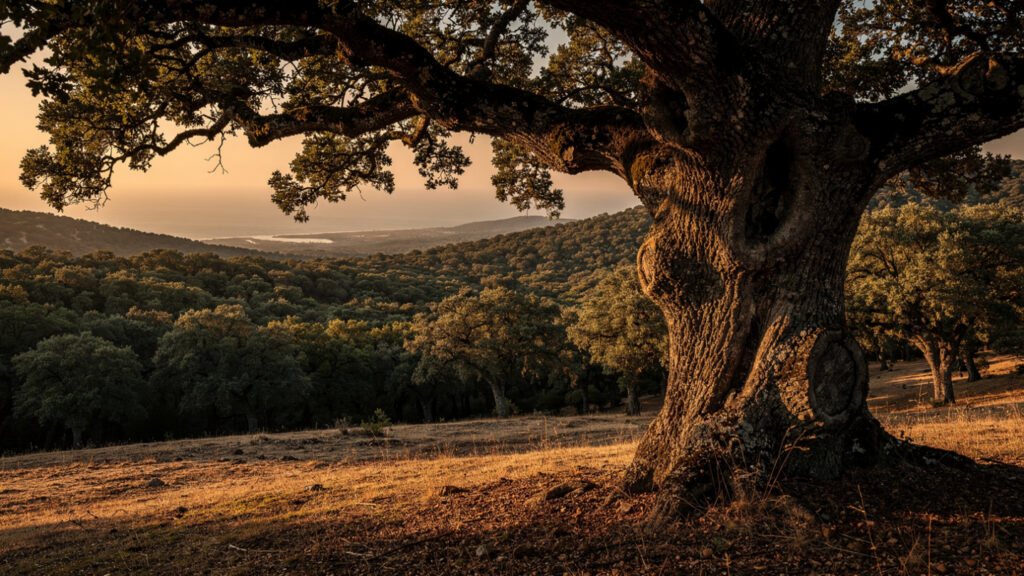
The forest is the only surviving oak forest of this scale in the Balkans: the combination of the holm oak, the downy oak, and the Valonia oak that constitutes the forest’s primary canopy is the combination that the ancient woodland of the southern Balkans maintained across the Pleistocene and into the historical period, and whose survival at Foloi reflects the combination of the forest’s inaccessibility to the large-scale agricultural clearance that removed the equivalent ancient woodland from the more accessible landscapes of the Peloponnese and Thessaly.
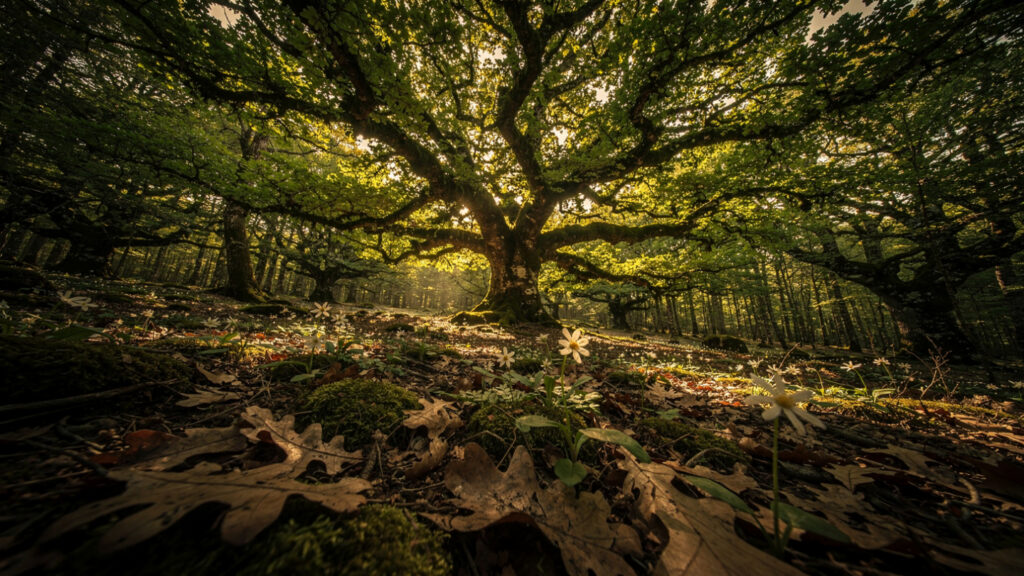
The oak trees of Foloi are old in the sense that oak trees measure age: not the dramatic vertical height of the fir or the pine but the horizontal spread and the trunk girth of the tree whose growth is organized around the lateral extension of the canopy rather than the vertical extension of the stem. The oldest oaks at Foloi have trunk circumferences that require three adults to span, and the quality of the ancient oak woodland interior, the deep shade of the high canopy and the carpet of the accumulated leaf litter and the acoustic character of the wind in the oak canopy rather than the pine canopy, is the quality of a forest that has been growing without significant human disturbance for centuries.
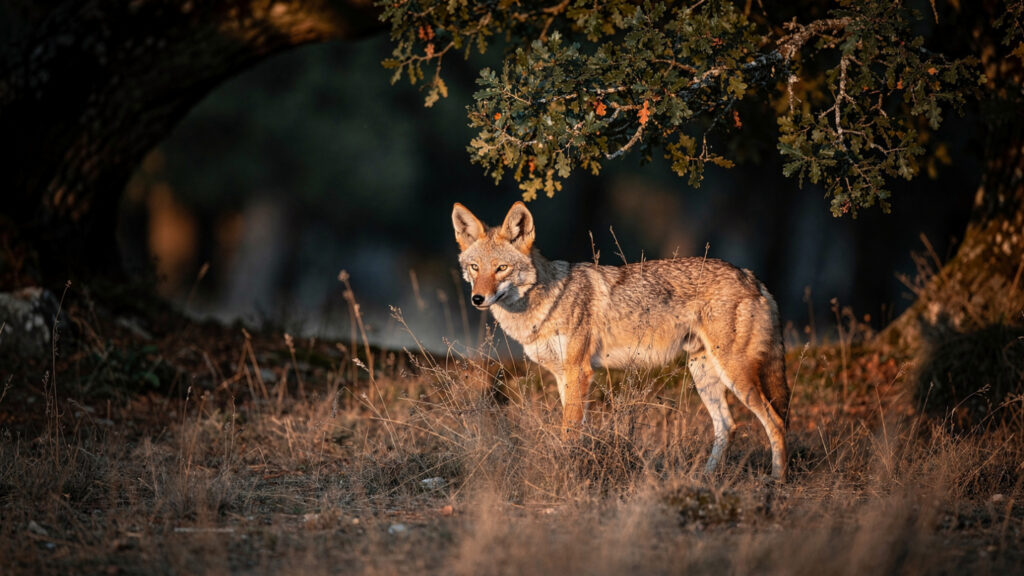
The wildlife of the forest is the wildlife of the ancient Peloponnesian woodland in its most intact surviving form: the population of the golden jackal, whose range in Greece extends through the Peloponnesian oak woodlands and which the Foloi forest maintains in one of its most significant Peloponnesian populations, and the raptor community of the forest, the short-toed eagle and the booted eagle and the Bonelli’s eagle that nest in the forest’s oldest trees, are the wildlife whose presence most directly expresses the forest’s ecological integrity.
The Erymanthian Boar and Its Landscape
The fourth labor of Heracles, the capture of the Erymanthian Boar, was the labor that brought Heracles through the Forest of Foloi on his way to Mount Erymanthos, and the landscape of the labor is the landscape that the Foloi forest and the mountain above it together constitute.
Mount Erymanthos, the mountain above the forest whose summit reaches 2,224 meters and whose character as the highest peak of the northwestern Peloponnese gives it the visual dominance over the surrounding landscape that the mythological tradition’s placement of the divine boar on its slopes reflects, is the mountain whose ecological character, the dense maquis and the rocky upper terrain and the deep ravines that the mountain’s geological structure produces, made it the appropriate habitat for the mythological boar whose danger the tradition encoded as the danger of the untameable wild animal at the boundary between the cultivated and the uncultivated landscape.
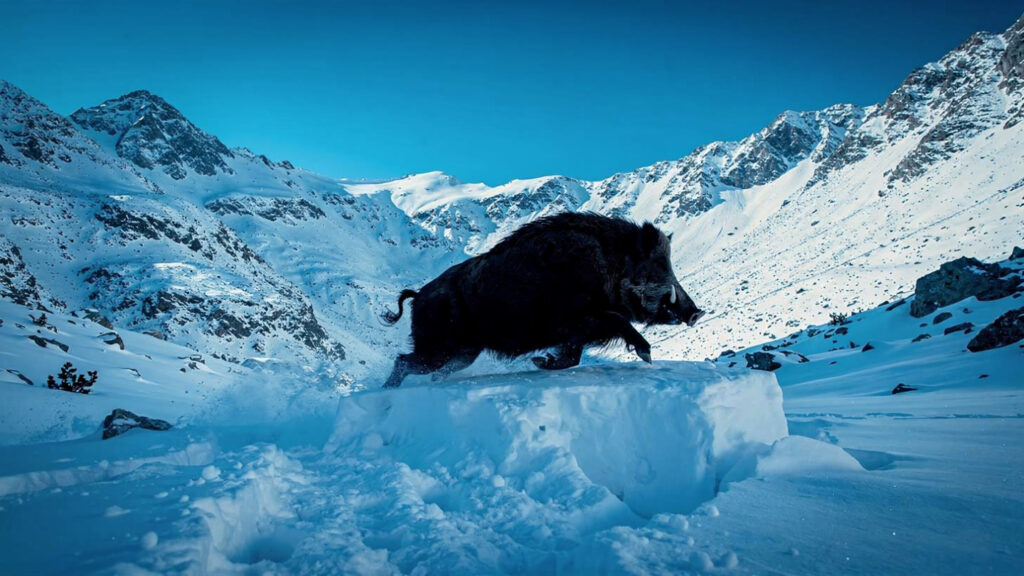
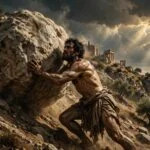
Heracles captured the boar alive, which was the requirement of the fourth labor: not to kill the animal as the earlier labors had required killing, but to capture it and bring it back to Mycenae. The technique that the mythological tradition describes, driving the boar into a snowdrift in the higher mountain terrain where its movement was impeded by the snow’s depth, is the hunting technique that the winter conditions of the Erymanthos upper slopes would make available to the hunter who knew the mountain’s seasonal character.
The boar that Heracles brought to Mycenae in the carrying position of the object captured and controlled rather than the object killed and processed, was the boar that provoked the response from Eurystheus, the king whose labors Heracles was performing, that the mythological tradition preserved as the most comic moment in the labor sequence: Eurystheus, seeing Heracles approaching with the living boar on his shoulders, hid in the large storage jar that the ancient sources describe as his response to the deliveries that the labors produced, and issued his instructions for the next labor from inside the jar.
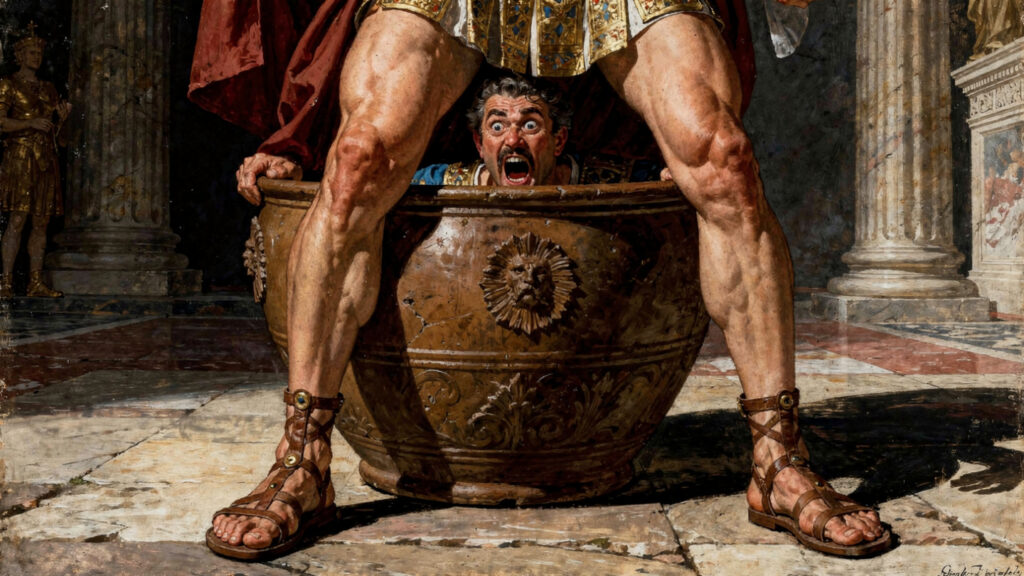
The terror that the hero’s success inspired in the king who had ordered the labor was the terror that the mythological tradition used to mark the distance between the heroic capacity and the ordinary human capacity for encountering the monstrous.
Ancient Olympia and the Forest’s Context
The Forest of Foloi lies approximately twenty kilometres northeast of Ancient Olympia, and the geographical relationship between the Centaur Forest and the greatest sanctuary of Zeus in the ancient world is the relationship that gives the Foloi forest visit its deepest historical and mythological context: the landscape between the forest and the sanctuary is the landscape through which the ancient pilgrims and the athletic participants traveled on their way to the Olympic Games, and the character of that landscape, the oak forest of Foloi and the Alpheios River valley and the flat plain of the Altis at Olympia, is the character of the ancient Peloponnesian landscape in its most complete surviving form.
The Olympia article in this collection develops the sanctuary and the games in full. The Foloi forest adds the dimension of the mythological landscape that precedes the sanctuary: the forest of the centaurs who were the teachers of heroes, the forest through which Heracles passed on the labor whose episode encodes the most precise observations about the costs of virtue and curiosity in the entire labor tradition, and the forest whose ancient oak woodland has maintained its character across the centuries that the sanctuary’s stone monuments have not.
The sacred wild olive of Olympia, whose relationship to the original Idaean Herakles’s organization of the games the Kouretes article in this collection develops, and whose connection to the Elean landscape of which the Foloi forest is the northern edge, is the botanical connection between the sanctuary’s symbolic tree and the forest’s woodland ecology: the olive that provided the victor’s crown and the oak that provided the sanctuary’s sacred grove occupied the same ancient Elean landscape that the Foloi forest has preserved in its most intact surviving form.
The Villages of the Erymanthos Foothills
The villages of the Erymanthos foothills, whose communities occupy the valleys and the lower slopes between the forest and the mountain, maintain the pastoral agricultural character of the ancient Peloponnesian highland community in its contemporary form: the small-scale transhumant pastoralism, the seasonal movement of the flocks between the lower winter pastures and the higher summer grazing, the cheese production tradition of the Ilia prefecture.
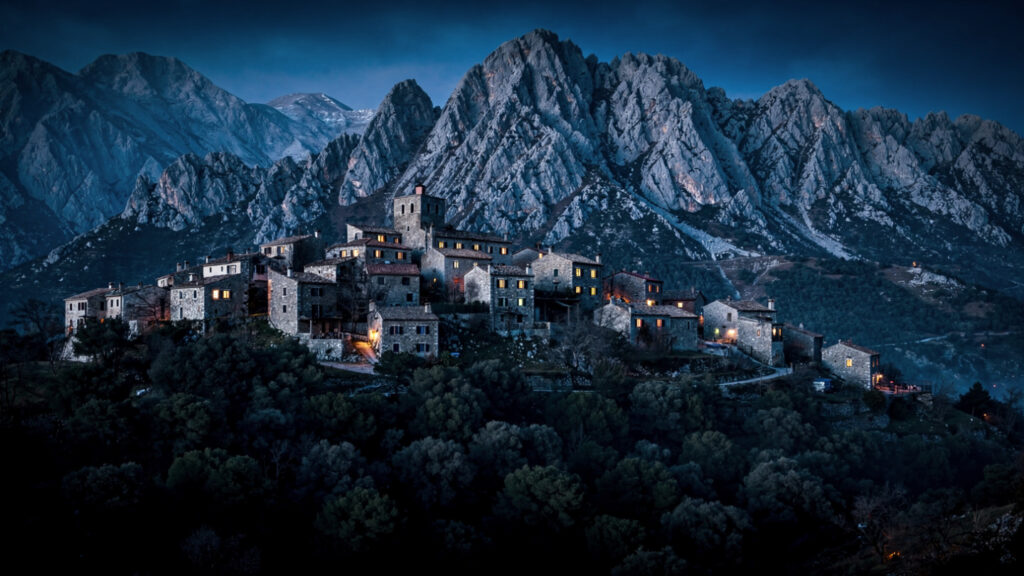
Lambea, on the slopes of Mount Erymanthos above the forest’s northern edge, is the village whose combination of the stone architecture and the panoramic views across the forest canopy to the Alpheios valley and the Ionian coast beyond gives it a character among the most visually compelling of the Ilia prefecture villages. The view from the Lambea plateau across the dark canopy of the Foloi forest to the Olympia plain and the sea beyond is the view that most completely expresses the geographical layering of the Erymanthos-Foloi-Olympia landscape: the mountain above, the ancient forest in the middle distance, the sanctuary plain below, and the Ionian coast at the horizon.
The local honey of the Foloi forest region, produced from the botanical diversity of the oak woodland and the surrounding maquis and the wildflower populations of the forest clearings, carries the flavors of the ancient woodland’s botanical composition: the oak’s own contribution to the honey’s flavor through the honeydew that the oak tree’s interaction with the aphids that feed on its sap produces, and the wildflower palette of the forest margins. The forest honey’s character is the character of the ancient Peloponnesian woodland in an edible form.
Visiting Foloi
The Forest of Foloi is accessible from Olympia by the road that follows the Alpheios River eastward through the Ilia prefecture and then turns north toward the forest’s southern edge, a journey of approximately twenty-five kilometres from Olympia that takes thirty minutes by car through the agricultural landscape of the Alpheios valley whose character transitions from the flat irrigated plain near Olympia to the rolling oak-forested terrain of the Foloi hills.
The forest is also accessible from Pyrgos, the Ilia prefecture’s capital, by the road that crosses the prefecture from the coast to the interior, approximately forty kilometres and forty-five minutes by car.
The forest has a network of marked trails whose starting points are at the forest management office near the village of Foloi and at several secondary trailheads along the forest road. The trail system ranges from the short circular walks of one to two hours that give the casual visitor the experience of the ancient oak woodland interior without committing to the longer mountain approach, to the full-day hike to the upper Erymanthos terrain that the dedicated walker who wants the combination of the forest and the mountain in a single day requires.
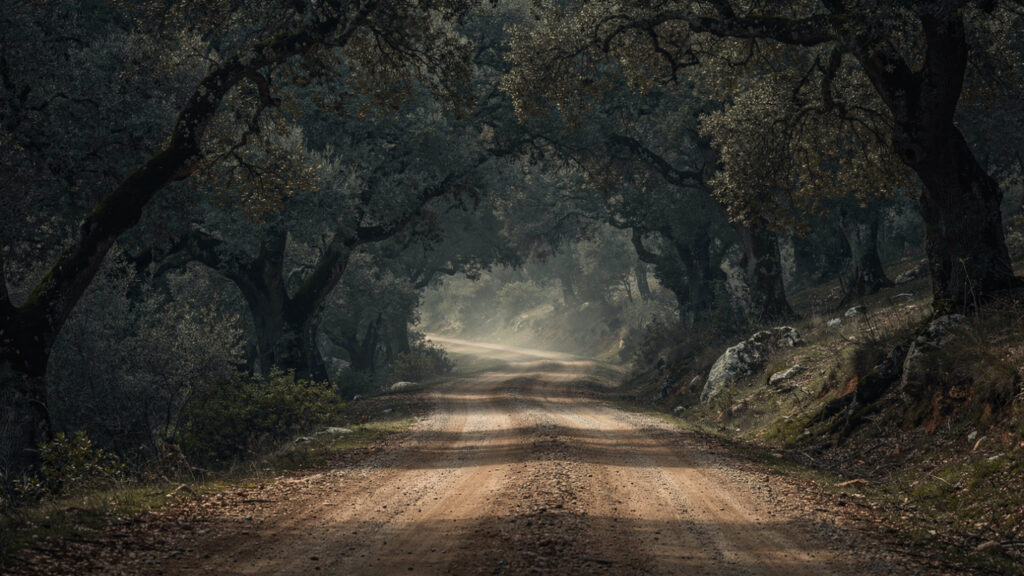
The forest road that traverses the Foloi woodland from south to north, whose character as the unsealed forest management road gives it the quality of the route through an unmanaged landscape rather than through an organized nature tourism infrastructure, is the route that most directly gives the visitor the character of the ancient Peloponnesian oak woodland: the quality of the light through the high oak canopy in the morning, the sound of the forest in the wind, and the absence of the human organization that most natural tourism sites in Greece maintain.
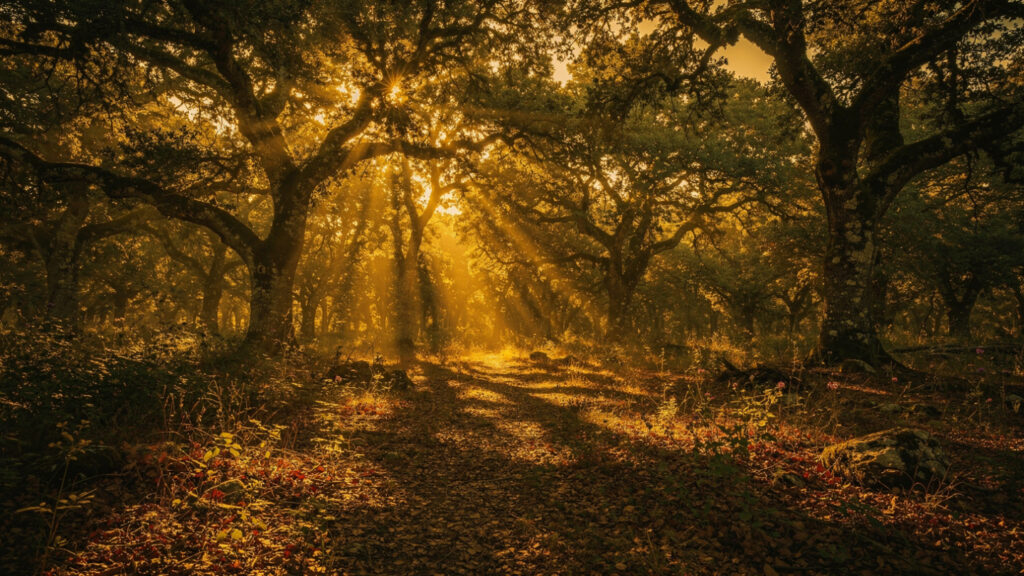
The optimal visiting months are April through June for the spring flowering of the forest floor and the quality of the oak canopy in its fresh leaf emergence, and October through November for the autumn coloring and the quality of the forest in its seasonal transition. The summer months are accessible but the combination of the heat and the deep shade of the forest interior produces the atmospheric condition that the forest shares with all Mediterranean oak woodlands in the height of summer: the particular stillness of the enclosed shade in the hottest hours, which is the condition that the ancient tradition called the hour of Pan.
At Olympus Estate, Wanderlust Greece guides you across the sacred and storied terrain of the Hellenic world. Pholus opened the communal wine because the guest had asked and the host could not refuse. He was killed examining the arrow that had defended the hospitality he had offered. The forest kept his name. The Erymanthian Boar lived on the mountain above the forest and Heracles captured it alive and carried it to Mycenae and Eurystheus hid in a jar. The oldest oaks at Foloi have trunk circumferences that require three adults to span. The golden jackal lives here. The Bonelli’s eagle nests in the oldest trees. Ancient Olympia is twenty kilometres south. The forest has been here longer than the sanctuary. Go to the forest first.