

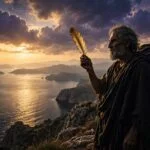

The island is named for a boy who fell out of the sky.
Icarus, the son of Daedalus, flew from Crete on wings made of feathers and wax that his father had constructed to escape the imprisonment of King Minos. Daedalus warned him: fly at the middle height, not too low where the sea’s moisture would weigh down the wings, not too high where the sun’s heat would melt the wax. Icarus, exhilarated by the freedom of flight, flew too high. The wax melted. The feathers scattered. He fell into the sea below, the sea that has been called the Icarian Sea ever since, and the island near where he fell took his name: Ikaria.
The myth of Icarus is the ancient Greek world’s most concentrated expression of the hubris principle: the overreaching that the Greek imagination identified as the fundamental human flaw, the reaching beyond the middle height into the zone where the divine forces that sustain the flight become the forces that destroy it. Icarus died from excess. He flew too high. He ignored the warning about the middle distance that would have kept him alive.
The island named for him has the lowest rates of dementia and some of the highest rates of longevity in the world. The island named for the person who died from too much has become the place where people live longest from doing, apparently, just enough.
This is the irony that gives Ikaria its character: the island whose name is the myth of premature death is the island whose people most consistently defeat premature death. The myth and the demography are in conversation across three thousand years, and the conversation is worth attending to.
The Island and Its Geography
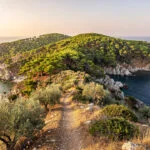
Ikaria lies in the eastern Aegean, approximately nineteen kilometers southwest of Samos and approximately forty kilometers from the Turkish coast, in the position that gives it its meteorological character: exposed to the winds that the Aegean funnel from the north and northwest in the summer months, and receiving substantially more winter rainfall than the southern Cyclades because its mountainous interior intercepts the moisture of the winter weather systems that cross the Aegean from the west.
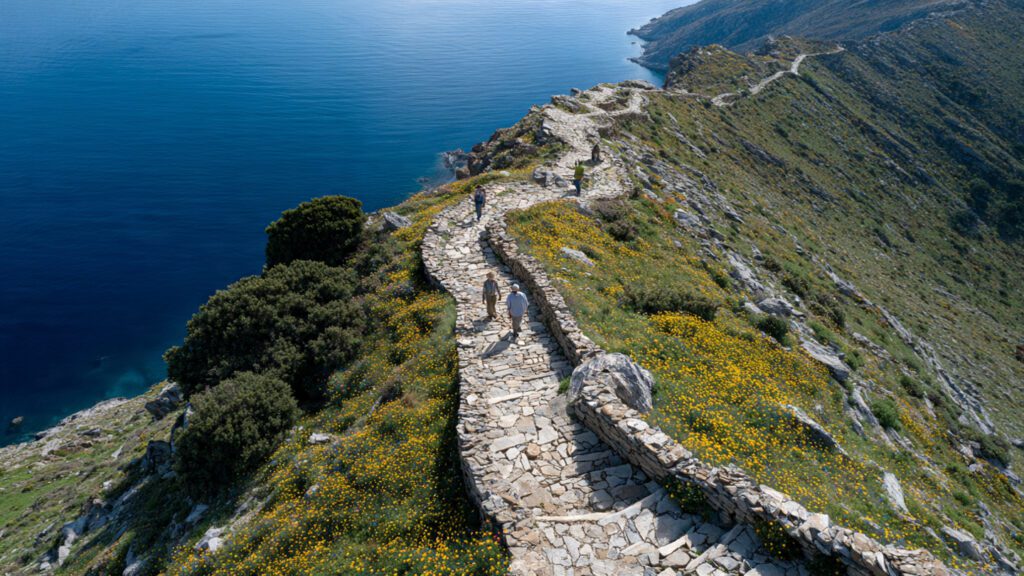
The island’s terrain is predominantly mountainous: the central massif of Mount Atheras reaches 1,041 meters, and the combination of the steep slopes, the deep ravines, and the narrow coastal strips produces a landscape in which the difficulty of movement between settlements is not simply inconvenient but constitutive of the island’s character. The villages of Ikaria are distributed across the island’s mountain terrain in a pattern that reflects the defensive logic of the piracy centuries: the settlement sites were chosen for their inaccessibility from the coast, and the paths between them involve the sustained low-intensity physical engagement with steep terrain that the island’s topography imposes on everyone who lives there and moves through it.

The island’s rainfall and its terrain together produce the botanical richness that distinguishes it from the drier Cycladic islands to the southwest. The mountain slopes carry the combination of the endemic Aegean herbs, the wild oregano and the sage and the rosemary and the thyme and the dozens of species of wild greens that the island’s foraging world has always incorporated into the diet, and the abundance and variety of this botanical resource is the resource that the Ikarian diet builds on.
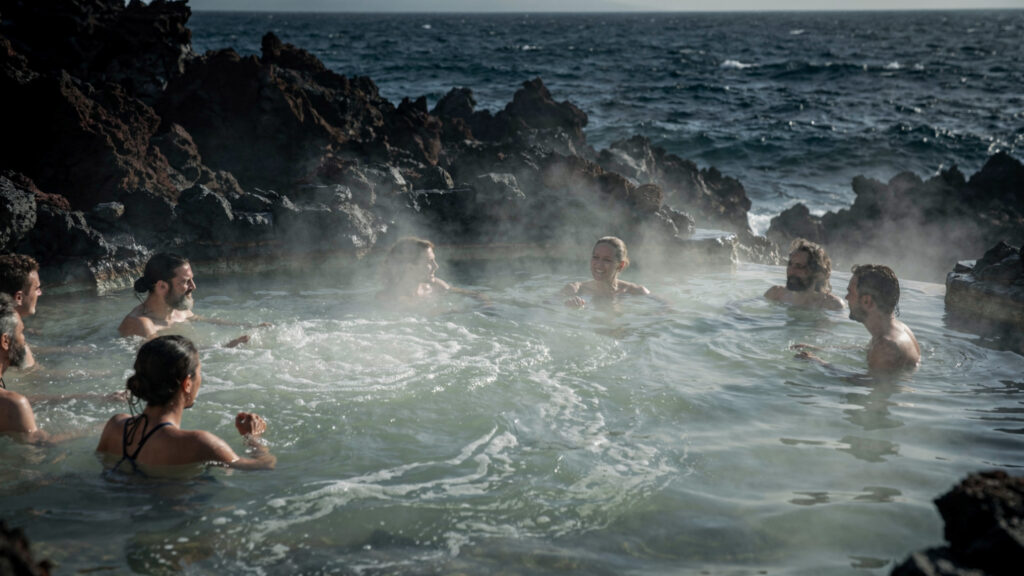
The hot springs of Therma on the island’s northern coast, whose mineral composition the ancient world valued for therapeutic purposes and that the contemporary thermal world continues to use, are among the most concentrated natural therapeutic mineral springs in the Aegean. The springs emerge from the island’s geology at temperatures between 33 and 55 degrees Celsius, and their mineral content, radioactive radon alongside the conventional therapeutic minerals of the thermal‑spa world, made them significant enough to have been in continuous therapeutic use since the classical period.
The Myth and What It Was About
The Icarus myth is not a myth about flying. It is a myth about the danger of the middle position being abandoned: the middle height that Daedalus specified was the height at which the physical forces in balance, the moisture from below and the heat from above, produced the conditions under which the wax-and-feather technology was sustainable. The middle height was the height of the sustainable flight. The excess was the departure from the sustainable.

The ancient Greek tradition’s engagement with the Icarus myth consistently developed the hubris dimension rather than the technology dimension: the myth was not about the technical failure of wax as an adhesive at high temperatures but about the human tendency to abandon the middle position when the middle position is working perfectly well and the upper position is available. Icarus did not fall because the technology was inadequate. He fell because he did not maintain the discipline that the technology required.
Daedalus survived. He flew at the middle height. He reached Sicily. The myth preserved both versions of the flight simultaneously: the excess that produced the death and the discipline that produced the survival. The island that took the dead son’s name and the sea that took the dead son’s name are the permanent geographical markers of the thing that the myth was teaching, which is that the middle height exists and that abandoning it has a consequence.
The island named for the person who abandoned the middle height is the island whose population has maintained, across the historical and cultural processes that the longevity research has documented, the closest available approximation in the contemporary world to what the Greek tradition called the middle height: the diet that is plant-based but not purely vegetarian, the exercise that is daily and low-intensity rather than occasional and extreme, the sleep that is complete because the culture that imposes no particular schedule on the afternoon, the social connection that is the product of the all-night panegyri rather than the scheduled social engagement.
The Longevity Research and What It Found
The systematic documentation of Ikaria’s longevity pattern began with the work of Dr. Ioanna Chinou of the University of Athens and the broader IKARIA Study conducted by the University of Athens Medical School in the late 2000s, and was brought to widespread international attention by the American journalist Dan Buettner whose 2009 New York Times Magazine article, later developed into the Blue Zones book series, placed Ikaria among the five populations in the world with the highest rates of exceptional longevity.
The findings of the research were not simply that Ikarians lived longer in the aggregate sense of elevated average life expectancy: the finding was the pattern of what the Ikarian elderly were like when they reached advanced age. The rates of dementia in the Ikarian elderly population were approximately one third of the rates in comparable American populations. The rates of depression were significantly lower. The rates of cardiovascular disease were lower. The quality of the extreme old age in Ikaria, the functional capacity and cognitive clarity that the oldest Ikarians maintained into their eighties and nineties, was what distinguished the island from other long-lived populations rather than simply the count of centenarians.
The research identified several factors in the Ikarian lifestyle that correlated with the longevity and cognitive health outcomes. The diet was the factor that received the most attention in the popular accounts: the version of the Mediterranean diet that the Ikarian population maintained, with its emphasis on wild greens, legumes, olive oil, herbs, and limited quantities of meat and fish, was identified as the dietary pattern most strongly associated with the health outcomes. The botanical richness of the Ikarian mountain vegetation, which the foraging tradition incorporated into the diet through the hundred-plus species of wild greens that the island’s population regularly consumed, was identified as a particular resource whose nutritional density exceeded what a cultivated vegetable diet could reliably provide.
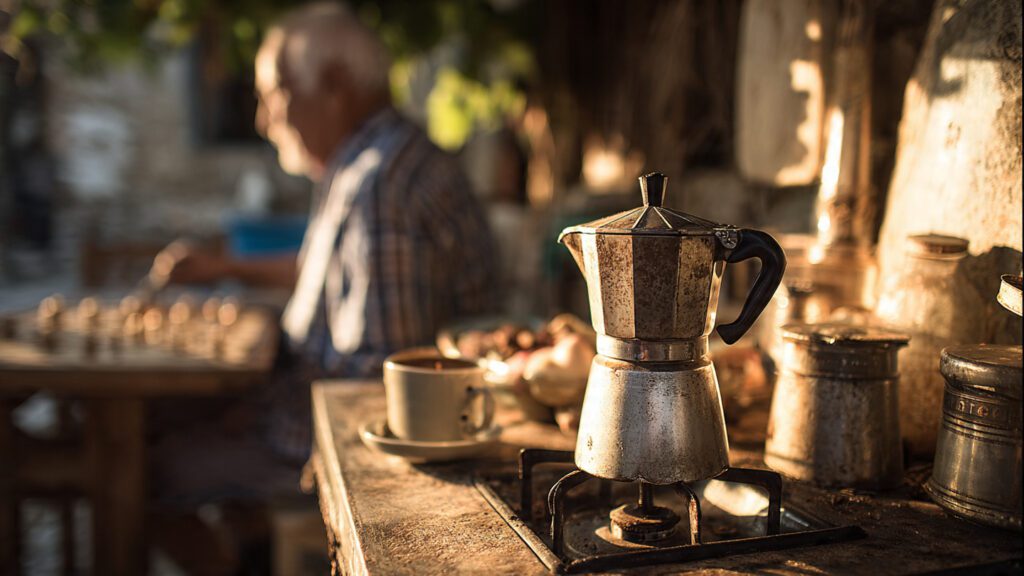
The herbal teas were the second most-discussed dietary factor: the daily consumption of the island’s wild herbs prepared as tisanes, the oregano tea and the sage tea and the rosemary and the dandelion preparations that the Ikarian tradition had maintained as the daily beverage of the mountain communities, was identified as a source of the antioxidant and anti-inflammatory compounds that the herbal pharmacology documents in these plants. The diuretic properties of many of these herbs were identified as a mechanism for maintaining the lower blood pressure that the Ikarian elderly consistently displayed: the herbs that encouraged kidney function and reduced fluid retention were the herbs that the daily tisane was preparing from, and their effect on blood pressure was the effect of a daily pharmacological intervention that the population was taking voluntarily without recognizing it as such.

The afternoon nap, or siesta, was the third factor: the cultural permission that the Ikarian daily schedule extended to the midday rest, the social norm that meant the island’s businesses closed in the afternoon and that the population rested during the hottest hours, was identified as a sleep practice that supplemented the night sleep rather than substituting for it and that produced the total daily sleep duration that the neuroscience of sleep increasingly identifies as protective against cognitive decline.
The social dimension was the fourth factor, and the one that the researchers consistently identified as among the most difficult to replicate: the quality of the Ikarian social life, organized around the panegyri, the communal outdoor gatherings at the village kafeneion, and the culture of the all-night celebration that the island’s festival tradition maintained, produced a pattern of deep social engagement that persisted into extreme old age in a way that the organized social activities of retirement communities in other cultural contexts did not replicate. The Ikarian ninety-year-old who dances at the August panegyri until two in the morning is the Ikarian ninety-year-old who has maintained the social engagement that the research consistently associates with cognitive health.
The Panegyri and Its Meaning
The panegyri, the village festival organized around the patron saint’s feast day, is the cultural institution that the Ikarian longevity research consistently names as one of the social mechanisms through which the island’s social engagement is maintained. The panegyri article in this collection develops the institution in full: the liturgical first half that most secular accounts omit, the music and dance that follow, the regional musical tradition of the Ikarian panegyri.
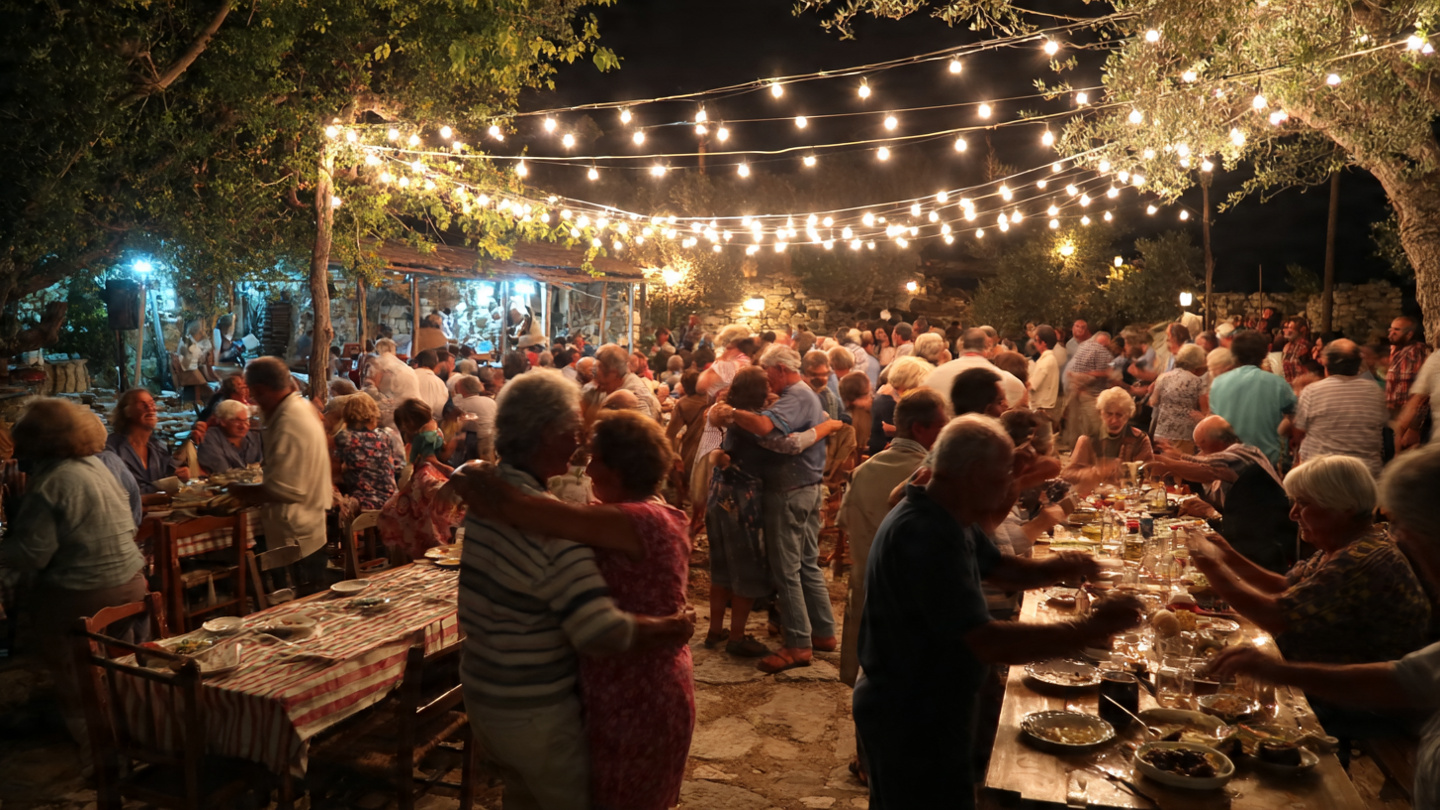
The quality of the Ikarian panegyri within the broader Greek panegyri tradition is the quality of its duration and its intensity: the all-night festivals of Ikaria, which regularly continue until sunrise and which the entire community, from the young adults to the very elderly, participates in across the full duration, are among the most extreme examples of the panegyri’s fundamental social function. The gathering that assembles the complete community and keeps it assembled through the full cycle of the night, through the shared food and the wine and the music and the dance, is the gathering that most completely realizes what the panegyri is for: the annual reassertion of the community’s existence as a community rather than as a collection of dispersed individuals who happen to share a geography.
The Ikarian who has been dancing at the panegyri since childhood, who continued dancing into middle age, who continues dancing into extreme old age, is the Ikarian whose physical activity has always been embedded in the social life rather than organized as a separate health practice. The distinction matters: the exercise that is part of the celebration that you have attended every year since you could walk is not the same experience, physiologically or psychologically, as the exercise that you perform in a gym for the purpose of maintaining your health. The body performs the same physical actions in both contexts. The nervous system is in a different state.
The Wild Greens and the Kitchen
The Ikarian foraging tradition, which the longevity research identified as one of the dietary factors most strongly associated with the island’s health outcomes, is not simply a dietary choice: it is a knowledge tradition, the accumulation of generations of observation of the island’s botanical resources and their nutritional and medicinal properties.

The hundred‑plus species of wild greens that the research documented as part of the Ikarian diet are not simply the weeds that the Western food world has eliminated from its diet through the systematization of agriculture. They are the plants that the Ikarian mountain environment produces in the combination of the island’s geology, the rainfall, and the altitude that creates the botanical richness of the mountain vegetation. The plants that the Ikarian foraging world uses, the wild chicory and the chard and the fennel and the purslane and the dozens of species whose names exist in Greek without English equivalents, are the plants whose phytochemical profiles the food‑science research has begun to document as the source of the antioxidant and anti‑inflammatory compounds that the Mediterranean diet’s health effects have been attributed to.

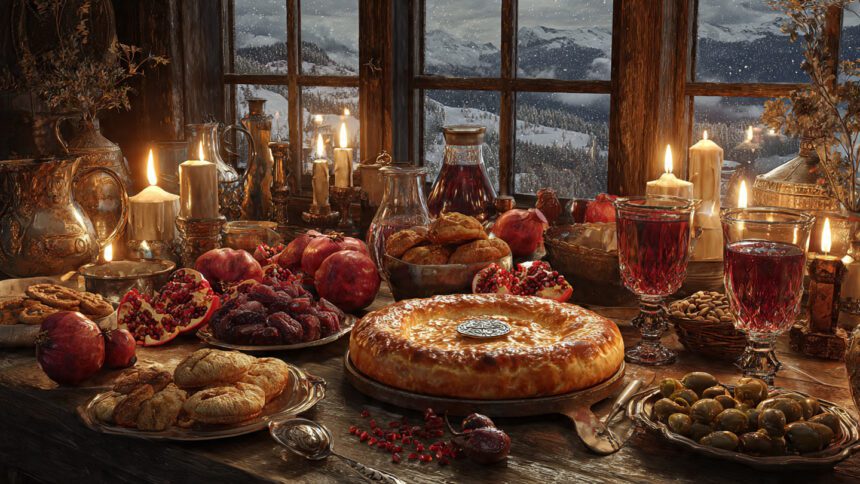
The Ikarian kitchen’s treatment of these wild greens is the treatment of a food world that has developed over generations of cooking with the resources of the island environment. The wild greens stewed in olive oil with the island’s herbs, the fritters made from the seasonal abundance of greens, the pites, the savory pies in which multiple greens are combined with eggs and cheese in the filling that the mountainous Ikarian world developed from the combination of the island’s pastoral and botanical resources, are the preparations that the food tradition has refined through the process of making the best available food from the most abundant available ingredients.
Visiting Ikaria
Ikaria is accessible by ferry from Piraeus with a journey of approximately eight to nine hours, or by a short flight from Athens to the island’s small airport. The ferry arrives at either Agios Kirikos on the southern coast or Evdilos on the northern coast depending on the route, and the island’s road network, the narrow winding mountain roads that connect the island’s settlements through the terrain that gives the island its physical character, is the road network that makes the car or scooter the practical mode of transport for the visitor who wants to move between the island’s different regions.
The thermal springs at Therma on the northern coast, the hot‑spring facilities that the ancient therapeutic world established and that the contemporary thermal tourism maintains, are the most immediately accessible of the island’s natural resources. The outdoor pools fed by the natural springs, in the mineral water that the radioactive radon and the conventional therapeutic minerals combine to produce, are the pools that the Ikarian population uses as the ambient social gathering point that the therapeutic tradition has maintained since the classical period.
The island’s panegyria, the village festivals organized around the patron saints’ feast days that run through July and August, are the cultural events that the Ikarian social life is most completely organized around and that the visitor who arrives in the summer months is most likely to encounter. The panegyri of Agios Panteleimon in late July, the Agios Kirikos panegyri in late July, and the August panegyria of the mountain villages are the events whose combination of the liturgical, the musical, the gastronomic, and the social provide the Ikarian social experience that the longevity research identified as one of the island’s defining characteristics.
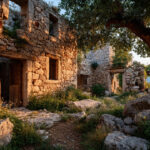
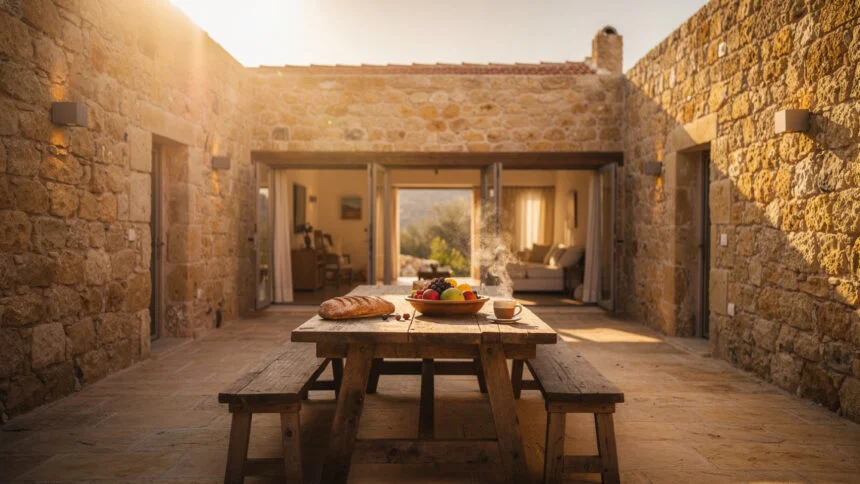
The mountain villages of the island’s interior, the settlements that the defensive logic of the piracy centuries placed on the high ground above the coastal strip, are the villages that most completely preserve the character of the Ikarian building and living tradition: the stone houses, the terraced gardens, the paths between the villages that the daily movement of the island population uses in the low-intensity physical engagement with the terrain that the research identified as one of the island’s characteristic lifestyle features.
What Ikaria Teaches
The Ikarian longevity pattern does not transfer easily to other contexts, and the lesson of Ikaria is not the lesson of the dietary or lifestyle factors in isolation from the cultural and geographical context that produces them.
The wild greens of the Ikarian diet grow in the combination of the island’s geology and rainfall and altitude that the foraging tradition has learned to use across generations. The herbal teas are the teas of the herbs that the island’s mountain vegetation produces. The panegyri is the social institution of the Orthodox Christian Greek island community that has maintained this institution for the reasons that the community’s religious and social history has produced. The afternoon nap is the response to the Ikarian daily schedule that the island’s culture has maintained.
What transfers from Ikaria is not the practices but the principle: the middle height. The diet that is neither extreme restriction nor unconstrained consumption. The exercise that is neither sedentary nor exhausting but daily and embedded in the activities of daily life. The sleep that is complete and culturally protected rather than compressed by the demands of productivity. The social engagement that is genuine and sustained rather than scheduled and managed.

Daedalus reached Sicily. He maintained the middle height. The island named for the son who did not is the island that has remembered, across three thousand years of changing cultures and administrations and economies, what the middle height looks like in the conditions of the human life that is possible on that island, in that sea, with those herbs and those mountains and those all-night dances.
The myth was a warning. The island took it seriously.
At Olympus Estate, Greek Living traces the customs and rhythms that connect the ancient Greek world to the one still visible in the kafeneion and the panegyri and the long Sunday lunch. Ikaria is named for the boy who flew too high. The island that bears his name has the lowest rates of dementia and some of the highest rates of longevity in the world. The myth and the demography are in conversation across three thousand years. Daedalus flew at the middle height and survived. The island named for the son who did not has remembered what the middle height looks like. Go to the panegyri. Dance until dawn. Eat the wild greens. Drink the herbal tea. Sleep in the afternoon. The island knows what it is doing.