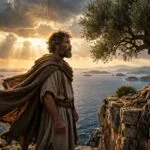


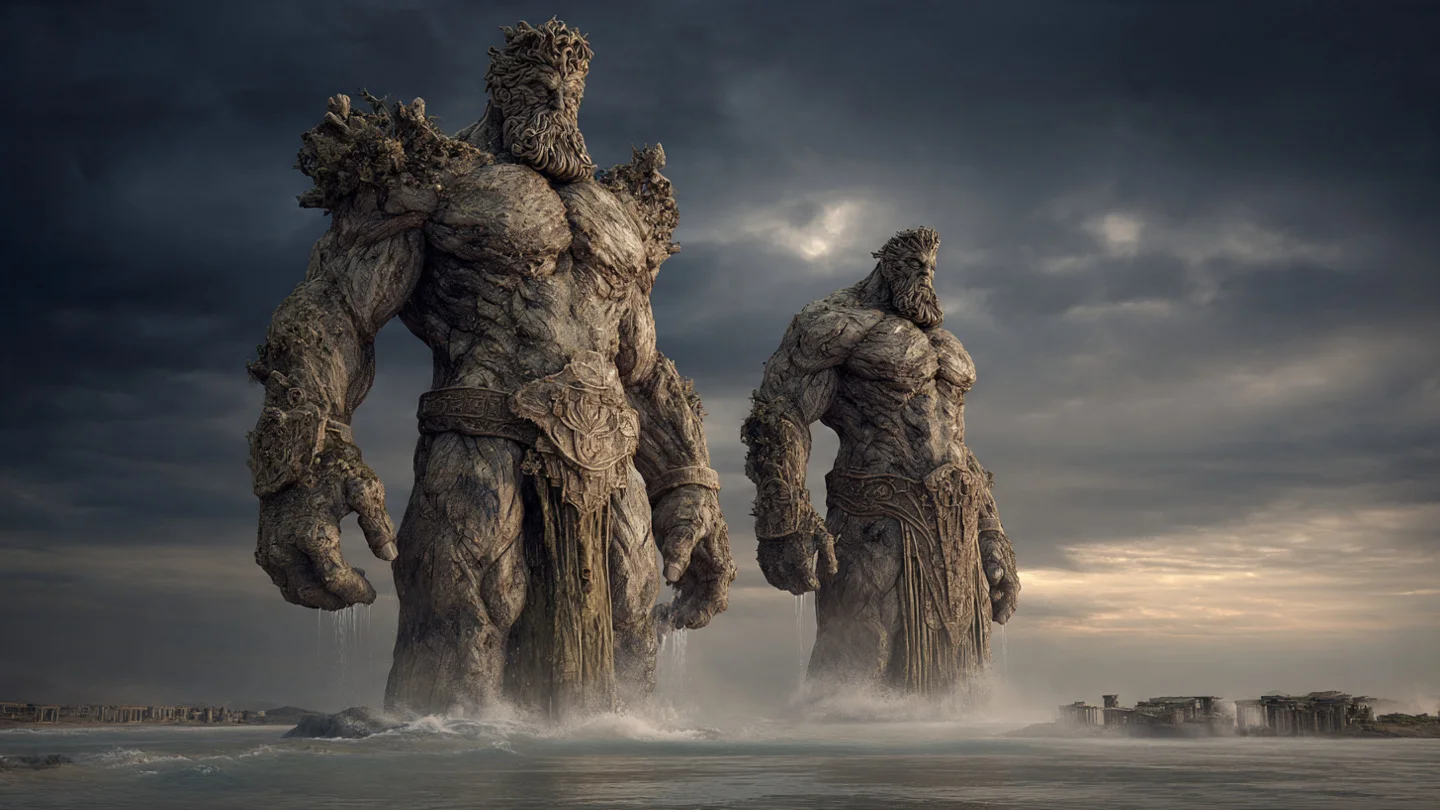
The myth of the Aloadae twins, Otus and Ephialtes, belongs to the deeper geological memory of Greece. Their story is not a decorative legend but a record of mass, height, and the ancient belief that the land itself could be lifted, rearranged, and re-engineered by beings born from the sea. They were the sons of Poseidon, accelerated in growth, and driven by a vision of reaching the divine realm through stone architecture rather than prayer.
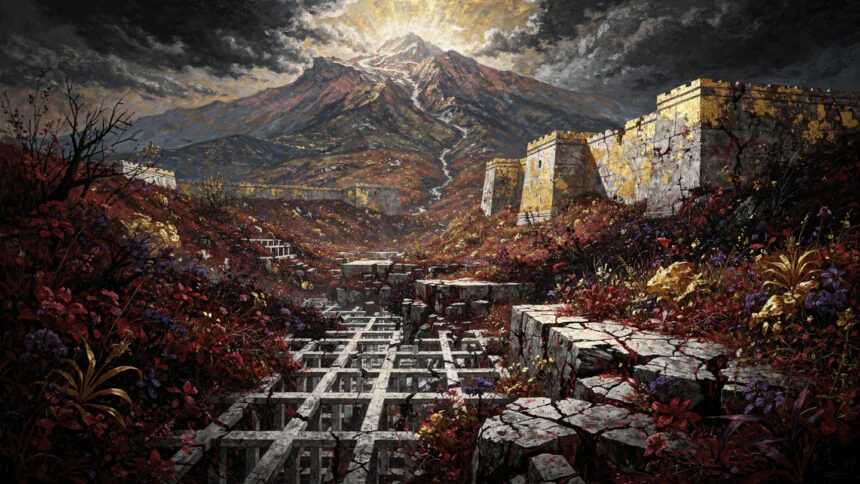
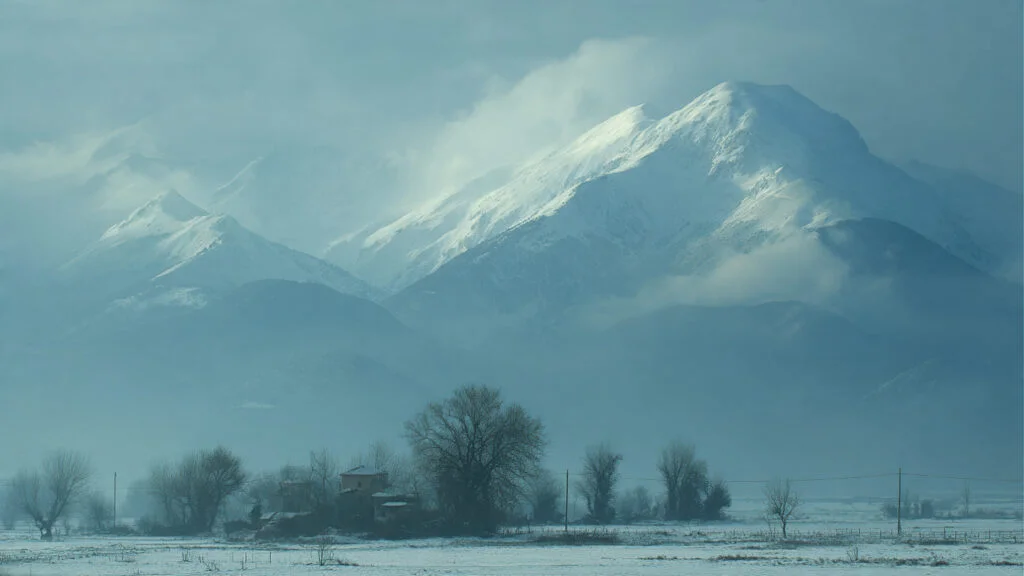
The Tempe Valley still carries the imprint of their ambition. It sits as a jagged incision between Mount Olympus and Mount Ossa, its limestone walls rising in sheer vertical planes. In winter, the cold settles into the gorge and becomes structural. The peaks stand with an almost engineered precision. This is the substrate of the Aloadae record: a landscape that feels like a construction site abandoned by giants.
The Biological Acceleration of the Twins
Ancient sources describe the twins’ growth with mathematical clarity. Each year added one cubit of width and one fathom of height. By the age of nine, they reached a scale that exceeded all heroic physiology, an eruption of mass rather than an evolution.
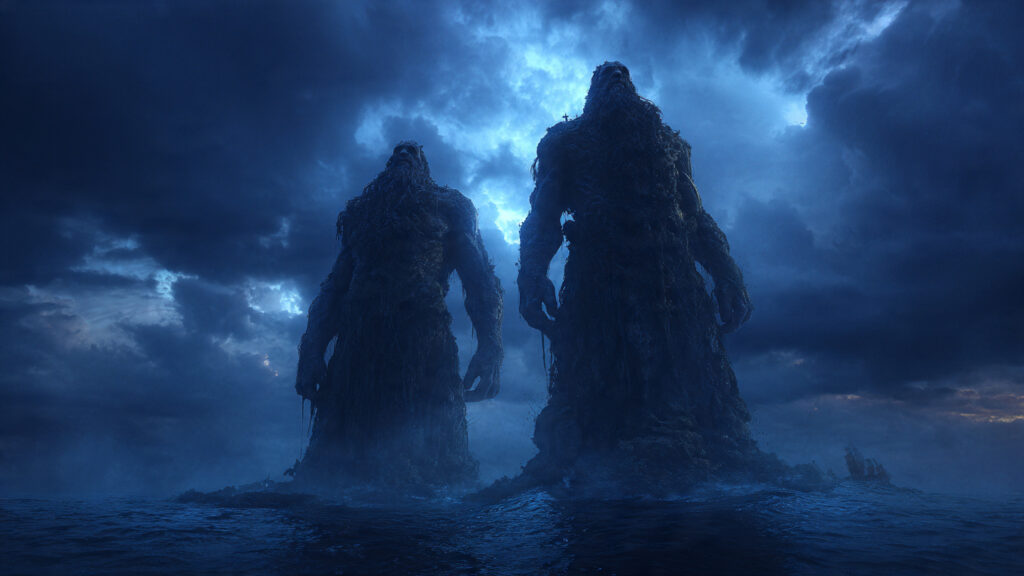
Their mother, Iphimedeia, conceived them by gathering seawater into her lap. This detail marks their origin as liquid, not celestial. They carried the raw force of the sea in their structure. They were the upward surge of the deep against the established order of the heights. The earth offered no resistance to their expansion. Homer references the twins directly in the Odyssey, describing them as the tallest and most beautiful men the earth ever produced after Orion, a detail that places them in the same register as the greatest heroic bodies in the epic tradition even as their story ends in the same catastrophic overreach that defines so many of that tradition’s giants.
The Engineering of Vertical Ambition
The twins approached Mount Olympus as a physical destination. They identified a problem of distance and proposed a solution through stone. Their plan was direct: lift Mount Ossa, place it upon Olympus, and then raise Mount Pelion above both. This was not metaphor. It was an architectural project on a planetary scale.
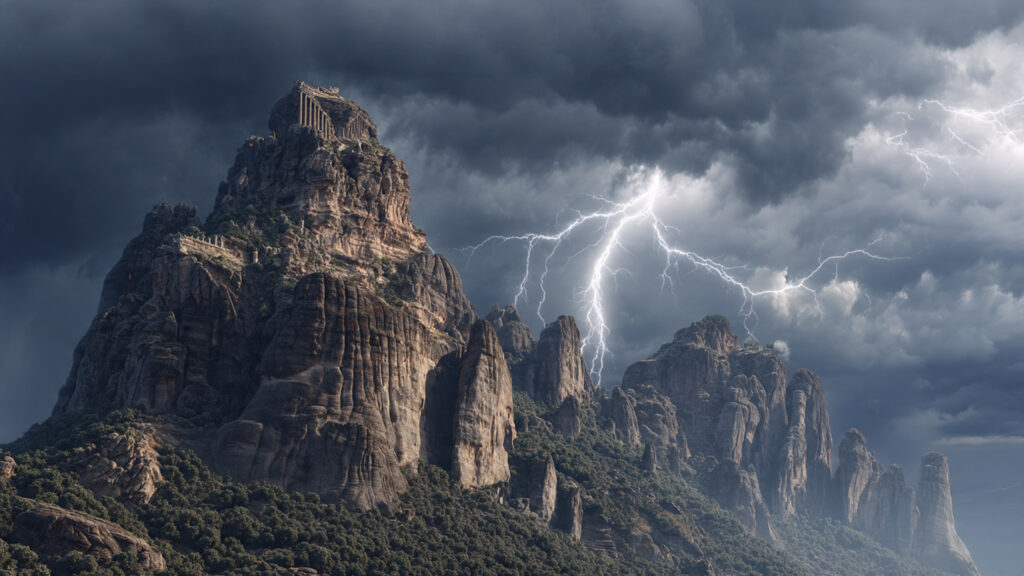
In the Greek worldview, space was a structured domain with boundaries. To move a mountain was to alter the geometry of existence. The Aloadae treated the landscape as a set of blocks, ignoring the sanctity of the stone. Their ambition was mechanical, not spiritual. The phrase later Greek writers used for this specific act, piling Pelion on Ossa, survived the myth itself and entered the language as an idiom for any attempt to compound one enormous difficulty on top of another, a rare case of a failed cosmic construction project becoming permanent shorthand in ordinary speech.
The Materiality of Ossa and Pelion
Mount Ossa rises as a steep conical mass. Mount Pelion stretches as a long, forested ridge. To balance one upon the other requires an instinctive understanding of center of gravity and load-bearing capacity. The twins possessed this through their own accelerating mass. Their bodies were the tools. Their strength was the mechanism.
Had they succeeded, the structure would have reached the ether. The gods observed with increasing concern. Height was the final boundary between mortal and divine. The twins were approaching it through force alone.
The Neutralization of Martial Order
Before construction began, the twins executed a strategic act that revealed their capability. They captured Ares, bound him in chains, and confined him within a bronze jar for thirteen months. During this period, conflict across the Mediterranean ceased. The engine of war had been removed.
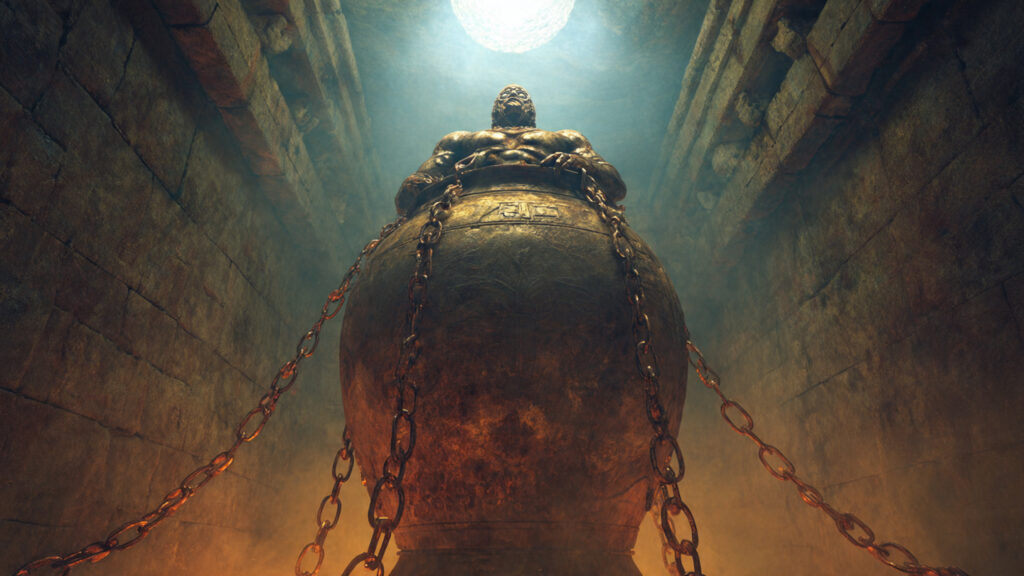
The jar functioned as a containment system. Bronze, stable and resonant, held the god’s influence in suspension. This was not a victory of combat but a demonstration of control. The twins showed that even divine volatility could be stored, sealed, and set aside. The choice of thirteen months, a number with no clean calendrical logic behind it, has struck later commentators as deliberately excessive, as though the myth wanted to establish that the imprisonment was not a brief inconvenience for Ares but a genuine, prolonged suspension of the god of war’s function in the world.
Ares survived only because Eriboea revealed his location and Hermes intervened.
The Intervention of Artemis
The end of the Aloadae came through precision, not force. Artemis transformed herself into a white deer and crossed the clearing where the twins stood on opposite sides. They were hunters. They acted without hesitation.
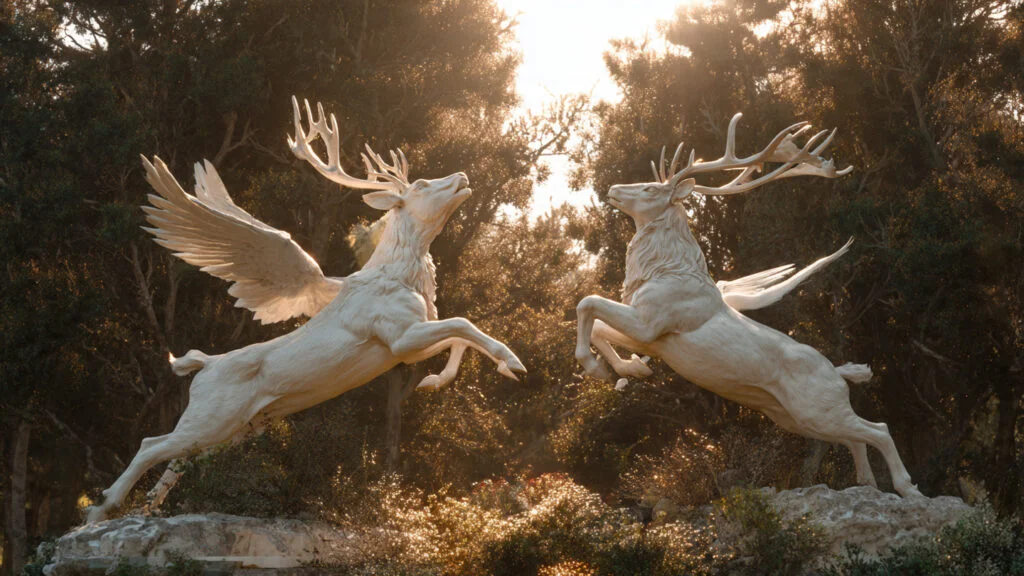
Both spears were thrown at the same moment. The deer vanished. The trajectories continued. Each twin was struck by the weapon of his brother. Their symmetry became the mechanism of their destruction.
Their alignment, once their strength, became their final vulnerability. Some versions of the myth place this scene on the island of Naxos, which the Aloadae were said to have founded and colonized during their brief reign, and the island’s own local tradition connected several natural features, including a pair of freshwater springs, to the presence of the twins during their brief span of dominance over the region before Artemis brought it to an end.
Geological Residue in the Thessalian Plain
The landscape preserves the memory of the myth. The Tempe Valley appears as a rupture between Olympus and Ossa. Geologists speak of seismic shifts and ancient lakes draining through the gorge. The Greeks spoke of the twins. Both explanations describe a world shaped by immense forces.
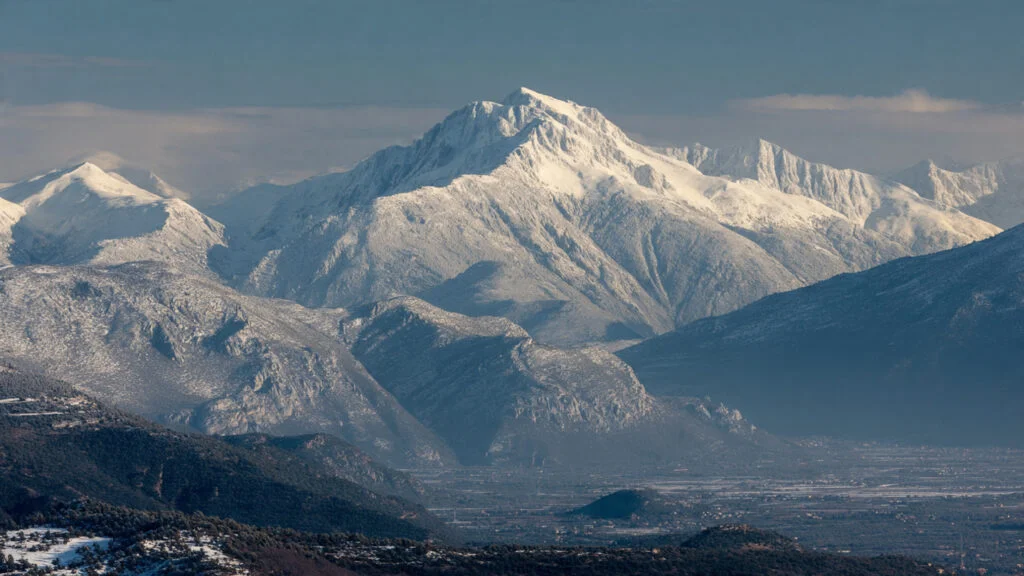
In winter, the mountains reveal their geometry. Snow removes detail and leaves only form. Ossa rises like a capstone. Pelion stretches like a foundation. The logic of the stacking plan becomes visible.
The Lessons of the Mountain Stacking
The myth establishes the limit of vertical ambition. Mass can be moved. Stone can be lifted. But height remains a boundary that cannot be reorganized by force. The mountains stand where they stand because the world requires proportion.
The twins grew without proportion. They were all expansion and no measure. In the Greek worldview, the infinite belongs to chaos. The finite belongs to beauty. The separation of the peaks preserves the order of the world.
Winter as a Constraint
Winter restores the hierarchy of the heights. The passes of Pelion close under snow. The summit of Olympus becomes a zone of lethal cold. The season enforces the boundary the twins attempted to erase.
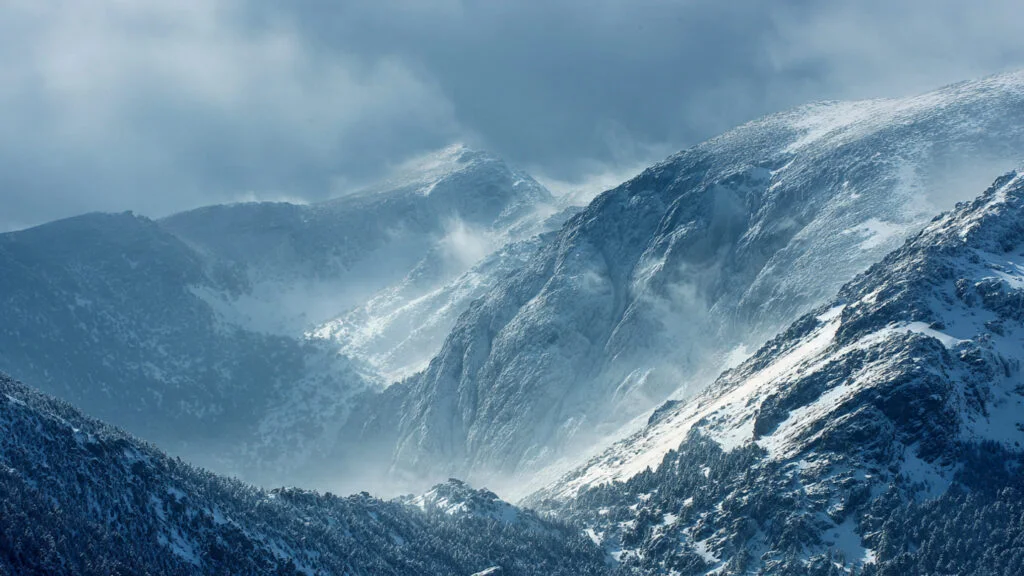
The ancient Greeks understood winter as a time when the gods reclaimed the mountains. Humans withdrew to the valleys. The Aloadae sought a permanent ascent. Winter ensures that all ascents remain temporary.
The Structural Integrity of the Seasons
The seasons maintain the rhythm of the body and the mind. Winter reveals the skeleton of the land. The leaves fall. The stone remains. The mountains show their true form. This is the architecture the twins tried to lift.
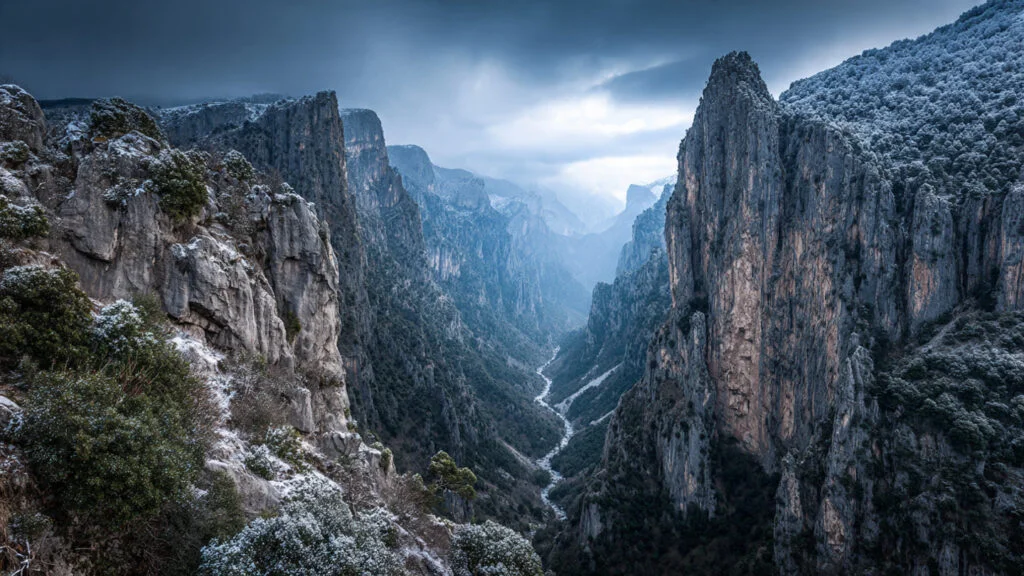
It does not move. It does not yield. It requires adaptation. The Aloadae attempted to reverse this relationship. They failed because the earth is older than ambition.
The Modern Obsession with Vertical Scale
The story of the twins echoes in an age of towers and expanding skylines. Height is pursued as a measure of achievement. Technology extends the reach of the human frame. Yet the myth asks whether perception grows at the same rate as ambition.
The twins had the strength to lift the stone. They lacked the clarity to understand the deer. Their tools exceeded their insight. This remains a relevant warning.
The Proportionality of Human Design
Architecture succeeds when it respects the contours of the land. The Greek landscape is filled with structures that follow the slope, the ridge, the natural line. They do not attempt to replace the mountain. They work within its logic.
The fall of the Aloadae restored proportion. The mountains returned to their foundations. The gods returned to their heights. The world regained its balance.
The Finality of the Geometric Law
The death of the twins followed a geometric certainty. Two identical forces, aligned in opposition, will intersect at the center. Their symmetry defined their fate. They were a single impulse divided into two bodies.
The mountains remain. They rise in the Thessalian plain as silent witnesses. They do not move. They do not grow. They endure. The twins lie beneath the stone, part of the earth they once tried to lift. The idiom their failure left behind, piling one impossible burden on top of another, has outlasted the actual memory of who first tried it and why.
The climb is not the goal. The perspective is the goal.
At Olympus Estate, Mythic Essays moves through the deeper currents of the Greek tradition. The Aloadae twins grew one cubit of width and one fathom of height each year, and Homer names them in the Odyssey as the tallest and most beautiful men the earth produced after Orion. Their mother conceived them by gathering seawater into her lap. Their plan was direct: lift Mount Ossa, place it upon Olympus, then raise Mount Pelion above both, an act so audacious it left behind the lasting idiom of piling one impossible task atop another. Before construction began they captured Ares and confined him in a bronze jar for thirteen months, suspending the god of war’s function in the world entirely. Artemis transformed herself into a white deer and crossed the clearing where the twins stood on opposite sides. Both spears were thrown at the same moment. Each twin was struck by the weapon of his brother. Their alignment, once their strength, became their final vulnerability. The mountains remain. They do not move. They do not grow. The twins lie beneath the stone, part of the earth they once tried to lift. The climb is not the goal. The perspective is the goal.