




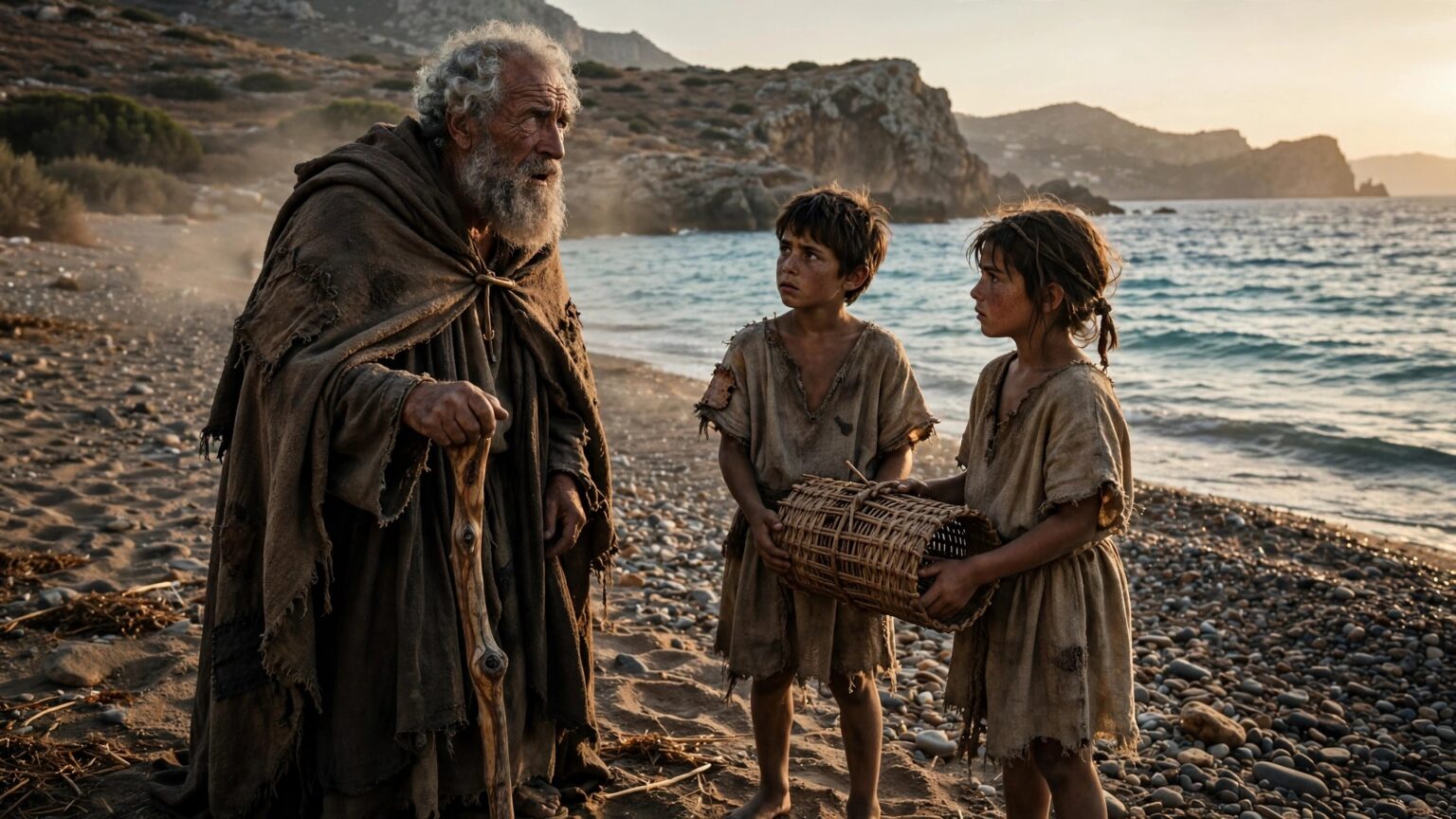
On Ios, Homer was defeated by children.
Not by a rival poet, not by a god, not by the sheer difficulty of being, on most ancient reckonings, the greatest voice the Western tradition ever produced. Not by blindness, which the ancient tradition says he bore. Not by poverty, which the biographical accounts describe in his wandering years. Not by the competitive violence of the oral performance world, where poets faced audiences who could and did reject them publicly. Not by the sheer scale of what he had attempted, two epics of a combined nearly twenty-eight thousand lines, preserved across centuries by the most demanding transmission system the ancient world possessed, the human memory of professional performers.
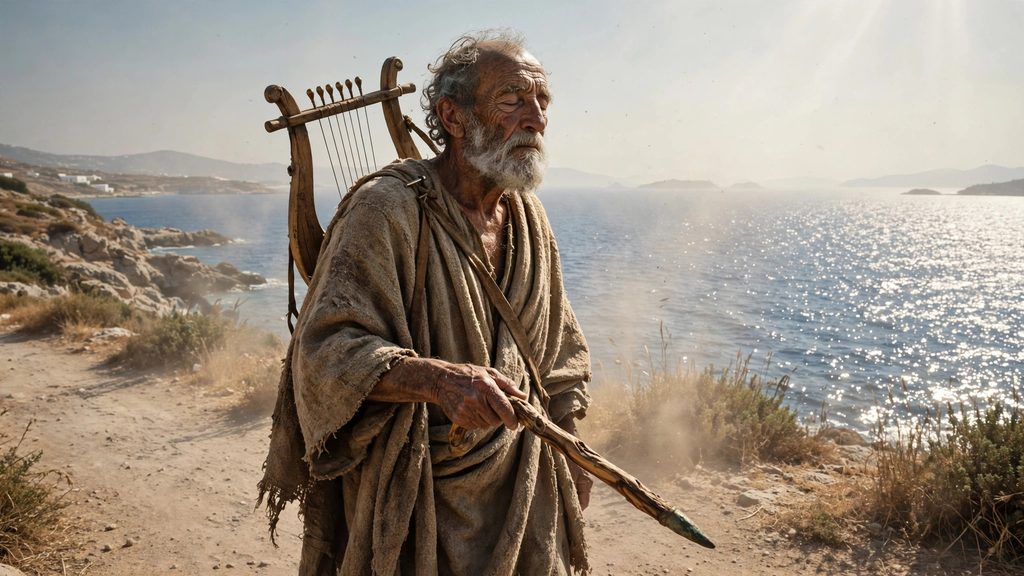
By a riddle. Posed by fishermen’s children on a beach on a small Cycladic island. A riddle about lice.
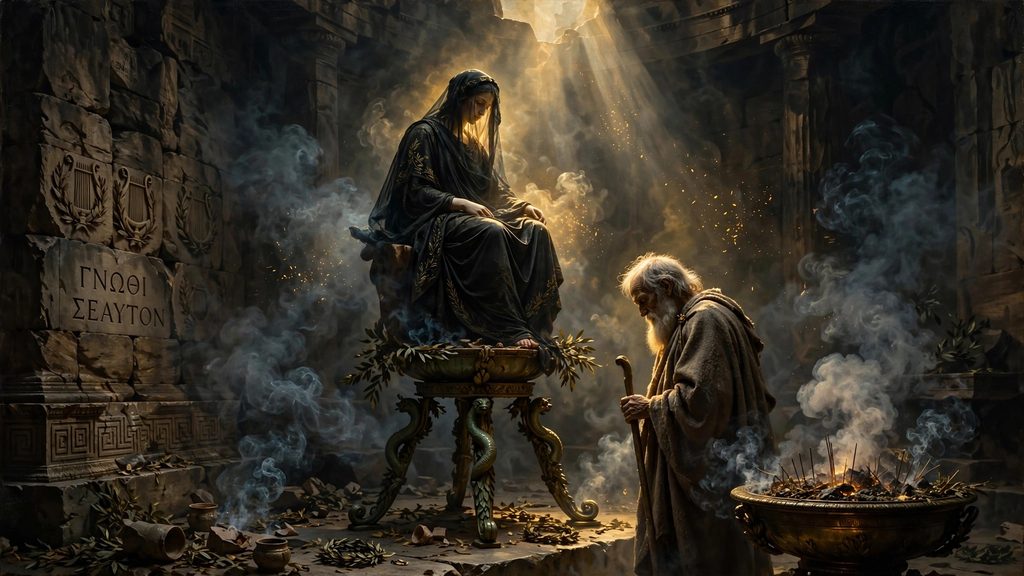
The tradition, preserved by Pausanias, holds that Homer travelled to the Delphi oracle, whose actual working this site has examined at length elsewhere, to ask Pythia about his parents and his origins. Her answer named the island of Ios as the mother’s home that would receive him when he died, and warned him to be wary of a riddle posed by young children. He went to Ios anyway.
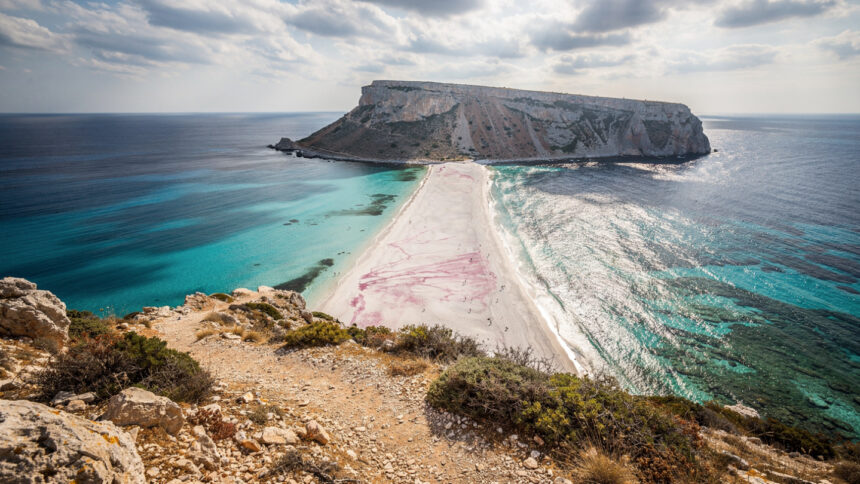
He arrived at the beach at Plakoto on the island’s northern coast and found boys who had been fishing. He asked what they had caught. They answered him with a riddle rather than a catch: what we caught, we left behind; what we didn’t catch, we carry with us. They were talking about lice. What you find on your body, you kill and discard. What you don’t find stays on you, unnoticed, carried home.
Homer could not solve it. Horrified, remembering the oracle’s warning, he ran. The road was muddy. He slipped, fell, and died, whether of the fall itself, of the shame of failing, or of an illness the tradition says the oracle had already foreseen finding him here, the sources do not agree. He was buried on the hill above the bay where the children had outwitted him.
This is the island that is now the Cyclades’ most notorious party destination, whose Mylopotas beach hosts thousands of visitors each summer for exactly what Ios has been marketing since the 1980s: the nightlife, the sunsets, the concentrated young-European hedonism. Almost none of them know about the tomb on the northern hill. Fewer still know about the riddle.
The Competing Birthplaces and the One Consistent Death
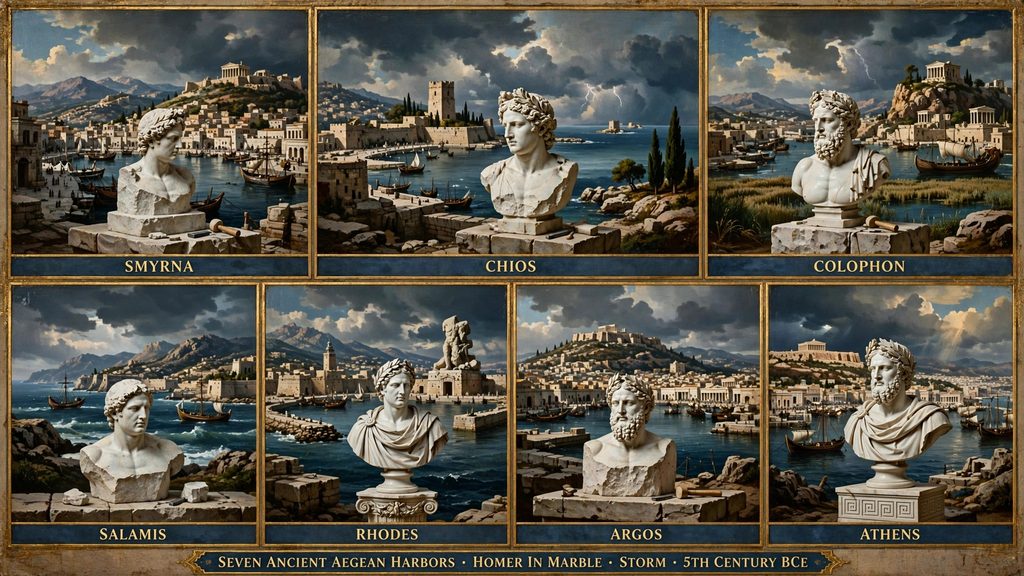
The ancient world’s inability to agree on where Homer was born was not a failure of research. It was the predictable consequence of the way his poetry had actually circulated: not through a documented biographical record but through oral performance, carried across generations of rhapsodists, with every performance community that had adopted the poems eventually claiming the poet as its own. Smyrna, Chios, Colophon, Salamis, Rhodes, Argos, Athens: seven cities quarrelled for Homer’s birthplace, in the line the Greek Anthology preserved, each one finding in the poems’ language and geography the evidence that made the claim theirs. The quarrel was genuine and it went unresolved. It remains unresolved.
Ios itself could not even keep the argument settled within its own tradition. Pausanias, who collected these stories without endorsing any of them, records that the islanders pointed out a second tomb standing near Homer’s own, that of a woman named Clymene, whom they called his mother. A rival Cypriot tradition gave her a different name entirely, Themisto, and had Homer born on Cyprus rather than conceived anywhere near Ios at all. The island that would eventually win the argument about where the greatest poet of the Greeks died could not win the argument about where he began.
The death is different. Where Homer was born was disputed by everyone who had an interest in the answer. Where he died was not. Pausanias names Ios. Strabo names it too, though carefully, attributing the claim to “some writers” rather than asserting it outright, the geographer’s usual hedge against a story he cannot verify but is not willing to discard either. A biography of Homer that circulated widely in late antiquity under Herodotus’s name, and that later readers mistook for the real historian’s work, tells the riddle story in its fullest form, even though the actual fifth-century Herodotus never wrote it. And the poet Alcaeus of Messene, writing centuries after the events he describes, put the whole story into a six-line epigram preserved in the Greek Anthology: that on Ios, boys weaving a riddle at the bidding of the Muses had, in his phrase, vexed the singer of heroes to death. Alcaeus does not leave it there. In his telling, the Nereids themselves rise from the sea to anoint Homer’s body with nectar before he is laid beneath the rock. The epigram turns what could have been the island’s embarrassment into its boast. Ios did not merely watch the greatest poet in the tradition lose to a child’s riddle. It buried him, and the sea’s own goddesses came to do it properly.
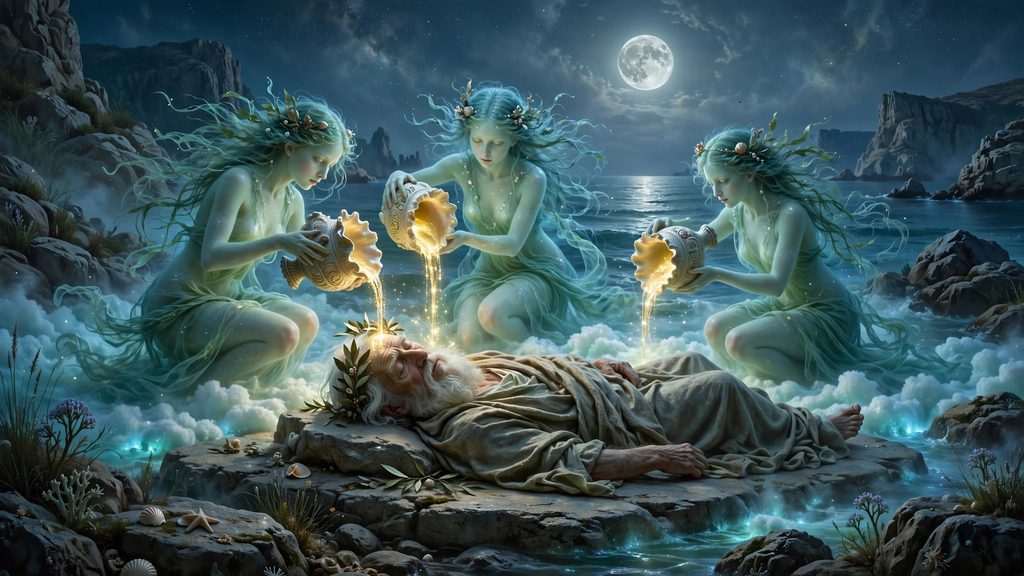
The convergence is remarkable precisely because the divergence on the birthplace question is so complete. The same tradition that could not agree on where Homer came from agreed, with unusual consistency, on where he died and where he was buried.
The oldest witness to the story is also the least sentimental about it. Heraclitus, the philosopher writing in the late sixth and early fifth centuries BCE, referred to the riddle in passing, as an illustration of a point about knowledge and appearance, mentioning it the way a writer mentions something his readers will already know without needing it explained. He does not call the children fishermen. He does not set the scene on a beach, or mention Delphi, or any of the narrative texture that the fuller version, the one Pausanias and the epigrammatists inherited, would eventually add. The bones of the story existed a hundred years before Pausanias was born. The flesh came later, and it came from a tradition that kept working the story for centuries after Heraclitus had already used it and moved on.
The island backed the claim with its currency. Ios began minting coins bearing Homer’s image in the fourth century BCE and kept doing so for generations afterward, dozens of distinct issues that survive today in museum collections from Berlin to London.
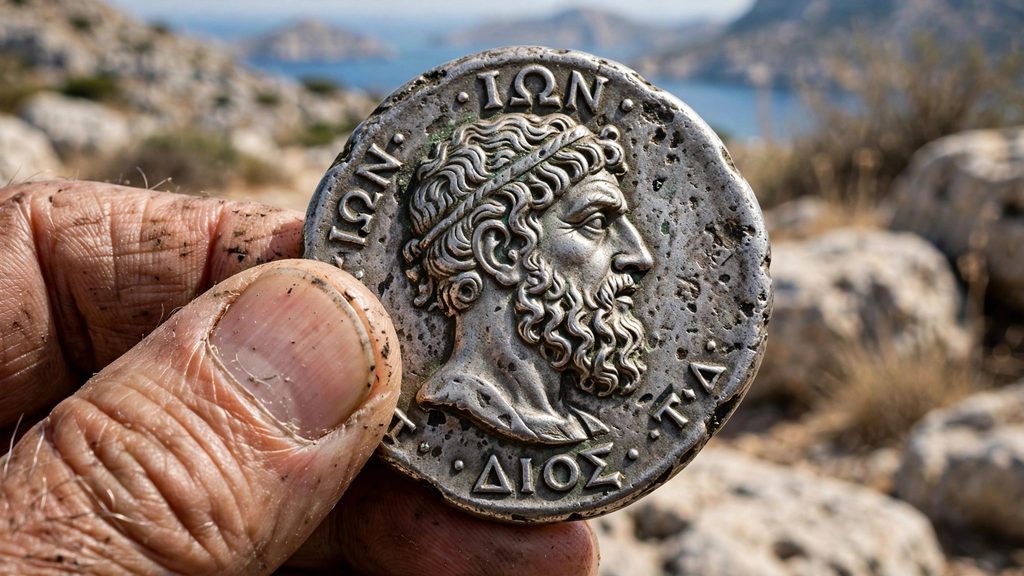
A small Cycladic island putting a poet’s face on its money, for that long, is a community that had been maintaining a specific claim about its own significance for a very long time, and meant to keep maintaining it.
The Riddle and Why It Matters
The riddle that defeated Homer is the detail that most travel writing on Ios treats as a charming footnote, if it mentions it at all, and it deserves considerably more than that.
Homer had survived, in the biographical tradition, everything the ancient world’s most demanding vocation could throw at a person. He had been born, by various accounts, into poverty or into service. He had spent years wandering from city to city, performing for whatever patronage was available. He had gone blind. He had composed two epics of unprecedented scale and complexity and had transmitted them to the rhapsodic tradition that would carry them forward until writing made the oral transmission unnecessary. By the time the oracle sent him to Ios, he was a very old man who had done everything the Greek world asked of the people who served its highest cultural function.
He couldn’t solve a children’s riddle.
The specific quality of the defeat is what makes it philosophically interesting rather than simply ironic. The riddle works by exploiting a category distinction. The children are talking about lice, which belong to a category of things found on a body: caught and killed and left behind, or not caught and carried home unnoticed. The riddle asks the listener to name both halves of that distinction at once, and the answer requires accepting that what you carry without knowing you carry it belongs to an entirely different category of knowledge than what you actively pursue and catch.

Homer, the poet who had spent a lifetime naming the world with more precision than any Greek speaker before him, whose epithets, wine-dark sea, rosy-fingered dawn, swift-footed Achilles, are among the tradition’s most celebrated acts of precise naming, examined in full elsewhere on this site, was defeated by a naming problem posed by children whose daily work had given them a specific knowledge he did not have. The fishermen’s children knew about lice from experience. Homer, who had words for everything, did not have the experience that made this particular set of words solvable.
The tradition that recorded his defeat was not mocking him. It was making the same observation about knowledge that Socrates would later turn into a philosophical method: that the person who knows what they do not know is wiser than the person who does not know what they do not know. Homer, facing the children’s riddle, discovered a gap in his knowledge of the world that his extraordinary verbal intelligence could not bridge without the specific, mundane, experiential knowledge that only the children’s lives had given them.
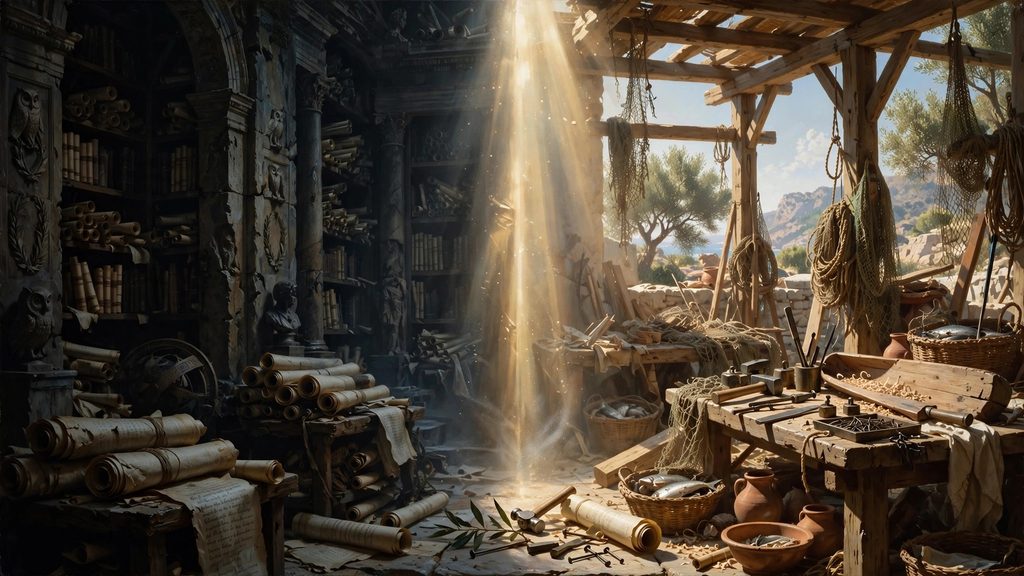
He was the greatest poet in Western literature. He was defeated by lice. These two facts are not contradictory. They are the same tradition’s most honest account of what knowledge is and what it isn’t.
The Tomb and Its Honesty
The tomb on the hill above Plakoto is, depending on which source and which century you consult, either the site of the greatest literary burial in the Western tradition or a Hellenistic watchtower that the island’s community decided, at some point, to call Homer’s tomb, because the island needed a Homer’s tomb and this hill above this bay was the correct hill above the correct bay.
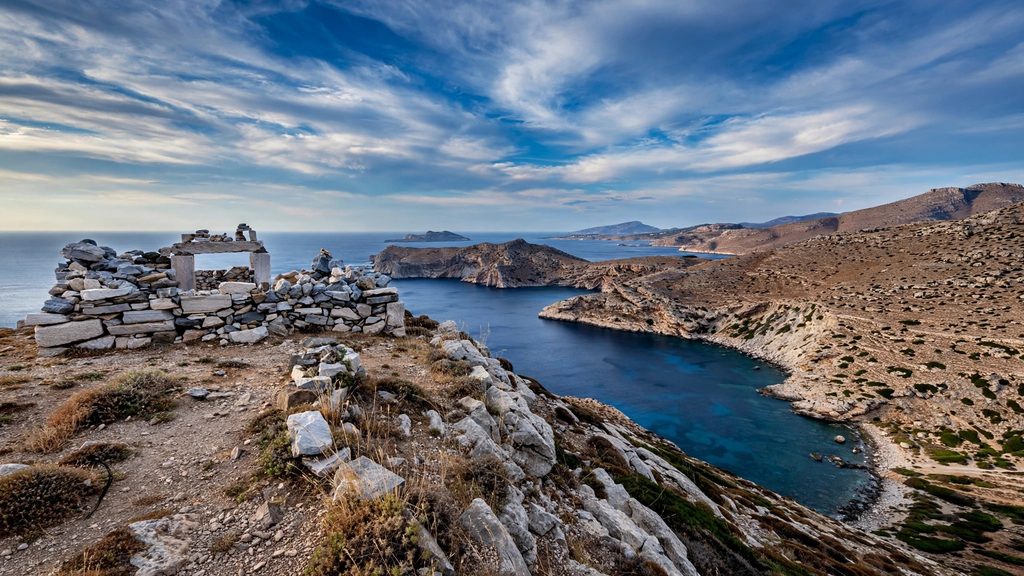
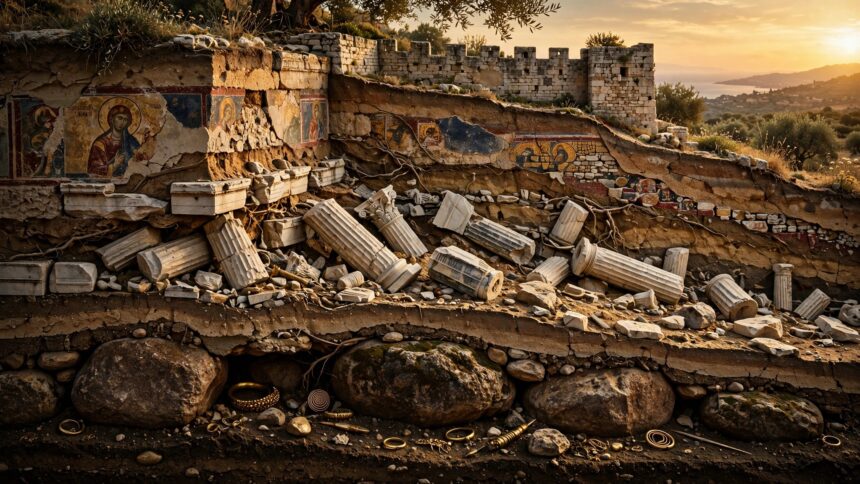
In 1771, a Dutch antiquarian named Heinrich Leonard Pasch van Krienen came to Ios specifically to find that tomb. Local tradition directed him to a scatter of marble graves near a small hilltop chapel. Digging through them, he found an inscription on one that read, roughly, “here under the earth lies the sacred head of heroic Homer.” He examined the wording, noticed grammatical errors that troubled him, doubted the stone’s authenticity himself, and abandoned the search. The man most often credited with discovering Homer’s grave on Ios is, on the actual record, the man who found the only physical evidence for it and did not believe it.
The honest account of the site is the one that holds both possibilities at once rather than resolving them prematurely. The literary tradition, attested across independent sources of reasonable age and reasonable reliability, is consistent about Ios as Homer’s burial place. The physical structure that the island points to as the tomb is a Hellenistic-era ruin whose specific connection to Homer cannot be archaeologically confirmed, identified by an eighteenth-century antiquarian who did not, in the end, trust his own discovery.
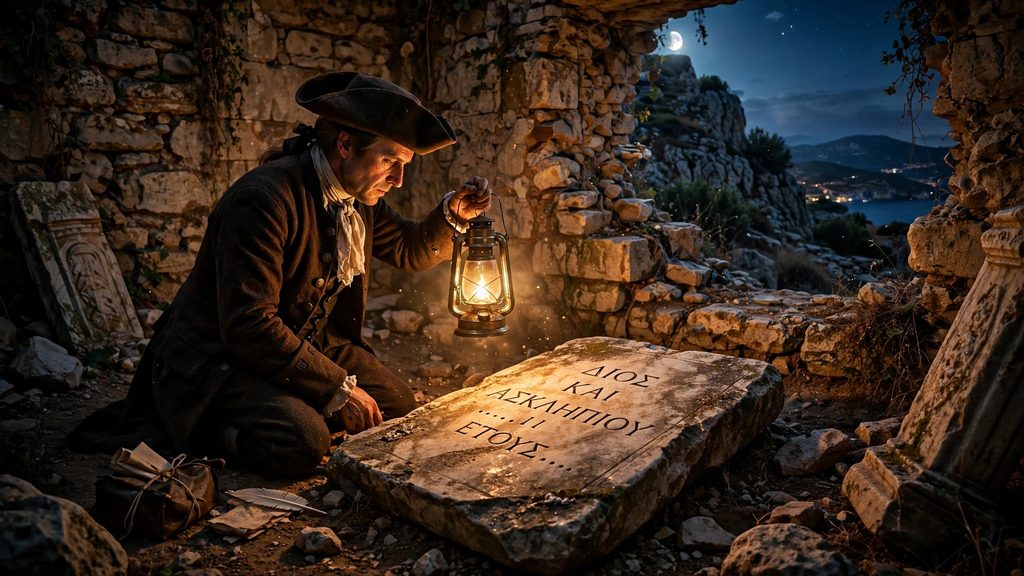
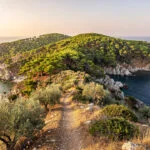
What the site offers, beyond the uncertainty, is the geography the ancient sources consistently describe: the northern bay of a Cycladic island, the hill above it, the beach below, the sea beyond. Standing there does not confirm anything, and it shouldn’t be asked to. What it does is put a visitor inside the exact stretch of coastline that writers were already naming more than two thousand years ago, which is worth doing on its own terms, without asking the landscape to settle a question that only an inscription, one better attested than the one Pasch van Krienen doubted, could actually settle.
The Island the Tradition Built and the Island Tourism Built
Ios in its current form is two islands occupying the same twenty-nine square kilometres, and the gap between them is what this piece exists to close.
The first island is the one the ancient tradition built: a place whose coins bore Homer’s image, whose community maintained a claim to the greatest literary burial in the Hellenic world across two and a half thousand years of Cycladic history, whose northern hill held a site significant enough that Pausanias and Strabo both thought their readers should know about it.
The second island is the one the 1980s tourist economy built: a destination marketed specifically at young European travellers seeking the Cycladic nightlife experience in its most concentrated and least inhibited form, whose Mylopotas beach and whose Chora streets have hosted, for four decades, a culture of summer celebration that has given Ios an international reputation entirely distinct from its ancient one.

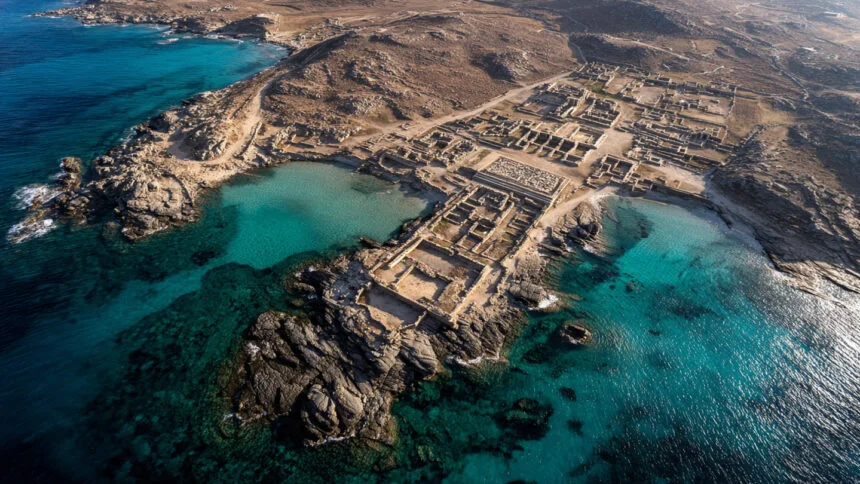
Almost none of the people who know Ios through that second reputation know about Skarkos: an Early Bronze Age settlement a short walk from the port, one of the most important prehistoric sites in the Cyclades, its urban planning sophisticated enough that archaeologists compare it to the great early settlement at Poliochni on Lemnos, and its occupation dated to roughly the middle of the third millennium BCE, something like a thousand years older than the famous Bronze Age town whose ash-preserved ruins at Akrotiri on Santorini this site has explored in full elsewhere. The island that guards a contested claim to the Western tradition’s founding poet also guards a settlement that predates the poems themselves by close to two thousand years, a prehistoric community whose importance to Cycladic archaeology makes Ios, beneath its contemporary reputation, one of the most layered small islands in the entire Aegean.
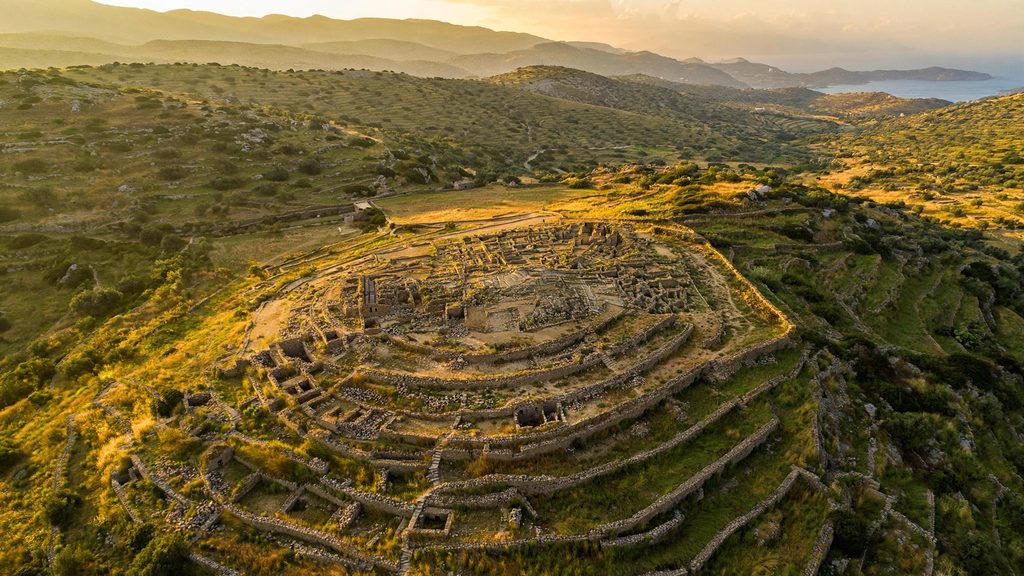
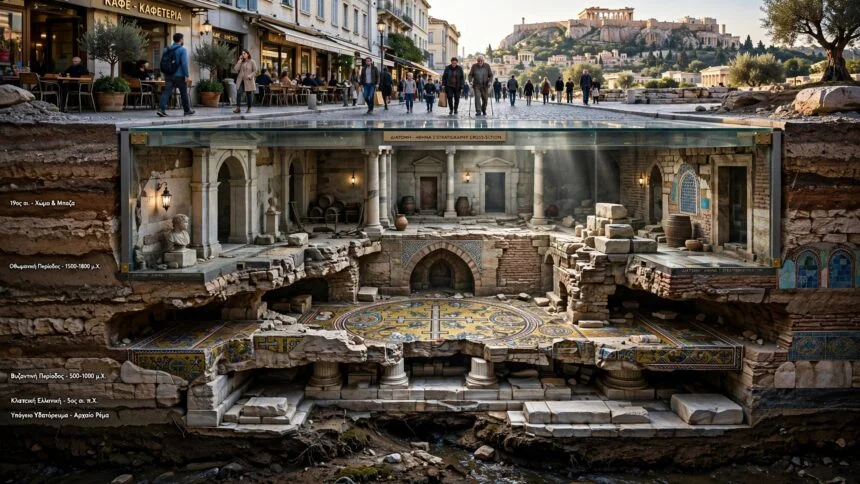
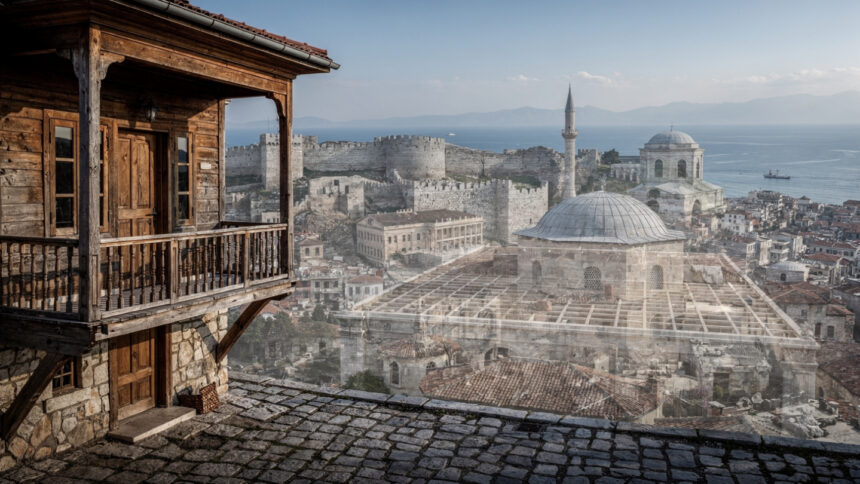
The layers are real and they are all simultaneously present. The Bronze Age settlement, the Homeric burial tradition, the Byzantine chapels that dot the Chora’s hilltop, the Venetian kastro that once defended that same high ground, the whitewashed Cycladic village that quieter tourism discovered in the 1970s, and the beach culture that discovered it in the 1980s: all of this is Ios, and the island has never required a visitor to choose between them.
The Chora and What It Actually Is
The Chora of Ios, perched above the port, is the island’s whitewashed Cycladic village heart and the centre of its nightlife at once, and it manages to be genuinely beautiful and genuinely loud at the same time because the architecture that makes it beautiful is the same architecture that makes it acoustically efficient. The narrow lanes between whitewashed walls concentrate the sound of a summer evening with the same effectiveness that they concentrate the light of a winter afternoon. The bars that occupy the old lane system of a Cycladic hilltown are operating in spaces that were never designed for bars, and the result is more intimate, for better and worse, than the purpose-built resort entertainment districts of Mykonos or Rhodes.

The sunset from the hilltop, looking west over the Aegean toward Santorini roughly thirty kilometres away, is among the finest in the Cyclades, watched over the centuries first by whatever stood on this high, defensible ground in antiquity, then by the Byzantine chapels and the Venetian kastro that followed, and now by the contemporary visitors who gather there each evening. The fact that some of those visitors have been drinking since noon does not make the sunset any less extraordinary.
How to Visit Both Islands
A serious visit to Ios means deliberately visiting the island that isn’t currently being advertised, in the same spirit that sends other travellers past the beaches of Ithaca in search of Odysseus’s own harder, less photogenic homecoming, followed elsewhere on this site.
The tomb, or the tower, above Plakoto is reached by a drive from the port that turns into a track and then a short walk on a marked path. There are no facilities beyond a small kiosk. There is the ruined structure the island calls Homer’s tomb, the view the ancient geographers described, and the bay below where the children were fishing when the greatest poet in the tradition arrived and couldn’t solve their puzzle. Go in the morning, before the day commits to the heat. The northern part of the island is quieter than the concentration of visitors around the port and Mylopotas, and the landscape between Chora and Plakoto gives the island its actual character rather than its reputation: dry limestone hills, an occasional chapel, stone field walls that predate any tourist economy, and the harsher, cleaner quality of light that the northern Cyclades carry and the more famous southern islands don’t.
Skarkos is accessible from the port road and takes about an hour to walk through properly. It is less visited than the tomb and archaeologically the more substantial site of the two.
The beaches still serve their purpose, and Mylopotas is genuinely beautiful early in the day, when the water is clear and the meltemi is blowing from the north. The island is large enough that the beach culture and the historical landscape don’t compete for the same space. They simply coexist, as they have been coexisting, in different forms, for something close to four thousand years.
The Riddle’s Second Life
The tradition that Homer was defeated by a children’s riddle about lice never disappeared from Ios’s own memory of itself. It became the island’s founding story: the reason he came, the reason he stayed, the reason the hill above Plakoto became the hill it became. An island whose most significant historical claim is that the greatest poet in the tradition died there because he couldn’t answer a riddle has been sitting, for two and a half thousand years, with a genuinely distinctive relationship to the question of what knowledge actually is.
The riddle is still unsolvable if you haven’t lived inside its specific domain of knowledge. You have to have lived close enough to a certain kind of life to know the answer immediately. Homer hadn’t. The fishermen’s children had. The greatest poet in the Western tradition possessed knowledge the fishermen’s children would never have, and they possessed knowledge he would never have, and the riddle happened to sit in their domain rather than his, and he ran from the beach because he could not bear not knowing.
Almost nobody drinking on Ios’s beach tonight knows this. The cocktail glasses and the music and the famous sunset and the genuinely very good beach have taken up the space where the story used to be. The story is still there, on the northern hill, in the ruins of whatever the island calls Homer’s tomb, in the bay where the children were fishing when the old, blind poet arrived, asked his question, and received an answer he couldn’t parse.
The deeper riddle was never really about lice. Twenty-seven centuries later we have his poems. We have seven cities that fought over his birth and one island that never stopped insisting on his death. We have a mother named Clymene on Ios and a mother named Themisto on Cyprus, a philosopher who mentioned him in passing and a poet who buried him properly, a coin that carried his face for generations and a grave nobody has ever confirmed. What we do not have, after all of it, is the man himself. Homer spent a lifetime handing his heroes their names, their epithets, their exact place in the world. Ios is where he became the one figure in his own tradition that nobody could finish naming.
What we caught, we left. What we didn’t catch, we carried with us.
He couldn’t solve it. He died here. The island put his face on its coins for generations after.
Go and look at the hill.
At Olympus Estate, Wanderlust Greece guides you across the sacred and storied terrain of the Hellenic world. Ancient tradition consistently places Homer’s death on Ios, where an oracle at Delphi is said to have warned him of a riddle posed by children, and where fishermen’s boys later stumped him with a question about lice that he could not answer. Pausanias, Strabo, and the poet Alcaeus of Messene all name the island as his burial place, and coins minted there carried his image for generations. The physical tomb above Plakoto, identified in 1771 by an antiquarian who doubted his own discovery, remains a Hellenistic ruin rather than a confirmed grave, standing in a landscape that matches the ancient descriptions regardless. The same island holds Skarkos, an Early Bronze Age settlement roughly a thousand years older than Akrotiri, and the Chora that has been, for four decades, one of the Cyclades’ most famous nightlife destinations. All of it is Ios at once.