




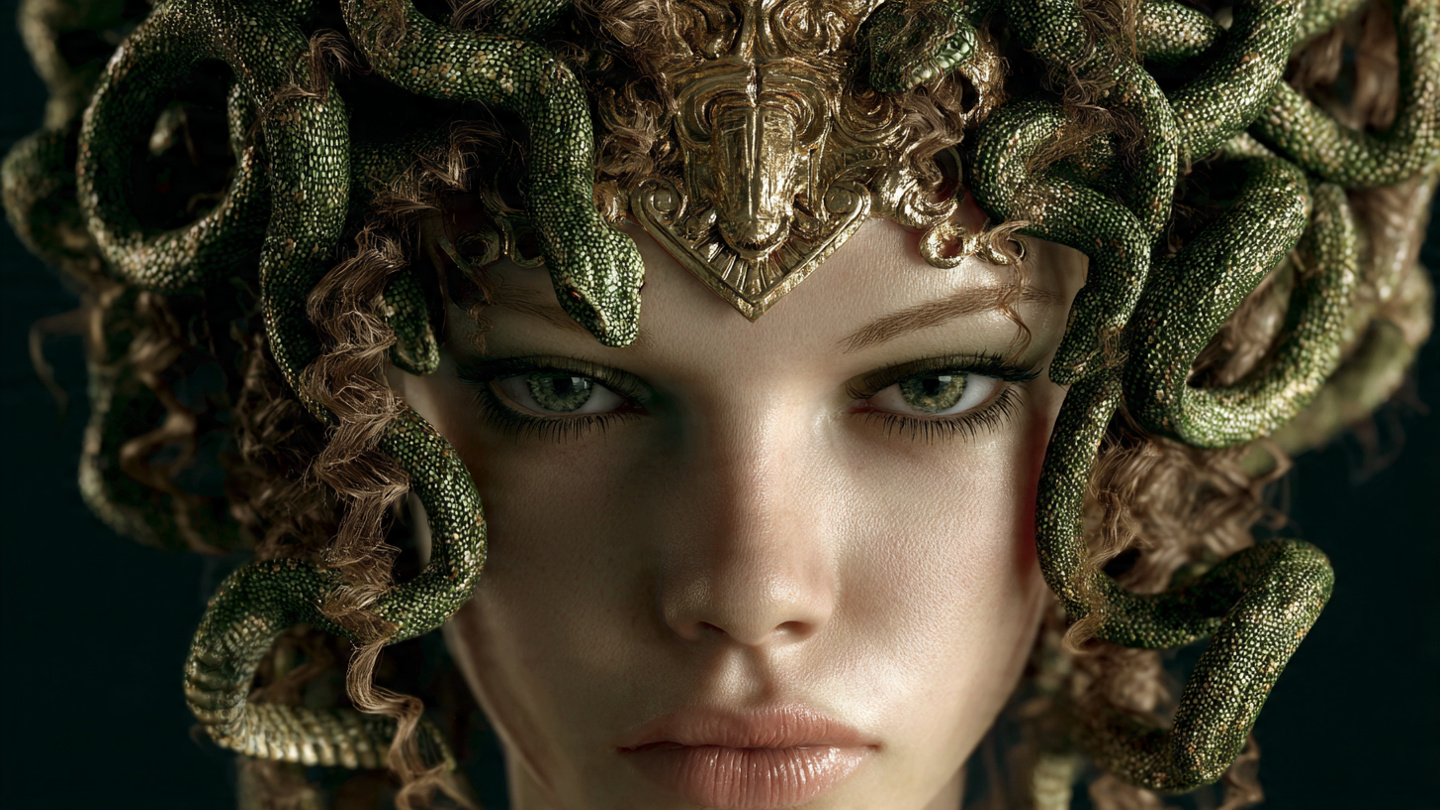
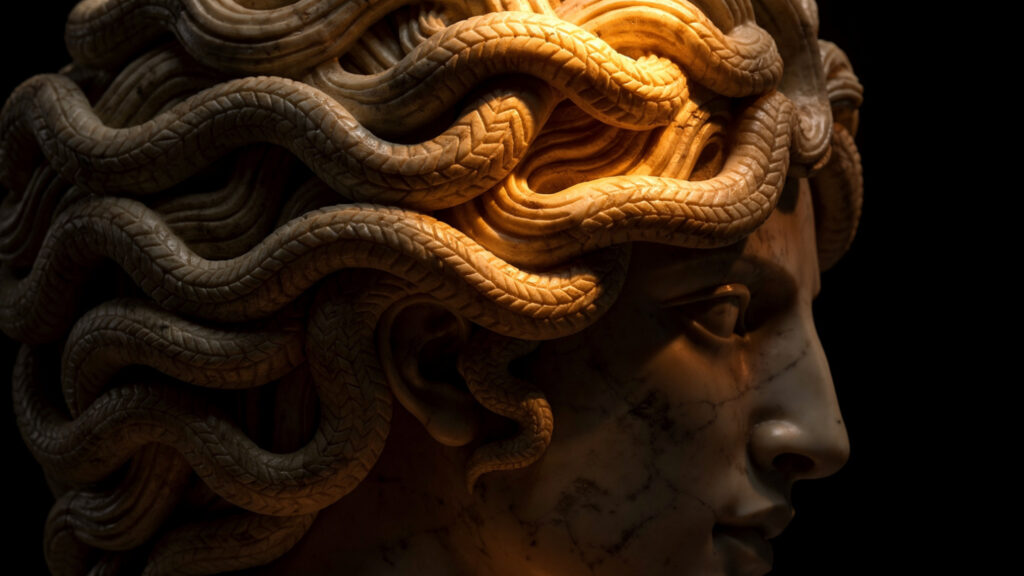
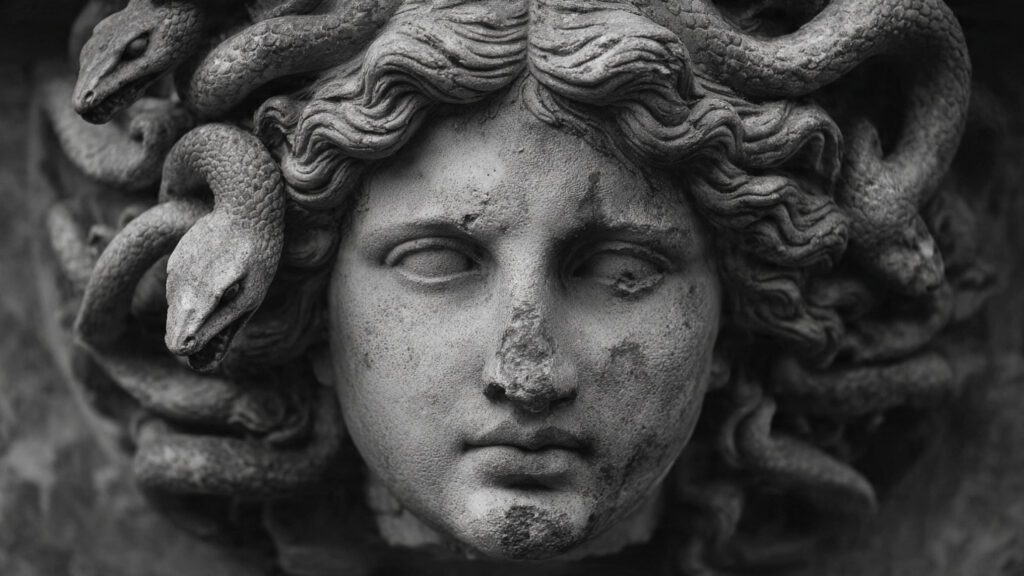
The Gorgoneion was everywhere.
On the breastplate of Athena. On the shields of warriors. On the pediments of temples. On the coins of Syracuse and Corinth and Populonia. On the antefixes of roof tiles, facing outward from the building’s edge toward whatever approached. On amulets worn by children and adults alike across the Greek and Roman worlds for roughly a thousand years of continuous use. The facing female face with wide staring eyes, a protruding tongue, writhing snakes, and an expression ancient artists settled on as the face of apotropaic power itself: the face that turns back approaching evil, that meets a malevolent gaze with a gaze of its own, that confronts a harmful eye with the counterforce of the single most powerful protective symbol in the ancient Mediterranean world.
The face was Medusa’s. The power belonged to the dead Gorgon’s severed head, which Perseus carried in the kibisis, the divine wallet, after killing her on her Libyan island, using it to turn his enemies to stone before giving it to Athena, who placed it on her aegis. A dead monster’s face became the protective symbol of an entire civilization. The head that killed became the head that protected. The gaze that petrified the living became the gaze that repelled evil itself.
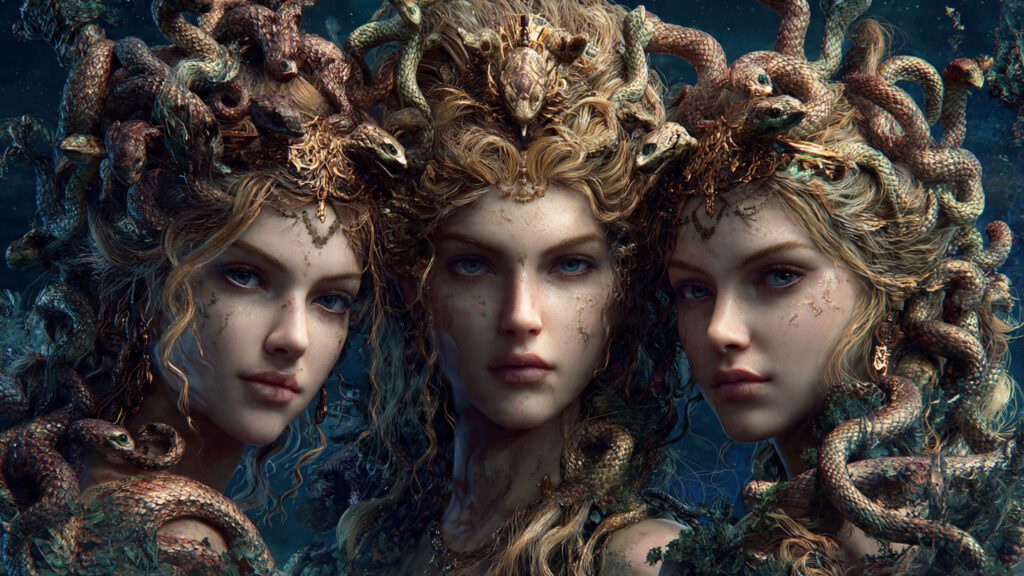
This transformation, from a monster’s lethal gaze to a civilization’s protective symbol, is what makes the Gorgon myth far more interesting than the simple reading of Medusa as a beautiful woman punished by a jealous goddess and killed by a resourceful hero.
The Two Traditions
Ancient sources preserve two distinct and genuinely incompatible accounts of what Medusa was and how she came to be that way, an incompatibility that reflects the real history of her myth as it developed across the archaic and classical periods.
Hesiod’s Theogony makes no claim that Medusa was ever anything other than a monster. In Hesiod’s account, the Gorgons were children of Phorcys and Ceto, two of the sea’s primordial divine forces: Phorcys, god of the sea’s hidden dangers, Ceto, goddess of sea monsters. The Gorgons were sisters to the Graiai, the Grey Women who shared a single eye and a single tooth and guarded the path to the Gorgons’ lair, and to Echidna, the half-woman half-serpent who, with Typhon, produced the monsters later heroes would spend entire careers defeating.
In Hesiod’s account, the three Gorgons, Stheno the mighty, Euryale the wide-sea, and Medusa the queen or guardian, were born monstrous. Hesiod draws his distinction between Medusa and her sisters along mortality, not beauty: Stheno and Euryale were immortal, Medusa was mortal, and it was precisely this mortality that made her the target of Perseus’s labor. The immortal sisters could not be killed. Medusa could.
Ovid’s Metamorphoses tells an entirely different story, and preserves it in the most complete surviving form. Medusa was once a beautiful woman, most famous for her hair, and it was this beauty that drew Poseidon’s attention while she was in Athena’s temple. What happened there Ovid describes plainly as a violation, Poseidon and Medusa together in Athena’s own sacred space. Athena’s response was to transform Medusa, turning her most beautiful feature into a horror of serpentine hair, making the woman whose beauty had attracted a god’s assault into the monster whose appearance would deter anyone from approaching.
The incompatibility between these two accounts is real, and ancient audiences recognized it themselves. Hesiod’s Medusa, born monstrous, and Ovid’s Medusa, transformed by divine anger, are not the same figure. They share a name, a lethal gaze, and the Perseus myth, but the theological claims underneath them differ completely. Hesiod’s Medusa is a monster who exists at the edge of the world simply because that is where monsters exist. Ovid’s Medusa is a mortal woman whose beauty attracted divine violence, and whose transformation was a punishment aimed squarely at the victim rather than the perpetrator.
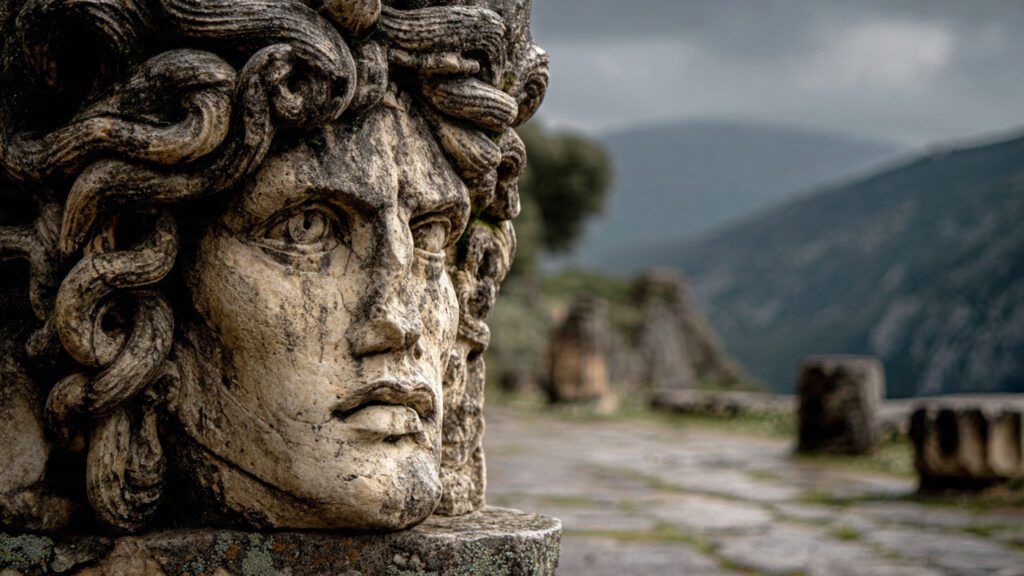
Ovid’s version raises a real theological problem, one ancient audiences noticed and later interpreters have kept returning to: Athena’s punishment falls on Medusa rather than on Poseidon. The Metamorphoses never explains this. It simply reports it. Ovid, who had already developed the habit of narrating mythology’s most uncomfortable stories without editorial comment in the Arachne section of the same book, left Athena’s justice standing here entirely unresolved.
The Arachne tapestry in Metamorphoses Book VI, which the Greek textiles article in this collection develops, wove exactly this kind of story: divine misconduct producing mortal suffering. Ovid wrote his own tradition’s most uncomfortable theological content directly into his most technically accomplished poem and left his audience to judge it for themselves.
The Perseus Myth and Its Mechanics
Polydectes, king of Seriphos, sent Perseus to bring back Medusa’s head because he wanted Perseus out of the way while he pursued Danae, Perseus’s own mother, without interference. The labor was designed to be fatal: nobody had ever killed a Gorgon, the task required finding the Gorgons’ lair at the edge of the world, and a Gorgon’s gaze killed anyone who looked at it directly.
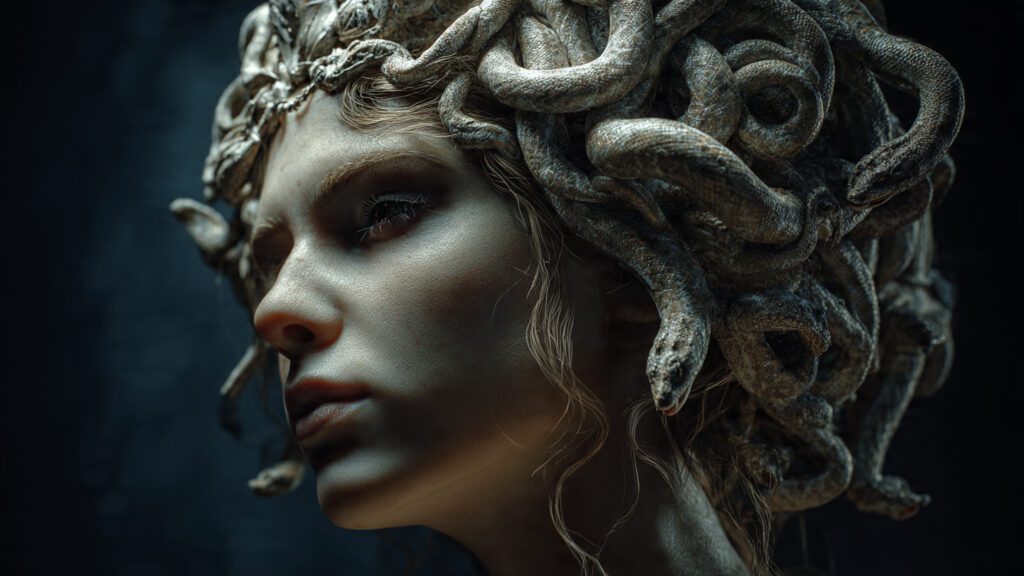
The divine assistance Perseus received matches the same logic this collection’s monsters article develops elsewhere: a hero’s intelligence combined with divine help accomplishes what the hero’s body alone never could. The kibisis from Hermes to carry the head safely. The adamantine sickle from the same source. The cap of invisibility from the Nymphs. Winged sandals. And from Athena, a polished shield whose mirrored surface let Perseus approach Medusa without ever meeting her gaze directly.
The mirrored shield is this myth’s single most precise intellectual device: a hero who cannot look at the Gorgon directly looks instead at her reflection, which is safe to view in a way the original never is. Ancient sources never spell out why, and the tradition doesn’t seem to have found the distinction philosophically troubling at all. The reflection is an image that carries none of the original’s power. Looking at the copy is safe in exactly the way looking at the original is lethal.
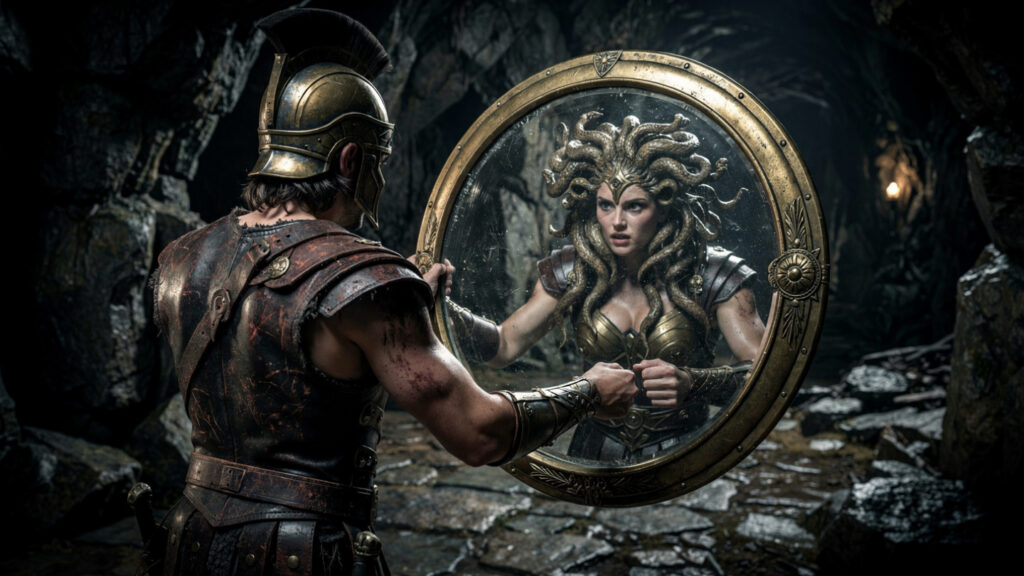
Philosophy has been drawn to this same distinction since Plato used the mirror in the Republic as a metaphor for the imitative relationship between art and reality: a mirror produces an image, the image resembles its original, and the image lacks the original’s substance. The Gorgon’s reflection lacks the original’s lethal power in exactly this relationship, resembling the original closely enough for Perseus to orient his sword, while lacking whatever quality made the original fatal to look at.
Perseus found the Gorgons sleeping. Guided by her reflection in the shield, he approached Medusa’s sleeping form, oriented the sickle correctly, and struck. In both the Hesiodic and Ovidian versions, the severed neck produced two figures who had existed invisibly within Medusa all along: the winged horse Pegasus and the giant Chrysaor, both fathered by Poseidon in the same encounter Ovid identifies as the assault in Athena’s temple. The children born from Medusa’s severed neck were the children of that violation.
Athena received the head and placed it on her aegis, and the dead Gorgon’s face became the protective symbol at the center of the goddess of wisdom and warfare’s own divine equipment. This is the transformation the Gorgoneion itself encodes: a monster who killed through looking, repurposed by divine intelligence into an instrument that protects through looking. The same face. The opposite function. The claim that the single most powerful protective symbol available is the face of the thing most feared.
The Gorgoneion and Its Deployment
The Gorgoneion, the facing apotropaic face with wide eyes, protruding tongue, and snake hair, ranks among the oldest continuously deployed protective symbols in the Western world, and its distribution across ancient Greek and Roman material culture reflects a real understanding of what the Gorgon’s power actually was and how it could be redirected.
The apotropaic principle behind the Gorgoneion is the evil eye turned back on itself: the ancient Mediterranean belief that a malevolent gaze carried real destructive force, and that the proper defense was a countergaze powerful enough to meet and neutralize it. The Gorgon’s face was the most powerful available countergaze precisely because the Gorgon’s own gaze had been the most destructive available: a creature whose natural gaze killed anyone who encountered it became, once Athena placed it on her aegis, the single most concentrated form of apotropaic power available.
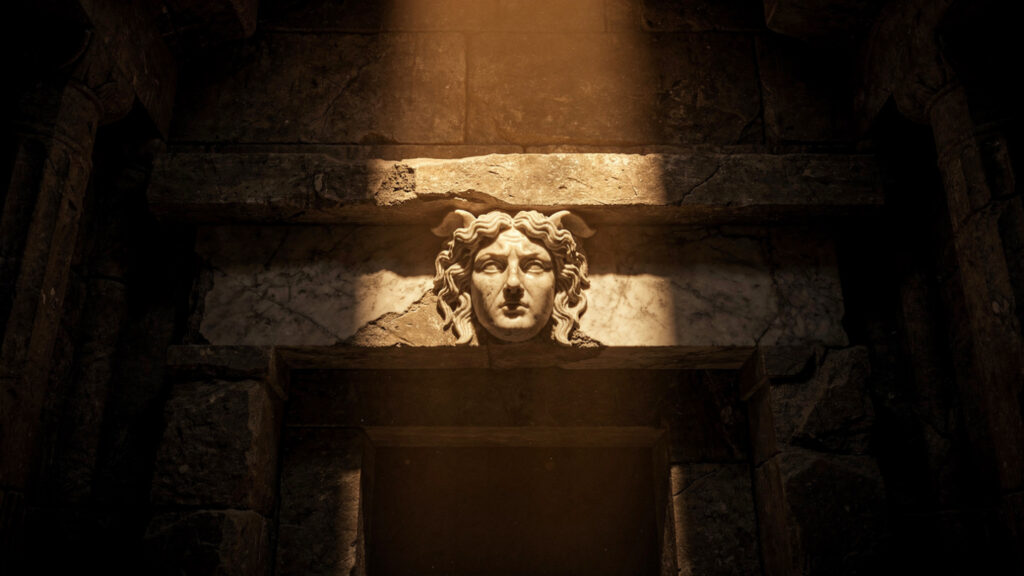
The Gorgoneion on the pediment of the Temple of Artemis at Corfu, dated to around 600 BCE and now in the Corfu Archaeological Museum, is the oldest surviving large-scale architectural Gorgoneion in Greece: the central figure of the whole composition, flanked by leopards and by Chrysaor and Pegasus emerging from the severed neck’s own blood, deployed at the single most architecturally prominent position available to protect the temple and everything inside it. A Gorgoneion facing outward from a temple’s entrance confronted anything approaching the sacred space before anything else could.
The Temple of Athena Nike on the Athenian Acropolis, whose decorative program prominently featured the Gorgoneion in the victory goddess’s own temple, gives the symbol its most direct connection to Athena herself: the goddess who placed Medusa’s head on her aegis is the same goddess whose own temples incorporated the Gorgoneion as their primary protective figure. The goddess of wisdom’s protection was the face of the monster she had helped kill.
The Gorgoneion’s use on coins, particularly at Syracuse in Sicily and at Corinth and Populonia in Etruria, reflects a genuinely practical deployment of the same apotropaic symbol at the exact point of commercial exchange: a coin passing from hand to hand in the market carried the Gorgoneion as protection for the transaction it represented, a countergaze meeting whatever malevolent intent might otherwise enter the exchange.
Gorgoneion amulets worn as jewelry across the Greek and Roman worlds represent the same protective principle applied personally: anyone wearing one carried a face that would meet any evil eye directed at them with a countergaze powerful enough to neutralize it. The sheer spread of these amulets, across social classes and across the entire chronological range of the ancient Mediterranean, reflects a genuine, widespread belief in both the evil eye’s destructive power and the Gorgoneion’s ability to counter it.
The Mortal Gorgon’s Immortal Companions
Hesiod’s detail that Stheno and Euryale were immortal while Medusa alone was mortal directly shapes the structure of the entire Perseus myth: the immortal sisters are present at the scene of Medusa’s killing, and their response to her death gives the myth its most urgent dramatic movement.
When Perseus struck with the sickle and Medusa’s head fell, and the blood produced Pegasus and Chrysaor, Stheno and Euryale woke. They could not be killed. They pursued Perseus. Only the cap of invisibility let him escape at all: the immortal sisters, who could easily have killed the hero for killing their sister, simply could not see him, and Perseus escaped while they searched the air in vain.
The emotional weight of this pursuit, immortal sisters moving through the air searching for the invisible killer of the one mortal among them, is something Hesiod preserves without ever dwelling on it. He narrates the pursuit with the same brevity ancient epic reserved for events whose emotional content needed no elaboration at all. The sisters searched. They could not find him. They could not die, and the one who could had died, and the one who killed her had vanished, and there was nothing left to do with the grief.
Their immortality in this moment reveals exactly what immortality costs: sisters who cannot be killed cannot grieve their way to an end, cannot be destroyed by loss, cannot follow their sister into the mortality that had been her only vulnerability. Their immortality preserves them inside a grief mortality would eventually have concluded. They are permanent mourners at a permanent loss, unable to die their own way out of grief the way Medusa died her way out of her own existence.
The Modern Greek Gorgon
The Gorgona of modern Greek folklore is an entirely different figure carrying the same ancient name, and her character reflects the long semantic journey the word gorgon took through the Byzantine period into the contemporary Greek imagination.
The modern Gorgona is a mermaid: a creature with the upper body of a beautiful woman and the lower body of a fish, haunting the seas around Greece and asking sailors the same question Alexander the Great’s sister would ask. Is Alexander the Great alive? The correct answer, that he lives and reigns and conquers still, spares the ship and calms the sea. The wrong answer, that Alexander is dead, brings the storm that sinks it.
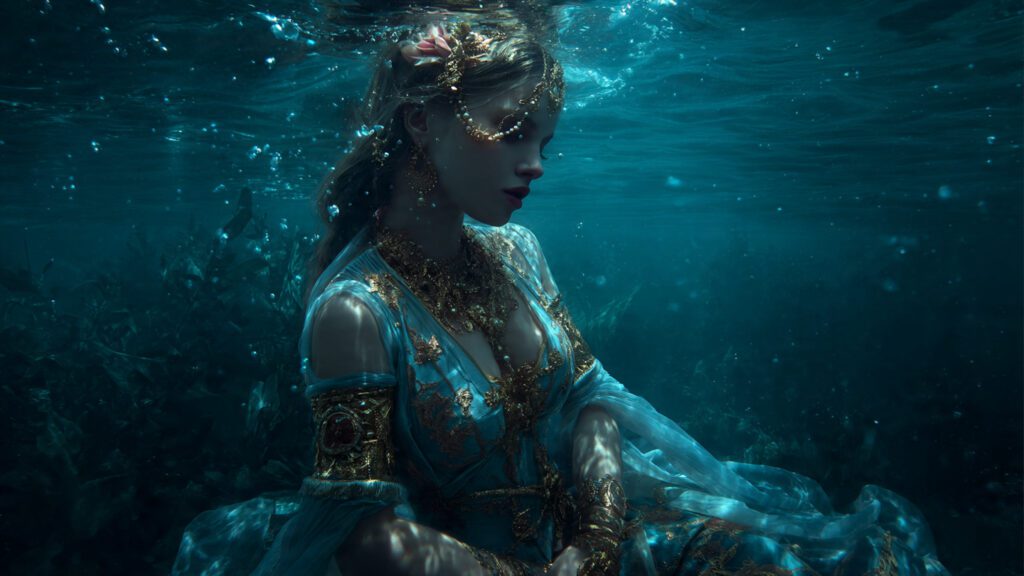
What connects this figure to the ancient Gorgon is the name itself, and the shared association with a dangerous feminine presence at the sea’s boundary, a creature testing a sailor’s knowledge and destroying anyone who fails. The content of the test has changed completely: the ancient Gorgon killed through looking, the modern Gorgona kills through the wrong words. The ancient Gorgon was the monster at the edge of the world. The modern Gorgona is the mourning sister of history’s greatest conqueror, held in her grief by a curse rather than by immortality.
The word gorgon traveled from Hesiod’s monster to the Byzantine mermaid of the Alexander legend while keeping its underlying power, that association with the dangerous feminine, the sea boundary, and a test that kills whoever fails it, intact across an entire millennium, even as the actual content of the danger transformed to fit the different theological and cultural world Christianity brought in to replace the Olympian one.
Where to Encounter the Gorgoneion
The Corfu Archaeological Museum holds the Artemis temple pediment Gorgoneion, the oldest surviving large-scale Gorgon face in Greece: standing before the roughly 600 BCE pediment and meeting the facing gaze of this ancient Gorgoneion, in a museum space whose conservation conditions have preserved the limestone’s original surface, recreates almost exactly what an ancient worshipper approaching the Temple of Artemis would have experienced first, the confrontation with a protective face before ever entering the sacred space itself.
The Athens National Archaeological Museum holds an extensive collection of Gorgoneion material across its ceramics, sculpture, and decorative arts collections, spanning enough media and periods to make a visit there the most comprehensive available encounter with the Gorgoneion across its full chronological range.
The Acropolis Museum holds Athenian Gorgoneion material in direct context with Athena herself: architectural Gorgoneia fragments from the Acropolis buildings, alongside representations of Athena wearing the Gorgoneion on her aegis, give this protective symbol its most direct divine genealogy anywhere.

Ancient coins from Syracuse and Corinth, accessible through numismatic collections and online databases, preserve the Gorgoneion’s single most widely distributed surviving form: a face reproduced by the millions on the coins of the ancient Mediterranean’s most commercially significant cities, deployed consistently as protection for whatever transaction each coin represented.
At Olympus Estate, Mythic Essays moves through the deeper currents of the Greek tradition. Hesiod made Medusa born monstrous. Ovid made her transformed by divine anger directed at the victim rather than the perpetrator and left the theological problem standing without explanation. The Gorgoneion was deployed on temples and shields and coins and amulets for a thousand years because the face of the thing most feared was understood as the most powerful protection available. The immortal sisters searched the air for the invisible hero who had killed the one mortal among them and could not find him. The modern Greek mermaid who asks about Alexander the Great carries the ancient name and the ancient association with the dangerous test at the sea boundary. The face is still recognizable. The gaze still meets whatever approaches.