
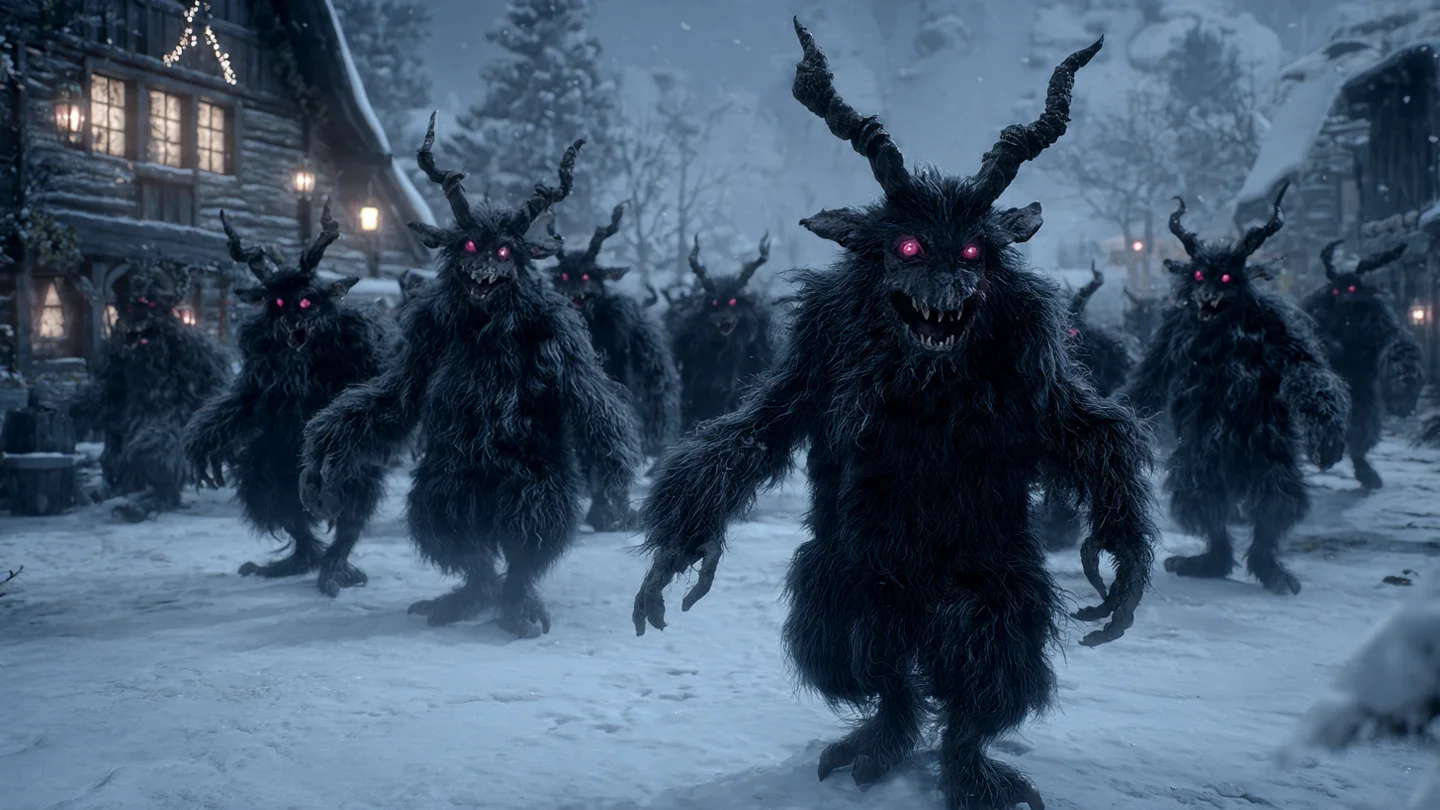
Every year the Kallikantzaroi almost end the world.
They spend eleven months underground sawing at the roots of the World Tree, the great cosmic axis that holds the earth above the void. The sawing is continuous and purposeful. The tree weakens through the year, the core of the trunk narrowing under the accumulated labour of the creatures whose occupation is the destruction of the structure that makes the organized world possible. By late December the tree is close to falling. The Kallikantzaroi can feel it giving way beneath the saw. They press harder. The end is near.
Then Christmas arrives. Christ is born. The tree miraculously heals.
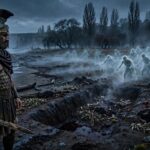
The Kallikantzaroi, deprived of their almost-completed work, surge to the surface in frustration and rage and spend the twelve days between Christmas and Epiphany doing what frustrated creatures do when the purpose they have been pursuing for eleven months is suddenly removed: they make chaos. They enter houses through the chimneys. They sour the milk and tangle the yarn and extinguish the hearth fire and sit on sleeping people’s chests and whisper confusion into the ears of anyone who has left themselves unprotected during the period when the boundary between the underground world and the surface world is at its most permeable.
On January sixth, the priest blesses the waters. The first drop of holy water touches the ground, and the Kallikantzaroi are driven back below. They return to the underground to find that the World Tree they spent a year sawing has completely regenerated. They pick up their saws and begin again.
This is the tradition that the Greek folk imagination has maintained with extraordinary consistency across regional variations and across the transition from the pre-Christian world to the Orthodox Christian one. The details vary. The Kallikantzaroi are described differently in different regions: some accounts give them animal legs, some give them enormous teeth, some make them small and some make them enormous. But the core cosmological structure does not vary: the creatures that spend the year attempting to destroy the World Tree emerge during the window when the cosmic order is temporarily suspended and must be driven back by the ritual whose performance restores the cosmic boundary.
The question worth asking about this tradition is not what the Kallikantzaroi look like. It is what the tradition understood about the nature of the world that produced this cosmological structure.
The World Tree and Its Roots
The World Tree tradition is not Greek in origin. It is among the most widely distributed cosmological concepts in the human record, appearing in Norse mythology as Yggdrasil, in Vedic tradition as the cosmic tree whose roots reach into the underworld and whose branches support the heavens, in Siberian shamanic traditions as the axis along which the shaman travels between the worlds, and in numerous other traditions whose geographical and cultural diversity suggests that the World Tree concept addresses something fundamental about how human beings understand the relationship between the organized world and the void that surrounds and underlies it.
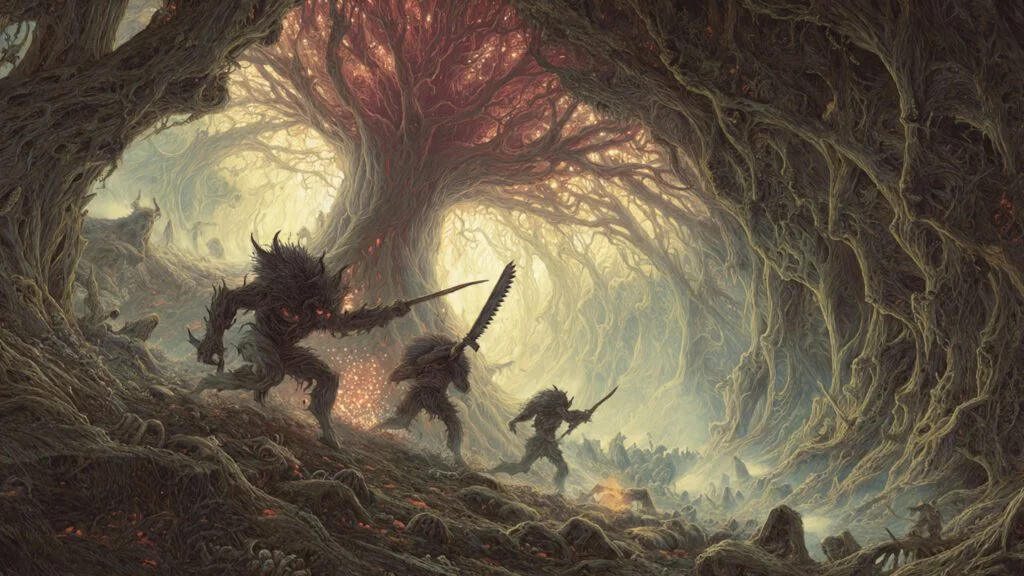
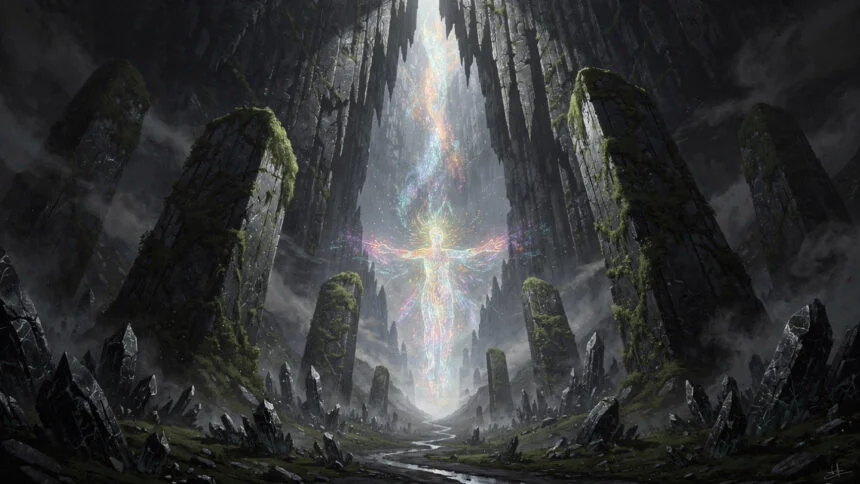
The character of the World Tree concept is the concept of the cosmic axis: the structural element whose existence is the condition of the organized world’s existence. The World Tree is not simply a large tree. It is the organizational principle that holds the levels of the world in their correct relationship to each other. The roots go into the underworld. The trunk occupies the middle world where mortals live. The branches reach into the upper world where the divine beings dwell. The vertical structure whose maintenance is the maintenance of the organized world.
The Kallikantzaroi are the beings whose occupation is the attack on this structure. They do not make war on the surface world directly. They attack the foundation of the surface world. They saw at the roots of the tree whose existence is the condition of the surface world’s existence.
This is the cosmological understanding that the Kallikantzaroi tradition encodes: the threat to the organized world is not the threat from outside the world but the threat from below the world, from the zone whose relationship to the surface world is the relationship of the foundation to the structure it supports. The Kallikantzaroi are dangerous not because they are strong but because they are persistent and because they are attacking the right target.
The Twelve Days as a Cosmological Category
The period during which the Kallikantzaroi roam the surface is the period between Christmas and Epiphany: the twelve days whose character in the Greek folk tradition is the character of the period when Christ is born but not yet baptized.
The theological precision of this formulation is the precision that gives the twelve-day period its cosmological character. The birth of Christ is the event that heals the World Tree and drives the Kallikantzaroi from their almost-completed work. But the baptism of Christ, the event commemorated on Epiphany, is the event that completes the cosmological restoration and makes the blessing of the waters possible.
Between the birth and the baptism, the cosmic order is in an intermediate state. The healing of the World Tree has occurred but the ritual restoration of the cosmic boundary has not yet occurred. The Kallikantzaroi cannot continue their underground work because the tree has healed. But they cannot be driven back below because the ritual that drives them has not yet been performed. The twelve days are the period of this intermediate state: the period when the cosmic order has been saved in principle but not yet restored in practice.

This theological structure, the period between the saving event and the completing ritual, is the structure that gives the Dodekaimero its particular character as the liminal period whose liminality is not metaphorical but cosmological. The Kallikantzaroi on the surface during the twelve days are the evidence that the cosmic boundary has not yet been fully restored. They are the symptom of the incomplete restoration. Their presence is the indicator that the work of Epiphany remains to be done.

The twelve days table article in this collection develops the foods of the Dodekaimero as the foods whose protective symbolism was designed to navigate the turbulence of this period. The Christópsomo and the xirolíkhoudes and the pichti and the sykofto and the miropsomo are all foods whose protective function addresses the cosmological condition of the twelve days: the period when the organized world has been saved but the cosmic boundary has not yet been sealed.
The Threat and the Protections
The Kallikantzaroi enter houses through the chimney.
The chimney is the architectural element whose character is the character of the controlled opening between the interior of the house and the exterior: the passage through which fire passes in one direction and whose opening makes the house permeable to what comes from outside. In the cosmological logic of the Kallikantzaroi tradition, the chimney is the vulnerability of the sealed domestic space: the opening through which the creatures that have come up from below can enter the household that is trying to maintain its own internal order against the external turbulence.

The hearth fire that must be kept burning through the twelve days is the protective response to the vulnerability of the chimney: the fire in the hearth fills the chimney with heat and light and blocks the passage that the Kallikantzaroi would use. The Skarkantzalos, the large log chosen to burn continuously from Christmas to Epiphany, was the material expression of the understanding that the domestic fire was not simply warmth but the protective technology of the household during the twelve days.

The colander on the doorstep is the protective technology that addresses the Kallikantzaroi’s cognitive vulnerability. The folk tradition is consistent across its versions: the Kallikantzaroi are compulsive counters. They cannot pass a collection of small objects without counting them. The colander’s holes are countable but not finitely countable in the practical sense that counting them before dawn requires: the creature begins counting and cannot stop and dawn arrives before the counting is complete and the creature is driven back to the underground by the light.
This detail encodes a genuine understanding about the nature of the threat the Kallikantzaroi represent. They are not defeated by superior force. They are contained by the redirection of their own compulsive character against itself. The colander exploits the nature of the creature: its compulsion to count is used to occupy it past the window of its available freedom.
The garlic and the burning of laurel and basil fill the domestic space with the substances whose scents are understood to be intolerable to the creatures. The lower jaw of a pig hung above the door is the apotropaic object whose presence marks the threshold as the threshold of a household that has taken the protective measures the twelve days require.
These protections are not arbitrary. They are the responses to the character of the threat. The Kallikantzaroi tradition understood what the creatures were, what they wanted, how they moved, and what would contain them, and built the protective practices around that understanding.
Hestia and the Threshold
The Oikos article in this collection develops Hestia as the goddess who had no mythology because she was the condition that made all other activity possible. She received the first and last portion at every sacrifice because the fire opened the ritual and closed it.

The Kallikantzaroi tradition gives the hearth fire its most concentrated theological expression in the folk calendar. The fire that must not go out through the twelve days is the fire of Hestia maintained against the threat of the period when the cosmic boundary is not fully sealed. The domestic fire is not simply warmth during this period. It is the material expression of the divine presence whose maintenance is the condition of the household’s continued existence as an organized domestic space against the turbulence of the Dodekaimero.
The Kallikantzaroi enter through chimneys. The fire in the chimney prevents entry. The fire is Hestia. The protection of the household during the twelve days is the form that Hestia’s protective function takes during the period when the cosmic boundary is at its most permeable.

This is the connection between the oldest divine presence in Greek religion and the most persistent folk practice in the contemporary Greek calendar: the fire that Hestia embodies is the fire that protects against the Kallikantzaroi not because someone decided to connect the two but because the fire at the center of the household and the fire in the chimney that prevents the creatures from entering are the same fire performing the same function at different scales of the same cosmological understanding.
The Northern Greek Mask Festivals
In the mountain villages of northern Greece, the winter period produces the living descendants of the ancient Dionysian winter festival tradition whose formal elements have been maintained with extraordinary consistency across the transition from the pre-Christian world to the contemporary one.
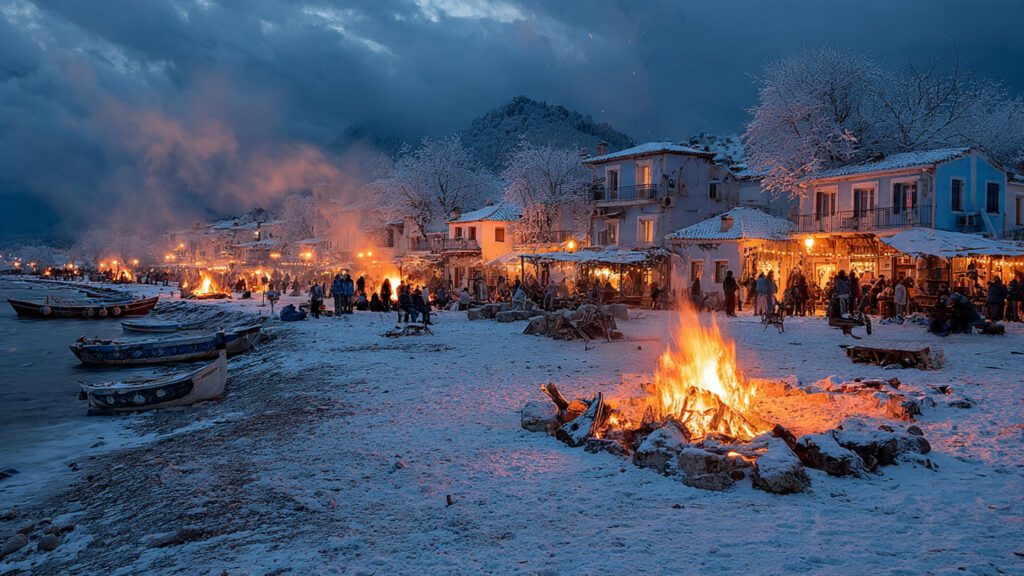
The Ragoutsaria of Kastoria in early January sends costumed revelers through the town in a procession whose elements, the animal masks, the cowbells, the house-to-house movement, and the central bonfires, are the elements that the ethnographic documentation of the northern Greek winter festival traditions most consistently identifies as the living descendants of the ancient Dionysian winter threshold tradition.
The Momogeroi of the Pontic tradition in Kozani and the surrounding region are the costumed figures, often dressed as warriors or tricksters, who travel from house to house performing their choreographed dramas beside bonfires. The fire of the Momogeroi is the fire of the protective tradition that understood the winter threshold as the threshold requiring the ritual attention of the community moving together through the darkness with light.
The Babougera of the Drama region, with its demonic and animalistic masks and its giant cowbells and its roaring bonfires that burn into the earliest hours of the morning, is the festival whose connection to the agricultural rebirth tradition gives it its particular character as the living expression of the understanding that the land must be actively awakened from its winter sleep by the ritual attention of the community that depends on it.
These are not tourist spectacles. They are the community rituals whose performance during the winter period is the community’s engagement with the cosmological condition of that period. The animal masks encode the understanding that the winter threshold is the period when the boundary between the human and the non-human is at its most permeable, when the creatures and forces that occupy the boundary zones between the organized human world and the wild beyond it are at their most present. The cowbells drive the creatures away with noise. The fire marks the protected space. The house-to-house procession extends the protection across the entire community rather than leaving individual households to manage the twelve days alone.

The Kallikantzaroi tradition and the northern Greek mask festival traditions are two expressions of the same cosmological understanding. Both encode the understanding that the winter threshold is the period of maximum permeability between the organized world and what lies beneath and beyond it, and that the ritual attention of the community is the technology that navigates this permeability without losing the organized world to the forces that the permeability releases.
Epiphany and the Sealing of the World
On January sixth the priest blessed the waters and the Kallikantzaroi were driven back below.
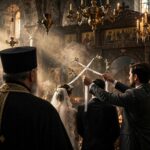
The ritual of the Blessing of the Waters is the ritual whose performance seals the cosmic boundary that the Dodekaimero had left permeable. The holy water whose first drops touch the ground are the substance whose sacred character, produced by the ritual performed by the ordained authority of the Orthodox Christian tradition, restores the boundary between the surface world and the underground world that the twelve days had opened.
The Kallikantzaroi return below to find the World Tree completely regenerated. The tree they spent eleven months sawing, the axis whose destruction would have ended the organized world, has healed completely in the time they spent on the surface. The sawing begins again. The cycle is restored. The organized world continues for another year.

The theological content of this restoration is the content that the collection’s Moirai article develops through the governing claim about the relationship between the organized divine world and the framework that the organized divine world depends on and cannot override. The World Tree is the material form of the framework whose maintenance is the condition of the organized world’s existence. The Kallikantzaroi’s annual near-success and annual failure and annual restoration is the cyclical demonstration that the framework is permanent and that the forces that threaten it are persistent but not ultimately capable of destroying it.
The world almost ends every year. Every year it is saved. The fire holds through the twelve nights. The colander occupies the creatures until dawn. The priest blesses the waters. The tree heals.
The organized world continues because the practices whose performance maintains the conditions of the organized world’s existence are performed. Not because the threat is not real. Not because the Kallikantzaroi are not persistent. Because the fire is kept lit and the ritual is performed and the community navigates the permeability of the twelve days with the attention that the tradition knows the twelve days require.
This is the oldest Greek fear: not the fear of the monster that can be fought and defeated but the fear of the foundation giving way beneath the world that is built on it. And this is the oldest Greek response to that fear: the fire, the ritual, the community moving together through the darkness, and the knowledge that the tree will heal if the practices are maintained until the moment when the blessing seals the boundary and the year can begin again.
At Olympus Estate, Cultural Chronicles traces the practices and institutions that defined Greek civilization from the inside. The Kallikantzaroi spend eleven months sawing at the roots of the World Tree. By late December the tree is close to falling. Then Christmas arrives and the tree heals and the frustrated creatures surge to the surface. The chimney is the vulnerability of the sealed domestic space. The hearth fire is Hestia maintaining the domestic order against the twelve days’ turbulence. The colander’s holes occupy the creatures until dawn because they cannot stop counting. The priest blesses the waters on January sixth and the Kallikantzaroi return below to find the tree completely regenerated. The sawing begins again. The world almost ends every year. Every year it is saved. Because the fire is kept lit and the ritual is performed and the community navigates the twelve days with the attention that the tradition knows the twelve days require.