





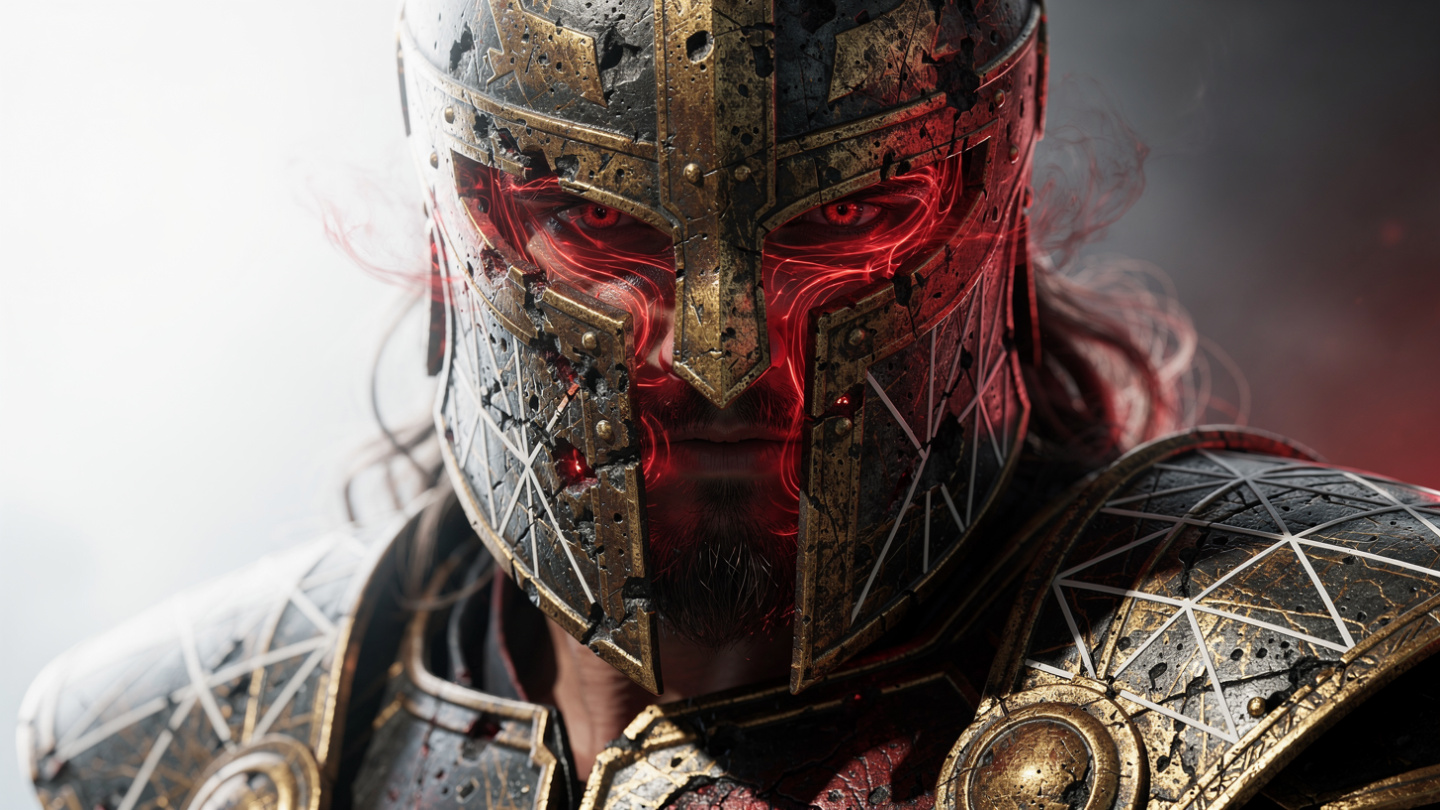
No Greek city built Ares a great temple.
This is the fact that most completely expresses what Ares was in the Greek religious heritage: the god who received cult and sacrifice and occasional invocation but who did not receive the sustained institutional devotion that the building of a major temple represented. Athens built the Parthenon for Athena. Delphi was Apollo’s. The Heraia at Olympia was Hera’s. Poseidon had Sounion. Zeus himself had Mount Lykaion, an Arcadian altar older than any of these temples by a thousand years or more. Even Hephaestus, the lame craftsman god who was humiliated in the most public episode of divine scandal in the Homeric heritage, had a well-preserved temple in the Athenian agora that still stands.
Ares received the Areopagus, the hill of Ares, in Athens, named for him as the site where the divine court that Athena established to try Orestes for matricide held its deliberations. The naming was appropriate in a way: the Areopagus was the court that adjudicated homicide cases, which placed Ares at the center of the Athenian civic heritage’s engagement with the most extreme consequence of the force he represented, but at the center of a court designed to regulate and adjudicate that consequence rather than to celebrate it. Ares was in the Athenian civic life as the force that the institutions of the polis existed to contain, which is precisely the position that the Homeric heritage had given him in the divine world.
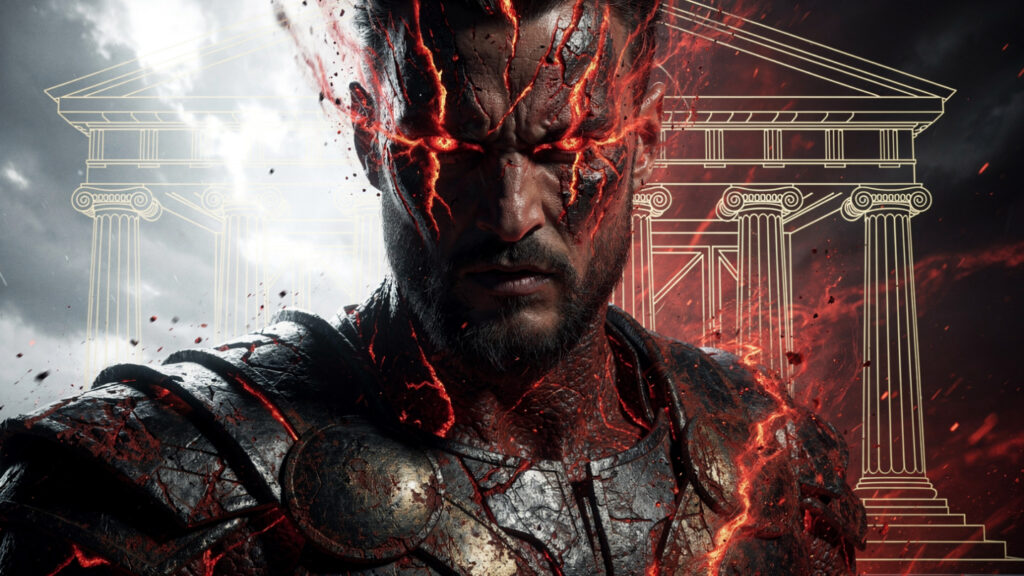
In the Iliad, Zeus calls his son the most hateful of all the gods who hold Olympus. The god’s own father, the king of the Olympians, expresses open contempt for the divine principle that Ares embodied. This is not the conventional divine family friction of the Olympian tradition, in which gods quarrel over issues and temporary alliances. It is Zeus’s considered theological position about what Ares represented: the undirected violence that had no function in the organized world except to damage it, the war that was not in the service of any justice or any order but simply in the service of more war.
What Ares Was Not
Understanding Ares requires first understanding the distinction that the Greek heritage maintained with unusual care between the two divine principles of war, because the conflation of Ares with Athena’s domain of strategic military excellence was the confusion that the Greek heritage spent considerable mythological energy preventing.

Athena was the goddess of the organized, strategic, purpose-directed military activity that the polis engaged in when it went to war in defense of its interests or its allies: the war of the Trojan expedition, which had a political justification and a strategic objective, was the war that Athena supported and participated in on the Greek side. The tactics that the commanders employed, the stratagems that the Odyssey’s Odysseus developed and that the Iliad’s heroes deployed, the training and discipline and the organized coordination of forces that made one army superior to another: all of this belonged to Athena’s domain.
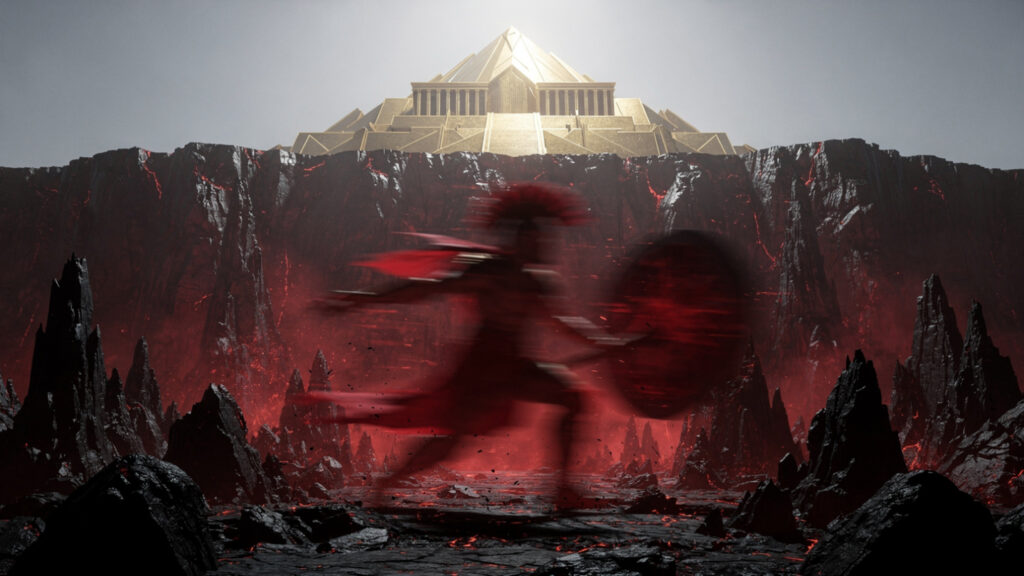
Ares was the war that could not be justified or directed or organized: the violence for its own sake, the battle rage that made the fighter lose the distinction between the purpose of the fight and the fighting itself, the madness of combat that the ancient tradition consistently distinguished from the strategic and political contexts within which combat occurred. Ares on the battlefield was the battle when it had exceeded any purpose that started it, when the violence was feeding itself rather than serving the goal that had brought the armies into contact.
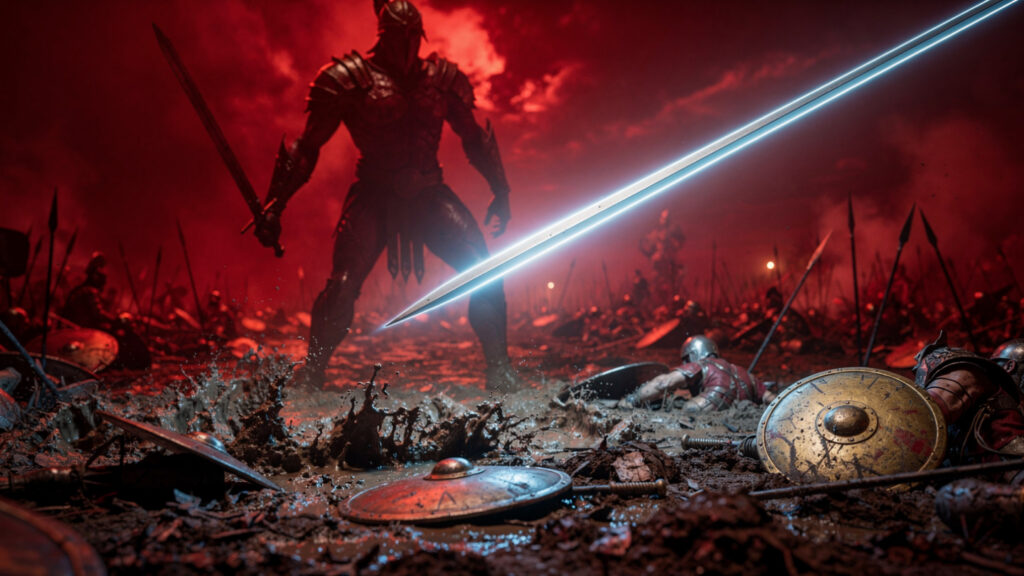
The Homeric heritage documented this distinction through the contrast between the two war deities’ relationships with the war’s outcome: Athena supported the Greek cause and contributed to tactical successes because she was oriented toward the war’s purpose. Ares supported the Trojans for most of the Iliad‘s fighting not because he had a considered position on the justice of the Trojan cause but because the Trojans happened to be fighting more ferociously at the moment he joined them, and he switched sides in earlier mythological heritage without evident principle. The divine principle of undirected violence has no permanent alliance with any cause because it has no interest in causes: it is interested in violence.
The Thracian Dimension
The ancient heritage’s consistent association of Ares with Thrace, the region to the north and northeast of mainland Greece that bordered the Black Sea and that the Greek world of the classical period regarded as the paradigmatic barbarian territory, is the geographical encoding of the theological distinction that the Greek heritage maintained between its own military culture and what it understood as the military culture of the non-Greek world.
Sophocles’ attribution of Ares’ origins to Thrace, the homeland of warriors whose ferocity the Greek heritage consistently contrasted with the organized military discipline of the polis, was not simply geographical information about the cult’s origin. It was the theological argument that the principle of undirected violence that Ares represented was foreign to the Greek ideal of the organized city-state, that it belonged to the world outside the polis’s order rather than to the world within it.
This is the sense in which Ares’ rejection by Zeus and by the Olympian heritage more broadly was not merely the personal preference of a father for some sons over others but a theological position about what kind of divine principle could be integrated into the organized cosmos that the Olympian administration maintained and what kind could not. Athena’s war, the purposive strategic engagement in the service of political objectives, belonged in Olympus. Ares’ war, the violence that had no purpose beyond itself, was tolerated on the Olympian fringe but never welcomed into the center.

The Mycenaean evidence for Enyalius, a war deity whose characteristics were later absorbed into the Ares heritage, is the archaeological-linguistic proof of the deep roots of the war deity in the Greek heritage before the Olympian mythology gave him his Ares-shaped form. The name Enyalius appears in the Linear B tablets as a divine name receiving offerings alongside Ares, which suggests that in the Mycenaean period the two were distinct divine figures before the classical heritage absorbed Enyalius into Ares as an epithet rather than a separate deity.
The Iliad and the Wounded God
The Iliad is the text that most extensively develops the character of Ares as the god of undirected violence and that most directly dramatizes the theological argument that this kind of divine principle loses when it encounters the purposive and organized force that Athena represents.
Ares is wounded twice in the Iliad: once by the mortal hero Diomedes in Book V, where Athena guides Diomedes’ spear to find its mark in Ares’ flesh, and once by Athena herself, who strikes him with a stone when he attacks her in Book XXI. Both woundings are the same theological argument in narrative form: the undirected violence of Ares is vulnerable to the directed force of Athena because directed force has a purpose and undirected violence does not, and the goal-oriented attack that is aimed at a target is more effective than the expansive rage that is aimed at everything in general.
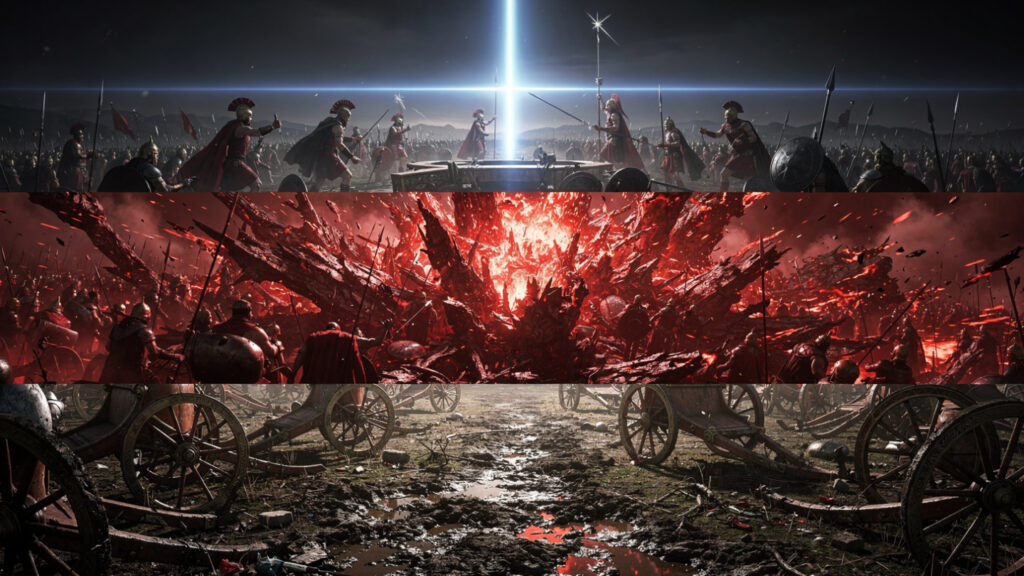
The wound that Ares receives and the cry of pain that he produces, which Homer describes as the cry of nine or ten thousand warriors simultaneously, is the epic tradition’s most concentrated statement about the difference between the human-scale violence that the poem’s mortal warriors engage in and the divine-scale violence that Ares embodies: the god of war wounded by a mortal hero guided by Athena is the god of undirected violence defeated by the combination of mortal courage and divine strategy, which is the combination that the Iliad consistently presents as superior to the brute force that Ares represents.
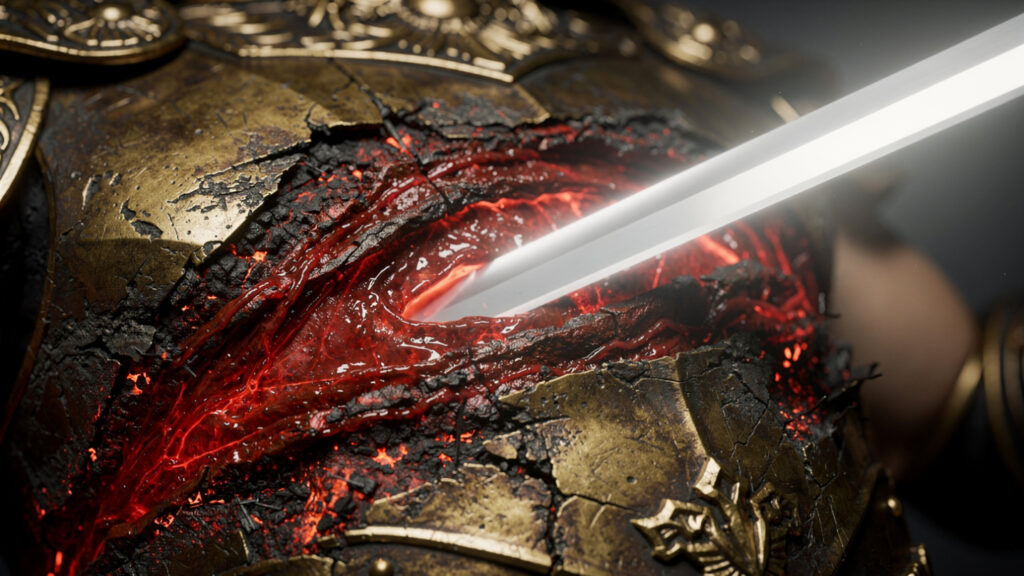
The flight to Olympus and the complaint to Zeus that follows the wounding is the episode that contains Zeus’s explicit statement of contempt for his son: you shape-shifting, inconsistent god, do not come whining to me, you who are most hateful of all the gods on Olympus. The content of the contempt is worth attending to: shape-shifting and inconsistent are the qualities Zeus attributes to Ares, which are the qualities that the god of undirected violence necessarily has. Ares has no stable character because undirected violence has no stable character: it takes whatever form the current fighting requires and changes direction with the current fighting’s own changes.
Ares and Aphrodite
The myth of the affair between Ares and Aphrodite, told in its most complete form in Book VIII of the Odyssey by the blind bard Demodocus at the Phaeacian court, is the Homeric tradition’s most sustained treatment of the paradoxical relationship between the divine principles of war and love, and it is a comedy rather than a tragedy: the story ends with the gods laughing at Hephaestus’s net and at Ares’ humiliation, which is the comic register appropriate to the divine scandal rather than the tragic register that the relationship’s apparent seriousness might suggest.

The theology of the pairing is the theology of the most extreme poles of the divine spectrum: Ares as the principle of destructive separation, the force that tears apart what has been connected, and Aphrodite as the principle of creative connection, the force that brings together what has been separate. Their attraction to each other is the attraction of complementary extremes, the way that the forces most opposite to each other in a system exert the strongest mutual pull precisely because each represents what the other lacks.
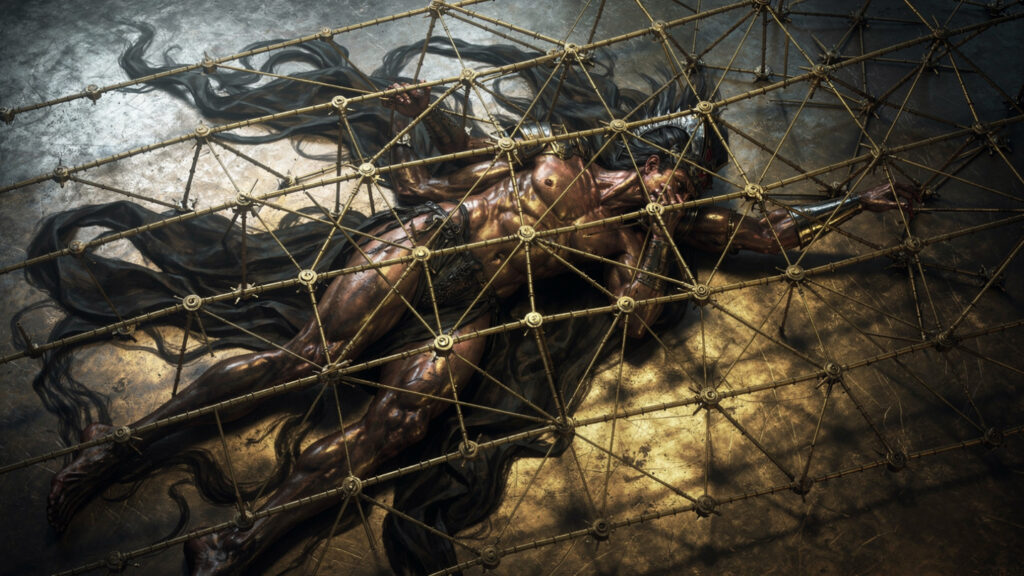
Their children encode the consequences of the union between these two extremes: Phobos and Deimos, Fear and Terror, are the emotional states that war produces in the person who encounters it against their will, the affect of combat when it is experienced as something done to you rather than something you are doing. Eros, the god of desire, is the force of attraction that transcends the rational and the purposive in the same way that Ares’ violence transcends the rational and the purposive. Harmonia, the goddess of harmony and the wife of Cadmus and the ancestor of the Theban royal house, is the claim that the union of war and love can produce something that is neither: the harmony that results when the two most extreme forces in the divine system are brought into direct contact.
Hephaestus’s net is the craftsman god’s revenge: not violence, because Hephaestus cannot compete with Ares physically, but the technology of the trap, the intellectual creation that immobilizes the physical force without engaging it on its own terms. The divine laughter that follows the revelation of the trapped couple is the laughter of the other Olympians at the exposure of the divine scandal, but it is also the laughter of the tradition at the image of the god of war immobilized by craft and skill and unable to fight his way free from a net.
Ares and Mars | Two Different Theologies
The Roman adoption of Ares as Mars was the adoption of the divine name and the divine domain, but not of the theological position that the Greek heritage had developed about what the god of war was and what his relationship to the divine order was.
Mars in the Roman heritage was not the hateful, rejected, undirected violence of Ares in the Greek heritage. Mars was the father of Romulus, the divine ancestor of the Roman people, the divine patron of the legionary culture that the Roman world built its power on, the god whose month of March opened the military campaign season. The Roman Mars was the war that the organized state engaged in purposively and disciplinedly in the service of Roman expansion and Roman order: closer to Athena’s domain in the Greek heritage than to Ares’.

The divergence between the Greek and Roman heritages on the character of the war god reflects the divergence between their cultures’ self-understanding of military practice: the Greek polis heritage, with its citizen-soldier hoplite armies engaging in wars of limited duration and objective, had no institutional basis for the sustained professional military culture that the Roman legionary system represented, and the religious expression of that difference was the contrast between the rejected, undirected Ares and the honored, purposive Mars.
The theological rejection of Ares in the Greek heritage was not a rejection of war itself. It was an insistence on the distinction between purposive organized conflict and raw undirected violence, encoded in the divine genealogy and the divine relationships that the Olympian world maintained around the war deity.
The Necessity of the Unloved God
Zeus called Ares the most hateful of the gods on Olympus and wished he had never been born, and the tradition preserved this divine contempt as a feature of the Olympian order rather than as a temporary conflict to be eventually resolved.
The reason that Ares could not be expelled from Olympus despite the contempt that Zeus and the tradition expressed for him was the reason that Zeus himself names in the passage: he was his own flesh and blood. The biological relationship that prevented Zeus from throwing Ares into Tartarus with the Titans was the mythological encoding of the fact that the divine principle of undirected violence could not be permanently expelled from the cosmos without the cosmos losing something essential about what it was.
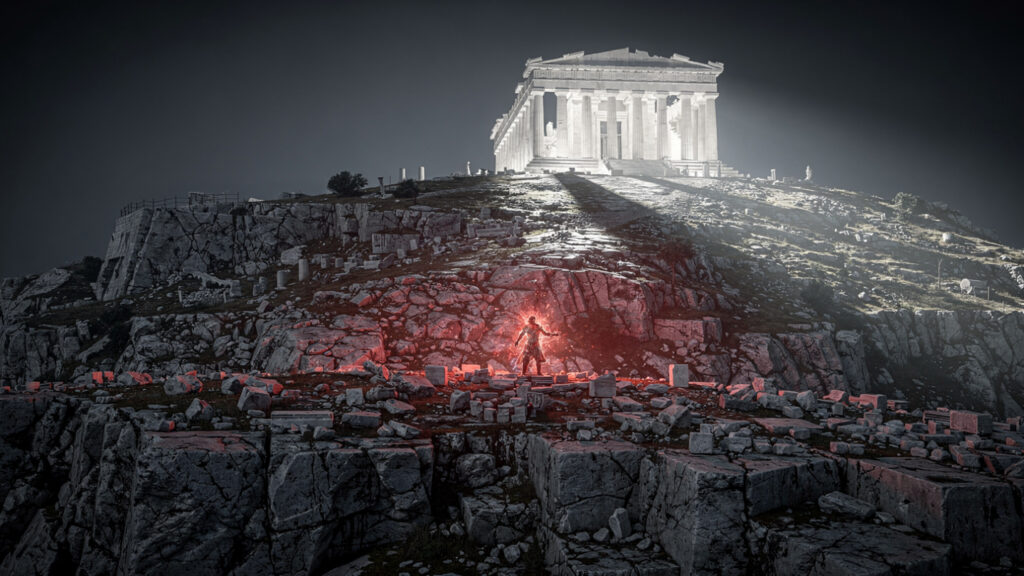
The world without Ares would be the world in which all conflict was purposive and directed and organized: the world of Athena’s war exclusively. But the tradition understood that this was not the world that existed, that the world that existed contained both the organized purposive conflict and the undirected violence that exceeded any purpose and continued after every purpose had been achieved, and that the divine order had to contain both even if it preferred one to the other.
Ares in the Areopagus, the court that adjudicated homicide, was Ares domesticated into the civic order as the force that the civic order existed to manage: the hill named for him was the hill where the community assembled to pass judgment on the violence that the community’s own members had committed, to impose the organized and purposive response of the legal institution on the undirected violence that Ares embodied.

The most hateful of the gods on Olympus was the god whose presence reminded the Olympian order, and the human order that the Olympian mythology organized, that the violence which exceeded any purpose was not a failure of the system to function correctly but a feature of what the world was: always present, always requiring management, never finally expelled.
At Olympus Estate, Mythic Essays moves through the deeper currents of the Greek tradition. Zeus called his own son the most hateful of the gods and wished he had never been born, and still could not expel him from Olympus because the world that would not contain him would not be this world. The hill of Ares in Athens was named for the god and used as a court for judging homicide: the best the civilization could do was to name the place for the force and then devote the place to containing it. It was enough. It had to be.