



The most politically consequential decision in the history of the Olympian order was not a war or a judgment or a punishment. It was a marriage.
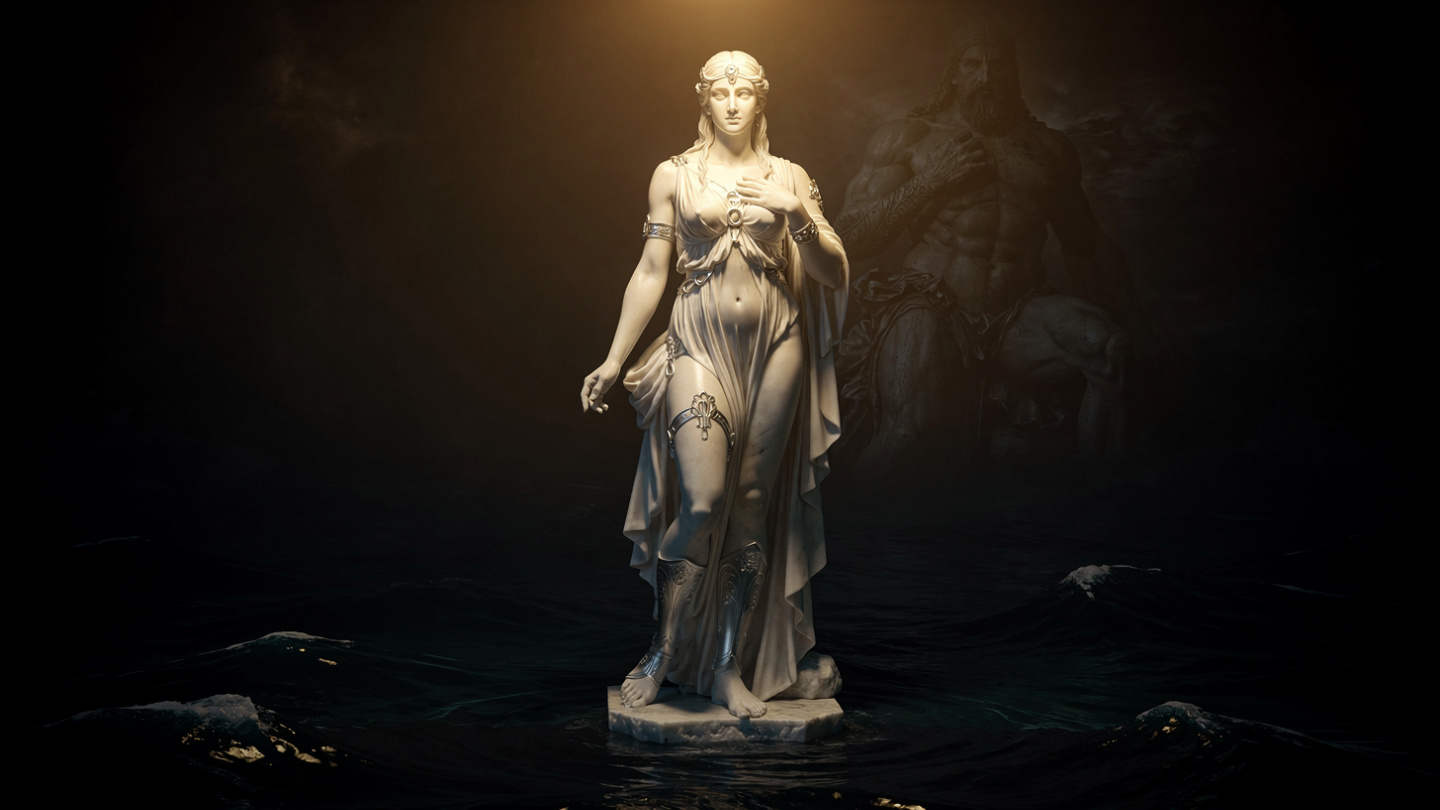
Zeus and Poseidon had both pursued Thetis. She was the daughter of Nereus, the Old Man of the Sea, and the Oceanid Doris, granddaughter of Oceanus the world-stream, and the most honored of all the Nereids, the fifty daughters of Nereus who moved through the deep water attending to the sea’s oldest divine business. Homer calls her silver-footed, an epithet whose quality of light moving through deep water gave her a particular luminescence unlike any other sea deity’s. Both sons of Kronos had wanted her, which was itself the measure of her standing: the two supreme rulers of the Olympian order, sky and sea alike, had each pursued the most honored of the sea’s ancient daughters.
They stopped pursuing her because of a prophecy.
Every version preserves the prophecy’s content in the same essential form: the son born to Thetis was fated to surpass his father. The Greek word in most versions was kreitton, stronger or better or more powerful, and its application to a son’s relationship with his father named exactly the threat the Olympian order had been built to contain. Zeus had surpassed Kronos. Kronos had surpassed Ouranos. That sequence was the very thing the Olympian establishment of cosmic order had closed off, and a prophecy that Thetis’s son would repeat it threatened nothing less than the end of the Olympian age.
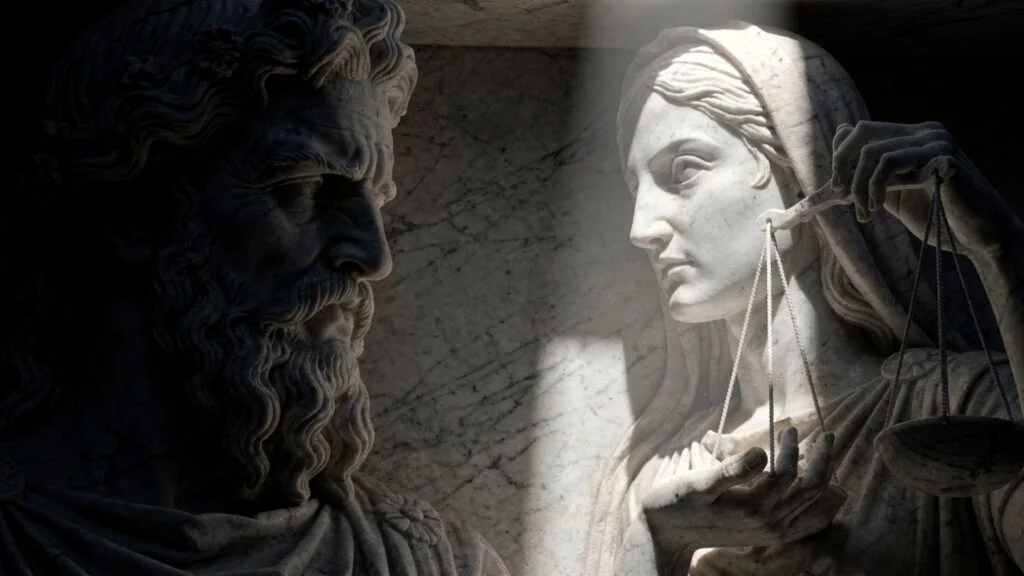
Themis, goddess of divine law and mother of the Moirai in the Hesiodic account the Moirai article in this collection develops, gave Zeus and Poseidon the warning. That article develops Themis as the prior condition the whole organized divine world operated inside, the divine law that preceded even Zeus’s own authority and that his wisdom consisted precisely in recognizing and honoring. Warning Zeus and Poseidon about the prophecy was Themis performing exactly the function her domain required: making the conditions of cosmic order legible to the very beings whose governance of it depended on understanding them.
Zeus withdrew from the pursuit. He arranged for Thetis to marry Peleus instead.
The Logic of the Marriage
The forced marriage of Thetis to Peleus was never a punishment in the sense of a penalty for some transgression. It was a structural solution to a genuinely cosmological problem, and the surviving accounts preserve its logic with real philosophical precision.
The problem was this: a son of Thetis and any divine father would be a being whose power exceeded that father’s, and since every divine father in the Olympian order operated within the authority Zeus himself governed, the chain of the prophecy’s own logic meant such a son would ultimately exceed Zeus. The prophecy never said a son of Thetis would surpass Zeus specifically. It said he would surpass his father, whoever that father was, and the recursive implication followed on its own: a divine son surpassing a divine father would destabilize whatever position in the hierarchy that father occupied, and with it the whole hierarchy Zeus governed.
The solution followed the same logic the Moirai article develops as governing Zeus’s whole relationship to necessity: divine authority that actually understands the conditions it operates within makes the choices that preserve those conditions, rather than the choices that satisfy an immediate desire at the cost of destroying them. Zeus desired Thetis. The desire was real. Withdrawing from the pursuit was the act of recognizing that satisfying it would produce exactly the outcome the prophecy named, an outcome that would destroy the very order Zeus was trying to protect.
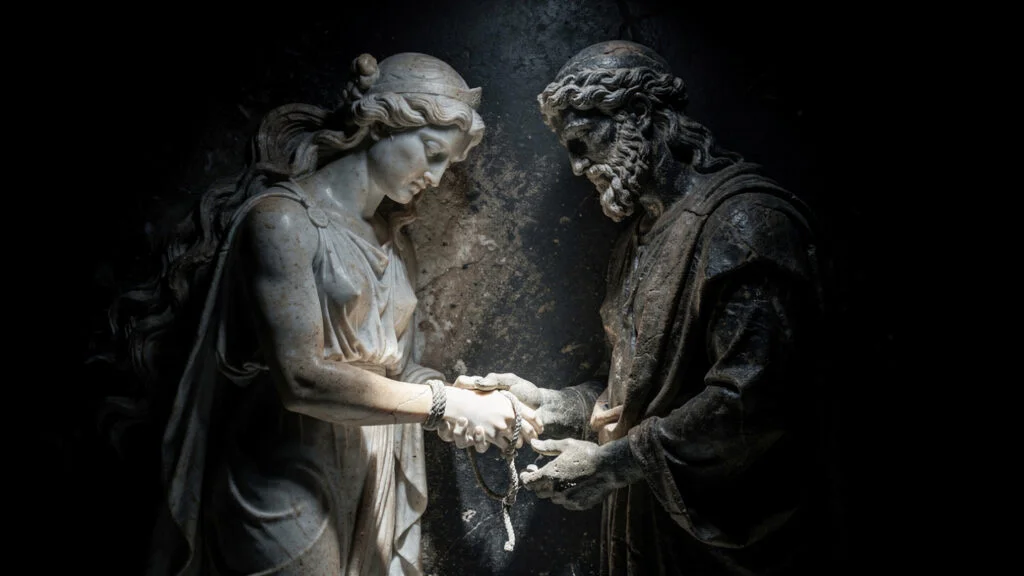
The marriage to Peleus was the structural fix: if Thetis’s son would surpass his father, and the father was mortal, then what he surpassed was simply the ordinary limits of mortal capacity, and what he was measured against was mortal death rather than divine authority. The greatest mortal hero the world would ever see was a being whose excellence exceeded the human norm, not a being who threatened the divine order at all.
This is the cosmological bargain the Thetis myth actually encodes: her divine nature and lineage were the true sources of her son’s potential power, and marrying her to Peleus was the mechanism that redirected that power toward mortal heroic excellence rather than toward yet another repetition of the sequence in which each new generation of divine beings overthrew the one before it.
The Olympian order survived because the most honored of the Nereids was married off to a mortal king of the Myrmidons.
The Wedding on Mount Pelion
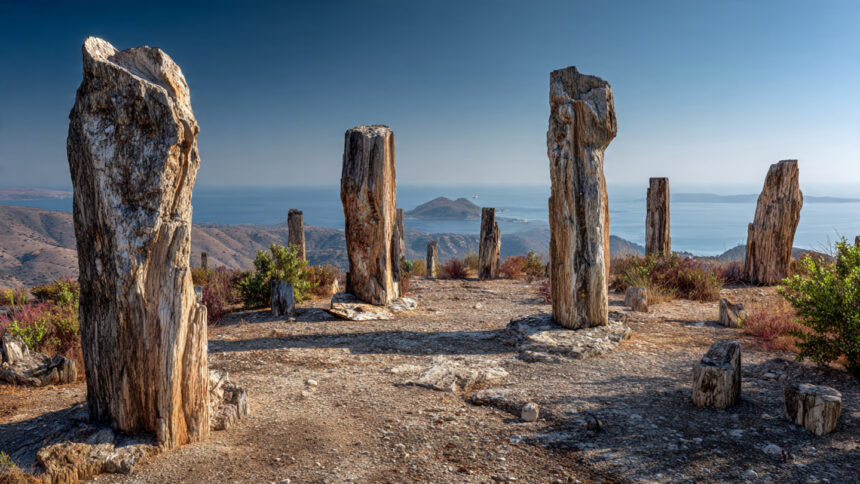
The wedding of Thetis and Peleus was the last occasion in Greek mythology when the full company of gods and mortals occupied the same celebration at once: the Olympians, the elder divine beings, and mortal guests together on the slopes of Mount Pelion, the mountain the Makrinitsa article in this collection develops as Chiron’s home and the training ground of Greek heroism.
The wedding was a genuine threshold moment: an occasion that celebrated the prophecy’s forced resolution while already containing, inside it, the seed of the catastrophe the Iliad would go on to trace. The apple of Eris, thrown among the gods at the wedding feast, produced the judgment of Paris, which produced the abduction of Helen, which produced the Trojan War, which was, in the end, the occasion of Achilles’s death. The wedding arranged specifically to prevent the cosmic catastrophe of an all-powerful son produced, instead, the chain of events that killed the mortal son the marriage had made possible in the first place.
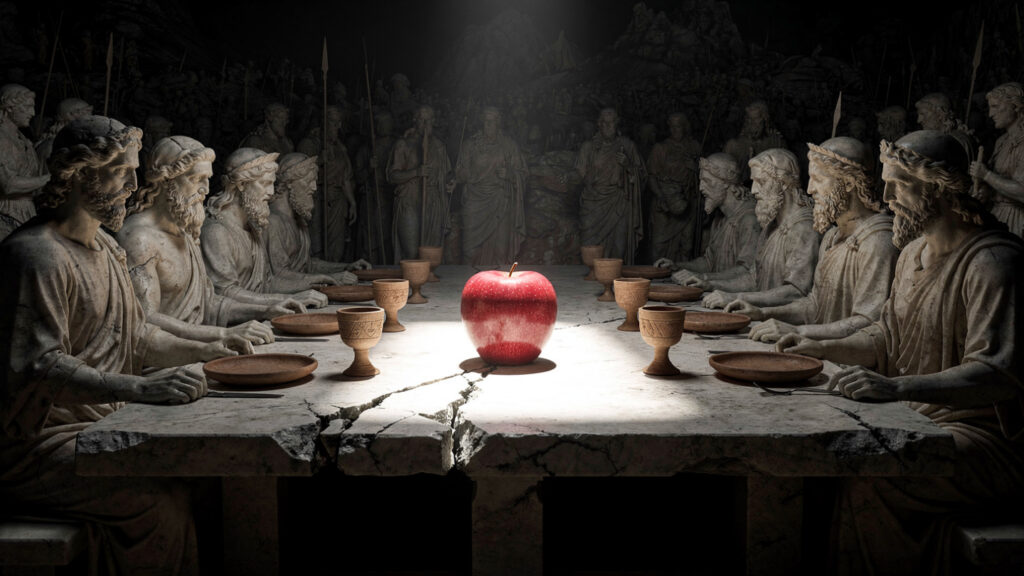
The uninvited guest was Eris, goddess of strife, and her role was never simply the villain’s cameo later retellings have reduced her to. She was the divine being whose domain was exactly the discord an organized world needs to avoid the stagnation of a problem too perfectly resolved. The Olympian order the Thetis marriage had just preserved was the same order Eris’s apple immediately began complicating: the hierarchy had been saved, and the saved hierarchy went straight to work producing the very consequences Greek heroic storytelling existed to explore.
Chiron was at the wedding too, and his presence tied the occasion directly to the pedagogical world the Makrinitsa article develops: Achilles would later be entrusted to Chiron’s instruction on the very mountain where his parents’ wedding had taken place. The centaur whose domain was training heroes in medicine, music, hunting, and ethics was, at this wedding, simply a guest, not yet knowing he would become the trainer of the hero whose birth the marriage had been arranged to produce.
The Iliad’s Thetis
The Thetis of the Iliad has no real parallel anywhere else in Greek heroic literature: she is the immortal mother of a mortal hero, inside a poem whose entire subject is the encounter between the mortal condition and the human excellence built to answer it.
The theological paradox Thetis embodies in the Iliad is stated plainly in her own grief: she is immortal, and her son is dying. Her grief is not the grief of an ordinary bereaved parent who will eventually die and rejoin the dead child in the underworld. It is the grief of a being who knows her son is dying, knows she will not die herself, and knows that the sheer permanence of her existence means permanently experiencing his absence. The Iliad’s Thetis will remember Achilles forever.
She says as much herself in Book One, in the single most concentrated statement of the theological problem her existence poses: she is the only Nereid whose marriage was to a mortal, her mortal husband ages while she never will, her son was given a choice between two fates and chose the short glorious life over the long obscure one, and she will live forever carrying full knowledge of what he chose and exactly what it cost.
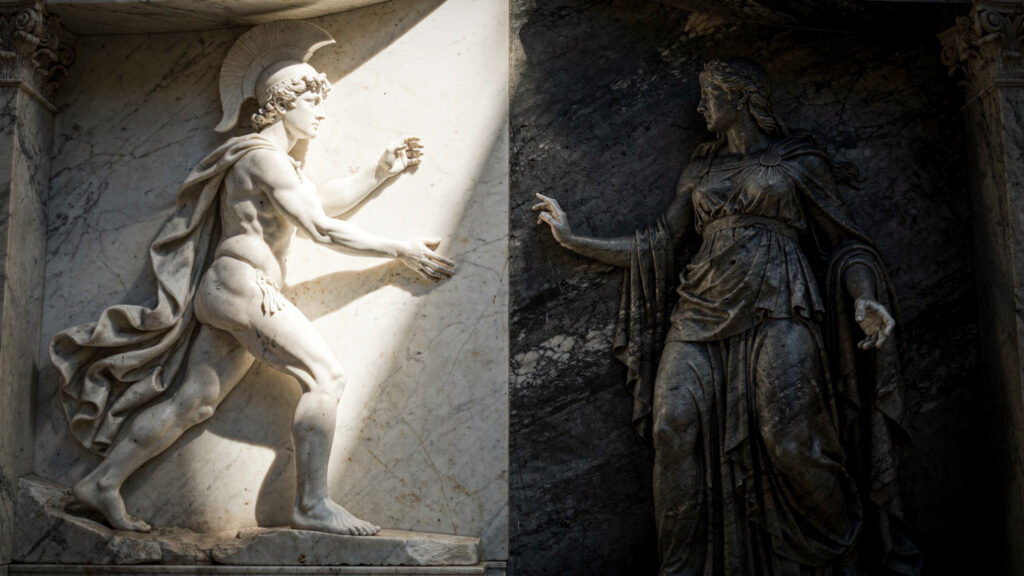
The Shield of Achilles article in this collection develops the scene in Book Eighteen where Thetis goes to Hephaestus to commission new armor after the original set is lost with Patroclus’s death. That visit is also the occasion on which Hephaestus repays what Thetis once did for him, when Hera threw him from Olympus and Thetis herself caught him in the sea: the god of the forge, maker of the most beautiful and powerful objects anywhere in Greek myth, is the very god Thetis rescued and sheltered for nine years while he learned his craft, and it is his gratitude for that rescue, decades earlier, that produces the Shield.
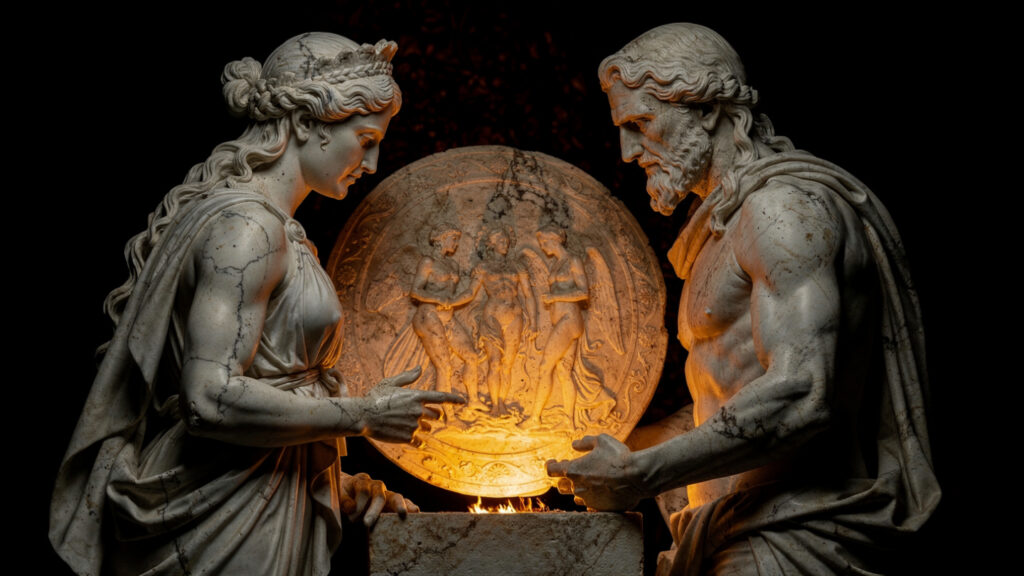
The Shield itself stands as the masterpiece of the whole epic tradition in how it handles the relationship between an individual human life and the cosmos containing it: two cities, the human world’s full range of activity from wedding to harvest to dance, all of it framed by the ocean stream running around the rim, all of it made in the narrow window between Patroclus’s death and Hector’s killing, all of it created by the fire-god at the request of the silver-footed goddess who still cannot prevent the very thing the shield is being made for.
The Briareus Episode and the Limit of Olympian Authority
Book One of the Iliad preserves the single most extraordinary statement of Thetis’s real authority anywhere in the organized divine world, and it is a statement most treatments of her character have consistently undervalued.
Thetis petitions Zeus to honor Achilles by giving the Trojans success until the Greeks finally recognize her son’s worth. Zeus hesitates, worried about Hera’s fury. Then Thetis produces the one reminder that gives her leverage over the king of the gods no other being in the poem possesses: she reminds him of the time she saved him.
The conspiracy had been Hera’s, with Poseidon and Athena as her co-conspirators. They had bound Zeus in chains while he slept, chains strong enough to hold the king of the gods immobile while the three of them debated how to redistribute his authority among themselves. Binding Zeus would have ended the Olympian order in its existing form entirely, not through the son overthrowing the father the prophecy had warned against, but through three of his own most powerful subordinates deciding his governance itself was the problem rather than the framework holding their own power in place.
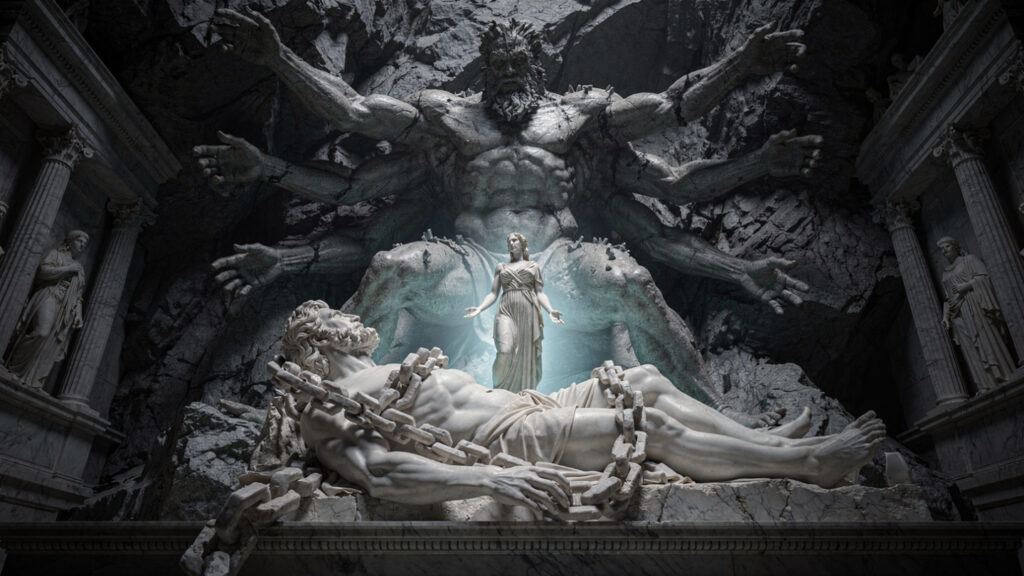
Thetis had gone to Briareus. He was one of the Hecatoncheires, the Hundred-Handed Ones, sons of Gaia and Ouranos who had been imprisoned in Tartaros during the Titan Wars and whom Zeus later freed to fight as his allies in the Titanomachy. Their power was the most archaic force available anywhere in the cosmos, not the organized divine authority Olympians wielded, but the raw geological and meteorological force of earth and sky at their most unconditional. Briareus, simply sitting beside Zeus, was enough to terrify the three conspirators into releasing him. They fled.
This episode supports the same claim the Moirai article develops elsewhere: Thetis had access to a force older and greater than organized Olympian authority itself, and she used that access to preserve the Olympian hierarchy at the exact moment its own members were trying to dismantle it. She saved Zeus not by being stronger than Hera, Poseidon, and Athena combined, but because she could summon something none of them could summon, and none of them could withstand.
This is exactly the quality of authority the forced marriage to Peleus was designed to contain without ever destroying: a goddess who could call on the Hundred-Handed was a goddess whose son by any divine father would have been the single most dangerous being in the cosmos, and redirecting that potential toward mortal heroic excellence was the structural solution the Olympian order actually needed to survive intact.
Zeus owed her.
The debt was never gratitude in the ordinary social sense. It was the debt owed for the one occasion on which the organized divine world had been preserved by an act only a being with access to older, deeper forces could have performed at all. Thetis preserved the Olympian order the same way the marriage itself had preserved it: both acts openly acknowledged that the order’s continued existence depended on managing forces it did not, itself, control.
Zeus nodded. He would help Achilles. Hera would be furious, and she would be entirely correct that Thetis had gained access to Zeus no other being in the poem possessed.
The Grief That Does Not End
Thetis’s grief in the Iliad exposes, more completely than anything else in Greek myth, the paradox at the heart of an immortal’s relationship to mortal death.
A mortal parent who grieves a dead child will themselves die, and the grief has a duration bounded by that mortality. An immortal parent who grieves a dead child will never die, and the grief has no natural process left to bring it to an end. Thetis will be silver-footed, will move through the deep water, and will remember Achilles for as long as the cosmos holds its current form, which in mythological terms is indefinitely.
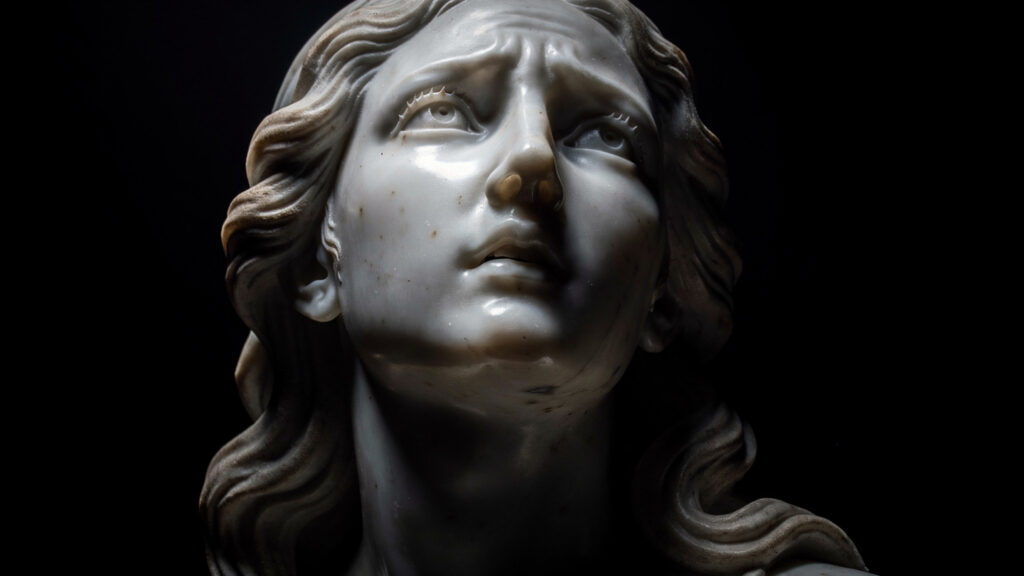
This is the cost the forced marriage to Peleus imposed on Thetis, one not always made fully explicit: not simply the insult of a marriage beneath her divine station, and not simply the loss of the divine future a son with a divine father would have represented, but the cost of an immortal consciousness that would go on carrying the loss forever.
The mortal Peleus would grow old, die, and join whatever version of the underworld the tradition assigns him. The mortal Achilles would die young, in the glory the Shield of Achilles article develops as the heroic choice of the short radiant life over the long obscure one. The divine Thetis would remain, carrying the full memory of both, and the knowledge that she had known from the very beginning what was coming and had never been able to prevent it.
The story of Thetis dipping the infant Achilles in the Styx, whose correct literary source is Statius’s Achilleid rather than Homer, as the Styx article in this collection correctly identifies, was the attempt to circumvent exactly the outcome the prophecy had already determined. The dipping made his body invulnerable everywhere except the heel. The mechanics of that one vulnerability, the exact point where her own hand held him and the water never touched, carry the story’s real tragic irony: the place a mother held her child most tightly was the one place her protection failed completely.
The arrow that killed Achilles struck the heel.
What Later Sources Did With Thetis
Thetis’s role across the mythological record after Homer follows a trajectory of forced diminishment, a political consequence of how the Olympian order managed the very problem she represented.
The Homeric Thetis is the figure who saved Zeus, commissioned the Shield, and whose reminder to Zeus about Briareus rests on the foundation of a genuine debt rather than a favor performed for a superior. Later sources consistently narrow this figure down toward the grieving mother at the shore, a character defined almost entirely by her relationship to Achilles’s death rather than by the authority and access to older forces that had once made the Olympians themselves afraid of her.
This narrowing answers the same structural problem the marriage to Peleus had already answered on the cosmological level: Thetis was too powerful to leave fully visible without inviting an obvious question, why was the most powerful of the Nereids weeping on a beach while her son died, instead of using the same access to Briareus that had once saved Zeus to stop what was happening to Achilles?
The answer the tradition can never quite state outright is the one the Moirai article’s central claim already supplies: Achilles’s thread had been spun and measured, and Atropos, who cannot be turned, had already cut it. Thetis’s access to the Hundred-Handed was access to a force operating within the same framework of necessity the Moirai themselves governed. She could summon Briareus to terrify mortals or gods attempting to override the conditions of their own authority. She could not summon him to override the Moirai, because the Moirai were never part of the Olympian hierarchy to begin with. They were the conditions the Olympian hierarchy itself operated inside.
Thetis knew this. She had known it from the beginning. Her grief without end belongs to a being who knew exactly what was coming, tried everything available to her, understood precisely why none of it was enough, and will remember all of it forever.
At Olympus Estate, Mythic Essays moves through the deeper currents of the Greek tradition. Zeus abandoned Thetis because the son born to her would be greater than his father, and Zeus had risen to power by being greater than his own father, and understood exactly what repeating that sequence would mean. The marriage to Peleus was the structural solution. At the wedding on Mount Pelion, Eris threw the apple that started the Trojan War. Thetis saved Zeus when Hera, Poseidon, and Athena bound him while he slept, by summoning Briareus from the deep. Zeus owed her a debt no other being in the Iliad could call on. She knew from the beginning that Achilles would die young. She tried the Styx. She held him by the heel. She commissioned the Shield. She will remember him forever. The Moirai cannot be turned. Thetis knew this too.