

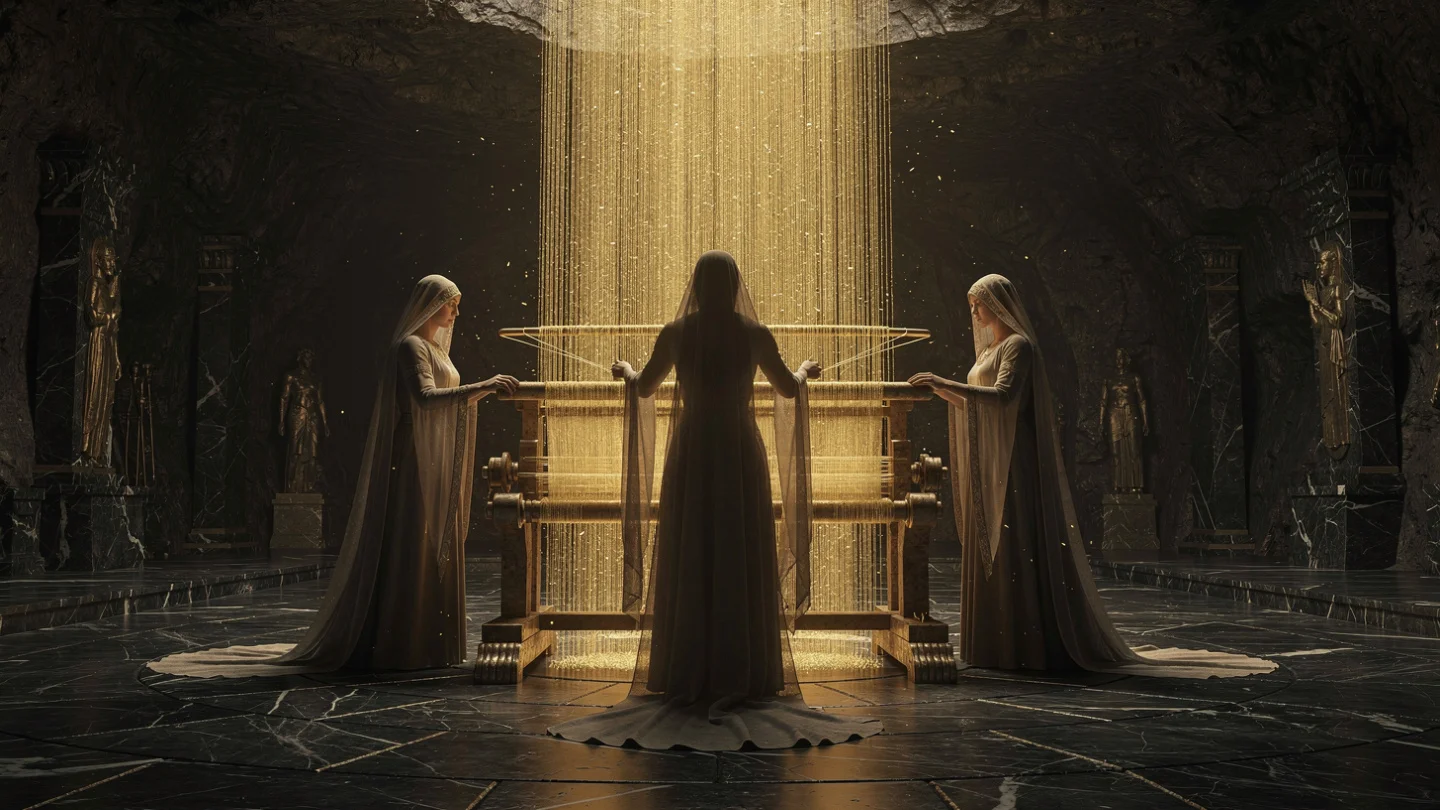
Consider what it means that Zeus feared three old women with a spindle.
Not feared in the way that powerful people fear rebellion or assassination: feared in the way that someone fears the ground they stand on. The fear of the Olympian king before the Moirai was not the fear of a superior force. It was the recognition of a prior condition: the acknowledgement that the authority he held existed within a framework that he had not created and could not override.
The Moirai, the three sisters who spun and measured and cut the thread of every mortal life, were not simply the goddesses of death in the Greek religious imagination. They were the embodiment of an idea that the Greek tradition spent centuries developing and that, once fully articulated, became one of the most consequential philosophical propositions the Western world inherited from antiquity: that even the most supreme power operates within a structure of necessity that precedes it, that the order of things is prior to the authority of anyone who governs within it, and that the honest acknowledgement of this fact is not weakness but wisdom.
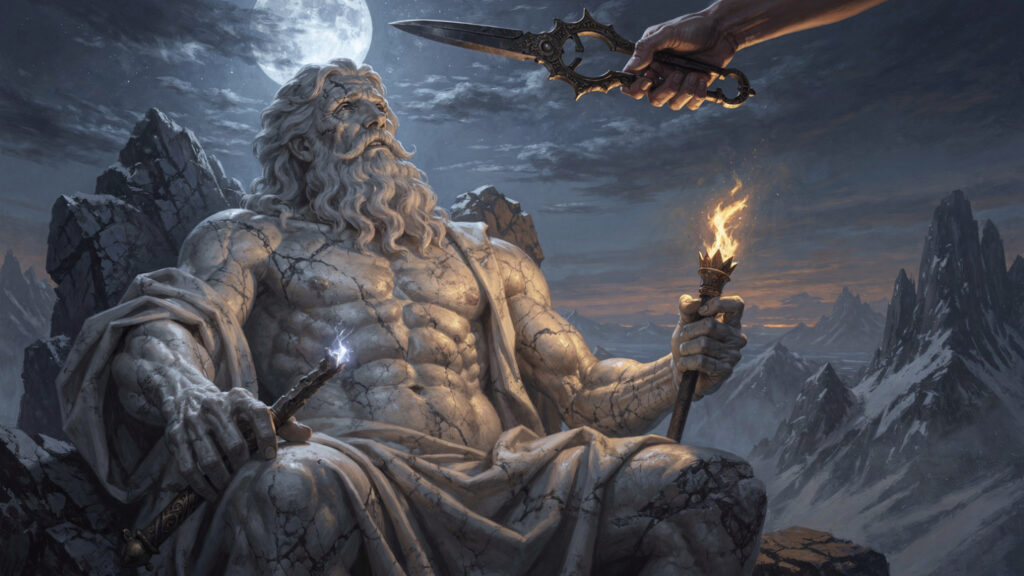
Every Greek tragedy is, at its deepest level, a meditation on this idea. Every time a king or a hero discovers that the destiny the Moirai assigned cannot be escaped by intelligence or strength or divine favour, the play is not simply telling you that death is inevitable. It is making a philosophical argument about the relationship between power and the conditions that make power possible.
The Moirai are not a story about death.
They are a story about order.
Who They Were | The Problem of Their Origin
The Moirai present the Greek tradition with an origin problem that is itself philosophically revealing.
Hesiod, in the Theogony, gives them two different genealogies in the same poem. In one passage, they are the daughters of Night alone, born without a father alongside Death and Sleep and Nemesis and Strife: primordial forces that emerged from the darkness before the structure of the divine world was established. In another passage, they are the daughters of Zeus and Themis, the goddess of divine law and order, born alongside the Seasons and the Hours.
This apparent contradiction is not an error in the text. It is the tradition’s honest account of a genuine theological tension.
If the Moirai are daughters of Night, older than the Olympians, born from the primordial darkness before Zeus existed, then their authority precedes and supersedes his. They are the conditions within which he operates. When he defers to their judgement, he is acknowledging the framework that preceded him.
If the Moirai are Zeus’s daughters, then they derive their authority from him, and the cosmic order they enforce is his order expressed through their function. When he defers to them, he is deferring to his own previous decisions made cosmic and permanent.
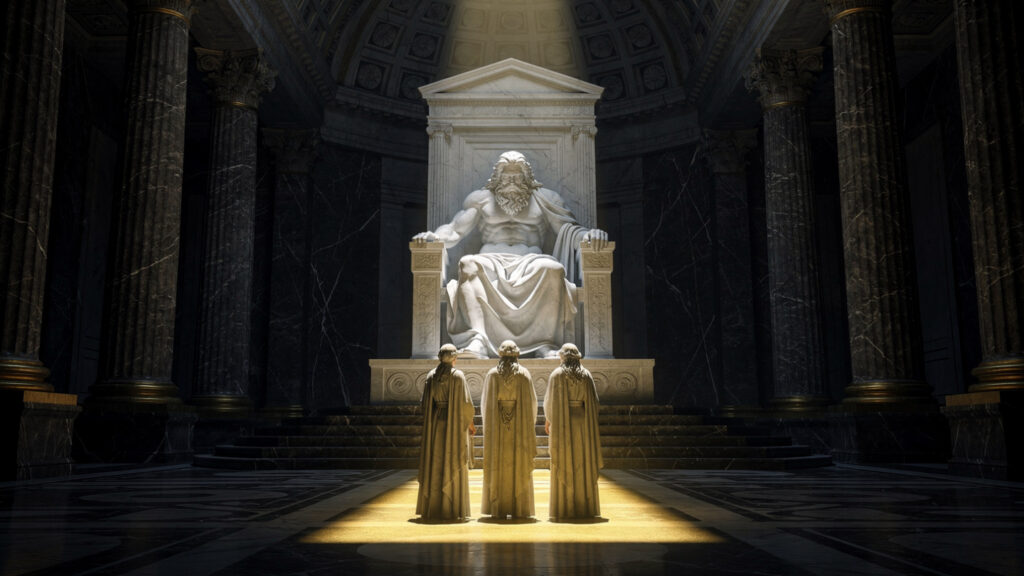
Both genealogies are doing theological work. The tradition needed the Moirai to be simultaneously subject to Zeus, because the Greeks required a coherent divine hierarchy, and prior to Zeus, because the Greeks required an account of necessity that even supreme power could not override. The two genealogies preserve the tension rather than resolving it, which is the tradition’s way of saying that the tension is real and that any resolution would falsify something true.
The most philosophically significant resolution, the one that Aeschylus develops in the Prometheus Bound and that the Stoics later systematised, is that Zeus’s wisdom consists precisely in his recognition of the Moirai’s authority: that a truly supreme intelligence does not override the structure of necessity but governs in accordance with it.
Clotho | The Thread Before the Life
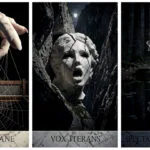
The first sister is Clotho, whose name means simply the spinner, from the verb to twist and wind.
She draws the thread from the raw material of possibility and sets it spinning. The moment she does this, a life has begun: not yet measured, not yet cut, but committed to being. Whatever the thread is made of, whatever combination of fortune and hardship has been drawn into its fibre from the undifferentiated mass of potential, that is now what this life is made of. It cannot be changed by adding different material at a later stage. The thread is what it is from the moment Clotho’s fingers first draw it out.
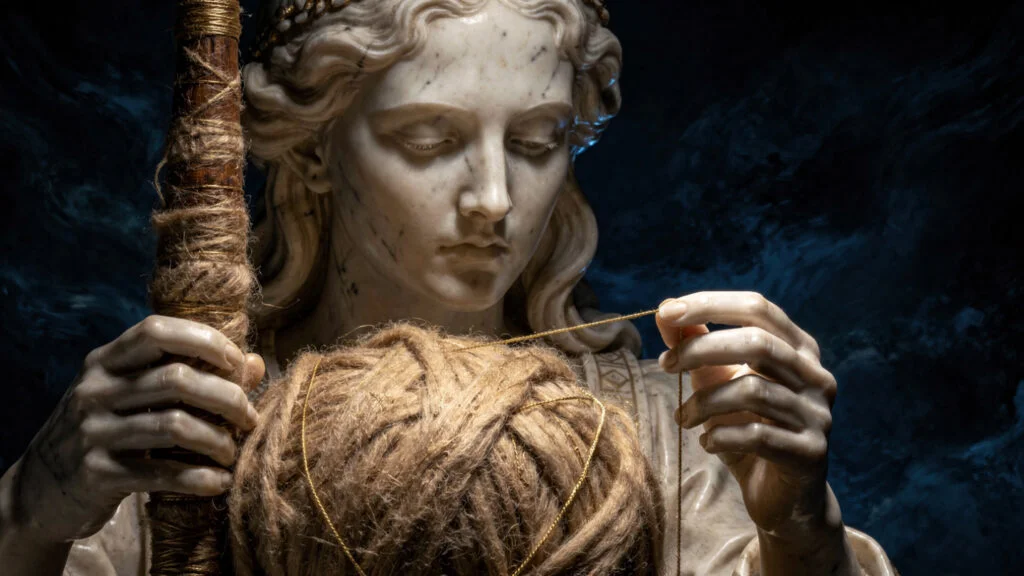
The theological precision of this image is considerable. Clotho is not making a decision about the content of a life in the way that a planner might make a decision. She is giving form to a possibility that was already latent in the material she is working with. The spinning does not create the life from nothing. It draws out what was there in potential and commits it to actuality.
This is why the Greeks depicted Clotho sometimes as spinning and sometimes as holding the distaff without moving: the act of drawing out the thread and the prior condition of the unspun material being already everything the thread will be are the same moment extended through time.
Homer, in the Iliad, describes the thread being spun at the moment of birth: from the day the mother bore him, the Moirai spun for him the thread of his destiny. The thread is not assigned after the fact of birth. It is what the birth is: the commitment of a possibility to actuality, the crystallisation of what was potential into what is actual.
The modern philosophical parallel that the Greeks would have recognised is not genetics, though the image of DNA as a predetermined script captures something of what Clotho embodies. The deeper parallel is the question that philosophers of free will have circled for centuries: whether the initial conditions of a life, its constitution, its circumstances, the nature that precedes any choice, determine what choices are genuinely available. Clotho’s thread is the initial condition. Everything that follows from it is the working out of what was already there.
Lachesis | The Measure of a Life
The second sister is Lachesis, whose name derives from the verb to receive by lot, to draw lots.
Where Clotho establishes the raw material and the initial direction of the thread, Lachesis measures and apportions. Her domain is the length and the texture of what has been spun: how much life, what quality of experience, how the thread of this person interweaves with the threads of others.
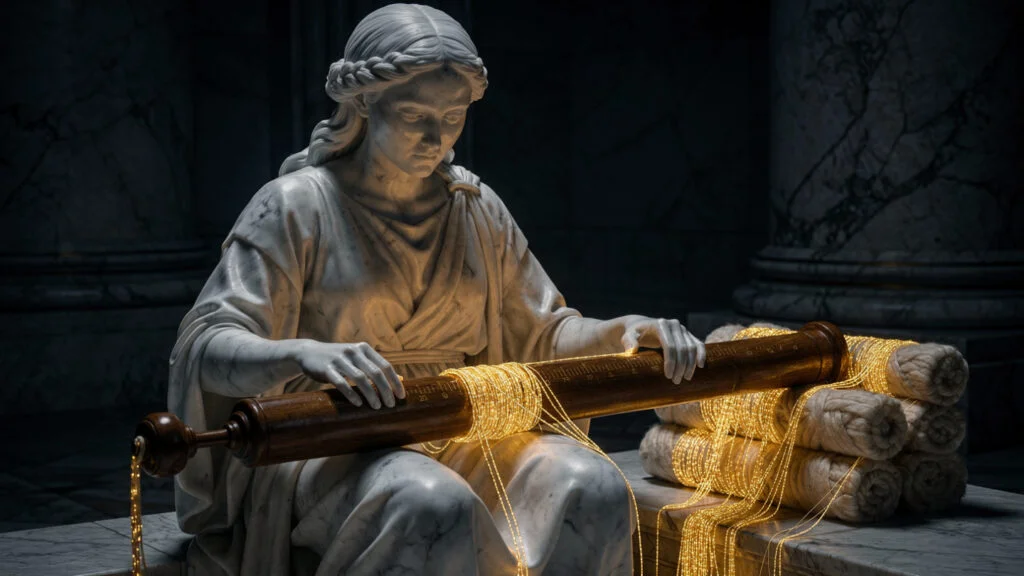
The lot imagery in her name is important. Lachesis does not design the content of a life from first principles. She draws from an allocation, apportions from what is available in the cosmic distribution. This makes her function simultaneously impersonal and precise: she does not favour the pious over the impious in the abstract, but the lot that falls to each person is their lot and no one else’s.
The most philosophically significant deployment of Lachesis in the ancient tradition is in Plato’s Republic, in the Myth of Er. The souls of the dead, before their reincarnation, must choose their next lives. Lachesis gives the speech that introduces this choice. Souls, here begins another cycle of mortal life. The daemon will not choose you. You will choose the daemon. Let the one who draws the first lot be the first to choose a life, to which he will be bound by necessity.
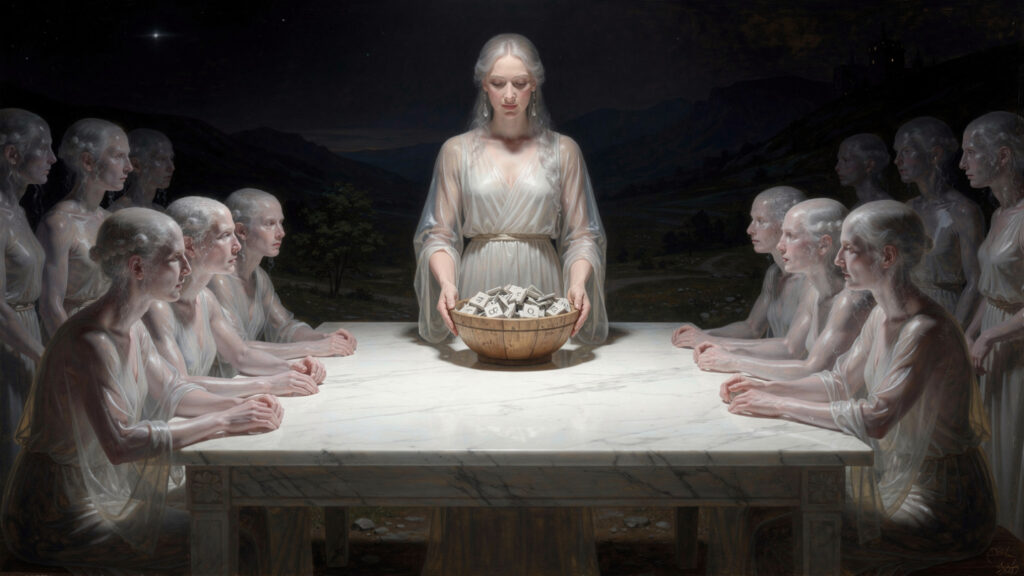
What Plato’s Lachesis is describing is the relationship between the structure of necessity and the content of individual fate. The souls choose, but they choose from within a framework they did not design, with a nature they did not select, in circumstances they did not arrange. The choice is real. The constraints on the choice are prior to it.
This is the most sophisticated position the Greek tradition arrived at on the question of fate and free will: not that fate eliminates choice, but that choice always occurs within the structure that fate provides. Lachesis does not prevent the soul from choosing. She establishes the conditions within which the choice is made and from which no choice can escape.
Atropos | The One Who Does Not Turn
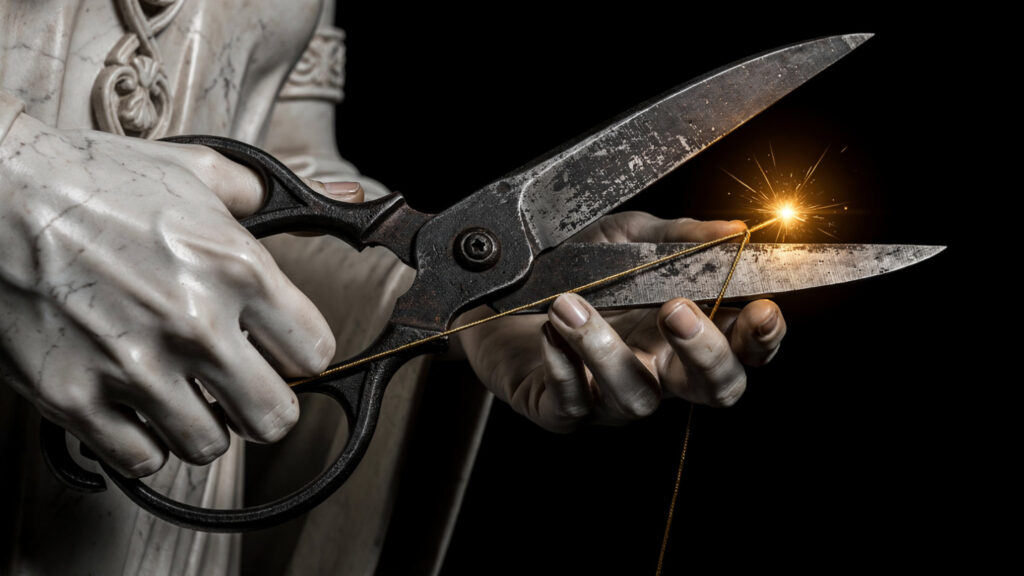
The third sister is Atropos, whose name means the one who cannot be turned, from the privative a and tropos, a turn or turning.
She carries the shears. When the thread has been spun and measured, she cuts it. The life is over.
The name is the most philosophically loaded of the three. Clotho spins and Lachesis measures, but the verbs of their functions describe actions that could conceivably be modified: a spinner might spin differently, a measurer might measure again. Atropos is named not for her action but for her immovability: she is the sister who cannot be turned, cannot be redirected, cannot be persuaded.
This distinction is not simply the observation that death is inevitable. It is a statement about the character of necessity itself: that necessity is not simply a very strong force, one that could in principle be overcome by a sufficient counter-force, but the condition of there being forces at all, the framework within which forces operate and without which the concept of a stronger force has no meaning.
Atropos is why the Moirai outrank Zeus. Not because she is more powerful than he is in any sense that would allow a comparison of powers, but because she represents the condition that makes his power a power rather than an absolute. Zeus can do whatever he wills within the framework of necessity. He cannot will that the framework be otherwise, because the willing itself operates within the framework.
The ancient sources are consistent on this. When Zeus in the Iliad weighs the fates of heroes on his golden scales, he is not deciding their outcomes. He is reading what the Moirai have already determined. When he appears to intervene, to save a mortal whom the scales would have condemned, the deeper narrative makes clear that the intervention was itself within the structure of what was fated.
Atropos is the reason that Greek tragedy works as an art form. If necessity were simply a very strong force, tragedy would be the story of insufficient heroes. Because necessity is the framework within which all force operates, tragedy is the story of the encounter between human agency and the conditions that make agency both real and bounded.
Why Zeus Bowed and What This Means
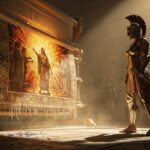
The most philosophically significant moment in the Greek tradition’s engagement with the Moirai is the moment in the Iliad when Zeus considers overriding fate to save his mortal son Sarpedon from death, and Hera argues him out of it.
Hera’s argument is not that the Moirai are stronger than Zeus and would defeat him if he tried. Her argument is that if Zeus overrides the fated death of his own son, every other god will immediately do the same for their own favourites, and the entire cosmic order that makes the gods’ authority meaningful will dissolve. The framework of necessity is not a constraint on divine power from outside. It is the condition under which divine power is a coherent concept rather than arbitrary force.
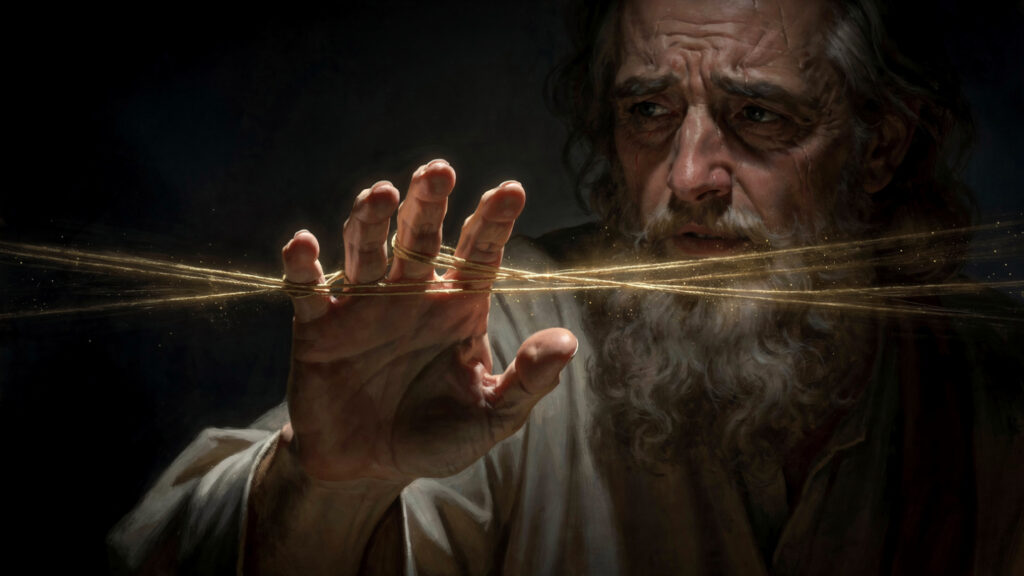
Zeus relents. He sends Sarpedon death and sleep, weeping tears of blood as his son falls, but not intervening. The grief is the point: this is not the resignation of a being too weak to act. This is the wisdom of a being who understands that his authority derives from his alignment with the cosmic order, and that to override the Moirai would be to destroy the foundation of the authority he is being asked to use.
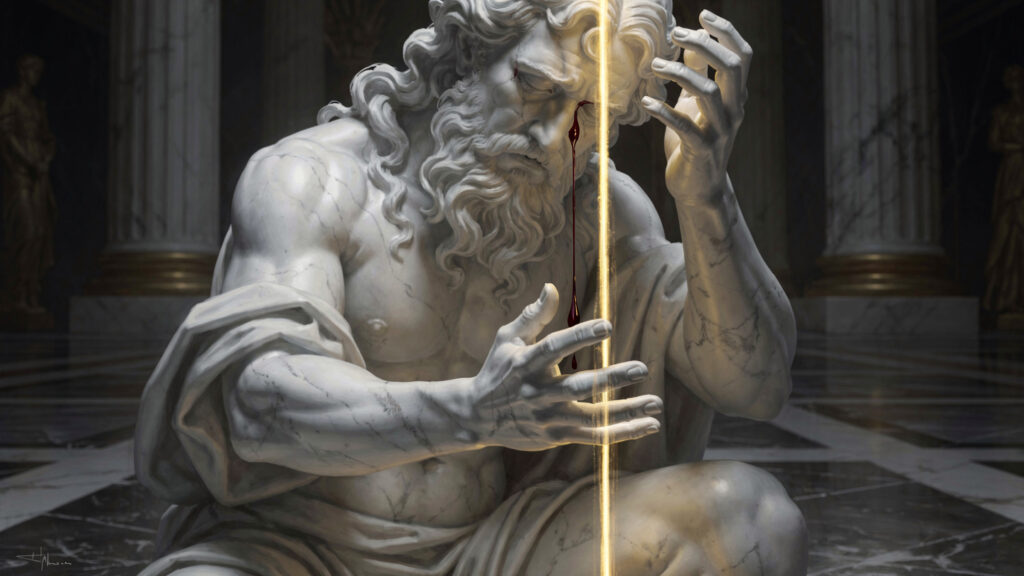
This moment encodes one of the most consequential political and philosophical insights the Greek world produced: that legitimate authority is not the same as unlimited force. The ruler who understands the conditions within which their rule is possible is the ruler whose rule is sustainable. The ruler who mistakes power for the absence of constraint mistakes their authority for something it is not, and eventually encounters the conditions that demonstrate the difference.
The Greeks called this understanding of power in relation to necessity sophrosyne, a word usually translated as temperance or moderation but carrying the deeper meaning of knowing one’s place in the cosmic order. Zeus’s restraint before the Moirai is the exemplary act of sophrosyne: the recognition, by the most powerful being in the cosmos, that his power operates within a framework that he did not create and cannot override, and that this recognition is the source of his legitimate authority rather than a limitation on it.
Fate, Freedom, and the Tragic Tradition
The Moirai are the theological foundation of Greek tragedy, and understanding what they represent clarifies why Greek tragedy produces the emotional and intellectual effect it does.
Every Greek tragedy involves a person of significance encountering a fate that their power, intelligence, and virtue are insufficient to escape. The standard reading of this encounter is pessimistic: the tragic hero is defeated by forces beyond their control, and the lesson is the smallness of human agency against cosmic necessity.
The deeper reading is considerably more interesting. In every Greek tragedy that works at the highest level, the hero’s encounter with fate is an encounter with the structure of their own situation that they have refused to see clearly. Oedipus does not simply encounter a fate that arrives from outside. He encounters the consequences of who he is and what he has done, and the tragedy is his discovery that the framework within which he has been operating was not the framework he believed he was in. The Moirai did not impose a malevolent destiny. They set the conditions. Oedipus’s choices, made within those conditions without full knowledge of what the conditions were, produced the outcome.
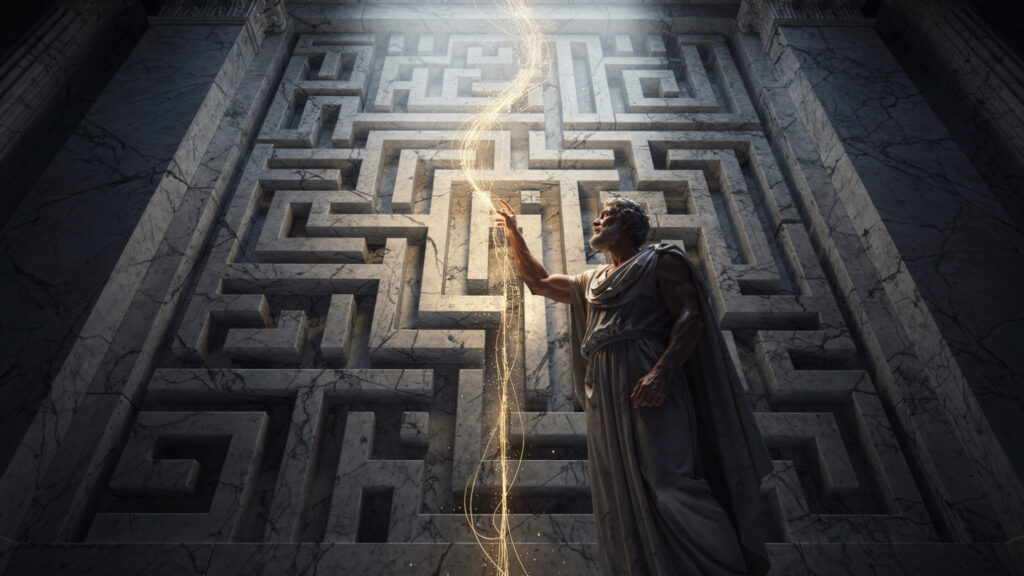
This is the philosophical claim that the tragic tradition makes through the Moirai, and it is a claim of extraordinary sophistication: that the encounter with necessity is not the defeat of agency but its fullest expression. Oedipus’s greatness is precisely that he does not stop seeking the truth when the truth becomes dangerous. His fidelity to the values of his own character, the relentless pursuit of knowledge, is what drives him toward the discovery that destroys him. He is not a victim of fate in spite of his virtues. He is a victim of fate through them.
The Moirai make this possible as a concept by establishing that the structure within which all choice occurs is not chosen. We did not design the conditions of our existence. We did not select the nature with which we face those conditions. But we act within them, and the quality of that action is genuinely ours, and the consequences are genuinely ours, and this combination of given conditions and unchosen response is what the Greek tradition called fate.
What the Thread Is Made Of
The spinning metaphor deserves its full philosophical examination, because it is more precise than a casual reading suggests.
Clotho draws the thread from existing material. She does not create the material. The raw fibre of possibility that she works with is not something she made: it is the undifferentiated potential of what a human life could be, and what she does is draw from it and commit a configuration to actuality.
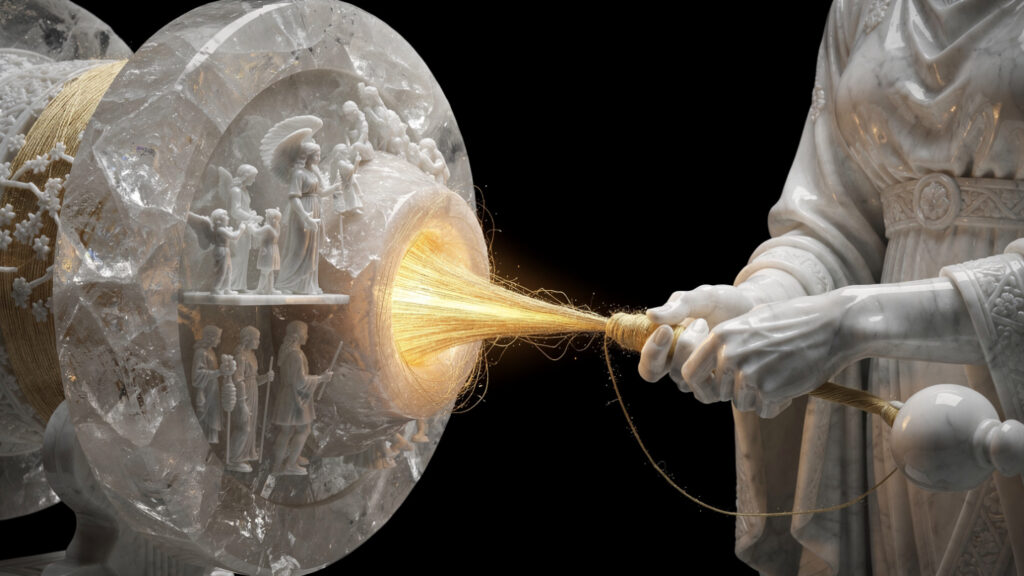
This means that the thread of a life is not assigned from outside the life. It is drawn from the life’s own potential. The fate that the Moirai determine is not an external constraint imposed on a person who would otherwise be free. It is the actualisation of what that person already contains in potential. The spinning does not add something to the life. It reveals what was already there and commits it to being.
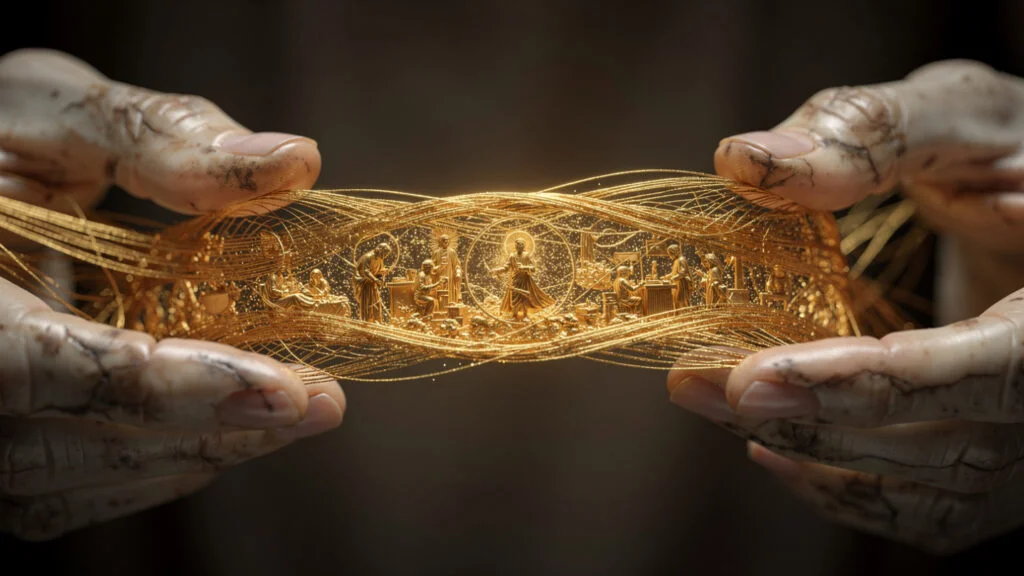
This understanding of fate is significantly different from the popular image of three old women deciding in advance what will happen to every mortal and then imposing that decision on a world that would otherwise unfold differently. In the deeper reading, the Moirai are not deciding what will happen from outside the event. They are the name for the relationship between potential and actuality, for the process by which what could be becomes what is.
The thread is already what it will be when Clotho draws it out. Lachesis does not change its nature when she measures it. Atropos does not alter it when she cuts it.
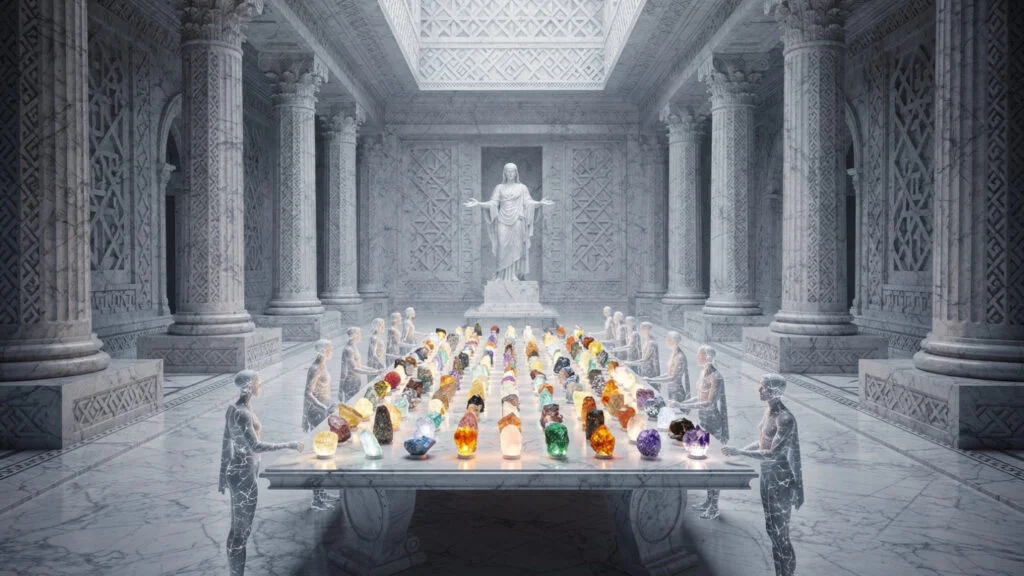
The three sisters are three aspects of a single process: the process by which the potential contained in existence becomes the actual existence of a person, is sustained for a duration, and returns to the potential from which it emerged.
The Moirai in the Landscape of Greece
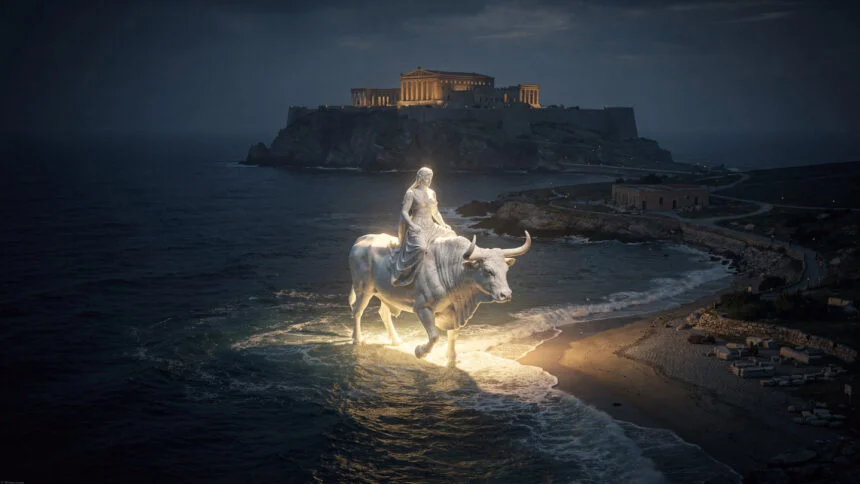
They are not abstract philosophical constructs. They have addresses.
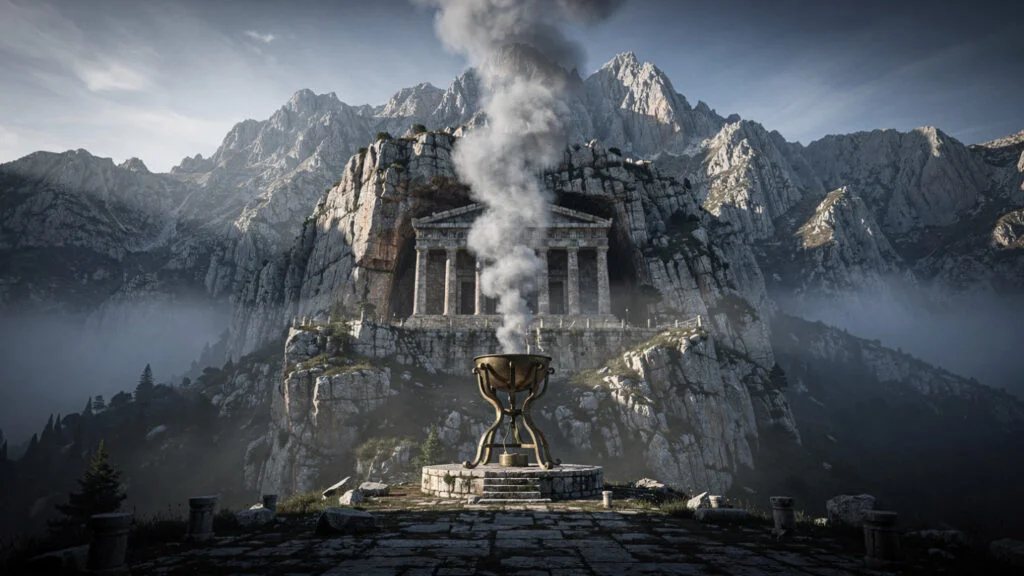
At Delphi, the most sacred oracle in the ancient world, the Moirai were worshipped in a sanctuary that the Pythia, the oracle herself, was understood to serve. The oracle did not predict the future in the sense of describing what the Moirai had arbitrarily decided. She made available to those who came seeking it the knowledge of what the structure of their situation already contained. The oracle was the service of reading the thread, of perceiving the conditions of a life clearly enough to understand what it was moving toward.
At Thebes, the city of Oedipus, the Moirai had a sanctuary. The archaeological evidence of their cult across the Greek world indicates that they were not simply literary figures. They were the object of regular worship, of libations and votive offerings, of the religious attention that the Greeks gave to forces they considered both real and beyond their control.
The spinning and weaving imagery that defines their iconography was not chosen for its aesthetics. Weaving was one of the foundational technologies of the ancient world, one of the earliest human activities that converted raw natural material into something shaped by human intention, and one whose product, cloth, was simultaneously protective, ornamental, and fragile. The analogy between the weaving of cloth and the weaving of a life was not decorative. It was the most precise available description of the relationship between raw potential and shaped actuality.
When the ancient Greeks made offerings at the sanctuaries of the Moirai, they were not bargaining for a better fate. The tradition was consistent on this: the Moirai cannot be persuaded. What the offerings acknowledged was the framework itself, the recognition that the conditions of existence precede any existence and that the appropriate response to this recognition is neither despair nor denial but the quality of attention that the Greeks called reverence.
Kind of Wisdom
The Moirai endure because the question they embody does not go away.
Every civilisation that has thought seriously about the relationship between human agency and the conditions that make agency possible has produced some version of them. The Norns of Norse mythology weave the same threads. The Parcae of Rome spin the same spindle. The concept of karma in Buddhist thought addresses the same relationship between the conditions inherited from the past and the choices made within them. The Stoic concept of fate, which the Greek tradition developed directly from the Moirai mythology, became one of the foundational ideas of Western ethics.
What persists across all these variations is the same philosophical structure: the recognition that the conditions within which we act are not of our choosing, that this recognition is not a counsel of despair but a call to a kind of wisdom, and that the quality of a life is not measured by its freedom from the constraints of necessity but by the quality of what it does within those constraints.
Clotho spins. Lachesis measures. Atropos cuts.
The thread between the first and the last is the only one we have. The Greek tradition’s most honest counsel on what to do with it is not to rail against the spindle or beg the shears to stop. It is to pay attention to what the thread is made of, to understand the conditions within which it moves, and to act within those conditions with the full force of everything that the thread contains.
Zeus understood this. He wept as Sarpedon fell, and he did not intervene.
That is what wisdom looks like when it has seen clearly.
At Olympus Estate, Mythic Essays moves through the deeper currents of the Greek tradition. Zeus feared three old women with a spindle not in the way that powerful people fear rebellion but in the way that someone fears the ground they stand on. Hesiod gave the Moirai two different genealogies in the same poem, and the contradiction is not an error. Clotho draws the thread from existing material. She does not create the material. Lachesis apportions from what is available in the cosmic distribution. The souls in Plato’s Republic choose their next lives, but they choose from within a framework they did not design. Atropos is named not for her action but for her immovability. Zeus wept as Sarpedon fell, and he did not intervene. That is what wisdom looks like when it has seen clearly.