
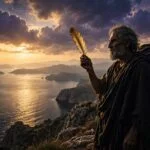
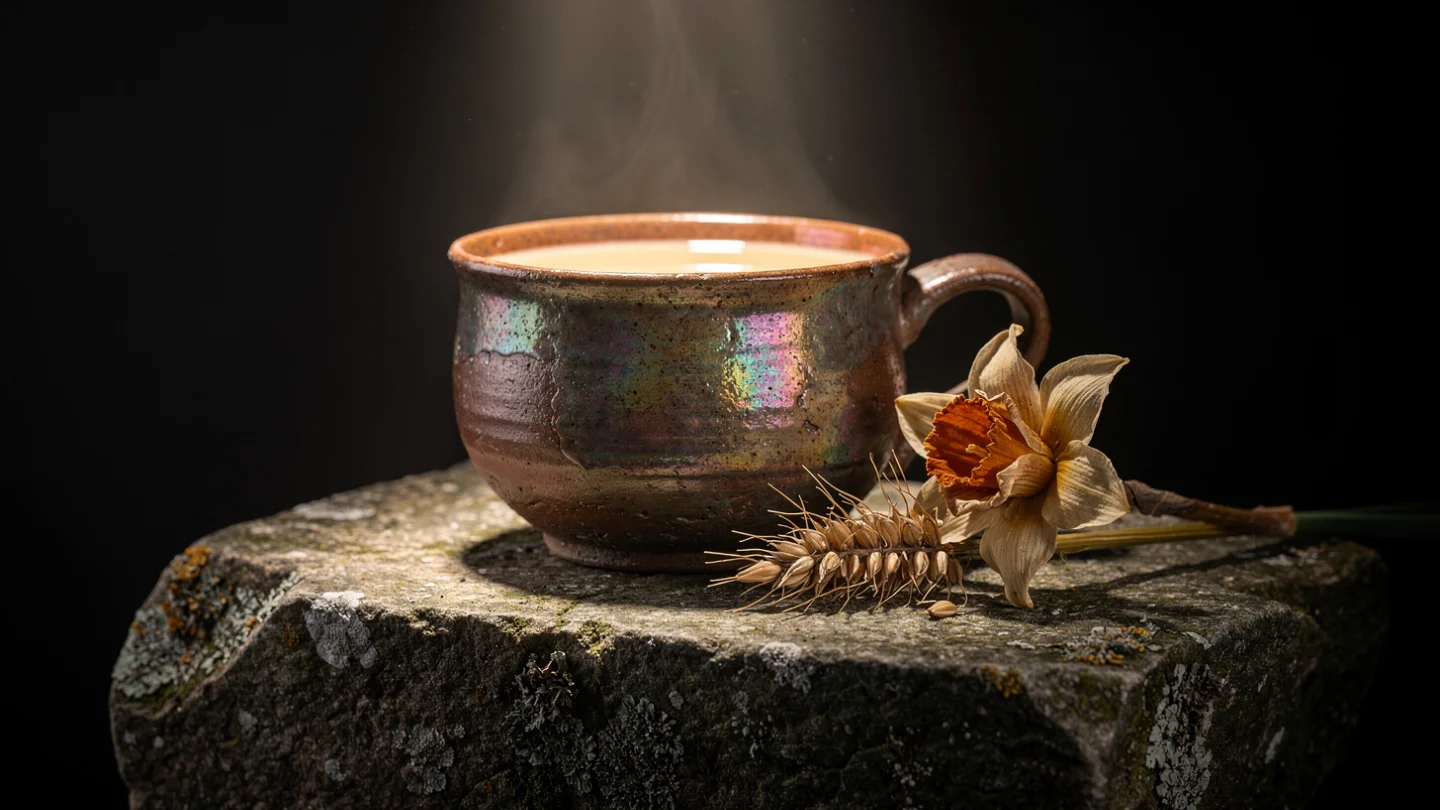
The Eleusinian Mysteries ran for two thousand years.
From the Mycenaean period, when the archaeological record first documents cult activity at Eleusis in the fifteenth century BCE, through the classical period when Sophocles and Pindar and Plato were initiated, through the Roman period when the emperors Hadrian and Marcus Aurelius and Commodus made the journey from Rome to Eleusis to receive initiation, to the closing of the sanctuary by Alaric the Visigoth in 396 CE: two thousand years of uninterrupted initiatory ritual at the same site, organized around the same mythological narrative, producing the same experience in the people who underwent it, generation after generation, in the longest continuously operating religious institution in the Western tradition.
The breadth of the initiate list is the most direct evidence for what the institution meant to the ancient world: it included virtually every significant figure in ancient Greek and Roman intellectual and political life. Cicero, who was initiated at Eleusis and wrote about the experience in De Legibus, said that among all the contributions of Athens to civilized life, none was greater or more divine than the Mysteries. He was not using the word divine loosely: he meant that the Mysteries had given him a reason to live without the fear that made the living of an ordinary life a constant struggle against the inevitability of death. This claim, that the initiation produced a change in the initiate’s relationship to the fact of mortality, is the claim that appears in the ancient sources about the Mysteries more consistently than any other.
The secrecy that the Mysteries imposed, which was genuine and was maintained with remarkable fidelity across two millennia of initiation involving hundreds of thousands of participants, is the most tantalizing and most discussed feature of the institution in the modern literature. But the secrecy is also the feature that has been most consistently misunderstood: the initiates were not prohibited from speaking about the Mysteries because the institution was protecting a doctrinal or theological secret of the kind that revelation would damage. They were prohibited from speaking about the objects shown and the actions performed in the Telesterion during the culminating ceremony of the initiation. The prohibition was a ritual prohibition, maintaining the sacred character of the experience by keeping it within the context in which it was sacred rather than exposing it to the profane world where it would lose that character.
The Homeric Hymn to Demeter and Its Claims
The foundational text of the Eleusinian Mysteries is the Homeric Hymn to Demeter, composed in approximately the seventh century BCE, which is simultaneously the myth’s fullest literary account and the most detailed surviving ancient description of the ritual practices associated with the Eleusis sanctuary.
The myth begins with a detail whose specificity is itself significant: Persephone was picking flowers in the meadow of Nysa, and the flower that Hades had arranged to grow there to attract her was the narcissus, a flower the earth had produced at Zeus’s direction, a hundred-stemmed narcissus whose smell reached both the arched heaven and the salt sea. The narcissus’s function in the myth is the function of the bait: a flower of extraordinary beauty and extraordinary fragrance, placed specifically to draw the girl away from the companionship of the other maidens who would have protected her, into the solitary encounter with the gap in the earth that opened when she reached for the flower.
The Hymn’s account of Demeter’s response to the abduction is the account that gives the ritual its agricultural and cosmic dimension: Demeter in her grief withheld the harvest from the earth entirely, and the consequence was not simply famine but the threatened extinction of the entire human race and with it the extinction of the sacrifices that fed the gods. The winter food tradition preserves this agricultural memory in dishes like trahanas, the fermented grain whose preparation echoes the cycle of descent and return that the Mysteries enacted. Zeus intervened not out of compassion for Persephone or for humanity but out of the calculation that the divine order required the maintenance of the human population that sustained the sacrificial economy. The myth encodes the understanding that the gods needed the mortals as much as the mortals needed the gods, a theological claim that the Eleusinian tradition was making through the myth rather than through explicit doctrine.
The Demophoon episode, in which Demeter disguised as an old woman is taken in by the royal family of Eleusis and undertakes to render their infant son Demophoon immortal by burning away his mortal nature in the fire each night, is the myth’s most concentrated statement about what the abduction of Persephone had taken from the world: before Persephone’s descent, the goddess of the harvest was willing to give immortality to a mortal child, to undo the boundary between the human and the divine. The interruption of the ritual by the child’s mother, who discovered the burning and screamed, ended the possibility of the gift permanently. Demophoon would die a mortal death. The possibility that had been present before the cosmic disruption was permanently foreclosed by the same disruption.
The Hymn’s account of the founding of the Mysteries follows directly from the Demophoon episode: Demeter, revealing her divine identity to the shocked Eleusis royal family, instructed them to build her a great temple and altar on the hill above the well of Parthenon, and promised to teach them the performance of sacred rites by which they could propitiate her favor. The Mysteries were founded, in the Hymn’s account, as the consolation that Demeter offered the human world for what the Persephone abduction had permanently removed: not immortality, which Demophoon lost when his mother interrupted the ritual, but the promise of a better fate after the death that was now inevitable.
The Structure of the Initiation
The Eleusinian initiation was organized across two distinct stages separated by at least one year: the Lesser Mysteries held at Agrai near Athens in the spring, and the Greater Mysteries held at Eleusis in September. This two-stage structure was not simply administrative: it was the ritual encoding of the difference between the preparation for an experience and the experience itself.
The Lesser Mysteries at Agrai involved purification rituals, preliminary sacrifices, and the mythological teachings that the initiates needed to understand the significance of what would happen in the Greater Mysteries. The preparatory nature of the Lesser Mysteries was understood as the preparation of the initiate’s capacity to receive what the Greater Mysteries would deliver: the person who arrived at Eleusis having undergone the preparatory stage was the person whose readiness had been constructed by the preparatory rituals, and the Greater Mysteries were calibrated to the prepared initiate rather than to the uninitiated newcomer.
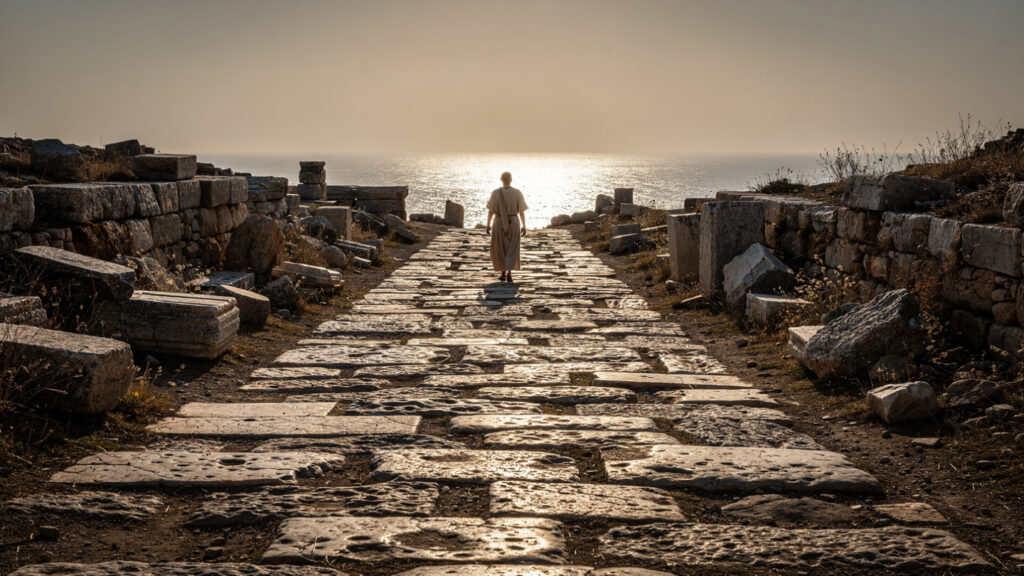
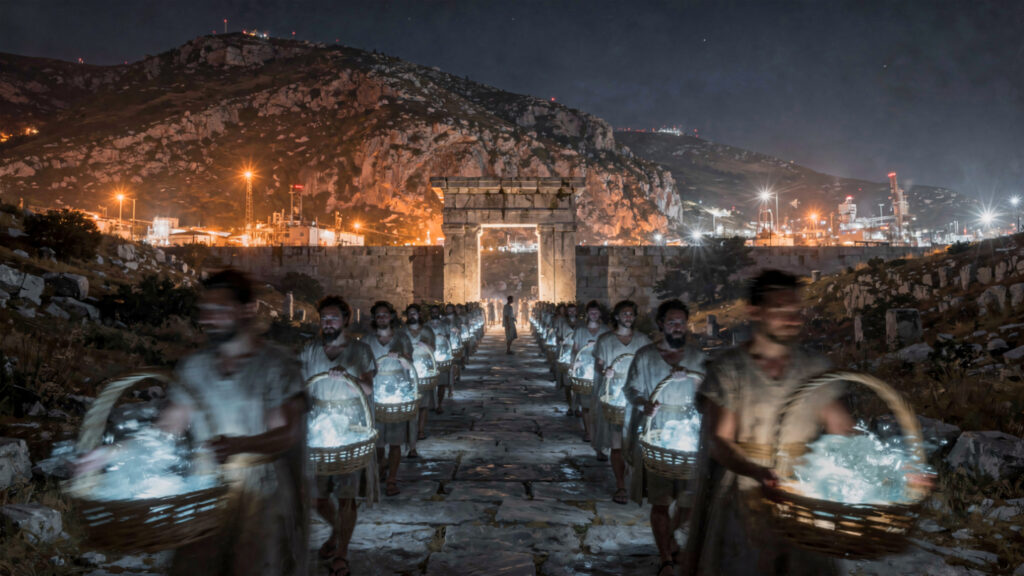
The Greater Mysteries began in Athens with the procession of the sacred objects of Eleusis from the sanctuary to the city: the objects were wrapped and covered and carried in sacred baskets, and their nature remained concealed during the procession just as it remained concealed during the culminating ceremony. The Sacred Way, the road from Athens to Eleusis, was the route of the return procession on the fourth day of the festival: the initiates walking the approximately twenty-two kilometers from Athens to Eleusis in the company of thousands of fellow initiates, with the ritual behavior of the Rharian plain crossing and the jesting that occurred at the Kephissos bridge where women shouted ritual abuse at the passing procession, a practice called gephyrismoi that the tradition maintained for its ritual purpose of transition-marking.
The initiates arrived at Eleusis after dark, having fasted for the period that the purification required, and the all‑night ceremony in the Telesterion began after their arrival, a nocturnal rite belonging to the same sacred logic as the night sanctuaries that governed boundary‑crossing ritual across the Greek world. The content of the Telesterion ceremony was what the secrecy prohibition protected, and what was shown, what was said, and what was enacted in the hours of the ritual remained within the boundary of the sacred. The ancient sources that came closest to describing the ceremony without violating the prohibition distinguished three categories of experience within the ritual. The dromena were the things enacted, the deiknymena were the things shown, and the legomena were the things said. These three categories were the structure of the experience, and the content of each category was the secret.
The Kykeon and the Question of the Psychoactive
The kykeon, the ritual beverage that the Homeric Hymn to Demeter specifies as the drink that Demeter herself accepted when she was taken in by the Eleusis royal family and that the initiates drank at the culminating moment of the initiation ceremony, is the element of the Eleusinian tradition that has attracted the most sustained pharmacological and botanical investigation in the modern scholarship.
The Hymn gives the kykeon’s ingredients specifically: barley, water, and tender pennyroyal. This is a modest formulation compared to the kykeon that appears in the Odyssey, which Homer gives as the blend of wine, cheese, barley, and honey that Circe uses as the base for her drug, but the Hymn’s simplicity is precisely what makes the Eleusinian kykeon interesting to the pharmacologist: the three named ingredients do not in themselves produce the visionary and transformative experience that the ancient sources consistently attribute to the Mysteries, which means that either the experience was produced by the ritual context alone without chemical assistance, or the kykeon contained additional ingredients that the Hymn does not name.
In 1978, the ethnomycologist R. Gordon Wasson, together with Albert Hofmann, the chemist who had first synthesized LSD, and the classical scholar Carl Ruck, published The Road to Eleusis, proposing that the kykeon’s psychoactive effect was produced by the ergot fungus Claviceps purpurea that infected the barley used in its preparation. Ergot contains lysergic acid derivatives whose pharmacological profile includes the production of visual hallucinations, altered time perception, and the quality of overwhelming emotional significance that the ancient sources attribute to the Eleusinian experience. The hypothesis proposed that the ancient priests of Eleusis had discovered the conditions under which ergot-infected barley produced the desired effect and had been maintaining the preparation across the two thousand years of the institution’s operation.
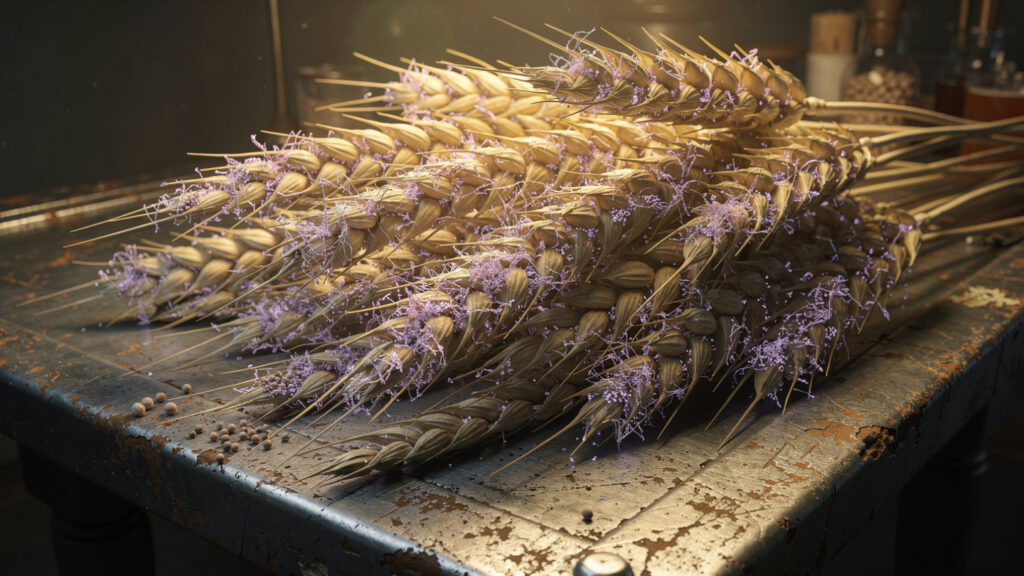
The Wasson-Hofmann-Ruck hypothesis has been neither confirmed nor definitively refuted in the subsequent scholarship. The problem of maintaining a consistent psychoactive preparation from year to year while keeping the process concealed, the potential variability of the ergot concentration across different barley harvests, and the dose-response relationship that would be required to produce the consistent visionary experience across hundreds of thousands of initiates are all genuine difficulties with the hypothesis. The hypothesis was substantially revived in 2020 with the publication of Brian Muraresku’s The Immortality Key, which presented archaeological evidence for psychedelic preparations in early Christian contexts alongside renewed arguments for the ergot hypothesis, generating both significant popular interest and the same scholarly caution that had received the original hypothesis.
What the sources agree on, regardless of the mechanism, is that the experience in the Telesterion produced a profound and lasting change in the initiate’s relationship to death: the transformation was not metaphorical or doctrinal but experiential, something that happened in the Telesterion during the ceremony and that the initiate carried out of the ceremony and maintained for the remainder of their life.
What the Initiates Said
The ancient sources that describe the Eleusinian experience are the sources that came closest to violating the prohibition without technically violating it, and reading them requires the attention that the secrecy produces: the authors were choosing their words to convey the quality of the experience without specifying the content of the experience.
Pindar, in a fragment preserved by Clement of Alexandria, writes that the initiate who has seen the sacred things before their death understands what the end of life is, and understands its beginning given by god. The claim is the claim that the initiation produced knowledge of the end and the beginning: not faith in the afterlife but something the ancient sources consistently describe as direct knowledge, the experience of knowing rather than the experience of being told.
Sophocles, in a fragment from a lost play, writes that three times fortunate are the mortals who go to Hades having seen the sacred things: they alone have life in the underworld, while for all others there is only evil. The claim is that the initiate’s afterlife was qualitatively different from the afterlife of the uninitiated: not a better version of the same experience but a different kind of experience entirely, the possession of the light and the life that the darkness of the ordinary afterlife lacked.
Plato’s engagement with the Eleusinian tradition is the most philosophically sophisticated ancient engagement with the institution, precisely because Plato was trying to do in philosophical language what the Mysteries were doing in ritual language: to produce in the student’s encounter with the philosophical argument the transformation of the relationship to mortality that the initiate’s encounter with the Telesterion ceremony produced. The Phaedo’s account of the philosopher’s relationship to death, the philosopher spending their life in a kind of practice for dying, is the philosophical version of the initiatory claim: the person who has undergone the preparation can approach death as the initiate approaches the Telesterion, with the knowledge that what lies on the other side is not the annihilation that the uninitiated fear.
Cicero’s account in De Legibus, already cited in the article’s opening, is the most direct Roman statement of what the initiation gave: the capacity to live well and to die with better hope. The phrase better hope is the phrase that the ancient sources return to most consistently, and it is the phrase that most precisely captures what the Mysteries claimed to offer: not certainty, not doctrine, not theological proof, but the quality of the hope that the direct experience of the ceremony produced and that distinguished the initiate’s approach to death from the uninitiated person’s approach.
The Telesterion and the Sacred Objects
The Telesterion, the great hall of initiation at Eleusis whose reconstruction by Ictinus and Metagenes in the fifth century BCE produced the largest interior space in classical Greece after the Athens assembly hall, was the architectural achievement that the scale of the Mysteries required.
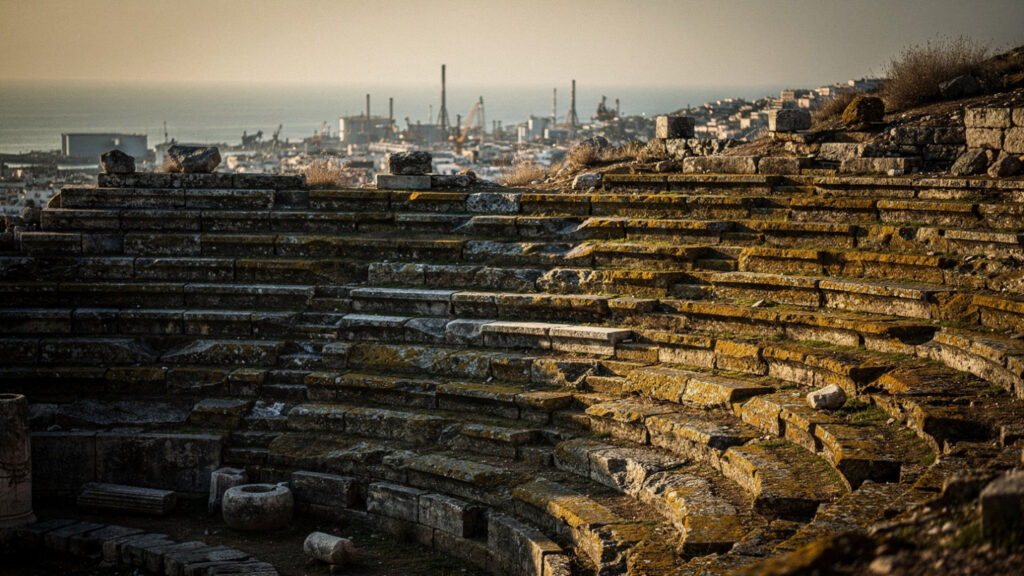
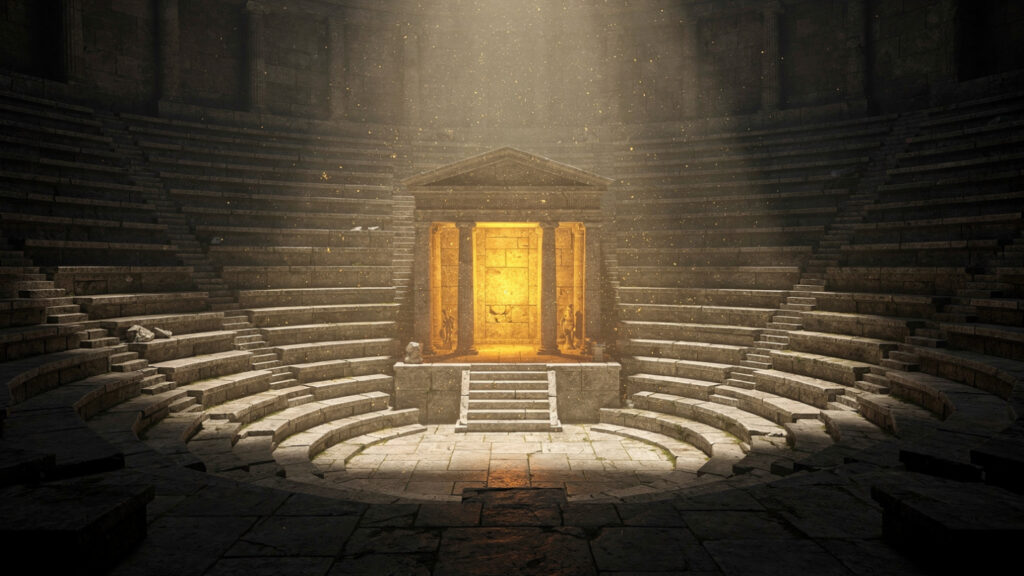
The building held approximately three thousand initiates simultaneously: the interior was surrounded on all four sides by tiers of stone benches cut into the hall’s walls, and the visual relationship between the benches and the central floor space where the ceremonies occurred was the relationship of the theater audience to the stage, except that the Telesterion’s ceremony was not a theatrical performance in the conventional sense but the display and enactment that the dromena, deiknymena, and legomena categories described.
At the center of the Telesterion was the Anaktoron, the inner sanctuary that only the hierophant, the chief priest of the Mysteries, could enter, and within which the most sacred objects of the cult were kept and from which they were brought forth at the culminating moment of the ceremony. The objects contained in the Anaktoron are the deepest level of the secrecy: the deiknymena, the things shown, were the contents of the Anaktoron revealed to the assembly of initiates at the moment that the ancient sources describe as the moment of the revelation.
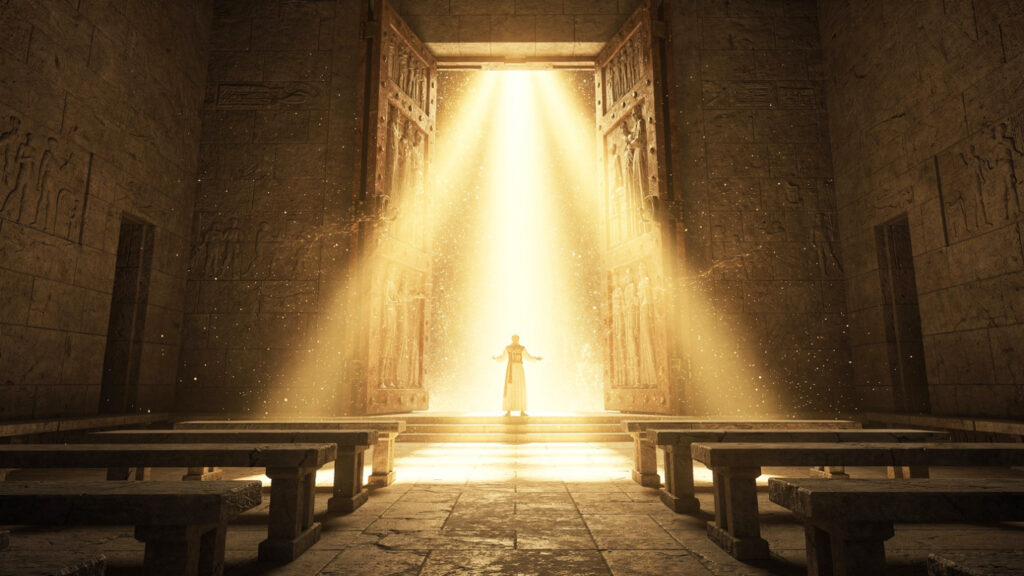
The hierarchy of the Eleusinian priesthood was an Athenian civic institution as much as a religious one: the hierophant who presided over the ceremony was always drawn from the Eumolpid family, one of the most ancient of the Athenian noble clans, and the hereditary transmission of the priestly office was the institutional mechanism that maintained the continuity of the ritual knowledge across the two thousand years of the institution’s operation. The Kerykes family provided the secondary priestly officials. The institutional structure that maintained the Mysteries was as carefully organized as any Athenian civic institution.
Visiting Eleusis
The archaeological site of Eleusis, now the modern suburb of Elefsina approximately twenty-two kilometers northwest of Athens on the Saronic Gulf coast, is among the most completely overlooked significant archaeological sites in the Athens region, overshadowed by the Acropolis and by Sounion and by the more visitor-organized sites of the Attica peninsula.
The site’s oversight is in part a consequence of its position in the industrial suburb that developed around it across the twentieth century: Elefsina was the site of significant heavy industry, including one of the largest oil refineries in Greece, and the industrial landscape surrounding the archaeological site produces a visual context that the tourism infrastructure has difficulty reconciling with the sanctuary’s ancient character.
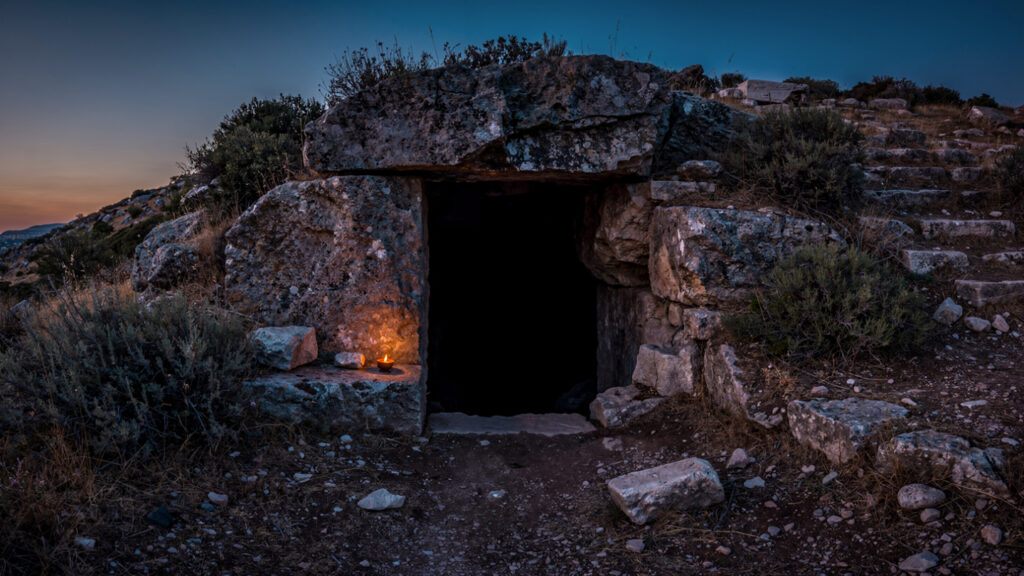
The archaeological site itself preserves significant remains: the Propylaia, the monumental entrance gateway complex whose inner and outer sections are both partially preserved, giving the visitor the sequential experience of the approach to the sanctuary. The Telesterion’s foundation, whose massive scale becomes legible in the field of stone benches that still partially survive in the hillside, gives the most direct encounter with the building’s character as an assembly space rather than a temple. The Ploutonion, the cave shrine to Pluto-Hades cut into the rock of the acropolis adjacent to the Telesterion, is the site that most directly embodies the mythological geography of the sanctuary: the location at Eleusis that the tradition identified as the entrance to the underworld through which Persephone descended and from which she returned.
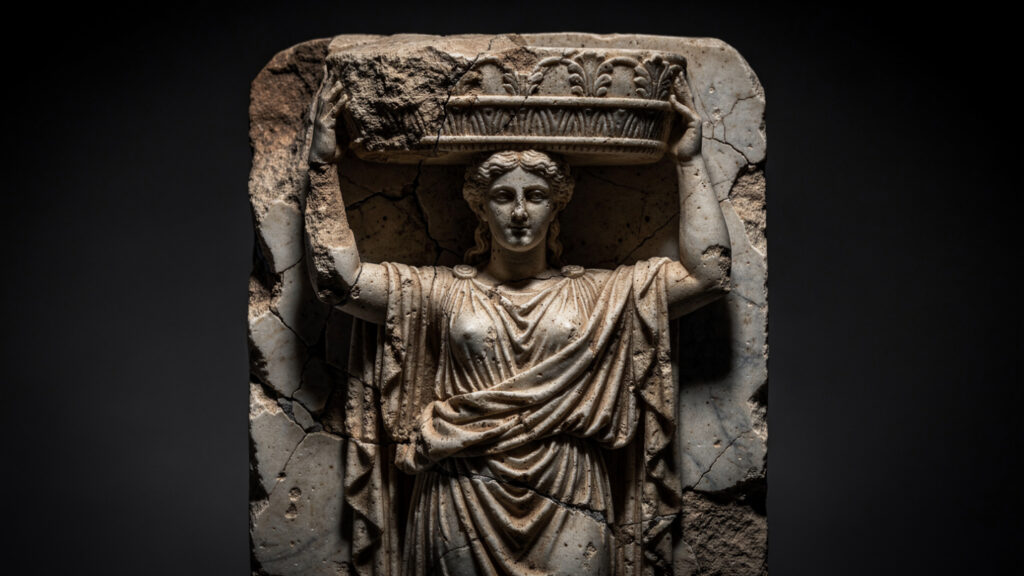
The Eleusis Archaeological Museum, on the eastern edge of the site, holds the most significant portable finds from the excavations. The Caryatid from the inner Propylaia, whose figure carrying the sacred basket on her head is among the most direct surviving representations of the ritual acts performed by the initiates on the approach to the sanctuary, stands at the center of the collection. The museum also holds the proto‑Attic amphora that shows the blinding of Polyphemus by Odysseus, and the Roman‑period votive objects dedicated to Demeter and Persephone by initiates whose names are sometimes inscribed on the dedications.
The early morning visit to the Eleusis site, before the Elefsina traffic has built and before the industrial landscape around the site asserts itself most forcefully, is the visit that most allows the landscape’s ancient character to become briefly present: the slope of the hill behind the Telesterion, the sea visible beyond the modern town, and the quality of the September light at the time of year when the Greater Mysteries were celebrated are the dimensions of the place that the ancient initiates would have found familiar.
At Olympus Estate, Mythic Essays moves through the deeper currents of the Greek tradition, from the Homeric Hymn’s narcissus meadow to the Telesterion’s midnight revelation to Cicero’s claim that the Mysteries gave him the capacity to live without the fear of death. The secret was kept for two thousand years. What the initiates saw in the Telesterion has not been definitively reconstructed. What they said when they came out, the better hope, the knowledge of the end and the beginning, the three times fortunate: these words survived the secrecy because they were about what the experience produced rather than about what the experience was. The sanctuary is in Elefsina. The September light is the same.