
The Greeks had a word for this exact moment, and the word was not summer.
Opora, in ancient Greek, named the specific season that falls between high summer and the true beginning of autumn: the late-summer harvest window when the fruit is ripe, the grain is in, and the year is visibly turning even though the calendar still says August. It is not a season modern English bothers to name separately. We call it late summer and move on. The Greeks gave it its own word because they understood it as its own distinct thing: not the peak of the year’s heat, which had already passed, and not yet the rain and the cooling that autumn would bring, but the specific, urgent, celebratory window in between, when everything the year had been building toward all summer had to be gathered in before the weather turned.
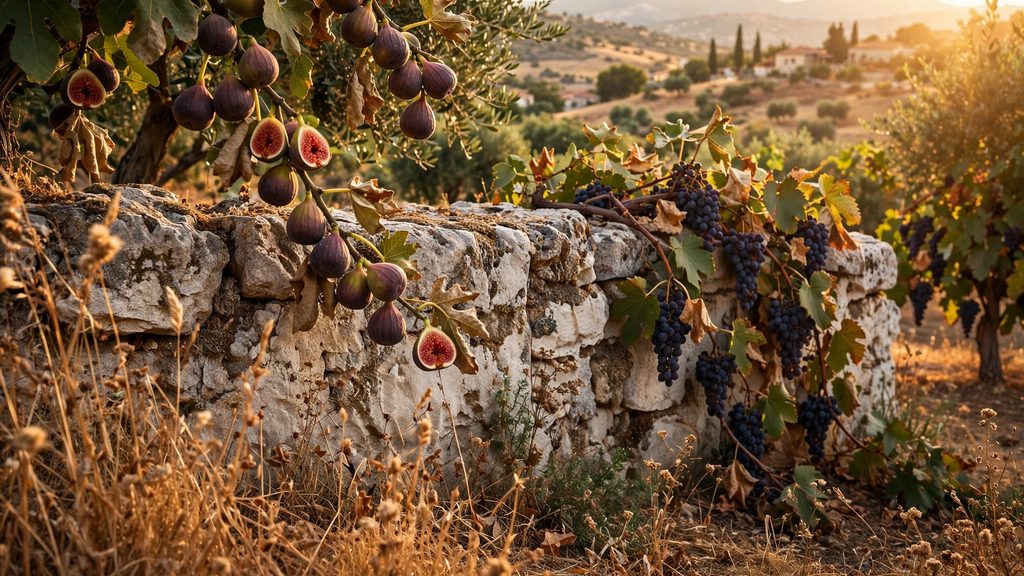
This is the Greek August that the tourist calendar rarely shows you. The beaches are still full. The Meltemi is still blowing, though it is beginning to soften. But in the villages and the vineyards and the fig groves away from the coast, an entirely different, older calendar is running underneath the summer one, and it has nothing to do with sunbathing and everything to do with getting the year’s food safely off the trees and vines before the weather makes the decision for you.
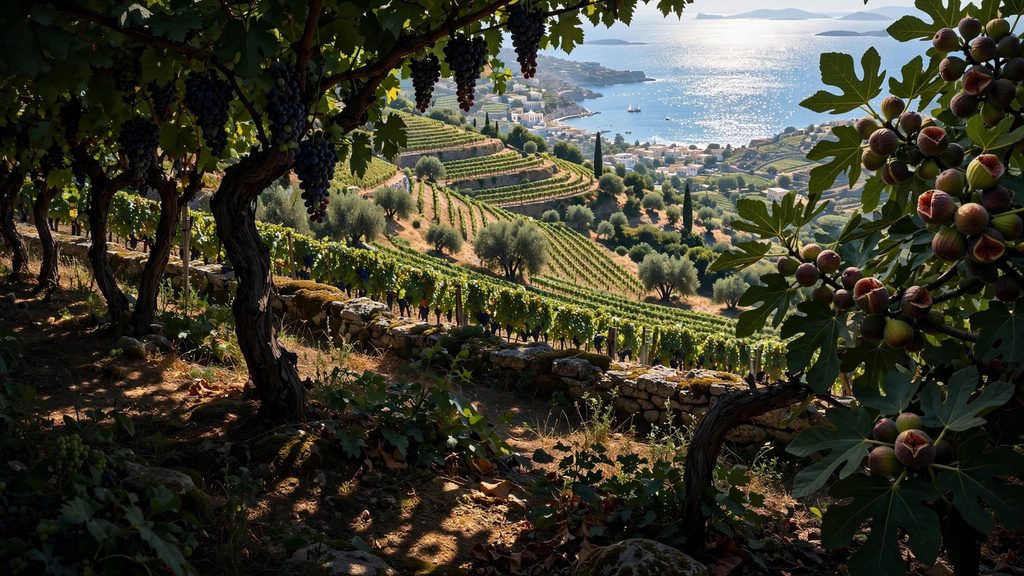
August in Greece is the month the harvest closes. Here is what that actually looks like, and what the rituals attached to it are still doing.
The Sixth of August | The First Grapes Go to Church
Long before the main grape harvest arrives in September, there is a smaller, quieter ritual on the sixth of August, the feast of the Transfiguration, that sets the tone for everything that follows.
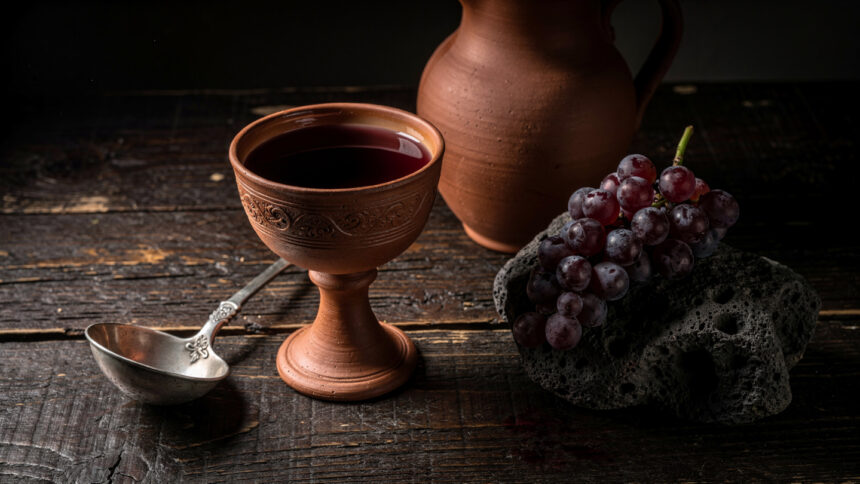
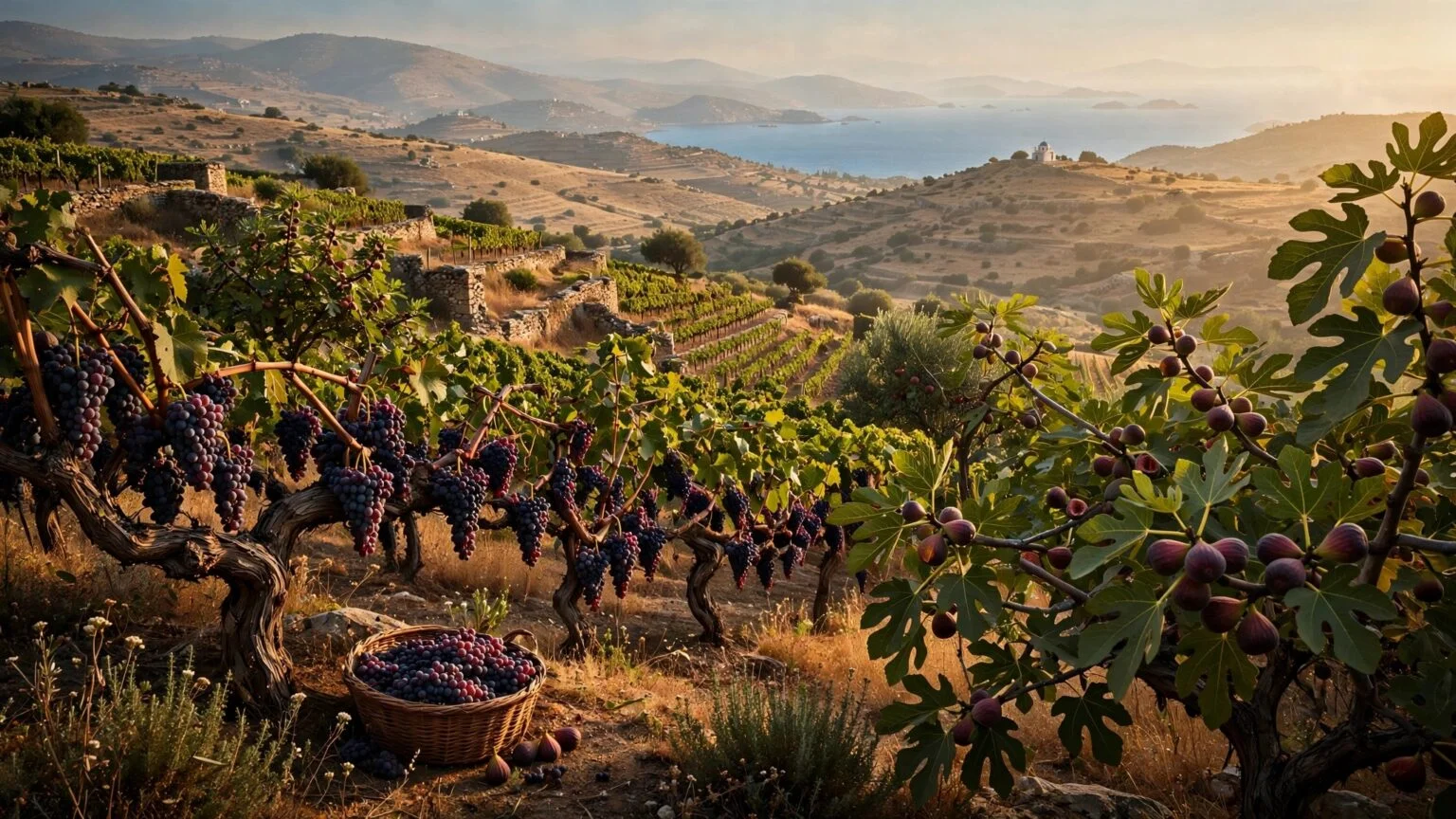
Every year on this day, winemakers across Greece traditionally fill a basket with the first ripe grapes of the year and bring it to church for a blessing, along with a priest to say a prayer over the vineyard itself. This is not a formality tacked onto a religious holiday. It is the ritual acknowledgment that the harvest about to begin is not simply an agricultural transaction between a farmer and a vine, but a transaction that involves the divine, and that the year’s most significant crop should not be gathered without first asking for the blessing that will make the rest of the harvest safe.
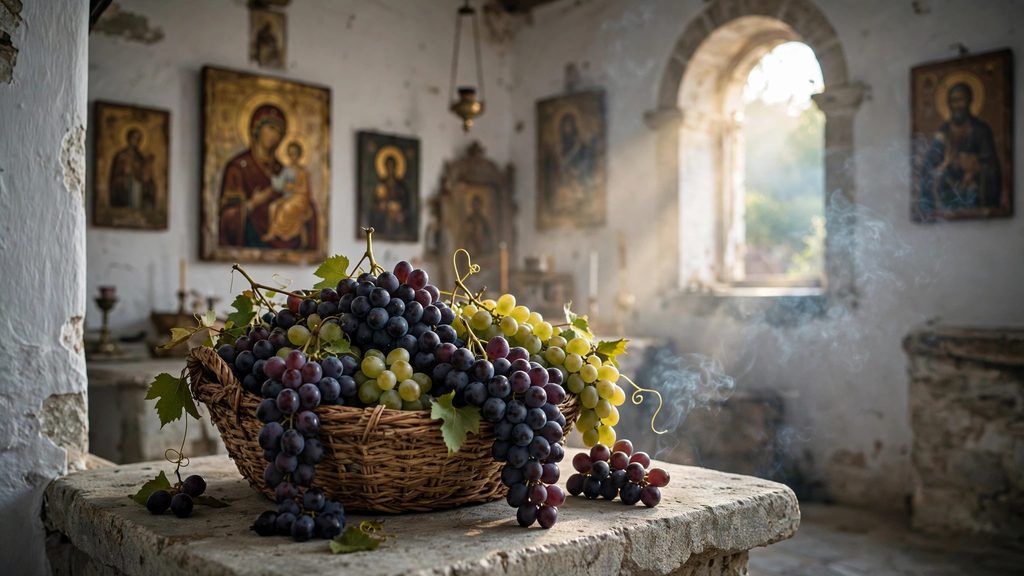
The gesture continues after the blessing. In many parts of Greece, winemakers traditionally leave a small, deliberately unharvested portion of the vineyard standing at the end of the season, an offering left in the ground rather than brought to the table, a tithe paid directly to whatever power had made the harvest possible in the first place. The custom varies by region. On Ikaria, the older tradition attached this same first-fruits blessing to the earlier feast of the Prophet Elias on the twentieth of July, when the earliest grapes of the season were brought to the saint’s church so that the rest of the year’s crop would be good, a custom this site has already touched on in its own account of the island’s relationship to time. Wherever it happens and on whatever specific date, the logic is identical: before you take, you give something back, and you ask.
Why August Was Called the Fig-Gatherer
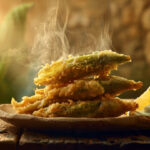
Grapes were not the only fruit that defined the month. In the older Greek folk calendar, August carried a working nickname that told you exactly what the month was for: Sykologos, the fig-gatherer, from syka, figs, because August was predominantly the time for harvesting fruit, grapes, and figs at once, in a compressed window that left no room for a farming household to be idle.
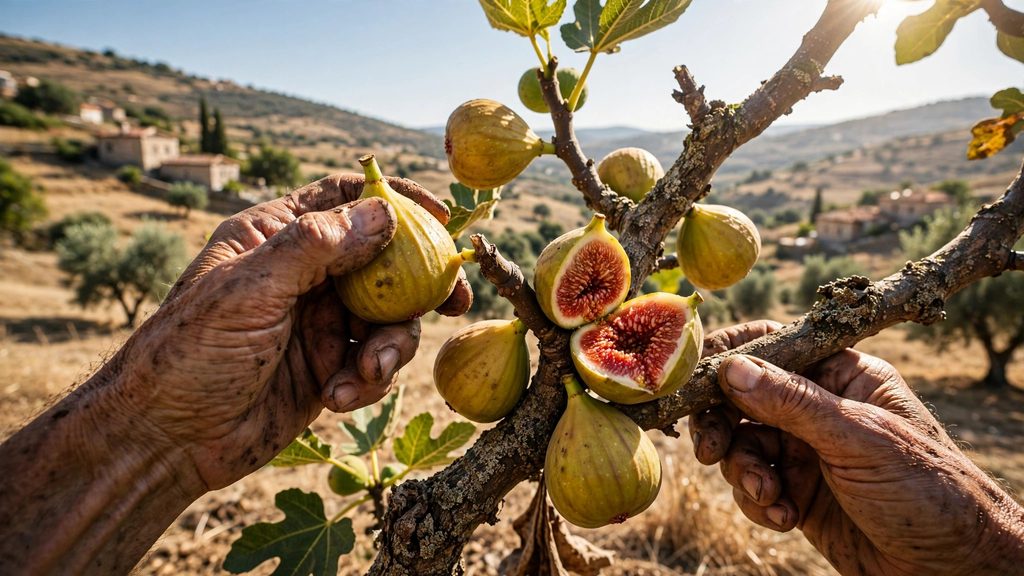
Figs ripen fast and spoil faster. Unlike grapes, which can be timed with some precision and left on the vine for days while the household decides exactly when to pick, a ripe fig has a window measured in hours rather than days before it splits, ferments on the branch, or draws every wasp in the district. The fig harvest was, for this reason, one of the most physically demanding and time-pressured tasks of the entire agricultural year, and the fact that the fig crop also had genuine commercial value, dried figs being one of the most exportable products a rural Greek household could produce, gave August’s fig-gathering an urgency that went beyond simply feeding the family through winter. It was, quite literally, the month’s financial gain as much as its physical labor.
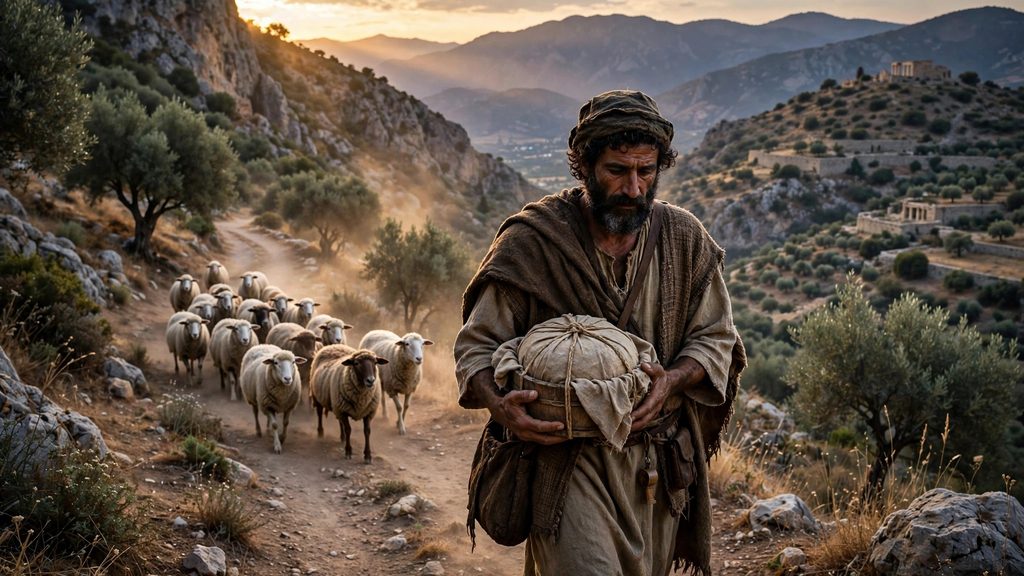
This is also the month, in the same older folk calendar, when the great moving flocks completed their season in the mountain pastures and the shepherds finished their cheese-making, since milk production was already declining by August and whatever cheese was still being produced was destined for the household’s own table rather than for sale. Three separate harvests, grapes, figs, and the last of the summer’s cheese, were all converging on the same few weeks, which is exactly why the Byzantine folk calendar gave August its other, stranger nickname.
Kleidochronias | The Lock and Key of the Year
August was also known as Kleidochronias, the lock and key of the year, in the older Byzantine agricultural calendar, a name that positioned the month as the final gate the year had to pass through before the true turning toward autumn and winter began.
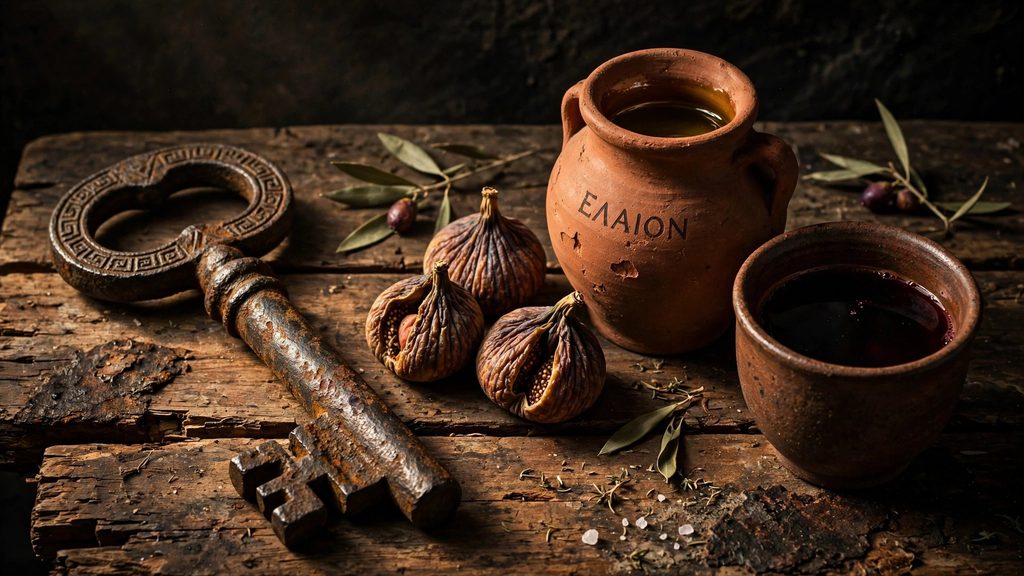
A lock and key is not a decorative image. It is a mechanism that closes something and, at the same time, is the only thing that can open it again. August, in this understanding, was the month that closed off the growing year, sealing in whatever the summer had produced, while simultaneously being the mechanism through which the following year’s provisions, the stored wine, the dried figs, the preserved cheese, would eventually be reopened and consumed across the winter that followed. Nothing gathered in July was safe yet. Nothing gathered in September would exist without what August had secured first. The month was the hinge the entire agricultural year turned on, and the Byzantine calendar’s name for it said so directly.
The Trygos and What a Harvest Is For
The grape harvest itself, the trygos, properly belongs to September in most of Greece, but its preparation, its social organization, and in some regions its actual beginning, belong to the closing days of August, and the trygos deserves its own account here because it is the harvest ritual that most completely preserves the ancient logic underneath the modern practice.
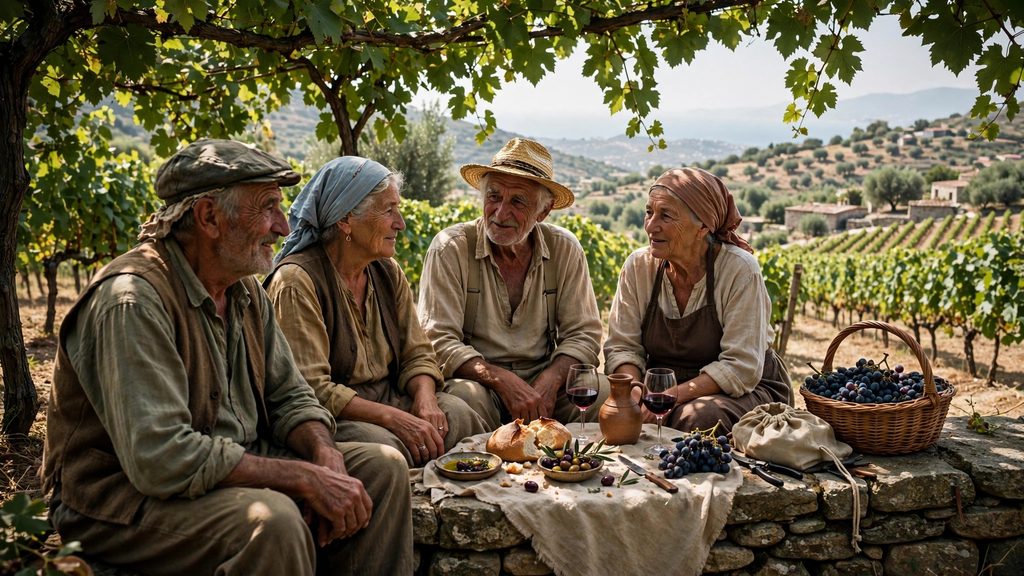
The trygos was never simply agricultural labor. Family, neighbors, and friends all worked together to bring in the grapes, and because autumn rain in Greece is unpredictable and can arrive suddenly enough to rot an entire year’s crop on the vine, the harvest had to be completed quickly once it began, which meant the whole community’s cooperation was not a courtesy but a genuine practical necessity. The urgency produced the festivity rather than working against it: long hours in the vineyard were followed by shared meals of bread, cheese, olives, and the previous year’s wine, the harvesters singing and dancing after the physical work was done, the entire event carrying, even in its contemporary form, the memory of the ancient festivals dedicated to Dionysus, whose own complicated relationship to wine, examined in full in this site’s dedicated essay on the god, gave the Greek grape harvest a religious weight that the modern festival atmosphere has never entirely shed.
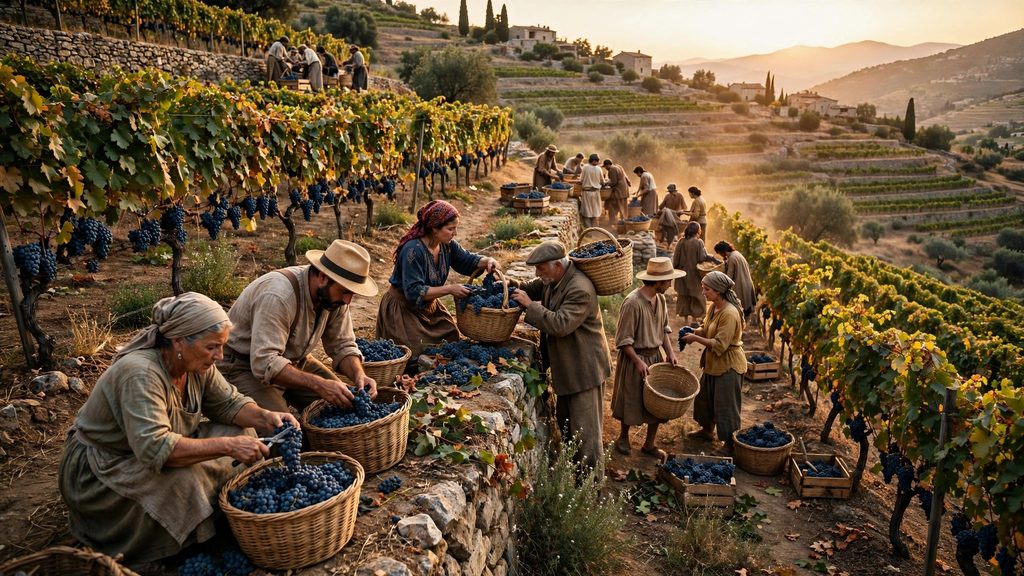
The blessing of the grapes by a priest, still a common feature of the modern trygos, is Christianity’s inheritance of a much older instinct: that the harvest is a sacred transaction, not merely an economic one, and that the wine produced from it carries something of the god who first taught humanity to make it, whatever name that god currently answers to. This site’s own account of the grapes that survived Dionysus rather than being invented by him traces the deeper version of that inheritance in full.
How Different Islands Close Their Summer
The general shape of the August harvest holds across Greece, but its specific expression varies sharply by region, and three examples show how differently the same closing season can look depending on what a particular island actually grows.
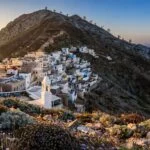
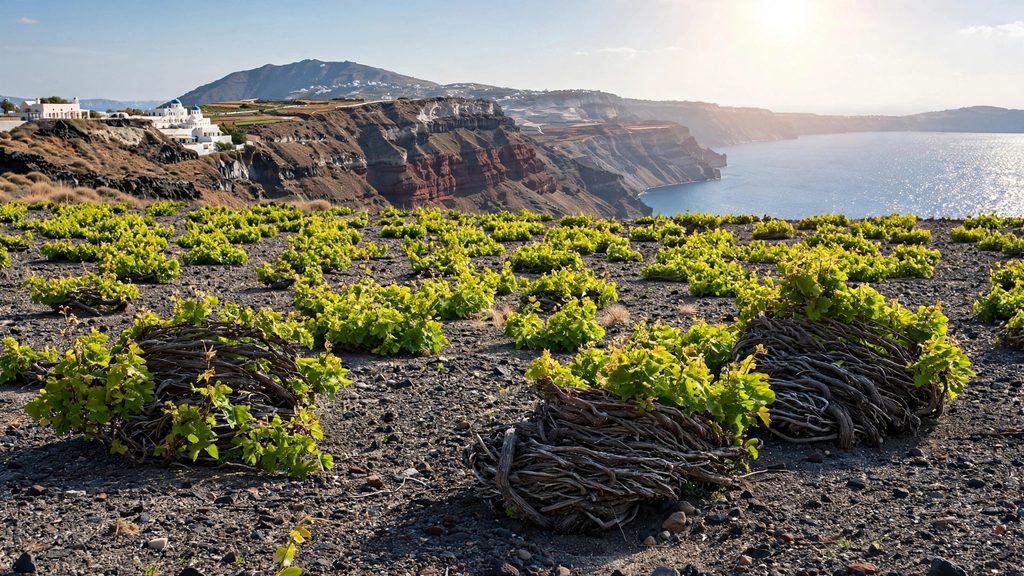
On Santorini, preparations for the grape harvest, locally called the Vendema, begin in the first days of August, months ahead of most of the mainland’s September timeline, because the island’s volcanic soil and famously old, basket-trained vines, some of the oldest documented vineyards on earth, produce a crop that ripens on its own accelerated schedule. The Assyrtiko grapes that Santorini’s harvest ultimately protects, examined in this site’s own treatment of the island’s volcanic mythology, are the direct product of this earlier, hotter closing season, the same volcanic heat that shaped the island’s mythology also shaping the timing of the fruit it grows.
On Zakynthos, the closing weeks of summer belong not primarily to wine grapes but to raisins, a crop that has sustained the island’s farming families financially for generations. When the raisin grapes are ready, they are cut, carried to the threshing floor in baskets, and laid out with real care on special cloths to be dried, or burnt, as the local phrase has it, by direct exposure to the sun, a process that trades the trygos’s urgency for a different kind of patience: not the race against autumn rain that defines the wine harvest, but the slow, sun-dependent transformation of fresh fruit into something that will keep through an entire winter without spoiling.
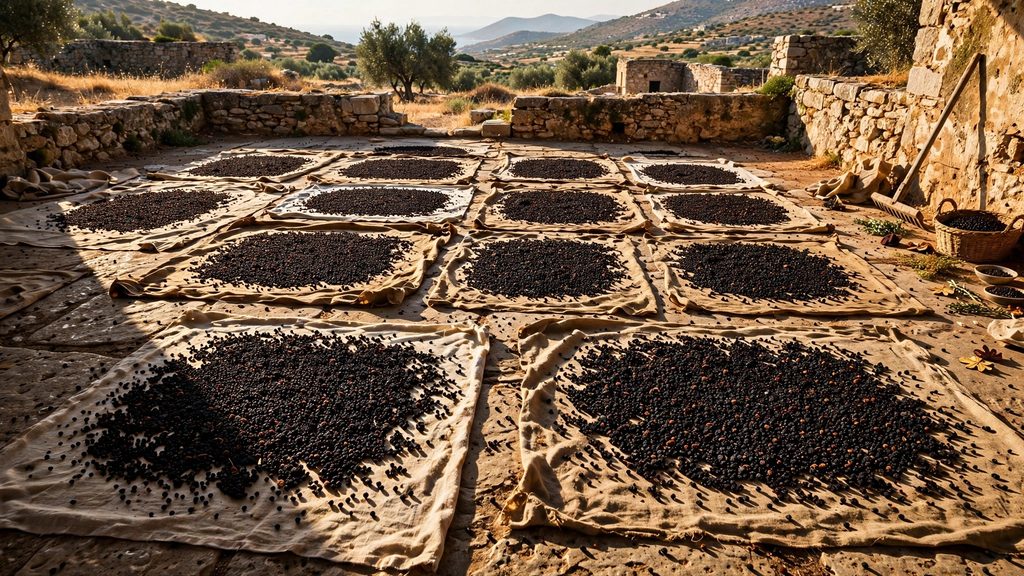
On Ikaria, whose relationship to time and longevity this site has already examined at length, the July feast of the Prophet Elias grape blessing sits inside a wider culture of unhurried, communal agricultural labor that outside researchers have specifically connected to the island’s unusually low rates of age-related illness: a population that has spent the whole of its life working a harvest calendar built around cooperation rather than individual competition, gathering in fields and at threshing floors as a matter of course rather than obligation, closing each summer the same patient way its parents and grandparents did.
What August Fifteenth Adds to the Closing Season
The harvest calendar this article has been tracing converges, in the middle of the month, on the single most significant date in the Greek religious year after Easter: the fifteenth of August, the feast of the Dormition of the Theotokos, whose full religious and cultural weight, the Tinos pilgrimage, the village panigyria, the older mother-goddess traditions the feast day absorbed, this site has already given a complete account of in its own right.
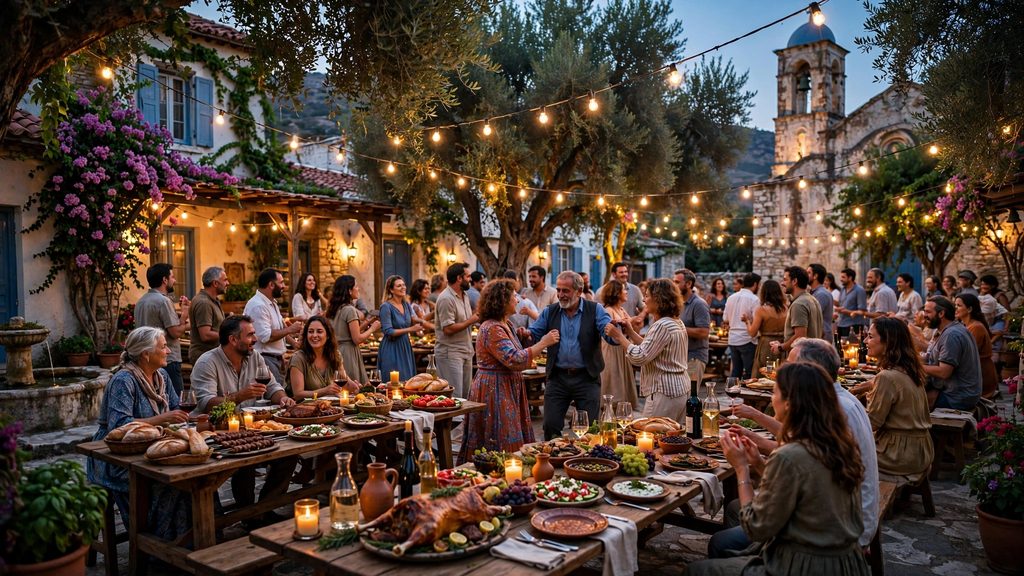
What is worth adding here is how precisely the religious date sits inside the agricultural one. The fifteenth of August falls in the exact middle of the harvest window this piece has been describing, after the Transfiguration’s first blessing of the grapes on the sixth, before the main trygos in September, in the same weeks that the figs are being raced off the trees and the last mountain cheese is coming down from the high pastures. The village panigyri that follows the religious observance, the shared meal and the dancing that turns a solemn feast day into a genuine community celebration, is not simply a spiritual observance interrupting the agricultural calendar. It is the harvest season’s own halfway marker, the moment when a community that has been working since dawn through the hottest weeks of the year gets to stop, together, and eat what the summer has actually produced so far.
The Grain That Carries the Harvest Into Winter
Not every harvest ritual produces something meant to be eaten immediately. The most quietly ingenious piece of the whole closing-summer calendar is the one designed specifically to outlast it.
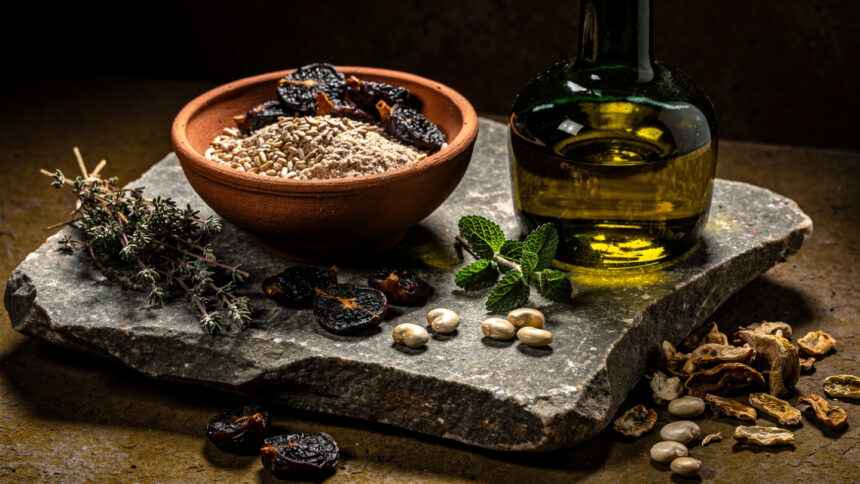
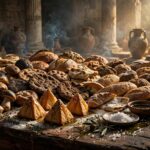
Trahanas, the fermented grain and soured milk preparation this site has examined in its own dedicated essay, is made in precisely this window: high summer’s fresh milk, still available from flocks that will stop producing within weeks, combined with the new season’s wheat and left to ferment and dry in the same relentless August sun that ripens the figs and burns the raisins on Zakynthos’s threshing floors. The result is a preserved food built entirely out of ingredients that would not survive the winter in their original form, transformed, through the same patient, sun-dependent process that defines every other ritual in this article, into something that will still be edible in January, when the vines are bare and the flocks are producing nothing at all.
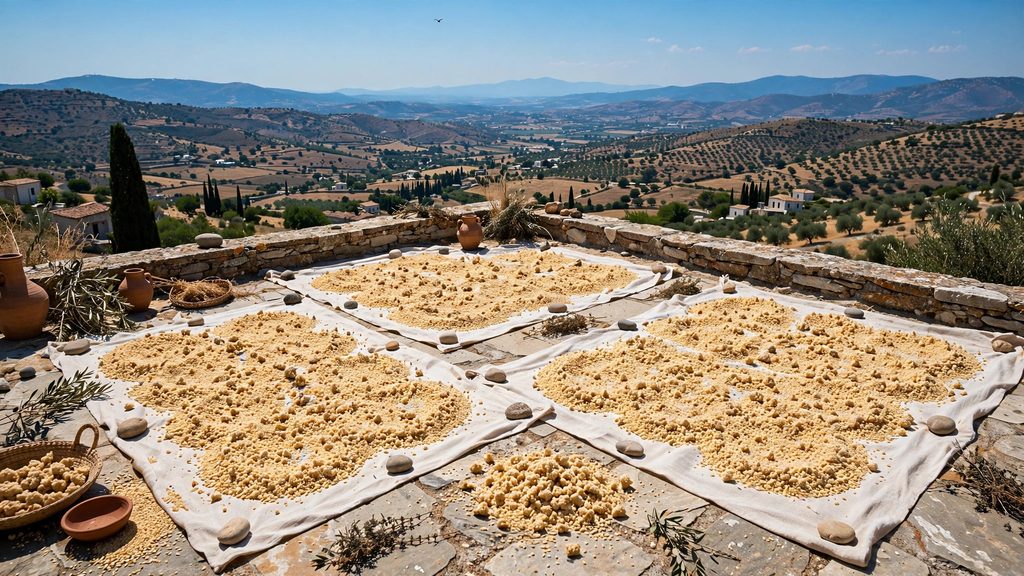
Trahanas is, in this sense, the summer’s closing act rendered as a pantry item rather than a festival: the same instinct that fills a basket with grapes for a church blessing, that dries figs against the coming winter, that lays raisins out on a threshing floor to be burnt by the sun, applied to the humblest possible ingredients and stretched forward across the entire cold season that August’s harvest is, in every one of its rituals, quietly preparing for.
The Lock Closing, the Key Still Working
Opora is closing. The grapes that were blessed on the sixth of August are ripening toward the trygos that will properly begin once September arrives. The figs, gathered under real time pressure through the month’s hottest weeks, are dried and stored or already sold. The last mountain cheese has come down with the flocks. The raisins on Zakynthos’s threshing floors have finished burning in the sun.
The lock and key of the year is doing exactly what its name says: sealing the summer’s produce into a form that will last, while remaining, in the same motion, the only mechanism through which that stored abundance will eventually be reopened, jar by jar and loaf by loaf, across the months when nothing new is growing at all.
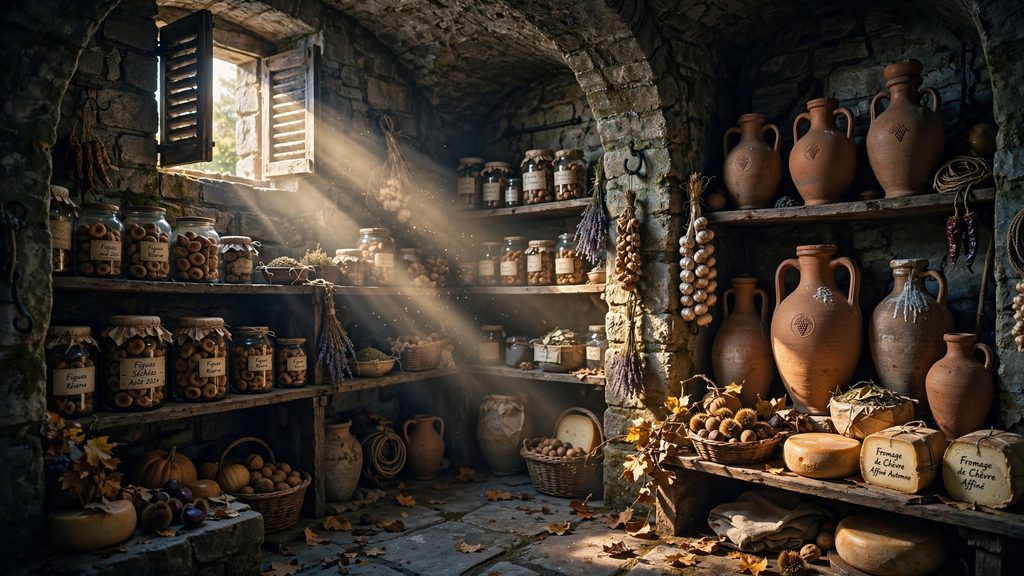
None of this required the beach to be less full or the Meltemi to stop blowing. The two calendars, the tourist’s August and the harvest’s August, have always run alongside each other rather than in competition, one visible from the coast road and one visible only if you turn inland toward the vineyards and the fig groves and the threshing floors where the actual closing of the Greek summer has been happening, in more or less this same form, for longer than anyone currently doing it could tell you.
At Olympus Estate, Food and Seasonal Life traces the customs, tastes, and rituals that still shape everyday life in Greece. Opora, the ancient Greek word for the late-summer harvest season, names the closing weeks of August that the tourist calendar rarely shows: the sixth of August blessing of the first grapes, the fig harvest urgent enough to earn the month its old nickname Sykologos, and the Byzantine name Kleidochronias, the lock and key of the year, for the month that seals in the summer’s provisions while remaining the only way to reopen them later. Santorini’s Vendema begins in early August on some of the world’s oldest vines. Zakynthos dries its raisins on threshing floors. Ikaria blesses its earliest grapes in July. And trahanas, made from summer’s last milk and the new wheat, carries the whole season quietly into winter. The beach calendar and the harvest calendar run side by side, and only one of them ever stops for a swim.