



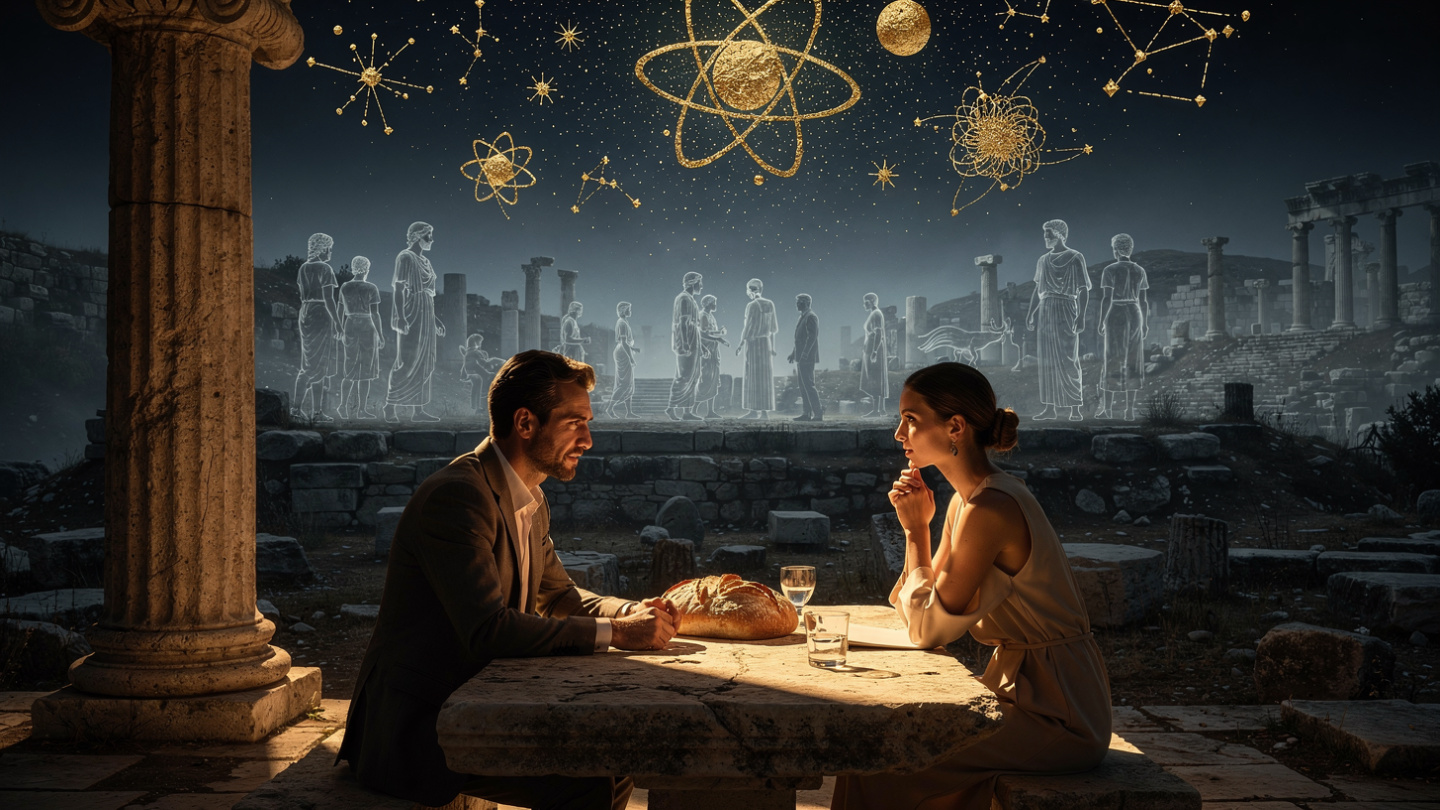
The word Epicurean in the contemporary world means someone who pursues sophisticated sensory pleasure: careful wine selection, the elaborate meal, comfortable surroundings chosen for their quality. Calling yourself an Epicurean today announces a relationship to pleasure built around cultivated appreciation of the finest available physical goods.
Epicurus taught the opposite of this.
The gap between what his name now means and what he actually taught is not a minor misreading careful attention to the texts would correct in a footnote. It is one of the most complete inversions of a philosophical position in the Western tradition. The word produced by a philosopher who taught that bread, water, simple cheese, and the company of friends in a garden were the sufficient conditions of a happy life has come to mean nearly the opposite of everything he actually argued.
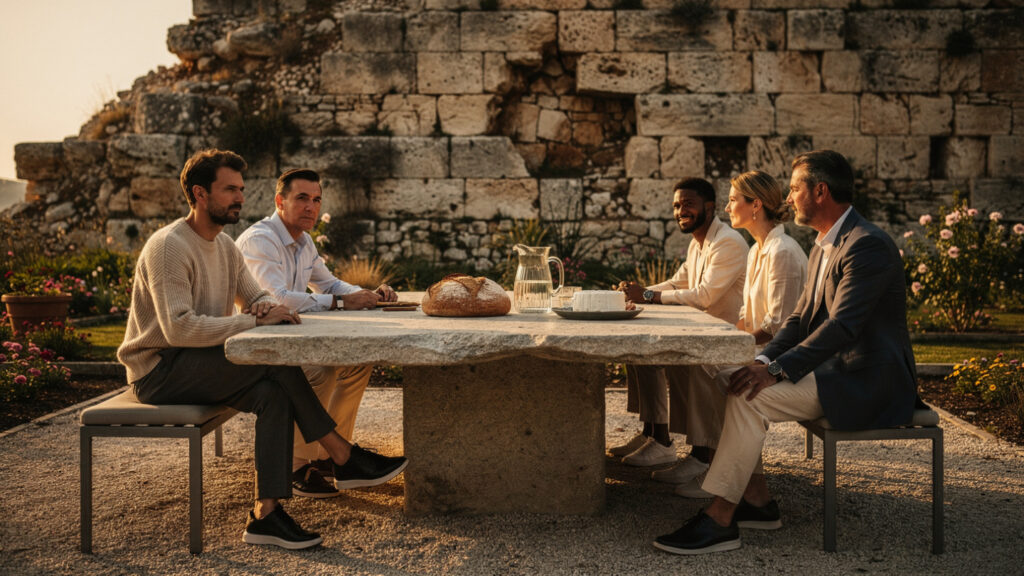
Epicurus taught that the greatest available pleasure was freedom from pain and freedom from fear. He called these ataraxia, the undisturbed soul, and aponia, the absence of physical pain. He recommended simple, easily available pleasures over complex, effortfully acquired ones, not because he believed pleasure itself was bad, but because he had analyzed the structure of pleasure and pain closely enough to see that pursuing elaborate pleasures consistently produced more pain than pleasure, through the anxiety of acquiring them and the disappointment of losing them.
The person who pursues the sophisticated wine risks the disappointment of the inferior vintage, the anxiety of acquiring it, and the loss that follows once the good bottle’s last glass is gone. The person who drinks water drinks water. The pleasure is not the same. But water produces none of that anxiety of acquisition, none of that disappointment at an insufficient bottle, none of that loss when the bottle empties. Calculated correctly across the full sequence of the experience, the water wins.
This is not a recommendation for poverty or austerity. It is the conclusion of a philosopher who had done the actual calculation, arriving at exactly what the contemporary word “Epicurean” now obscures most completely: the good life is organized around pleasures that are easily available and least liable to anxiety and disappointment, and those pleasures are, overwhelmingly, the simple ones.
The Argument About Death
The most important of Epicurus’s arguments, and the one that gives the whole Epicurean program its deepest foundation, concerns the fear of death.
Epicurus argued that death was nothing to the person who died: where death is, we are not, and where we are, death is not. The fear of death, on this account, is fear of an experience the fearing person will never actually have, because the dead do not experience being dead. They have simply ceased to experience anything at all. Death is not a condition the dead inhabit. It is the absence of every condition, including the condition of having any experience whatsoever.
The practical consequence was exactly what the Epicurean program was designed to produce: someone who genuinely grasped this argument could no longer rationally fear death, because the fear was, by the argument’s own logic, fear of something that could never actually be experienced. The energy an ordinary person pours into anxiety about future non-existence, an anticipation that quietly organizes a large share of anyone’s psychological life, was energy Epicurus proposed to free up entirely for the pleasures of the present.
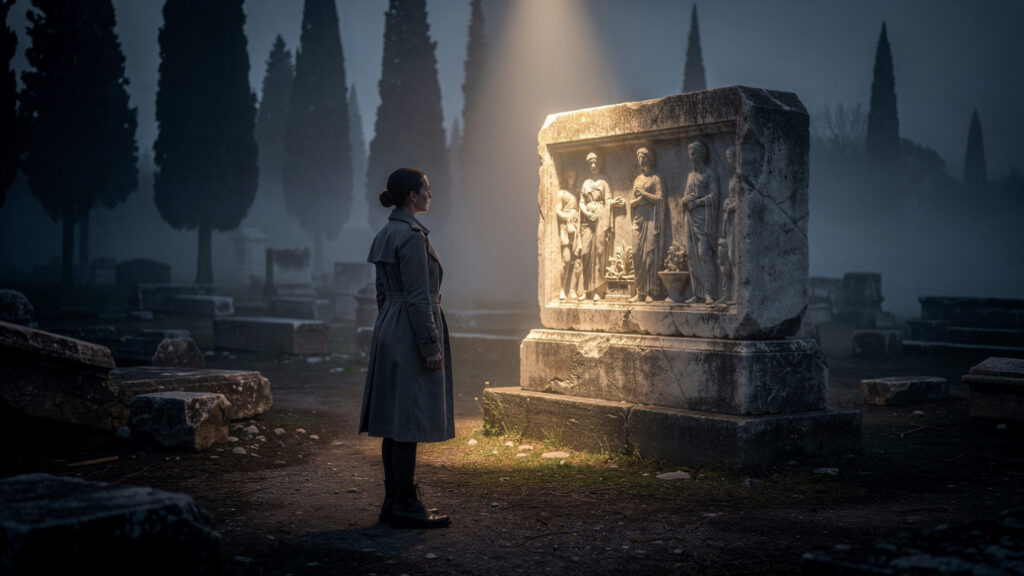
This is the ancient philosophical argument that speaks most directly to what contemporary therapeutic thought recognizes as one of the deepest sources of ordinary psychological suffering: existential anxiety about the finitude of a life, and the way that anxiety quietly distorts daily choices. Epicurus argued that the liberation from this anxiety was available to anyone willing to actually follow the argument through, and that this liberation was the precondition for the good life becoming fully available at all.
The argument offers no comfort in the usual sense. It does not promise an afterlife or reassure you that the death of the self is not what it appears to be. It offers a logical case that fearing death is irrational, and the practical payoff of freeing the psychological energy that fear had been consuming for the pleasures actually available in the present.
The Argument About the Gods
Epicurus did not deny the gods existed. He argued instead that beings who were blessed and immortal could have no interest in human affairs, and required neither worship nor propitiation. A god genuinely blessed and undisturbed could not, consistent with that very character, also be occupied managing human affairs, punishing transgressions, and rewarding worship, since all of that would make the god’s own condition dependent on the outcomes of human choices, and a being whose condition depends on human choices is not, by definition, perfectly blessed and undisturbed.
The gods of Epicurean physics lived in the intermundia, the spaces between worlds, in a state of perfectly organized atomic arrangement that constituted perfect and permanent blessedness. They had no connection to the human world. They required nothing from it. They punished nothing and rewarded nothing. They were the philosophical model for ataraxia itself: beings whose undisturbedness was simply permanent, rather than something a human being had to achieve and maintain through daily philosophical practice.

The practical consequence was the second liberation Epicurus identified alongside freedom from the fear of death: freedom from fear of divine punishment and displeasure, the anxiety the traditional Greek religious world had organized a great deal of ordinary life around managing. Someone who understood that the gods were simply not engaged in human affairs at all could live without the low hum of anxiety about divine displeasure that traditional religion had installed as a kind of permanent cosmic surveillance.
This made Epicurus, in a real sense, the most theologically dangerous of the ancient Greek philosophers, in that his theology challenged religious and social authority more directly than any rival’s did. Socrates had been executed for impiety, but Socrates’s own theological position had actually taken the divine more seriously than official religion did. His daimon, the inner divine voice, was the theological novelty the impiety charge existed to punish. Epicurus argued something considerably more radical: that the divine was simply not engaged with the human world at all.
The Garden
What Epicurus established in Athens around 306 BCE was nothing like the Academy or the Lyceum, whose architecture and organization followed the model of the civic and military institutions of the wider Greek world.
The Garden was a garden. Epicurus bought a property outside the walls of Athens, near the Dipylon Gate in the Kerameikos district, and built his philosophical community in and around a cultivated plot organized around exactly the simple pleasures the philosophy recommended. The community grew its own food, shared meals communally, and built its philosophical practice around conversation among friends in the garden itself, rather than the formal lecture and disputation of an institutional school.
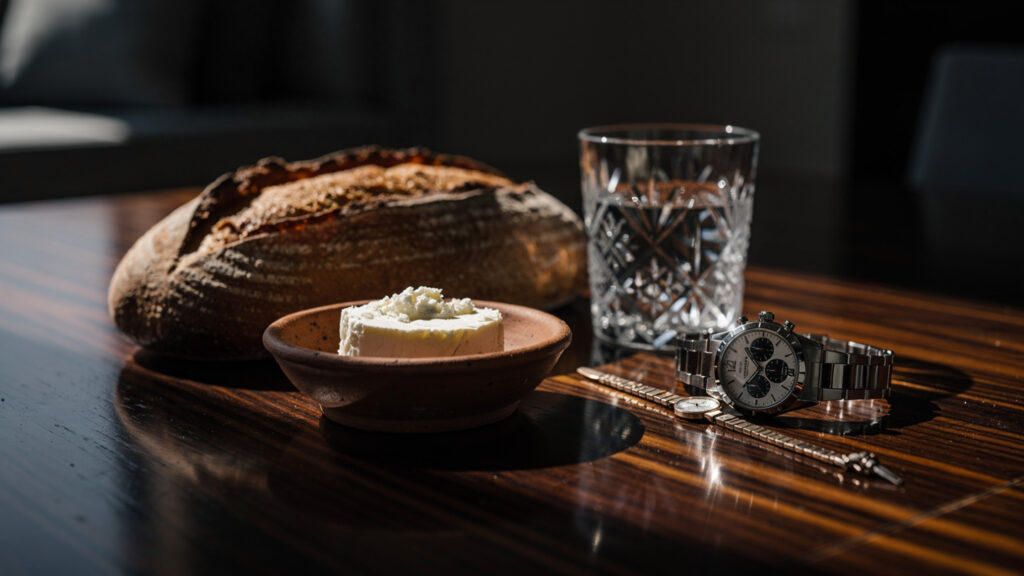
The Garden’s whole character as a community built around simple pleasures was the philosophy given institutional form: a school that taught ataraxia was itself organized around practicing ataraxia, its daily life the most direct demonstration available of what the philosophy actually claimed. Epicurus did not simply argue that simple pleasures were sufficient for the good life. He lived inside a community where that was the daily practice, and the community’s shared experience was itself the evidence the argument needed.

The Garden admitted women and slaves as full philosophical participants, a challenge to the Athenian social order neither the Academy nor the Lyceum ever made in the same form. Plato’s Academy excluded women from full participation, and the Lyceum’s own social organization simply reproduced the Athenian civic educational world built around the free male citizen class. The Garden’s inclusion of women and slaves was the philosophical position made visible in practice: that the argument about the good life was available to anyone capable of understanding it, whatever social identity Athenian civic order happened to have assigned them.
Epicurus and Samos
Epicurus was born on the island of Samos in 341 BCE, the son of an Athenian schoolteacher who had settled there as part of the Athenian cleruchy, the colonial settlement Athens established on Samos in 365 BCE after expelling the island’s original population. This colonial background shaped the young Epicurus’s position in Samian society: Athenian by citizenship, Samian by residence, occupying exactly the boundary between two communities without fully belonging to either.
Samos was also the island of Pythagoras, born there in the sixth century BCE before leaving to found his own philosophical community at Croton in southern Italy. The same island gave the Western tradition its first systematic mathematical philosopher and, centuries later, a philosopher whose account of pleasure and pain remains one of the most practically useful ever written. Both men share more than a birthplace. Both built their philosophy around a practiced way of life rather than argument alone: Pythagoras’s Croton community was organized around the practices of Pythagorean living exactly as the Garden was organized around the practices of Epicurean living.

The Samian landscape that shaped Epicurus’s earliest years combined agricultural fertility, active maritime commerce, and the political weight of Athenian colonial presence, giving daily life on the island a particular character: the tension between the simple and the elaborate, the agricultural and the commercial, the self-sufficient and the dependent, was visible there in a way few places made so plain. The philosopher who would go on to teach that the simple life was sufficient for happiness grew up somewhere that contrast was never far from view.
What Epicurus Actually Recommended
The content of the actual Epicurean good life, drawn from the surviving fragments and from the Letter to Menoeceus, the Letter to Herodotus, and the Vatican Sayings, is the clearest available demonstration of just how far the contemporary word has drifted from what he taught.
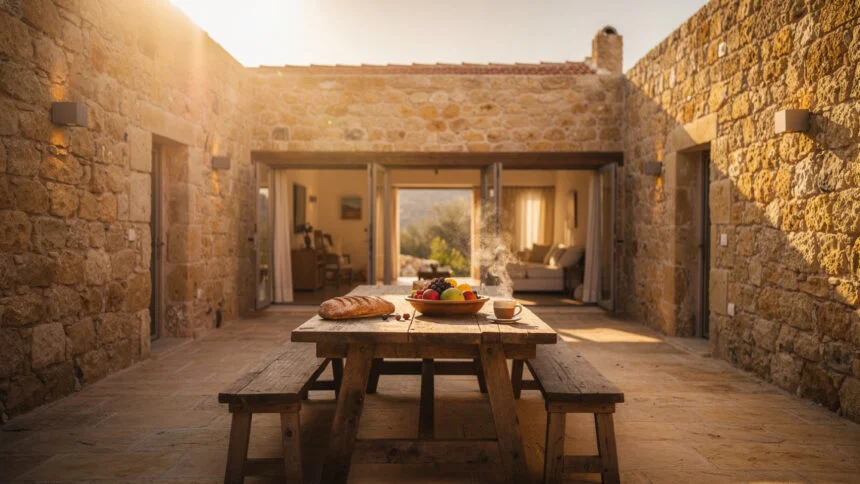
Epicurus recommended bread, water, and occasionally cheese. He wrote to a friend that he was well and happy on bread and water, and would be grateful for a small pot of cheese for the occasion when he wanted to feast luxuriously. This was not an ascetic gesture. It described a diet whose simplicity meant freedom from all the anxiety elaborate food creates: no worry about ingredient quality, no concern about preparation or occasion, no disappointment at an inferior version of some desired dish.
The social practice he recommended most consistently was friendship. The philosophical tradition preserves his claim that of everything wisdom provides for a good life, by far the greatest is friendship itself. This was not the performed bond of social equals maintained through the reciprocal favors Aristotle‘s own account of civic friendship required. It was genuine mutual care and shared philosophical commitment, built around honest conversation, a shared simple meal, and mutual support through the ordinary difficulties an honest life runs into.
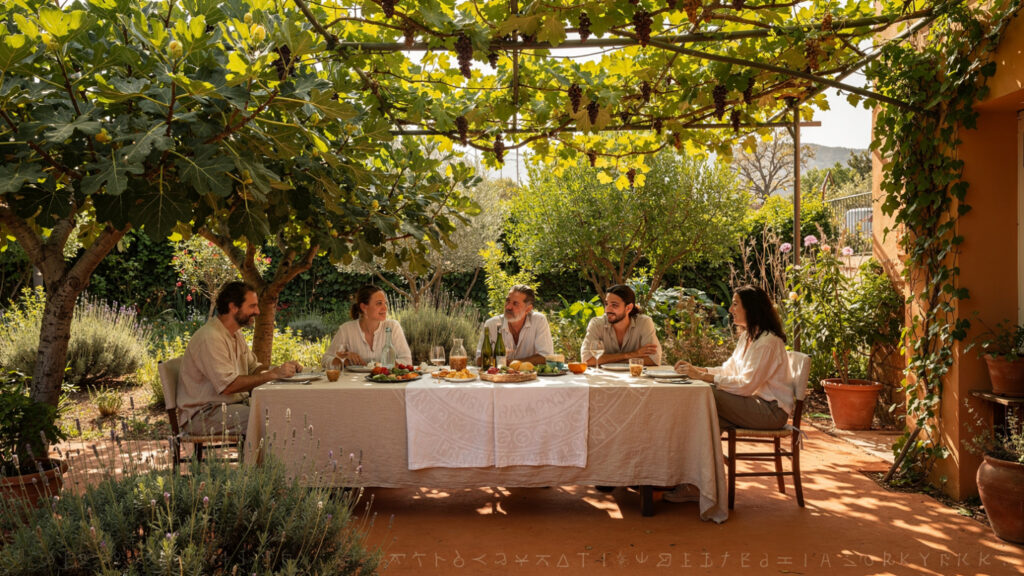
The daily practice of ataraxia meant withdrawing from the social world’s most anxiety-producing activities: political ambition, commercial acquisition, the pursuit of social recognition that consumes so much of most people’s psychological energy without their ever quite noticing. Live unknown was the Epicurean injunction: withdraw from the forms of public life whose participation demands exactly the anxiety-management the whole philosophy was built to make unnecessary.
The Epicurean Tradition After Epicurus
The school Epicurus founded at the Garden maintained continuous institutional life through a succession of leaders from his death in 271 BCE well into the late Roman period, roughly six centuries of continuity unmatched by any other ancient philosophical school.
Epicurean communities across the Greek and Roman world kept the Garden’s essential character: small communities built around shared simple pleasures, philosophical conversation, and communal meals, deliberately enclosed from the anxious public world outside. Communities flourished at Herculaneum, whose philosophical library the eruption of Vesuvius preserved as carbonized papyrus rolls recovered by eighteenth-century excavation, and at Aphrodisias in Asia Minor, and across the Roman world, where Lucretius’s poem De Rerum Natura preserved the fullest surviving account of the tradition’s engagement with Roman intellectual life.

Lucretius’s De Rerum Natura, a first-century BCE Latin poem, is the most sustained and intellectually ambitious surviving expression of Epicurean thought in verse: the arguments about death, the gods, and the structure of pleasure and pain, rendered with enough literary ambition to match Lucretius’s own conviction that an argument capable of freeing a person from the fear of death deserved the full resources of the Latin hexameter tradition.
The poem survived the medieval period through a single surviving manuscript line, rediscovered by the humanist scholar Poggio Bracciolini in a German monastery in 1417, an event Stephen Greenblatt’s The Swerve develops as one of the catalysts of the Renaissance’s engagement with ancient philosophy. That rediscovery carried the Epicurean argument about death and its materialist cosmology forward into the intellectual world that eventually produced the seventeenth-century scientific revolution and the political philosophy of the Enlightenment, whose own serious engagement with Epicurean thought gave the philosophy its continued relevance.
Visiting the Garden’s Athens
Ancient sources consistently place Epicurus’s Garden near the Dipylon Gate, the principal gate at the northwestern corner of the ancient walls, the entry point for roads from the north and northwest through which the philosophical and commercial life of the wider Greek world entered the city.
The Kerameikos district, the cemetery and ceramic-working area just outside the Dipylon Gate, sat neither fully inside the city’s institutional world nor fully outside it, and its contemporary archaeological site preserves the most direct physical access available to the space where the Garden once stood.
The Kerameikos site combines an ancient cemetery with its grave monuments, an ancient road system, and the remains of ceramic workshops, giving it the character of the ancient city’s most continuously inhabited and most layered residential area. Its quiet, and the combination of funerary and domestic remains, gives a contemporary visitor the most direct available sense of the ancient city’s daily life, away from the civic and ceremonial spaces the Agora and Acropolis preserve.
Walking through the Kerameikos with the Epicurean argument in mind means walking through the very neighborhood where the argument about the fear of death was developed, in the immediate vicinity of the city’s most concentrated space of funerary practice, of grave monuments and mourning ritual. The philosopher who argued that death was nothing to the dead person built his philosophy in the shadow of exactly the funerary world his argument was meant to make unnecessary.
The Agora, the anxious civic and commercial heart of the city that the Epicurean injunction to live unknown was aimed squarely against, sat inside the walls while the Garden sat outside them, and the physical distance between the two spaces was itself the spatial expression of the philosophical distance between two entirely different ways of organizing a daily life.
The Misrepresented Legacy
Understanding how the Epicurean vocabulary came to mean the opposite of what the philosophy taught gives the contemporary reader exactly the kind of reflection the philosophy itself was built to produce.
The historical mechanism runs through the tradition’s opponents. The Stoics consistently caricatured the Epicurean position as simple hedonism, pleasure pursued without any of the analysis that actually structured it. Early Christian writers, meanwhile, attacked the Epicurean denial of divine management over human affairs and divine punishment, precisely because Christian theology had organized so much of a convert’s psychological life around maintaining fear of exactly that punishment.
The irony is worth sitting with, because recognizing it is the first real step of applying Epicurus’s own philosophy today: anyone who calls themselves an Epicurean on the strength of the word’s current meaning has built their self-description around the precise inversion of the philosophy that would most directly free them from the anxiety Epicurus spent his life arguing against, and demonstrating against, in the daily practice of the Garden’s simple pleasures.
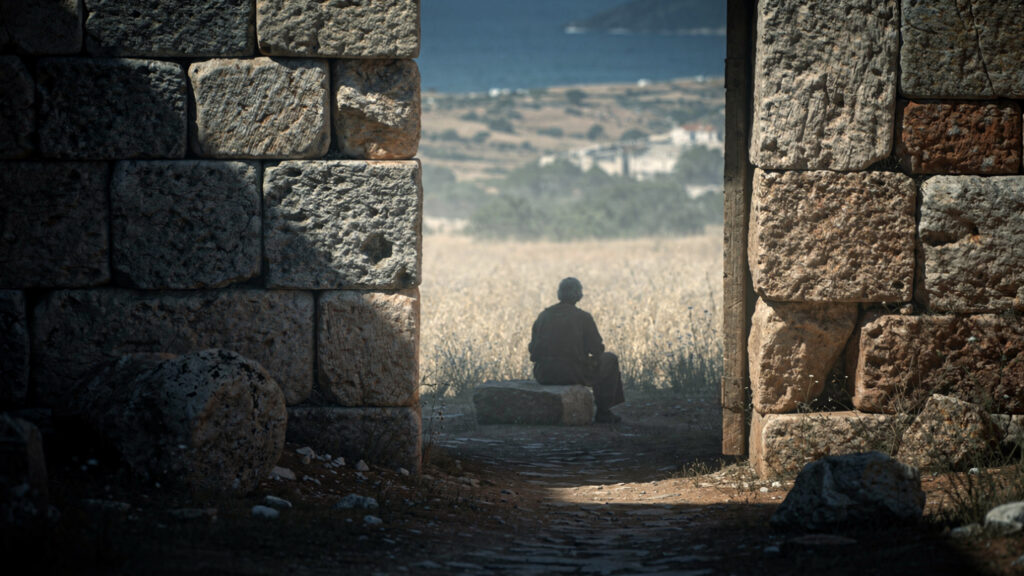
Bread and water and simple cheese are still available. The anxiety of the elaborate meal and the sophisticated wine is still exactly that anxiety. The argument Epicurus made about the structure of pleasure and pain is still the argument the calculation requires, if the goal is actually escaping the anxiety the elaborate pleasures create.
The Garden is still, in spirit, outside the Dipylon Gate toward the Kerameikos cemetery. The philosopher who built his argument about the fear of death in the shadow of the city’s funerary ground remains the source of the most practically useful account available of what a good life actually requires, a phrase whose common meaning now stands for almost exactly its opposite.
At Olympus Estate, Mythic Essays moves through the deeper currents of the Greek tradition. Epicurus taught that bread and water and simple cheese and the company of friends in a garden were the sufficient conditions of the happy life. The word his name produced means the sophisticated wine and the carefully selected restaurant. He argued that death was nothing to the dead person and that the gods had no interest in human affairs and that the pursuit of the elaborate pleasures produced more anxiety than pleasure. He established the Garden outside the Dipylon Gate near the city’s cemetery and admitted women and slaves as full philosophical participants. He was born on Samos, the island of Pythagoras. Thomas Jefferson called himself an Epicurean. The Garden is still outside the city. The bread and water are still available. The anxiety of the elaborate is still the anxiety of the elaborate.