





The biological classifications Mentha viridis and Mentha spicata identify the perennial herbs derived from the mythological nymph Minthe. Archaeological evidence from Mycenaean sites includes Linear B tablets that record the term mi-ta, proving the systematic use of the plant as early as 1450 BC. Chemical analysis of organic residues in ceremonial vessels at the Telesterion in Eleusis confirms the presence of pulegone, a psychoactive monoterpene found in Mentha pulegium. This herb was the essential ingredient in the kykeon, the drink consumed during the Eleusinian Mysteries. Greek physicians including Dioscorides documented the plant in the Materia Medica as a treatment for gastrointestinal distress and respiratory congestion. The plant produces menthol, which activates cold sensitive TRPM8 receptors and creates a physiological cooling sensation. During Classical funerary rites, mint was used to mask the odors of biological decay. It remains a primary botanical component of the Mediterranean ecosystem.
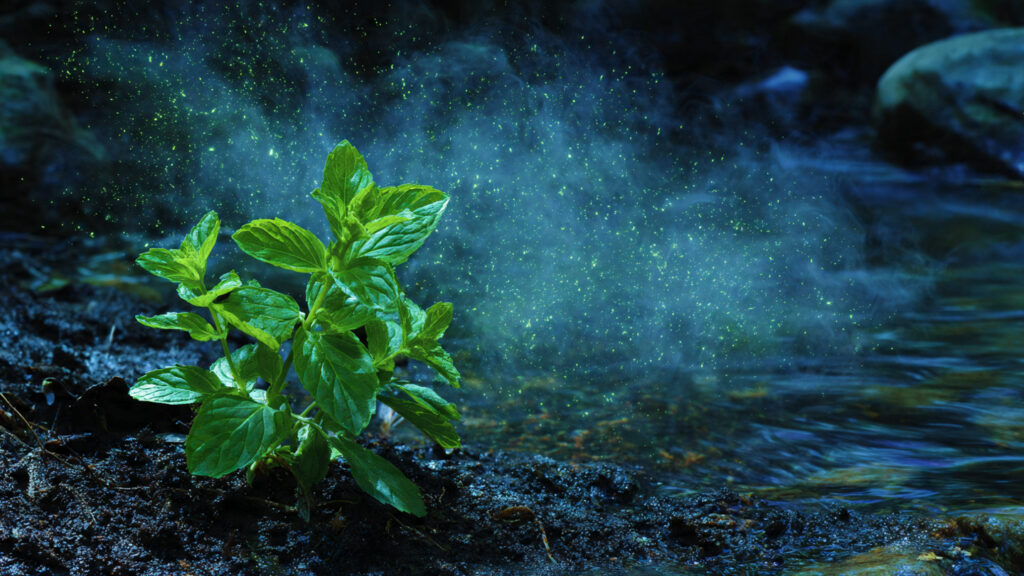
The Lousios River in Arcadia flows through a deep limestone gorge. The water moves over dark moss covered boulders and the air is heavy with the smell of wet earth and crushed vegetation. In the shaded margins where the soil remains damp, wild mint grows in thick clusters.

The leaves are small and dark green with serrated edges. When stepped upon, they release a sharp volatile oil that cuts through the humidity. This is the physical landscape of the nymph. The stones are slick with moisture. The sound of the river is constant. There is no human noise in this section of the gorge. The scent is the only indicator of a hidden presence and it is a biological reality rooted in the damp earth of the Peloponnese.
The Biological Origin of the Mentha Genus
The Mentha genus contains about twenty five species of aromatic herbs within the Lamiaceae family. These plants have square stems and opposite leaves. Wild mint in the Greek mountains is often a hybrid of these primary species. The plant survives through underground rhizomes that allow it to spread across damp soil with aggressive force. Volatile oils form in specialized glandular trichomes on the leaves. These oils defend the plant from herbivores. The scent functions as a chemical warning and a signal of physiological strength.

Archaeological records from the Palace of Pylos show that herbs were managed as state commodities. Linear B tablets list mint, coriander, and cumin stored in royal magazines. The Mycenaeans used these plants for culinary, medicinal, and ritual purposes. They also produced perfumed oils by steeping herbs in olive oil or almond oil. These early industrial processes formed the foundation of Greek herbalism. This was organized economic activity rather than casual experimentation.

The plant thrives in environments with high soil moisture and partial shade. Rivers and springs provide the conditions it requires. The limestone soil of Arcadia is rich in minerals and the water temperature remains stable. The biology of the plant is inseparable from the geography of the region.
The Underworld Jurisdiction and the Cocytus Nymph
In the structure of the Underworld, Minthe held a distinct position. She was a naiad linked to the Cocytus, the river of wailing. Mythology describes her as the companion of Hades before his union with Persephone. This connection suggests an ancient link between the herb and the unseen world. The Cocytus marked the boundary between existence and the void. Minthe lived at this threshold.
Hades represented permanence and the hidden wealth of the earth. This included minerals and the roots of plants. Mint was used to purify the air in spaces touched by death. Its scent replaced the smell of decomposition and created a sensory bridge for the living. The myth of the nymph explains this olfactory function through narrative rather than chemistry.

The arrival of Persephone disrupted this earlier order. The wild nymph was replaced by the queen. This shift reflects the movement from river based spirituality to agricultural religion. The mint plant remained as the fragrant remnant of that earlier world.
The Legislative Transformation by Persephone
The transformation of Minthe was an act of judgment. Persephone did not destroy her. She changed her state of being. The goddess trampled the nymph into the soil and the herb emerged from that impact. Greek metamorphosis preserves essence while removing agency. Minthe lost her voice and gained a permanent scent. She lost her form and gained wide distribution. This was expansion through contraction.
The act of trampling mirrors the biological release of fragrance. Mint must be bruised or crushed for its oils to escape. The cell walls must break. Persephone’s anger created the condition for the plant’s fame. Wild mint thrives in disturbed ground. It grows along pathways where footsteps release the memory of the nymph.

By turning Minthe into a plant, Persephone placed her within the agricultural cycle governed by Demeter. The nymph became a household resource rather than a wild river force.
The Chemistry of the Kykeon and Ritual Perception
The Eleusinian Mysteries centered on the consumption of the kykeon, a mixture of water, barley, and mint. Mentha pulegium is one of several candidates scholars have proposed for the drink’s more potent effects, alongside ergot-based theories involving the barley itself. Pennyroyal contains pulegone, which is toxic in high doses and psychoactive in smaller ones, and the debate over which ingredient did the real work remains genuinely unresolved.
Pulegone acts on the central nervous system and can alter perception. This enhanced the sensory impact of the initiation rites. The ritual combined darkness music and chemical stimulation. Mint cooled the throat while the compound affected the mind.

The kykeon also connected initiates to the myth of Demeter. During her mourning she refused wine and requested barley and mint. Mint became the scent of the searching mother.
Medicinal Records and the Materia Medica
In the Materia Medica, Dioscorides described several types of mint. He noted their ability to warm the stomach and ease digestion through carvone and menthol. These compounds relax the smooth muscles of the digestive tract.
Mint also served as a stimulant. Its sharp scent was believed to sharpen focus. Students and orators used it to maintain clarity. Menthol opens the airways and increases oxygen flow.

The Corpus Hippocraticum lists mint as a treatment for skin irritations coughs and digestive issues. It was the pharmacy of the poor and widely available.
The Archaeological Evidence of Herbal Trade
Excavations at Akrotiri on Thera uncovered carbonized herbs including mint from the seventeenth century BC. The trade in dried herbs connected islands with the mainland and Greece with the Levant.
Mint was stored in narrow necked ceramic vessels designed to preserve volatile oils. The Greeks understood that the power of the plant lived in its scent. If the scent faded the medicine was lost.

Linear B tablets from Knossos record the distribution of mint to sanctuaries. This confirms its ritual importance. Myth and economy formed a unified system.
The Geographic Reality of Modern Greek Mint
Today wild mint grows across the Greek peninsula especially in the Peloponnese and Epirus. The plant still seeks water and shade. Travelers encounter the scent of Minthe on paths leading to ancient sites.
Cultivation remains a local industry. Farmers in Thessaly grow Mentha spicata for the global market. High menthol content defines Greek varieties.
The plant survives fire and drought by retreating into its rhizomes. When rain returns mint is the first to emerge. This resilience reflects its mythic identity. It is the plant that cannot be erased.
The Scent as a Mechanism of Memory
The human brain processes scent in the limbic system, the center of emotion and memory. Mint’s sharp fragrance acts as a powerful mnemonic device. A single encounter can recall an entire event.
The Eleusinian initiates would smell mint throughout their lives and remember the Telesterion.
Wild mint’s persistence in the landscape ensures that these memories remain alive. The scent is a biological archive. Minthe is the guardian of this archive.
The Technical Execution of Herbal Preservation
Modern preservation of Mentha species uses cryopreservation to protect genetic diversity. Climate change and overgrazing make this essential.
Mint oil extraction uses steam distillation, a refinement of ancient methods. The goal is to capture volatile monoterpenes, the physical expression of Minthe.
The best oils come from plants grown in limestone soils at high altitude. Environmental stress increases the production of secondary metabolites and strengthens the fragrance.
The Final Presence of the Fragrant Nymph
The story of Minthe returns to the water. The nymph is gone and the plant remains. The scent moves through the air with calm precision. It does not demand attention. It simply exists.
At Olympus Estate, Mythic Essays moves through the deeper currents of the Greek tradition. Minthe was a naiad linked to the Cocytus, the river of wailing, and was the companion of Hades before his union with Persephone. Persephone did not destroy her. She trampled the nymph into the soil and the herb emerged from that impact. Minthe lost her voice and gained a permanent scent. She lost her form and gained wide distribution. Mint must be bruised or crushed for its oils to escape: the cell walls must break. Persephone’s anger created the condition for the plant’s fame. Linear B tablets from Pylos and Knossos record mint stored in royal magazines and distributed to sanctuaries. The kykeon of the Eleusinian Mysteries likely contained Mentha pulegium, whose pulegone content enhanced the sensory impact of the initiation rites. Wild mint thrives in disturbed ground and grows along pathways where footsteps release the memory of the nymph. The nymph is gone and the plant remains. The scent moves through the air with calm precision. It does not demand attention. It simply exists.