



The oracle at Delphi was right about Croesus.
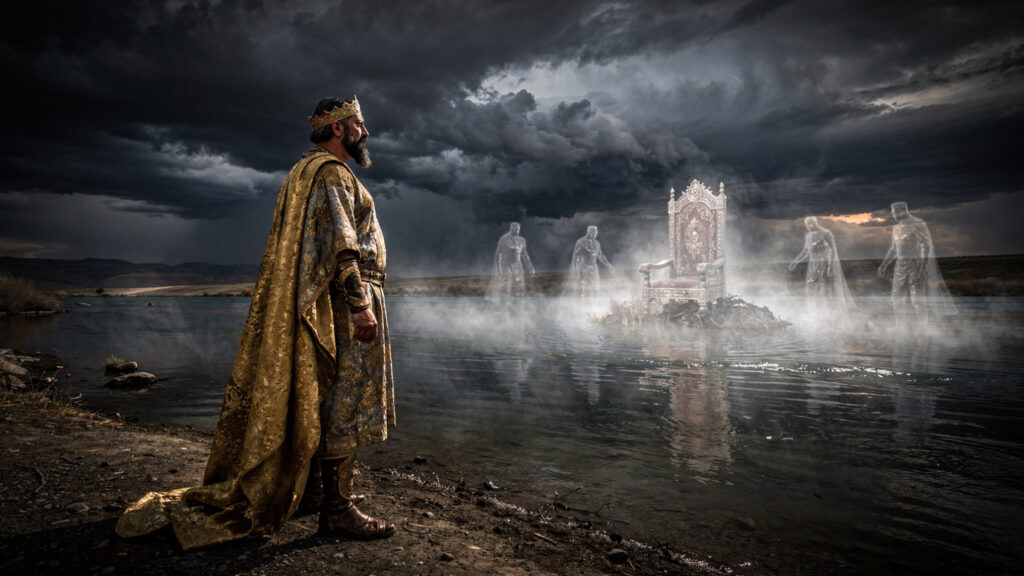
Croesus, the king of Lydia whose wealth was proverbial in antiquity and whose name became the standard Western reference for extraordinary riches, consulted the Delphi oracle before his campaign against the Persian Empire of Cyrus the Great. The oracle told him that if he crossed the Halys River and made war on the Persians, he would destroy a great empire. Croesus crossed the Halys and was defeated decisively. The empire he destroyed was his own.
The oracle’s response was not wrong. It was ambiguous in the way that the oracle’s responses were consistently ambiguous: it told the truth while leaving the critical interpretive work to the recipient, who brought to the oracle’s words the bias of wanting to hear confirmation of what they had already decided. The oracle’s genius, if that is the right word for the institution’s intellectual achievement, was the genius of a communication system that delivered genuine information about the structure of the situation while refusing to specify which of the available interpretations of that information was correct. The person who consulted the oracle received not a prediction but a problem: the oracle’s words, and the question of what they meant.
This quality of the oracle’s responses is what has most consistently frustrated the modern reader who wants to dismiss Delphi as a fraud and most consistently surprised the modern reader who gives it serious attention. The oracle at its best was not a confidence trick. It was a sophisticated institution for managing the relationship between the known and the unknown in political decision-making, operating through a set of mechanisms whose character the ancient sources document and the modern geological investigation has substantially confirmed.
The Geological Mechanism
The question of what actually happened in the Adyton, the innermost sanctuary of the Temple of Apollo where the Pythia sat on her tripod and gave her responses, was the question that the ancient sources described without fully understanding the mechanism and that the twentieth century geology initially dismissed as either theatrical illusion or priestly manipulation.
The ancient sources are consistent and specific: the Pythia entered an altered state through the inhalation of pneuma, a breath or vapor that arose from a chasm in the earth of the Adyton. Diodorus Siculus described the pneuma as sweet-smelling. Plutarch, who served as a priest at Delphi in the late first and early second century CE and who wrote a philosophical dialogue specifically about the oracle’s decline, described the vapor in terms that suggest a psychoactive effect on the Pythia. The ancient sources also described the geological feature, the chasm in the rock of the Adyton, that the pneuma arose from.
The modern archaeological consensus through most of the twentieth century held that no chasm had been found beneath the Adyton and that the vapors were therefore either a priestly fabrication or a misunderstanding of some other feature of the sanctuary. This consensus was revised substantially in 2001 when the geologist Jelle de Boer and the archaeologist John Hale, working with the toxicologist Henry Spiller and the chemist Jeffrey Chanton, published their findings in Geology and Clinical Toxicology documenting the geological conditions of the Delphi sanctuary.
The research team found that two geological fault lines intersect directly beneath the Temple of Apollo: the Kerna fault running east-west and a secondary fault running north-south. The intersection of these faults creates the geological conditions in which groundwater interacts with bituminous limestone, releasing petrochemical gases that travel upward through the fault system to the surface. The gases documented at the site included ethylene and ethane, both volatile hydrocarbons, and methane.
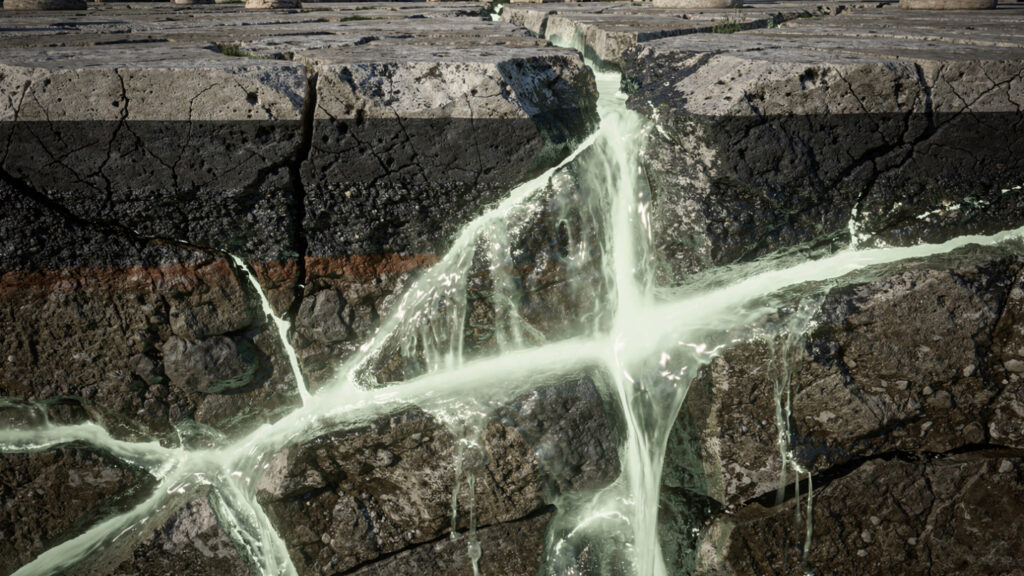
Ethylene is the critical finding. In concentrations between 20 and 30 percent of the air volume, ethylene produces a dissociated, trance-like state in the person who inhales it: a condition of altered consciousness in which speech continues but the normal filtering mechanisms of conscious self-editing are reduced. The person inhaling ethylene at the appropriate concentration is conscious, communicative, and in a state whose quality the ancient descriptions of the Pythia’s condition match with considerable accuracy. At higher concentrations, ethylene produces convulsions and loss of consciousness. The behavior that ancient sources describe as the normal Pythia response, altered but functional speech, corresponds to the moderate exposure range that the Adyton’s ventilation and the intermittent character of the fault emissions would have produced.
The geological finding does not make the oracle a simple matter of gas poisoning. The ethylene concentrations at the Delphi site would have varied with geological activity, with the seasons, with the conditions of any given consultation day. The ancient tradition that the oracle operated only on days of the year, originally the seventh day of the month Bysios in the spring, later more frequently as demand grew, may reflect the practical management of the irregular geological emissions: the consultation days were the days on which the conditions for the appropriate level of Pythia response were most reliably present.
The Pythia and Her Preparation
The Pythia was not a single person. She was an office, the holder of which changed across the oracle’s two-thousand-year operational history, though the office’s requirements remained consistent: the Pythia was a woman of Delphi, initially required to be a virgin, later modified to allow older women to hold the office while maintaining the dress and some of the ritual requirements of the original specification.
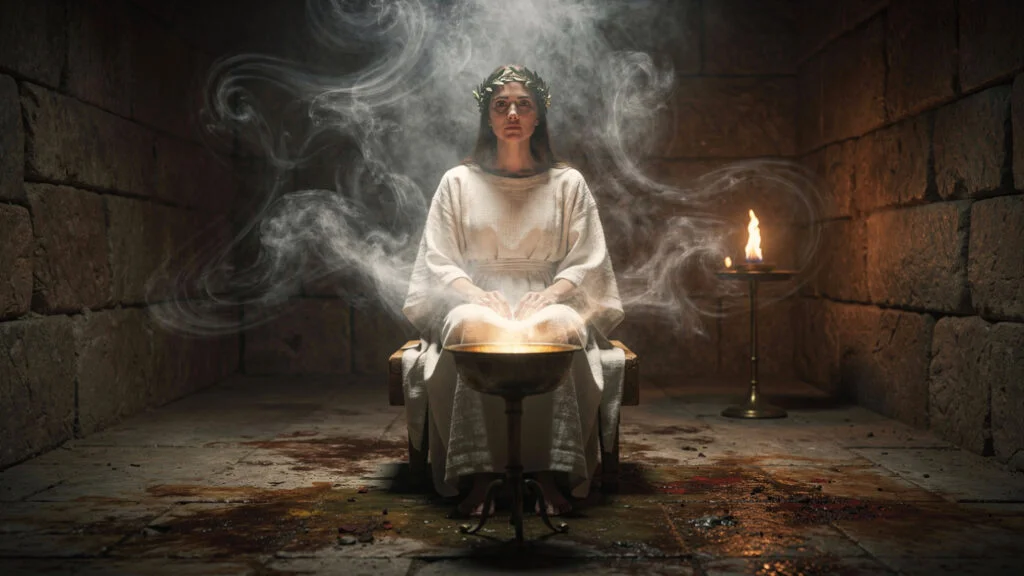
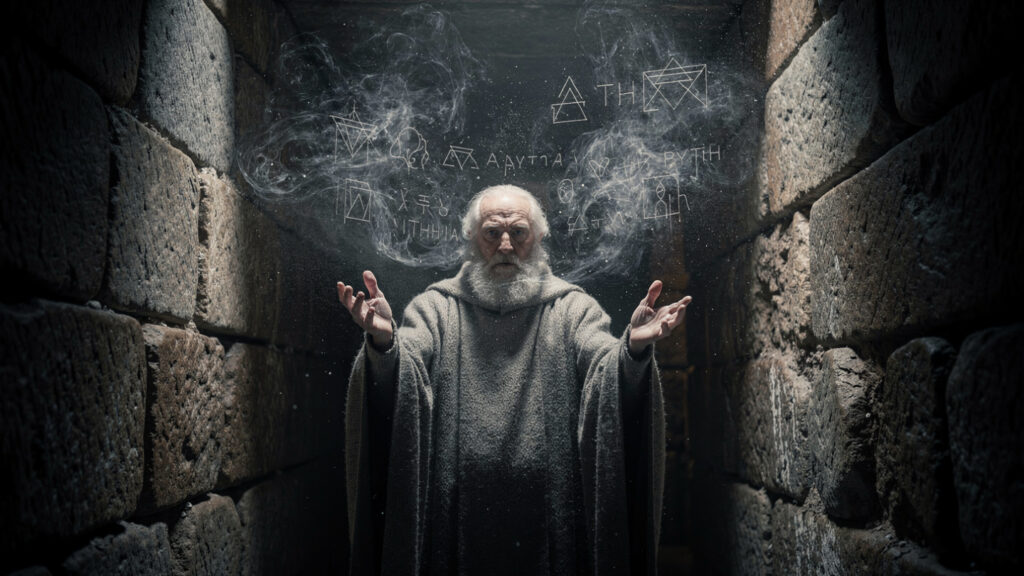
The preparation of the Pythia for the consultation ceremony was an elaborate ritual sequence whose stages the ancient sources describe with varying levels of detail but consistent overall structure. The Pythia fasted on the day before the consultation and bathed in the Castalian Spring, the sacred spring whose cold clear water ran from the cliff face to the east of the sanctuary. She chewed laurel leaves, which are mildly psychoactive, and drank from the Kassotis Spring inside the sanctuary itself, whose waters ran through the same geological fault system that produced the Adyton’s vapors and may have carried dissolved trace amounts of the same petrochemical compounds.

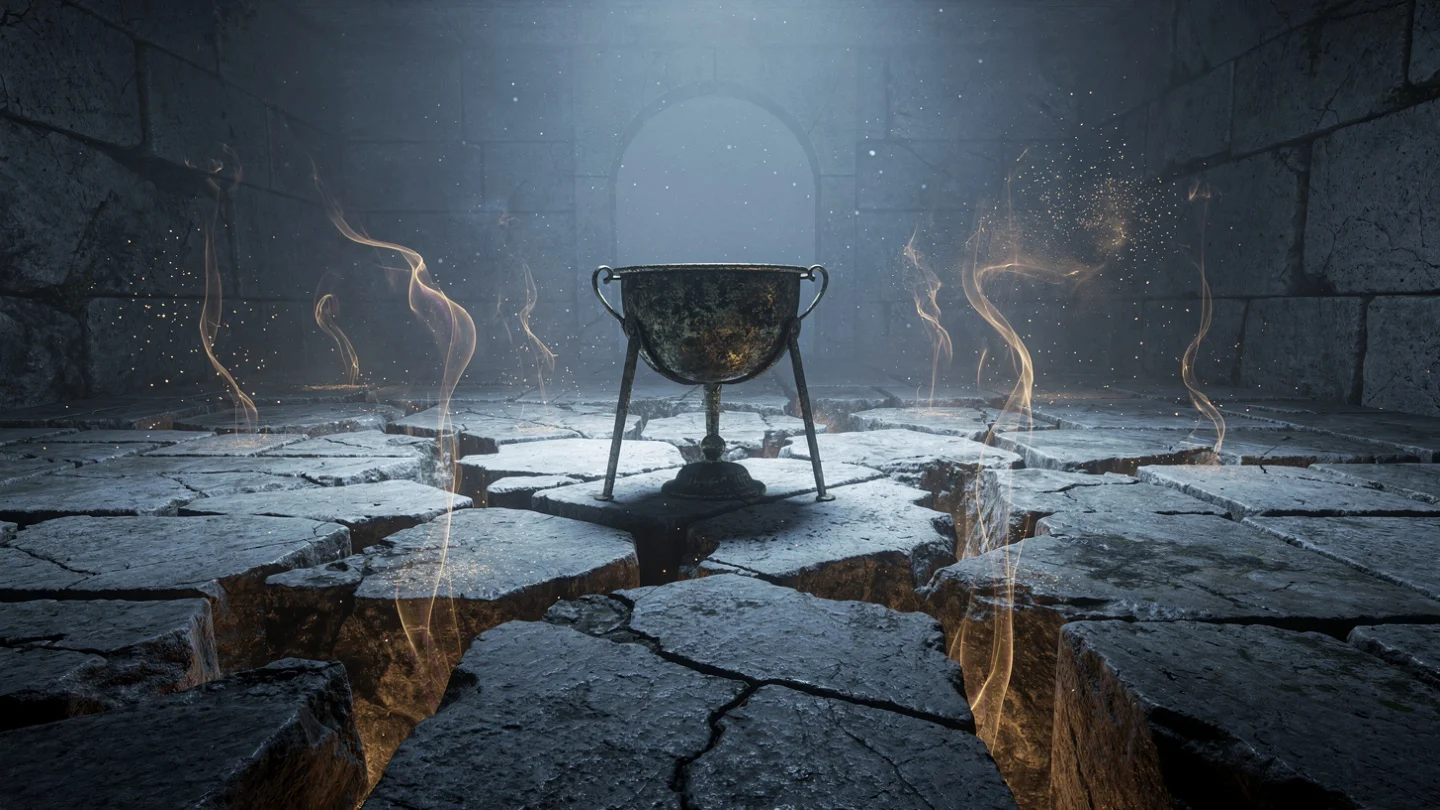
The consultation chamber, the Adyton, was a small enclosed space sunk below the floor level of the main temple, accessible by a narrow descending passage. The tripod on which the Pythia sat was positioned above the area of the floor where the geological fault was most active, and the combination of the enclosed space, the Pythia’s preparation fasting and ritual, and the atmospheric conditions of the Adyton produced the state in which the consultation took place.
The person consulting the oracle did not enter the Adyton directly: they presented their question through an intermediary system whose mechanics the ancient sources describe as involving the prophetes, the priests who managed the oracle’s operation, who transmitted the question to the Pythia and transmitted her response back to the consulter. Whether the consulter heard the Pythia’s actual utterances or only the prophetes’s rendering of them is a question the ancient sources do not resolve consistently: some accounts suggest the consulter could hear the Pythia’s voice from the Adyton, others suggest the prophetes mediated entirely.
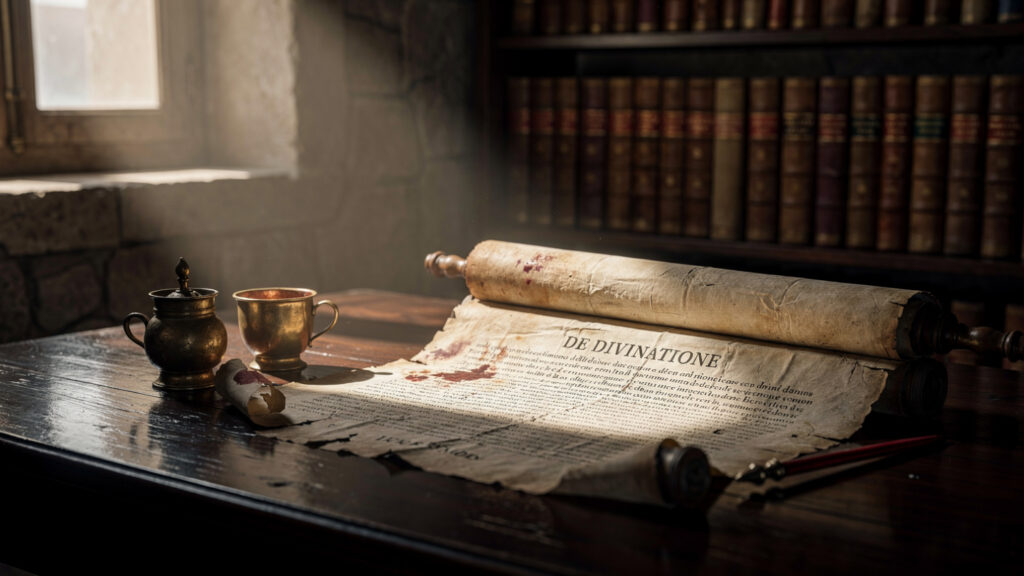
The question of how much the prophetes shaped the oracle’s response in transmission is the question that the ancient skeptical tradition, represented most extensively by Cicero’s De Divinatione, most persistently raised. Cicero was a philosophical skeptic about divination in all its forms, and his account of the Delphi oracle is the most sustained ancient argument that the prophetes’s role in rendering the Pythia’s utterances into hexameter verse constituted a degree of editorial control that made the oracle’s responses the prophetes’s responses more than the Pythia’s.
The ancient sources that present the oracle more sympathetically, including Plutarch, who had detailed insider knowledge from his service at the sanctuary, present the prophetes’s role as interpretive rather than creative: the Pythia produced the raw material of the divine communication and the prophetes gave it the form in which it could be delivered to the consulter.
The Ambiguity and Its Logic
The ambiguity of the oracle’s responses was not a defect in the institution’s operation. It was the institution’s most deliberate and most sophisticated feature, and the theological logic that justified it was the logic of a genuine philosophical position about the relationship between divine knowledge and human understanding.
The Delphic tradition’s own theological account of the oracle’s ambiguity was the account that Plutarch develops most fully in the dialogue On the Pythia: the god does not hide his meaning, and he does not declare it plainly. He gives signs. The sign is not the meaning but the direction toward the meaning, and the person who receives the sign must perform the interpretive work of moving from the sign to the meaning. The oracle that told Croesus he would destroy a great empire gave him a true sign. Croesus performed the interpretive work incorrectly, bringing to the sign the bias of his own expectation rather than the care that the sign required.
This is the theological claim that the Delphic tradition made about human responsibility in the consultation: the oracle provided the material for correct decision-making, and the human who consulted it was responsible for the interpretive work that the material required. The oracle’s ambiguity was the form in which human freedom was preserved in the consultation: if the oracle simply told the consulter what to do, the consulter’s subsequent action would be the oracle’s action rather than the consulter’s, and the human moral responsibility for the decision would be eliminated. The ambiguous oracle that required interpretation preserved the human’s moral authorship of the decision even while providing genuine divine input into its material.
The practical consequence of this theology was the character of the consultations that the ancient record preserves: the most significant consultations were the consultations where the question was asked badly, where the consulter brought a predetermined expectation to the oracle that shaped the interpretation of an inherently ambiguous response. Croesus asked whether he should make war on the Persians. He did not ask what the likely outcome of such a war was for his own empire versus the Persian empire. The oracle answered the question he asked rather than the question he needed to ask, and the failure was his.
The Consultations That Shaped History
The historical record of the Delphi oracle’s actual influence on the political decisions of the ancient world is the record that most directly challenges the modern dismissal of the institution as theatrical manipulation.
The most consequential single consultation in the political history of ancient Greece was the Athenian consultation before the Persian invasion of 480 BCE. The oracle’s first response to the Athenian delegation was unambiguously pessimistic: the sacred olive trees were burning, the wooden walls were falling, and the Athenians should flee. The delegation consulted again, as the tradition permitted when the first response was unacceptable, and the second response introduced the cryptic phrase that altered everything: the wooden wall alone shall remain unconquered, bringing joy to you and to your children. Themistocles interpreted the wooden wall as the Athenian fleet rather than the physical wooden wall around the Acropolis, persuaded the Athenian assembly to adopt this interpretation, and the fleet that was built on the basis of this interpretation defeated the Persian navy at Salamis.

The historical question is not whether the oracle predicted the Salamis victory, because it did not predict it in any direct sense. The historical question is whether the oracle’s response, interpreted by Themistocles in the way that Themistocles’s strategic intelligence suggested, was the mechanism by which the Athenian fleet was built and the Persian invasion was defeated. The answer that the historical record supports is yes: without the oracle’s wooden wall reference, and without Themistocles’s interpretation of that reference, the fleet that defeated Persia at Salamis would not have been built on the political basis that the oracle’s authority provided. The oracle’s ambiguity was, in this instance, not a deficiency but the quality that allowed the interpretation to do the political work that the strategic situation required.
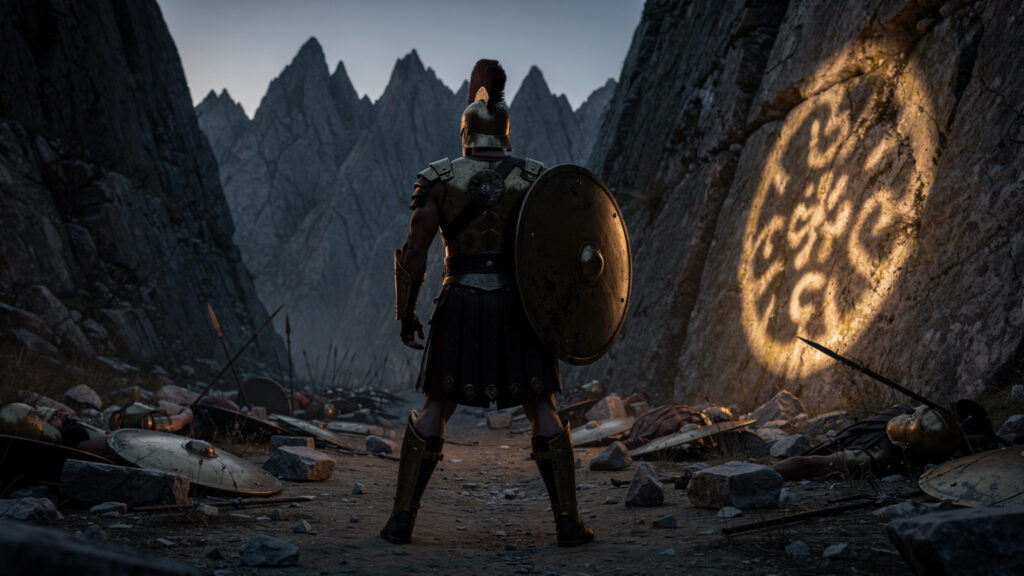
The Sparta consultation before Thermopylae is another instance of the oracle functioning in this way: the oracle told the Spartans that either their city would be destroyed or their king would die. Leonidas’s decision to hold the pass with three hundred Spartans while the main army retreated was the decision of a man who had received from the oracle the information that his death was the price of his city’s survival, and who made the decision that the oracle’s structure had made available to him: the sacrifice of the individual king for the continuity of the city. The oracle did not tell Leonidas what to do. It told him what the structure of the available choices was, and he made the choice.
The Oracle’s Decline and Its Causes
Plutarch’s dialogues about the oracle’s decline, written in the late first and early second century CE when the oracle was still operating but was visibly diminished from its classical period authority, are the most reflective ancient engagement with the question of why an institution that had operated at the center of the Greek world’s political life for six centuries was losing its authority.
Plutarch’s explanations for the decline are characteristically nuanced: he notes that the depopulation of Greece in the Roman imperial period had reduced the number of questions requiring consultation from city-states that were no longer independent political actors, that the oracle had therefore needed fewer Pythiai where the classical period had maintained three, and that the reduction in the frequency of the geological emissions, which Plutarch connects to changes in the sanctuary’s physical condition, had reduced the consistency and reliability of the Pythia’s altered states.
The geological explanation for the oracle’s decline is the one that the modern research team’s findings most directly support: the geological activity that produced the ethylene emissions at the Delphi fault intersection is not constant. It varies with seismic activity, with groundwater levels, with seasonal conditions, and over longer geological time scales. The conditions that produced the appropriate concentration of ethylene in the Adyton in the classical period may have been less consistently present in the Roman imperial period, reducing the reliability of the Pythia’s responses and thereby reducing the institution’s authority in the self-reinforcing way that any institution whose authority depends on consistent performance loses authority when the performance becomes inconsistent.
The oracle’s formal closure came with the emperor Theodosius’s edict of 391 CE ordering the closure of all pagan religious sites in the empire. Whether the oracle was already effectively non-operational by this point or was still functioning in a reduced capacity is a question the sources do not resolve clearly. The last recorded consultation at Delphi in the ancient sources is the consultation attributed to the emperor Julian in 361 CE, who received the response that the oracular spring had run dry, the laurel had lost its power, and Apollo had gone to a house of mud. This response, if authentic, is the oracle’s final statement about its own condition: the earth is no longer speaking.
The Delphi Tradition in the Modern World
The intellectual legacy of the Delphi oracle in the Western tradition is the legacy not of the prophecy but of the oracle’s theological framework for the relationship between divine knowledge and human understanding.
The claim that the god gives signs rather than declaring meaning plainly, that the interpretive work belongs to the human rather than arriving as a divine gift, and that the failure of consultation is most often a failure of interpretation rather than a failure of the oracle, is the claim that Western philosophy has continued to engage with in various forms across the centuries since Delphi fell silent. The Socratic engagement with the oracle, which begins with the story that Chaerephon asked whether anyone was wiser than Socrates and received the answer that no one was, and which produced Socrates’ famous conclusion that he was the wisest because he alone knew that he knew nothing, is the moment that most clearly shows the oracle’s intellectual challenge being taken up by philosophy. The oracle’s ambiguous response becomes the occasion for the inquiry that Socrates developed into a method.

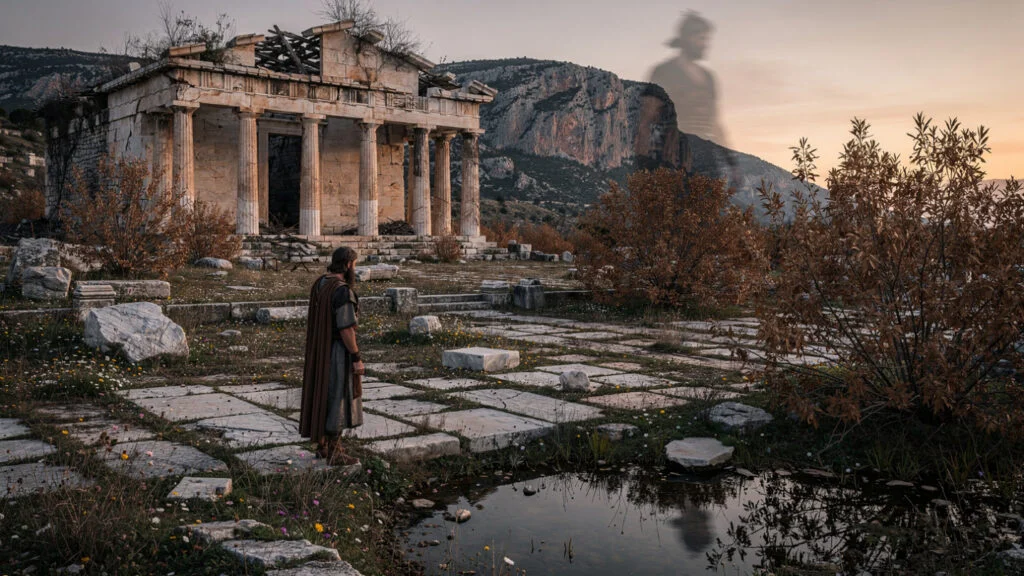
The sanctuary at Delphi, visited early in the morning before the tour coaches arrive from Athens, in the light of the Phaedriades cliffs and the mist in the olive valley below, is the visit that most allows the quality of the place to communicate what the oracle was: not a theatrical spectacle but a serious institution for engaging with genuine uncertainty, organized around a genuine geological phenomenon, operating through a genuine philosophical framework about the relationship between knowledge and interpretation. The stones are still there. The faults are still there. The ethylene is no longer accumulating in the Adyton. The oracle is silent. The questions it was asked have not diminished.
At Olympus Estate, Mythic Essays moves through the deeper currents of the Greek tradition. Croesus consulted the oracle before crossing the Halys River and received a true response that he interpreted incorrectly. The geological fault beneath the Temple of Apollo has been documented by the modern research team and the ethylene it produced has been chemically identified. The Pythia entered the Adyton, sat above the fault on her tripod, inhaled the rising gas, and spoke in a state whose character the geology confirms. The oracle told the truth. The interpretation was the human’s responsibility. It always was.