
The epithet Apanchomene translates directly as the strangled one, and it names one of the darker chthonic aspects taken on by a goddess more commonly associated with the hunt, the wild, and the protection of childbirth. The story behind the name survives in a single passage of Pausanias, and it is stranger and more unsettling than most of what the Olympian tradition preserves.
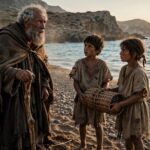
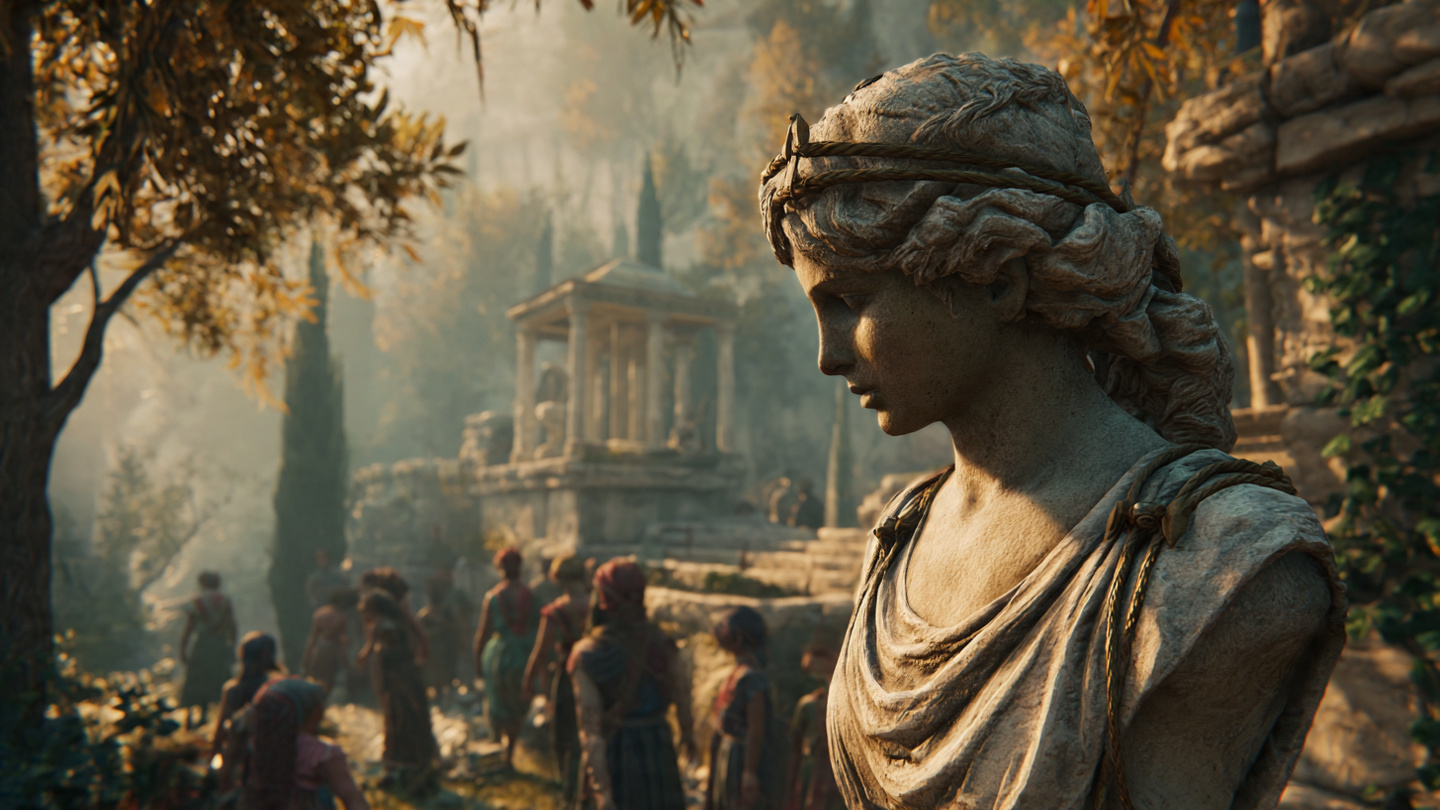
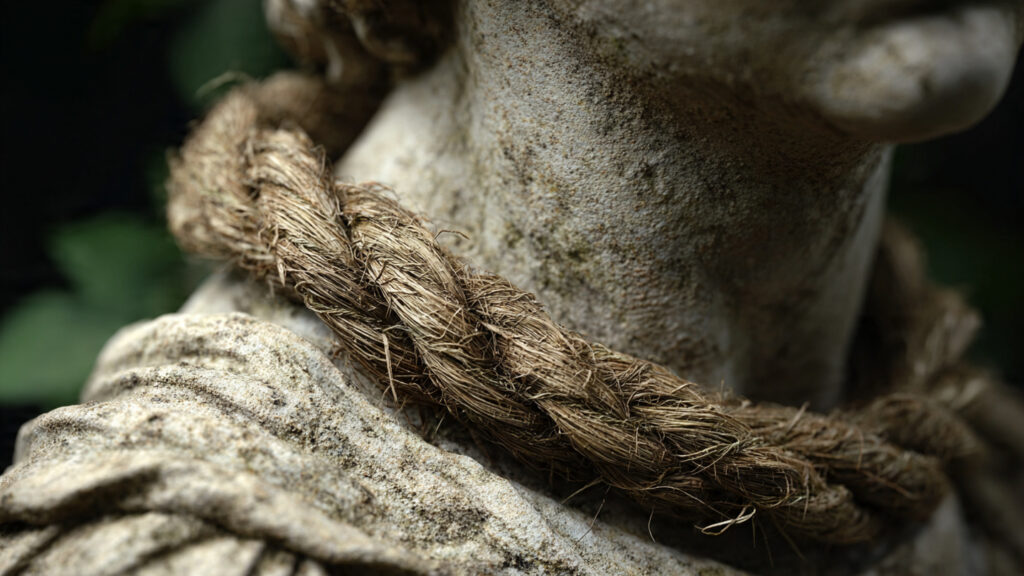
About a stade from the town of Kaphyai in Arcadia lay a place called Kondylea, where a grove and a temple belonged to Artemis under her older title, Kondyleatis. Pausanias records that some children playing near the sanctuary found a length of rope, tied it around the neck of the cult statue, and declared, as a joke, that they were strangling the goddess. The people of Kaphyai discovered them at it and stoned the children to death on the spot. What followed, according to the same account, was a wave of stillbirths among the women of the town, a calamity that did not end until the Pythian priestess at Delphi instructed the Kaphyans to bury the children with honor and to sacrifice to them every year as they would to heroes, since they had been wrongly killed. The town obeyed, and from that day the goddess at Kondylea was called Apanchomene, the Strangled Lady, in place of her older name.

What makes the story worth returning to is not simply its cruelty but its resolution. The oracle did not demand further punishment, or a ritual of purification meant to erase the incident. It demanded that the town remember it, permanently, in the goddess’s own name. That decision, and what it implies about how this particular community made sense of guilt, is the real subject of the myth.
The Geographical Isolation of Kondylea
Kaphyai sat on a small plain northwest of the lake of Orchomenus, in the kind of closed mountain basin that recurs throughout Arcadia’s interior. Ancient sources describe the town as protected from the lake by an artificial dyke, a defense made necessary by the region’s karst geology: without an above-ground river to carry it away, rainwater in these basins drains only through katavothres, natural sinkholes in the limestone. When the sinkholes are clear, the plain stays farmable. When they silt up or collapse, the basin floods and the harvest is lost with it. This is a documented feature of several Arcadian plains, not unique to Kaphyai, but it shaped daily life there in a very literal way: survival depended on channels that had to stay open.

It is difficult to know how consciously the Kaphyans connected this hydrology to their own religious vocabulary, but the parallel is hard to miss once it is pointed out: a landscape organized entirely around the principle that a blocked passage means disaster and an open one means survival is a landscape well suited to producing a myth about strangulation, blockage, and eventual release. Pausanias describes the grove of Artemis Kondyleatis as standing among old trees whose roots gripped the fractured limestone of the ridge, in a setting that offered little comfort and demanded, in its own way, the same kind of vigilance the katavothres required: constant attention to what might close off and need reopening.
Kaphyai itself was not an isolated backwater. It traded timber and mountain herbs and had some contact with the wider currents of Peloponnesian life. But the cult that grew up at Kondylea, a stade away, stayed rooted to that single grove and that single incident, tied to the soil in a way that never traveled with the town’s other exports.
The Children and the Statue
Pausanias gives no number for the children and no detail about their ages beyond calling them children at play. What they did was almost certainly imitation rather than malice: they had likely seen adults handle livestock, or prisoners, with rope, and repeated the gesture on the nearest available figure without any sense that a cult statue occupied a different category from everything else in the grove. Their joke, “Artemis is being strangled,” was the kind of thoughtless mimicry any child might produce. It became, in the eyes of the adults who found them, a desecration serious enough to answer with death.
The stoning was, in the logic of the community that carried it out, a defensive act: an attempt to remove a threat to the town’s safety before an offended goddess could retaliate on her own terms. What the Kaphyans could not have anticipated was that the punishment itself would become the offense that required atoning for. They had killed children to protect themselves from divine anger, and in doing so had committed the wrong that provoked it.
The Stillbirths and the Reading of the Sign
According to Pausanias, the calamity that followed struck the town’s women directly: their children were stillborn, one after another, for long enough that the crisis could not be read as coincidence. To a community that understood misfortune as communication, this had an unmistakable shape. The killing of children in the goddess’s own grove had been answered with the death of children in every household. The logic was symmetrical, and it was legible to everyone.

Artemis was, among her other domains, the protector of childbirth and of the young. A goddess whose sanctuary had witnessed the killing of children, and who then withdrew her protection from every child conceived afterward, was not a mystery the Kaphyans needed an oracle to diagnose. What they needed Delphi for was the remedy: some ritual precise enough to answer a wrong of this specific shape, since ordinary sacrifice and prayer had already failed to move it.
The Command of the Delphic Oracle
The Kaphyans sent to Delphi, and the Pythia’s answer was not what a town expecting further punishment might have braced for. She did not demand additional sacrifice or ritual purification in the sense of erasing the memory of the incident. She instructed the Kaphyans to bury the children with the honors due to heroes, to sacrifice to them annually thereafter, and to change the goddess’s name at Kondylea from Kondyleatis to Apanchomene, the Strangled Lady, in permanent acknowledgment of what had happened there.

This was an unusual instruction by the standards of the Greek oracular tradition. Most cult epithets celebrated a god’s power, protection, or favor. Apanchomene did the opposite: it fixed the town’s worst memory permanently into its own religious vocabulary, so that every time a Kaphyan spoke the goddess’s name, the crime and its consequence were spoken along with it. The oracle’s logic seems to have been that the stillbirths would not stop until the wrong was fully acknowledged rather than simply appeased, and that acknowledgment, to be real, had to be built into the name itself rather than performed once and then set aside.
Pausanias reports that the Kaphyans obeyed the oracle and continued to call the goddess Apanchomene down to his own time, some six centuries later. Whatever the actual mechanism behind the resolution of the crisis, the persistence of the name across that span suggests a genuinely deep-rooted local tradition rather than a story invented for a single occasion.
What the Yearly Rite Likely Involved
Pausanias does not describe the annual sacrifice at Kondylea in detail beyond noting that it followed the pattern used for hero cults elsewhere in Greece: offerings made at the graves of the dead, treating them with the reverence given to those who died wrongfully and whose goodwill the living community depended on maintaining. What can be reconstructed with any confidence is the general shape such rites took across Arcadia: an annual visit to the grove, sacrifice at the children’s tombs, and renewed attention to the goddess whose favor the town’s fertility now visibly depended on.

Whatever its exact form, a rite performed annually by the descendants of the very community that had carried out the stoning would have functioned as something close to collective penance: a yearly return to the site of the original wrong, repeated generation after generation, so that the memory could never fully recede into the safety of the distant past.
Chthonic Shift in Arcadian Religion
The cult at Kondylea marks a real shift in how Artemis could be understood within Arcadian religion specifically. Where the wider Greek tradition generally kept her identity fixed to the upper world of the hunt, the moon, and the wild, this mountain sanctuary gave her a genuinely chthonic character: a goddess who could close off the passage into life as readily as open it, whose favor determined whether a community’s children lived or died before they were born. This darker register sat more naturally alongside the world the Kaphyans actually lived in, one where death and birth felt like two expressions of the same unyielding landscape rather than opposites.

The ancient tradition did not treat this dark aspect of the goddess as evil. It treated it as necessary: a reminder that the world required a balance between growth and decay, and that divine power was not something to be handled carelessly, even by children who meant no harm. The grove at Kondylea became a place approached with genuine caution, a site where the ordinary rules of casual behavior did not apply.
This darker Artemis is not unique to Kaphyai. Arcadian religion elsewhere preserves other instances of gods taking on unsettling or transformative forms, in a landscape whose hidden caves and underground rivers already suggested a world only partly visible from the surface. The Strangled Goddess belongs to that same pattern: a local deity standing at a threshold between the seen and the unseen.
Modern Arcadia and the Site of Kondylea
Kaphyai itself has been identified with ruins near the modern village of Chotoussa in Arcadia, though the precise location of the grove at Kondylea, a stade from the town in Pausanias’s day, has not been established with certainty. The wider region still bears the geological signature Pausanias would have recognized: closed mountain basins prone to seasonal flooding, drained only by the same katavothres that shaped the agricultural life of the ancient town.

What survives most clearly is not a specific set of excavated ruins but the story itself, preserved by a single ancient travel writer who considered it worth recording alongside the more famous myths of the region. That in itself says something about how seriously the ancient Greek imagination treated a local, specific act of communal violence and the equally local, specific ritual invented to answer it.
What the Myth Preserves
The story of Artemis Apanchomene is a reminder that the ancient Greek religious imagination did not always resolve guilt by erasing its trace. At Kondylea, the oracle chose the opposite path: naming the wrong permanently, inside the very name used to invoke the goddess’s protection. A community that has to say the word “strangled” every time it prays for its children’s safety is a community that has been made structurally incapable of forgetting what it once did.
Whether or not the historical Kaphyans understood their own myth in these terms, the logic embedded in it is coherent and, in its way, humane: memory carried openly, and renewed every year through ritual, may be more stabilizing for a community than memory suppressed. The children were not returned to life. But their deaths were given a permanent place in the town’s understanding of itself, rather than being quietly absorbed and forgotten.
The myth of the Strangled Goddess is, finally, a story about the cost of religious overreaction and the discipline required to answer it honestly rather than simply moving on. It survives because Pausanias thought it worth writing down, and it still says something true about how a small mountain community, faced with the consequences of its own fear, chose to carry the memory forward instead of burying it.
At Olympus Estate, Mythic Essays moves through the deeper currents of the Greek tradition. Children at Kondylea near Kaphyai tied a rope around the neck of a cult statue of Artemis and joked that they were strangling the goddess. The townspeople stoned them to death for it. Afterward, the women of Kaphyai began losing their children to stillbirth, a calamity that did not stop until the Pythian priestess at Delphi commanded the town to bury the children with the honors given to heroes, sacrifice to them annually, and rename the goddess Apanchomene, the Strangled Lady, in permanent acknowledgment of what had happened. Pausanias reports the Kaphyans still used the name six centuries later. The oracle did not ask the town to forget its crime. It built the memory into the goddess’s own name.