


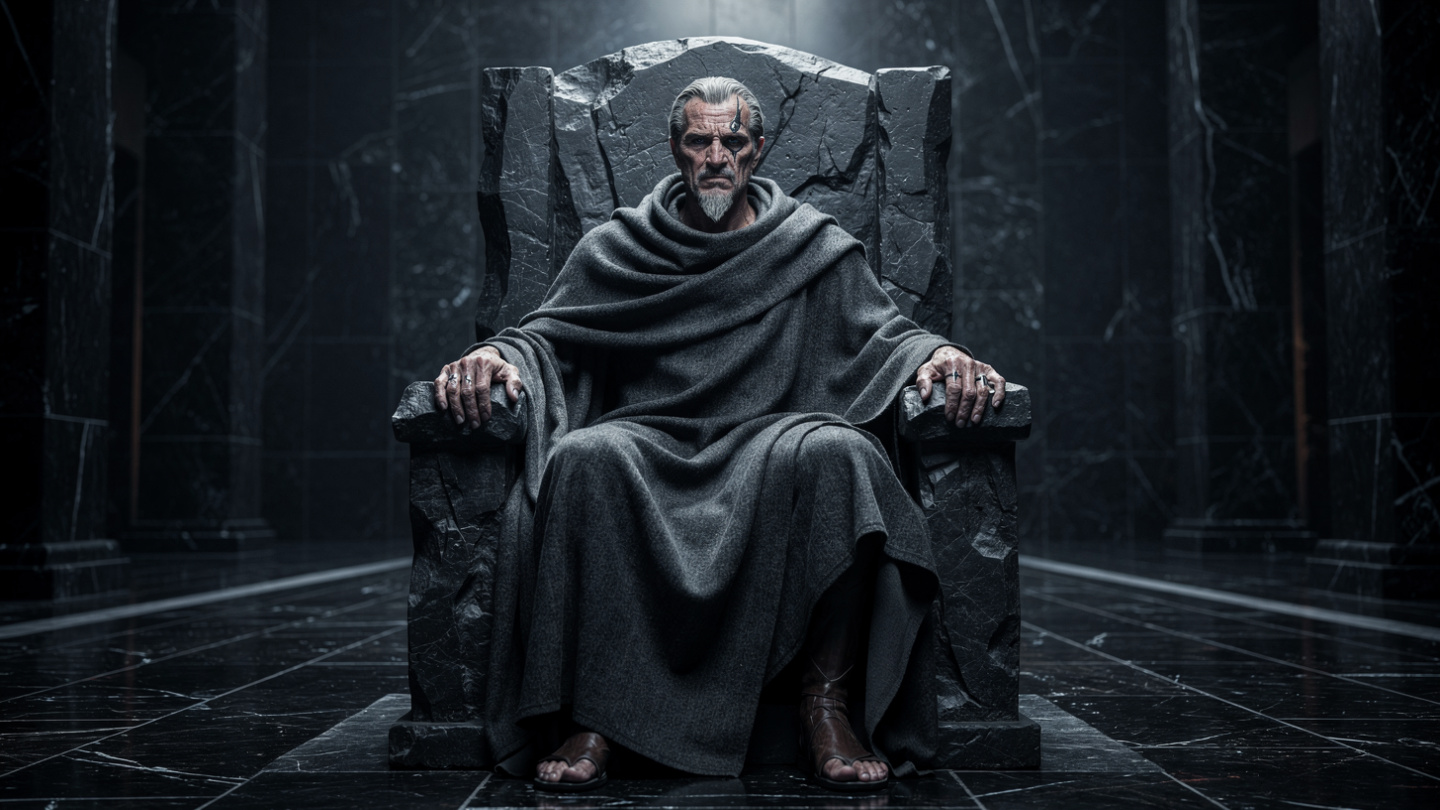
Hades did not punish the dead.
This is the single most important correction any honest account of the Greek underworld has to make before going any further, because thinking of Hades as a god of punishment, and the underworld as a place of punishment, makes what the Greeks actually believed about death unrecognizable.
Hades governed the realm of the dead the way an organized administrator governs a domain, not the way a punitive judge presides over one. He did not cause death. He took no pleasure in the deaths of those who entered his realm. He held no malevolence toward the living or the dead. Ancient sources describe him consistently as the divine being who received the dead when they arrived, who kept the underworld organized according to the divine order established once the cosmos was settled after the Titanomachy, and who enforced a single rule: the dead, once received, did not return to the living world.
That rule was what actually gave Hades his identity in Greek myth, not cruelty or malevolence but an absolute insistence on the boundary between the living and the dead. The dead belonged to his realm. The living belonged to the world above. The boundary between the two was the single most absolute boundary in the Greek cosmos, more absolute than the boundary between the divine and the mortal, more absolute than the boundary between the Olympian order and the Titanic one before it. Hades’s function was maintaining exactly that boundary.
This is why the heroes who crossed it and returned earned an awe no other achievement could match: Orpheus, Heracles, Odysseus, Psyche, Aeneas. Each crossed the most absolute boundary in the cosmos and came back, and each crossed it by a different method, each method itself a demonstration of what that boundary actually was.
The Division of the Cosmos
Greek myth preserved the exact mechanism by which the three brothers of the second Olympian generation divided the cosmos in the lot-drawing that followed the Titanomachy: Zeus received the sky and governance of the divine order, Poseidon received the sea and its geological forces, and Hades received the underworld.
The Poseidon article in this collection develops Poseidon’s own portion and the sense in which it was the worst of the three: the sea’s irreducible instability, and centuries of mythological frustration the earth-shaker’s domain generated as a result. Hades’s portion had its own defining character, one ancient engagement with death and its aftermath was organized around entirely.
The ancient Greek underworld was never a bad place the way the later Christian Hell was a bad place. It was never organized around punishing the wicked or the misery of the condemned. It was organized around administering the dead as a category of being whose existence there was simply the existence of the dead rather than the existence of the condemned, their connection to their former life preserved in the underworld through the shade, the psyche, whose character kept something of the living person’s own identity, in the diminished form appropriate to death.
Homer’s Nekyia, the eleventh book of the Odyssey in which Odysseus descends to the edge of the underworld and speaks with the dead, is the oldest surviving extended account of the Greek underworld and its character. The shades gathering at the blood Odysseus pours retain enough individual identity that he recognizes Achilles, Agamemnon, and his own mother Anticleia, but their condition remains the diminished existence proper to the dead rather than the full existence of the living. They flit about the blood seeking the nourishment that will temporarily restore the speech and recognition the fully living possess and the dead have lost.
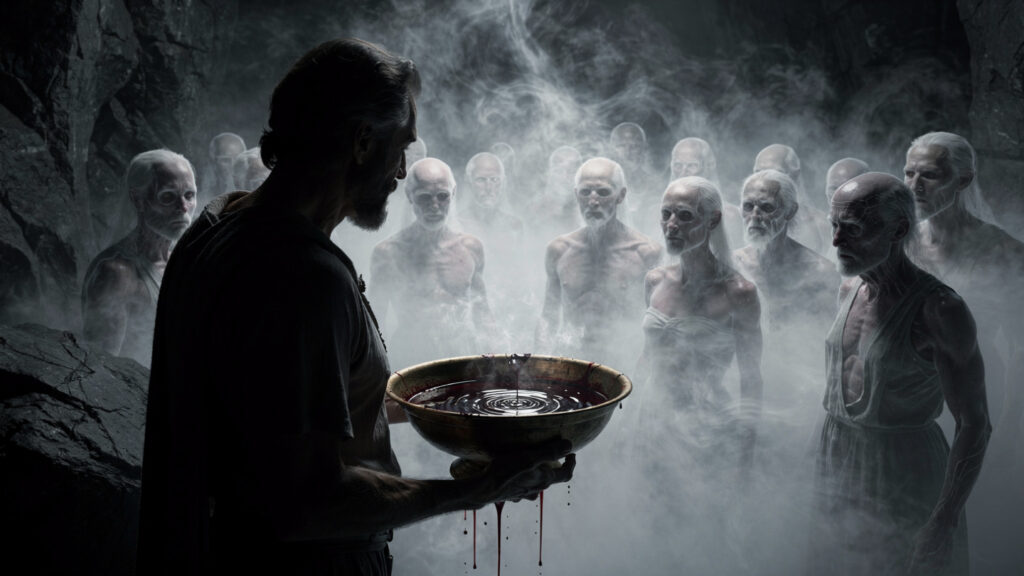
The Homeric underworld is not a place of punishment for the wicked. It is where the dead exist in the diminished form fitting their condition, and the real distinction between the wicked and the virtuous in Homer’s underworld belongs to specific individuals, Tantalus, Sisyphus, and others punished in Tartarus, the underworld’s deepest region, for crimes committed directly against the divine order, not a general punishment applied to sinners as a class.
The Geography of Hades
The Greek underworld had a geography documented with the same precision as the upper world it mirrored.
The entrance to the underworld ran through locations the geography article on Epirus in this collection develops through the Necromanteion of Efyra: places whose own landscape, a marshy river confluence in the case of the Acheron, cave entrances in the volcanic terrain of Campania and the Peloponnese, suggested the underground world’s real proximity to the surface. The rivers of the underworld were the waterways whose own geography organized the journey from the surface down into the underworld’s interior.
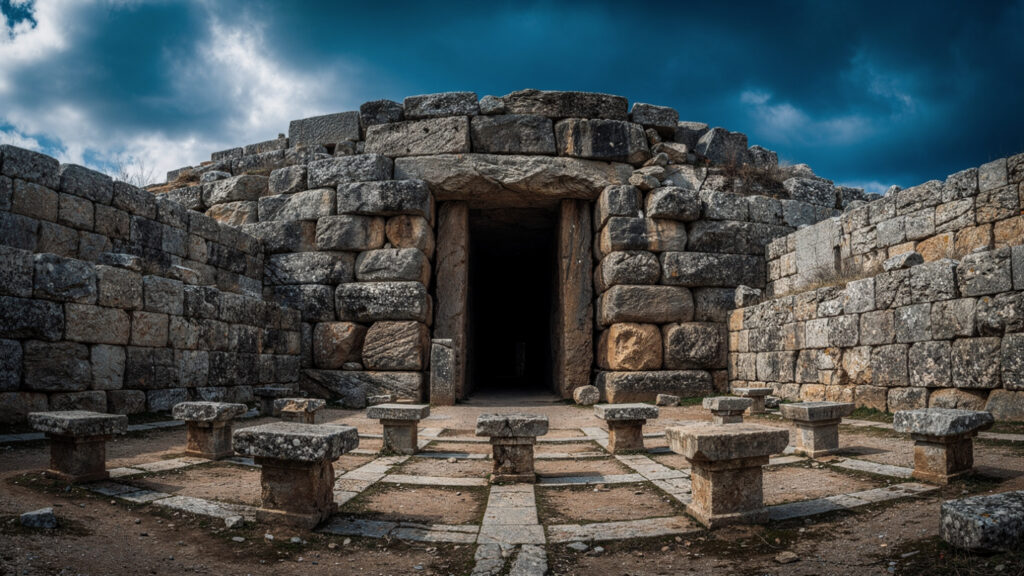
The Styx, the river of hate, was the most theologically significant of the underworld’s rivers: the river by which the gods swore their most inviolable oaths, its sanctity drawn directly from its own status as the boundary between the living world and the dead one.
The divine order could not accommodate a broken Styx oath, and the punishment for breaking one, exclusion from the divine community for nine years, drew its very duration from the theological weight the river itself carried.
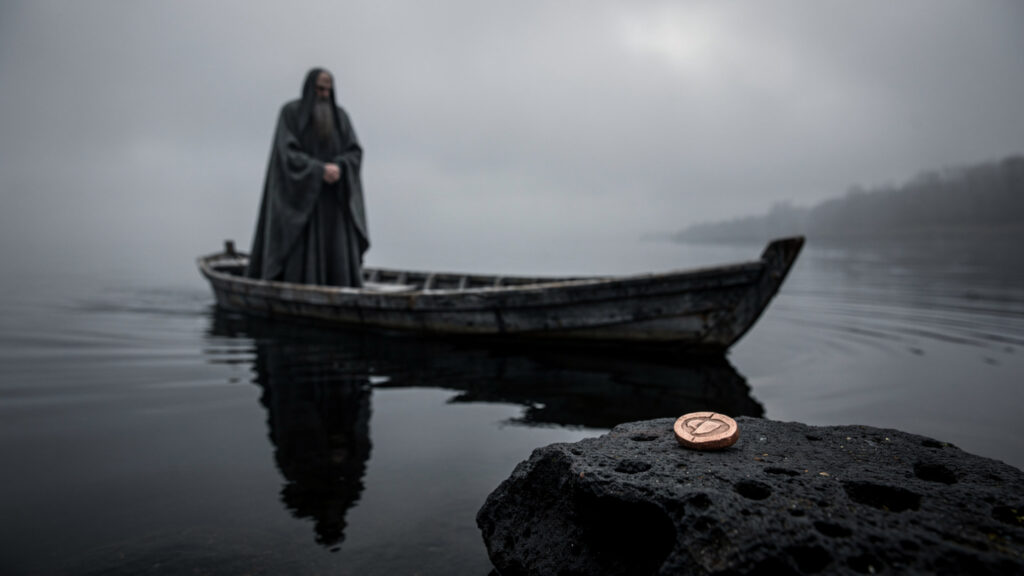
The Acheron, the river of woe, was the river the dead had to cross to enter the underworld proper. Charon, the ferryman whose role gave the journey from life to death its most concrete mythological image, carried each shade across the Acheron from the world of the living into the world of the dead. The obol placed under the tongue or on the eyes of the dead before burial was the payment Charon required for that crossing, and the dead who could not pay were left waiting at the crossing for a hundred years before Charon would finally take them across without it.
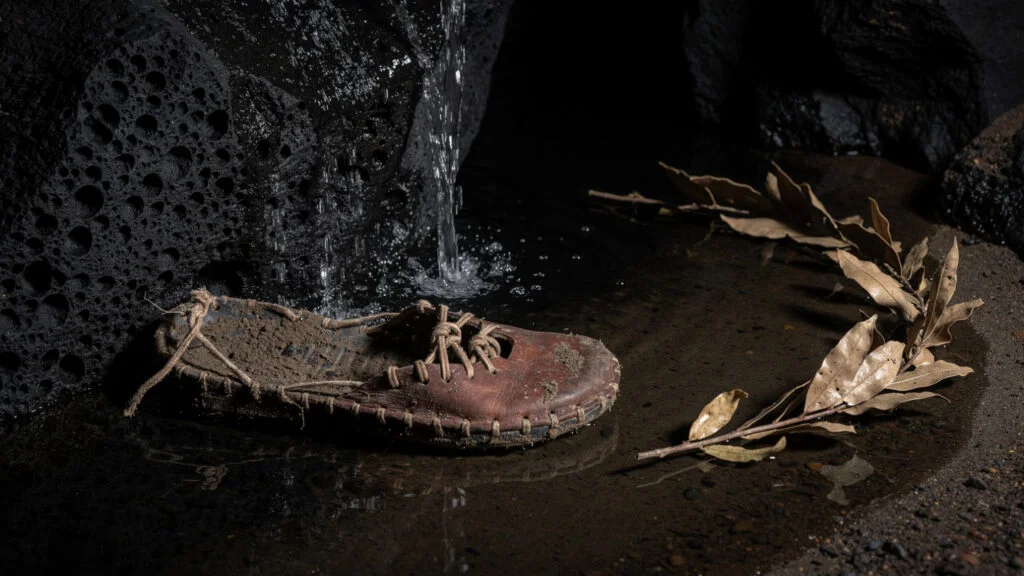
The Lethe, the river of forgetfulness, was the river ordinary shades drank from before their souls could be reborn into new bodies. Plato’s development of underworld geography, most fully preserved in the Republic’s Myth of Er, gave the Lethe its role in the cycle of reincarnation whose details Plato worked out from earlier Pythagorean thought.

The Elysian Fields, the Islands of the Blessed, and Tartarus were the regions whose different characters reflected the real distinctions the Greeks drew among the dead: heroes and the exceptionally virtuous received the reward of a pleasant afterlife in Elysium, the condemned received Tartarus’s punishments, and ordinary people inhabited the Asphodel Meadows in the neutral condition of an undistinguished shade, a life neither heroic enough nor criminal enough to merit either extreme.
The Judges and Their Function
The Greek underworld maintained a real judicial function: evaluating a dead soul’s life in the upper world and assigning the afterlife condition that evaluation warranted.
Minos, Rhadamanthys, and Aeacus served as the three judges of the dead, chosen from figures whose earthly lives had already made each of them an exemplar of just governance. Minos, the Cretan king Thucydides credits with organizing the first Aegean maritime order, Rhadamanthys, the Cretan sage renowned for his impartial application of divine law, and Aeacus, the king of Aegina whose piety toward the gods made him the divine administration’s most trusted mortal executor.
The Rhadamanthys article in the Europa essay in this collection develops the Cretan connection to the underworld judiciary through the sons of Zeus and Europa. Plato’s dialogues, above all the Gorgias and the Republic, preserve the fullest philosophical development of what these three judges actually did: a soul judged on the real record of its life, stripped of the wealth, status, and social connections a living person could once deploy in an earthly courtroom, judged instead on the character that life had actually produced rather than on what social circumstances had merely allowed or prevented.
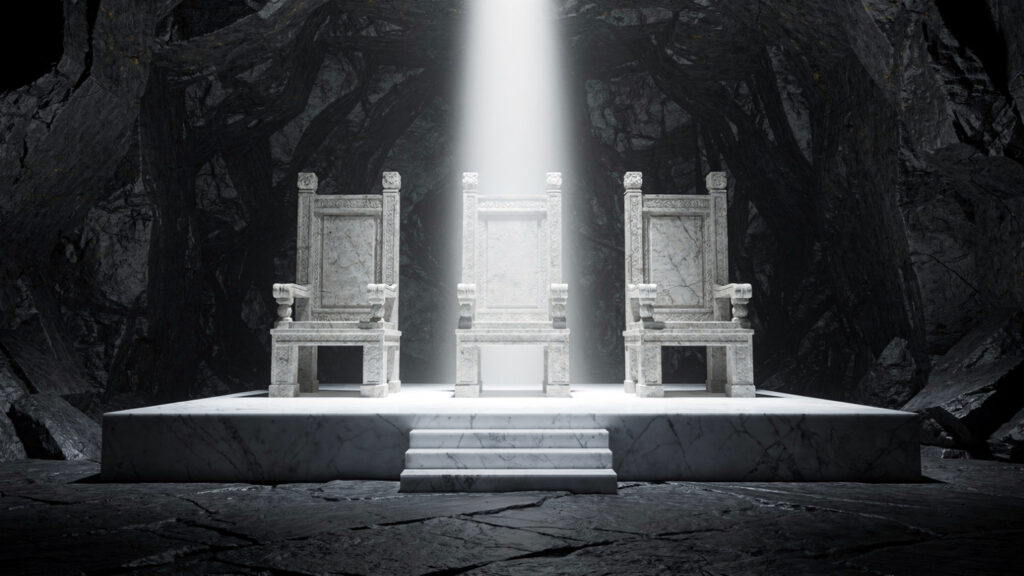
The Gorgias gives this its most philosophically developed form directly: the soul, stripped of body and social identity, judged by a judge stripped in turn of judicial robes and court procedure, two naked beings confronting the soul’s own record without disguise. Plato’s claim is precise: justice in the fullest sense is possible only in the underworld, because only there have the distortions of the earthly courtroom finally been removed.
Persephone and the Queen of the Dead
Persephone’s dual identity, daughter of Demeter and queen of the dead at once, gives Greek theology its most direct engagement with the relationship between the living world and the dead.

Persephone’s abduction by Hades, whose fullest surviving literary treatment is the Homeric Hymn to Demeter, and whose mythological weight the sacred table article in this collection develops through the Thesmophoria and the pomegranate’s role in her story, marks the moment the boundary between the living world and the dead was breached most directly: the harvest goddess’s own daughter taken into the underworld, and the consequence was catastrophe, the harvest’s failure, winter’s dominance over the earth, plants refusing to grow while Demeter’s grief went unresolved.
The pomegranate seeds Persephone ate in the underworld, whose consumption bound her there for the months each year the agricultural calendar marked as winter, when crops failed to grow, worked through the same logic that governs hospitality everywhere: a guest who eats in a host’s house has accepted that host’s hospitality and cannot simply leave without acknowledging it. Persephone ate the pomegranate seeds in Hades’s own house, and that act created the bond that made her annual return to the underworld the condition of her annual departure from it.
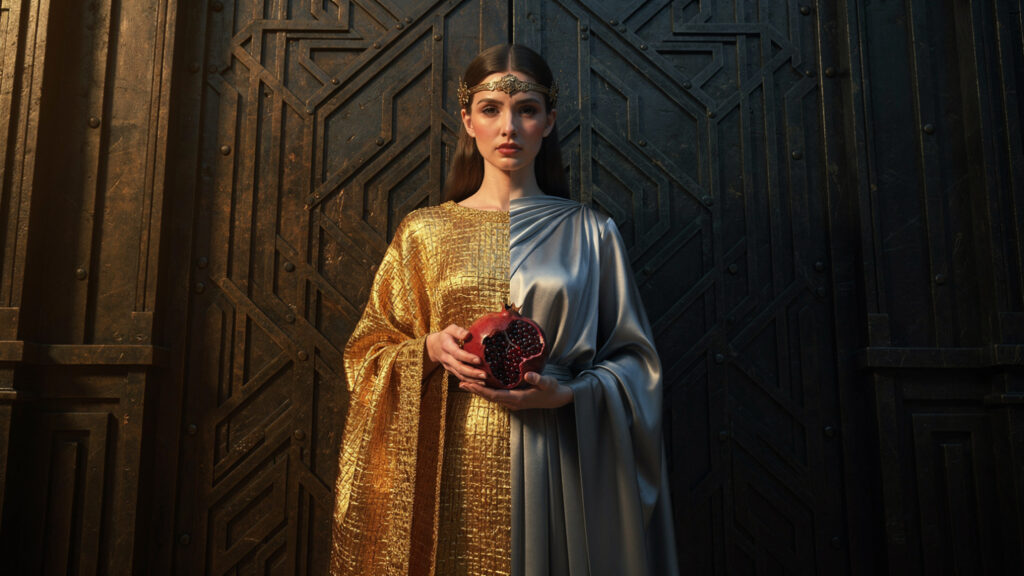
Persephone as queen of the dead combined the living world’s most vital force, the harvest goddess’s daughter whose presence above ground coincided with the growing season, with real authority over the underworld’s own governance. She was the being who mediated between the two worlds, her own annual movement between them serving as the mythological explanation for the agricultural cycle that organized the entire human food supply.
The Crossings | Orpheus, Heracles, Psyche
The three most significant crossings of the living-dead boundary in Greek myth demonstrate, through the method of each crossing, both the nature of the boundary itself and the character of the person who crossed it.
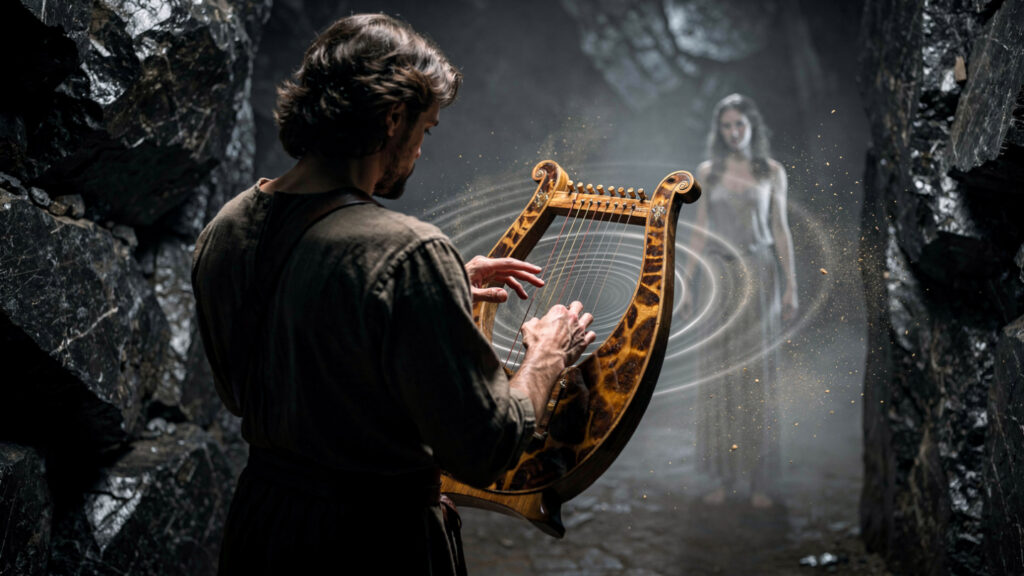
Orpheus crossed through art: music powerful enough to move rocks, rivers, and animals also moved the underworld’s own emotional register, stilling the grief of the dead, suspending the judges’ severity, and pausing the punishments of Tartarus, all through the playing of a single lyre. The tragic loves article in this collection develops the Orpheus and Eurydice story through the look back that destroyed the rescue: a look back whose logic is really the logic of the living world’s inability to fully trust the underworld’s own terms, doubt itself expressed by the one living person briefly allowed to breach the boundary.
Heracles crossed through force: his twelfth labor took him into the underworld itself to bring Cerberus to the surface, and Hades granted permission for the attempt on one condition, that Heracles use no weapon but his own body, the permission of an administrator who recognized the divine parentage of Zeus’s own son and could not refuse a request from a being whose entire heroic character rested on completing exactly the task set in front of him. The monsters article in this collection develops Cerberus’s guardian role and the three modes of crossing it embodies.

Psyche crossed through wisdom: the tasks Aphrodite set her demanded the kind of practical intelligence myth consistently rewards, and her underworld task, retrieving a box of Persephone’s beauty, required knowing exactly what the underworld demanded from a living visitor hoping to pass through safely, coins for Charon, honey cakes for Cerberus, and the discipline to refuse the pleading of dead souls who would try to delay her passage. The pharmakeia article’s brief reference to Psyche’s crossing develops the honey cake payment as an act of understanding exactly what the guardian wanted and providing exactly that.
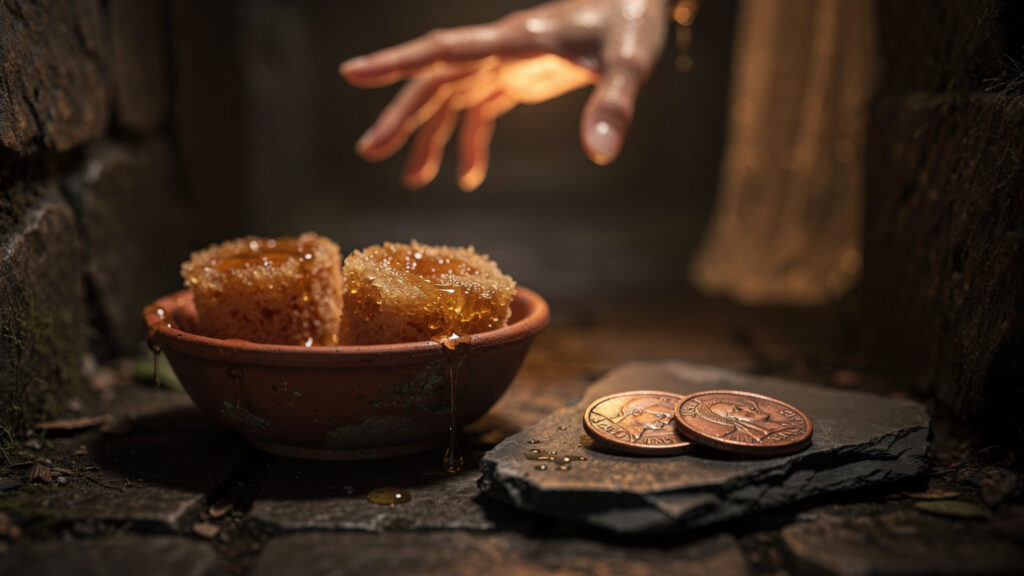
All three crossings demonstrate the same underlying truth: the boundary between the living and the dead was never a punishment for the condemned but the absolute separation of two orders of existence the organized divine structure required to maintain, breachable only temporarily, and only by someone whose own capacity matched exactly what the boundary demanded.
Hades and the Misunderstanding
Understanding why Hades was later misread in the West, and why the Christian Hell carries features of punishment, pain, and evil governance the Greek underworld never carried, deserves an honest account.
The Greek underworld’s neutral character, administering the dead without any punitive orientation toward the afterlife’s negative dimension, expressed a genuinely Greek interpretation: death was not a moral event. The dead were simply the dead, their condition neither reward nor punishment, with the sole exceptions of exceptionally virtuous heroes and exceptionally criminal violators of the divine order, who received their distinct treatments in Elysium and Tartarus respectively.
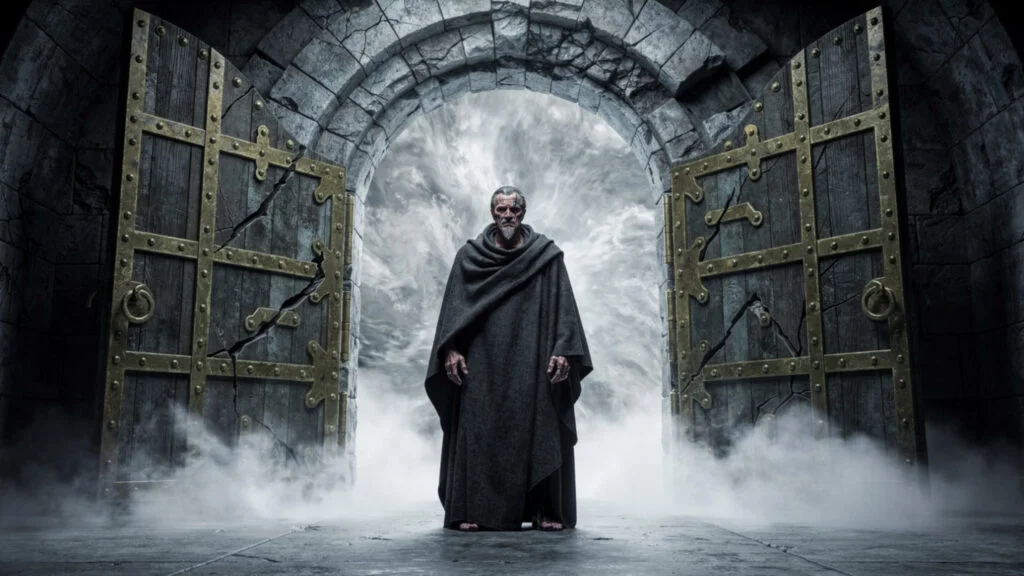
Hades’s later transformation into the evil ruler of a place of punishment reflects the theological needs of whatever religious system eventually replaced the Greek one. Christianity’s own architecture required Hell as the destination of the unrighteous, set against Heaven as the destination of the righteous, and needed a punitive afterlife in a form the Greek underworld’s neutrality simply did not offer. Translating Greek mythological vocabulary into Christian theological vocabulary conflated Hades the place name with Hades the divine identity, and both with the Christian concept of punishment neither had ever actually carried.
Hades himself was not evil. He was the just administrator of the most absolute boundary in the Greek cosmos. He received the dead with the impartiality a realm organized around necessity, not punishment, actually required. He insisted on the boundary between the living and the dead with exactly the severity that boundary demanded. And on occasion, faced with an argument brought directly to his throne, he granted the permission the moment required.
He was not Hell’s ruler. He organized what came after death for everyone, the divine being whose function the most absolute boundary in the cosmos simply required someone to perform.
At Olympus Estate, Mythic Essays moves through the deeper currents of the Greek tradition. Hades did not punish the dead. He maintained the boundary between the living and the dead with the absolute severity that boundary required. Orpheus moved the underworld with music. Heracles moved it with force and his own divine parentage. Psyche moved it with the practical intelligence of someone who understood exactly what the boundary required. The Styx oath was the most inviolable oath in the divine world because the river you crossed to enter the realm of the dead was a river whose crossing could not be undone. Persephone ate the pomegranate seeds and the winter followed. The three judges evaluated each soul stripped of the social advantages that had once protected it in the earthly courtroom. The dead existed in the diminished form fitting their condition. Hades received them all.